The Myth of the Massive Home Office
Most design guides preach about sprawling walnut executive desks and sprawling multi-monitor arrays. Nobody talks about the reality of square footage. You have a quiet corner, maybe a foot of space next to a window, and a sudden need to get things done. That is where a thoughtful small desk setup shines. Cramming furniture into a tight zone fails when you treat it like a miniature version of a corporate cubicle instead of an intimate writing nook.
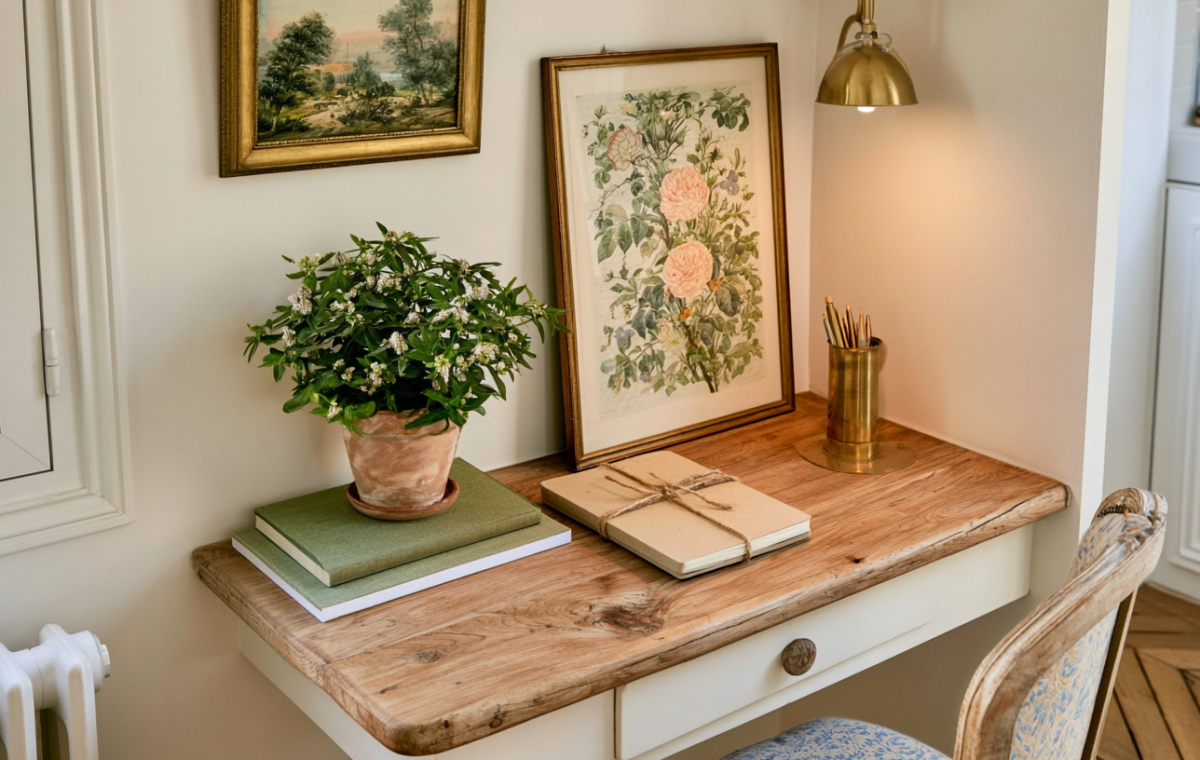
Look at how wood grain interacts with morning light. A simple solid wood surface anchors the space immediately. Plastic laminates and glass tops feel cold, slick, and temporary. Real wood absorbs shadows, shows character over years of use, and grounds a tiny nook so it feels deliberate rather than accidental.
Layering Texture Over Square Footage
When horizontal surface area is scarce, your styling has to go vertical or textural. Stacking a couple of hardcover books beneath a terra cotta pot creates instant height without eating into your writing radius. Notice how the muted green tones of the book cloth connect with the botanical print leaning against the wall. This is not accidental matching; it is visual breathing room.
You do not need an elaborate desk organizer system straight from a stationery catalog. A single brass container holds your pens. A notebook wrapped in twine waits for rough drafts. Restraint beats volume every single time. If an object does not serve a functional purpose or spark genuine calm, take it off the surface.
Illumination and Framing
Lighting ruins many a compact work zone. Overhead recessed lights cast harsh glares on paper. A modest brass desk lamp mounted or placed on the right side throws a warm pool of light right where your hand meets the page. Pair that with framed art instead of sticking sticky notes to the drywall. Framed botanical illustrations give the eye somewhere to rest during a mental block.
Upkeep requires ruthless honesty. A minimalist nook demands daily maintenance. Leave your coffee mug there overnight, and the whole arrangement collapses into visual clutter. The secret is treating the desk as a stage that resets every evening.
How many items are currently sitting on your workspace that you have not touched in the last week?
Editorial Silo • Recommended Architecture Studies
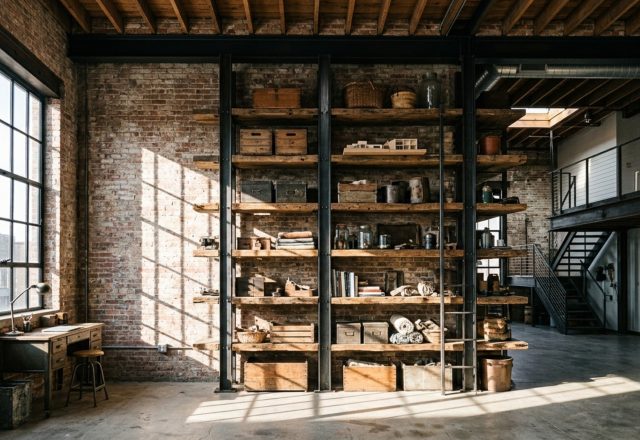
- Performance Modularity: Modular Shelf System & Engineering Seamless Living in the Modern Compact Home — Archival Design Case Study
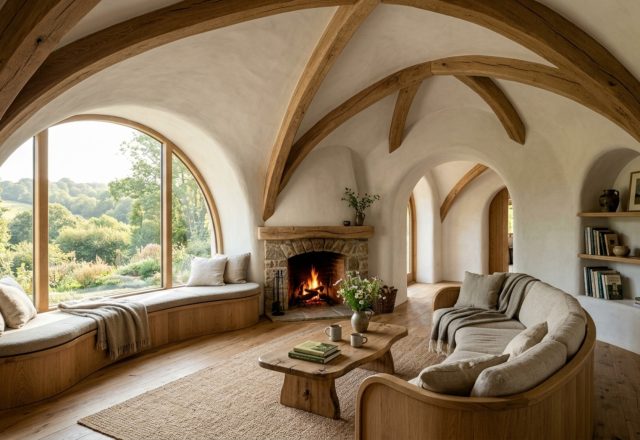
- The Physics of the Curve: Structural Secrets of Earth-Sheltered Hobbit Home Designs — Archival Design Case Study
Curated Lookbooks & Architectural Studies
- Large living room design rules for functional flow
- Styling a Patterned Armchair in a Traditional Living Space
- Ceramic Vase Base Details: Quality Clues in Pottery
- Exotic Khayangan Dreams Villa Seminyak Bali Indonesia with Tropical Nuance
- Rustic Table Setting Ideas for Warm, Inviting Dinners
- Dark Moody Kitchen Design Ideas for Timeless Spaces
Curated Visual Lookbook
Design Gallery & Spatial Studies
A visual curation of architectural arrangements, lighting concepts, and material palettes featured in this space.