The Deceptive Geometry of a Narrow Corridor
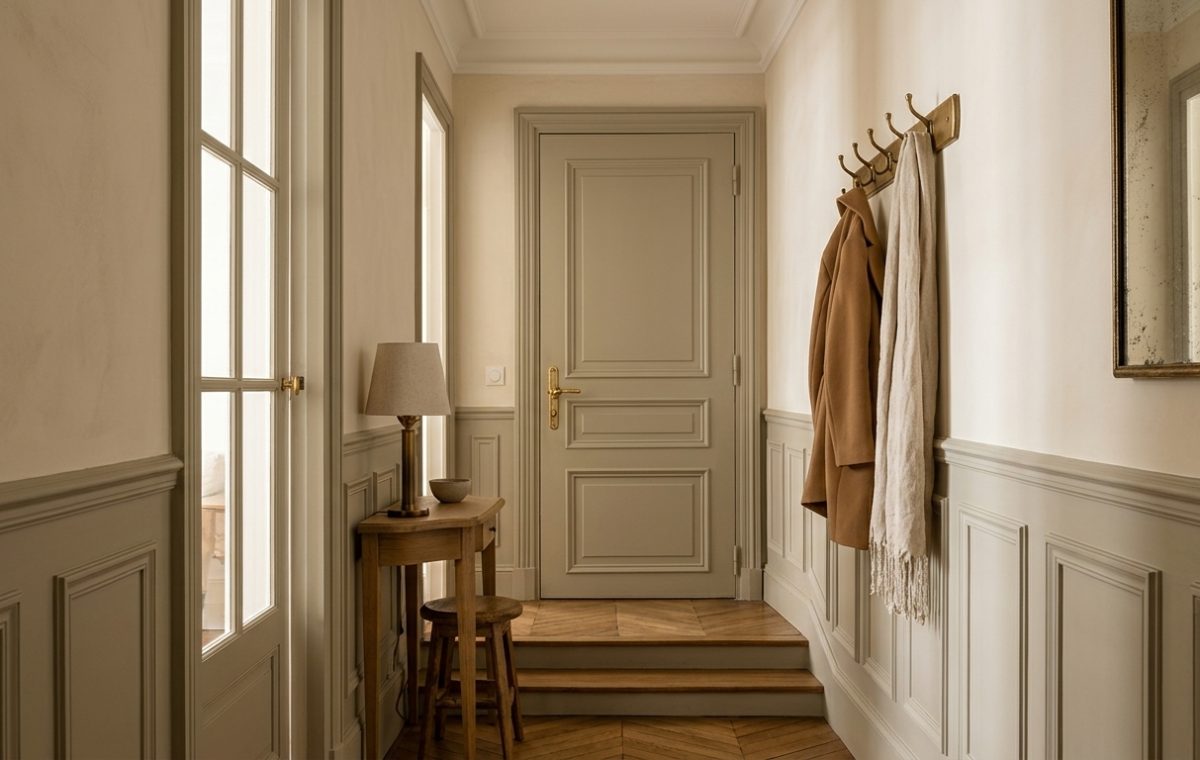
Corridors carry foot traffic, wet umbrellas, and stray elbows. They take a beating every day. Too often, people slap a coat of builder-grade white on the drywall and call it a day. The space ends up feeling like an echoing tunnel. Look closely at the entry hall here: running raised paneling along the lower third of the wall radically shifts how your eye registers depth. Classic wall molding provides visual anchor points that bare plaster simply cannot achieve.
Proportion dictates everything. Cut the wall exactly in half with a chair rail, and the ceiling feels suffocatingly low. Anchor your trim work slightly below the midpoint, roughly 36 to 42 inches from the floor, and the upper wall appears to stretch toward the molding. Notice how the two-step elevation shift and chevron wood floors lead directly to the rear door. The vertical profiles of the panels break up that horizontal stretch, balancing the hallway rhythm without cluttering walking space.
The Argument for Monochromatic Trim
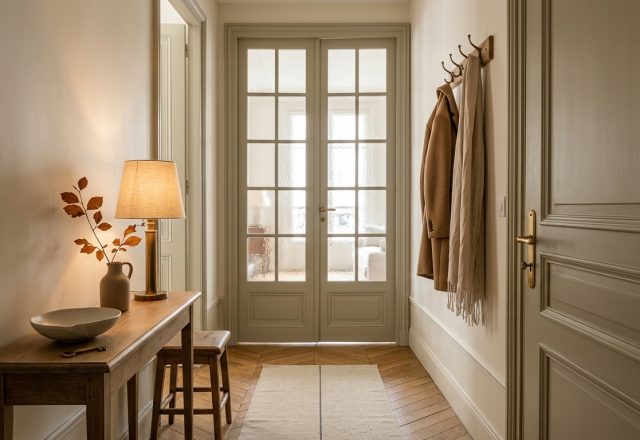
Why default to brilliant white trim? High contrast between dark walls and bright white woodwork chops a narrow room into chaotic stripes. Painting the raised panels, door jambs, and the interior door itself in a unified greige trim paint creates calm continuity. It softens transitions. The subtle earthy undertone absorbs daylight bouncing from the adjacent French doors instead of creating harsh glare.
Drenching both the wainscoting and the door in matching muted paint eliminates visual friction, making modest passageways read as deliberate architectural statements.
Carrying the color across the door casing tricks the eye into seeing custom millwork rather than standard stock panels. It looks solid. Grounded. Expensive, even if constructed from standard poplar and moisture-resistant MDF.
Living with Wall Paneling: Practical Maintenance
Woodwork in a transition zone has to survive real life. Backpacks swing wildly. Pets brush against it. If you coat these panels in dead-flat emulsion, you will scrub scuffs off twice a week and end up polishing the paint into uneven shiny patches. Use an eggshell, satin, or dedicated cabinet lacquer instead. The mild sheen deflects scuffs and allows quick wipedowns without degrading the pigments.
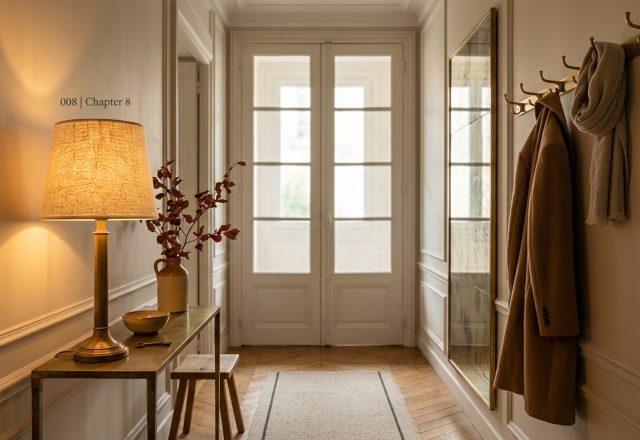
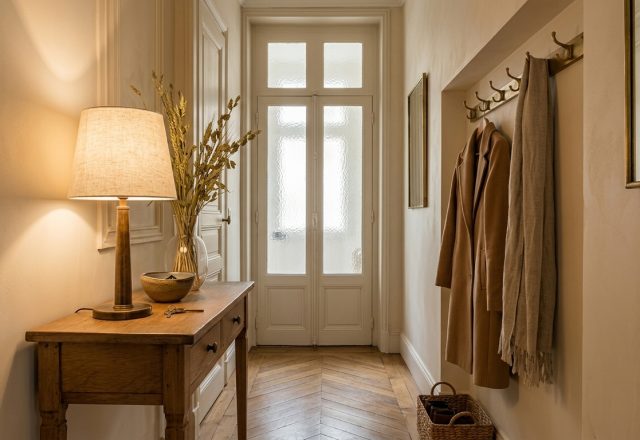
Don’t crowd the corridor. In narrow entryway design, every square inch stolen by furniture affects circulation. A slender console table tucked against the wainscoting cap gives keys a landing zone without blocking flow. An aged brass hook rail keeps wool coats and scarves accessible without the bulky footprint of an armoire or standing tree.
A corridor should set a quiet, composed baseline before you step into more boisterous living rooms. How do you strike the balance between heavy-duty mudroom utility and quiet architectural character in your own front hall?
Editorial Lookbook & Photo Collection