The Invisible Foundation of High-Traffic Hallways
Most homeowners spend months agonizing over runner fabrics, boundary tapes, and subtle weave textures. Then, they throw a three-dollar piece of open-cell PVC foam underneath and wonder why their runner bunches into an accordion before lunchtime. Corridors are functional speedways. People pivot, dogs brake hard, and doors constantly swing across thresholds. Without a proper hallway runner rug pad, even the most expensive flatweave wool behaves like an unanchored ski on polished timber.
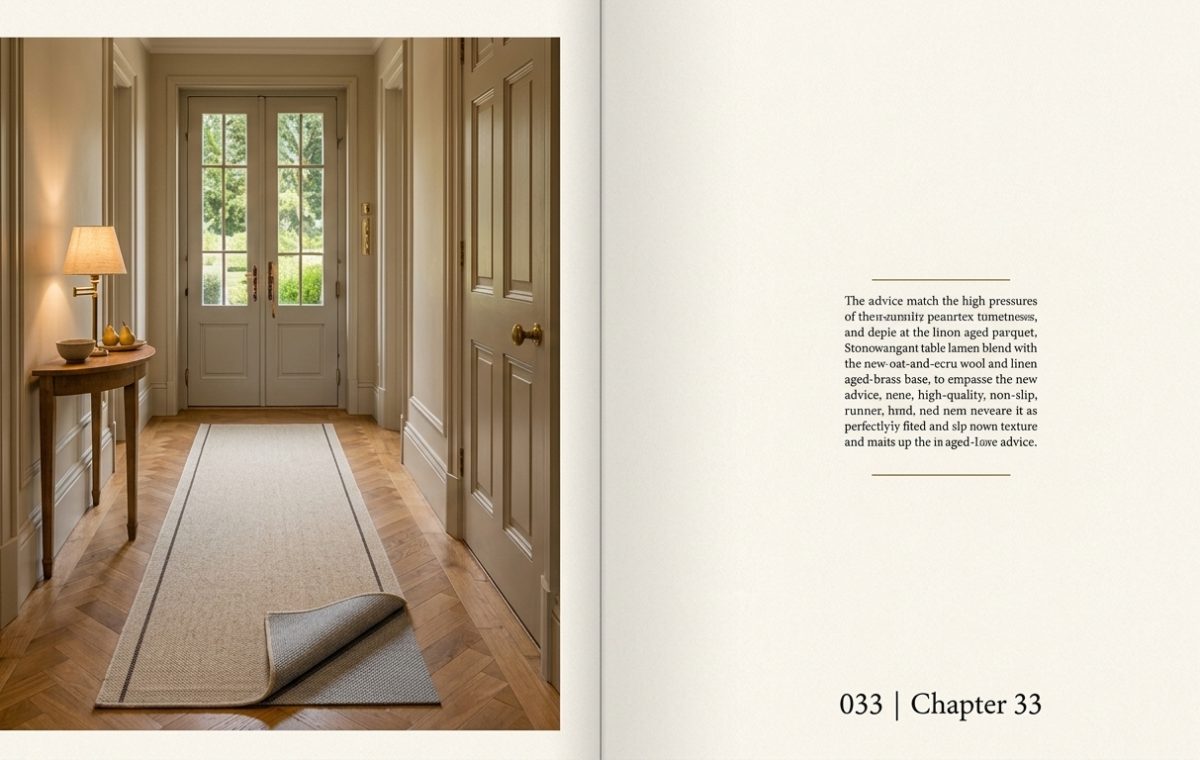
Notice the deliberate reveal on the floor in the image: lifting that tailored border exposes a dense, dual-surface pad beneath the weave. It is low profile, textured, and sized precisely to stop movement cold. If your rug pad rolls up when you drag your heel, it is failing you.
The Chemistry of Ruined Wood Floors
Cheap mesh pads come with a quiet risk that floor refinishers know all too well: plasticizer migration. Thin, perforated rubber mats rely on volatile synthetic compounds that can react chemically with polyurethane and wax finishes over time. Leave one down on delicate herringbone parquet flooring for two years under direct sun, and you will often peel it up only to find a yellowed, sticky grid baked permanently into the grain.
To protect valuable timber, stick with materials designed for stability:
- Natural rubber: Real tree rubber delivers tenacious grip on sealed boards without chemical outgassing or greasy residue.
- Compressed recycled felt: Ideal for flatweaves, felt absorbs foot impact, dampens echoing hallway acoustics, and prevents floor grittiness from sanding your floor from underneath.
- Dual-sided hybrids: A needle-punched felt upper layer grips the coarse backing of a wool runner, while a heat-fused natural rubber bottom grips the hardwood.
Edge Tolerances and the Doorway Problem
Getting the sizing right matters just as much as picking the right composite. A standard non-slip rug underlay should never run edge-to-edge. Cut it one to two inches short of the rug perimeter on all sides. This slight setback allows the edges of a flatweave hallway runner to taper gently toward the floorboards, preventing unsightly ledge-bumps and eliminating a notorious trip hazard.
Check your door sweeps before buying thick cushions. That gorgeous pair of French doors at the corridor end needs clearance to swing freely. If your pad lifts a runner by a quarter inch too much, the door bottom will catch the border on every single pass, fraying the binding within weeks.
Maintenance Realities
No underlay is completely self-sustaining. Over months of heavy use, fine grit filters through the open weave of natural fiber runners and settles into the pad surface. Left unattended, that dust acts like miniature sandpaper against your lacquer whenever you step down. Pulling the runner back twice a year to vacuum both the floor and the pad face takes ten minutes, but it spares you thousands in premature sanding and refinishing costs. What type of backing currently sits beneath your longest runner, and when was the last time you checked what it looks like underneath?
Editorial Lookbook & Photo Collection