The Hallway Paradox: Transit Versus Function
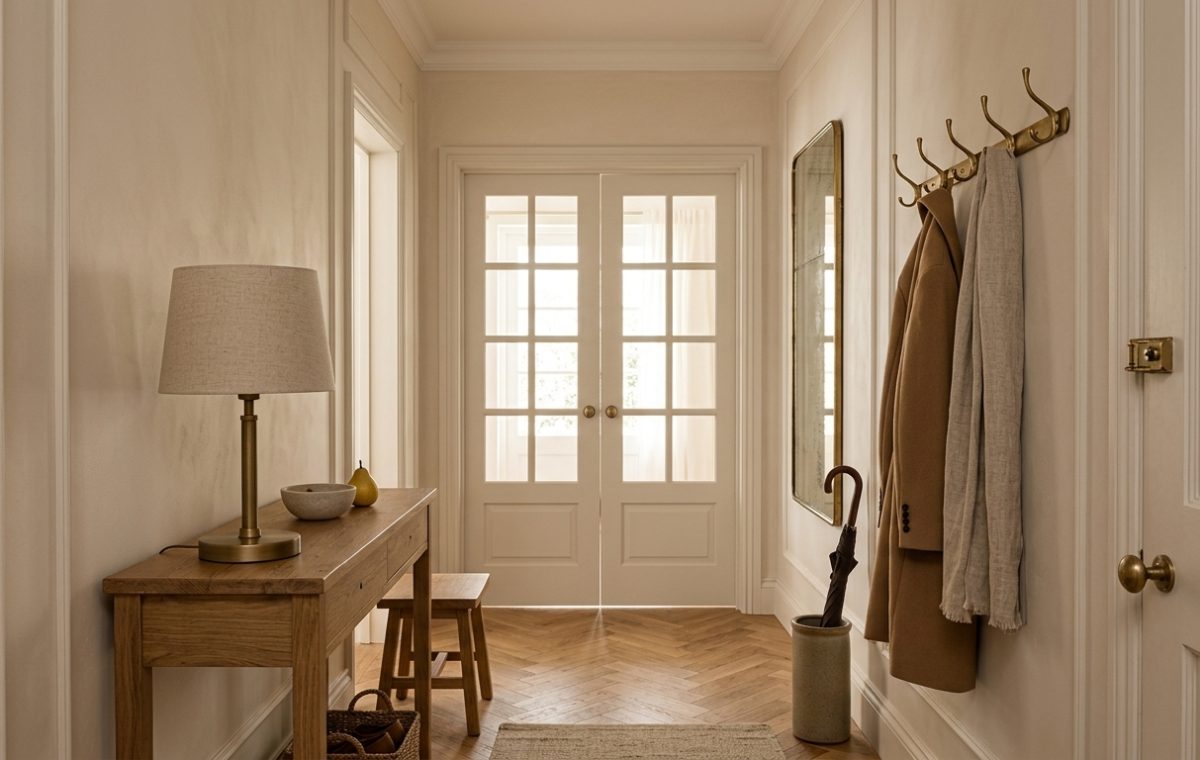
Most corridors are treated as architectural afterthoughts. They get pinched down to minimal clearances, slapped with builder-grade paint, and left to fend for themselves against wet umbrellas and muddy boots. Yet a transition space sets the rhythm for your entire home. Look at this setting: soft off-white wall moulding, warm oak herringbone wood flooring, and diffused light pouring past divided glazed interior doors. It feels airy. It looks disciplined. But keeping a corridor functional requires honest planning about how humans actually shed their outer gear.
A corridor is not just a passage; it is an everyday airlock where outdoor grit meets domestic calm.
Taming the Scale of Narrow Furniture
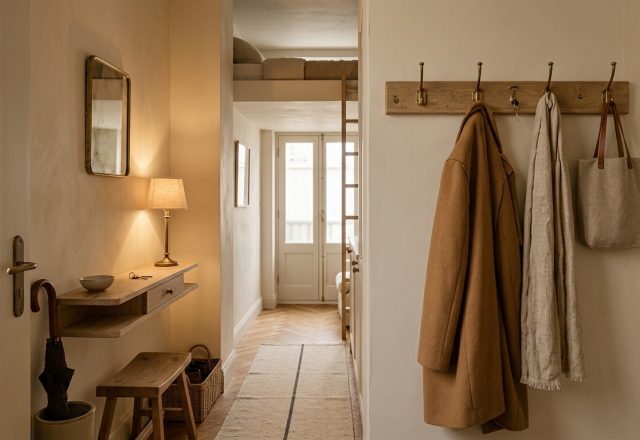
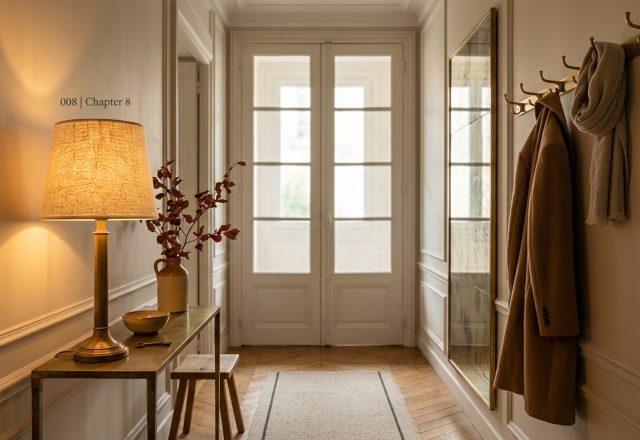
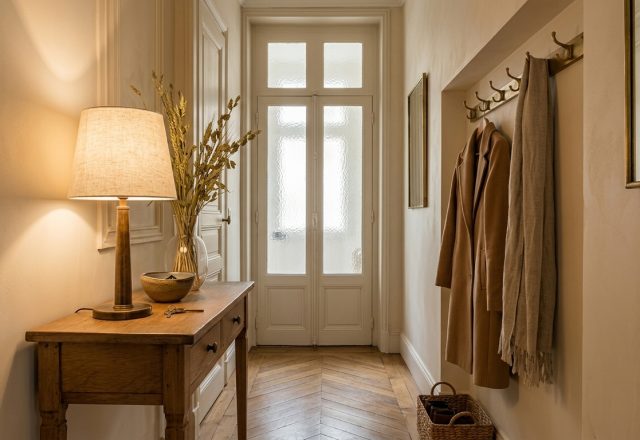
Proportion determines whether a passage breathes or chokes. A bulky credenza will instantly turn a corridor into an obstacle course. Here, the slim entryway console table changes everything. Its tapered legs let the floor plane run straight through to the baseboards, preserving sightlines. That open space underneath matters. Slide a low stool or a woven basket underneath for rogue sneakers, and the floor stays legible. Keep the tabletop sparse. A turned lamp base, an unglazed stoneware dish for spare keys, and perhaps a sculptural piece of fruit. The second you overload that horizontal surface with mail piles and loose chargers, the illusion of spaciousness dissolves.
Lighting Beyond the Overhead Glare
Ceiling spotlights in a long corridor often create the sterile ambience of a hospital ward. They blast shadows straight down your face. An offset table lamp solves this instantly. By washing low-level, warm light against painted plaster and panelling, you create depth where there was only flat drywall. Pair that soft glow with a tall, slender wall mirror. Positioned across from an open doorway or window, the glass steals daylight and bounces it back into shadowy corners without demanding an inch of floor space.
Practical Hardware That Handles the Weight
Notice the brass coat rack fixed directly into the wall panel frame. Brass brings warmth against cool cream paint, but installation is where people cut corners. Winter coats get heavy. Wet wool pulls down with real leverage. If you mount a coat rail into hollow drywall without hitting studs or solid blocking, it will eventually tear out and leave an unsightly crater in your wall moulding. Keep the umbrella crock ceramic and weighted at the bottom. Tipping over on polished timber is an accident waiting to happen.
Consider how your own arrival feels at the end of a wet Tuesday evening. Do your bags end up piled against the skirting boards, or does your space invite you to put things away immediately?
Editorial Lookbook & Photo Collection