Lighting the Path Home
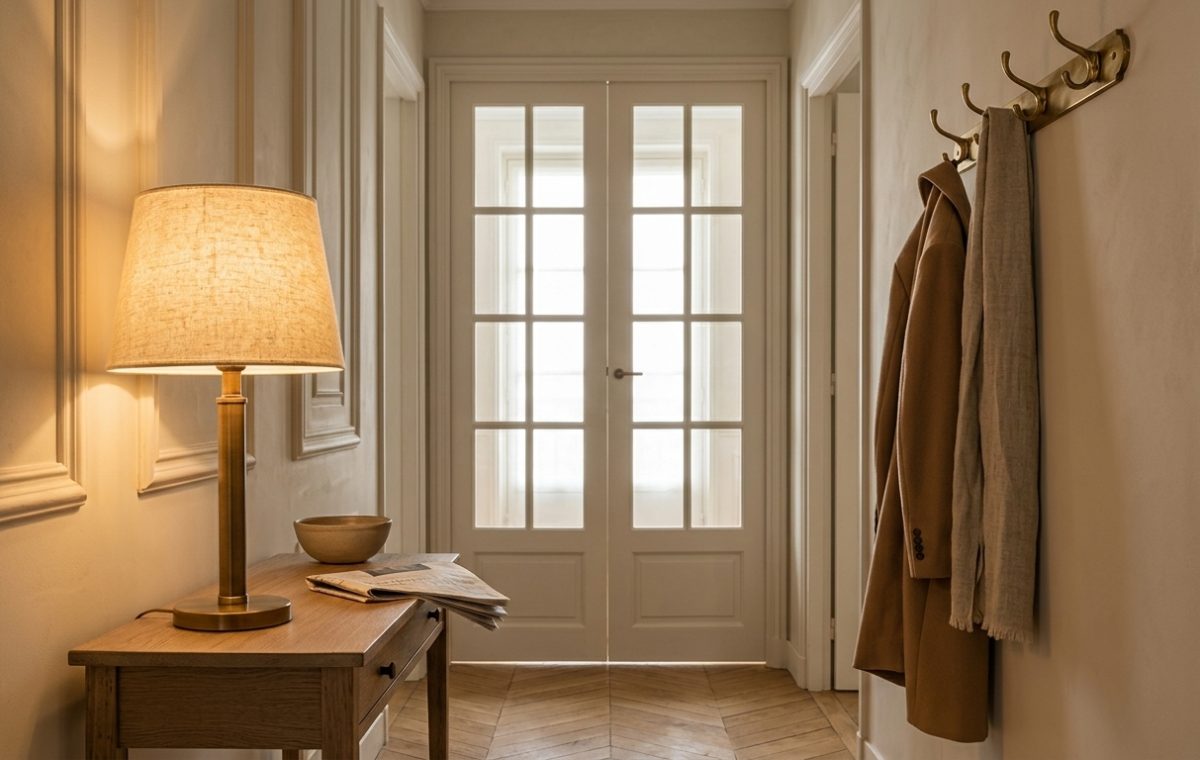
The first thing you notice isn’t the architectural molding or the expensive chevron wood flooring. It is the light. A well-placed brass table lamp creates a pool of warmth that signals the day is done. Most people rely on harsh, recessed ceiling cans that turn a hallway into a sterile corridor. Don’t do that. A lamp on a wooden console table adds height and a human touch. It’s about creating a mood before you’ve even kicked off your shoes. The soft glow from a linen shade masks the dust on the baseboards that you haven’t wiped in weeks.
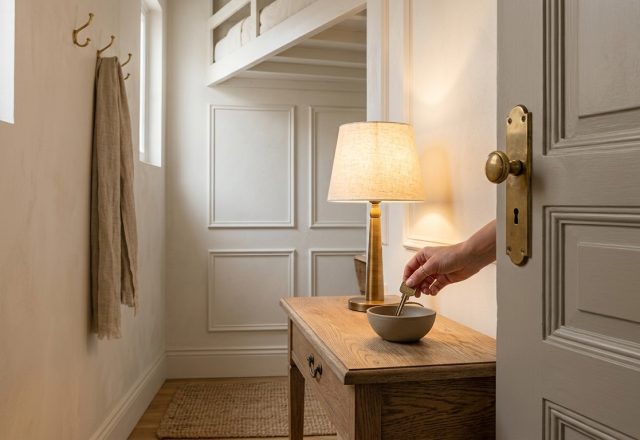
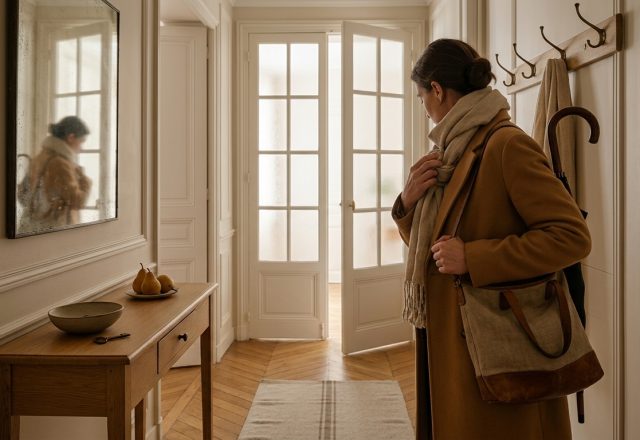
Entryways are high-friction zones. They handle the chaos of mail, keys, and damp coats. The image shows a curated version of this reality, where a single newspaper rests on the console table styling. In a real home, that pile grows. The trick is to give the clutter a designated, beautiful landing spot. A simple ceramic bowl or a shallow tray prevents the surface from becoming a graveyard for junk mail. It works because it respects the function of the space.
Architectural Details That Scale
Wall molding is often dismissed as a luxury reserved for grand estates. That’s a mistake. Even in a narrow hallway entryway design, simple wainscoting or picture frame molding adds vertical interest. It breaks up the monotony of flat drywall. When paired with double French doors, it creates a sense of depth. You aren’t just walking through a passage; you are moving through a series of intentional spaces. It feels permanent. It feels like a home, not just a house. It gives the walls a voice.
The best functional entryways balance the ‘look’ with the ‘life.’ If you can’t reach the coat hooks easily, the design has failed, regardless of how pretty the brass finish is.
The Texture of Transition
Look at the floor. Chevron wood flooring is a commitment. It’s harder to install than straight planks and usually more expensive. But the way it draws the eye toward the light of the far room is unmatched. It provides a rhythmic pattern that keeps the space from feeling static. If you can’t commit to a full floor renovation, a long runner with a similar geometric pattern can mimic the effect. Texture matters because the hallway is a tactile experience. You touch the brass lighting switch, you feel the wood of the table, and you see the grain of the linen shade.
Maintenance is the silent killer of these designs. Brass tarnishes. Glass panes on doors show every fingerprint. Wood floors need protection from wet boots. Acknowledge these chores before you buy into the aesthetic. A beautiful entryway requires a bit of a ritual to keep it that way. It isn’t just about the initial setup; it is about the daily reset. How many times a week do you find yourself clearing off your own landing strip at the front door?
Editorial Lookbook & Photo Collection