The Forgotten Transitional Space
Most hallways get treated like high-speed runways. People rush through them with grocery bags and muddy boots, ignoring the walls entirely. That is a missed opportunity. A narrow hallway console table transforms dead transitional square footage into a deliberate design statement. But putting furniture in a tight corridor requires discipline. If the table is too deep, you will constantly bruise your hip. If it lacks storage, clutter takes over instantly.
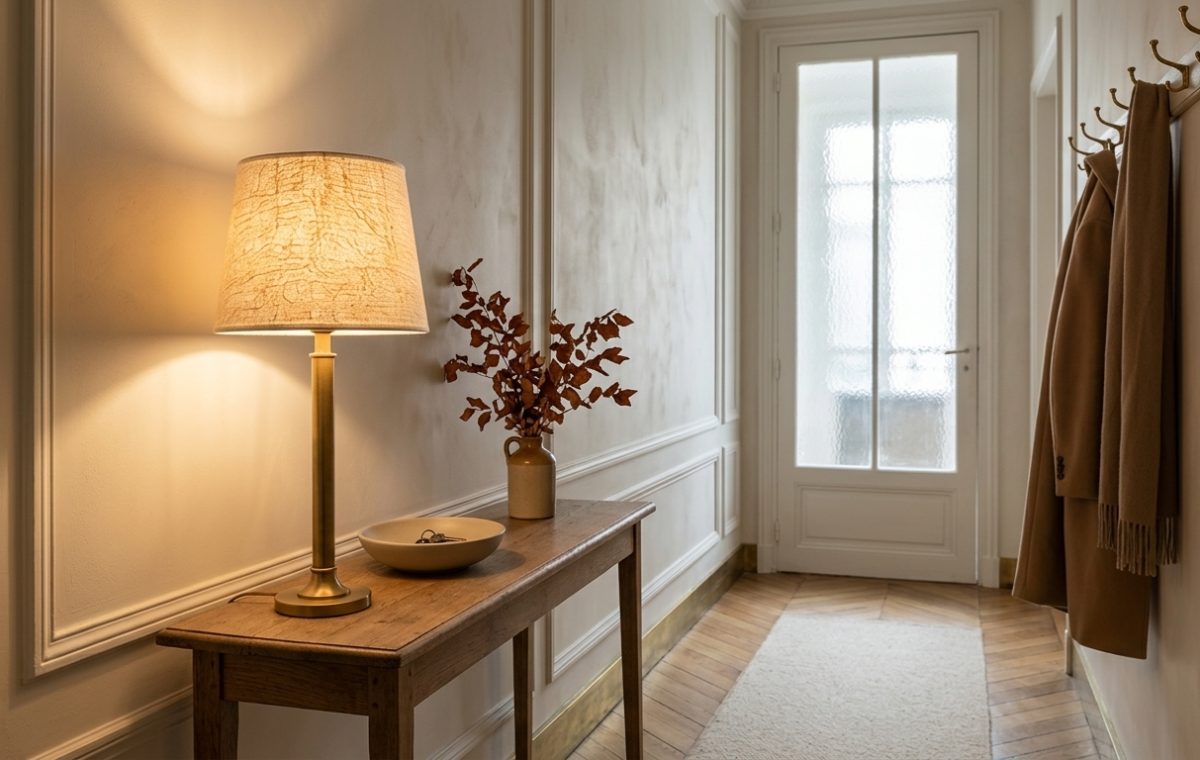
Notice how a slim wooden console rests flat against the paneled wall. It leaves plenty of floor clearance for foot traffic while anchoring the eye. The trick to narrow corridors is keeping surfaces breathable. You do not need a chaotic collection of picture frames and decorative junk. Just a few curated objects create interest without visual noise.
Layering Light and Texture
Overhead hallway lighting is usually terrible. It either blinds you with a harsh flush-mount bulb or leaves you in total darkness. Solving this means bringing task and ambient lighting down to eye level. A sturdy brass table lamp with a textured linen shade changes the entire atmosphere of an evening entrance. It casts a warm, horizontal glow that washes over the wall panels, making the plaster look soft and inviting.
Next to the lamp, a ceramic vase holds dried stems. They add organic height and rustic brown tones that contrast nicely against pale walls. You never have to worry about watering them. A shallow ceramic bowl provides a handy drop zone for pocket change and keys, keeping the wooden surface clean. Real homes accumulate clutter. Having one designated spot for daily carry items prevents chaos from spilling everywhere.
Balancing Practicality and Elegance
Coat hooks mounted neatly along the adjacent wall handle outerwear without eating up floor space. Heavy winter coats add rich texture and depth, especially when coordinated with the room’s warm neutral palette. There is a fine line between cozy lived-in charm and a messy coat rack explosion. Limit the hooks to everyday wear and store seasonal jackets out of sight.
Down below, herringbone wood floors meet a simple flat-weave runner. Rugs in high-traffic corridors take a brutal beating. Choose materials that handle dirt well and clean easily. If you pick something too delicate, it will look worn out within six months. Styling a corridor successfully means respecting its primary job: moving people smoothly from outside to inside while still looking exceptionally good.
Editorial Silo • Recommended Architecture Studies
- Performance Modularity: Modular Shelf System & Engineering Seamless Living in the Modern Compact Home — Archival Design Case Study
- The Physics of the Curve: Structural Secrets of Earth-Sheltered Hobbit Home Designs — Archival Design Case Study
Curated Lookbooks & Architectural Studies
- Designing a Warm Neutral Living Room with Texture and Light
- French Country Living Room Decor: Timeless Antique Styling
- Inspiring Interior Hallway Ideas for Classic Transitional Homes
- Chevron Hardwood Flooring: Why This Classic Pattern Endures
- Designing a Loft Bed Small Room That Doesn’t Feel Cramped
- The Horizon Effect: Narrow Living Room Design Ideas & Using Chromatic Depth and Soft Geometry to Deconstruct Narrow Proportions
Curated Visual Lookbook
Design Gallery & Spatial Studies
A visual curation of architectural arrangements, lighting concepts, and material palettes featured in this space.