The Two-Way Psychology of the Front Hall
Most designers treat an entrance strictly as a greeting. They stage it for guests who walk in, drop their keys, and take off their shoes. That misses half the point. The hallway is an exit airlock just as much as an entry point, and proper entryway mirror placement must account for both directions.
Think about the seconds right before you turn the deadbolt. You check your collar. You glance at your hair. You look yourself in the eye and make sure you appear pulled together before facing whatever awaits down the street. It is a quiet ritual of grounding. When a mirror hangs too high or sits crammed into an awkward alcove, that reset disappears. You leave feeling slightly unsettled instead of collected.
Aligning Hooks, Consoles, and Sightlines
Combining hanging storage with reflective glass looks effortless in staged vignettes, but real life tests the mechanics quickly. A row of heavy winter wool coats will easily swallow the bottom edge of an oversized glass frame if you miss your measurements by even three inches.
- Keep four inches of breathing room: Mount your mirror glass at least four to six inches above coat rack hooks. Bulky outerwear should drape beneath the glass line, not smear against it.
- Center on eye level, not the wall: The midpoint of your mirror should hover between 58 and 62 inches from the floor, regardless of ceiling height. High ceilings lure people into hanging glass too high. Resist the urge.
- Offset your consoles smartly: If a dresser or ledge sits beneath the coat rail, keep its depth under 14 inches. Anything deeper forces you to lean forward uncomfortably just to see your face.
Tactile Anchors Beat Showroom Perfection
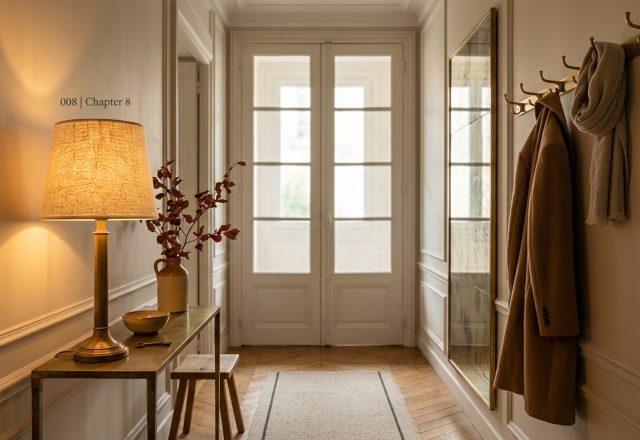
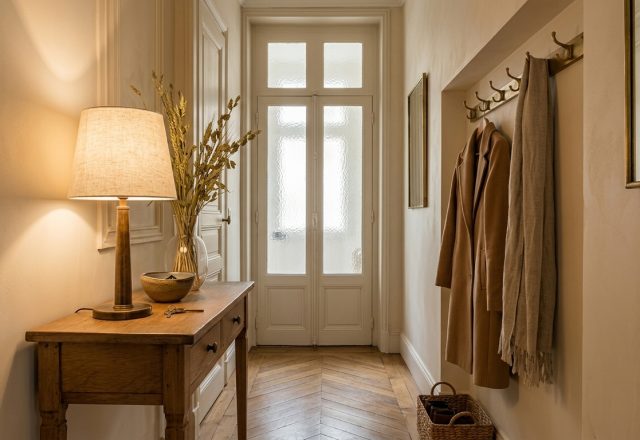
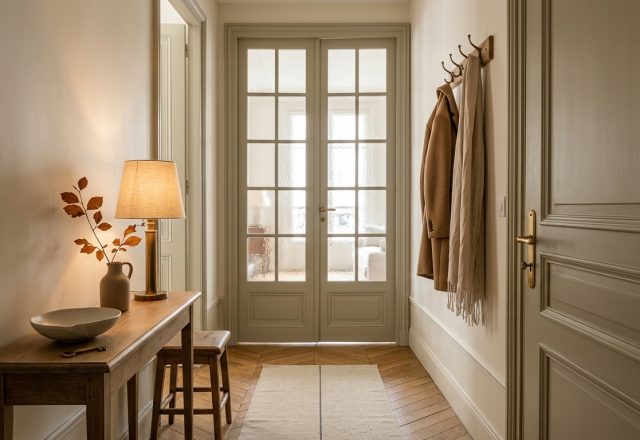
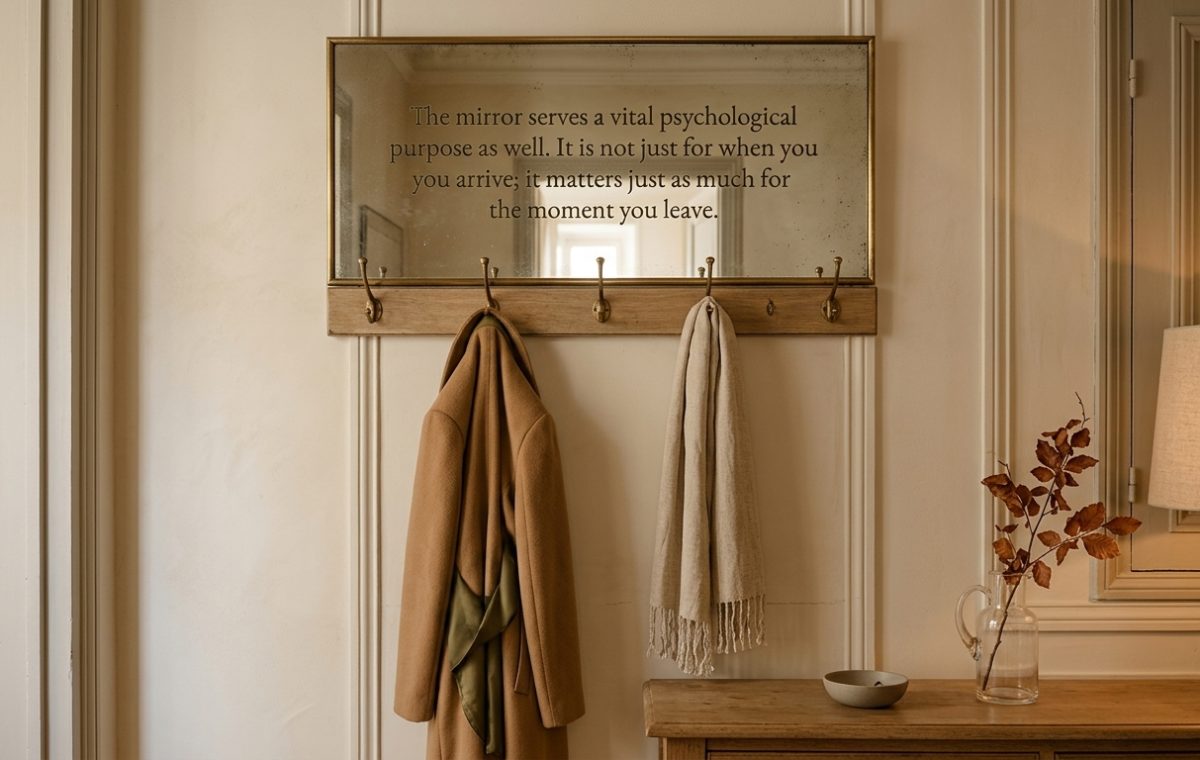
A sterile hall breeds clutter because nobody wants to interact with fragile decor on their way out the door. The setup in our visual reference works precisely because it leans into warmth: an aged timber rail, five unlacquered brass hooks, and a heavy camel coat anchored by a low console. It feels lived-in. It invites touch.
Brass hooks develop patina from wet wool and leather straps, while a stone catchall dish swallows keys without scratching surfaces. Notice the dried beech branches tucked into the clear jug on the side table. They soften architectural millwork without fighting for wall space. You do not need pristine surfaces here. You need resilient materials that welcome the inevitable friction of keys tossed in a hurry and coats pulled down by the collar.
The Light You Actually Need
Do not rely entirely on harsh overhead flush mounts when sizing up your mirror space. An overhead bulb casts unflattering shadows straight down across your forehead and eyes, making you look exhausted just as you leave for work. Position soft, warm perimeter lighting nearby. A small shaded table lamp on a narrow console bounces diffused warmth back onto the mirror face. What does your current morning exit look like—does your mirror send you out the door feeling ready, or are you rushing past a dark hallway corner?
Editorial Lookbook & Photo Collection