The modern kitchen has undergone a radical transformation, evolving from a purely utilitarian workspace into the emotional and architectural heart of the home. Yet, for too long, the pantry remained a forgotten annex—a site of plastic-bin chaos hidden behind closed doors. Today, we are witnessing the rise of the ‘Couture Pantry.’ This shift moves beyond mere shelf-stacking to embrace a sophisticated design language rooted in ‘Quiet Luxury.’ By integrating high-end small pantry organization ideas with intentional materiality and atmospheric lighting, we can transform these compact volumes into sensory, boutique-style experiences that feel like an extension of a primary living suite rather than a storage locker.
The secret to this elevation lies in treating the pantry with the same editorial rigor as a bespoke walk-in closet or a curated library. It is about the transition from a ‘closet of things’ to a ‘gallery of ingredients.’ When we approach small pantry organization ideas through the lens of tactile grounding and spatial cadence, even a few square feet can offer a profound sense of architectural relief.
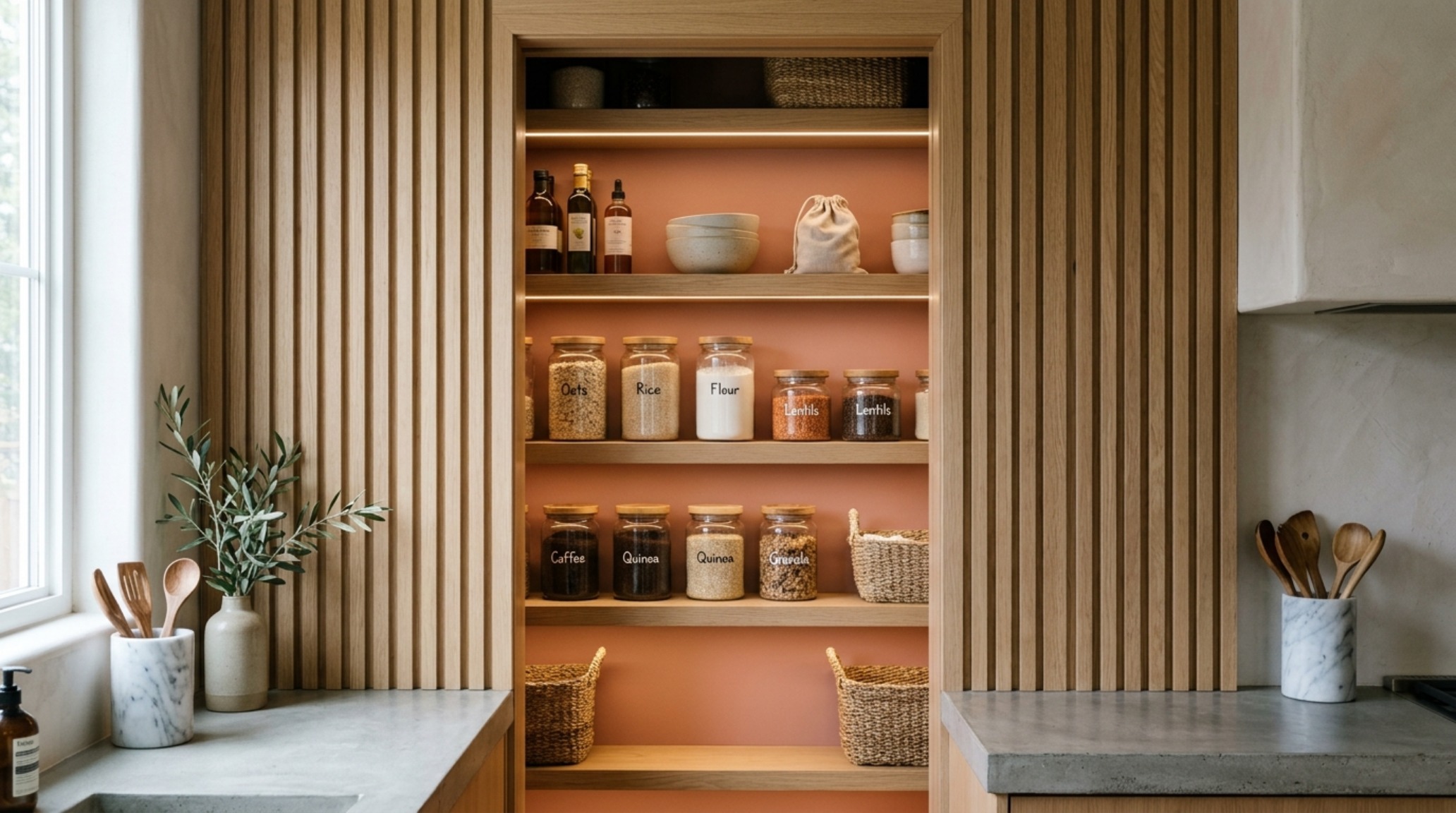
The Color Story: From Utilitarian White to Farrow & Ball ‘Dead Salmon’
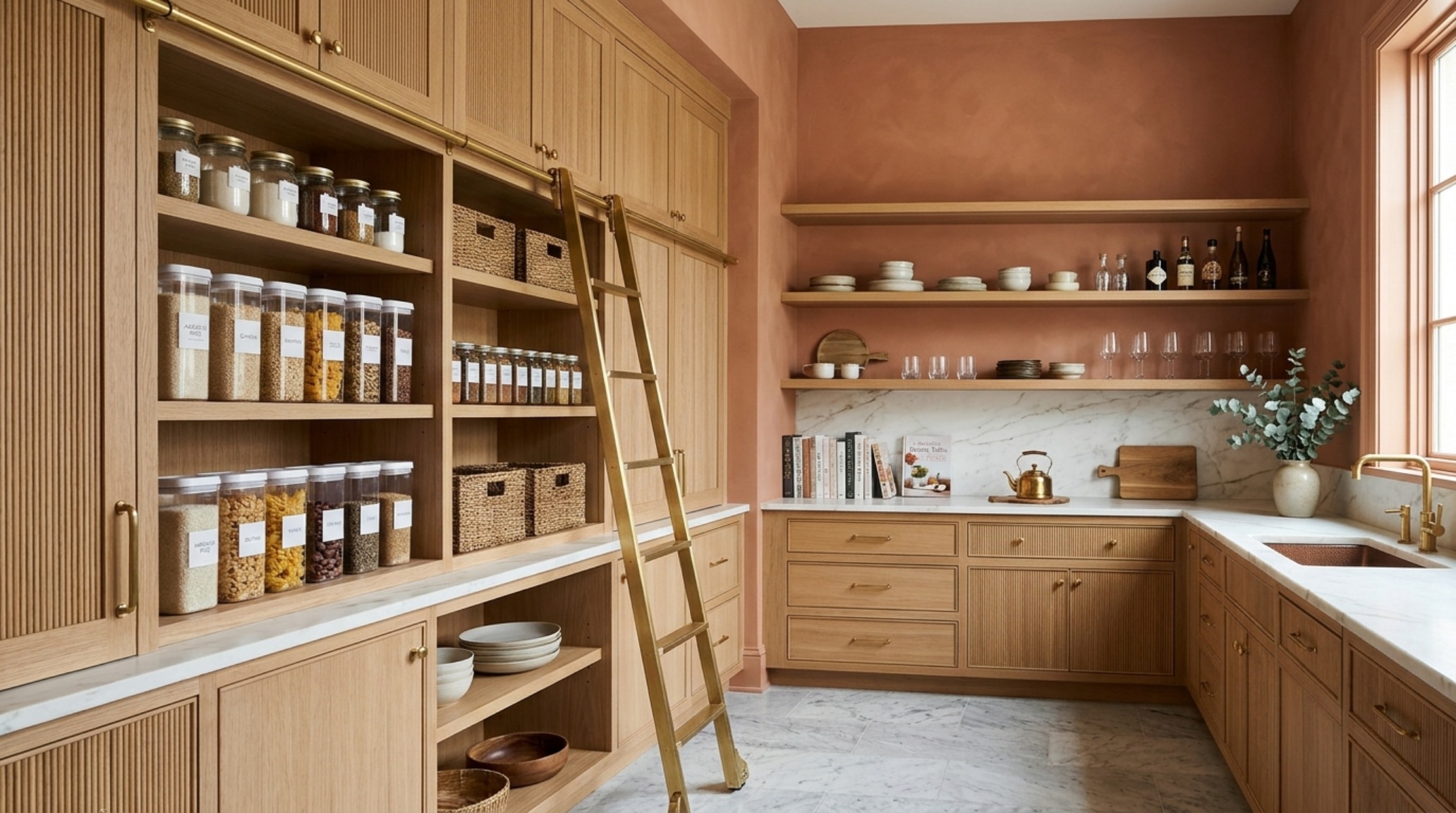
In the pursuit of small pantry organization ideas that actually feel luxurious, the first thing to discard is the default clinical white. Instead, we look to the subtle, mushroom-pink depths of Farrow & Ball’s ‘Dead Salmon.’ This specific hue—a muddy, sophisticated terracotta-rose—provides a soulful backdrop that makes glass jars and timber accents pop. It creates a sense of ‘enveloping warmth’ that white simply cannot achieve in a small, windowless space.
When you paint the interior of a pantry in a deep, matte finish, the boundaries of the walls seem to recede. This visual trick creates an illusion of depth, making a shallow reach-in pantry feel like a purposeful architectural niche. Pair this with a high-contrast trim or a tonal wash to establish a ‘monochromatic envelope’ that calms the visual noise of various product labels and packaging.
The Power of Slatted Timber and Tactile Backdrops
To break up the monolithic feel of traditional cabinetry, I often specify slatted timber accents. Vertical white oak slats, spaced exactly 0.5 inches apart, introduce a rhythmic shadow play that feels inherently high-end. This isn’t just about aesthetics; the texture provides a ‘grip’ for the eye, slowing down the visual scan and creating a sense of order before a single jar is even placed. Integrating these slats on the back wall of a pantry adds a layer of ‘architectural jewelry’ that complements organic modern interiors perfectly.
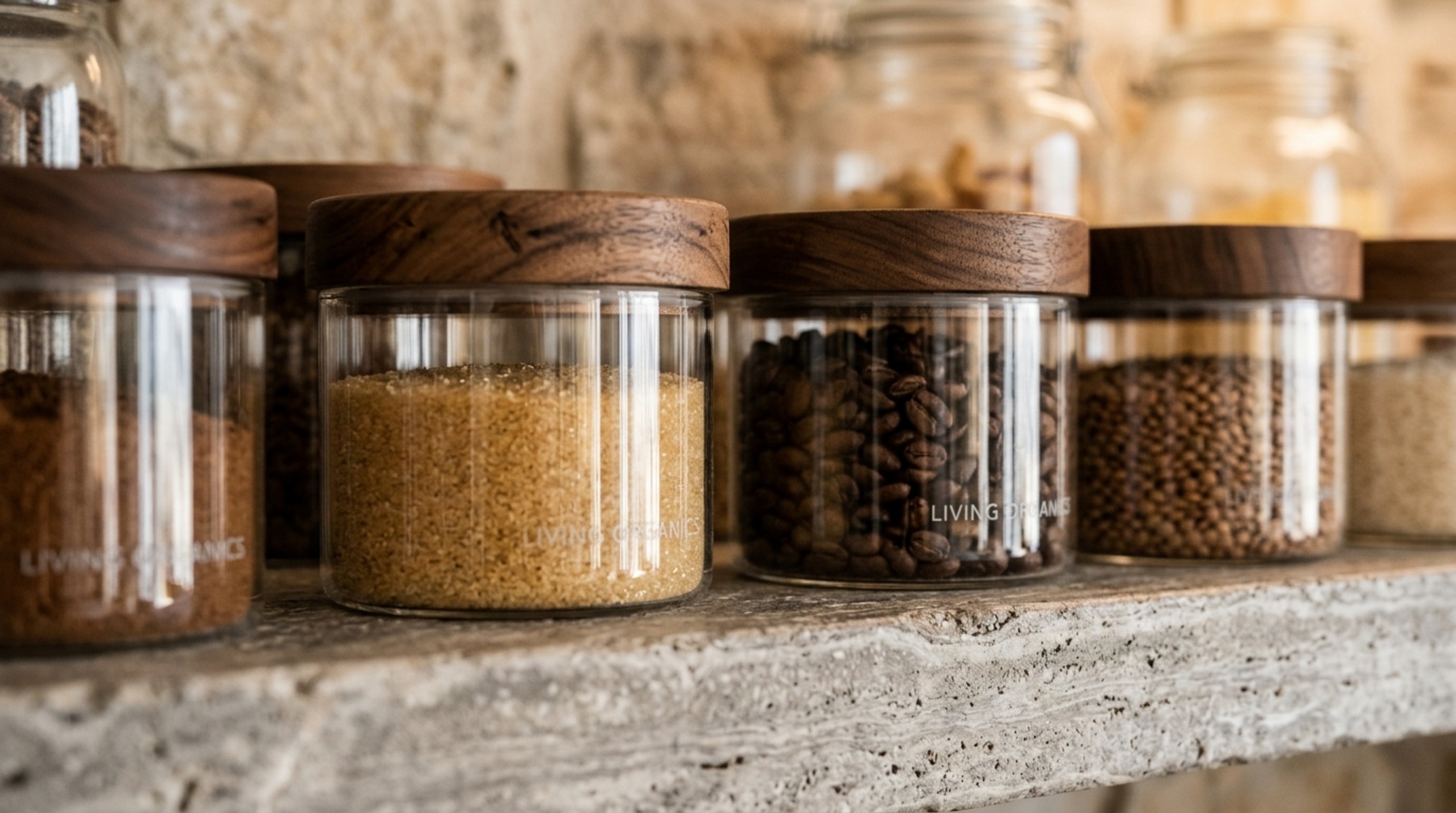
Lighting as Architecture: The 2700K Warm Spectrum Revolution
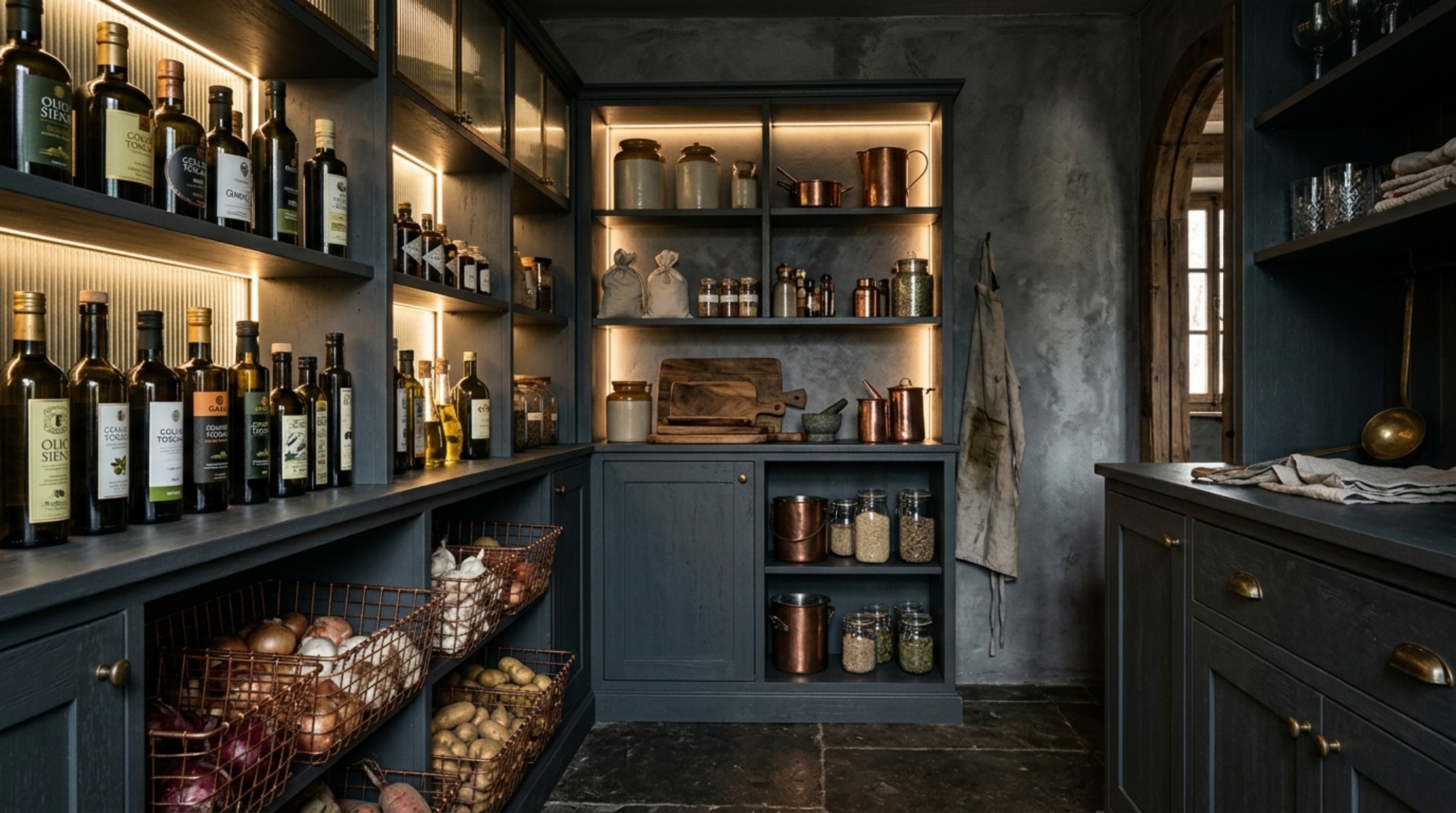
Lighting is the most overlooked element in kitchen storage solutions. Most pantries suffer from a single, harsh overhead bulb that flattens textures and creates unflattering shadows. To achieve a ‘couture’ effect, we must shift to integrated, diffused lighting. I recommend 2700K warm-spectrum LED strip lighting recessed into the underside of every shelf. This temperature mimics the soft glow of a golden-hour sunset, turning a simple shelf into a stage.
Crucially, ensure your LEDs have a High CRI (Color Rendering Index) of 90+. This ensures that the deep greens of an olive oil bottle or the rich reds of a spice jar look vibrant and true to life. When the light is diffused—never point-source—it eliminates glare on clear acrylic pantry storage bins and glass carafes, creating a soft, museum-like atmosphere that encourages a slower, more intentional pace of use.
Spatial Cadence and Negative Space
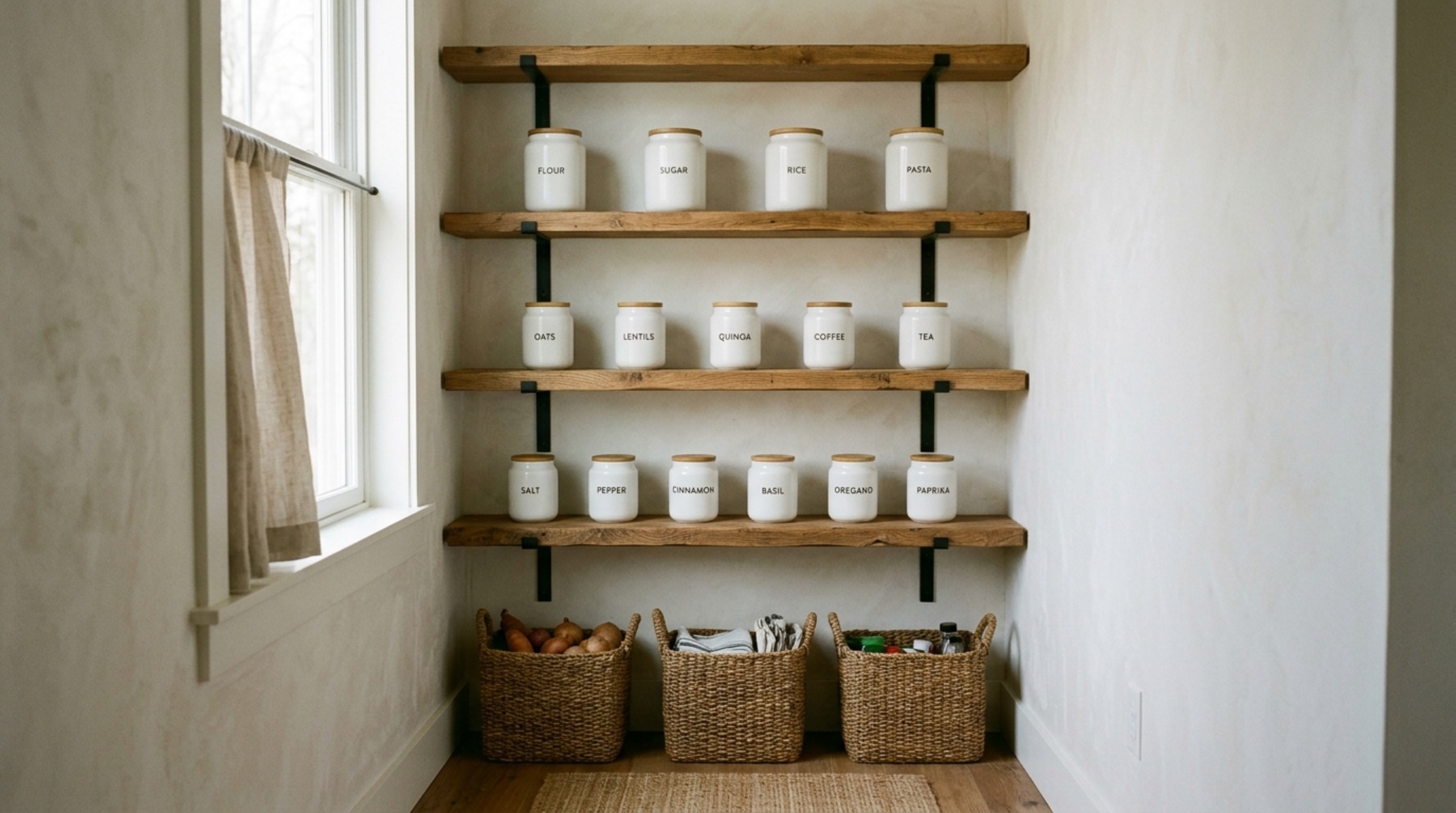
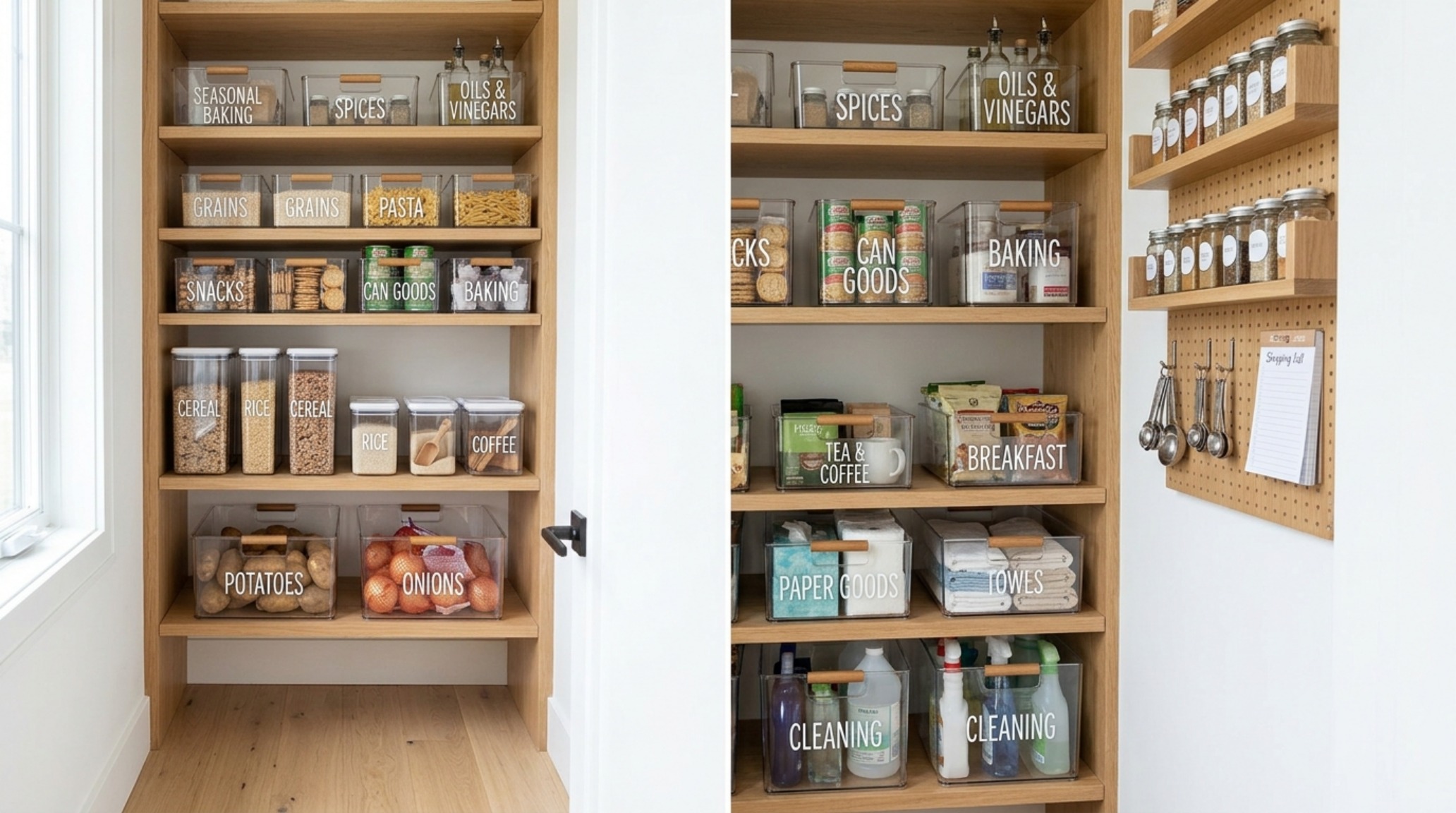
One of the most common mistakes in pantry decluttering is the ‘over-stuffing’ syndrome. High-end design requires negative space—room for the architecture to breathe. In a couture pantry, we aim for a ‘spatial cadence’ where every item has at least 1.5 inches of clearance around it. This is where professional organizing standards like those from The Home Edit meet the aesthetic of Architectural Digest. It’s not just about fitting it all in; it’s about leaving enough room to appreciate the objects you’ve chosen to keep.
“True luxury in a small pantry is found in the silence between the objects. It is the ability to reach for a single jar without disturbing the peace of its neighbors.”
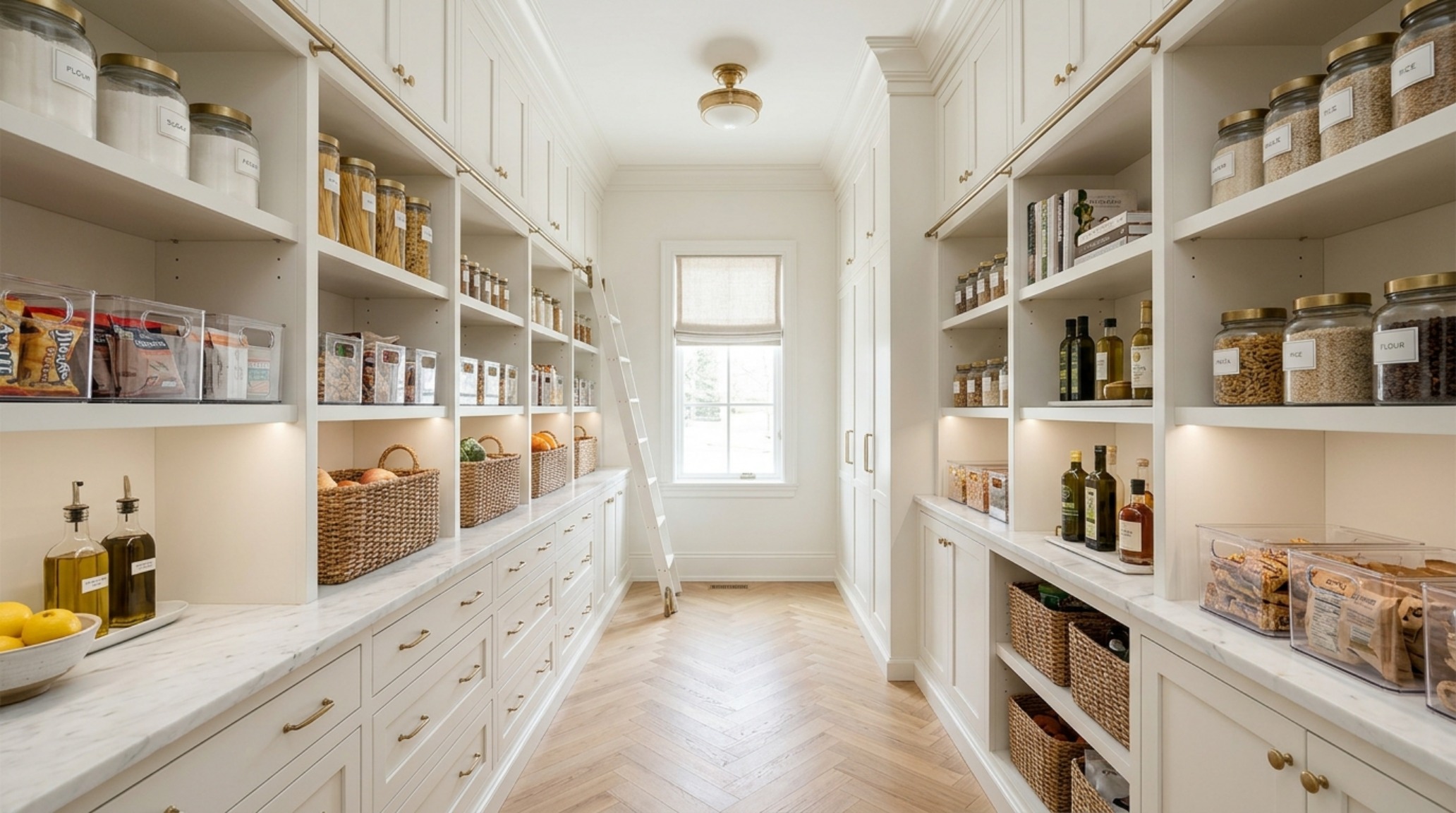
Material Synthesis: Decanting as a Design Choice
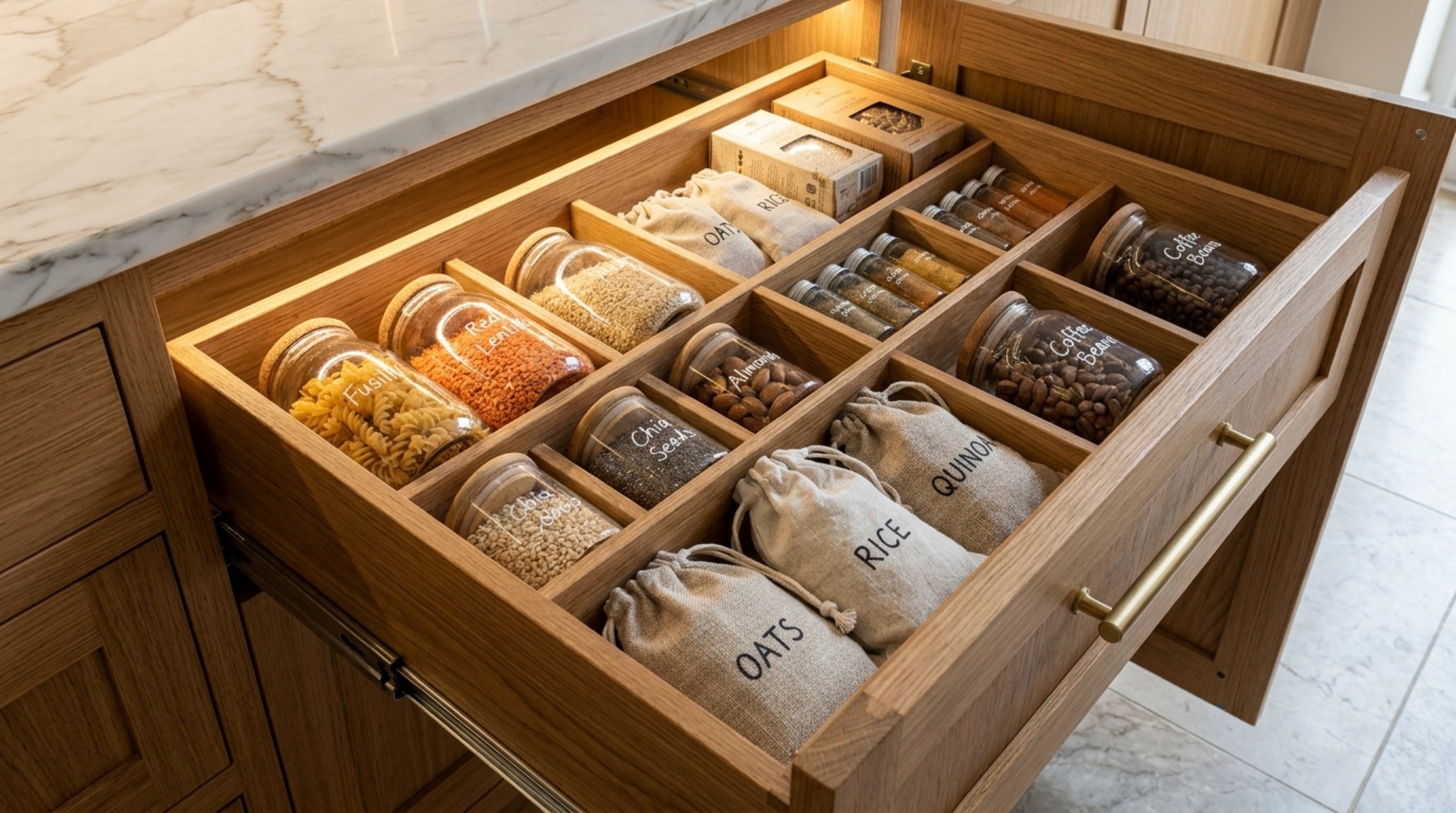
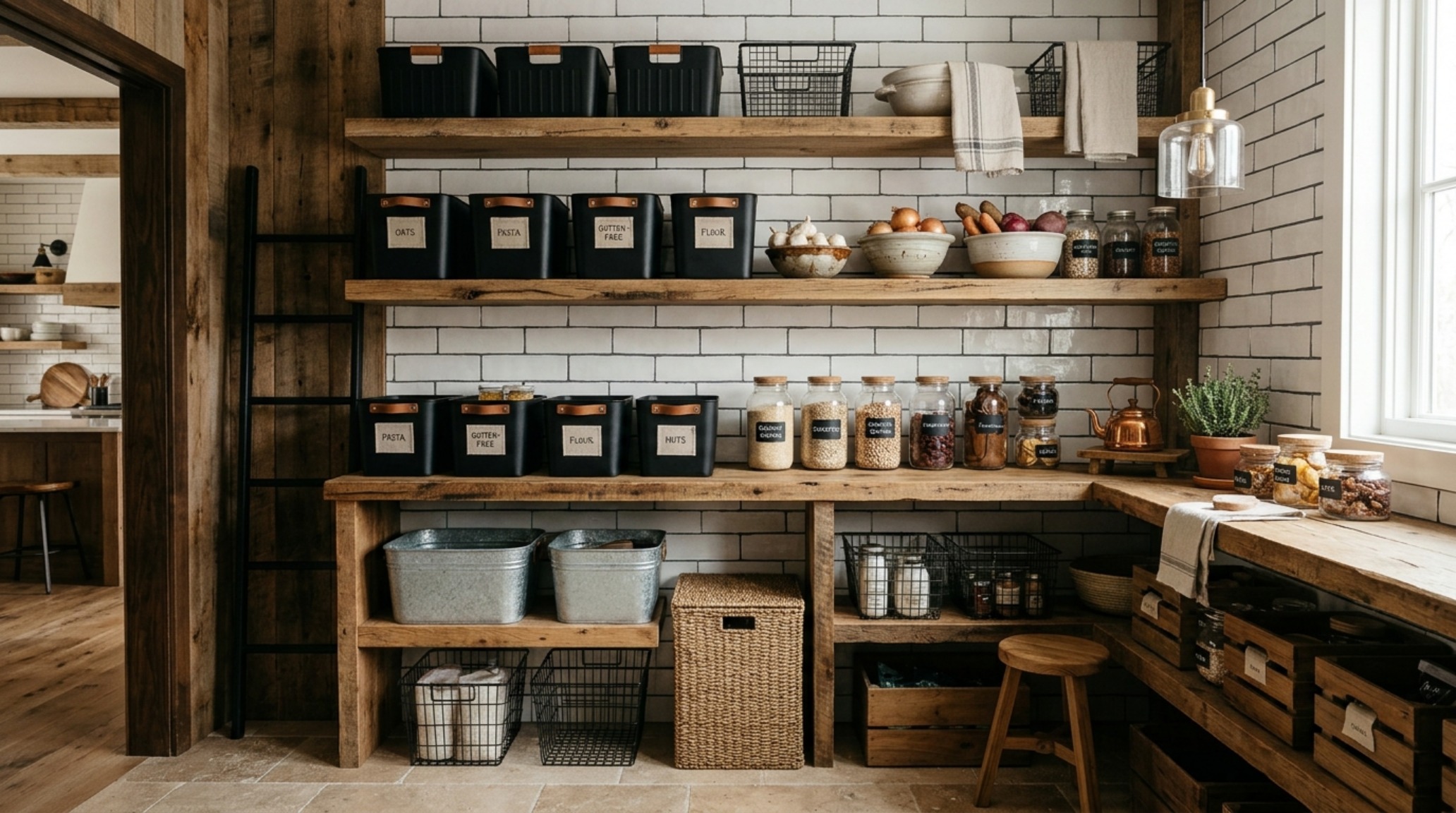
Sustainable kitchen decanting jars are the ‘wardrobe’ of your pantry. To maintain a cohesive, high-end look, move away from mismatched grocery packaging and toward a unified collection of glass, ceramic, and brass. I prefer borosilicate glass with walnut or matte black lids. The transparency of glass combined with the organic warmth of wood creates a material synthesis that feels grounded and intentional.
For those looking for corner pantry storage solutions, the key is accessibility without sacrificing the ‘sightline alignment.’ Lazy Susans are a functional staple, but to elevate them, choose versions in honed travertine or solid marble. This replaces a plastic ‘hack’ with a permanent architectural fixture. When you pull a stone turntable out of a corner, the weight and the cool touch of the material remind you that this space is built to last.
Architectural Clearances and Ergonomic Flow
Design is nothing without ergonomics. Even in a small pantry, we must respect real-world architectural clearances. A primary walkway should ideally maintain a 36-inch width to allow for comfortable passage and door swing. When designing small pantry shelves layout, the lowest shelves (below 24 inches) should be deep pull-out drawers to prevent crawling on the floor, while eye-level shelves should be shallower—around 12 to 14 inches—to prevent items from getting lost in the ‘pantry abyss.’
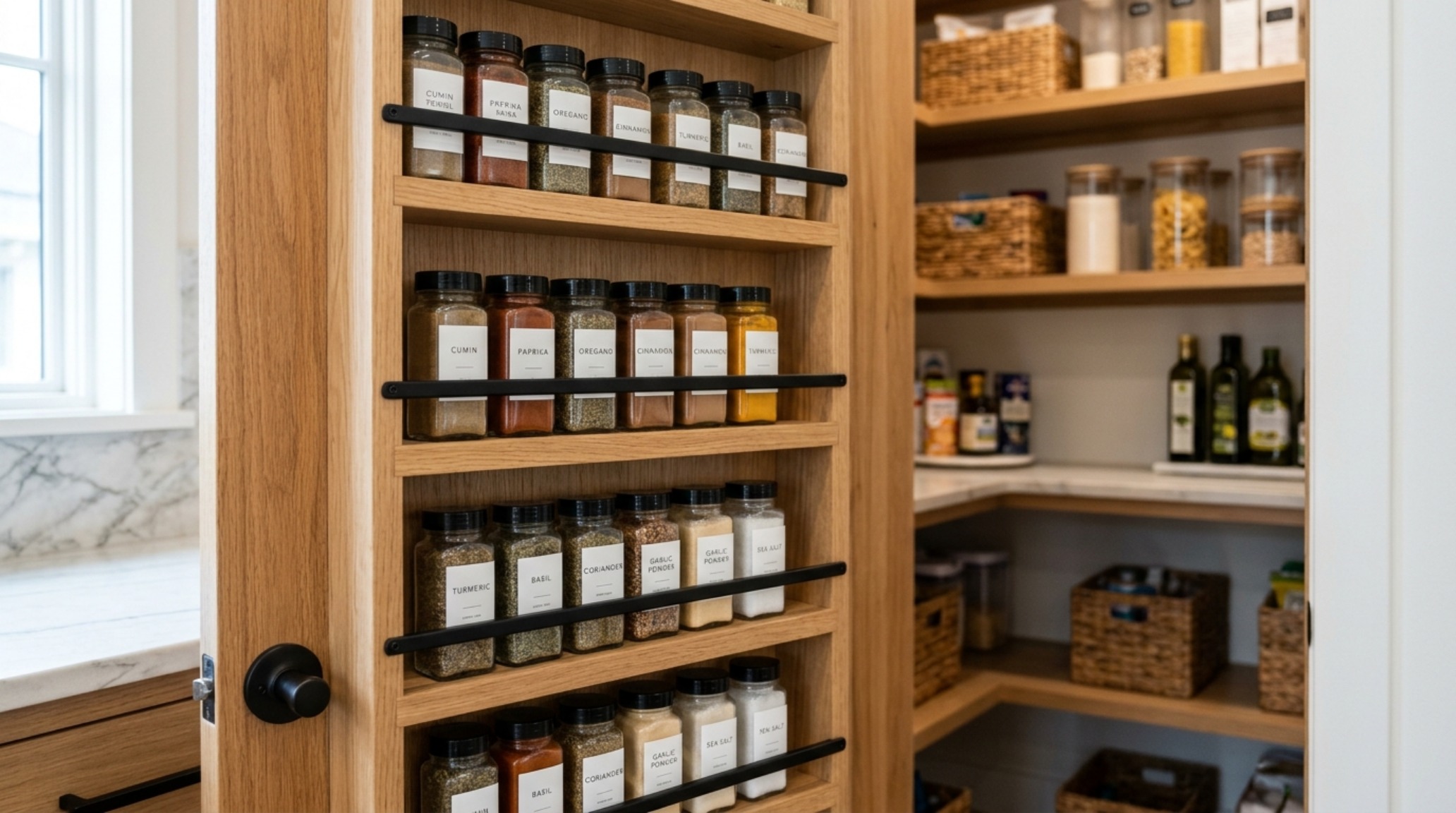
For an over the door pantry organizer, ensure it is integrated into the door’s millwork rather than hanging from flimsy hooks. A custom-built ‘door rack’ in the same timber as the internal shelves turns an afterthought into a feature. This approach maximizes storage density while maintaining the visual integrity of the kitchen’s cabinetry.
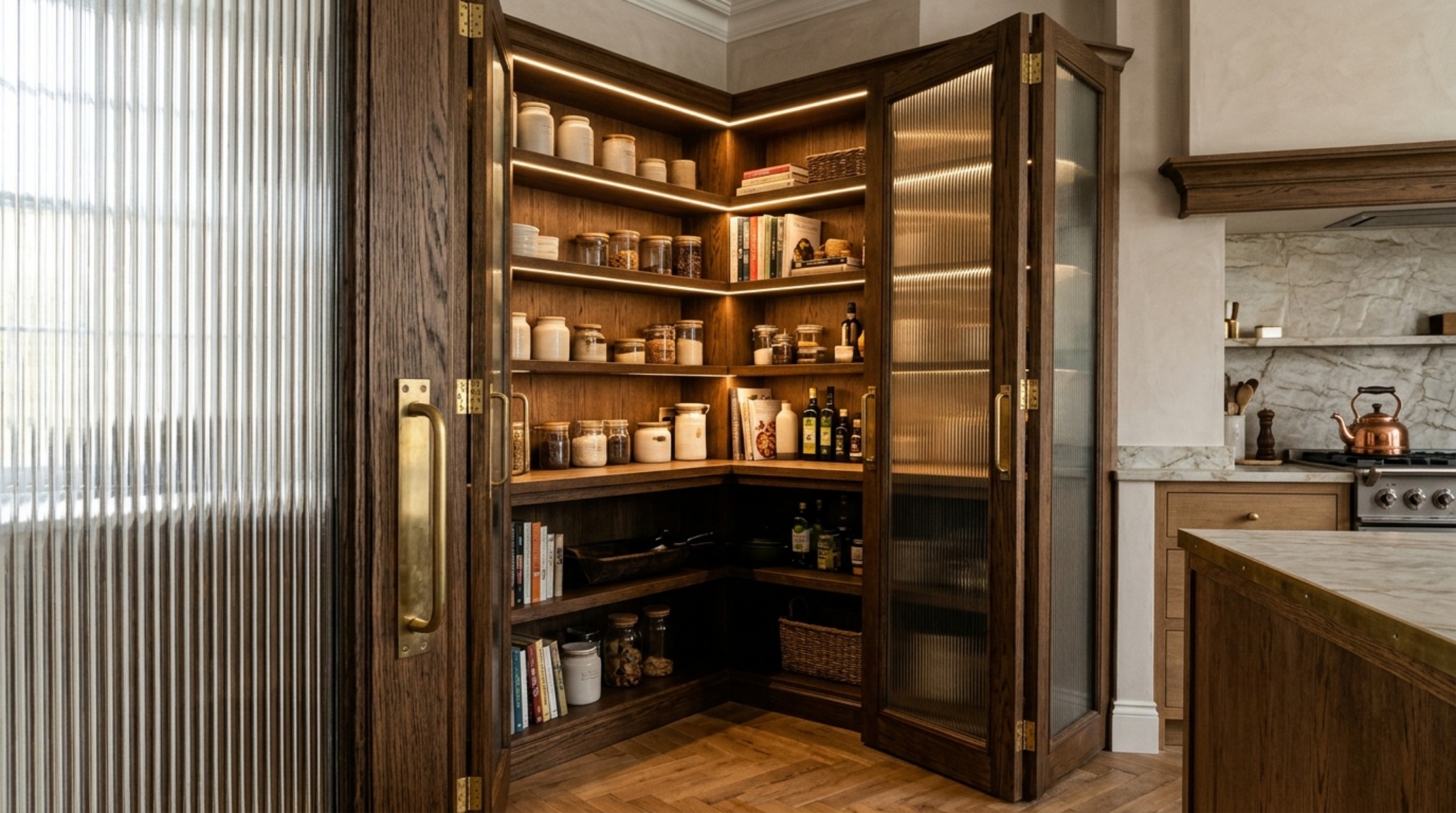
The Narrative of the ‘Daily Ritual’
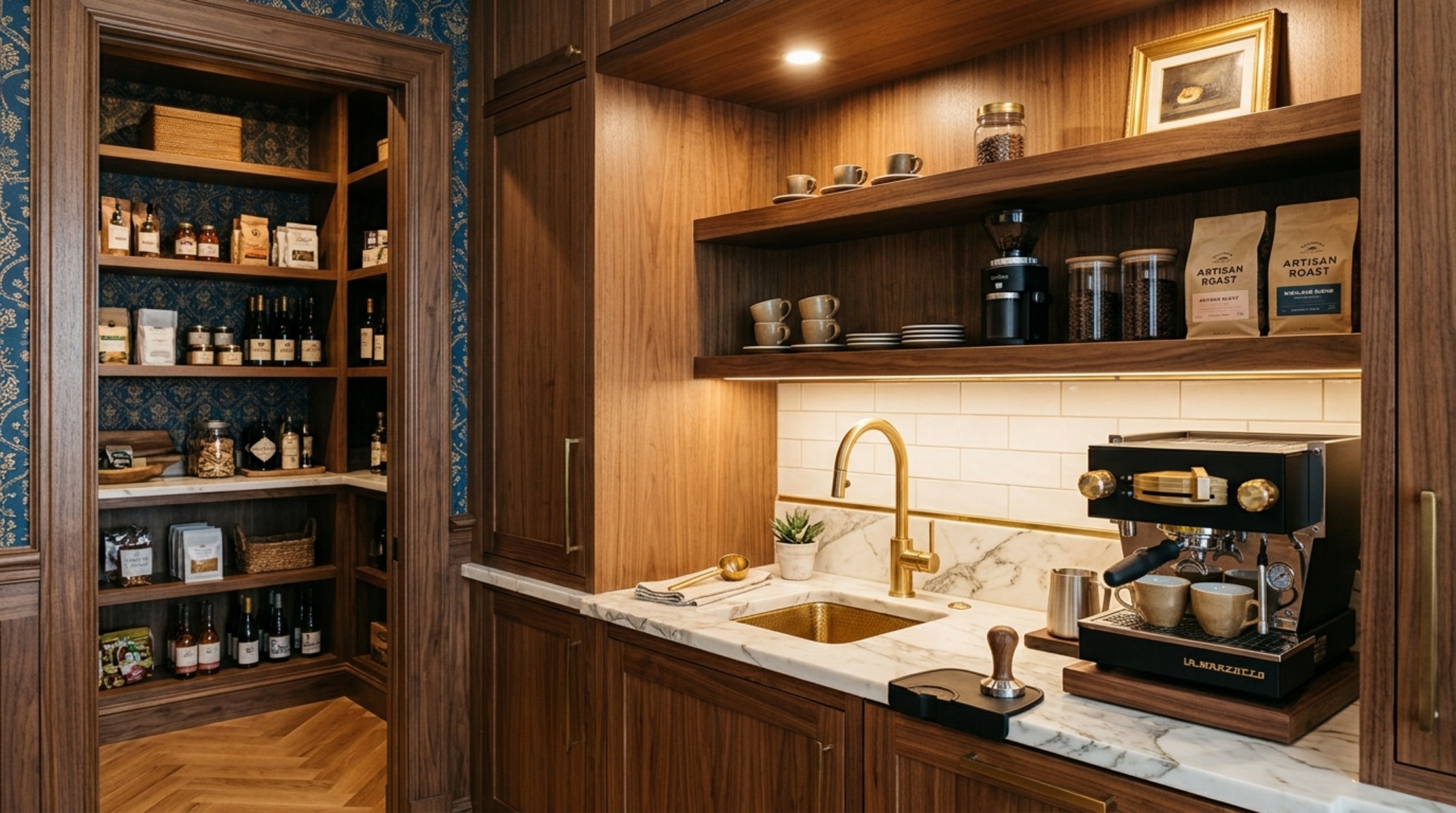
Ultimately, a couture pantry is about the ritual of the daily grind. It’s about the tactile click of a brass latch, the soft hum of an LED strip flicking on, and the visual calm of a perfectly ordered row of spices. By treating small pantry organization ideas as an architectural exercise rather than a cleaning chore, we transform a mundane task—making coffee or prepping dinner—into a moment of luxury. We are no longer just ‘storing food’; we are curating the fuel for our lives within a space that honors the materials it is made of.
Architectural Specification & Material Matrix
Curated tactile palette, spatial dimensions, and atmospheric lighting index for this design scheme.
Designing with these principles ensures that your kitchen storage solutions are as enduring as they are beautiful. When we look at small pantry organization ideas not as a series of bins to buy, but as a spatial story to tell, we elevate the home from a place of survival to a place of inspiration. The couture pantry is a testament to the fact that no space is too small for great design, provided we treat it with the warmth, light, and materiality it deserves.
Editorial Silo • Recommended Architecture Studies
- Test Publish Latency Diagnostic — Archival Design Case Study
- The Sensory Entryway: Mastering Quiet Luxury with 2700K Glow and High-Texture Materiality — Archival Design Case Study
Architectural Inspiration Lookbook
A high-resolution study in spatial proportions, tactile materiality, and light choreography curated for enduring modern living.
Curated Visual Lookbook
Design Gallery & Spatial Studies
A visual curation of architectural arrangements, lighting concepts, and material palettes featured in this space.