The Architecture of a First Impression
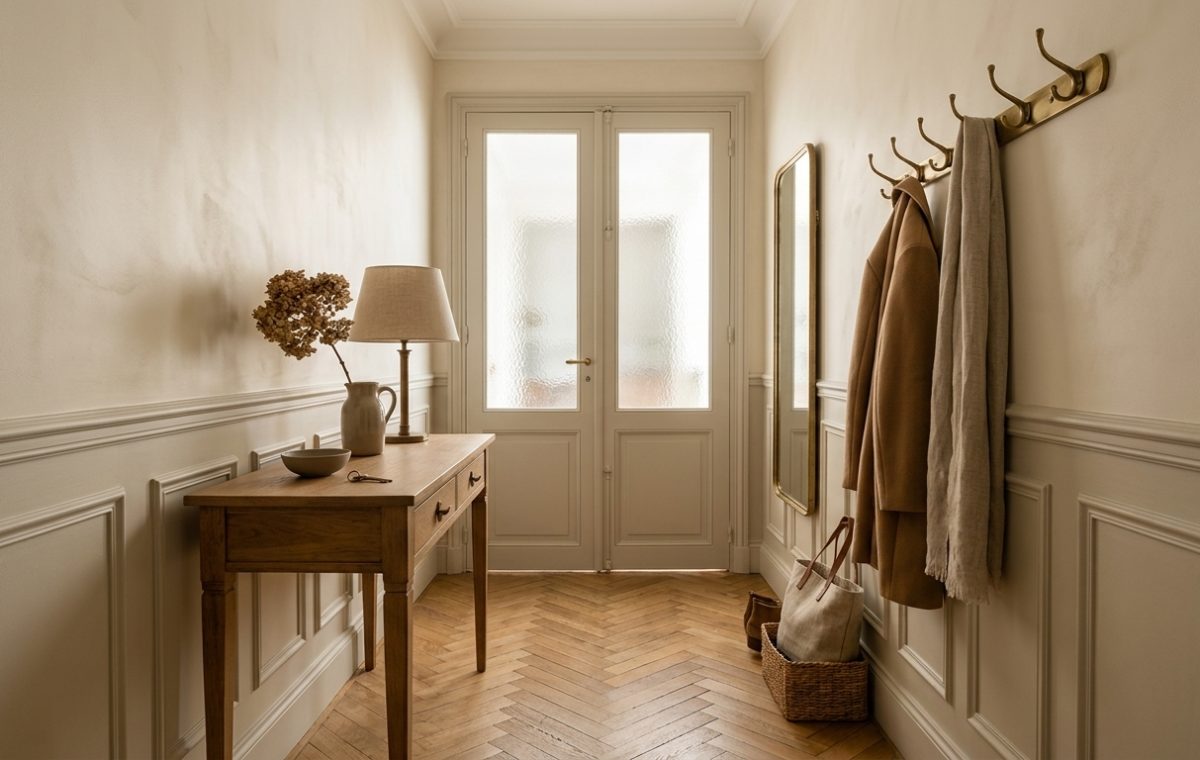
Entryways are the most overworked spaces in any home. They are transit zones. They catch the keys, the coats, and the grit from the street. Yet, we often treat them as an afterthought. A truly successful classic hallway design isn’t just about picking a pretty paint color; it is about creating a structural rhythm that guides you into the house. Look at the wainscoting in this space. Those wall molding panels provide a sense of scale and permanence. They break up the verticality of the walls, making a narrow passage feel intentional rather than cramped. It’s a classic trick. It works every time.
Texture Underfoot and On the Walls
Flooring matters more than you think. Herringbone flooring is a commitment. It requires precision during installation, and yes, it is more expensive than standard planks. But the visual payoff is massive. The diagonal lines lead the eye forward, creating a sense of movement. In a hallway, where you are literally moving from point A to point B, that directionality is vital. If you’re worried about wear and tear, remember that high-quality wood can be refinished. Scuffs happen. Life happens. A little patina on a wooden floor only adds to the character of a home over the years.
“A hallway should feel like a deep breath before you enter the main living areas.”
Storage Without the Stutter
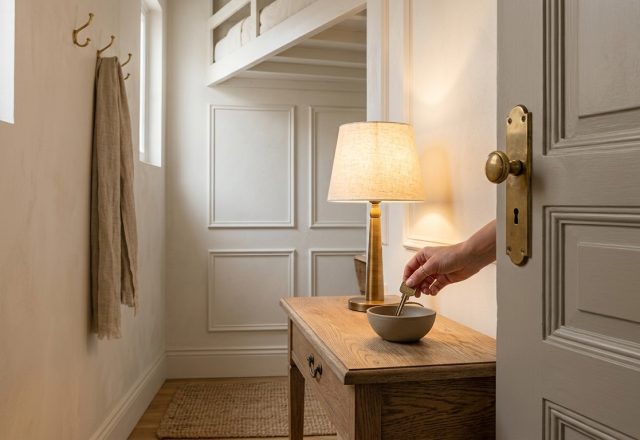
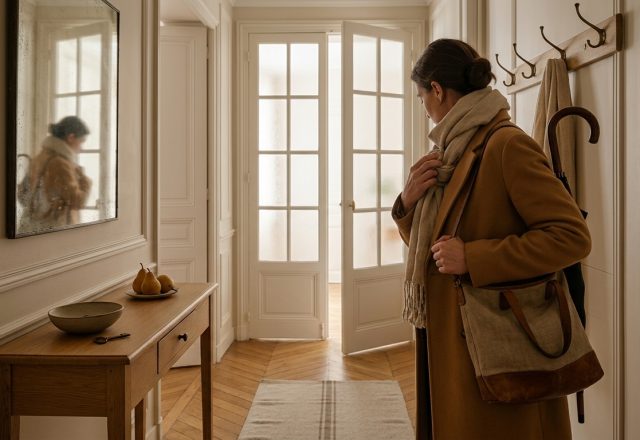
The biggest mistake people make is over-furnishing. You don’t need a massive wardrobe if you have smart entryway organization. A simple wooden console table offers a landing strip for mail and keys. It keeps the clutter off the floor. Then there is the brass hardware. Wall-mounted hooks are far more efficient than a bulky coat tree that takes up floor space. They are lean. They are functional. They keep your coats off the back of a chair. Notice how the mirror is placed opposite the light source. It doubles the perceived space. It’s a simple move, but it’s effective.
Neutral tones like cream and beige are often dismissed as “safe,” but in a hallway, they are strategic. They bounce light from those frosted glass doors deep into the interior. If you go too dark in a windowless corridor, you end up with a cave. If you go too bright, it feels clinical. The warmth of the wood against the soft wall tones creates a balance that feels lived-in but disciplined. It’s not about perfection. It’s about creating a system that stays tidy even when you’re in a rush.
What is the first thing you see when you open your front door? If it’s a pile of shoes and a stack of unpaid bills, maybe it’s time to rethink the layout. Sometimes, all a space needs is a single focal point—like a well-styled table or a set of solid brass hooks—to turn a dumping ground into a destination. How does your current entryway handle the daily commute?
Editorial Lookbook & Photo Collection