Why Linen Kitchen Towels Outperform Cotton Every Single Time
Key Points
The Case Against Fluffy Cotton Most people buy thick terrycloth dish towels because they look cozy on a rack.
They feel plush for about…
The Case Against Fluffy Cotton
Most people buy thick terrycloth dish towels because they look cozy on a rack. They feel plush for about a week. Then they start trapping moisture, holding onto grease odors, and leaving damp streaks across clean wine glasses. It is time to abandon the fluff. Real kitchen workhorses do not need to mimic bath sheets.
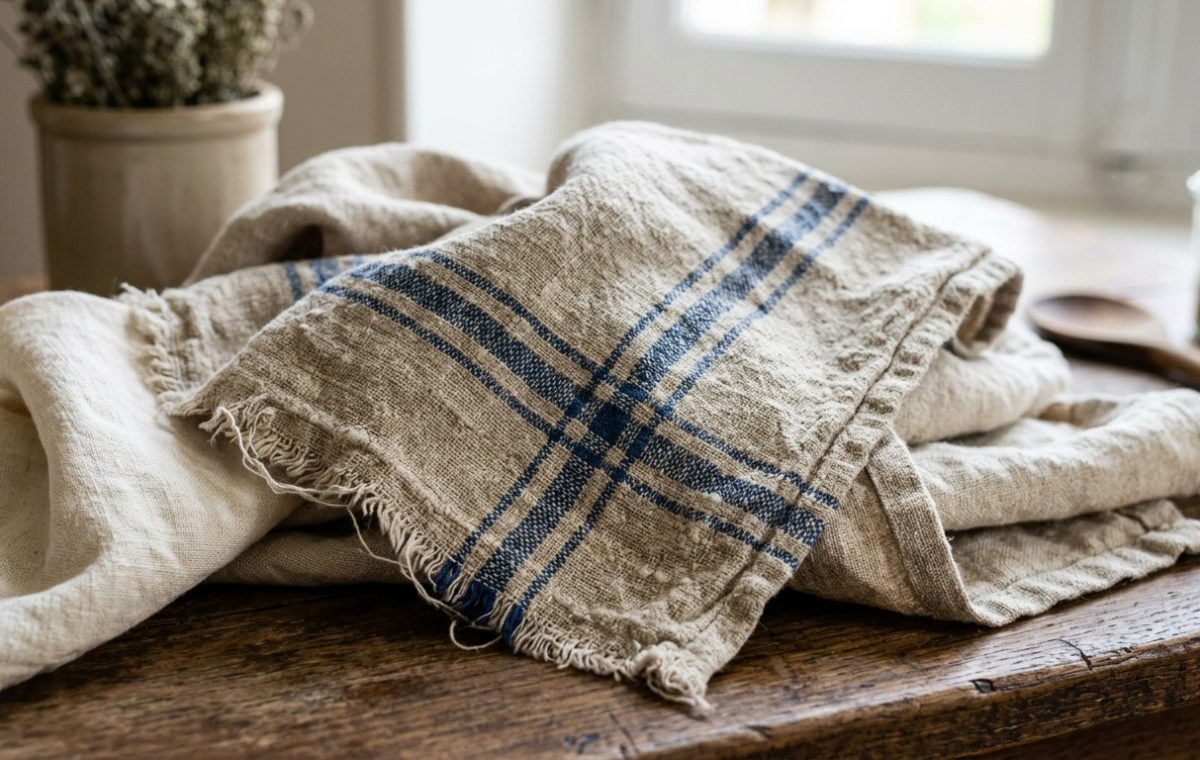
Pure linen changes the math. Toss a rumpled, blue-striped linen cloth onto a wooden counter and you immediately notice a different texture. It feels dry to the touch even after wiping down a wet sink. That is because flax fibers breathe naturally, releasing moisture into the air at three times the speed of conventional cotton.
Embracing Functional Patina
Perfection is the enemy of a good kitchen textile. Synthetic blends treated with heavy softeners will pill and look tragic after ten trips through the washing machine. High-end linen goes the exact opposite route. Every wash breaks down the stiffness, turning the fabric into a buttery, soft rag that drapes effortlessly over oven handles.
Wash in warm water without harsh chemical softeners to preserve flax integrity.
Air dry on a line whenever possible to keep the fibers crisp and strong.
Accept slight wrinkles as a hallmark of authentic, unpretentious material.
Frayed edges and visible slubs are not manufacturing defects. They are proof that your tools are being used daily. When you invest in a tightly woven, heavy-weight cloth featuring classic ticking stripes, you are buying an item that will likely outlive your current cookware set.
Daily Maintenance Realities
Let us be entirely honest about the upkeep. Good linen costs more upfront than a multipack of cheap microfiber rags. You will also need to resist the urge to bleach them every time a splash of red wine or tomato sauce hits the fabric. Let nature and a mild oxygen cleaner handle stubborn stains instead of stripping the organic yarn down to threads.
How often do you actually cycle through your kitchen textiles before tossing them into the rag bin? Take a close look at your current dish cloths today and see if they are genuinely drying your dishes or just pushing water around.
Editorial Lookbook & Photo Collection
Photo Archive: Why Linen Kitchen Towels Outperform Cotton Every Single Time
36 Photos
Written by
JayhawkRent Editorial Team
Culinary Critic exploring visual stories and modern design based in Paris, France.
Editorial review fields are available through custom fields: jayhawk_reviewer_name and jayhawk_reviewer_note.
Transforming Tight Outdoor Squares Most urban footprints leave us with postage-stamp ledges instead of sprawling gardens. Yet, a narrow concrete slab holds immense potential…