The Quiet Power of Architectural Details
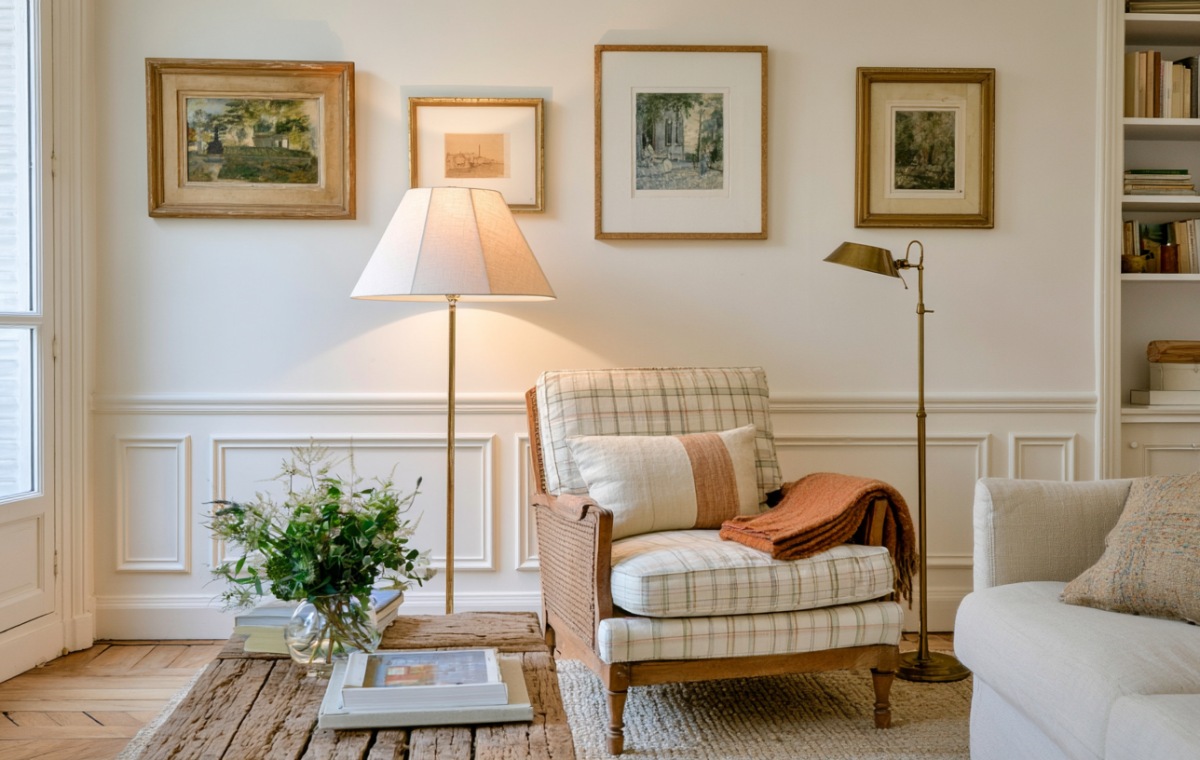
Flat walls are easy, but they rarely hold our attention. When you look closely at a balanced interior, the secret usually lies in the woodwork. Traditional wainscoting and crisp wall paneling ground a space long before furniture ever enters the room. Notice how the linear relief beneath the chair rail immediately pulls the eye around the perimeter without overwhelming the eye.
Painting woodwork the exact same chalky off-white as the upper drywall creates subtle texture. Light catches the raised edges differently throughout the day. It is an investment in shadows and lines rather than loud colors.
Curating a Gallery Wall That Breathes
Matching frames spell instant boredom. Instead, look at how mismatched wood tones and gilded antique moldings give a salon-style display genuine character. Each piece has room to breathe against the pale backdrop. You do not need a degree in art history to pull this off. Just stick to a cohesive color palette within the canvases—muted landscapes, soft charcoals, and sepia sketches.
Spacing matters more than frame symmetry. Keep gaps consistent and align the visual weight rather than measuring rigid grid lines. It feels collected over decades, not purchased from a catalog in one afternoon.
Layering Seating and Texture in Tight Spaces
Arranging furniture near a high-traffic zone requires restraint. A patterned armchair paired with a rustic wooden coffee table breaks up the sea of neutral upholstery. Toss a heavy wool throw over the arm for instant warmth. Just be warned: rustic wood surfaces with deep grain and cracks will catch crumbs and require a bit of patience during dusting routines.
Lighting anchors the entire vignette. A slim brass floor lamp adds height and directional glow, proving that functional pieces can double as sculptural art when chosen with care. Where do you find yourself leaning when styling a difficult corner of your home?
Editorial Lookbook & Photo Collection