The Proportional Fallacy of Hallway Furniture
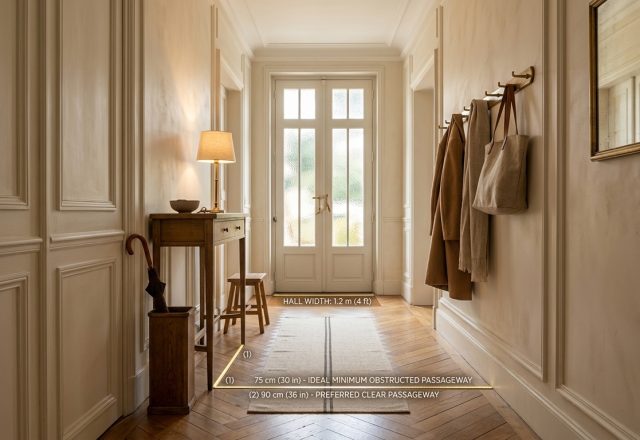
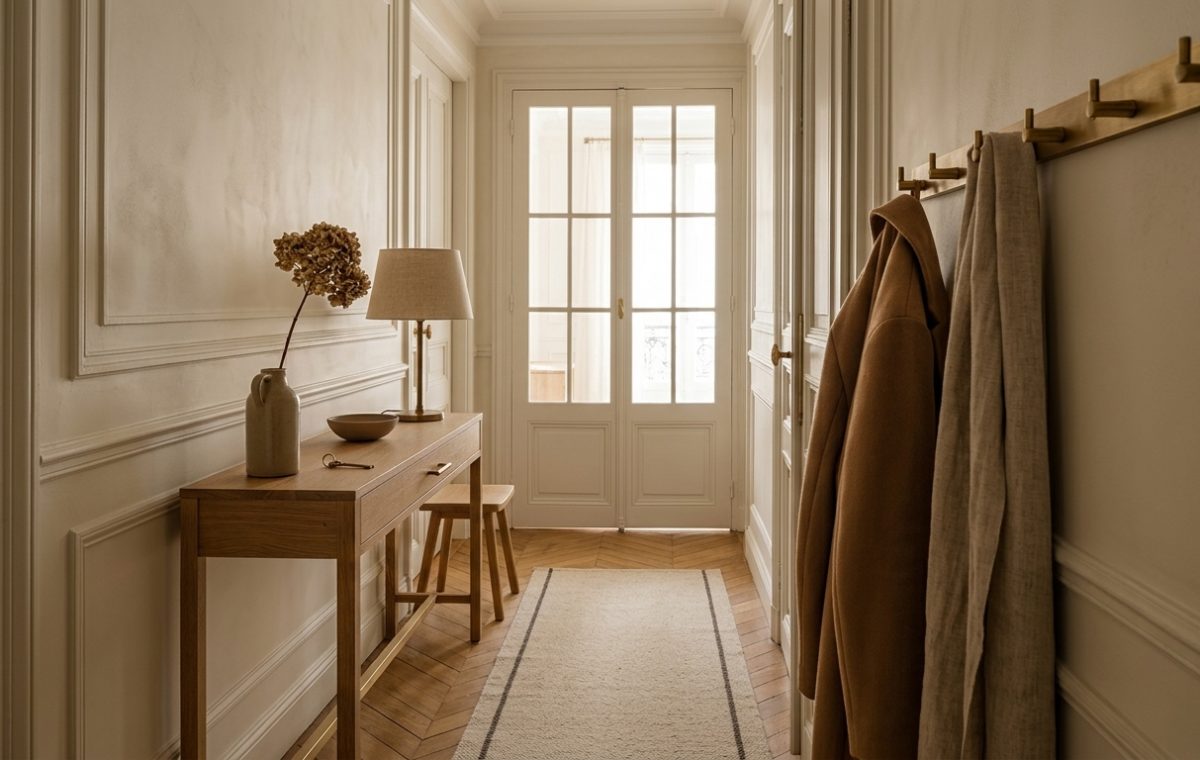
Hallways take a beating. Coats get tossed. Shoes pile up. Most people make one of two mistakes here: they leave the corridor completely bare out of fear, or they cram in an oversized sideboard that catches hips and elbows every evening. Look at the balance struck in this Parisian-style corridor. The console table is extraordinarily shallow. It measures barely thirty centimeters in depth. That shallow footprint matters immensely because walking clearance takes priority over tabletop surface area.
Notice the negative space underneath the furniture. By picking a console with slender legs and open clearance beneath the apron, sightlines travel straight down to the herringbone wood floor. The floor continues uninterrupted. Your eye reads the room as wider than it actually is. Try wedging a closed, bulky cabinet into this same footprint and the entire corridor instantly shrinks into a claustrophobic tunnel.
Wall Molding and Optical Depth
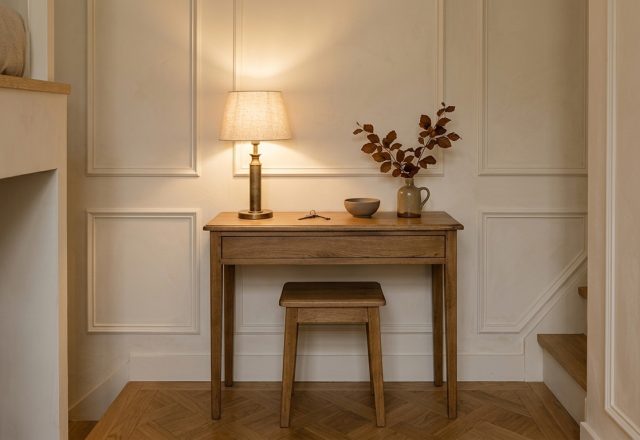
When you cannot push walls outward, you must build dimension inward. Flat drywall in a long corridor often produces an institutional, sterile feel. The picture frame molding seen here does heavy lifting. By introducing shadow lines and architectural rhythm along the wall, the corridor stops feeling like an awkward transition pipe and starts feeling like a room of its own.
Painting the moldings, baseboards, and walls in identical warm putty tones is a deliberate designer trick. High-contrast colors chop up narrow spaces. A tonal, low-contrast scheme softens boundaries. Light reflects gracefully from the double glazed doors at the far end, filtering across the subtle relief of the trim. Keep in mind that raised trim collects dust along its bottom ledges; living with classic woodwork requires a regular pass with a soft brush during your weekly clean.
The Discipline of Everyday Storage
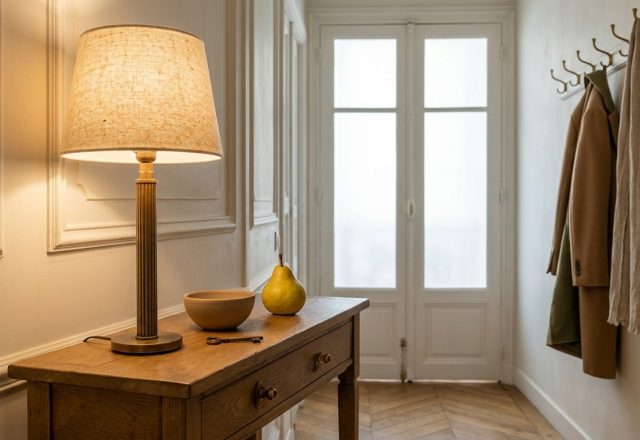
Storage in tight spaces must be honest. You cannot hide an entire family wardrobe in a narrow hallway design without building floor-to-ceiling cabinetry. The solution here leans on immediate utility: a horizontal brass coat rack set high enough so hanging wool coats do not drag across the console surface or bump passersby.
Keep drop zones minimal. A shallow catchall bowl stops keys and coins from scratching timber, but it also enforces a daily habit: if it does not fit in the bowl, it belongs elsewhere.
Then comes the floor runner. A flat-weave hallway runner rug with subtle borders anchors the perspective toward the back doors. Never buy high-pile wool for an entry corridor. It catches stray dirt, grinds grit underfoot, and catches on door swings. A durable, low-profile weave can handle street shoes and can be vacuumed without friction.
Balancing Utility and Movement
A functional entry never relies solely on overhead recessed fixtures. That creates harsh downward shadows. The low-wattage linen shade lamp shown here sits at eye level, casting a welcoming pool of light across the timber top and highlighting the dried hydrangea display. It softens the entire arrival experience after dark. How do you handle storage in your own entryway without letting clutter strangle the walkway?
Editorial Lookbook & Photo Collection