The Fallacy of the Dead Corridor
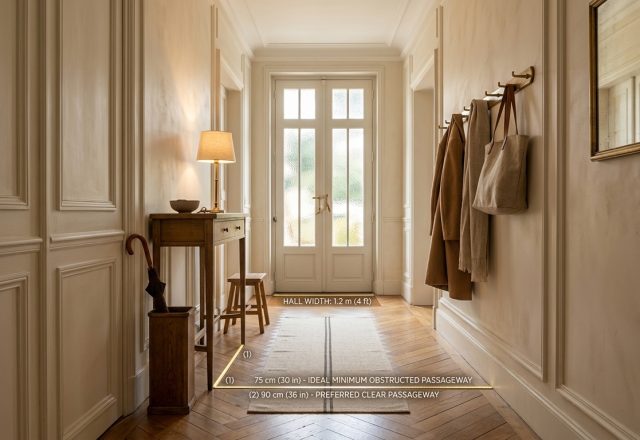
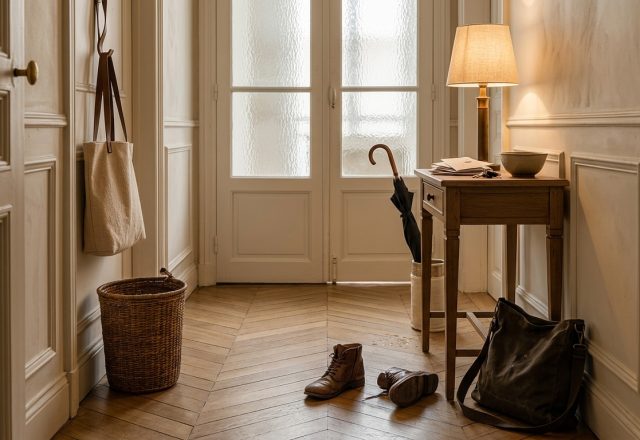
Stair landings and wide corridors often end up treated as dead passage zones. Homeowners freeze. They fear cluttering pathways, so walls stay barren, or they swing in the opposite direction and cram an oversized credenza into a walkway where shoulders constantly brush against cabinet corners. It looks clunky. It feels worse.
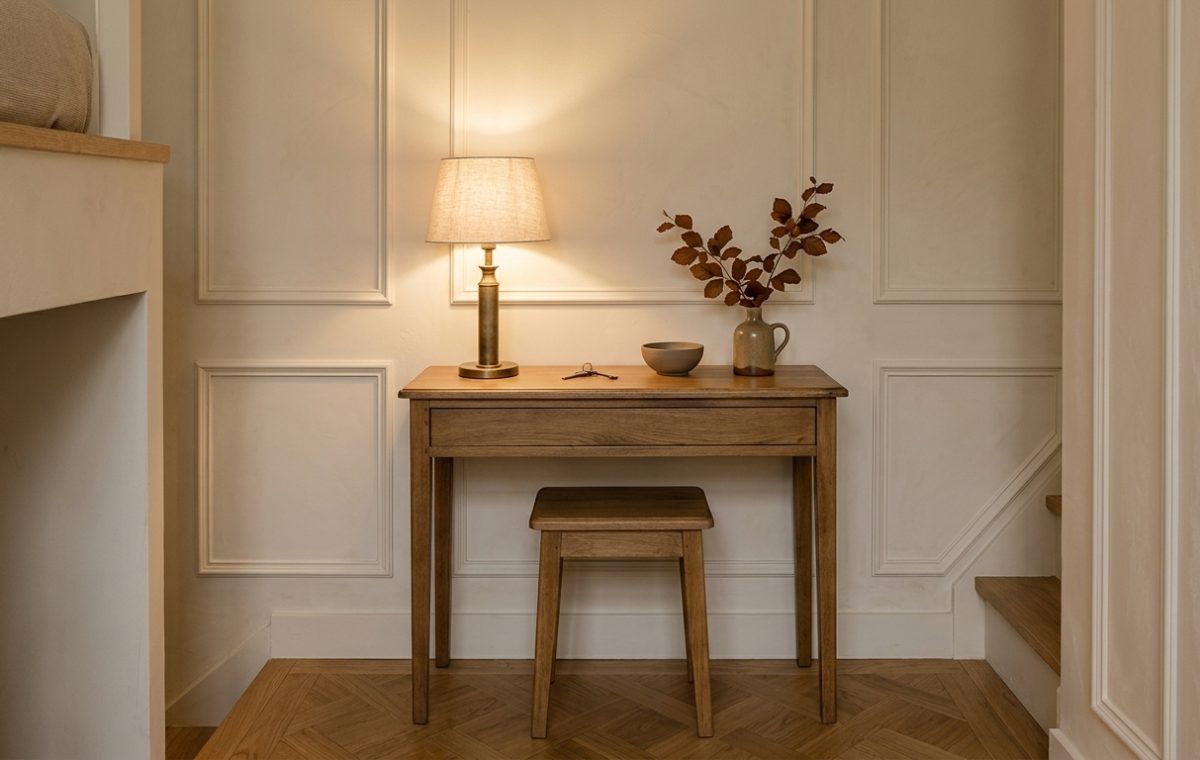
A thoughtfully scaled hallway console desk changes that dynamic instantly. Positioned directly into an architectural niche, it claims quiet utility without choking circulation. It operates as a drop zone by day and an occasional writing surface by evening, grounding an area people usually rush past.
Scale, Depth, and the Hidden Stool
Proportion governs everything in a tight transit area. A standard work desk runs 28 to 30 inches deep, which will swallow an average hallway whole. A console variation, however, hovers around 14 to 18 inches. That shallow footprint preserves physical clearance while giving you enough surface for essentials.
Notice the backless seating choice. Sliding the stool completely under the desk apron when not in use is not just a styling gimmick; it is an absolute necessity for tight footways. It disappears. No chair backs interrupt the vertical rhythm of the wall panel moulding. No protruding legs trip anyone walking toward the stairs.
In narrow floor plans, furniture should step out of the way before you even realize you need the floor space.
Letting Architecture Frame the Vignette
A slim wood writing table looks best when anchored to permanent wall detailing. Against flat drywall, lightweight tables can look adrift. Paired with classic picture moulding and warm oak herringbone wood floor patterns, the joinery feels built into the architecture itself.
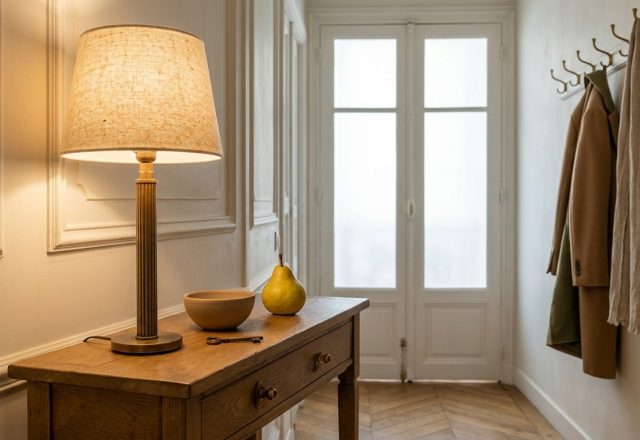
Lighting pulls double duty here. Recessed ceiling pots cast harsh vertical shadows and wash out subtle wall trims. A table lamp with an opaque or semi-dense linen drum shade casts warm, directional light downward across the timber surface and upward into the alcove. That low glow pulls focus, turning what was once a mere transit path into a defined room-within-a-room.
Curating Without the Clutter Trap
Because hallway surfaces are high-traffic zones, they easily devolve into junkyards for mail, charging cables, and random receipts. A single drawer hidden in the desk apron keeps everyday mess out of sight. Keep the tabletop strictly disciplined: an earthy vase holding seasonal beech twigs, a shallow stoneware dish for house keys, and nothing else. If you need a power outlet for the lamp, run the cord straight down the inner back leg with discreet adhesive clips; visible trailing cables instantly ruin the calm.
Take a hard look at the empty alcoves or stair landings in your home this weekend. Could a shallow timber table transform that dead corridor into your favorite spot to pause, or are you still using your hallways purely as high-speed racetracks?
Editorial Lookbook & Photo Collection