The Psychology of the Landing Strip
First impressions aren’t just for guests. They are for you. When you walk through your front door after a long day, the entryway acts as a decompression chamber. If it is a pile of shoes and junk mail, your brain stays in high-alert mode. But an intentional setup changes the energy immediately. Entryway console styling isn’t just about placing a few objects; it is about choreographing the transition from the chaos of the street to the sanctuary of the home. It is the physical border between your public and private life.
Lighting as an Architectural Tool
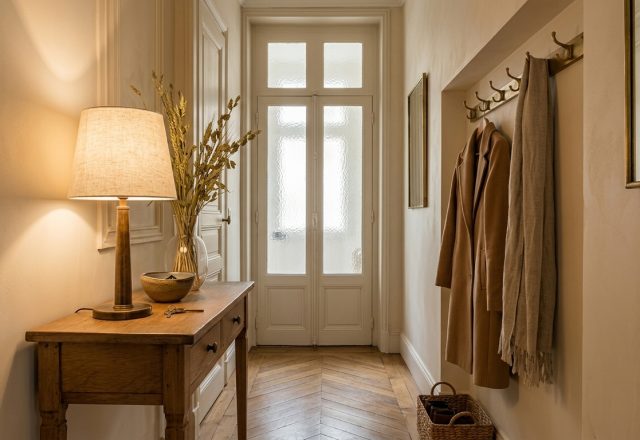
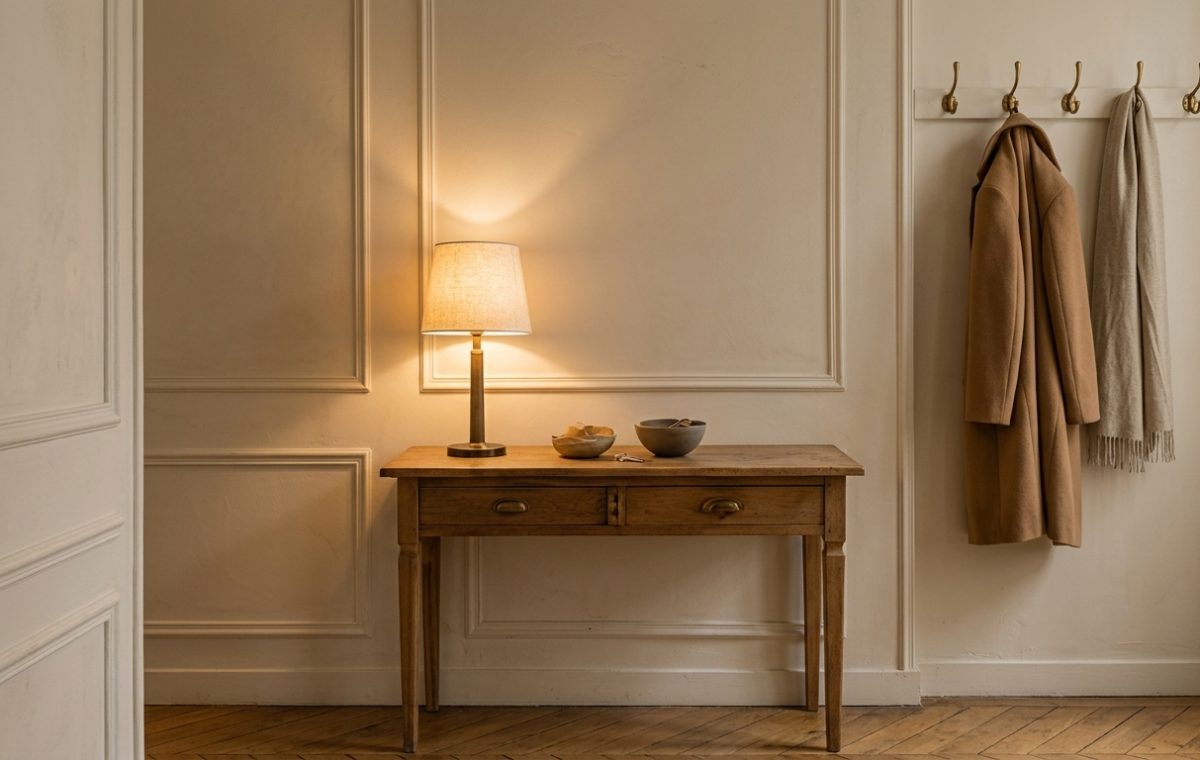
Lighting is the silent partner in any hallway. Most homeowners rely on harsh, recessed ceiling lights that flatten every feature of the room. Instead, a dedicated table lamp with a soft fabric shade creates a localized pool of light. It defines the console as a destination rather than a pass-through. Look at how the light hits the wall molding in the background. Those shadows add architectural depth to an otherwise flat surface, making the hallway feel like a deliberate room. It provides a warm welcome that overhead LEDs simply cannot replicate. If the lamp is the only light source on in the evening, the entire mood of the house shifts toward stillness.
Balancing History and Utility
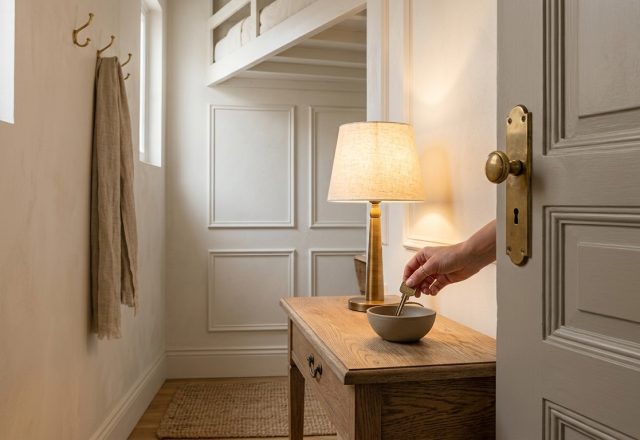
A vintage wooden console brings a sense of history that mass-produced furniture lacks. It doesn’t need to be in perfect condition. A few scratches or a weathered patina suggest a lived-in, comfortable home. The drawers are vital for your sanity. They serve as a graveyard for the ‘ugly’ necessities—spare batteries, old receipts, or mystery keys. On the surface, keep it sparse. Two stoneware bowls are usually enough. One for the keys you use every day, and one for the small items that clutter your pockets. This minimalist entryway approach keeps the wood grain visible and the visual noise low.
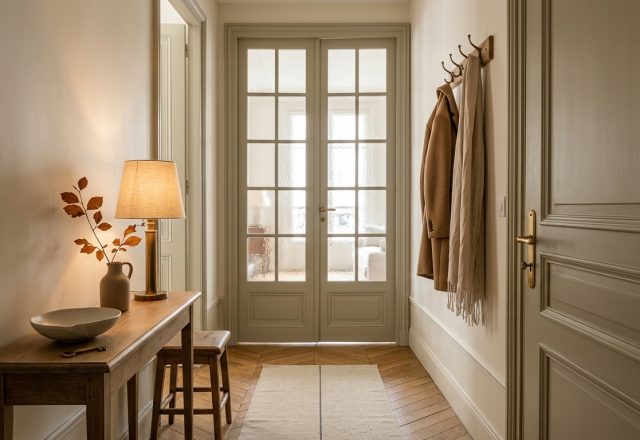
Small, intentional details like brass coat hooks and herringbone flooring provide a texture that feels grounded and permanent.
The Daily Edit
The coat rack is where most entryway design goes to die. We tend to overload every hook until it is a bulging mass of nylon and fleece. A better way? Hang just one or two high-quality items, like a wool coat or a linen scarf. It allows the hardware to be seen and prevents the space from feeling claustrophobic. Maintaining this look isn’t a one-time event; it requires a daily edit. It is easy for a console to become a magnet for grocery bags and mail. Taking five seconds to clear the surface every evening pays massive mental dividends the next morning. What is the one item currently sitting on your entryway table that you know doesn’t belong there?
Editorial Lookbook & Photo Collection