The Psychology of the First Impression
The entryway is the home’s handshake. It’s the first impression, yet it often becomes a graveyard for delivery boxes and mismatched shoes. Creating a curated space isn’t just about vanity. It’s about creating a landing strip that serves both your psyche and your schedule. When you walk through the door, you need a visual cue to decompress. A well-executed entryway console styling setup provides exactly that.
Lighting as a Silent Welcome
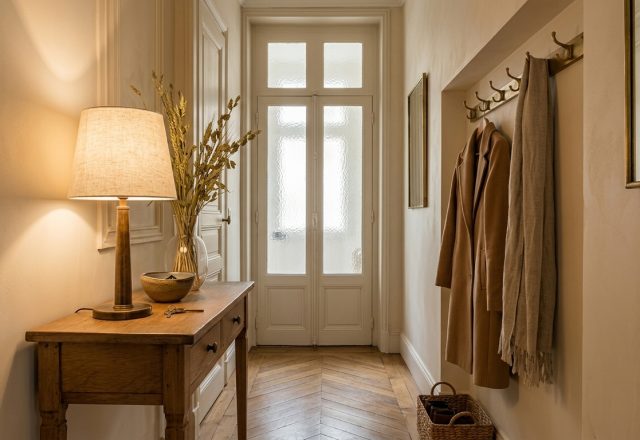
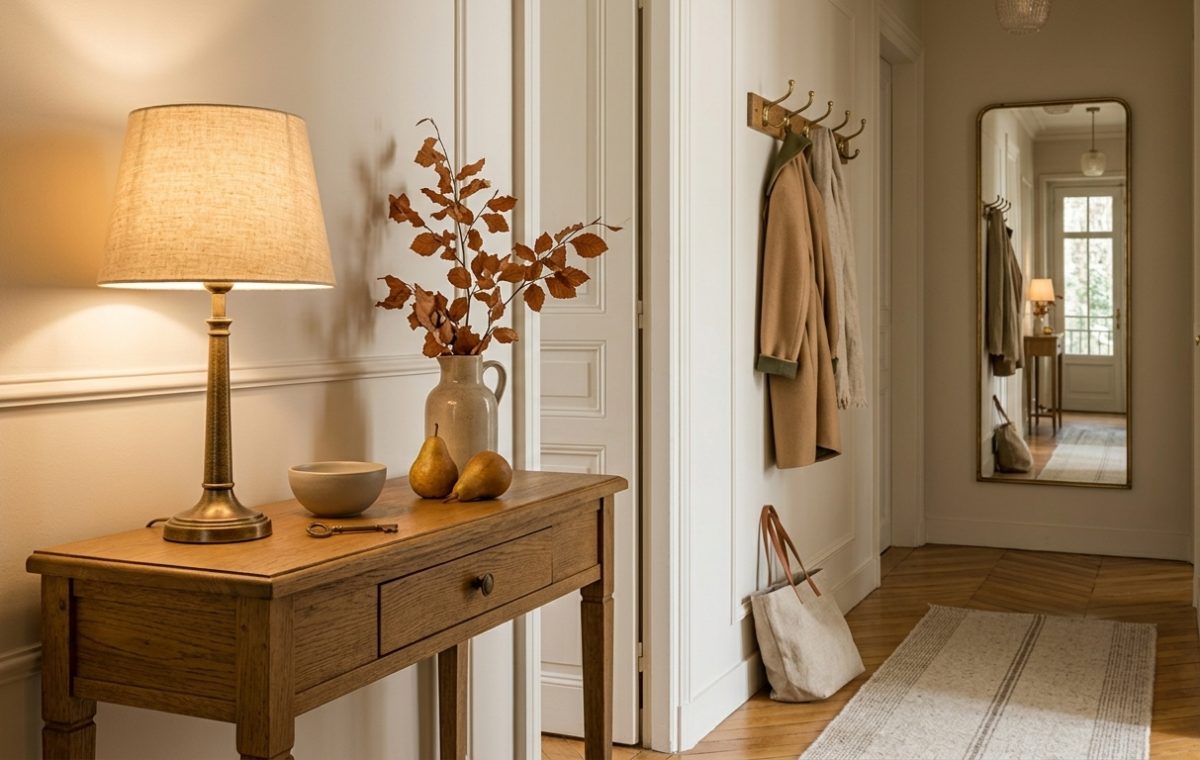
Most hallways suffer from harsh, clinical overhead lighting. It makes the space feel like a transition tunnel rather than part of the home. Look at the brass lamp on this console. The warm glow filtered through a linen shade softens the environment instantly. It’s a deliberate choice. A table lamp adds height and texture while providing a low-intensity light source that stays on in the evening. It makes the house feel lived-in and safe. If you lack a wall outlet, consider high-quality cordless lamps, though you’ll need the discipline to keep them charged.
Balancing Beauty and Utility
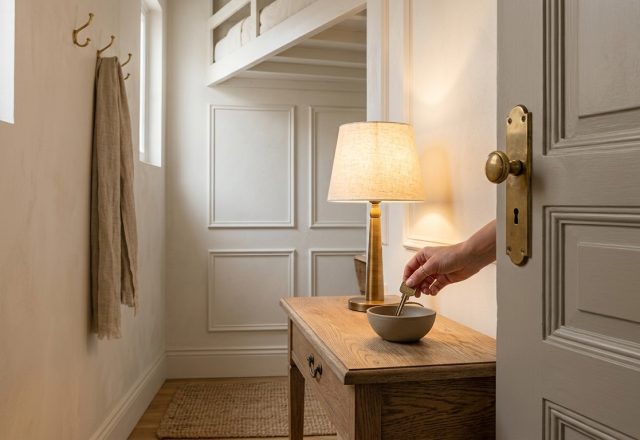
Design fails when it ignores how humans actually live. A console without a drawer is a missed opportunity for anyone who habitually loses their keys. That small brass key resting on the wood isn’t just a prop; it represents a designated spot for essentials. Pair your table with brass accents like hooks or a mirror frame to tie the look together.
A mirror is the oldest trick in the book for a reason. It doubles the light and gives the illusion of depth in a narrow space.
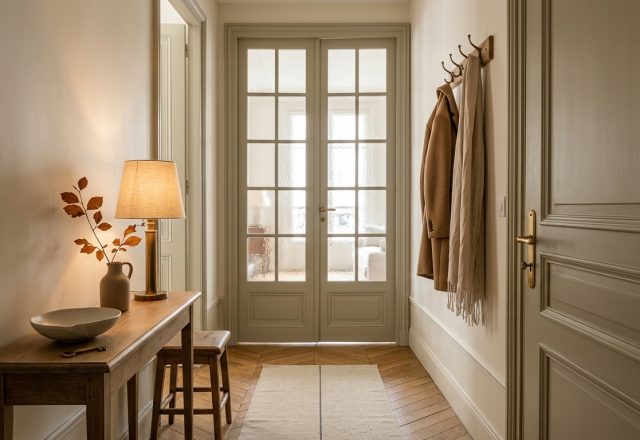
Practicality extends to the floor. A runner rug on herringbone flooring defines the path and dampens the sound of footsteps. Be realistic, though. A white or cream runner in a high-traffic zone requires constant maintenance. If you have pets or a busy household, opt for a patterned or darker weave that hides the inevitable grit of daily life.
Organic Textures and Visual Weight
To keep the space from feeling like a furniture showroom, you need organic elements. A ceramic pitcher with dried foliage—like the beech leaves seen here—adds a seasonal touch without the upkeep of a living plant. It provides vertical interest that balances the horizontal line of the table. Home organization shouldn’t look sterile. Use natural materials like wood, linen, and clay to ground the functional hallway. These textures are tactile and inviting, softening the hard lines of the architecture.
Think about the last time you felt truly relaxed the moment you stepped inside. Does your current hallway setup facilitate that, or is it just a place where you drop your bags in a hurry?
Editorial Lookbook & Photo Collection