The Problem with Tight Transitional Spaces
Most hallways get treated as an afterthought. We paint them white, slap down a cheap runner, and wonder why the entrance feels like a bowling alley. Space constraints make narrow corridors notoriously difficult to style without causing visual clutter. If you overload the walls, people bump into things. If you leave them completely bare, the space turns cold and institutional.
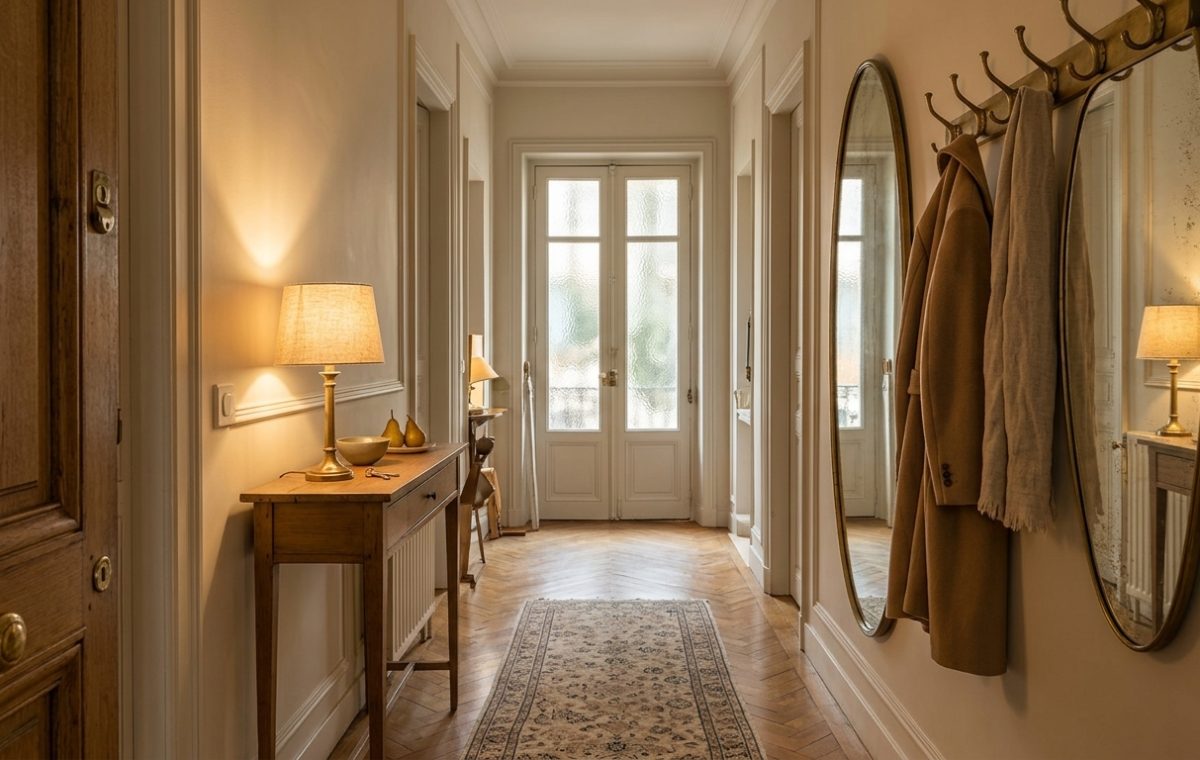
The secret lies in working with the architecture rather than fighting it. Notice how subtle wall paneling and traditional wainscoting ground a long corridor. Instead of flat drywall, raised moldings create horizontal depth. They trick the eye into seeing width where none exists. Combined with warm, neutral wall washes, texture replaces heavy furniture.
Hardware and Vertical Storage Solutions
Floor space is premium real estate in any passage. That means every single square inch matters. Piling shoes and dropping bags on the floor immediately shrinks a room. A row of heavy-duty brass coat hooks mounted high on a minimalist rail solves the outerwear storage dilemma without eating into walking clearance. Brass ages gracefully, developing a patina over time that adds character to otherwise plain plaster.
Beneath those hooks, scale is everything. Avoid bulky console tables that block foot traffic. Slimline wooden furniture barely touching the wall provides just enough surface area for a small lamp and a dish for keys. Lighting matters immensely here. A low-wattage table lamp creates pools of warm illumination, casting soft shadows across textured walls instead of relying on harsh overhead glare.
Flooring and Textiles
Hardwood parquet laid in a chevron or herringbone pattern naturally draws the eye forward. It adds directional movement, making the corridor feel intentional and designed rather than accidental. Softening that hard timber requires the right textile choice. A vintage runner rug with a faded motif adds warmth underfoot while mututing footsteps. Keep the pile low so doors swing freely over it without catching.
Maintenance is the hidden penalty here. Light paint finishes in high-traffic zones require frequent wipe-downs, especially if you have pets or children running through with muddy shoes. But the aesthetic payoff is undeniable. A well-proportioned passage sets an immediate tone for the rest of the home.
How are you currently managing clutter in your own entryway?
Editorial Silo • Recommended Architecture Studies
- Performance Modularity: Modular Shelf System & Engineering Seamless Living in the Modern Compact Home — Archival Design Case Study
- The Physics of the Curve: Structural Secrets of Earth-Sheltered Hobbit Home Designs — Archival Design Case Study
Curated Lookbooks & Architectural Studies
- Tactile Sophistication: Decorative Pillows For Couches & Curating High-Performance Textures and Heritage Prints for Modern Living
- Patina and Precision: Modern Rustic Furniture & Mastering the Tactile Contrast of Modern Rustic Materiality
- The Tactile Terrace: Mastering Materiality, Shadow Play, and Atmospheric Glow in Small Outdoor Nooks
- French Country Bedroom Design: Rustic Elegance & Warmth
- The Architectural Ofuro: Masterclass Proportions for Integrating Wooden Bathtubs into Modern Floorplans
- Shelf Styling Ideas: How to Curate Books and Decor Like a Pro
Curated Visual Lookbook
Design Gallery & Spatial Studies
A visual curation of architectural arrangements, lighting concepts, and material palettes featured in this space.