The Evolution of the Tactile Anchor
In the mid-century era, the living room was often a formal stage set, defined by stiff upholstery and rigid silhouettes that prioritized presentation over participation. Those bulky, monochromatic bolsters of the past felt like an afterthought—a static boundary rather than an invitation. Today, we’ve moved toward a more nuanced architectural philosophy where comfort and curated aesthetics are no longer mutually exclusive. In this modern landscape, decorative pillows for couches have evolved into the essential tactile anchor, bridging the gap between a room’s hard surfaces and the soft, lived-in reality of a high-functioning home. This transition isn’t just about softness; it’s about the strategic layering of high-performance textiles and heritage prints that respond to both light and lifestyle.
When we look at the ‘Quiet Luxury’ movement currently dominating the design world, it’s not about the absence of detail, but the elevation of it. It’s the tension between a raw, heavyweight Belgian linen and a luminescent performance velvet. It’s the way a deep earth brown mohair catches the 2700K warm ambient glow from a nearby plaster sconce. By understanding the spatial cadence of your seating—whether it’s a sprawling modular sectional or a curated 84-inch Lawson-style sofa—you can transform a standard living space into an immersive sensory experience.
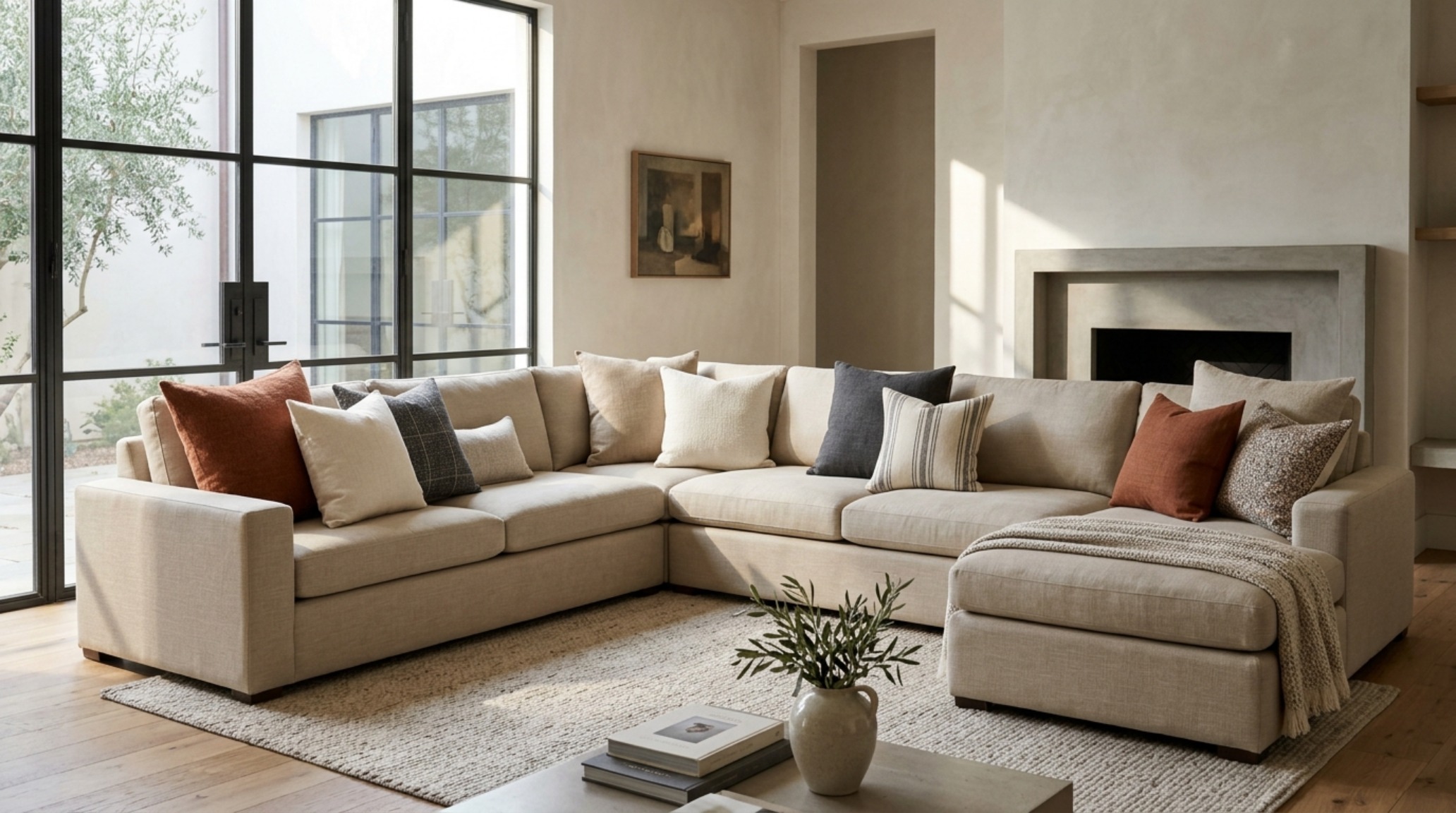
Sectional Pillow Layout Formula: Mastering Scale and Proportion
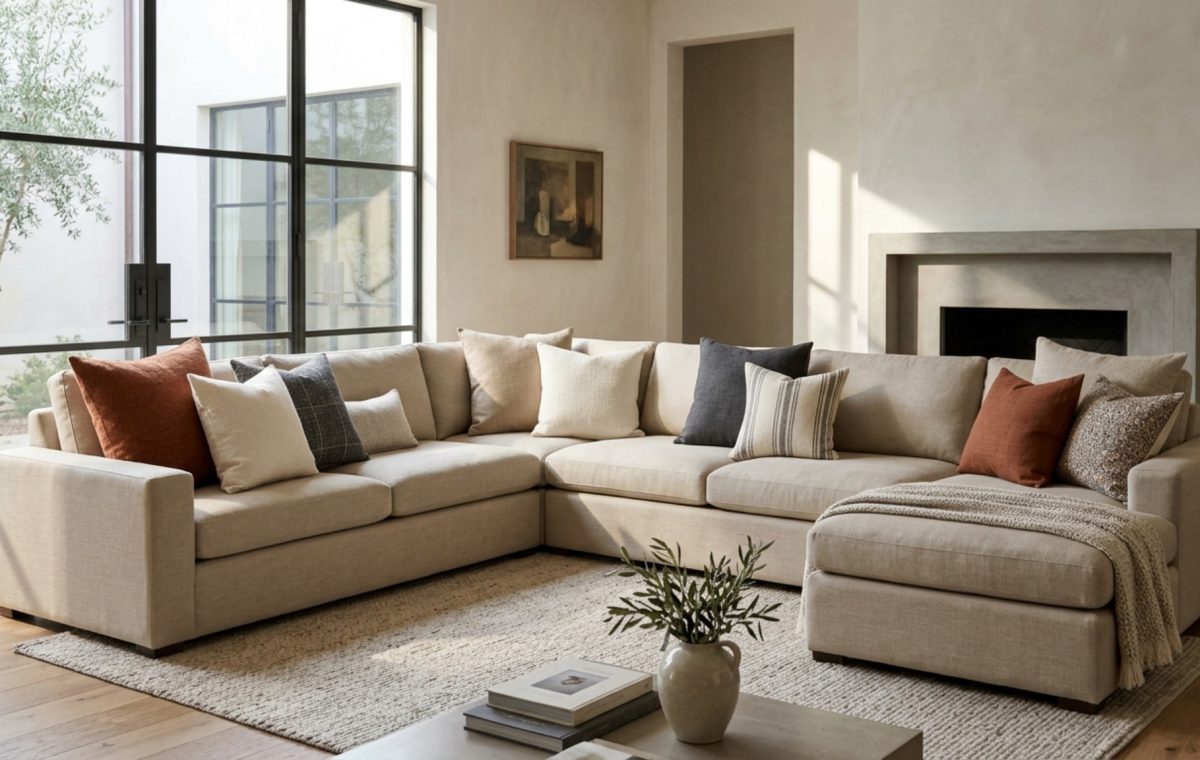
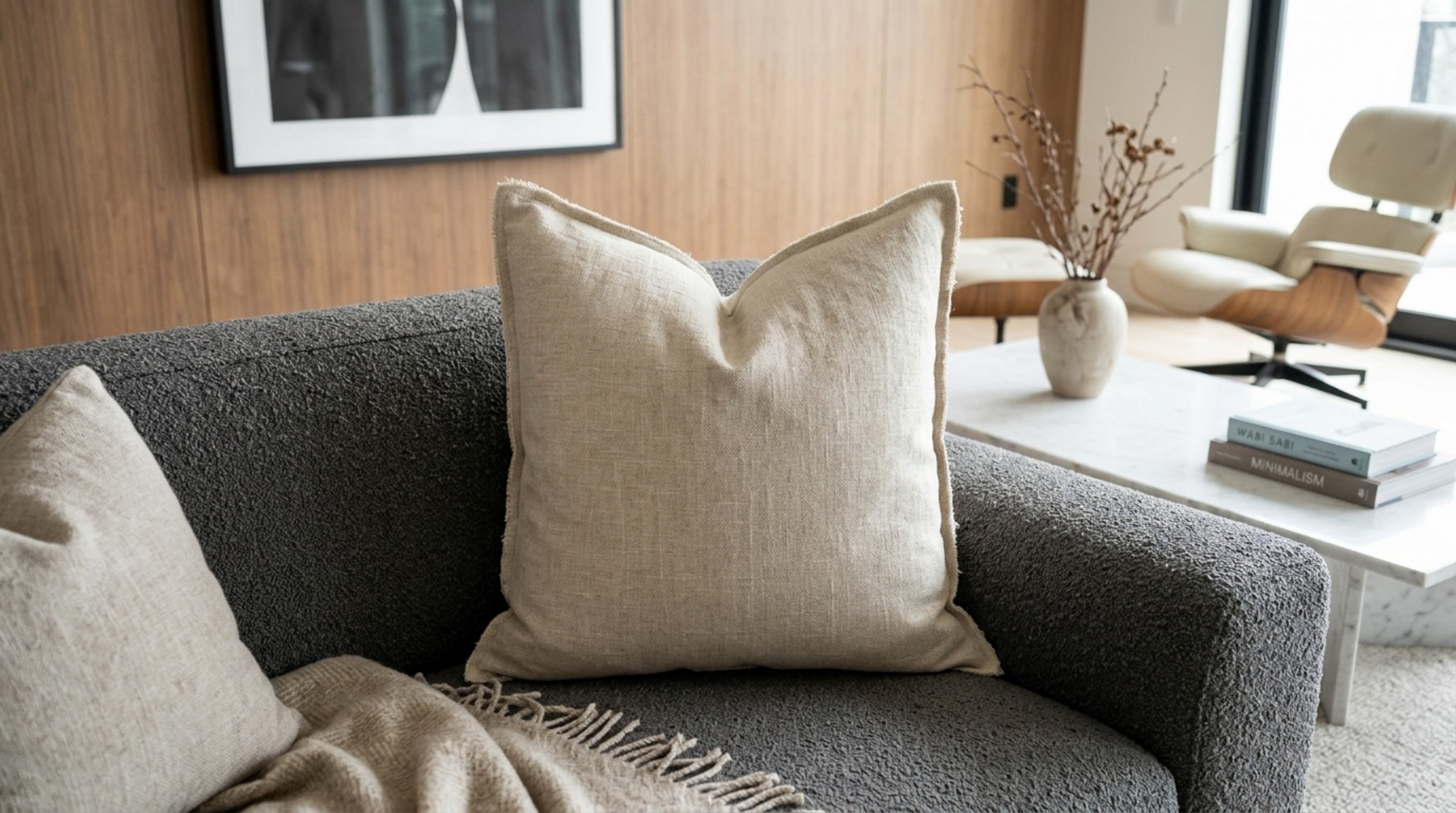
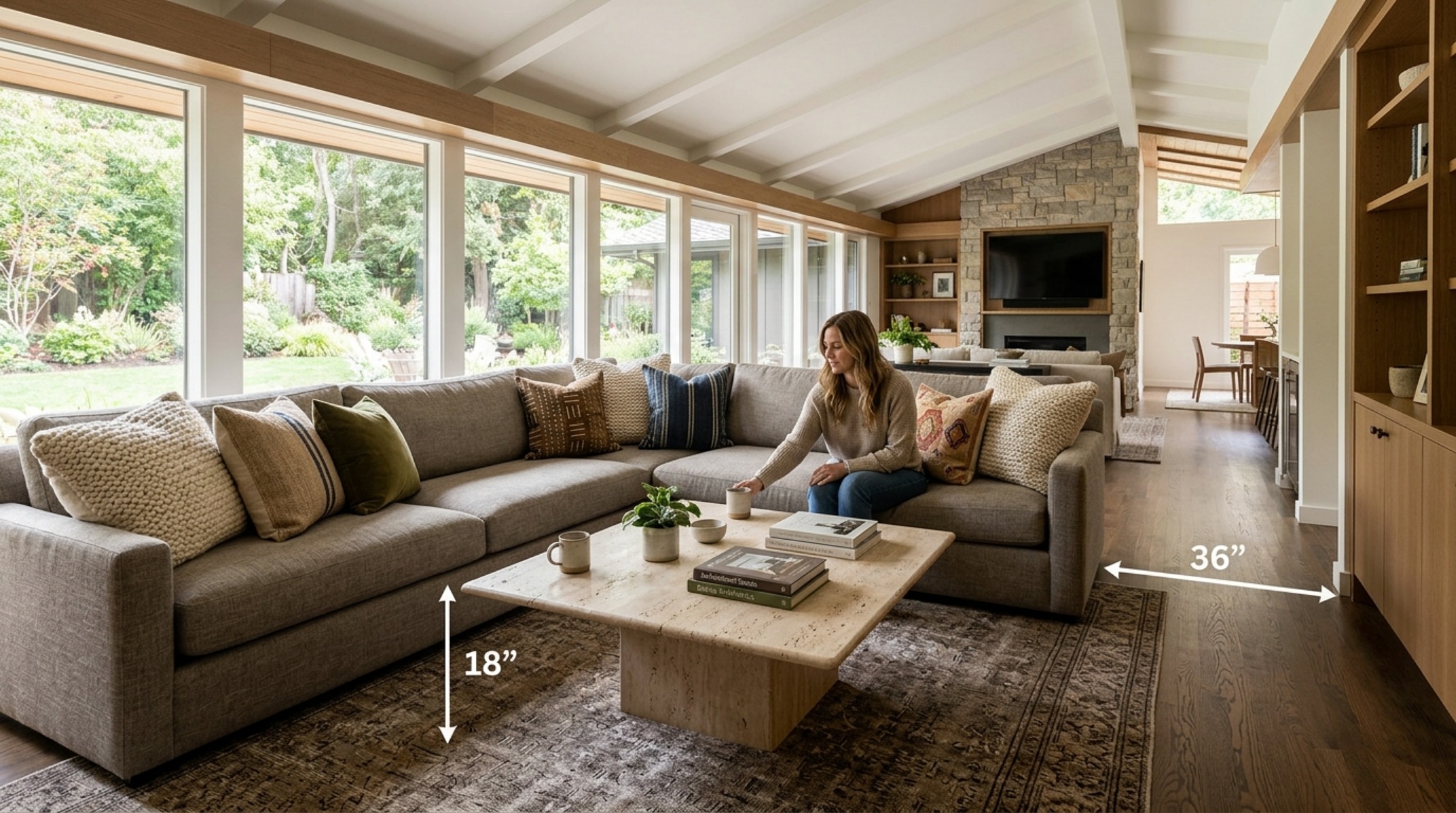
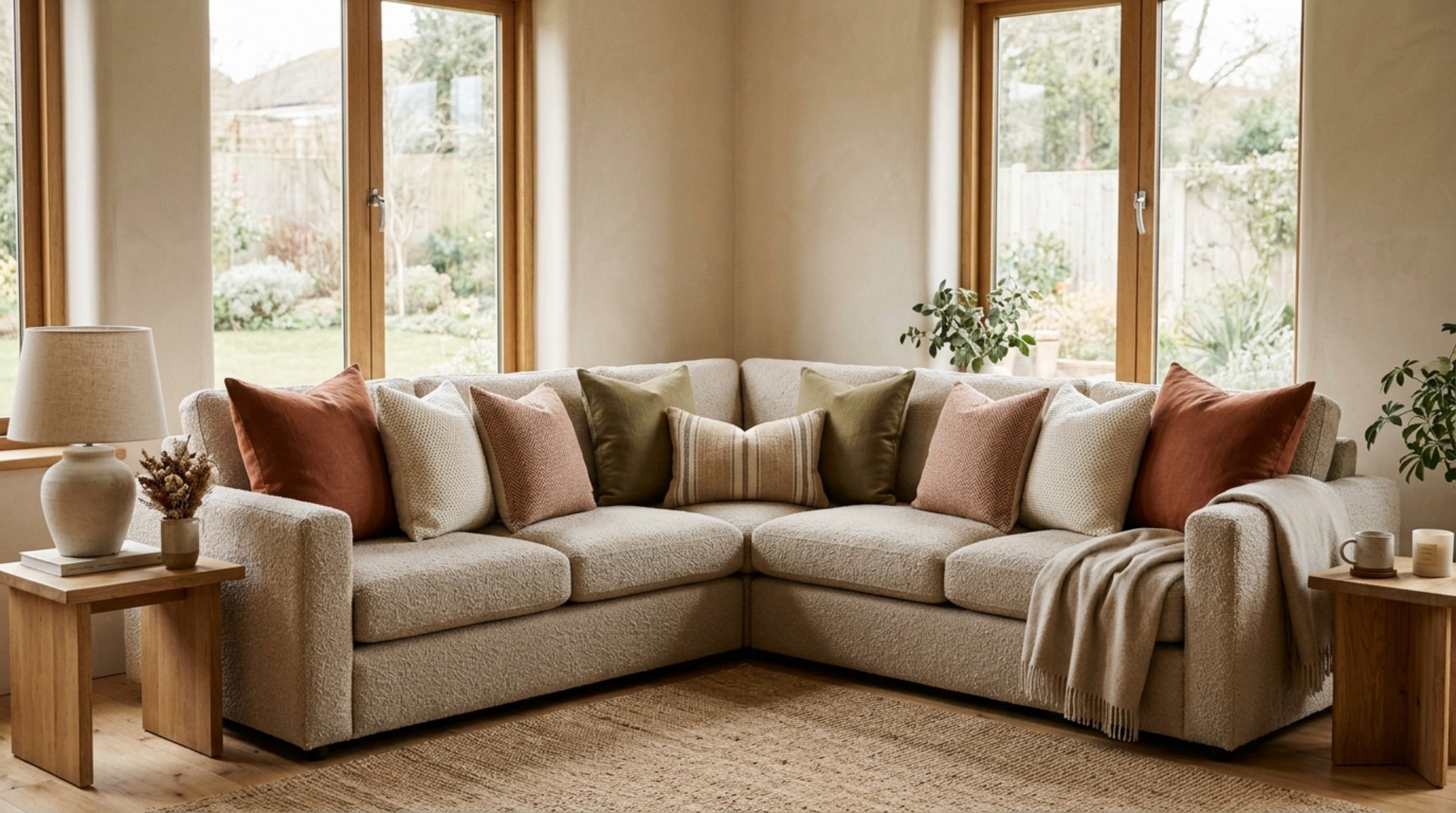
The challenge with larger furniture, particularly the L-shaped sectional, is maintaining a sense of visual rhythm without descending into clutter. A common mistake is using undersized cushions that disappear into the depths of the upholstery. To achieve a professional, ‘architectural’ look, we utilize a sectional pillow layout formula rooted in descending scale. Start with 24-inch ‘anchor’ pillows in the corners to establish a structural foundation. These should ideally be a heavy-weight linen or a subtle tonal weave that grounds the piece.
From there, layer inward with 22-inch squares, and finish with a singular 20-inch or a long lumbar in the center ‘elbow’ of the sectional. This cascading effect creates a sense of depth that mimics the layered architectural elements of a well-designed facade. Keep in mind the 18-inch coffee table reach; your arrangement should never feel like an obstacle to movement or conversation. The goal is to provide enough support for the 30-inch seat depth typical of modern deep-seated sofas, while leaving enough ‘negative space’ for the furniture’s silhouette to breathe.
Performance Velvet Throw Pillows: The Resilience of Luxury
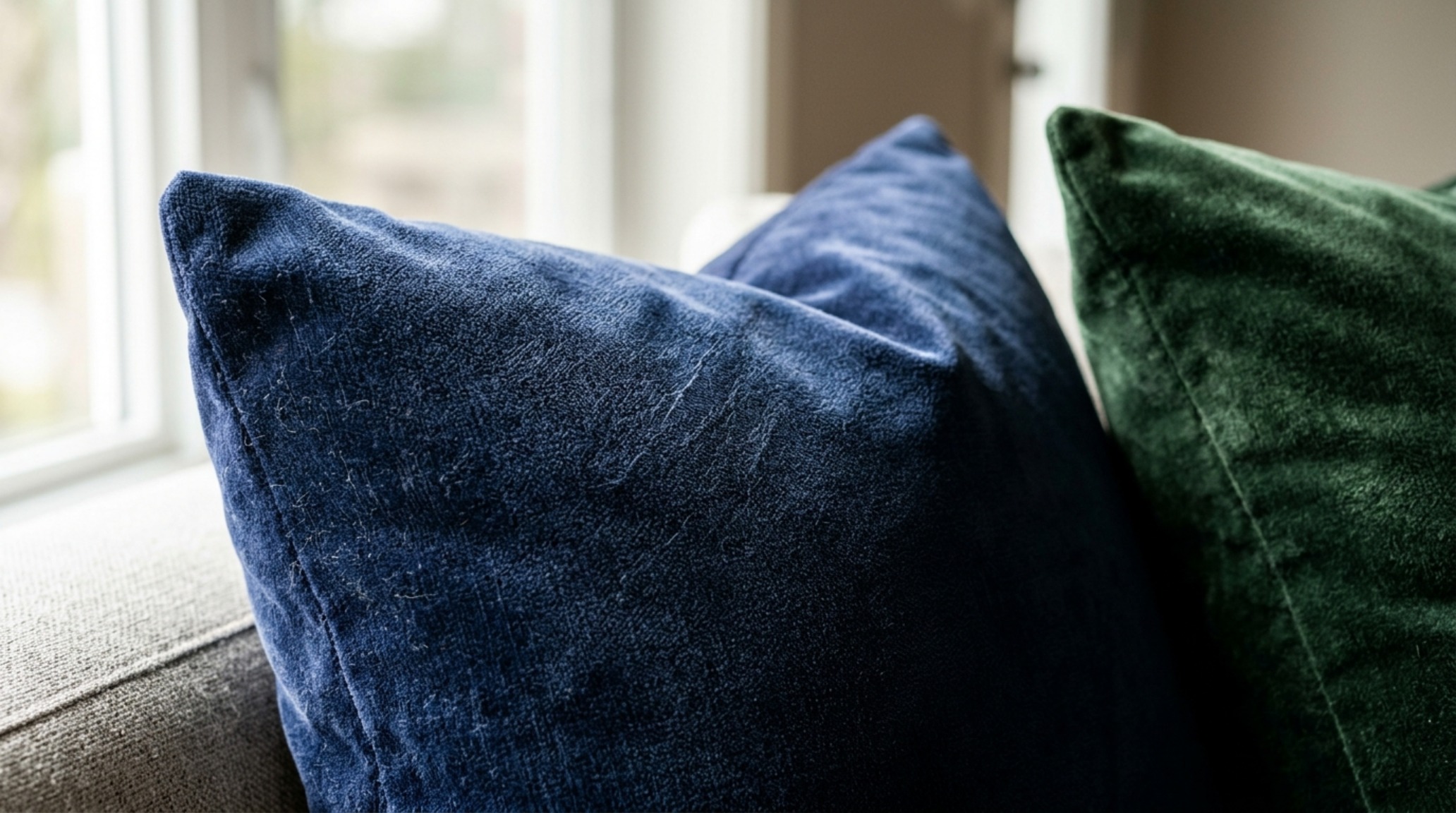
For years, the word ‘performance’ was synonymous with stiff, plastic-like textures that felt entirely out of place in a sophisticated interior. Thankfully, textile technology has caught up with our aesthetic demands. Today’s performance velvet throw pillows offer the same rich, matte luster as traditional silk velvet but with the durability of high-denier polyester blends that resist staining and crushing. This is particularly vital in high-traffic zones where the ‘touch’ factor is constant.
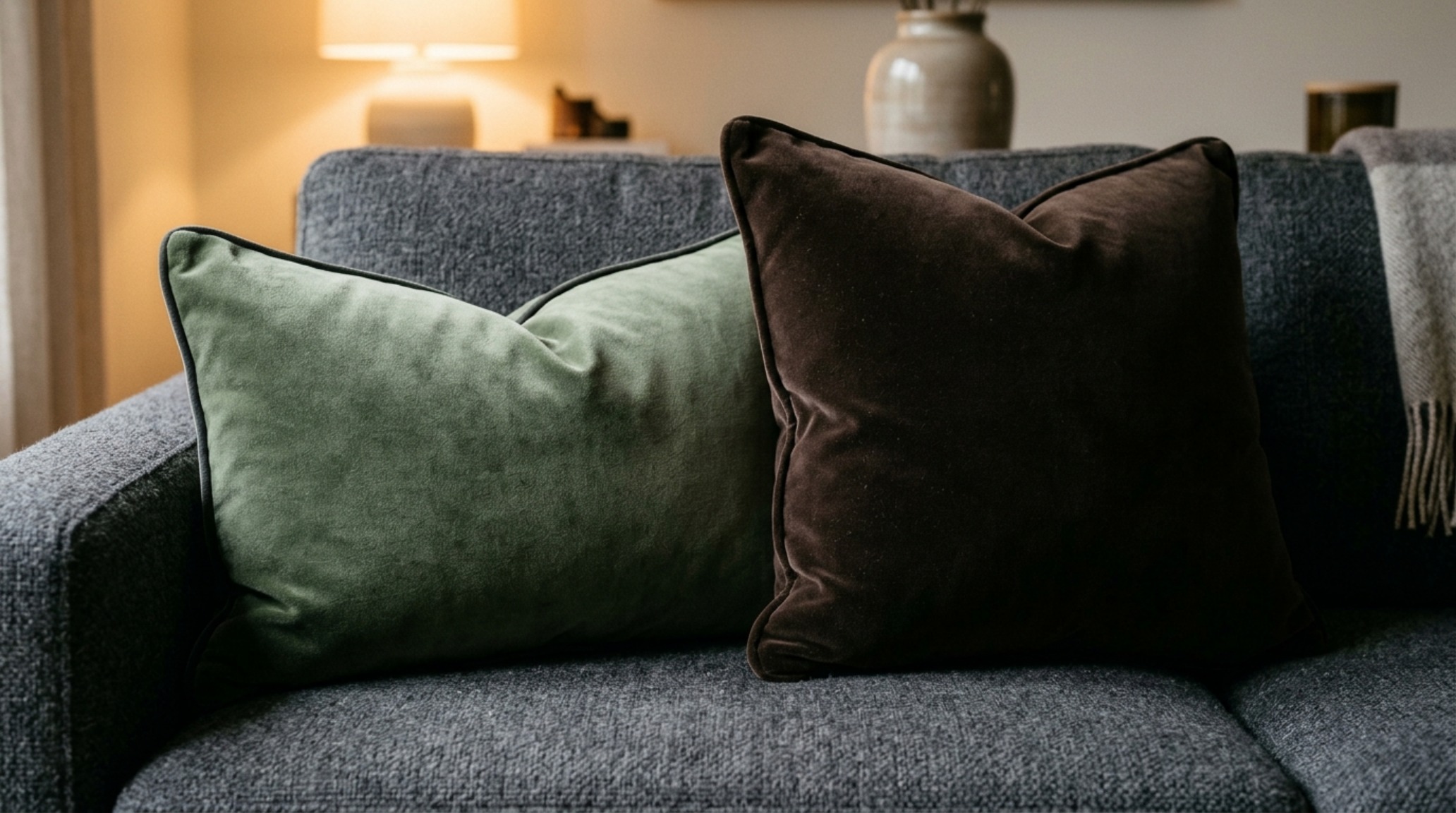
When selecting these textiles, look for a high Martindale rub count (30,000+) and a 90+ CRI lighting environment to truly appreciate the color depth. In a palette of 2026 anchor tones—think muted celadon, deep clay, and desaturated sage—performance velvet provides a necessary ‘heaviness’ that balances lighter, more ethereal materials like silk or fine cotton. The play of shadow on a velvet surface adds a dimensional quality that flat fabrics simply cannot replicate. It creates a ‘tactile grounding’ that makes a room feel finished and intentional.
Artisan Handcrafted Pillow Covers: Narratives in Thread
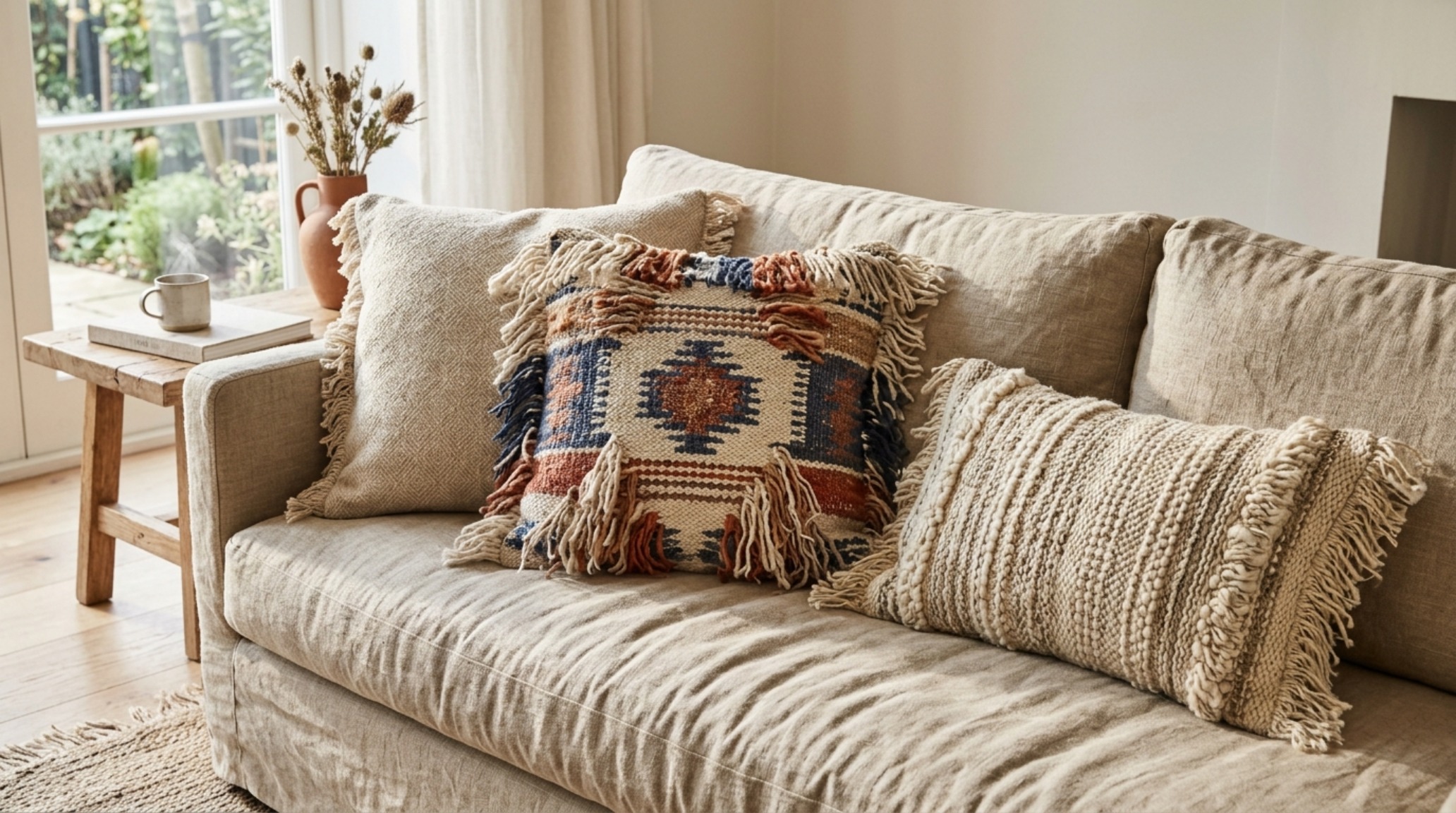
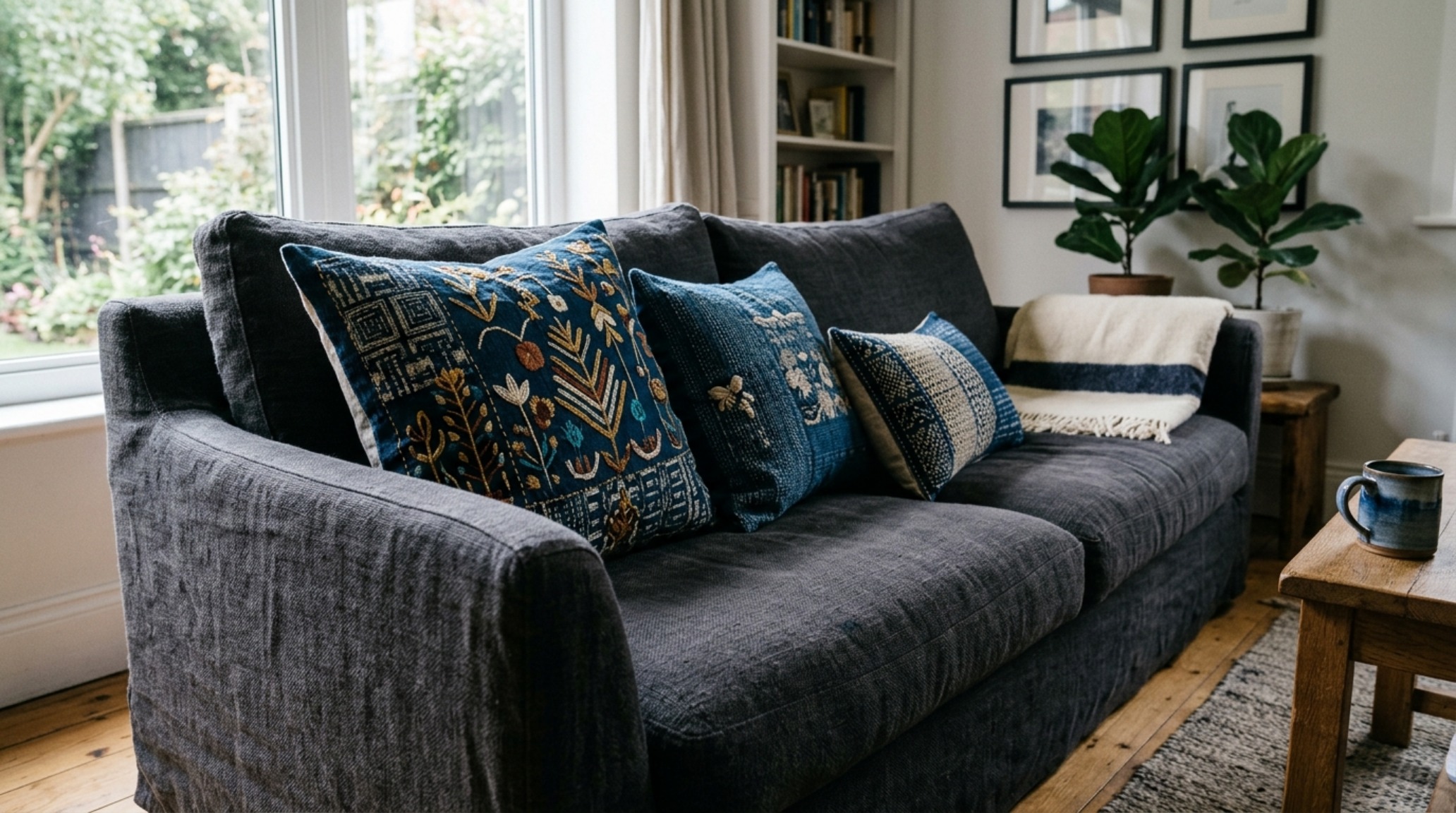
To prevent a room from feeling too ‘showroom-ready’ and devoid of soul, we must introduce the hand of the maker. Artisan handcrafted pillow covers act as the soul of the sofa. Whether it’s a hand-loomed wool from the Andean highlands or a Japanese shibori indigo print, these pieces bring a sense of history and global narrative. They introduce the ‘raw’ to the ‘refined.’
Mixing these artisanal pieces requires a keen eye for texture over color. A hand-knotted macramé or a heavily embroidered mudcloth adds a structural element that breaks up the uniformity of machine-made fabrics. Because these items often feature irregular weaves and organic dyes, they respond beautifully to directional natural sunlight, revealing new details as the sun moves across the room. They are the conversation starters, the pieces that suggest a life well-traveled and a home curated over time rather than bought in a single weekend.
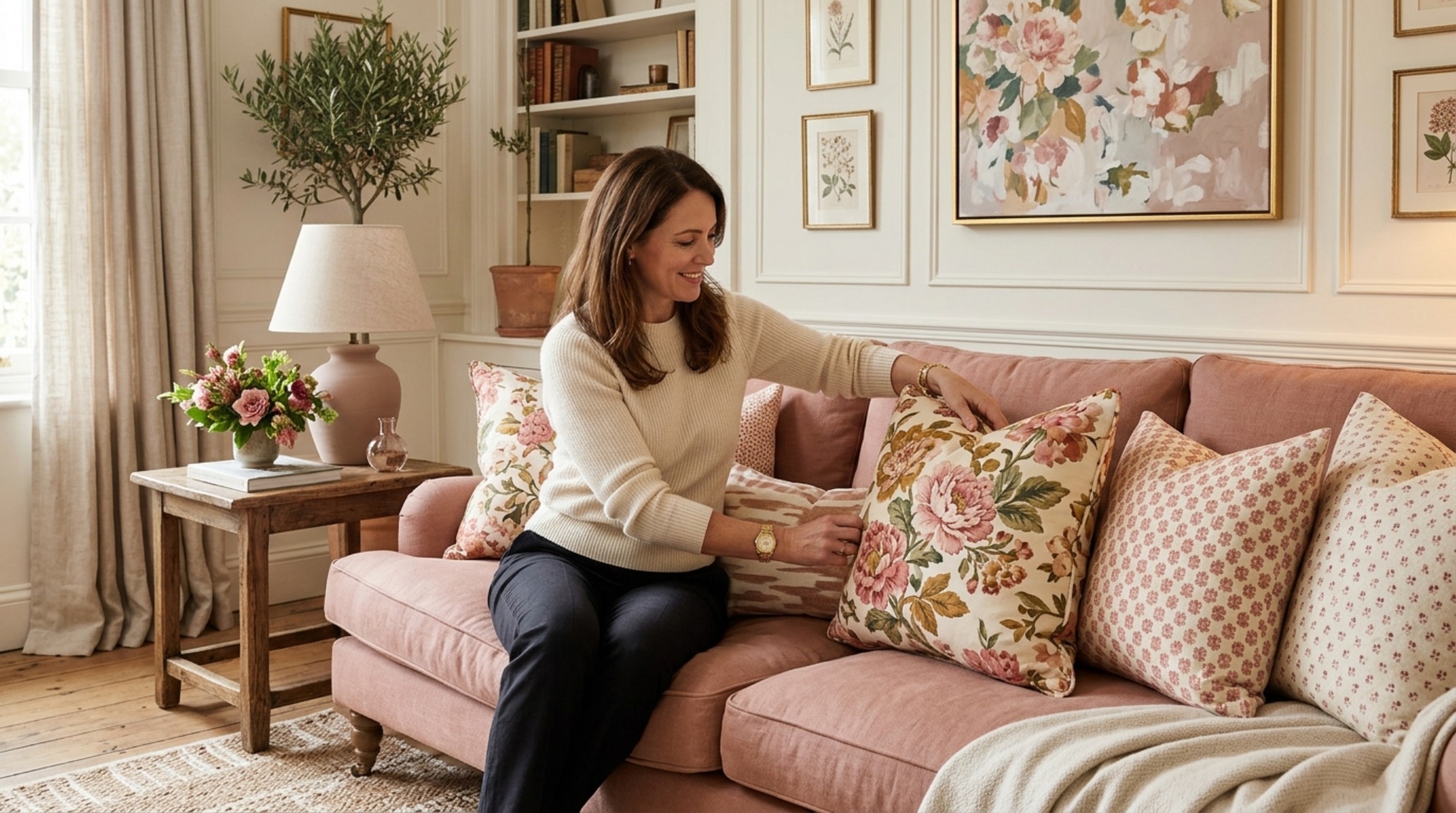
Mixing Patterns on Sofa: The Geometry of Visual Interest
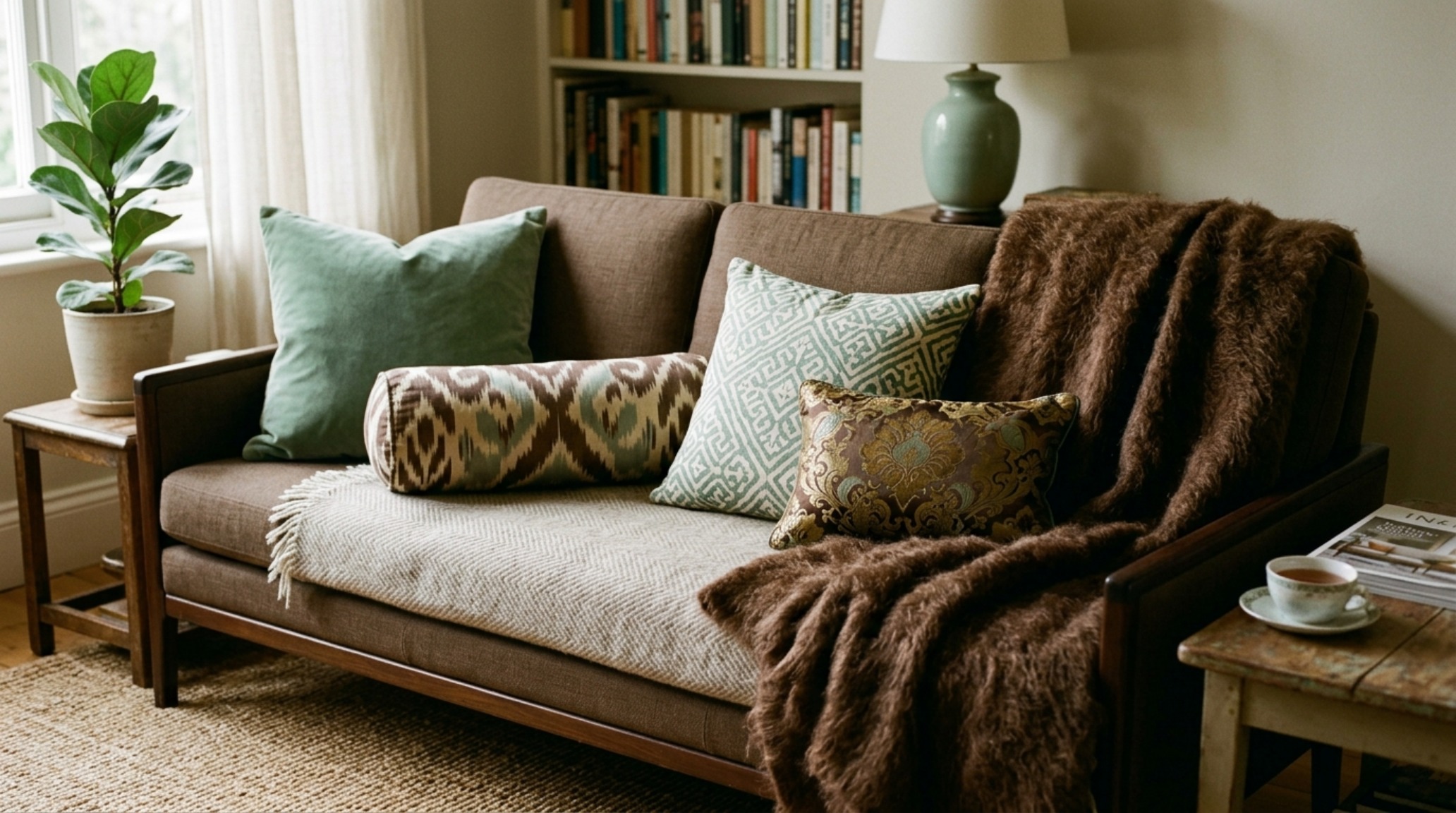
Pattern mixing is often where homeowners feel the most hesitation, yet it is the secret to a professional-grade vignette. The rule of thumb in high-end design is the ‘2-2-1’ principle: two solids, two patterns of varying scales, and one standout texture. When mixing patterns on sofa, start with a large-scale print—perhaps a heritage botanical or a geometric jacquard—and pair it with a much smaller, tighter pattern like a pinstripe or a micro-chevron.
This contrast in scale prevents the eye from becoming overwhelmed. Ensure there is a common ‘thread’ of color connecting them. For instance, if your large-scale floral features a hint of Farrow & Ball Setting Plaster, ensure your secondary stripe or solid velvet also pulls from that dusty terracotta family. By keeping the palette disciplined—limiting yourself to three or four core tones—you can push the boundaries of pattern without sacrificing the ‘Quiet Luxury’ aesthetic. Remember to check your sightline alignment; from the entryway, the patterns should feel harmonious, not chaotic.
Best Pillow Insert for Karate Chop: The Physics of the Perfect Dent
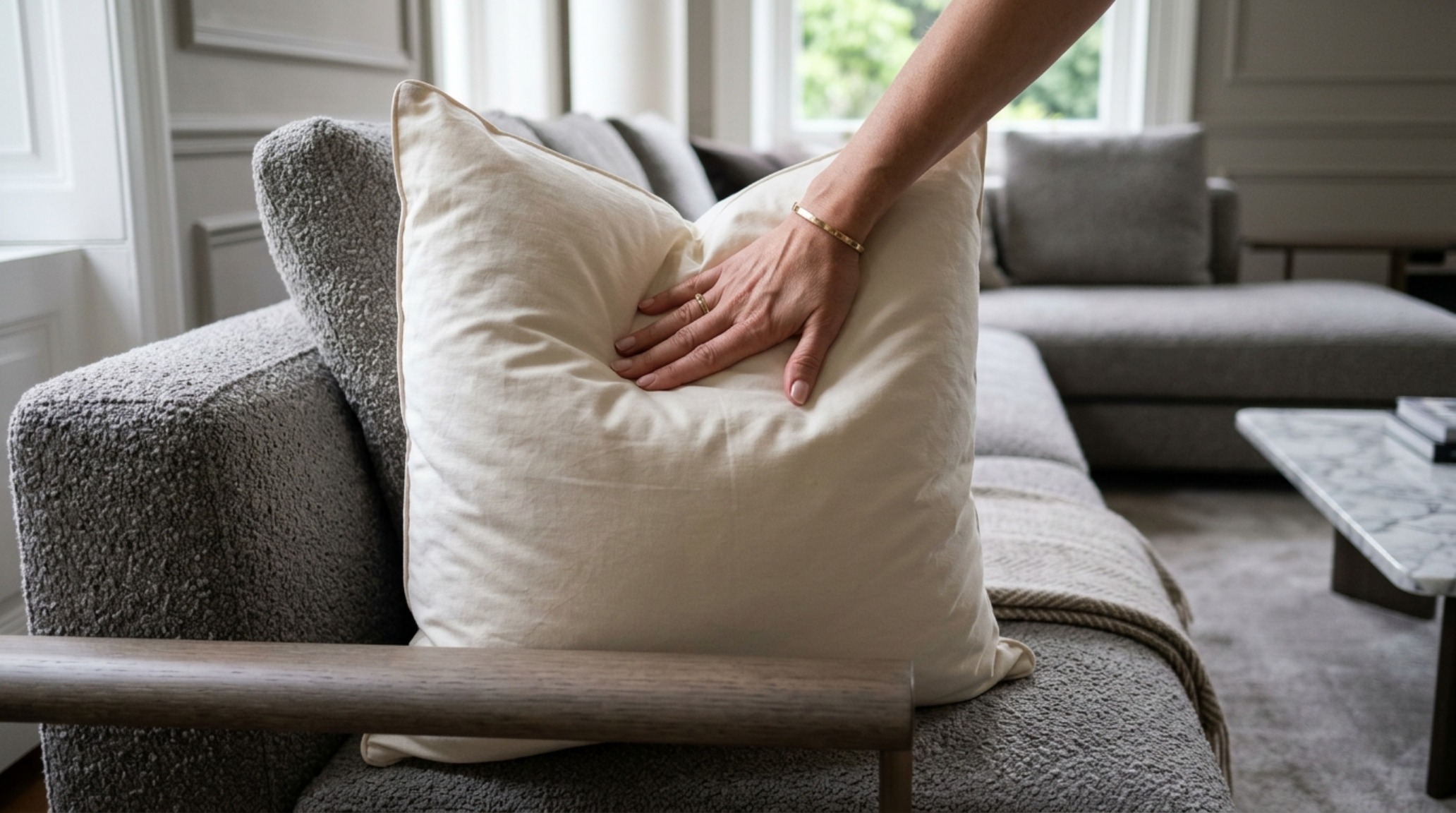
The interior of the pillow is just as important as the exterior. A high-end cover on a cheap, hollow-fiber insert will always look deflated and uninspired. If you are after that iconic, editorial ‘lived-in’ look, you must invest in the best pillow insert for karate chop: a high-ratio down and feather blend (typically 90% small grey duck feather and 10% down). This combination provides the weight and malleability needed to hold a shape while remaining soft to the touch.
For those with allergies, high-quality faux-down inserts made from siliconized micro-denier fibers have become incredibly sophisticated, mimicking the ‘heft’ of natural feathers without the allergens. To get the perfect chop, ensure your insert is always two inches larger than your cover. A 22-inch insert in a 20-inch cover creates a plump, filled-to-the-corners look that avoids the sad ‘dog-ear’ corners often seen in retail displays. This simple adjustment elevates the entire perception of the furniture, making the decorative pillows for couches look like custom-tailored architectural additions.
Lumbar Support for Deep Couches: Ergonomics Meets Aesthetic
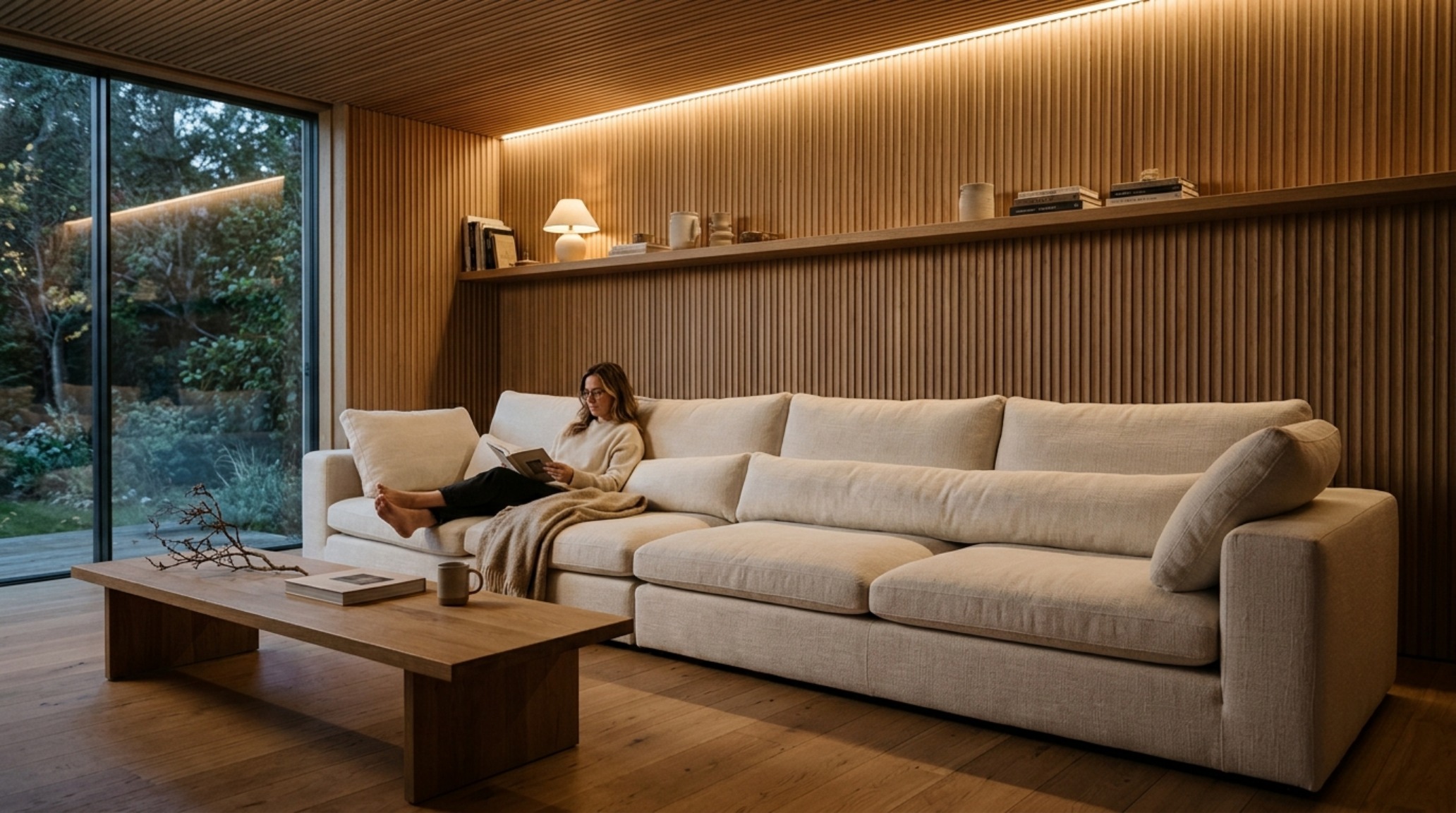
As sofas have trended deeper—often exceeding 40 inches in total depth—the need for functional support has become paramount. Lumbar support for deep couches shouldn’t look like an orthopedic accessory. Instead, we use elongated lumbar pillows (typically 12×24 or 14×36 inches) as a visual bridge. These horizontal elements break up the verticality of square cushions and provide much-needed lower back support for long-term lounging.
In a deep-seated environment, a long lumbar pillow in a contrasting texture—like a bouclé or a heavy-gauge knit—acts as a focal point. It draws the eye across the width of the piece, emphasizing the sofa’s scale. From a functional perspective, it ensures that your 36-inch primary circulation paths remain clear while the seating area itself feels cozy and enclosed. It’s the final piece of the puzzle in creating a space that feels as good as it looks.
Materiality, Palette & Dimension Blueprint
Detailed specifications outlining core tactile materials, lighting temperature, and room clearances.
Designing a home is an iterative process of finding harmony between the fixed architecture and the fluid elements of daily life. By thoughtfully selecting decorative pillows for couches, you aren’t just decorating; you are choreographing a sensory experience. It is the subtle ripple in a linen weave, the weight of a feather-filled cushion, and the way a pattern pulls a room together that transforms a house into a sanctuary. In the end, the most successful spaces are those that invite us to slow down, settle in, and appreciate the enduring beauty of materials designed to last a lifetime.
Editorial Silo • Recommended Architecture Studies
- Beyond the Cobalt Cliche: Modern Day Greek Architecture & Curating the Tactile Materiality and Mineral Palettes of Contemporary Greece — Archival Design Case Study
- Wall Mounted Coat Rack Plans: The Architectural Blueprint & Spatial Flow Guide — Archival Design Case Study
Curated Interior Perspectives
An editorial archive chronicling proportions, bespoke architectural joinery, and tranquil daylighting.
Curated Visual Lookbook
Design Gallery & Spatial Studies
A visual curation of architectural arrangements, lighting concepts, and material palettes featured in this space.