Long before the sleek, minimal lines of current architectural trends redefined our living spaces, the domestic interior was often a cluttered collection of heavy Victorian mahogany and dense velvet drapes. These spaces felt static, almost suffocating under the weight of history and unyielding formality. However, the modern shift toward intentionality has changed the landscape entirely. Today, the interior decorating major serves as the elevated standard for those seeking to master the balance between structural necessity and the sensory poetry of a room. This academic evolution replaces guesswork with a rigorous understanding of how light, texture, and volume interact to create homes that breathe. By moving away from the era of ‘over-decorating’ and into an era of material science, designers now treat a room as a living organism where every finish serves a psychological and functional purpose.

The Materiality of Sensation: Beyond Surface Styling
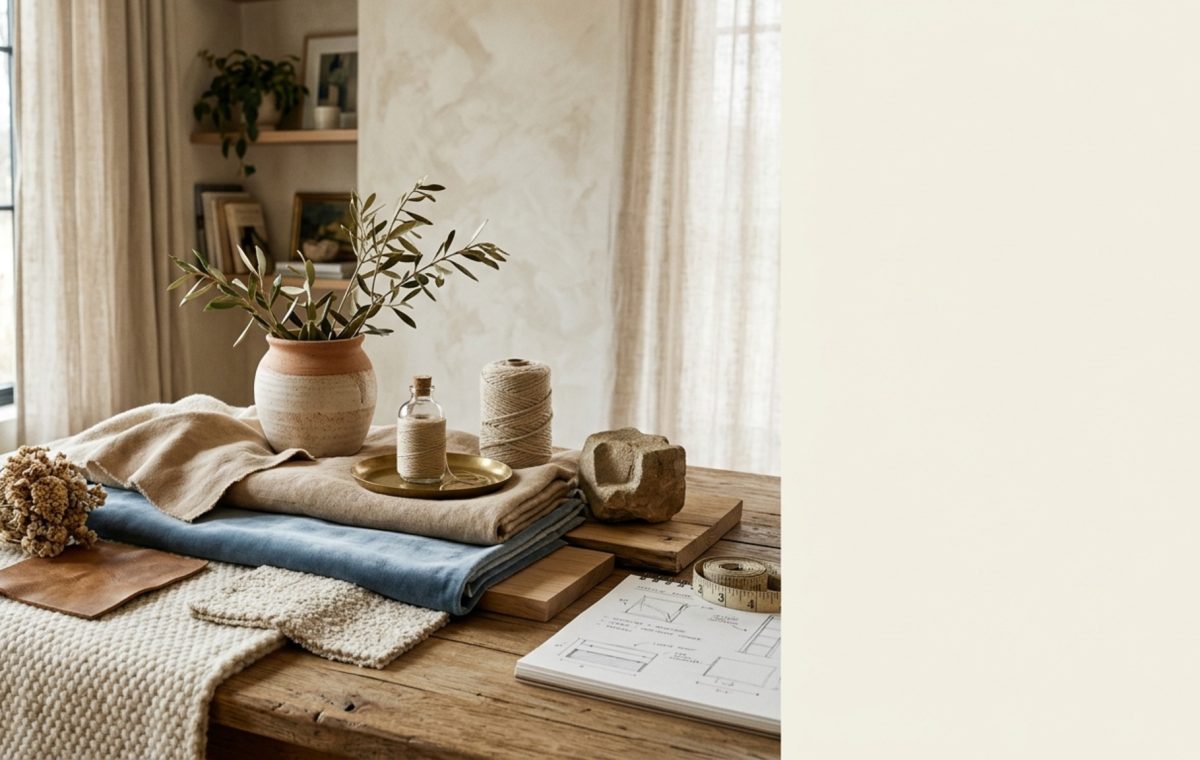
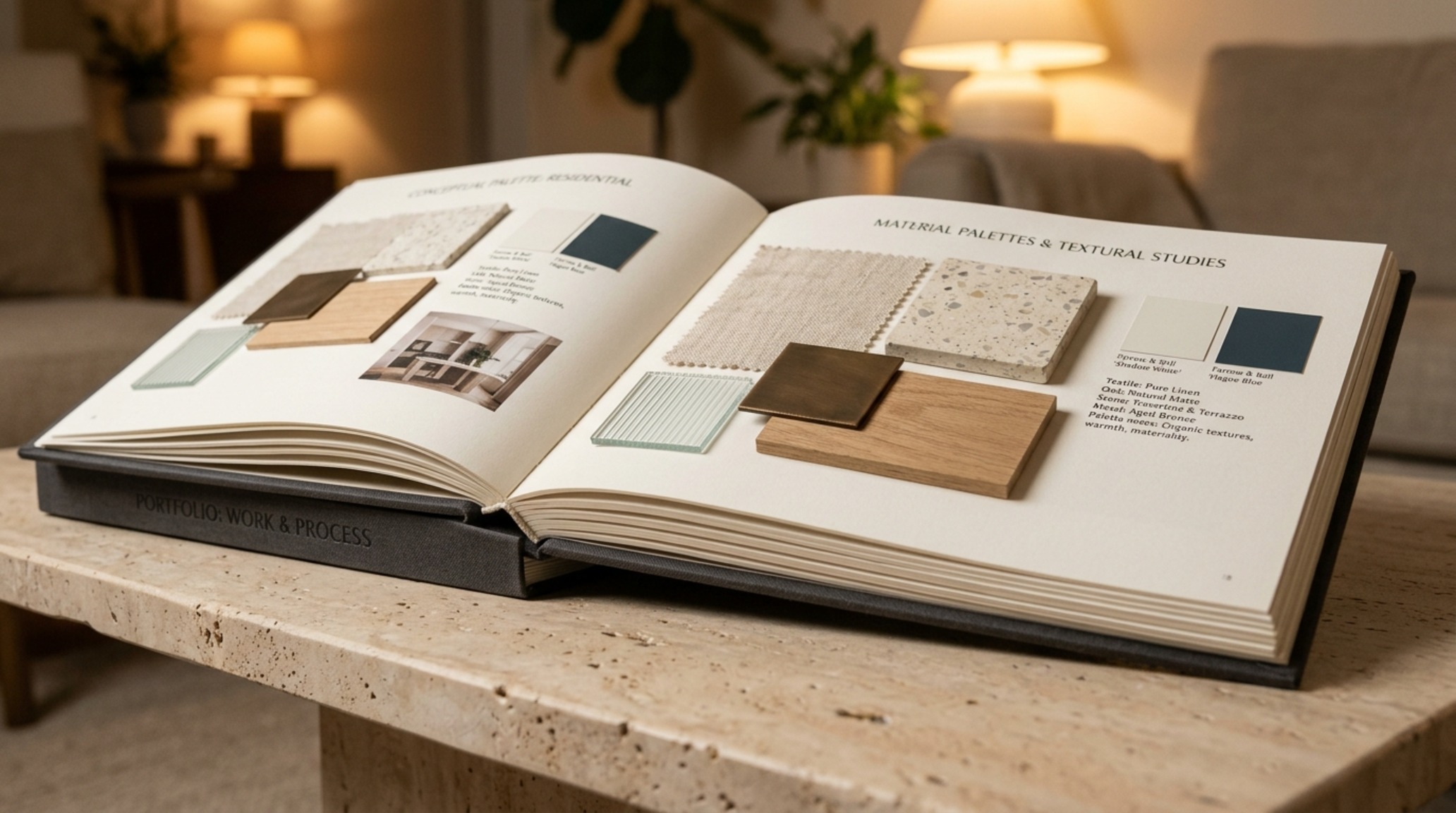
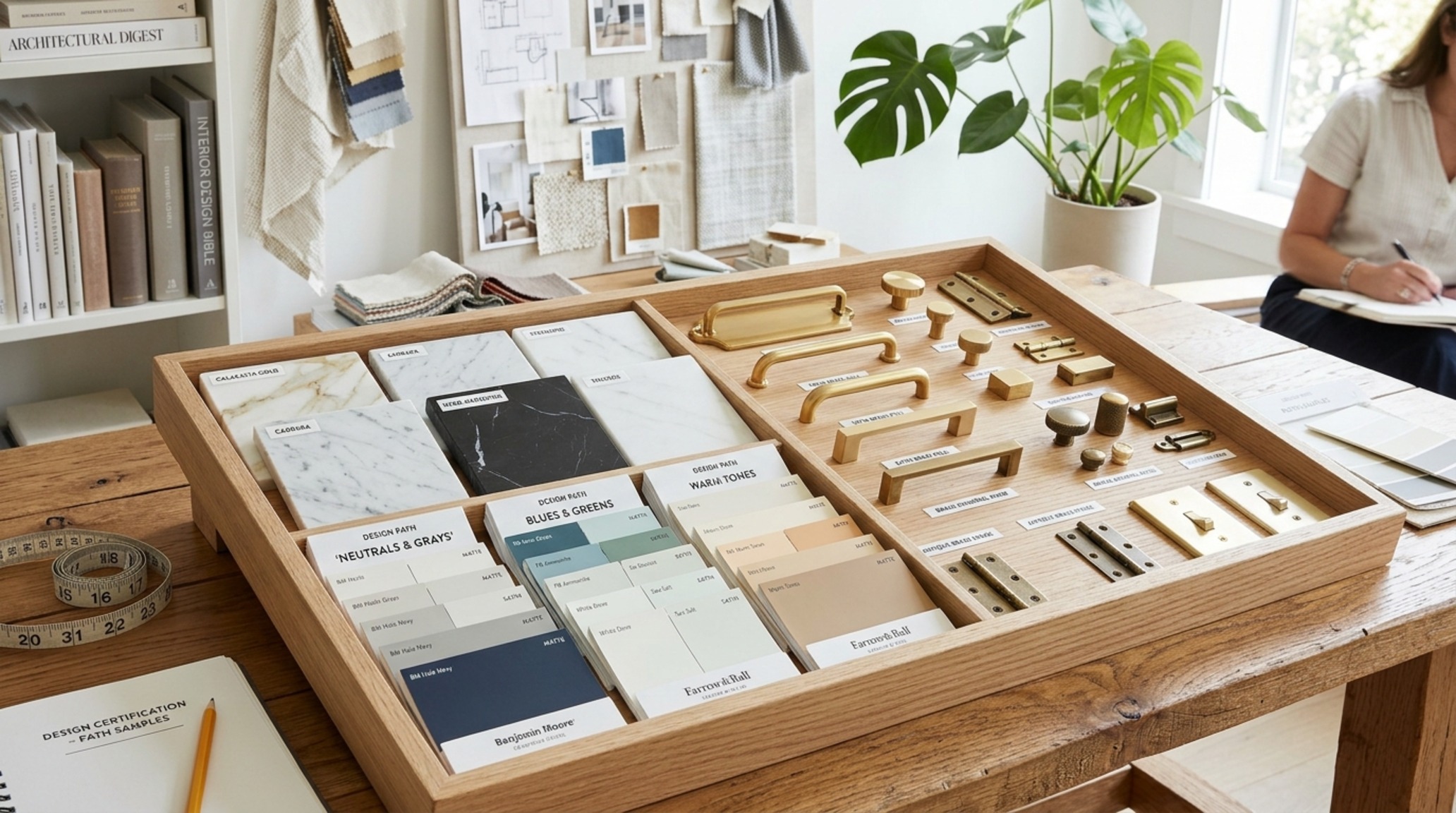
In the world of an interior decorating major, the concept of ‘materiality’ is the heartbeat of a project. It is no longer enough to simply match a throw pillow to a rug. True mastery involves understanding how a fluted white oak cabinet interacts with the diffuse morning light or how the cool, matte touch of honed travertine balances the warmth of a mohair sofa. This sensory training, central to elite design academies, prepares practitioners to curate atmospheres that are felt as much as they are seen. We look for a ‘tactile grounding’—the point where a room feels rooted in reality. When we layer textiles, we are building a narrative of comfort. A heavy Belgian linen drapes differently than a lightweight cotton voile, and a professional knows that the weight of that drape affects the spatial cadence of the entire window wall.
Authentic historical references are often the starting point for these palettes. We might pull the muted, earthy pink of Farrow & Ball Setting Plaster to evoke a sense of aged Mediterranean plaster, but then sharpen the look with contemporary black steel accents. This tension between the old and the new prevents a space from feeling like a museum. Within the interior decorating major curriculum, students are taught to recognize these historical echoes while applying them to modern lifestyles. It is a balancing act of respecting the past while providing the 36-inch primary circulation clearances required for modern flow. Every choice is deliberate, every texture a conscious decision to invite or repel touch.
Interior Design Degree vs Decorating: Understanding the Academic Divide
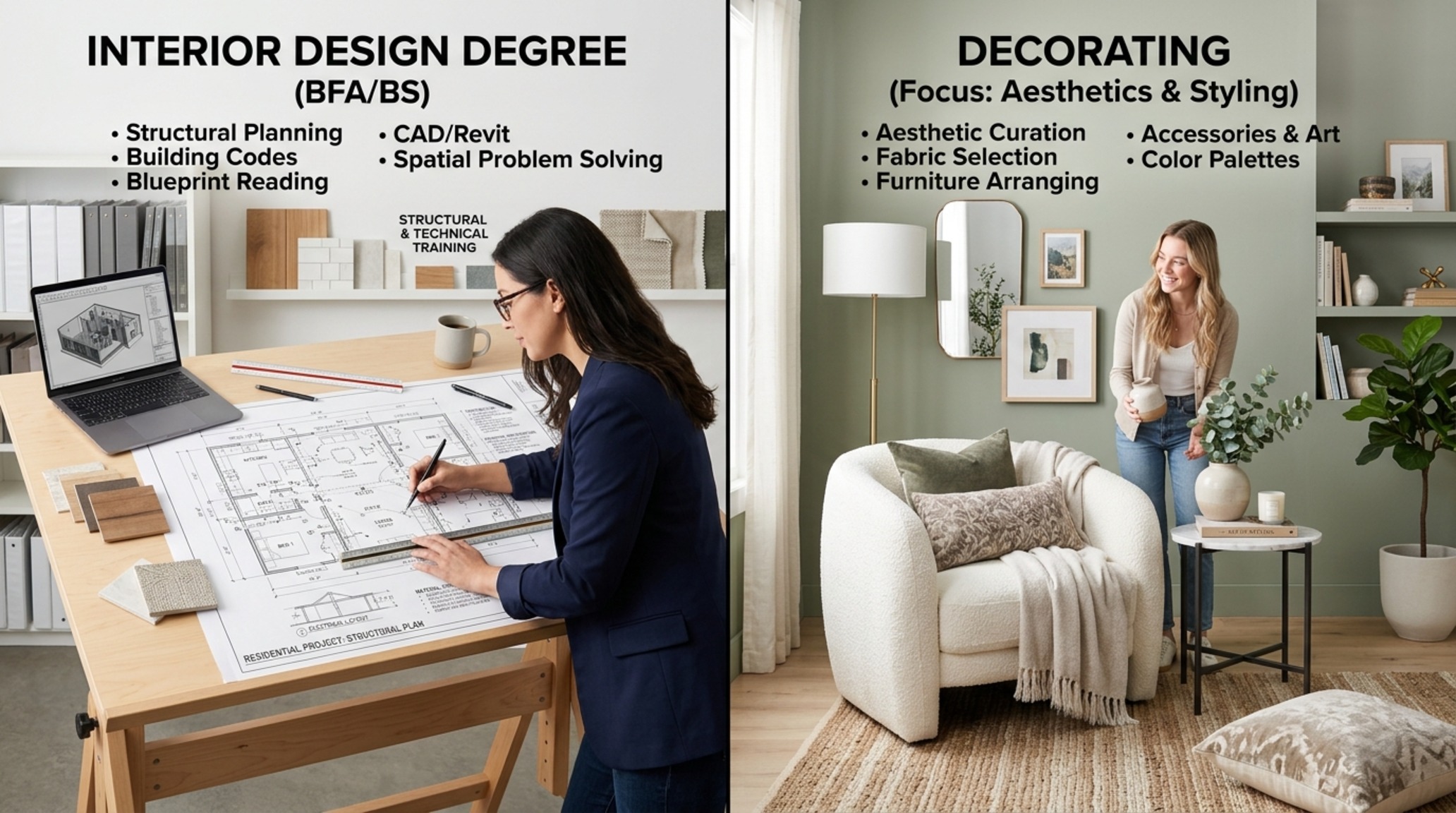
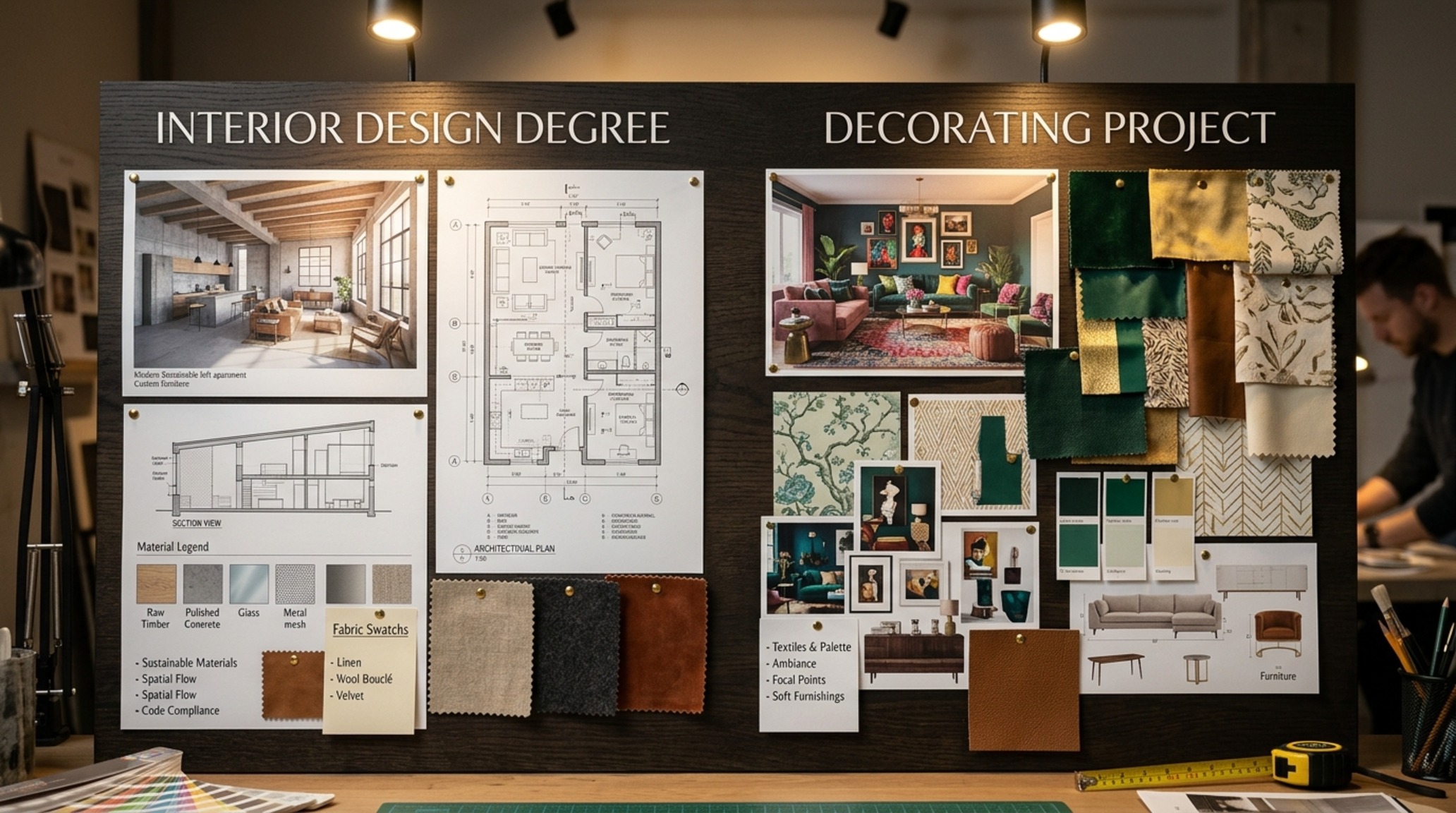
One of the most frequent conversations in the industry revolves around the interior design degree vs decorating distinction. While both paths share a love for aesthetics, the degree path often dives deeper into the structural bones and life safety codes of a building. However, the modern interior decorating major has absorbed much of this technical rigor. Today’s top-tier decorating programs emphasize spatial planning and human-centric design just as heavily as color theory. The distinction is becoming less about ‘who has the technical skill’ and more about the specific focus of the practice. A decorator might lean more into the finished surfaces and atmospheric quality, but they still must understand the architectural constraints of the shell they are inhabiting.

Curated Visual Narrative & Detail Studies
The successful execution of a high-end interior requires more than just a good eye; it requires a deep understanding of the CIDA accredited design programs‘ standards, which often dictate how we perceive professional quality in the field. These programs ensure that designers are not just choosing pretty objects but are understanding the environmental impact of materials and the ergonomics of a layout. For instance, when planning a dining area, a professional allows for a 30-inch chair pull-out clearance to ensure the spatial flow remains uninterrupted. This level of detail is what separates a hobbyist from a graduate of an interior decorating major. They understand that a chair isn’t just a seat; it’s a volume of space that must be accommodated for movement.
Visualizing these spaces requires a specific vocabulary of light. We speak in Kelvin and CRI (Color Rendering Index). A room illuminated at 2700K feels intimate and candlelit, perfect for a residential lounge, whereas 3000K provides the crisp task lighting needed in a kitchen. For an interior decorating major, these specifications are just as important as the fabric swatches. If you select a high-end paint like Benjamin Moore Swiss Coffee but light it with low-CRI bulbs, the warmth you intended will vanish into a muddy green. Professional lighting ensures that the material science behind your selections is actually visible to the naked eye.
Spatial Planning Software Proficiency: The Digital Skeleton
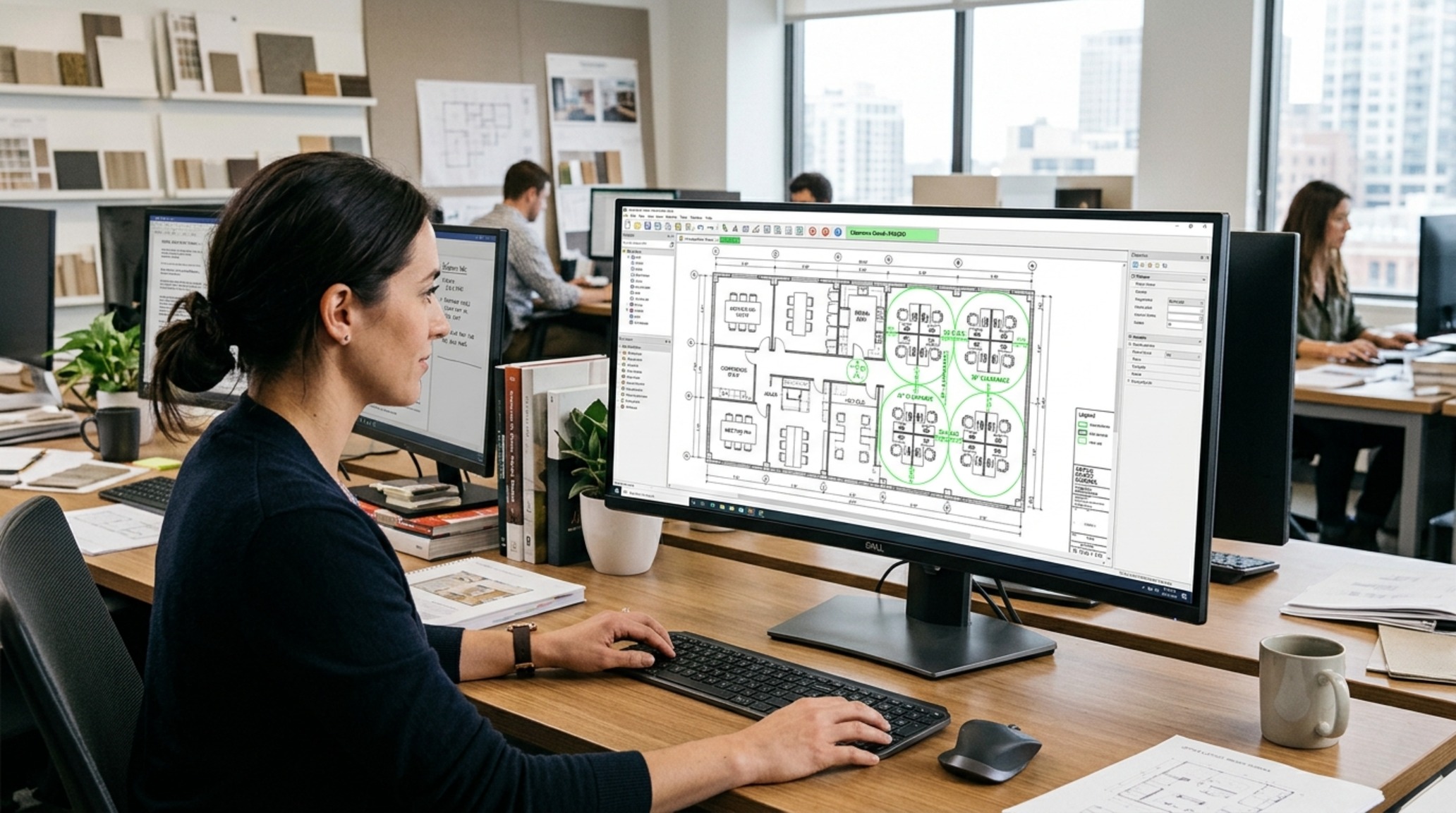
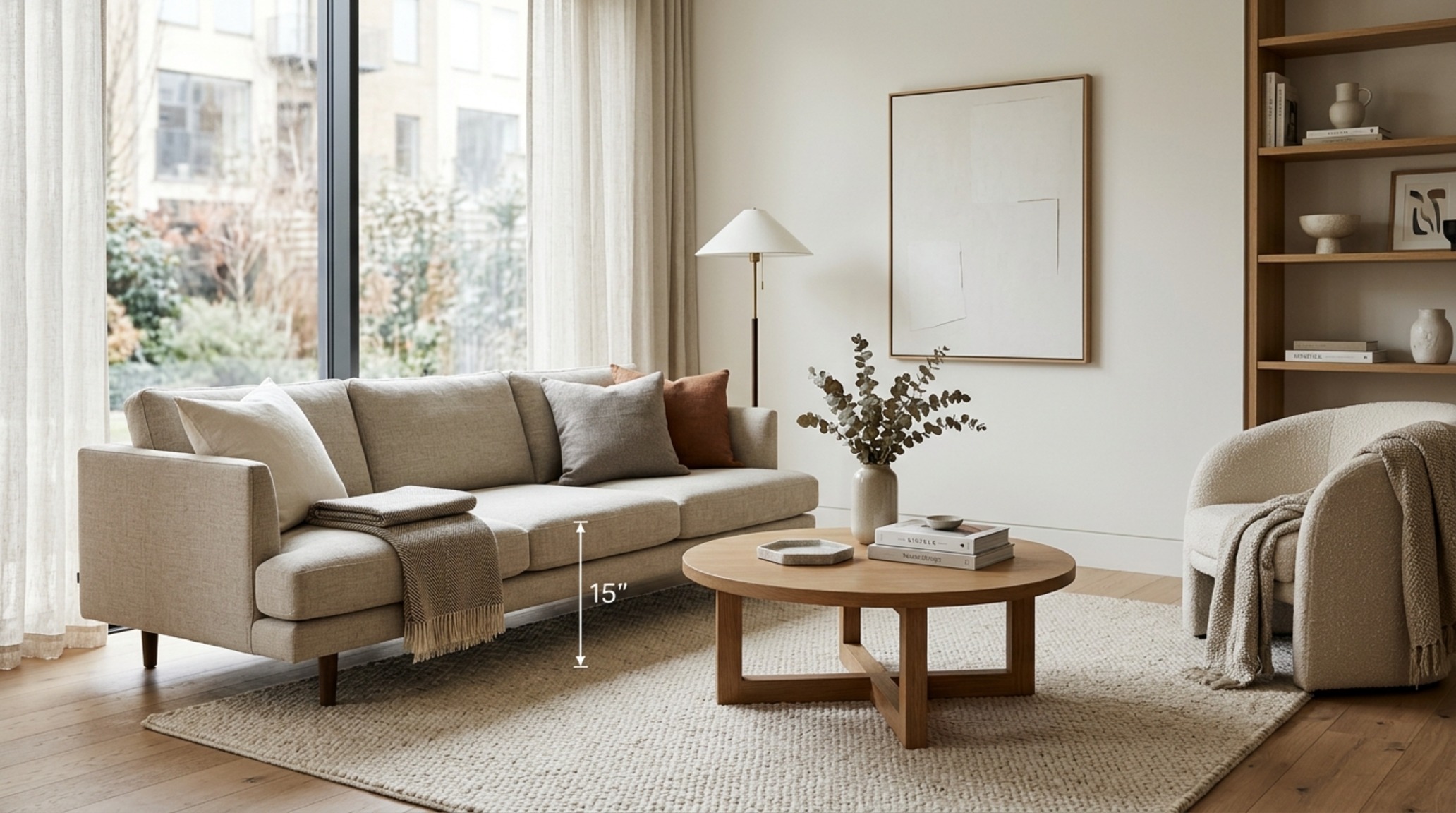
Behind every evocative room is a robust digital framework. Developing spatial planning software proficiency is a non-negotiable step for any modern professional. Using tools like AutoCAD, SketchUp, or Revit allows the designer to test sightline alignment before a single piece of furniture is ordered. This technical backbone allows us to see if an 18-inch coffee table reach is actually comfortable from a low-slung sofa or if a pendant light is hung at the correct 30-to-36-inch height above a kitchen island. The interior decorating major teaches that these digital drafts are the ‘skeleton’ upon which the ‘skin’ of textiles and finishes is stretched.

Architectural Vignettes & Spatial Flow
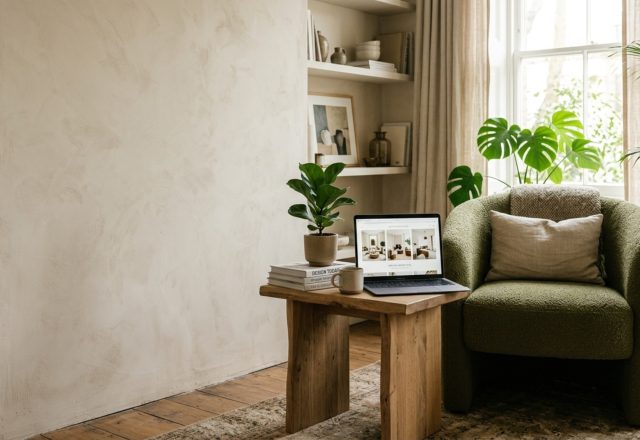
When we talk about spatial cadence, we are talking about the rhythm of a home. An interior decorating major focuses on how negative space provides breathing room for the eye. A common mistake in unstudied decorating is the fear of empty walls. A professional, however, knows that the void is just as important as the object. By strategically placing a single, high-impact piece of art against a neutral, lime-washed wall, we create a focal point that doesn’t compete for attention. This is where ‘shadow play’ comes into effect. The way a shadow falls across a fluted surface can change the entire mood of a room as the sun moves from east to west.
Material selection also plays a role in this rhythm. We might use a consistent flooring material—perhaps a wide-plank light oak—throughout a floor to create a seamless transition between rooms. This visual continuity is a hallmark of the interior decorating major. It prevents the ‘choppy’ feeling that occurs when every room has a different personality. Instead, we use subtle shifts in textile weight or paint sheen to signal a change in the room’s function while maintaining a cohesive architectural language. This ensures that the home feels like a singular, curated thought rather than a collection of disparate ideas.
Materiality, Form & Light Vignettes
In the final stages of a project, the focus shifts to the micro-details that define a professional’s signature. This is where professional design portfolio development becomes essential. A designer’s portfolio isn’t just a gallery of finished rooms; it is a visual argument for their specific material philosophy. For an interior decorating major, this often means showcasing how they’ve balanced the ‘hard’ elements—stone, metal, wood—with the ‘soft’ elements—wool, silk, and linen. They might highlight a close-up of a hand-knotted rug meeting a brass floor inlay, proving their attention to the transition points that most people overlook.
Color theory also evolves at this stage. We move beyond primary and secondary colors into the world of nuanced neutrals and desaturated tones. The interior decorating major explores how a ‘neutral’ isn’t just beige; it can be a complex mix of grey, blue, and brown that changes depending on the time of day. We use these colors to manipulate the perceived size of a room. A dark, moody charcoal like Sherwin Williams Iron Ore can actually make a small room feel larger by blurring the boundaries of the corners, a counterintuitive trick that professionals use to create ‘infinite’ space in tight quarters.
Residential Decorating Certification Paths: Bridging Art and Industry
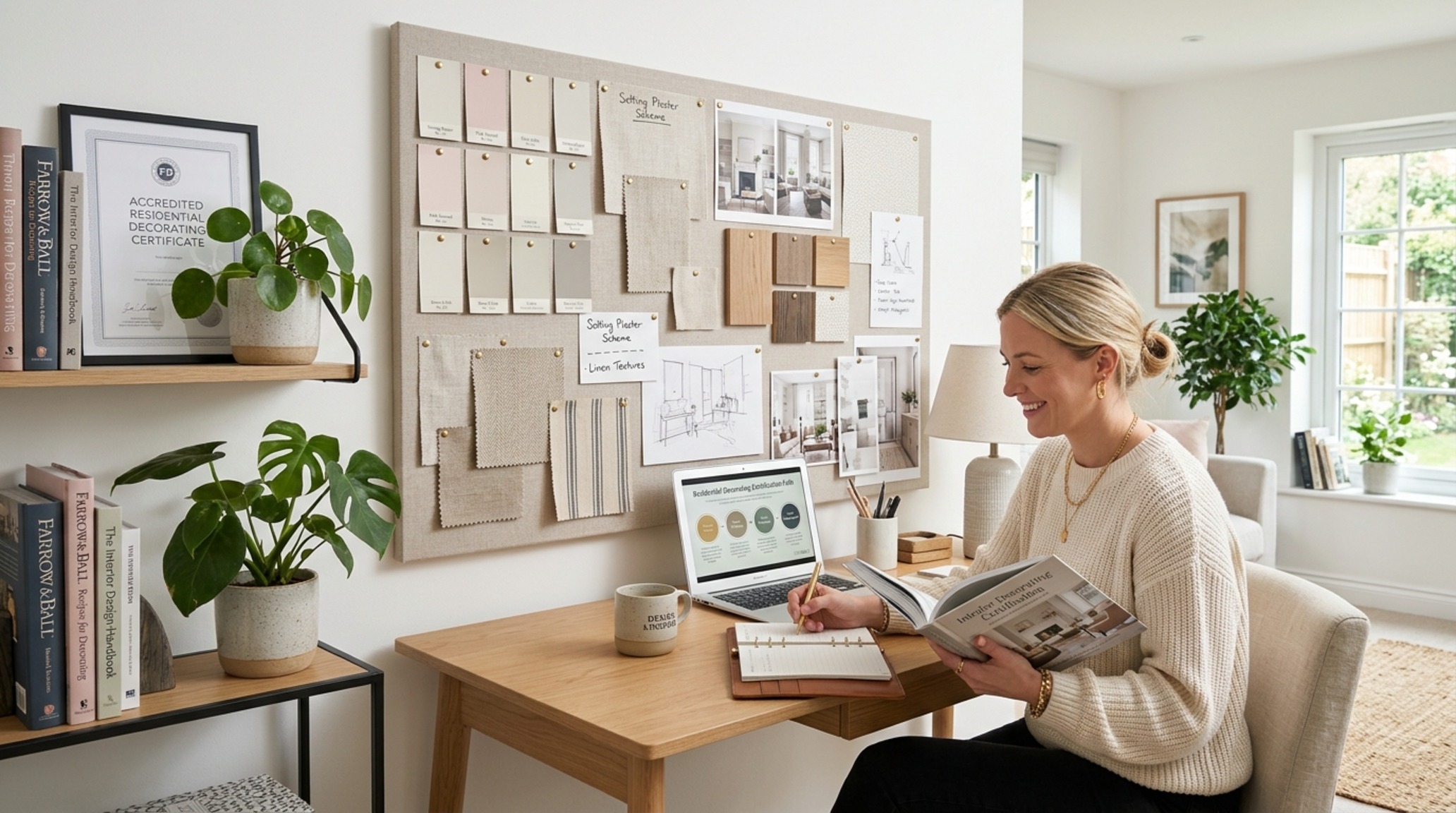
For those who wish to specialize in the domestic realm without committing to a full four-year architectural degree, residential decorating certification paths offer a focused alternative. These programs concentrate on the ‘human’ side of the interior decorating major—the psychology of the home. They teach how to conduct client interviews that get to the heart of how a family actually lives. Do they need a 36-inch primary circulation path for children and pets? Do they require a specific Kelvin temperature for their home office to maintain focus? These certifications ensure that the decorator is equipped with the industry standards required to transform a house into a bespoke sanctuary.
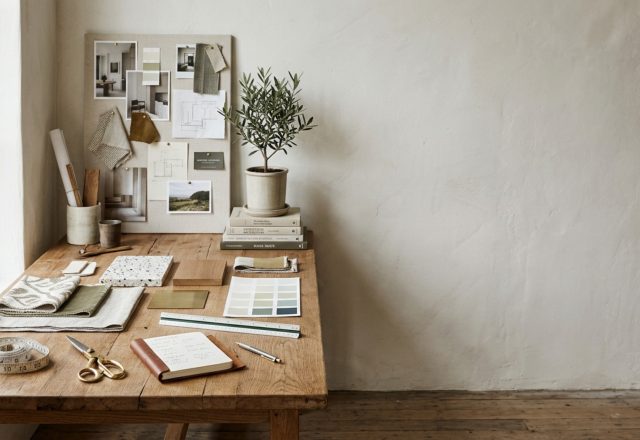
Architectural Materials, Swatches & Kelvin Index
Detailed finish schedule outlining authentic architectural surfaces, color values, and clearances.
Ultimately, the journey through an interior decorating major is a path toward understanding the profound impact our surroundings have on our emotional well-being. It is a discipline that marries the structural integrity of the built environment with the soft, ephemeral qualities of light and touch. As we look forward, the role of the decorator will continue to evolve, moving even further into the realms of sustainability and wellness, ensuring that every curated corner is not just a visual success, but a sanctuary for the senses. The future of design lies in this delicate intersection of material honesty and spatial intelligence, where the home is no longer just a place of shelter, but a meticulously crafted experience of the world.
Editorial Silo • Recommended Architecture Studies
- Exterior modern homes sculptural layout rules — Archival Design Case Study
- How do you become an interior designer in the modern market — Archival Design Case Study
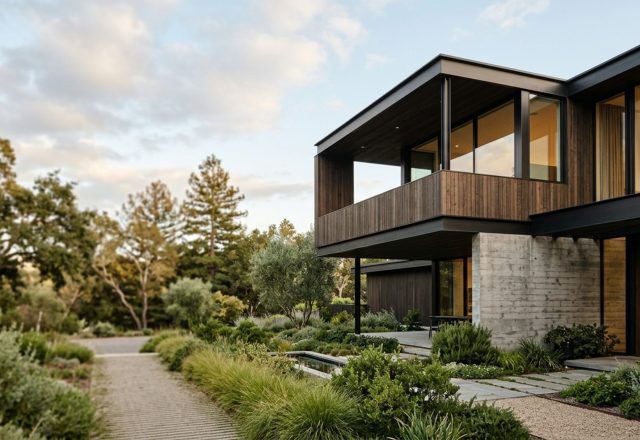
Architectural Harmony & Finishes
High-resolution photography exploring proportions, organic textures, and spatial harmony.

Curated Visual Lookbook
Design Gallery & Spatial Studies
A visual curation of architectural arrangements, lighting concepts, and material palettes featured in this space.