HISTORICAL CONTRAST & MODERN EVOLUTION
For decades, the domestic interior was defined by a rigid adherence to heavy, dark wood cabinetry and ornate, dust-gathering baubles that prioritized status over sensation. In the mid-century and Victorian eras alike, the home was often a museum of static objects, disconnected from the human touch and the fluid needs of daily life. Today, we witness a profound shift where interior decor items are no longer merely ornamental filler but structural participants in the room’s narrative. We have transitioned from the ‘decorated room’ to the ‘sculpted environment,’ where the tactile resonance of a space dictates its success as much as its floor plan. This evolution toward ‘Warm Minimalism’ focuses on the alchemy of materials—how a hand-poured plaster wall interacts with the soft grain of a white oak stool, or how a slab of honed travertine can anchor an entire seating arrangement.
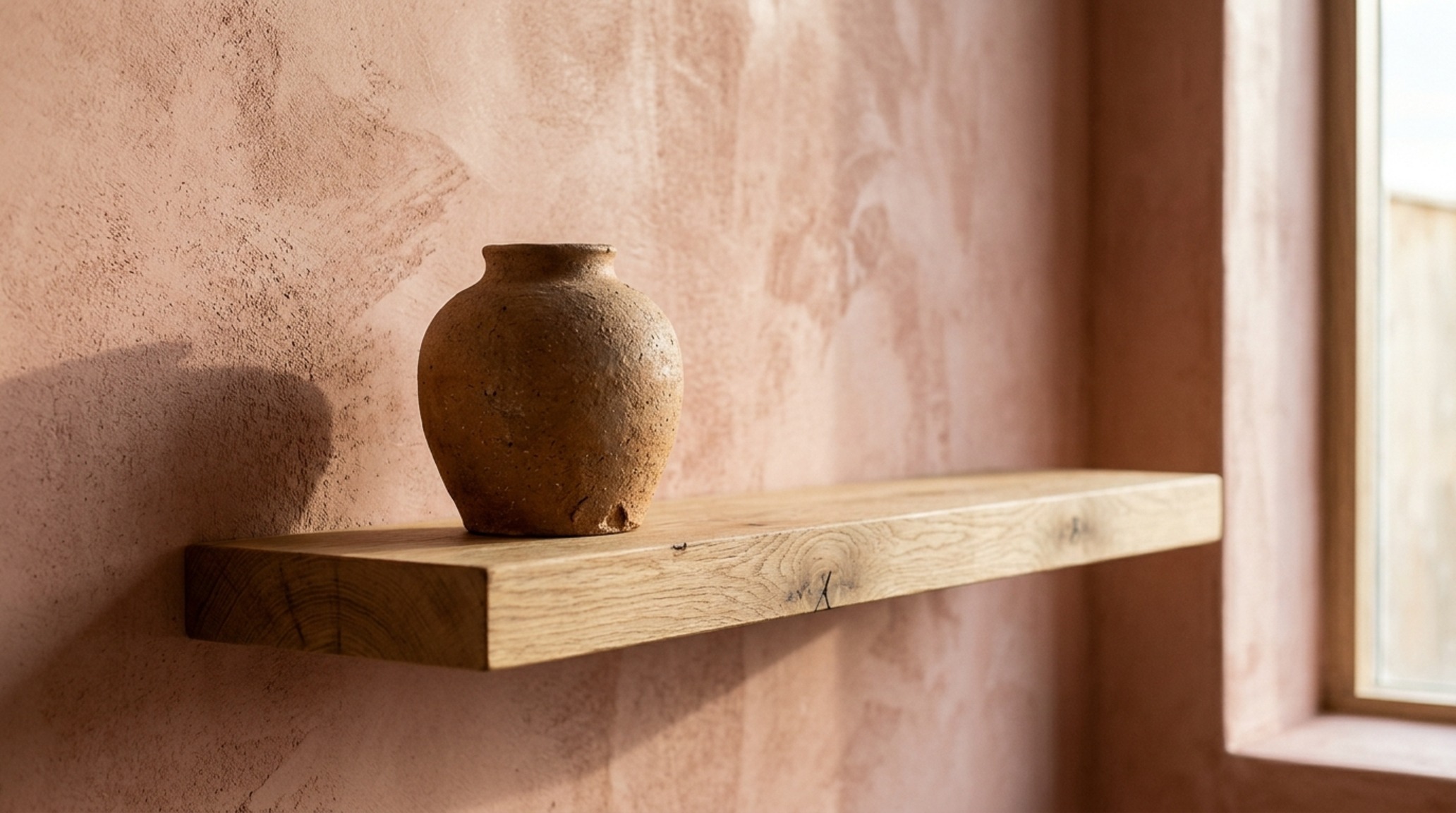
In this modern landscape, the soul of a home resides in its tactile depth. It is no longer enough for a space to look beautiful in a high-resolution photograph; it must feel resonant under the hand and calming to the nervous system. This editorial interrogates the sensory layering of ‘muddied’ 2025 color palettes—shades that feel pulled directly from the earth, such as terracotta, mocha, and muted olive—and explores how to fuse them with raw, high-contrast materials. By selecting objects that serve as sensory anchors, we can shift a living space from a flat visual plane into a deeply immersive, high-materiality sanctuary.
Tactile Interior Textures: The Foundation of Warm Minimalism
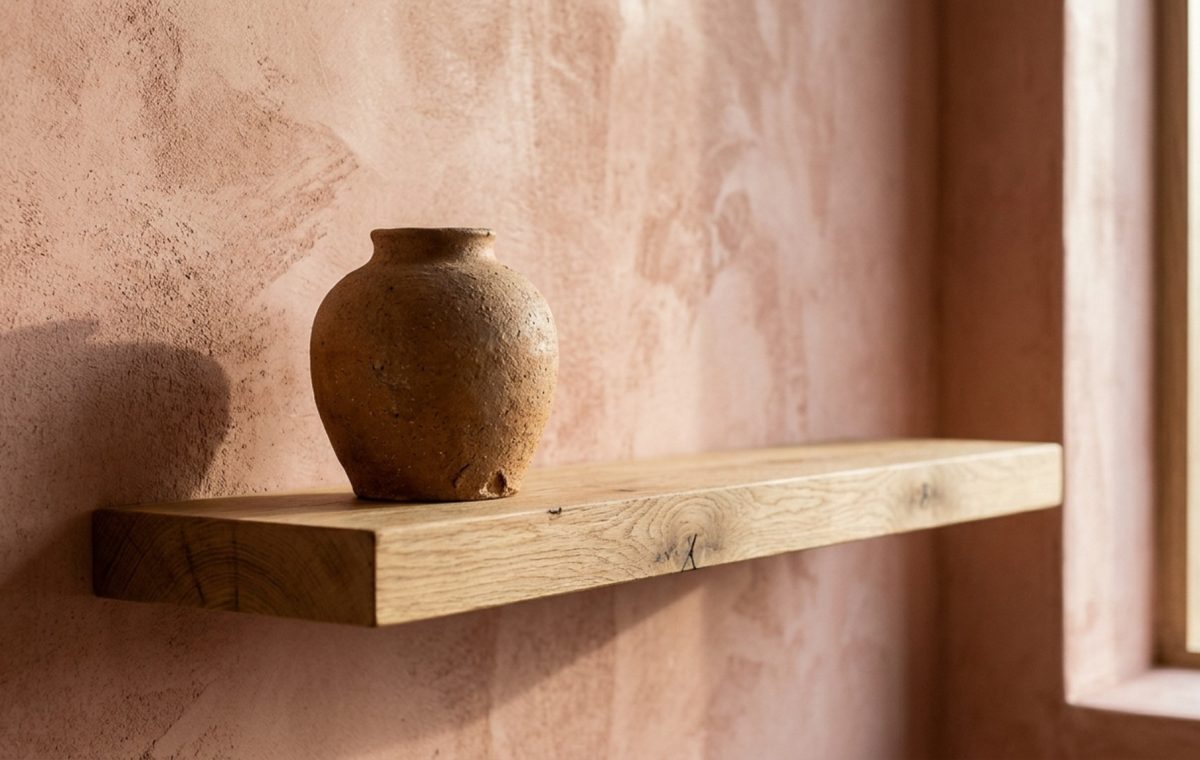
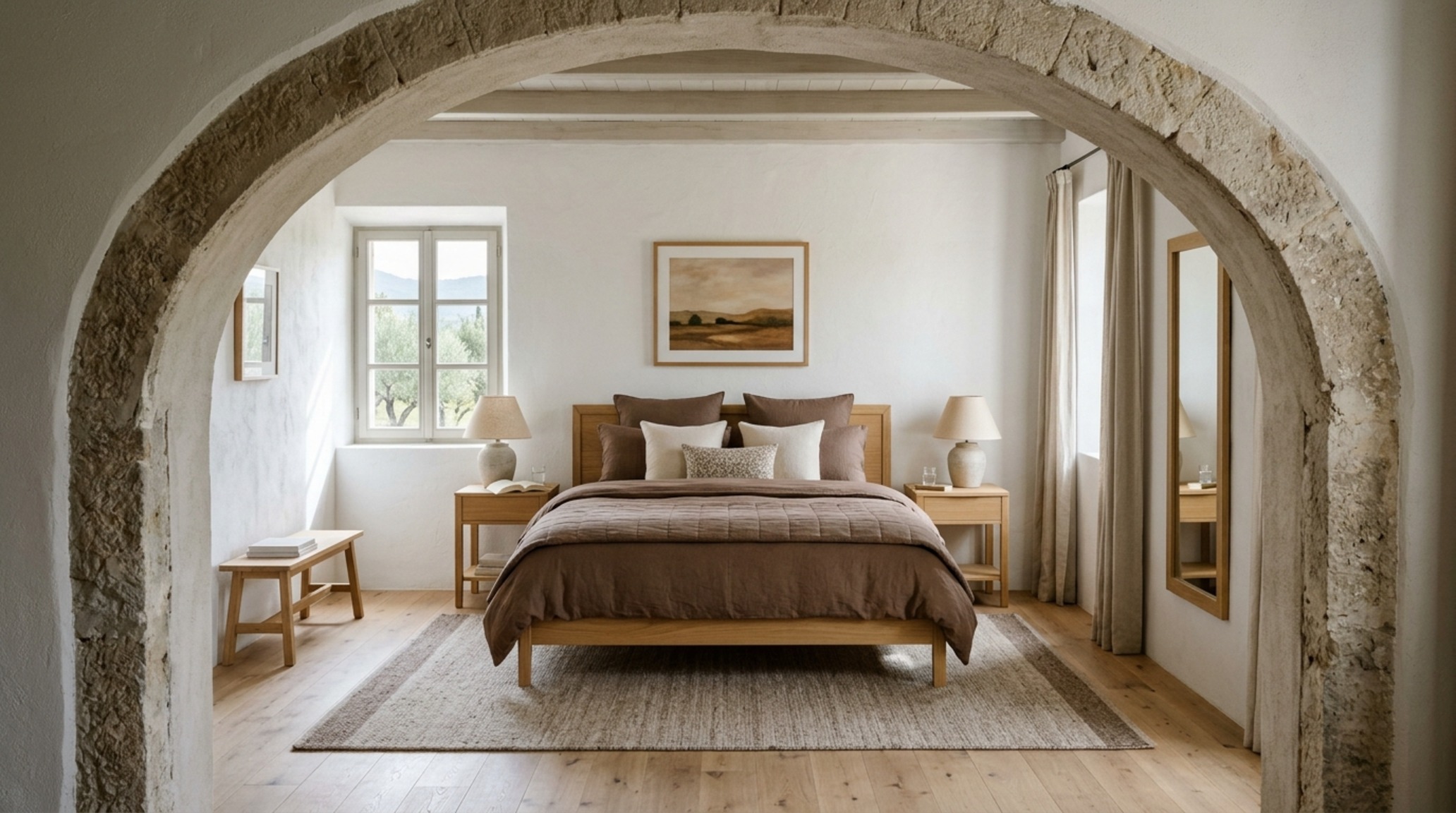
The primary driver of 2025’s aesthetic shift is the rejection of the ‘sterile’ white box. Instead, we are seeing the rise of tactile interior textures that demand engagement. This starts with the bones of the room—the walls. Moving away from flat latex paint, designers are turning toward hand-applied limewash and Roman clay. A shade like Farrow & Ball’s Setting Plaster or Benjamin Moore’s Swiss Coffee, when applied in a mottled, textured finish, creates a backdrop that changes throughout the day as natural light rakes across the surface. These finishes provide a soft-focus atmosphere that makes even the most minimalist room feel inhabited and warm.
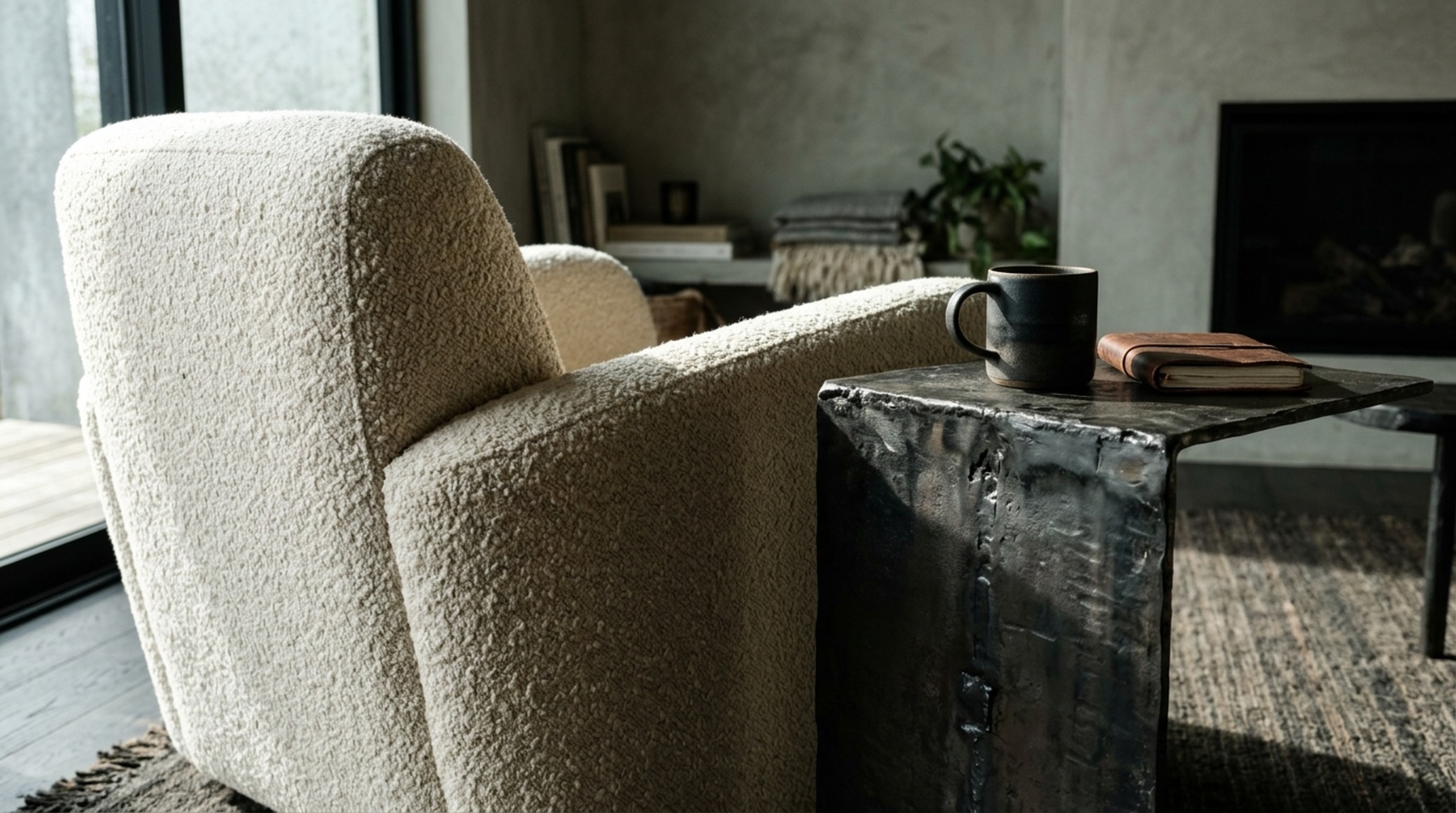
When we talk about materiality, we must address the contrast between hard and soft. A room dominated by bouclé textiles needs the sharp, cold counterpoint of blackened steel or a heavy, textured stone. The 2025 palette is unapologetically ‘muddied’—think of the deep, desaturated green of an olive grove at dusk or the scorched-earth warmth of raw terracotta. These colors act as neutrals, but with a psychological weight that pure grey or beige lacks. They provide a canvas for interior decor items that celebrate the ‘perfectly imperfect’—hand-thrown ceramics with visible finger ridges, or a solid wood side table that shows the natural checking and movement of the timber over time.
Modern Living Room Decor Essentials: Calibrating the Social Plane
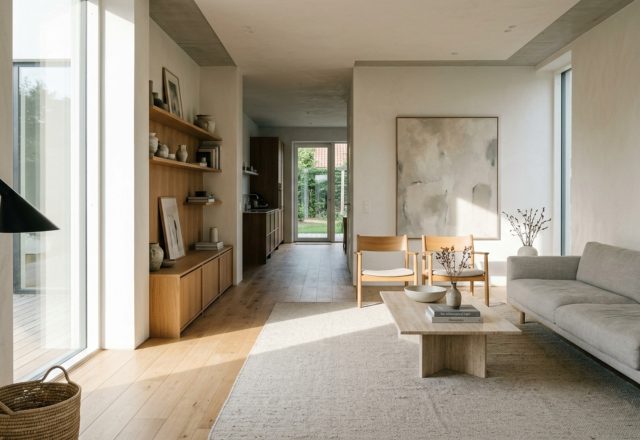
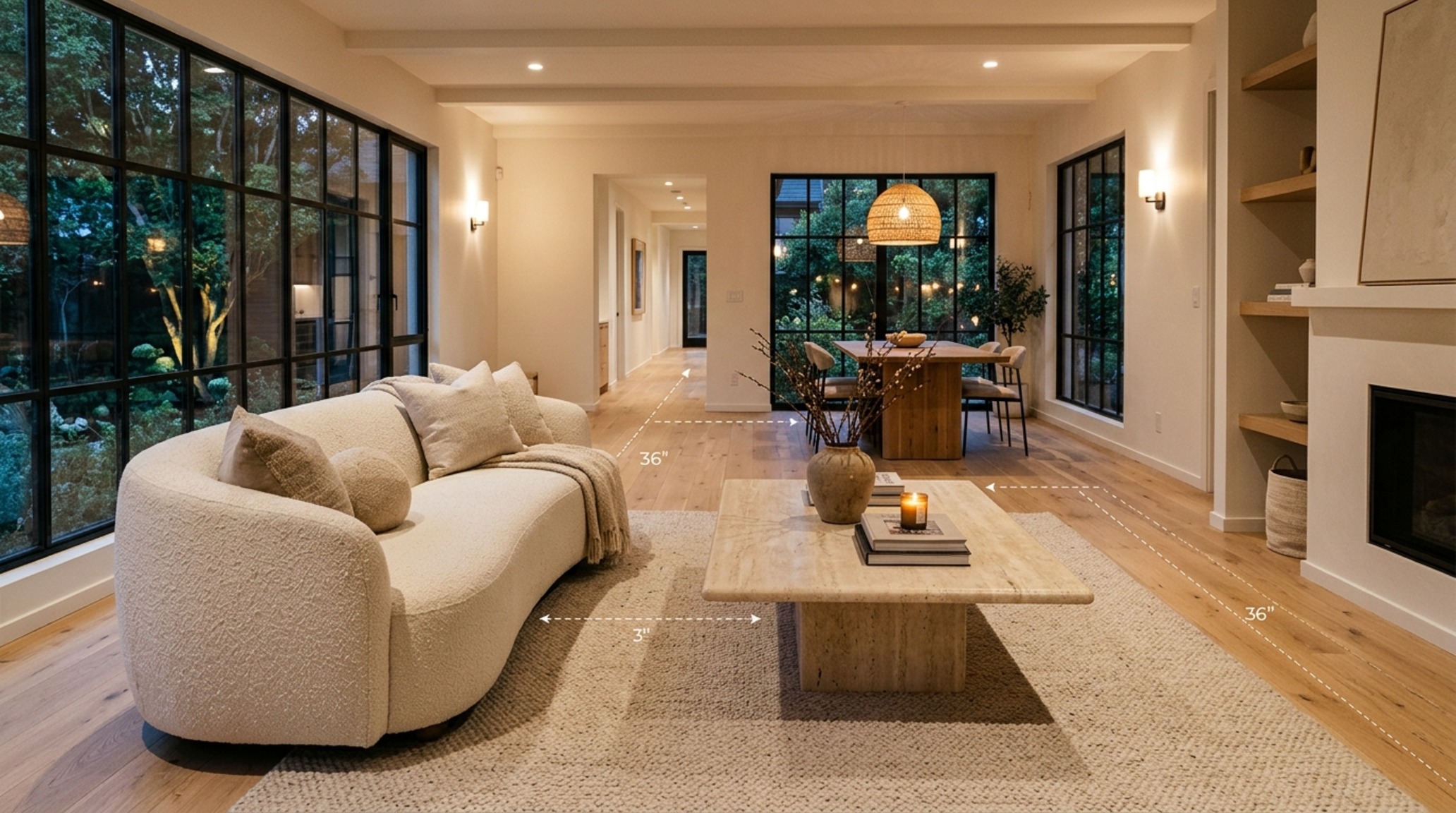
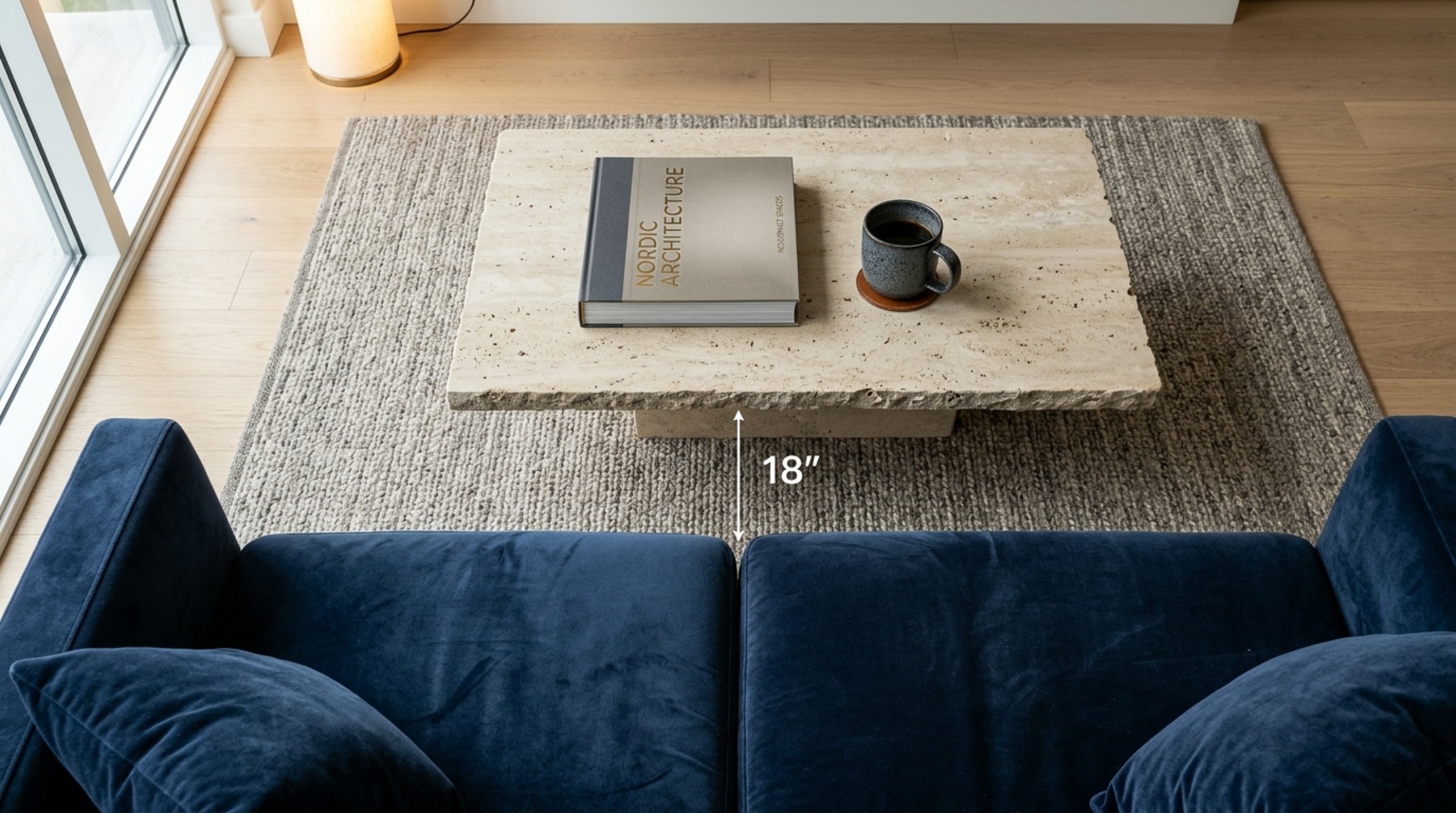
Architecture is as much about the space between objects as it is about the objects themselves. When curating modern living room decor essentials, one must respect the architectural clearances that facilitate human movement. A living room only feels truly ‘luxurious’ when it functions with ergonomic grace. This means maintaining a primary circulation path of at least 36 inches, ensuring that guests can move through the room without a sideways shuffle. The relationship between the sofa and the coffee table is equally critical—an 18-inch gap allows for a comfortable reach for a drink or a book while keeping the sightlines open. These are the invisible lines that define spatial harmony.
Lighting, too, serves as a structural tool rather than just a utility. For a truly immersive sensory experience, we move beyond the harsh glare of overhead ‘boob lights’ or recessed cans. Instead, focus on a high CRI (Color Rendering Index) of 90+ to ensure that your muddied olives and rich mochas don’t turn grey at night. Ambient lighting should sit at a warm 2700K, mimicking the golden hour of a setting sun. When you place a heavy stone lamp on a sideboard, you aren’t just adding light; you are creating a ‘light pool’ that defines a specific zone within the larger room, acting as a functional anchor for the eye and the body.
Luxury Home Styling Objects: Elevating the Everyday into Art
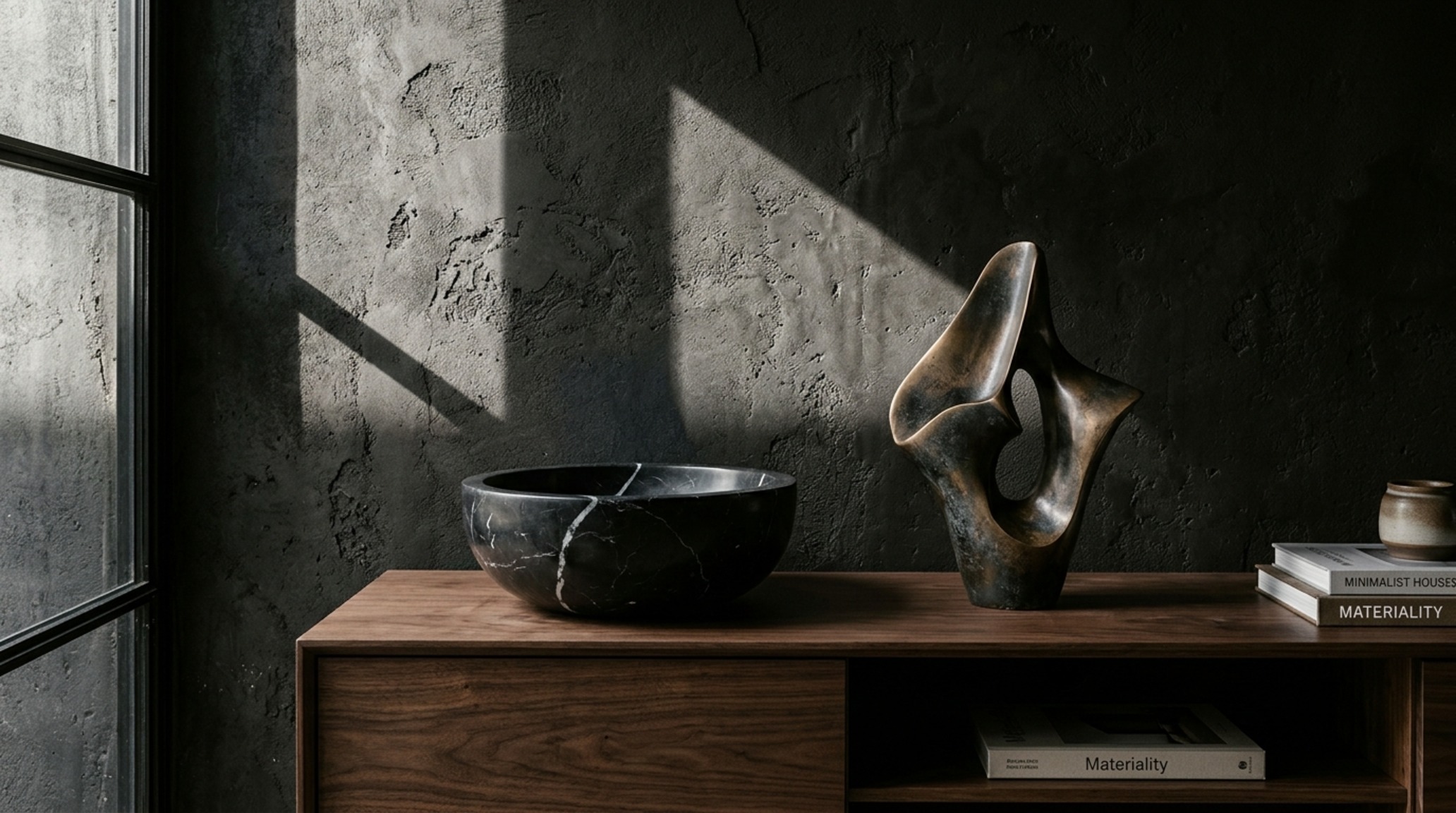
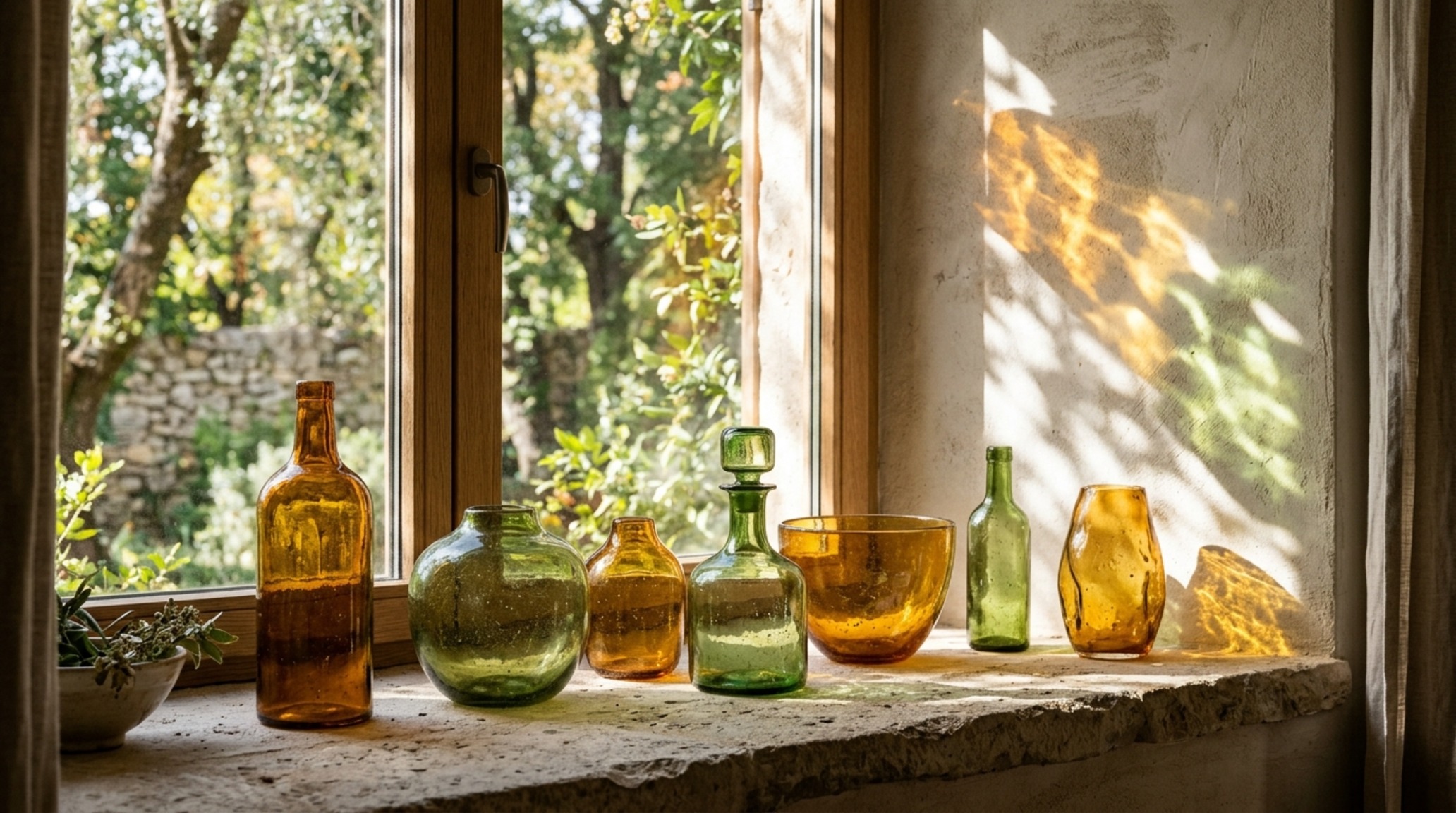
True luxury in 2025 is found in the weight and provenance of an object. We are moving away from mass-produced ‘filler’ items toward luxury home styling objects that possess a sense of permanence. Think of a solid block of Portoro marble carved into a simple bowl, or a oversized hand-blown glass vessel that catches the morning light. These items act as architectural punctuation marks. They provide the high-contrast moments that prevent a warm, minimalist room from feeling stagnant. A matte black metal sculpture against a limewashed wall creates a shadow play that evolves with the sun, introducing a temporal dimension to the interior design.
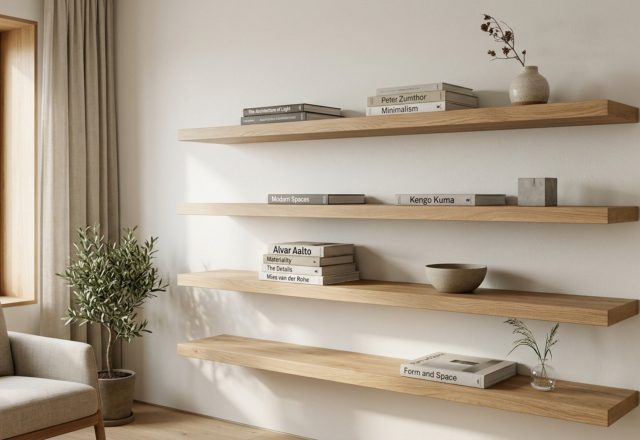
The selection of these items should be a study in restraint. In a world of digital noise, the home should be a visual palate cleanser. By choosing fewer, more significant objects, you allow each piece to ‘breathe.’ Negative space is not an absence of design; it is a deliberate design choice that grants the eye a place to rest. When a single, high-quality interior decor item is given its own pedestal or a generous stretch of shelving, it transforms from a purchase into a specimen. This is where the ‘curated’ home differs from the ‘decorated’ one—it is an intentional assembly of stories and textures rather than a collection of trends.
Functional Interior Decor Items as Spatial Anchors
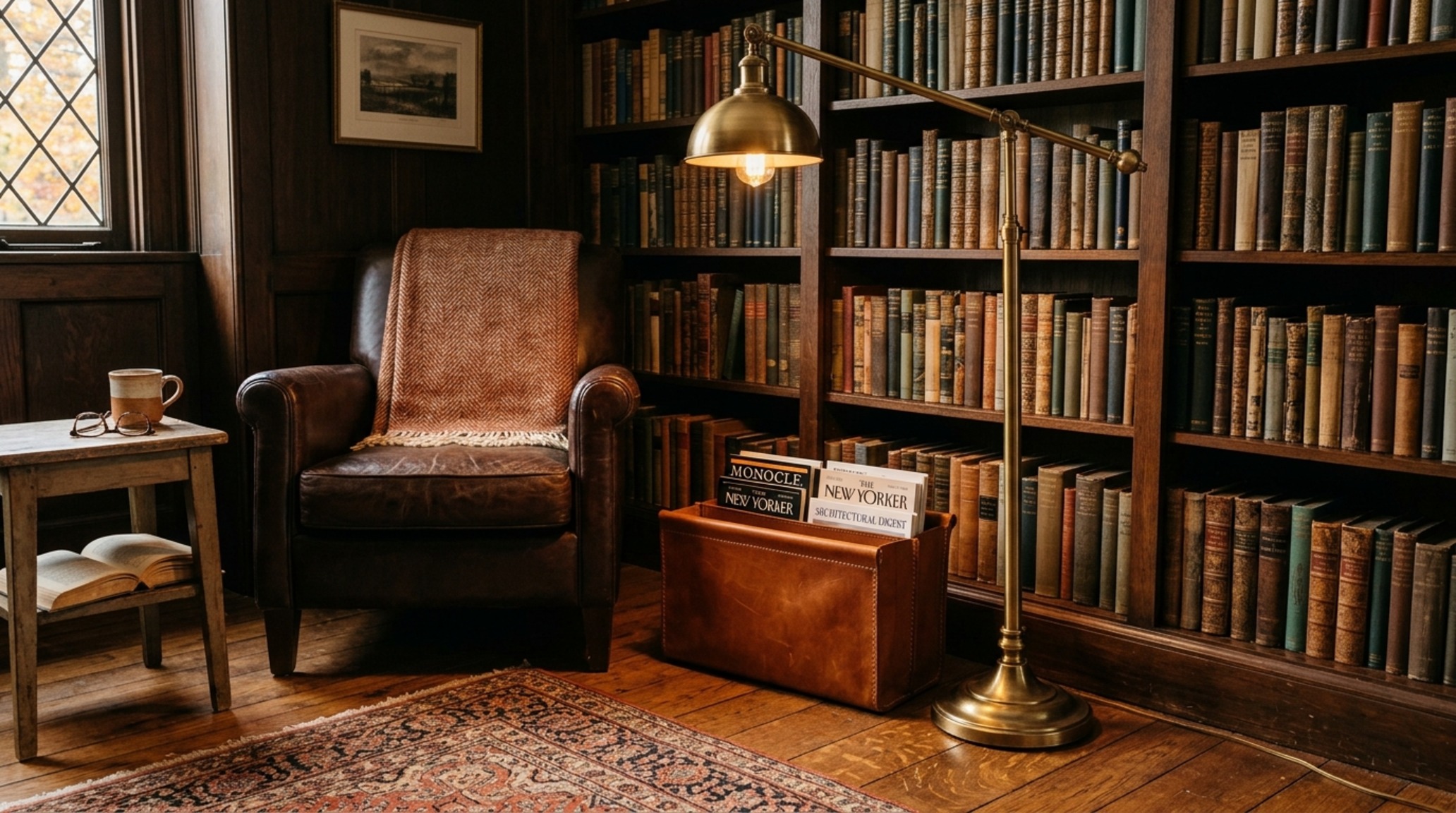
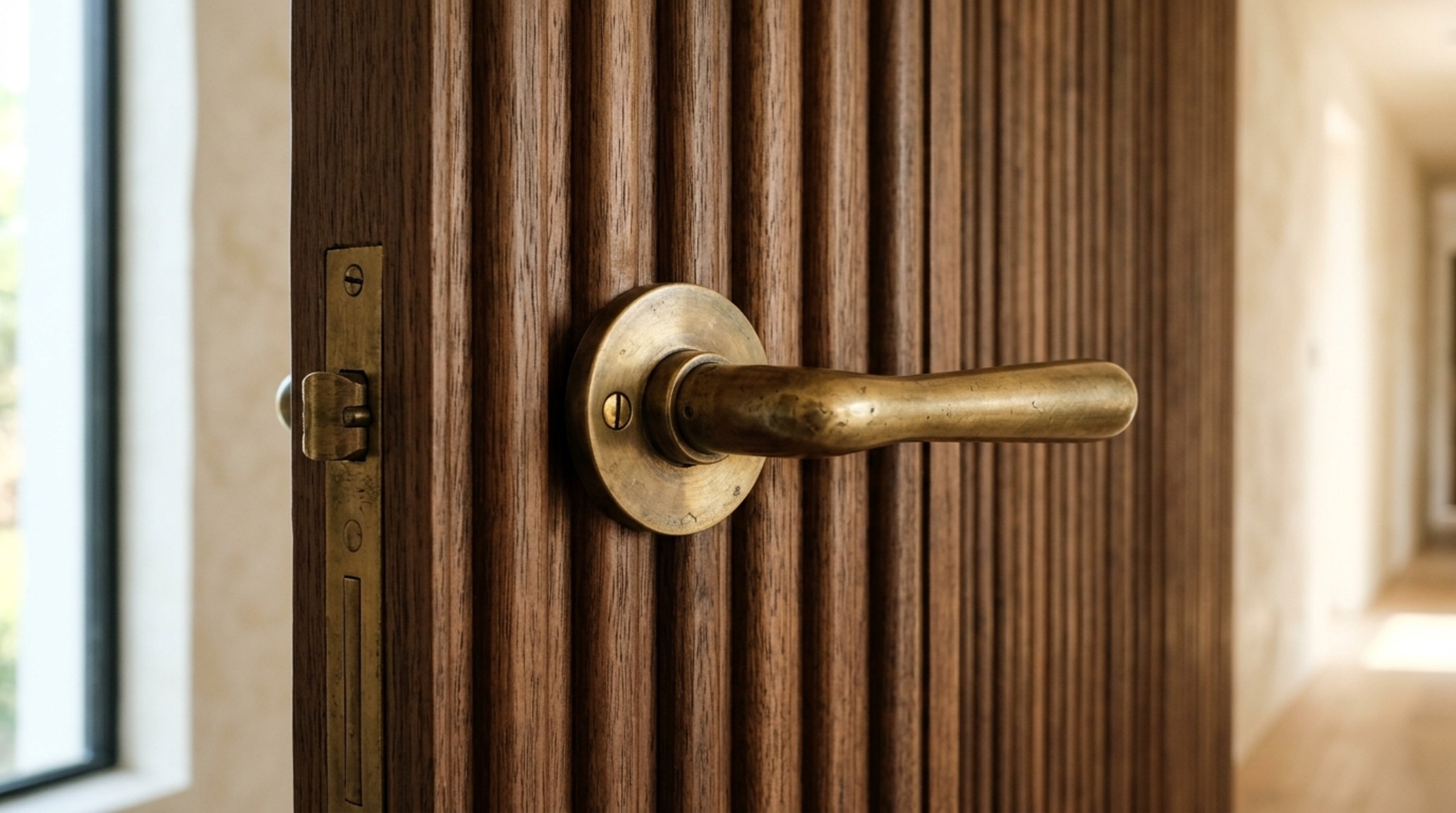
Every object in a high-materiality sanctuary must justify its existence through either extreme beauty or exceptional utility—ideally both. Functional interior decor items like catch-all trays, bookends, and even fire tools can be elevated through material choice. Instead of plastic or cheap veneer, look for solid brass, sand-cast iron, or thick-cut leather. These materials age gracefully, developing a patina that tells the history of the home’s inhabitants. A heavy brass doorstop or a hand-stitched leather magazine rack adds a layer of ‘functional jewelry’ to the room, proving that the most mundane tasks can be ritualized through good design.
Consider the dining area, where spatial cadence is paramount. To ensure ease of movement, a dining chair requires 30 inches of pull-out space from the table edge to allow a person to rise comfortably. Here, the interior decor items you choose—the centerpiece, the candle holders, the linens—should reinforce the geometry of the table. A long, linear dining table is best served by an asymmetrical arrangement of varying heights to break up the horizontal plane, while a round table benefits from a singular, powerful focal point like a large-scale ceramic vase with wild, sculptural branches.
Spatial Harmony in Design: Mastering the Negative Space
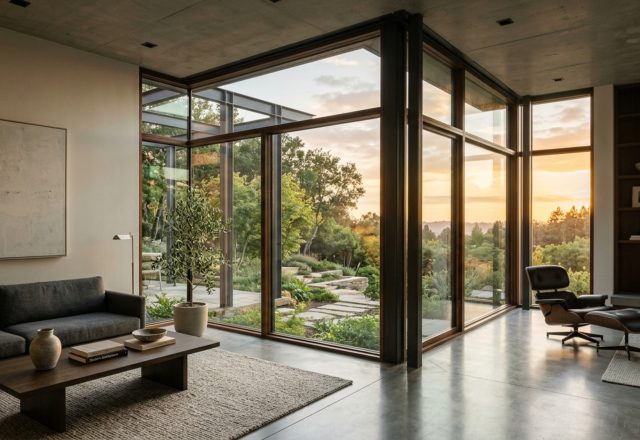
To achieve spatial harmony in design, one must look at the room as a volumetric composition. This involves balancing the ‘heavy’ visual weights—like a deep mocha-colored velvet sofa—with ‘light’ elements, such as a floating travertine shelf or a thin-profile floor lamp. The goal is to create a rhythm where the eye is guided smoothly from one focal point to the next. Sightline alignment is key; when you stand at the entrance of a room, what is the first material you see? If it is a raw stone hearth, then the subsequent interior decor items should either complement that stone or provide a deliberate, high-contrast texture to create visual interest.
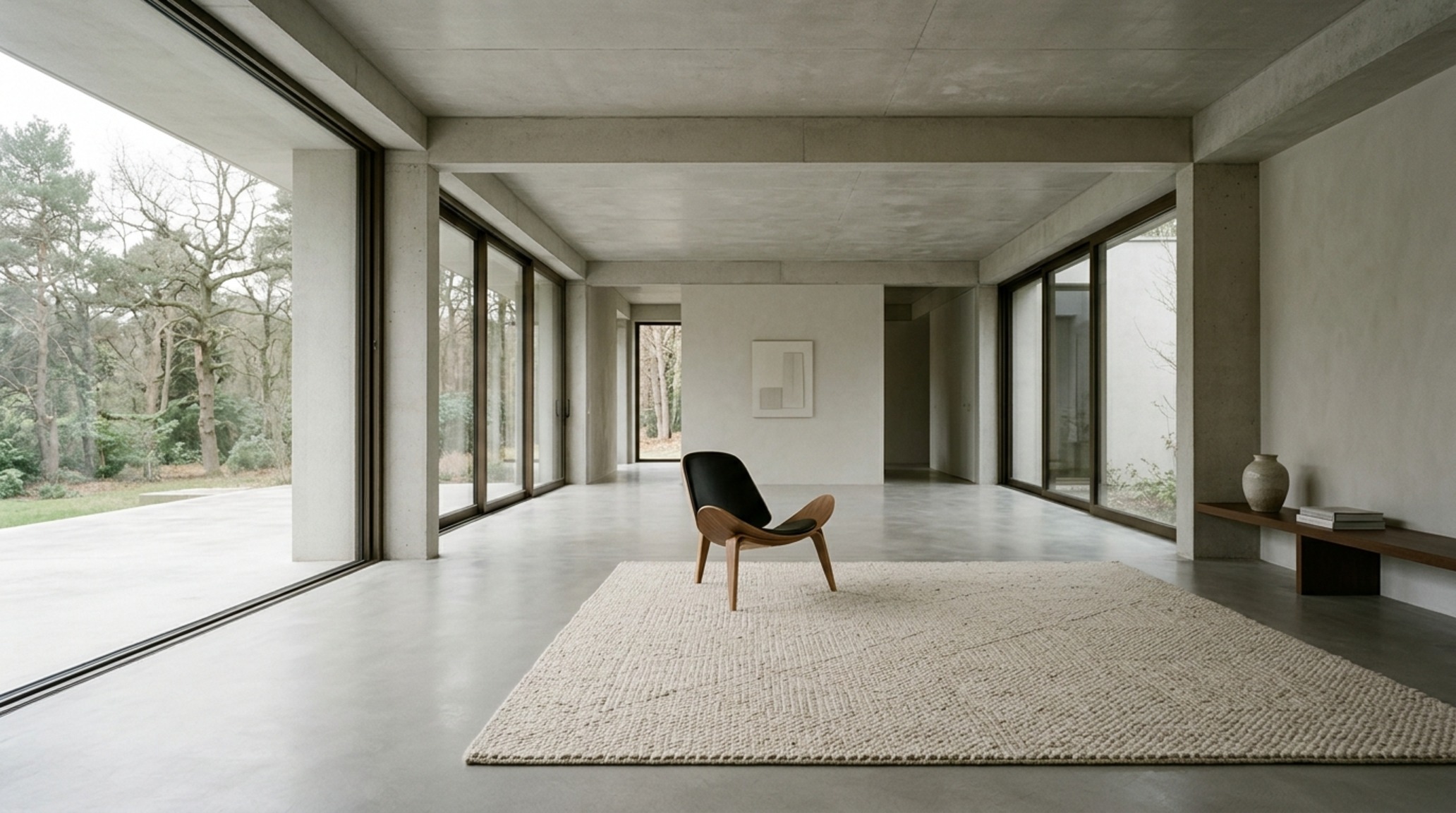
The concept of ‘compression and release’ is an architectural trick that can be applied through decor. In a smaller, darker nook, use deep, saturated colors like charcoal or forest green to create a sense of ‘compression’—a cozy, enveloping hug. As you move into a larger, sun-drenched living area, ‘release’ the space with lighter tones like BM Swiss Coffee and expansive textures like large-format wool rugs. This transition makes the home feel larger and more dynamic, as it mimics the natural shifts in landscape and light that we experience outdoors.
Sustainable Interior Accents: The Ethics of Materiality
As we move deeper into 2025, the conversation around sustainability has shifted from ‘recycled plastic’ to ‘ancestral longevity.’ Sustainable interior accents are those that never need to see a landfill because they are made from materials that can be refinished, repaired, or naturally biodegraded. Reclaimed stone, FSC-certified solid woods, and organic linens are the hallmarks of an ethically styled home. These materials carry a ‘genetic’ warmth—a sense that they have been part of the earth and will return to it. By investing in high-quality interior decor items made from these primary sources, we reduce the churn of the fast-furniture cycle.
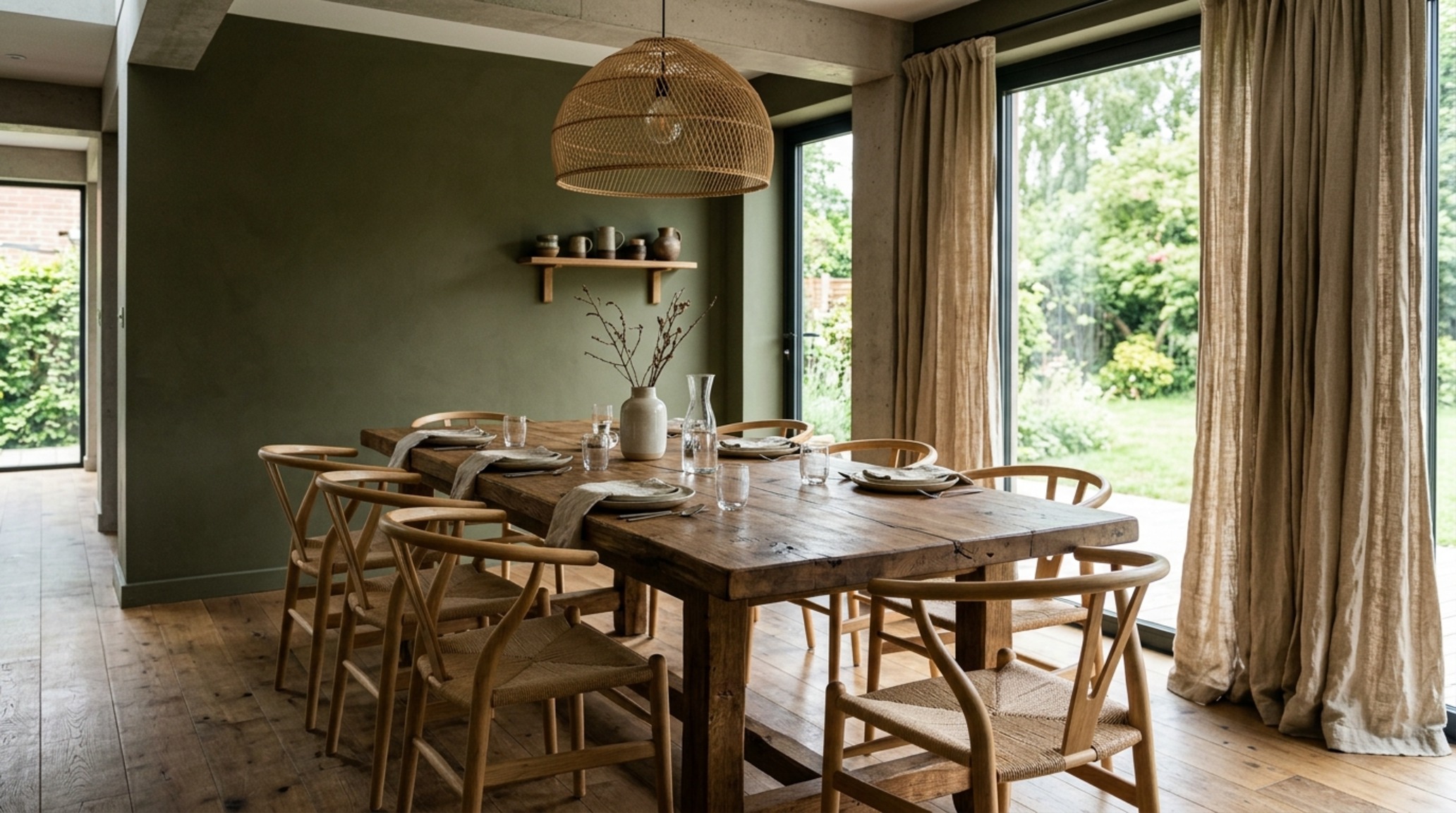
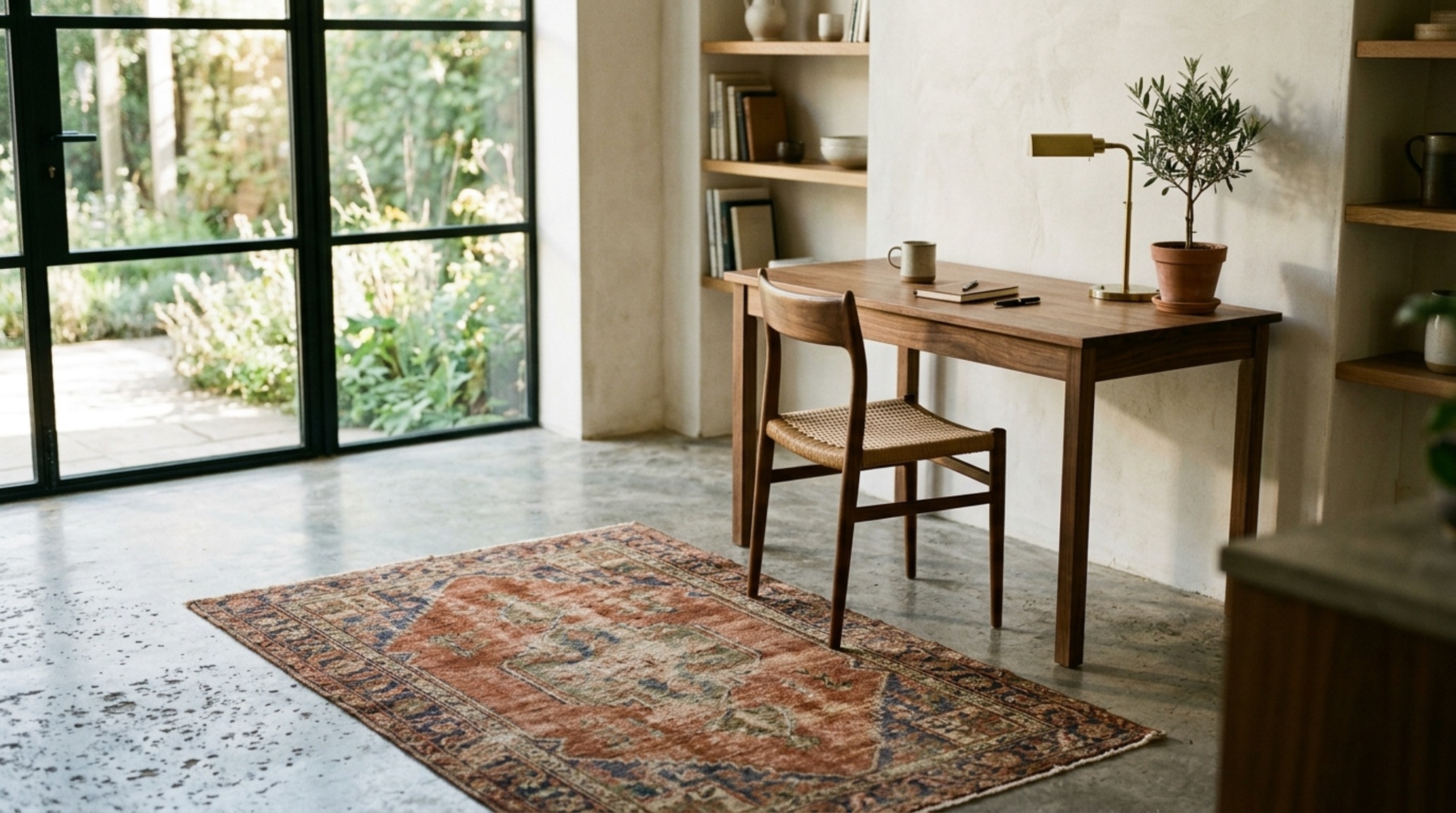
Think of a vintage Moroccan rug—it is sustainable not just because it is made of wool, but because its design is timeless and its construction is durable enough to last for generations. Similarly, a reclaimed oak dining table carries the marks of its previous life, adding a layer of soul and ‘muddied’ texture that a factory-new piece simply cannot replicate. In the sensory home, sustainability is synonymous with soul. We are looking for objects that have been handled by human hands, items that possess ‘wabi-sabi’—the beauty of things imperfect, impermanent, and incomplete.
Technical Breakdown & Material Schedule
Essential specification summary: tactile finishes, spatial proportions, and ambient lighting index.
Curated Visual Chronicle: A Study in Form and Light
To visualize these concepts, we must look at how light and shadow interact with the material palette. A curated visual chronicle of a home reveals that the most successful spaces are those that don’t reveal themselves all at once. There is a sense of discovery—a corner where the limewash finish catches a specific ray of afternoon light, or a shelf where the interior decor items are arranged with a rhythmic, musical quality. These vignettes are the true soul of the home. They are the moments where architectural theory meets lived experience, where the cold mathematics of clearances and Kelvin temperatures dissolve into a feeling of absolute belonging. By grounding our aesthetic choices in high-quality materials and thoughtful spatial layouts, we aren’t just decorating; we are sculpting a sanctuary that will resonate for years to come.
Editorial Silo • Recommended Architecture Studies
- Glass, Steel, and Sunlight: Reclaiming the Wellness Roots of Modernist Architecture for the Sensory Home — Archival Design Case Study
- Home Interior Blogs: The Architectural Blueprint & Spatial Flow Guide — Archival Design Case Study
Modern Spatial Living Lookbook
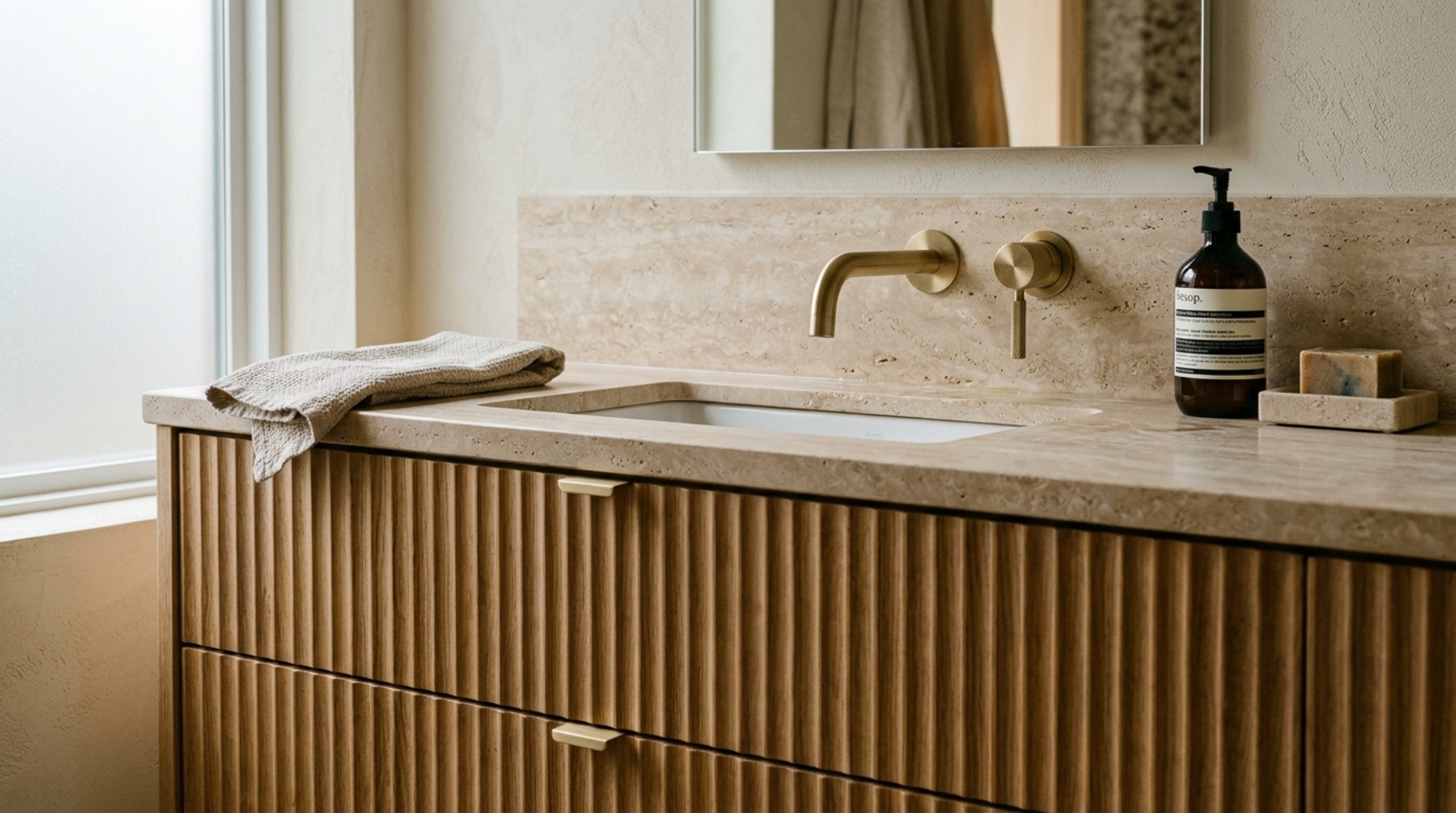
Visual documentation of honest materials, natural ambient lighting, and refined architectural balance.
Curated Visual Lookbook
Design Gallery & Spatial Studies
A visual curation of architectural arrangements, lighting concepts, and material palettes featured in this space.