The High-Performance Window: Ergonomic Innovation and Motorized Drapes for Bedroom Functionality
Why is it that we obsess over the thread count of our sheets yet ignore the architectural failure of a light-leaking, thermally inefficient window? For the modern dweller, choosing drapes for bedroom windows has evolved from a purely aesthetic pursuit into a critical component of high-performance living. In the contemporary urban landscape, where square footage is a premium and external stimuli are relentless, the window treatment must act as a sophisticated membrane—one that balances the poetry of soft light with the clinical precision of climate and acoustic control.
The shift toward high-performance window design reflects a broader trend in residential architecture: the move toward ‘silent luxury’ that prioritizes how a room works as much as how it looks. We are no longer satisfied with curtains that merely ‘cover’; we demand drapery systems that improve our circadian health, lower our carbon footprint, and respond to the touch of a button. This is the intersection of ergonomics and atmosphere, where the tactile weight of a 100% Belgian linen meets the invisible efficiency of a motorized track.
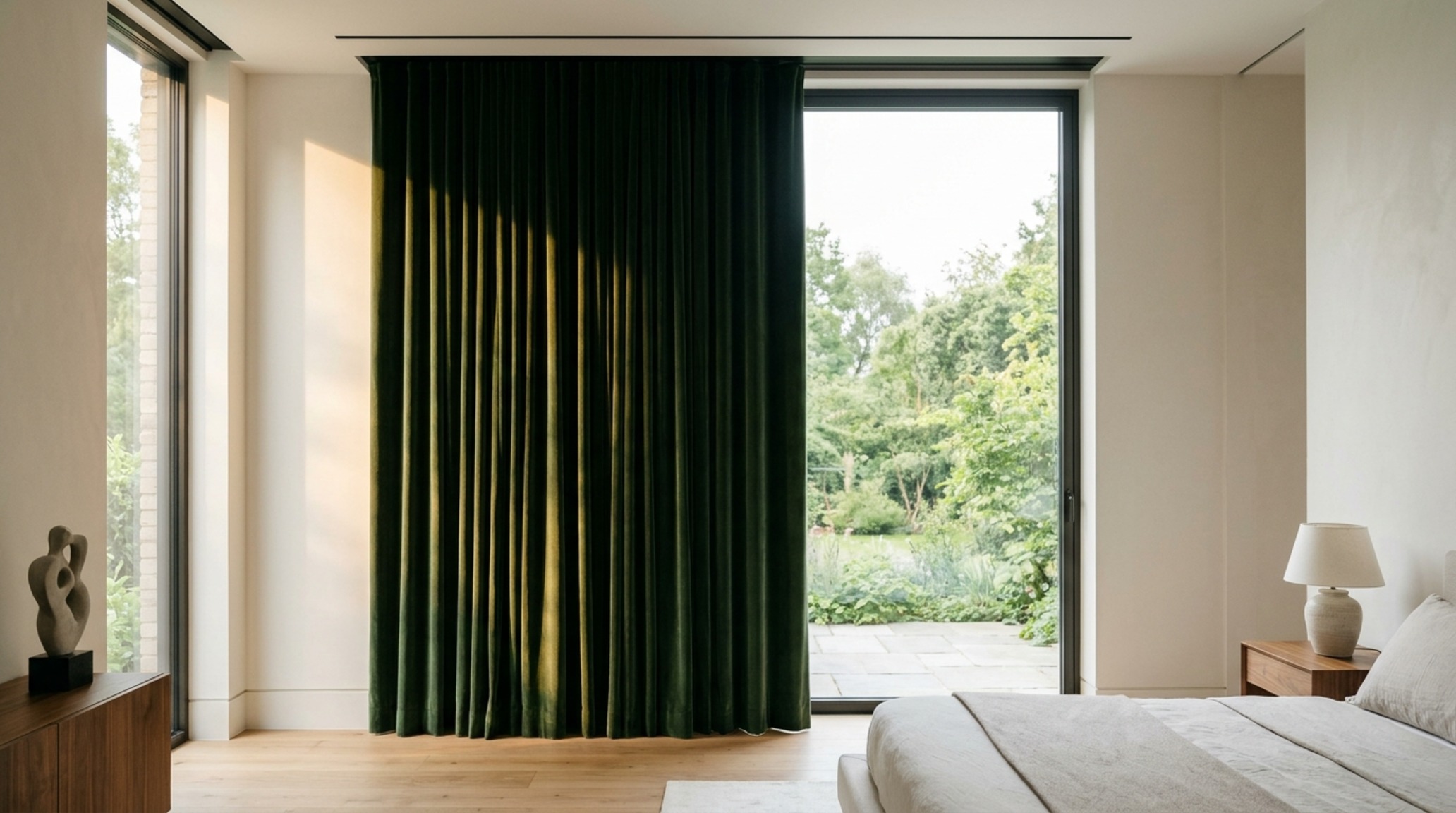
Motorized Bedroom Curtains: The Ergonomics of Silent Motion
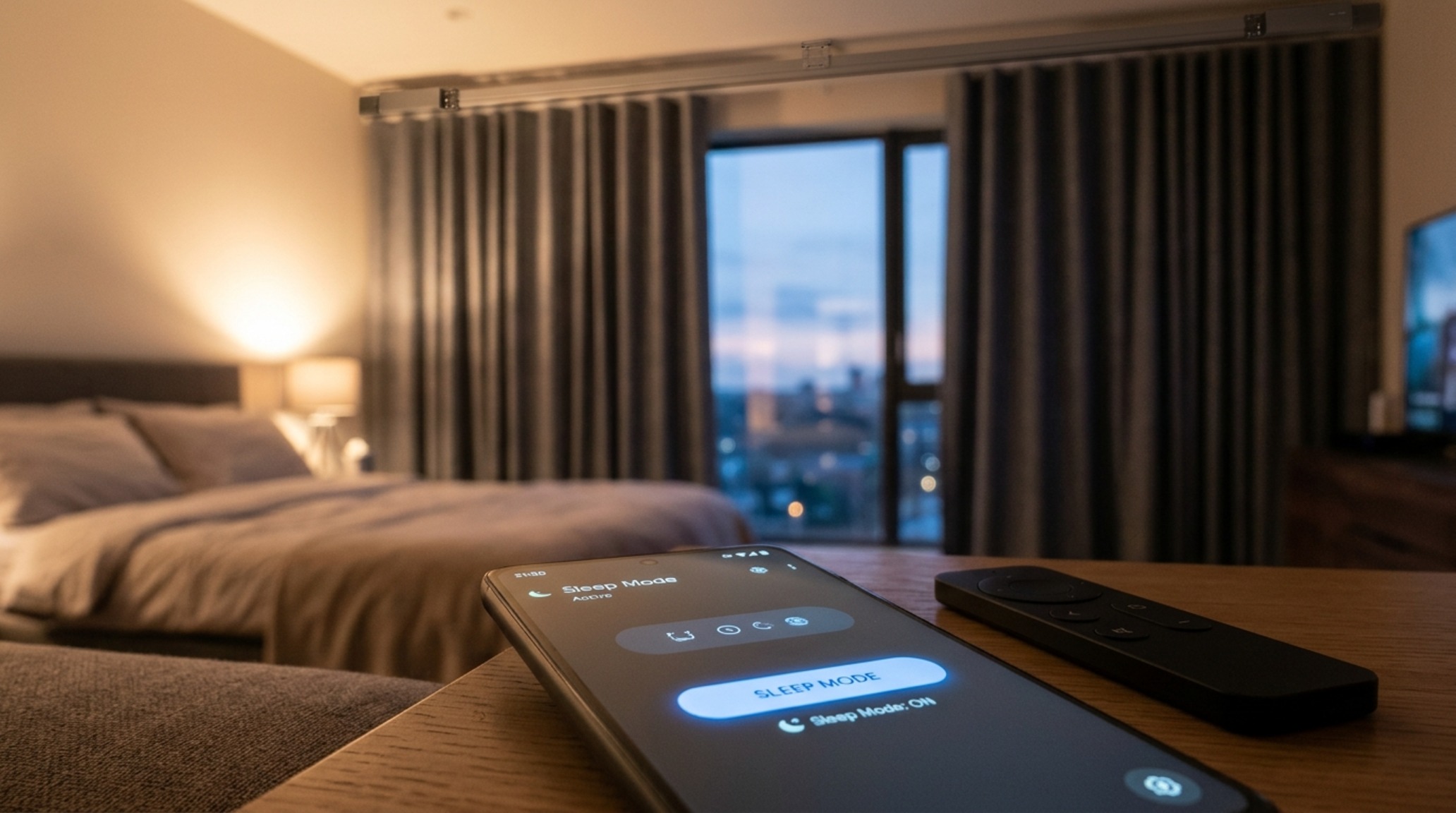
There is a profound psychological shift that occurs when your environment responds to your biological clock without manual intervention. Motorized bedroom curtains are frequently dismissed as a luxury whim, yet in the context of ergonomic design, they are a fundamental tool for accessibility and health. By integrating smart tracks—such as those from Somfy or Lutron—into a home automation system, the bedroom can transition from a sun-drenched morning haven to a pitch-black sanctuary based on precise scheduling. This eliminates the physical reach over nightstands or heavy furniture, adhering to the principles of universal design where effortless operation is paramount.
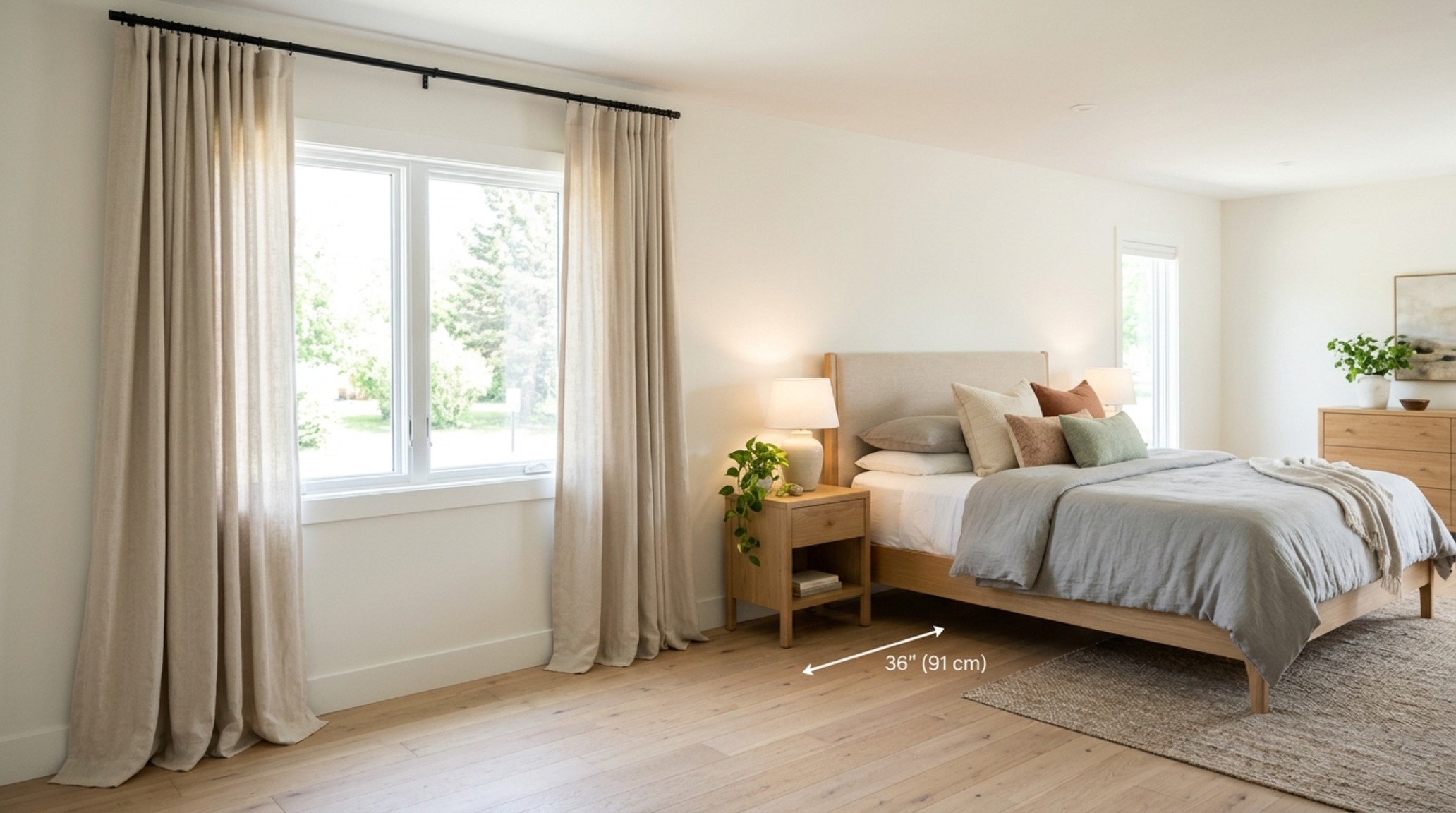
From an architectural standpoint, motorized systems allow for a ‘recessed pocket’ installation. This involves creating a 6-inch to 8-inch deep channel in the ceiling to house the motor and track, ensuring the hardware is completely invisible. This results in a seamless flow where the fabric appears to emerge directly from the architecture itself. When planning these spaces, I always recommend a 36-inch primary circulation path around the bed; motorized tracks ensure this walkway remains unobstructed by bulky manual wands or tangled cords, maintaining a clean, high-CRI 90+ lighting environment where the focus remains on the interplay of shadow and form.
Blackout Curtains for Sleep Hygiene: Engineering the Perfect Dark
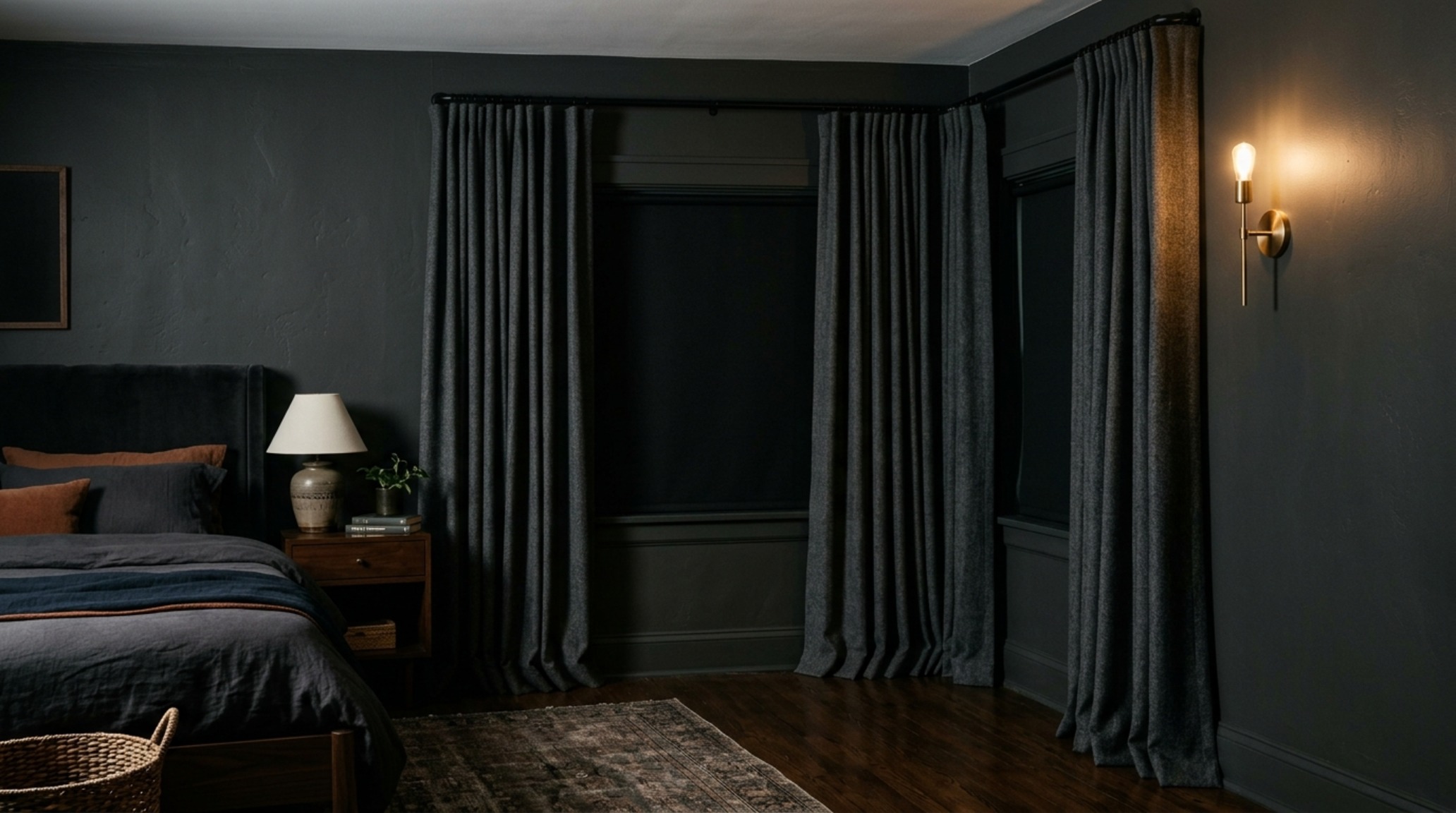
The science of sleep is inextricably linked to the quality of darkness. Blackout curtains for sleep hygiene are the primary defense against the ‘blue light’ pollution of city streets and the early intrusion of summer sun. However, the performance of a blackout system is only as strong as its weakest point—typically the light leaks at the top, sides, and bottom. To combat this, we look to the ‘wrap-around’ or ‘return’ technique, where the drapery rod curves back to the wall, physically sealing the gap.
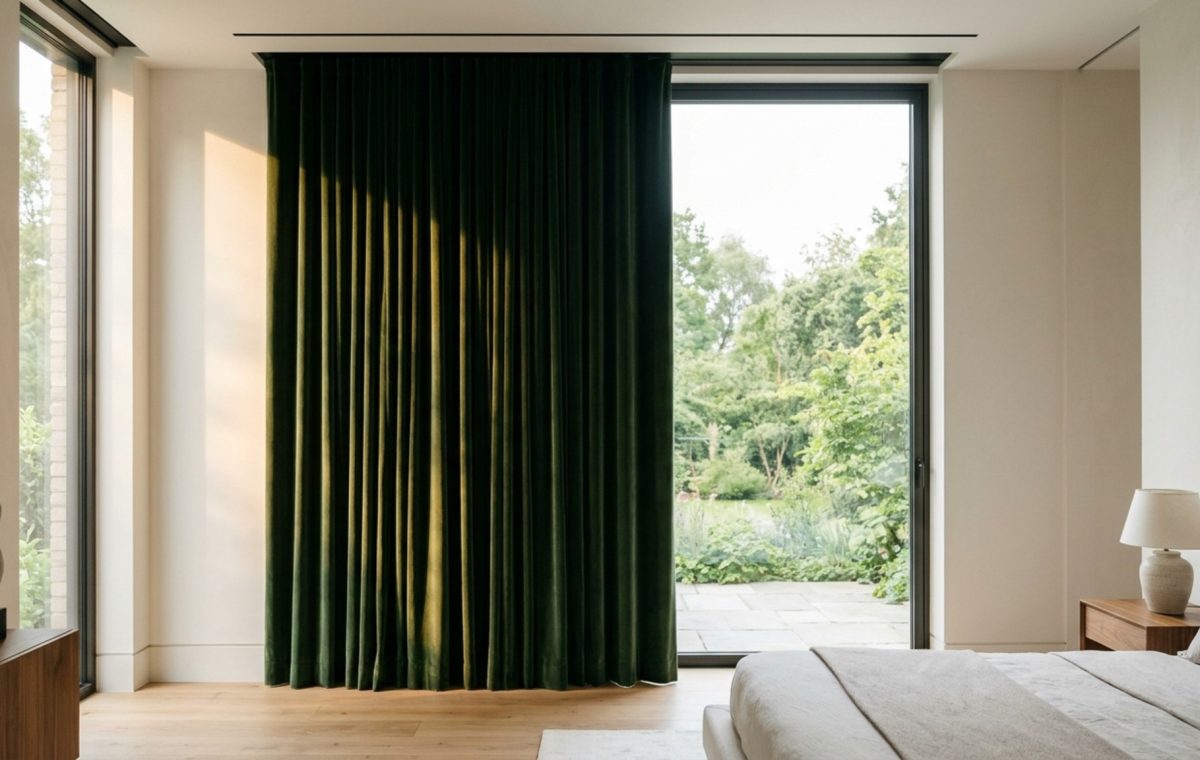
Texture plays a vital role here. We often look to heavy-weight velvets or triple-weave polyesters that possess an inherent density. When these fabrics are paired with a dedicated blackout lining—look for those with a soft, silicone-based coating rather than the stiff, ‘plastic’ feel of older iterations—the result is a drape that hangs with a weighted, sculptural elegance. For a sophisticated palette, consider a hue like Benjamin Moore’s Iron Ore for the drapery; the dark, desaturated charcoal absorbs light rather than reflecting it, creating a visual ‘grounding’ that signals to the brain that it is time for rest.
Thermal Insulated Drapery Panels: Micro-Climate Management
In the push for energy conservation, the window is often the largest source of thermal loss. Thermal insulated drapery panels act as a secondary skin for the room, trapping a layer of still air between the glass and the fabric. This ‘dead air space’ is a powerful insulator, significantly reducing the energy required to heat or cool a space. In urban apartments with floor-to-ceiling glazing, this is not just a comfort choice—it is a financial one.
The highest-performing windows are those that respect the laws of thermodynamics. A well-constructed thermal drape can reduce heat gain by up to 33% in the summer and heat loss by up to 10% in the winter.
The materiality of these panels has moved far beyond the utilitarian. We are seeing a rise in ‘interlining’—a hidden layer of flannel or bump cloth sandwiched between the face fabric and the lining. This adds a luxurious ‘heft’ to the drapes for bedroom, reminiscent of old-world Parisian apartments, while providing modern R-value performance. Pair this with a soft, warm white like Farrow & Ball’s School House White on the walls to create a soft, diffused glow that feels temperate and inviting regardless of the weather outside.
Floor-to-Ceiling Window Treatments: Sculpting Vertical Volume
Architecturally, the height at which you hang your drapery determines the perceived volume of the room. Floor-to-ceiling window treatments are a designer’s favorite ‘trick’ for making standard 8-foot ceilings feel expansive. By mounting the track at the very top of the wall, or within the ceiling itself, you draw the eye upward, emphasizing the vertical axis and creating a sense of grandeur even in compact urban dwellings.
When executing this look, the ‘puddle’ vs. ‘kiss’ debate is central. A ‘kiss’—where the fabric just brushes the floor—is the most ergonomic and hygienic option, preventing the collection of dust and allowing for easier cleaning. However, in rooms with slightly uneven floor levels (common in historic renovations), a 1-inch to 2-inch puddle can provide a romantic, tactile softness. To maintain a crisp aesthetic, ensure the fabric width is 2.5 times the width of the window; this ‘fullness’ ensures that even when the drapes are closed, they retain a rhythmic, pleated cadence rather than looking like a flat sheet.
Soundproof Drapes for Urban Apartments: Acoustic Barriers for the Modern Sanctuary
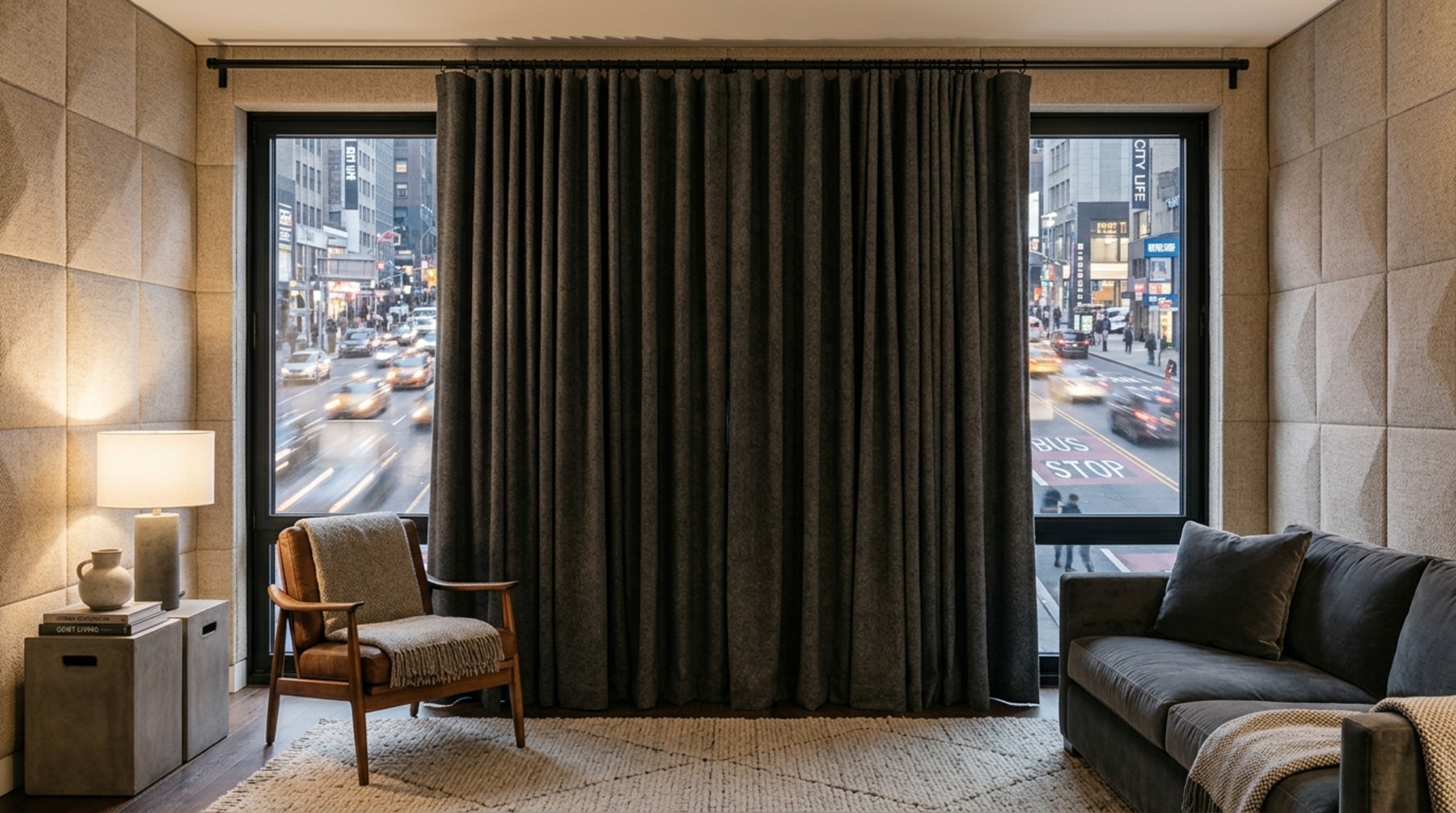
The roar of a metropolitan city is the enemy of the restorative bedroom. Soundproof drapes for urban apartments utilize heavy, multi-layered construction to dampen sound waves before they enter the room. This is achieved through the use of mass-loaded materials and dense fibers like wool or felt. While no fabric can completely ‘silence’ a jackhammer, the reduction in decibel levels—especially high-frequency noises like wind whistles or distant sirens—is significant.
In these scenarios, the tactile nature of the fabric becomes a sensory experience. A thick mohair or a heavy-gauge bouclé not only absorbs sound but also introduces a rich, ‘huggable’ texture to the room. This is where we consider ‘spatial cadence’—the way sound moves through a room. By introducing these heavy textiles, we eliminate the ‘echo’ effect typical of minimalist spaces with hard surfaces like polished concrete or glass, resulting in an environment that feels acoustically ‘dry’ and peaceful.
Sheer and Blackout Layering Techniques: A Narrative of Filtered Light
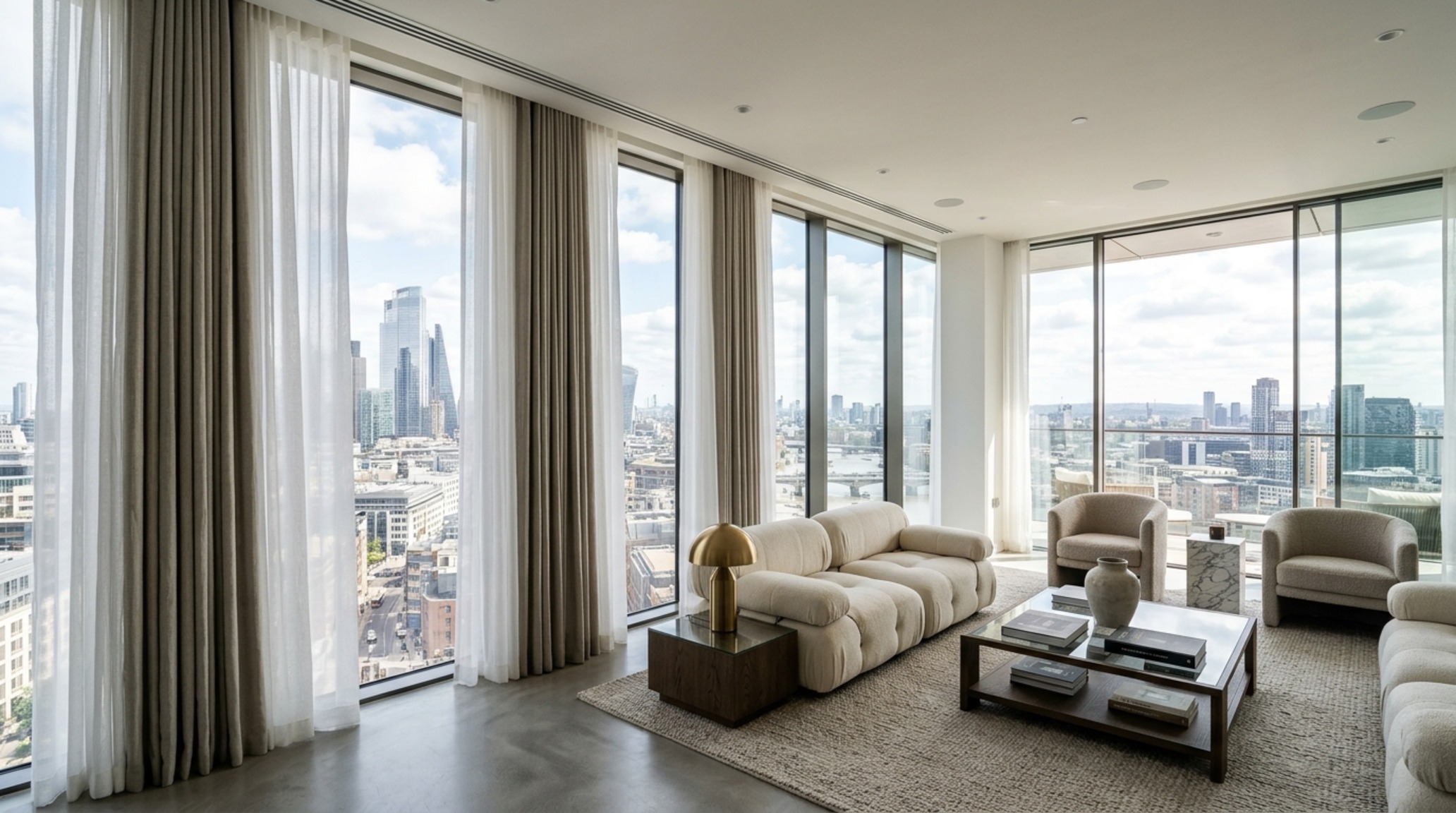
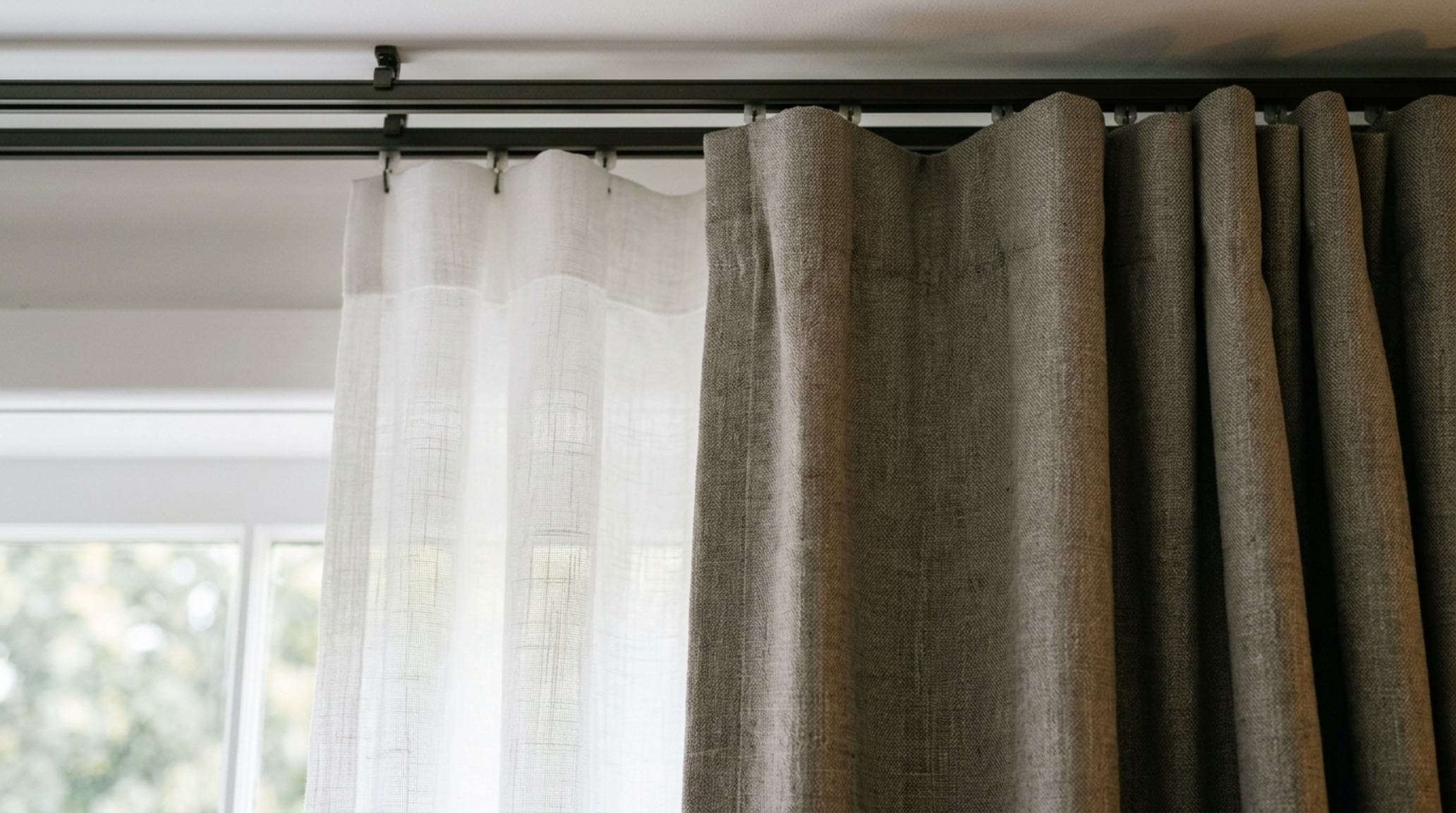
The most versatile window configurations rely on sheer and blackout layering techniques. This dual-track system allows the inhabitant to curate their privacy and light levels throughout the day. A sheer under-layer—perhaps a delicate linen scrim or a high-tech solar mesh—filters harsh UV rays and provides daytime privacy while maintaining a connection to the outside world. This is particularly effective when using 3000K task lighting; the sheer fabric diffuses both natural and artificial light into a soft, ethereal wash.
When the sun sets, the heavy blackout layer is drawn over the sheer, sealing the room for the night. This layering creates depth and ‘negative space’ at the window, giving the wall a layered, three-dimensional quality. For the color story, I often suggest a tonal approach: a soft taupe sheer paired with a deeper mushroom-colored blackout drape. This monochromatic layering feels sophisticated and prevents the window from feeling visually ‘heavy’ in a smaller bedroom.
Curated Materiality & Technical Dimensions Guide
Summary of authentic finishes, designer paint selections, and standard architectural clearances.
Designing the window is ultimately an act of boundary-making. It is the architectural moment where we decide exactly how much of the world to let in and how much to keep at bay. When we invest in high-performance drapes for bedroom sanctuary, we aren’t just buying fabric; we are engineering a better morning, a deeper sleep, and a more resilient home. As our cities grow louder and our lives more digitized, the ability to control our immediate environment with tactile grace and technological ease becomes the ultimate domestic luxury—a quiet, powerful reflection of how we choose to live in the light.
Editorial Silo • Recommended Architecture Studies
- Painting My Bedroom Ideas: The Architectural Blueprint & Spatial Flow Guide — Archival Design Case Study
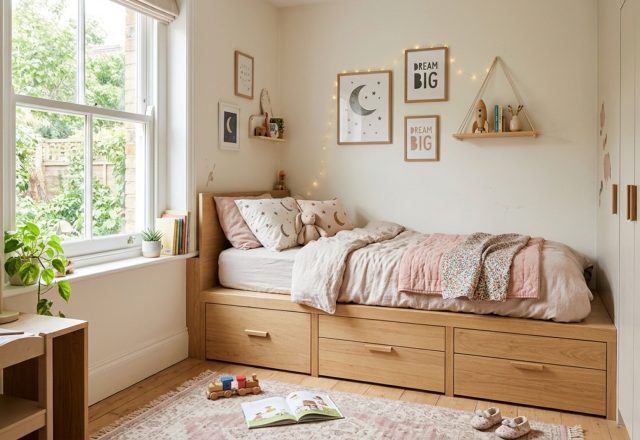
- Kinetic Simplicity: Engineered Storage and Ergonomic Flow for Small Bedroom Decorating Ideas for Girls — Archival Design Case Study
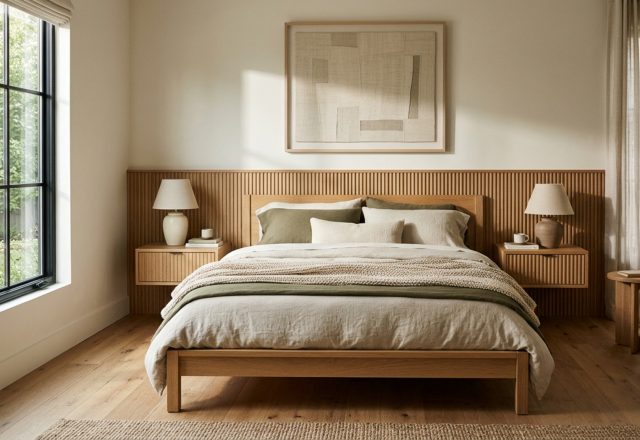
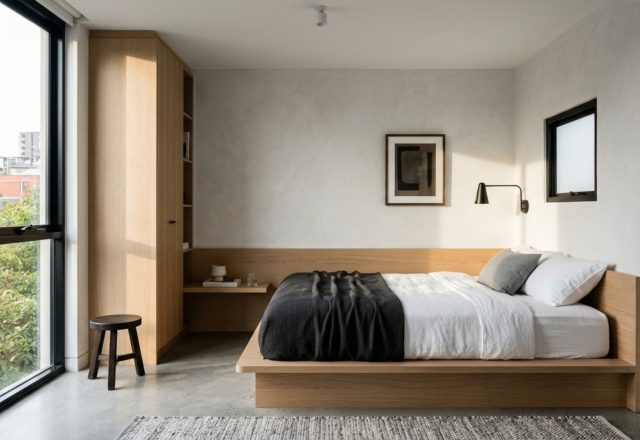
Spatial Balance & Form Lookbook
Detailed photographic vignettes showcasing texture balances, lighting nuances, and functional luxury.

Curated Visual Lookbook
Design Gallery & Spatial Studies
A visual curation of architectural arrangements, lighting concepts, and material palettes featured in this space.