The Vertical Shift: Reimagining the Festive Fifth Wall
For generations, the domestic holiday landscape was anchored by the gravity of the floor plane—a single, sprawling evergreen occupying a corner, surrounded by a clutter of boxes and tangled skirts. However, as contemporary residential architecture moves toward expansive volumes, double-height voids, and exposed structural skeletons, the design focus has undergone a radical upward migration. Contemporary ceiling christmas decorations represent a departure from these heavy, historical conventions, favoring an approach that treats the ceiling as a primary architectural canvas. This evolution isn’t merely about decoration; it is a spatial study in height, tension, and the mathematical rhythm of hanging elements that celebrate, rather than obscure, a room’s bones.
Integrating festive elements into a home’s structural framework requires an architect’s eye for proportion. When we look at a vaulted ceiling or a set of exposed Douglas fir rafters, we see more than just timber; we see load-bearing anchors capable of supporting grand-scale installations. By shifting the visual weight from the ground to the rafters, we liberate the floor plane, maintaining those critical 36-inch primary circulation paths that keep a home feeling breathable during high-traffic social gatherings. This strategy ensures that the verticality of a home is amplified, drawing the eye upward to appreciate the volume of the space while maintaining the ergonomic flow of the living areas below.
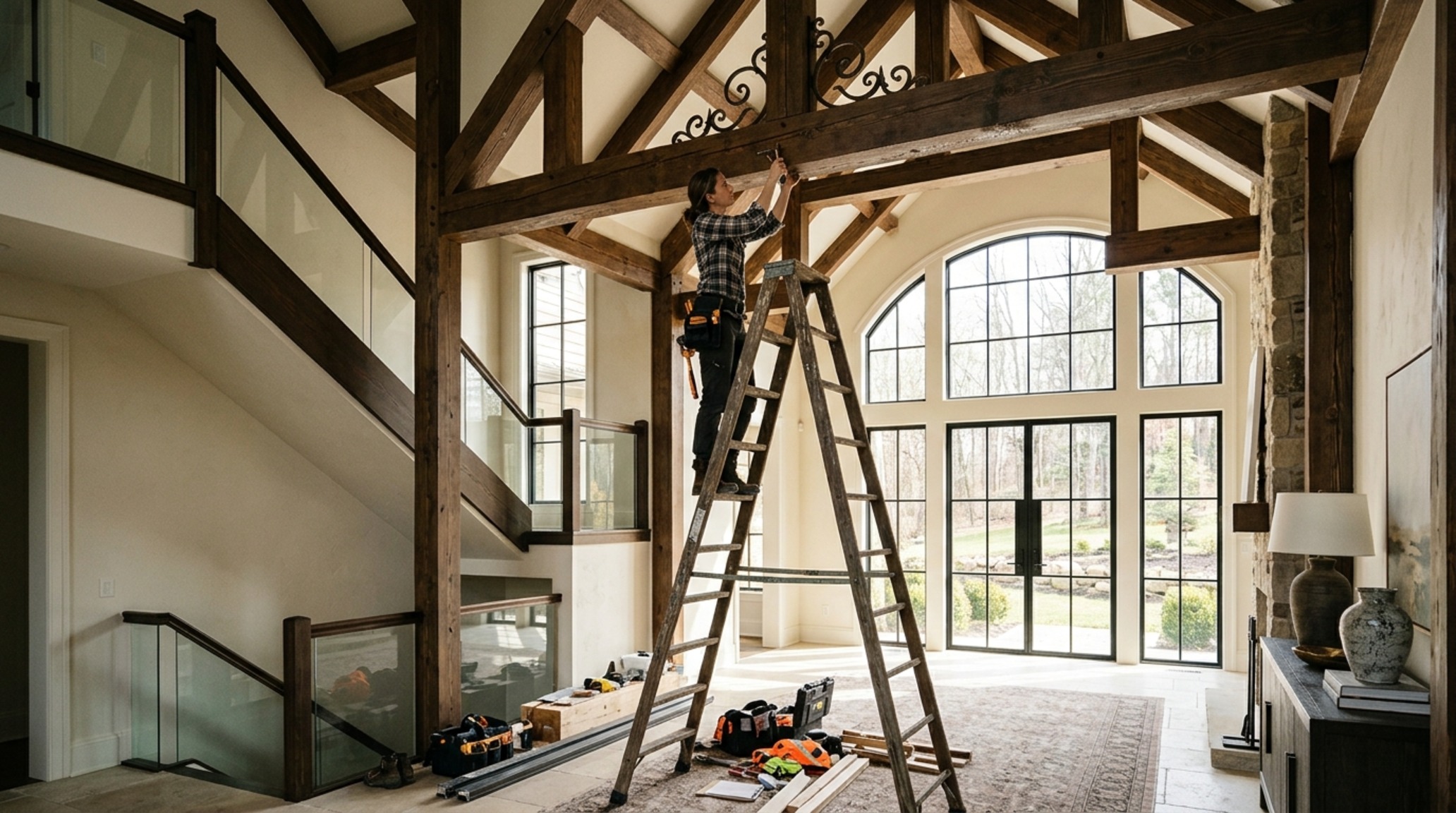
How to Hang Decorations from High Ceilings: Engineering and Access
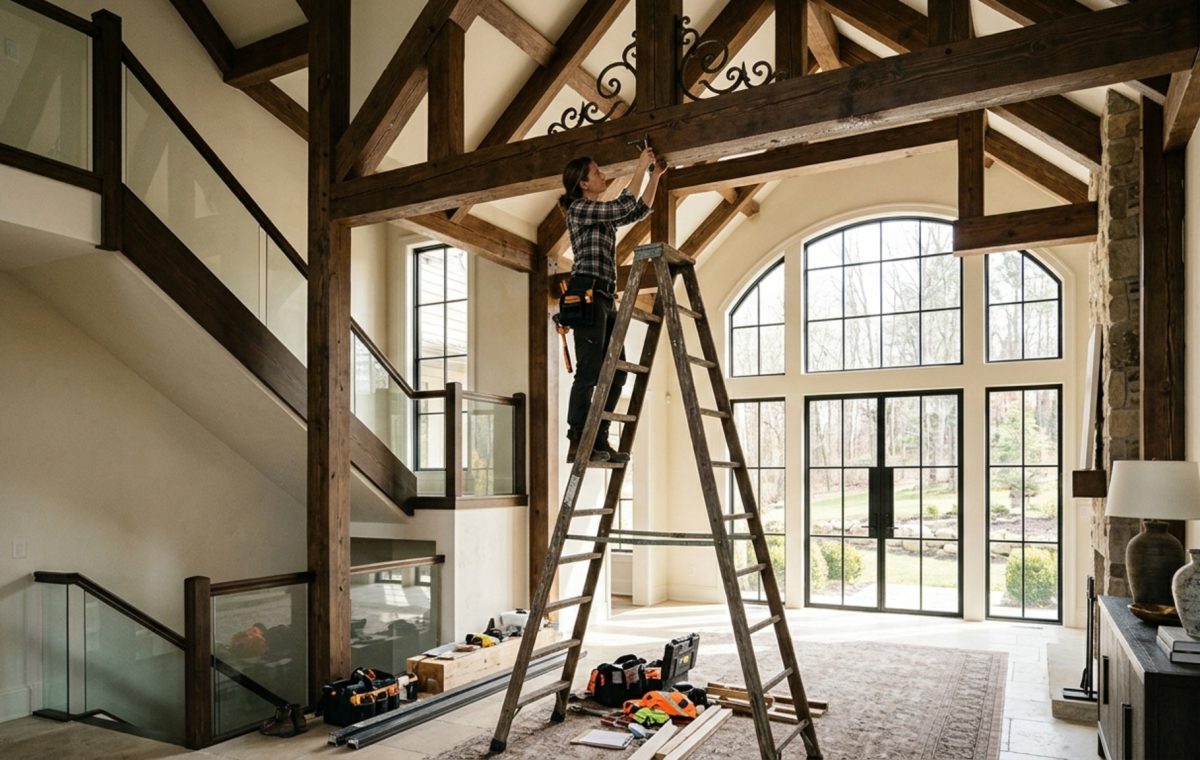
Scaling a design for a great room or a grand foyer requires a shift from domestic craft to light engineering. When addressing how to hang decorations from high ceilings, the first consideration is the mechanical interface between the ornament and the architecture. For homes with heights exceeding 12 feet, professional-grade A-frame ladders or even compact scaffolding—often sourced from specialists like Jayhawk Rent—become necessary tools. It is not just about reach; it is about the safety of the installer and the integrity of the finish. For drywall ceilings, toggle bolts are the gold standard, providing the shear strength needed for heavy garlands, whereas exposed beams allow for the use of discrete eye-bolts or tension-wrapped wire that leaves no permanent footprint.
The tension of the hanging medium is equally vital. Monofilament (fishing line) offers an invisible ‘floating’ effect, but for larger structural boughs, braided steel cable or high-denier velvet ribbons provide both security and a deliberate aesthetic line. Architectural Digest often highlights the use of ‘invisible’ aircraft cable for large-scale floating installations because it allows for a high degree of precision in leveling. When calculating the drop height, aim for a clearance of at least 84 inches from the floor in walking zones to ensure that even the tallest guests move through the space without interference. In dining areas, the lowest point of a suspended installation can safely drop to 60 inches above the floor, provided it is centered over a table, creating an intimate ‘room within a room’ effect.
Christmas Ceiling Canopy: The Architectural Weight of Suspended Greenery
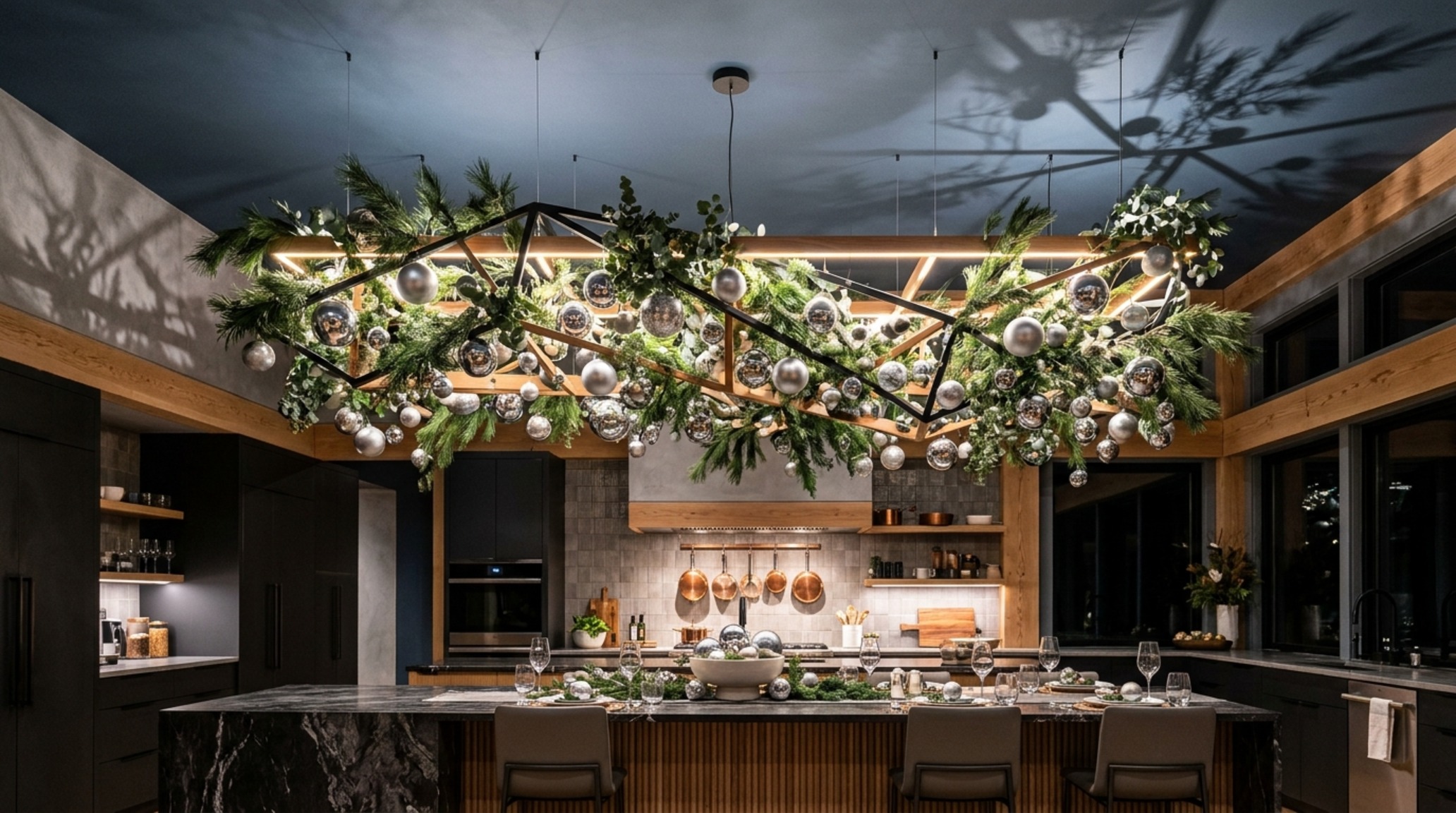
A christmas ceiling canopy is perhaps the most ambitious expression of vertical holiday design. This concept involves creating a dense, overhead ‘forest’ of greenery that spans across a seating area or dining table. To execute this with architectural rigor, one must consider the spatial cadence of the room. A successful canopy doesn’t just hang; it flows. By utilizing a grid of thin tension wires stretched between crown moldings or rafters, you can weave real cedar, silver eucalyptus, and long-needle pine into a floating tapestry that softens the acoustics of a high-ceilinged room.
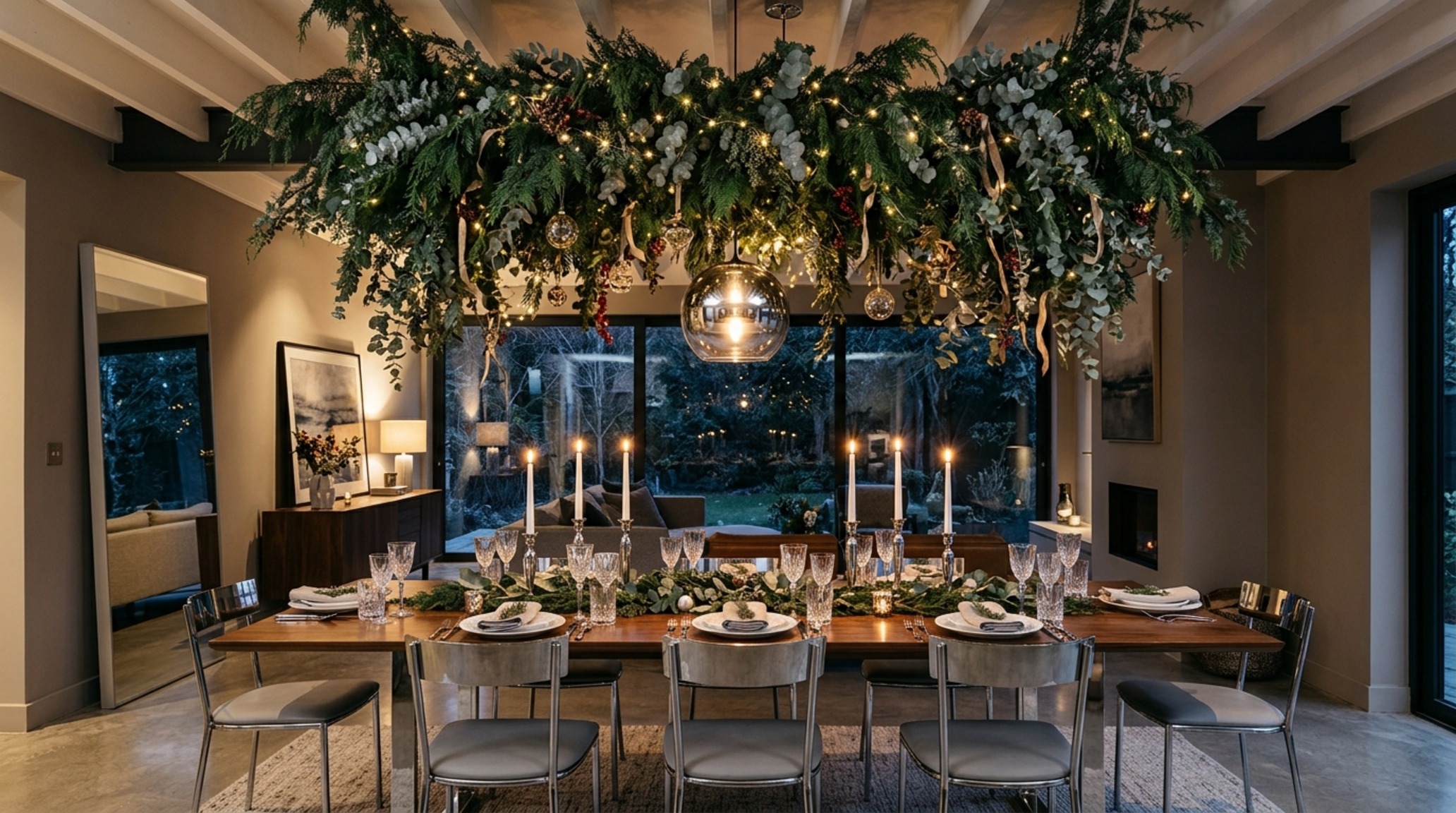
Current trends, such as the ‘Chrome-mas’ aesthetic popularized by House Beautiful, suggest mixing these organic textures with high-sheen metallics. Imagine a canopy of deep green Noble Fir interspersed with polished chrome spheres that catch the 2700K warm ambient glow from below. This juxtaposition of the soft, ephemeral needle and the hard, reflective metal creates a sophisticated visual tension. From an ergonomic standpoint, a canopy should never feel oppressive; keep the density concentrated toward the center of the architectural volume and allow the edges to ‘feather’ out, maintaining a sense of negative space breathing room near the walls.
Festive Chandelier Styling: Balancing Lumens and Ornament
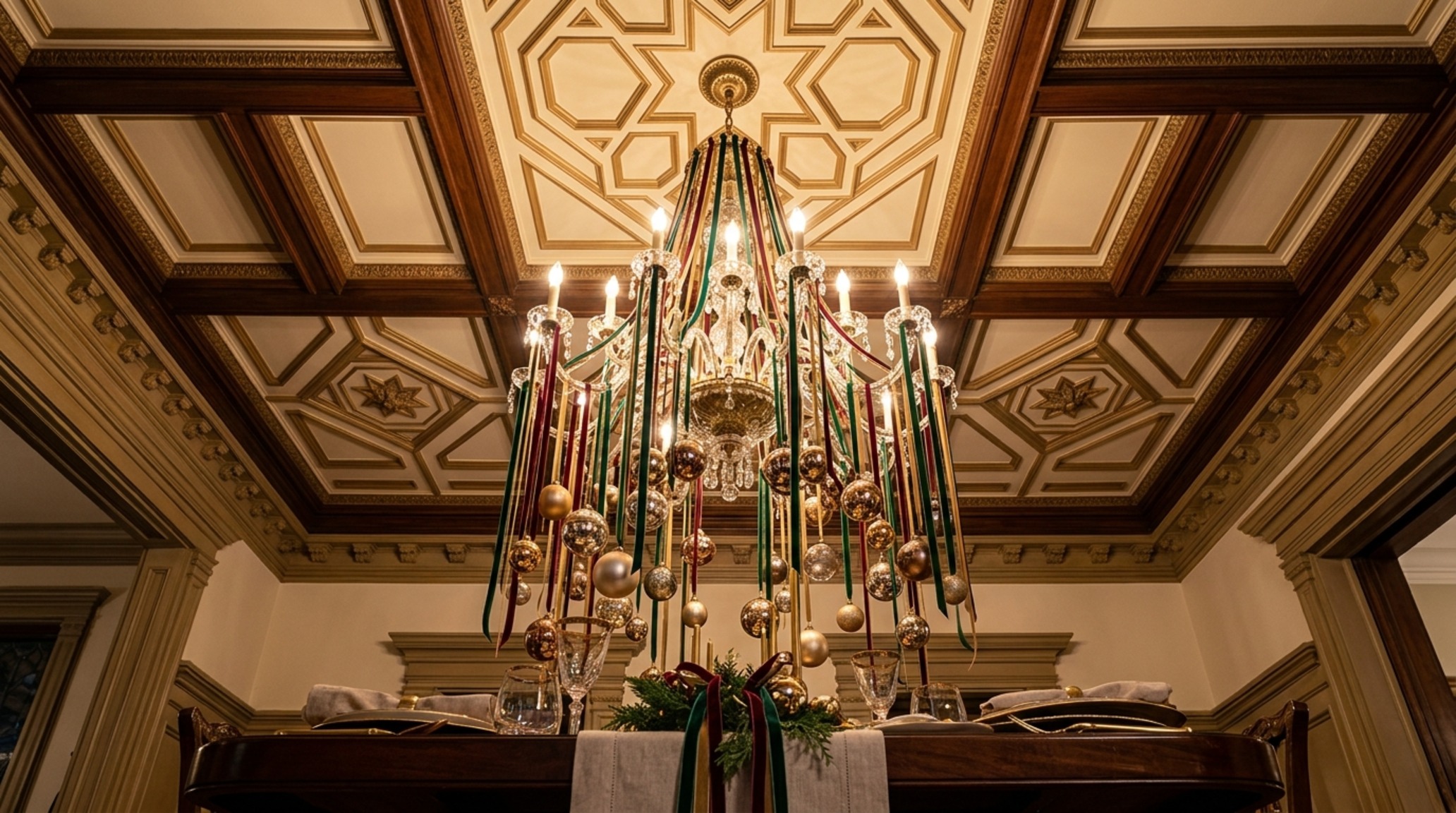
The dining room chandelier is frequently the focal point of the home, and festive chandelier styling should enhance its primary function—illumination—without causing glare or overheating the decor. When draping greenery or ornaments from a light fixture, the golden rule is to respect the light path. Avoid blocking the downward task lighting that hits the table surface; instead, focus on the decorative arms and the central stem. Use lightweight ornaments, such as thin-walled glass or metallic foils, to ensure the fixture’s mounting box isn’t overstressed.
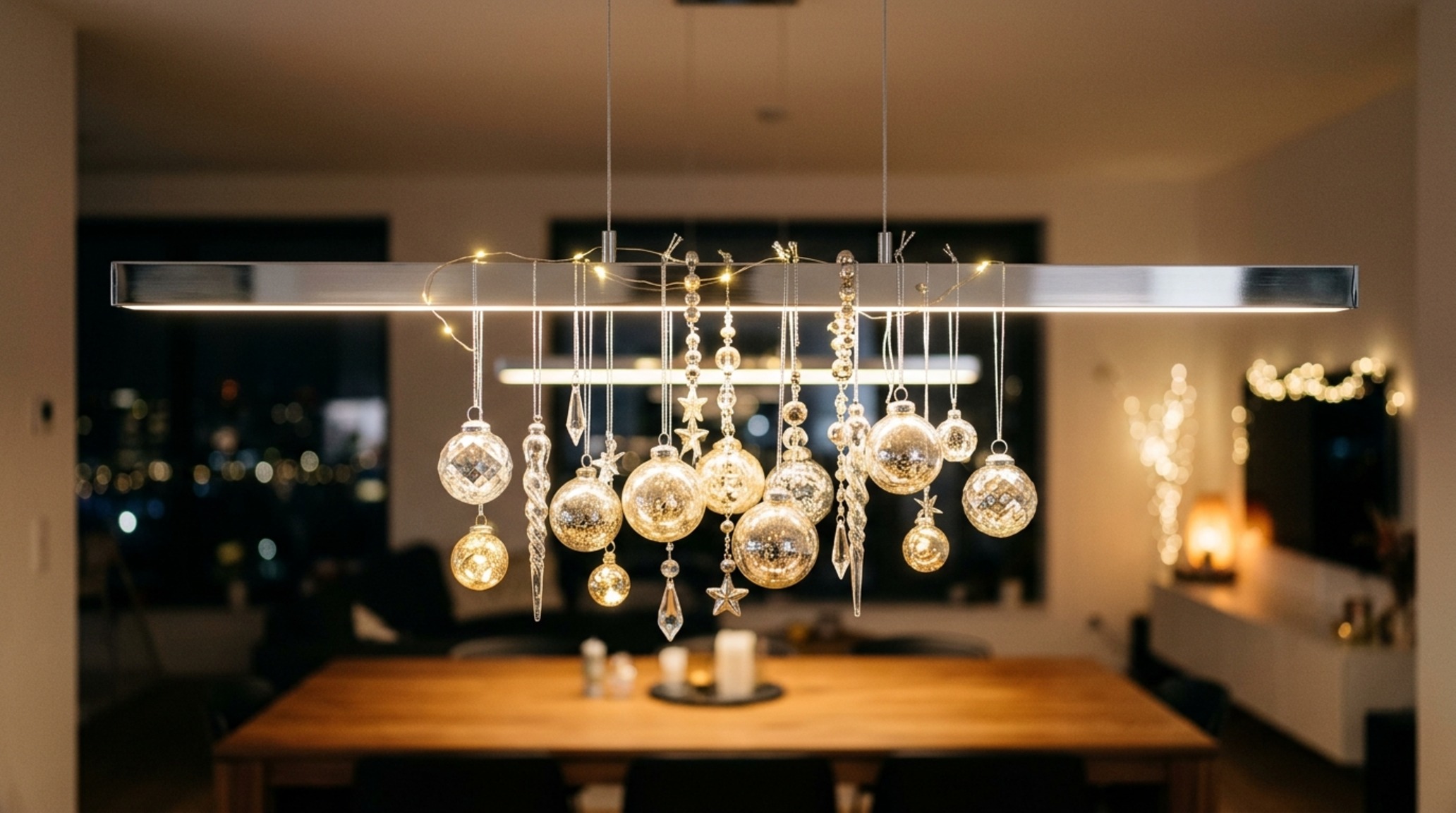
Consider the color temperature of your bulbs. Most holiday decor looks best under 2700K warm ambient lighting with a high CRI (Color Rendering Index) of 90+. This ensures that the deep reds of velvet ribbons or the subtle ochres of dried citrus appear vibrant and true to life. If your chandelier features exposed Edison bulbs, be cautious of heat; keep any flammable greenery at least 4 inches away from the glass. For a modern, minimalist look, try a ‘Chrome-mas’ approach by swapping traditional ornaments for sleek, monochromatic silver droplets that mimic the flow of melting ice, reflecting the chandelier’s light in a thousand different directions across the ceiling plane.
Hanging Baubles from Ceiling: Kinetic Sculptures and Spatial Depth
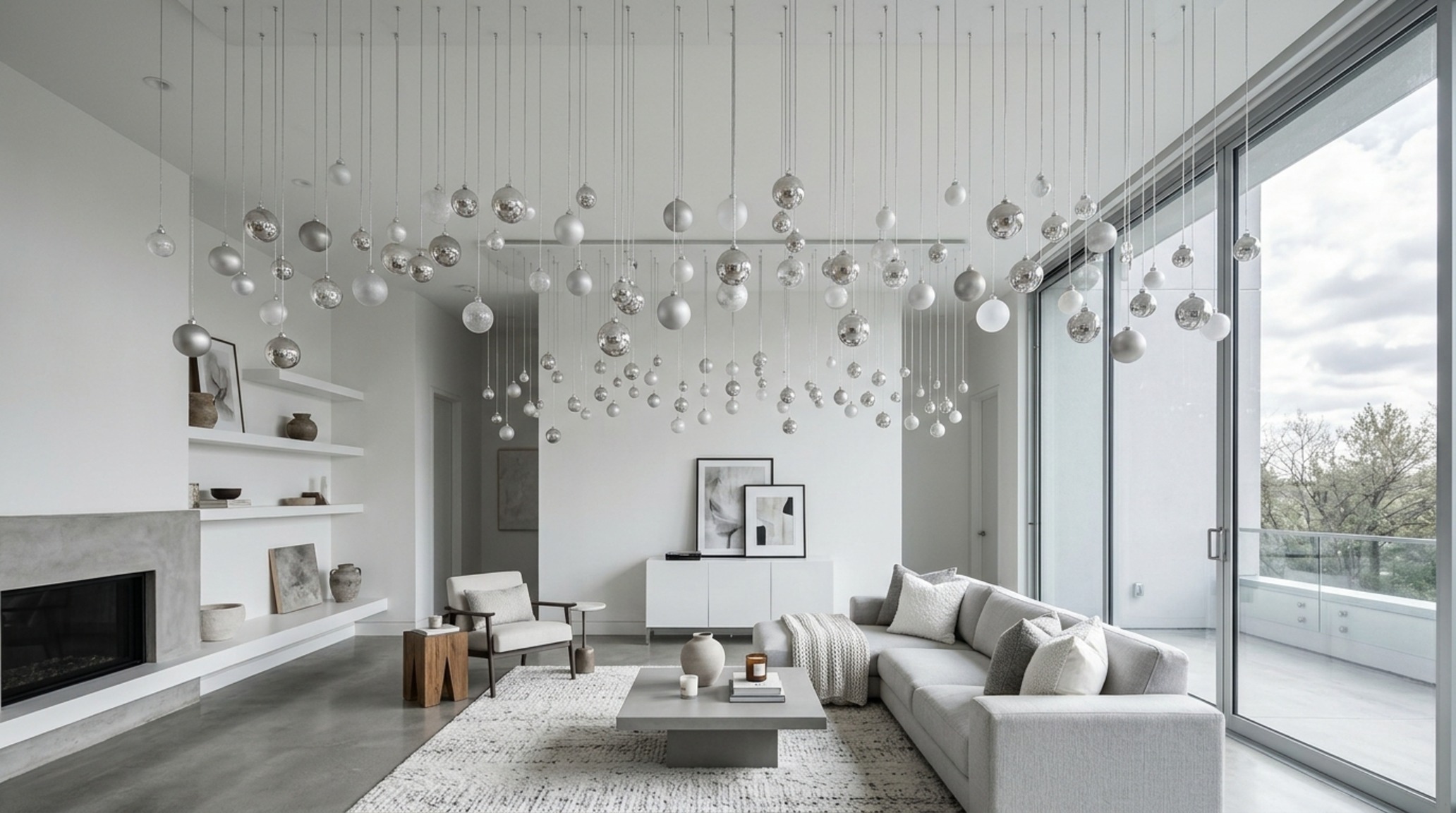
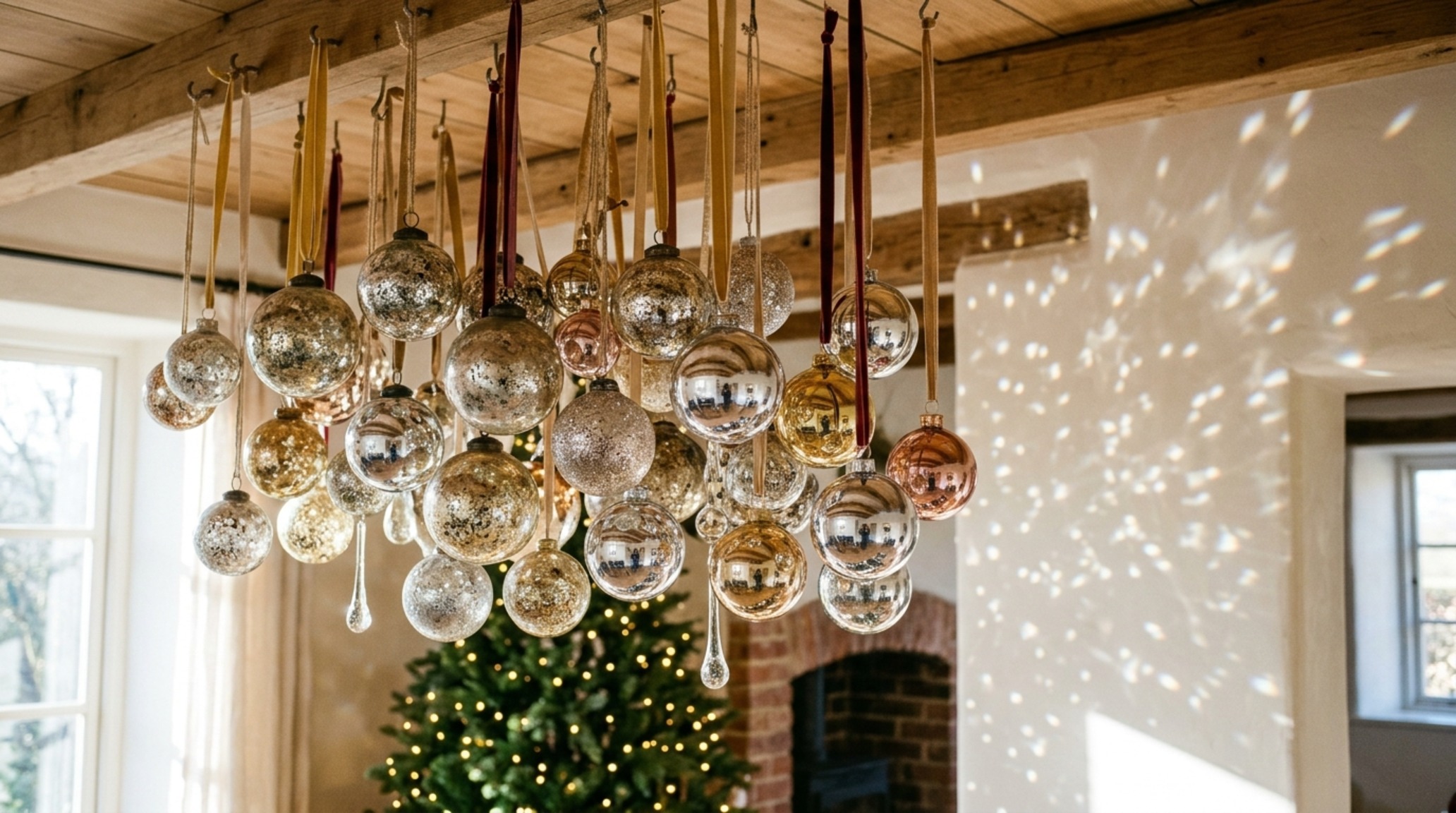
One of the most effective ways to fill a vertical void is the technique of hanging baubles from ceiling joists at varying heights. This creates a kinetic sculpture that moves subtly with the home’s natural air currents. The secret to a professional look lies in the mathematical distribution of the spheres. Avoid a flat, horizontal plane; instead, utilize a ‘staggered’ approach, varying the lengths of the suspension lines by 6 to 12 inches. This introduces a sense of depth and prevents the eye from getting ‘stuck’ on a single level.
When selecting your palette, consider the existing finishes of the room. Against a backdrop of Benjamin Moore Swiss Coffee, a collection of matte white, pearl, and clear glass baubles creates a subtle, ethereal texture. If your room features darker tones like Farrow & Ball Railings, opt for high-contrast metallics or rich, saturated jewel tones like emerald and navy. This section of the design is where the ‘Chrome-mas’ trend truly shines; the reflective surfaces of the ornaments bounce light into the dark corners of the ceiling, making the entire volume feel larger and more dynamic.
Removable Ceiling Hooks for Christmas: Precision Mounting Without Damage
For those living in rental properties or homes with pristine plaster finishes, the thought of drilling into the ceiling is a non-starter. This is where removable ceiling hooks for christmas become an essential part of the designer’s toolkit. Modern adhesive technologies have evolved significantly, with heavy-duty hooks now capable of supporting up to 5 or even 10 pounds when applied to a clean, non-porous surface. The key is in the application: clean the site with isopropyl alcohol first to ensure a perfect bond.
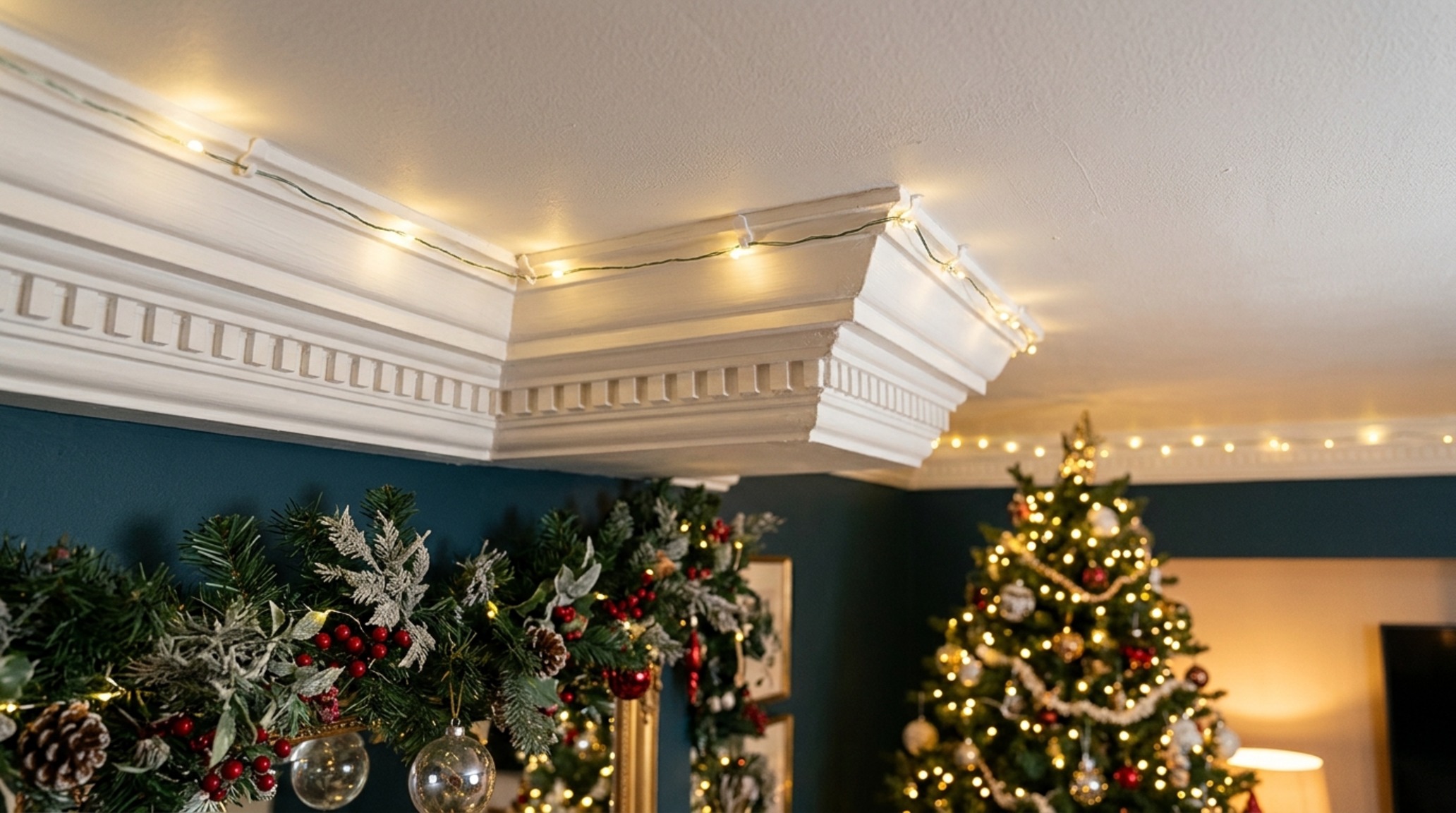
To hide these mechanical elements, choose hooks that match your ceiling color—typically a flat white—and position them behind structural features like crown molding or at the junction where a wall meets the ceiling. If you are hanging a series of baubles or a light garland, use a laser level to ensure the hooks are perfectly aligned. This precision transforms a DIY project into a professional architectural installation. Even with temporary hooks, always respect the weight limits; for heavier items like a suspended upside down christmas tree, you must locate a structural joist and use a permanent screw-in hook for safety.
Upside Down Christmas Tree: A Study in Avant-Garde Symmetry
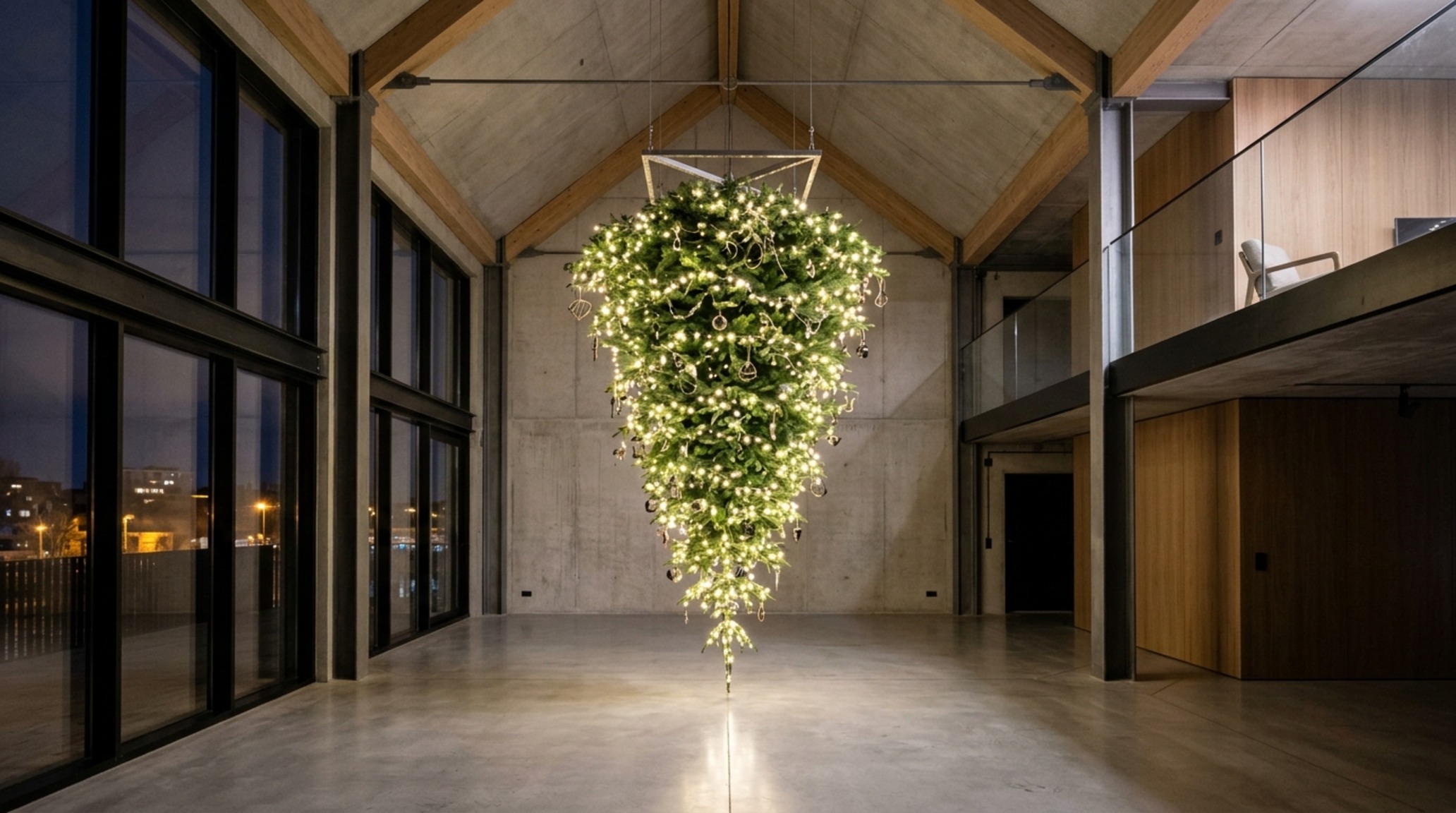
The upside down christmas tree is more than just a novelty; it is a historical tradition reimagined for the modern age, specifically designed to maximize floor space and showcase ornaments at eye level. From an architectural perspective, an inverted tree acts as a suspended chandelier, drawing the gaze upward and creating a striking vertical axis in a room. When installing an inverted tree, the mounting point is critical. It must be secured directly into a ceiling joist using a heavy-duty lag bolt. The visual effect is one of total spatial subversion—the widest part of the tree sits near the ceiling, tapering down toward a point, which allows for unobstructed furniture placement below.
This layout is particularly effective in smaller urban dwellings where every square foot of floor space is at a premium. By elevating the greenery, you maintain the 18-inch coffee table reach and the 30-inch dining chair clearance necessary for functional living. The ornaments on an inverted tree should be wired directly to the branches to prevent them from slipping, and the lighting should be woven tightly into the interior of the tree to create a glow that emanates from within, casting dramatic shadows onto the ceiling above.
Architectural Vignettes & Spatial Cadence
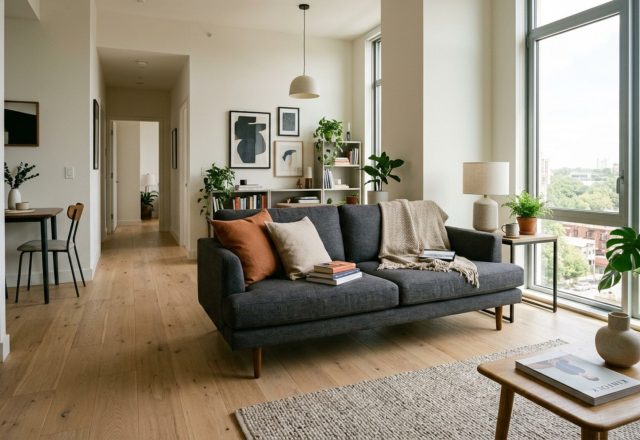
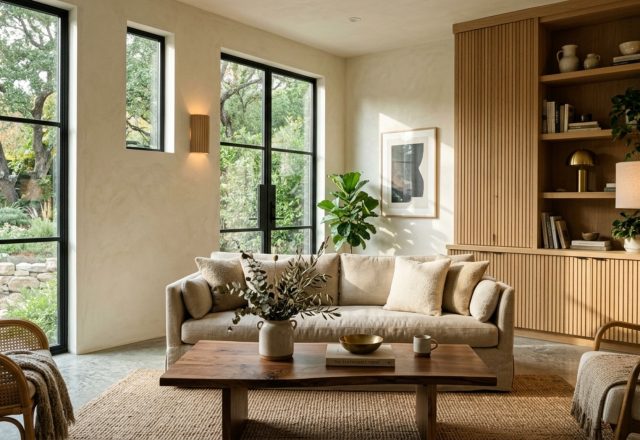
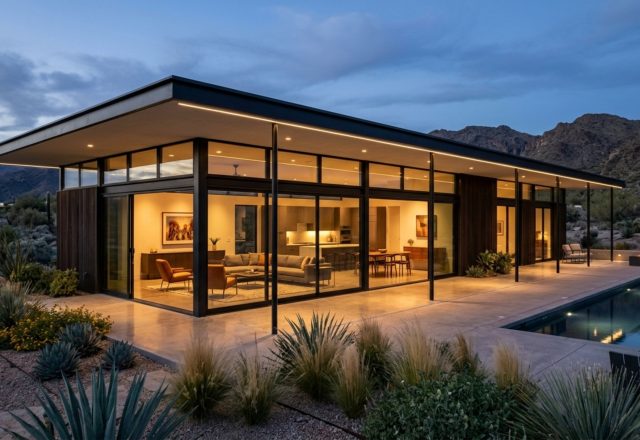
In this curated lookbook, we examine how these various elements coalesce into a unified spatial narrative. Notice how the use of negative space is just as important as the decorations themselves. A well-designed room doesn’t feel ‘full’; it feels ‘balanced.’ By focusing on the upper third of the room, we allow the middle ground—where we live and interact—to remain clear and focused on human connection. The following studies highlight the intersection of material, light, and structural integrity.
“True luxury in holiday design isn’t about the quantity of the ornament, but the precision of its placement within the home’s existing geometry.”
Finishes, Material Specs & Palette Details
Key material specifications, color codes, lighting kelvin, and ergonomic clearances.
Ultimately, the art of festive decoration is an exercise in seeing our homes anew. By utilizing ceiling christmas decorations to accentuate the verticality and structural rhythm of our living spaces, we create an environment that feels both grand and grounded. As the winter sun dips lower, casting long, geometric shadows across the floor, these elevated installations remind us that the most profound holiday transformations aren’t those that fill the room, but those that redefine how we perceive its very boundaries, reimagining our homes through the lens of ceiling christmas decorations.
Editorial Silo • Recommended Architecture Studies
- The Tactile Aesthetic of Decorating Ideas For A Small Apartment: Materials, Moods & Lighting Kelvin — Archival Design Case Study
- The Tactile Aesthetic of Sustainable Housing Communities: Materials, Moods & Lighting Kelvin — Archival Design Case Study
Contemporary Living Lookbook
Detailed photographic vignettes showcasing texture balances, lighting nuances, and functional luxury.
Curated Visual Lookbook
Design Gallery & Spatial Studies
A visual curation of architectural arrangements, lighting concepts, and material palettes featured in this space.