The Spatial Paradox of Festive Hosting
Why is it that the moment we decide to celebrate, we simultaneously decide to make our dining rooms structurally unusable? Introducing thoughtful table decorations for christmas should never necessitate a physical blockade between guests, yet the traditional towering centerpiece often does exactly that, severing sightlines and crowding out the actual purpose of the gathering: the meal. In high-performance interior design, we view the dining table not just as a canvas for aesthetics, but as a critical zone of ergonomic transit. When we over-clutter the central axis, we create friction in the service flow, forcing guests to navigate a minefield of pine needles just to pass a salt cellar.
Redefining the holiday tablescape requires a pivot toward what I call the ‘scatter approach.’ Instead of a singular, monolithic floral arrangement that demands the spotlight, we shift toward modular, low-profile elements that prioritize plate clearance and spatial breathing room. By decentralizing the decor, we allow the table’s architectural utility to remain intact while infusing the atmosphere with a curated, festive energy that feels intentional rather than imposed.
Low-profile Festive Centerpieces: The Architecture of Sightlines
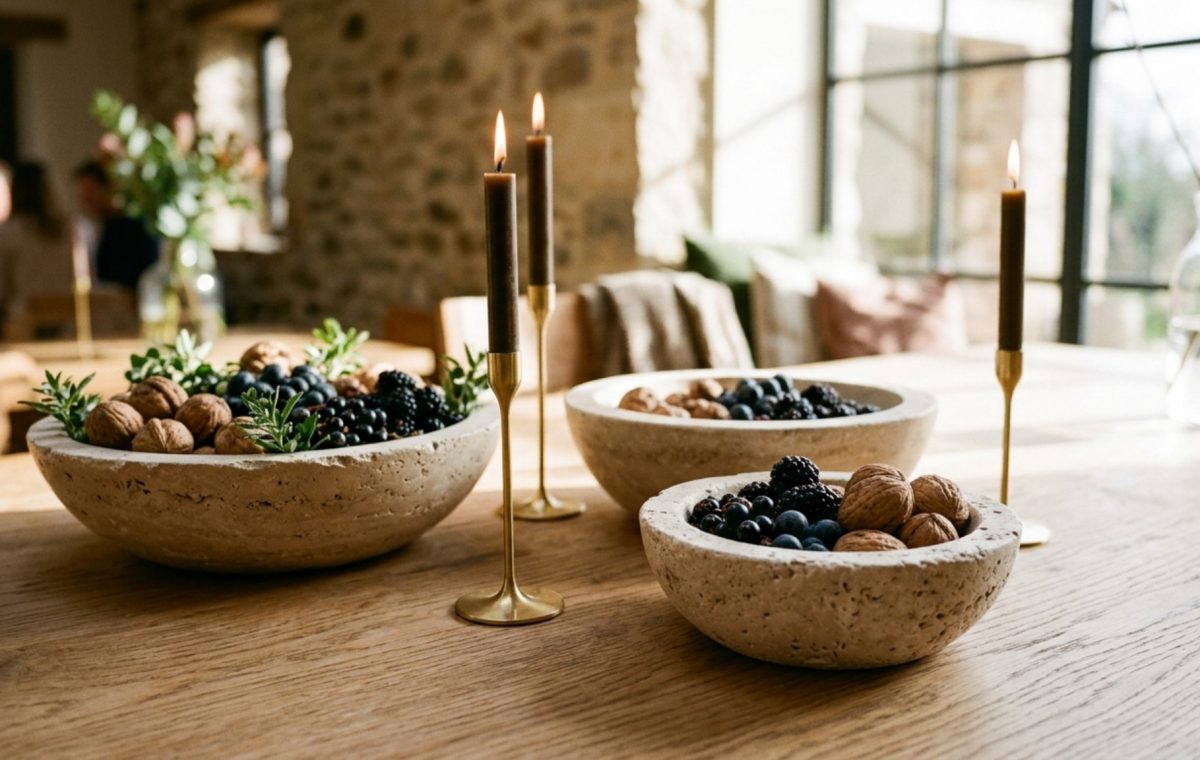
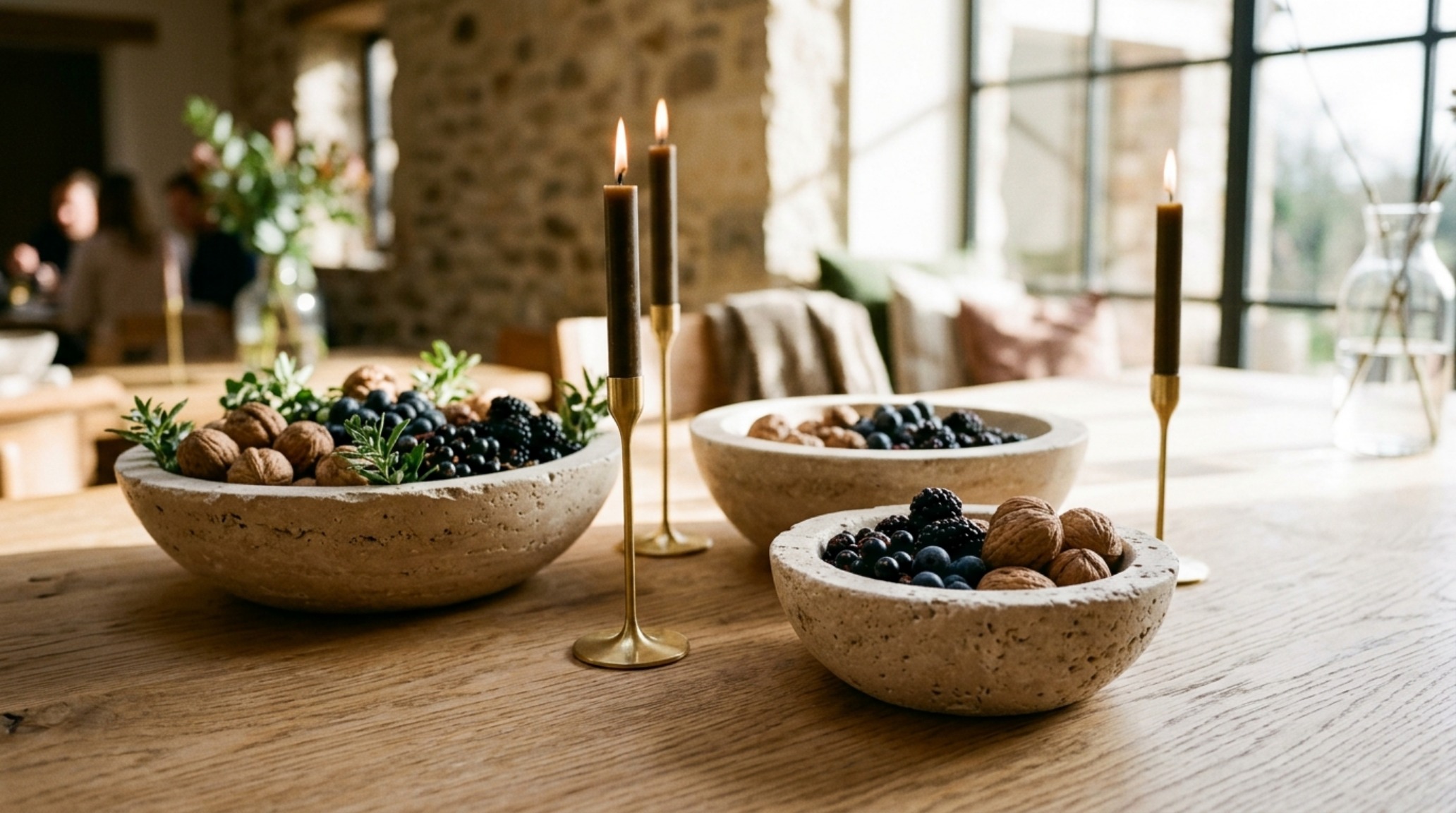
The primary failure of standard holiday styling is the vertical obstruction. An ergonomic tablescape demands that eye contact remain uninterrupted; the ‘sightline zone’—the space between 14 and 24 inches above the table surface—must remain clear. Low-profile festive centerpieces solve this by hugging the tabletop, utilizing horizontal spread rather than vertical mass. Think of these as architectural anchor points: a series of hand-carved travertine bowls filled with walnuts, or a rhythmic progression of slim taper candles in heavy brass holders.
When selecting materials for these lower-profile elements, texture becomes your primary tool for drama. Without height, you rely on the play of light against stone, the grain of raw wood, and the organic imperfections of handmade ceramics. A singular branch of cedar, stripped of excess bulk and laid flat along the central spine, provides the olfactory nostalgia of the season without blocking the guest sitting directly across from you. This is about creating a visual narrative that supports the communal connection rather than competing with it.
Modern Christmas Table Runners & The Linear Guide
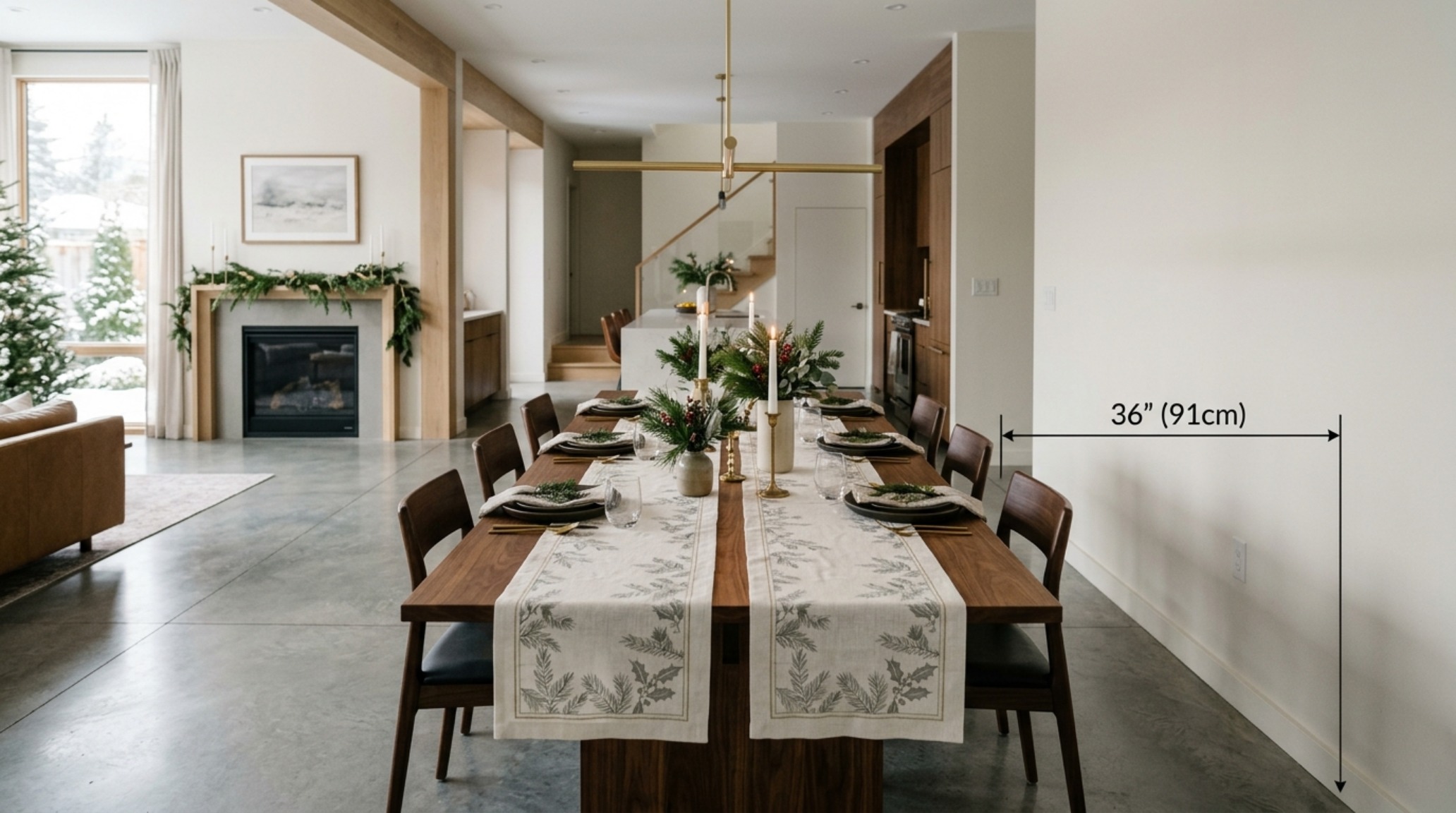
Traditional linens often feel suffocating, swallowing the materiality of a beautiful white oak or marble table. Modern christmas table runners should act as architectural blueprints for the meal, defining the service zone while leaving the perimeter of the table exposed. I prefer using heavyweight Belgian linen in muted tones like Farrow & Ball’s ‘Setting Plaster’ or a deep, desaturated moss. Instead of one long runner down the center, consider ‘vis-à-vis’ runners—shorter strips that run across the width of the table, connecting pairs of guests and creating a structured, rhythmic cadence to the seating arrangement.
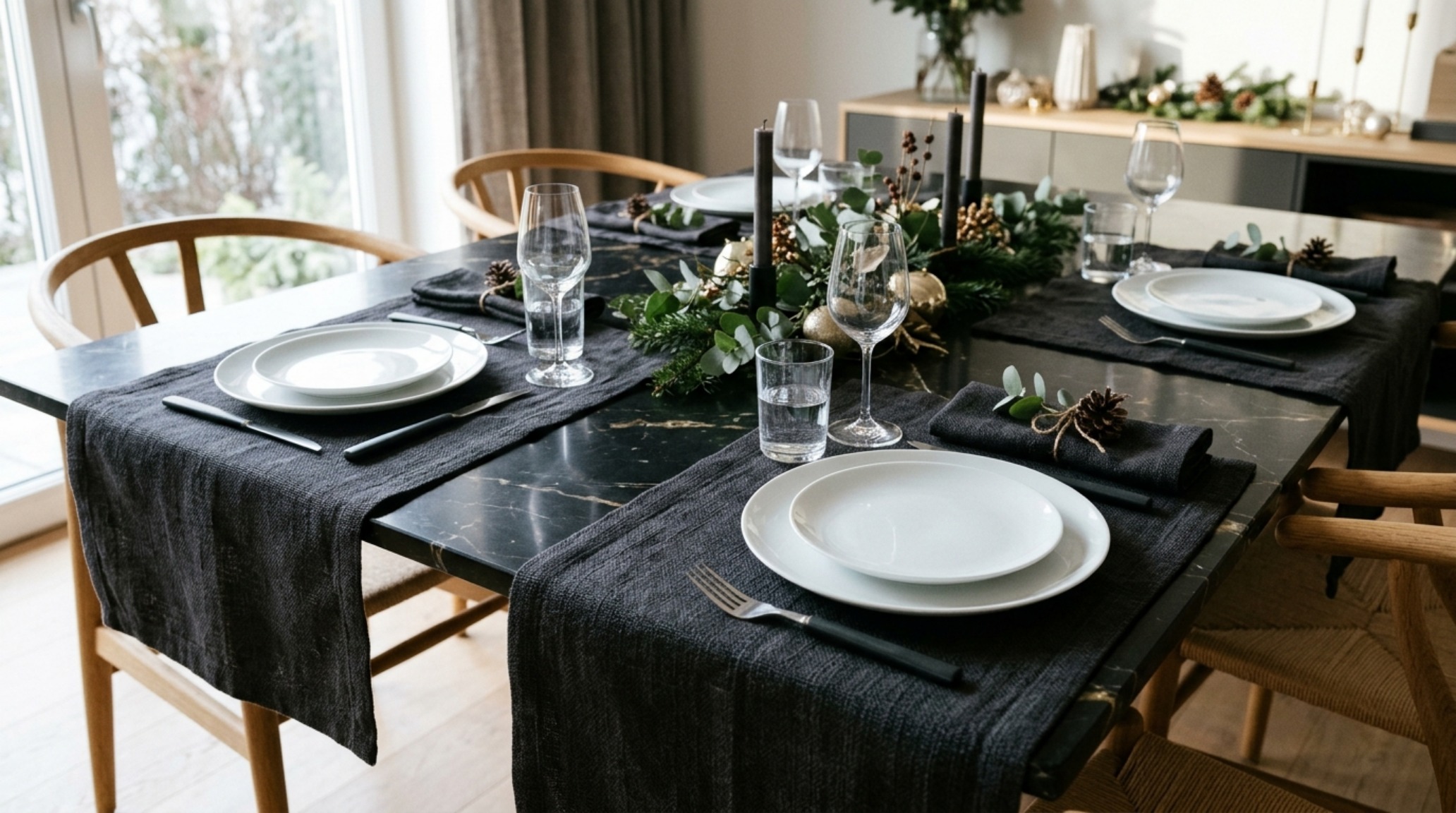
This layout naturally dictates where glassware and shared platters should land. By defining these zones with fabric, you create a subconscious guide for service flow. Guests instinctively know where the ‘decorative’ ends and the ‘functional’ begins, reducing the clumsy reshuffling of votives when the roast arrives. The goal is a seamless transition from the cocktail hour to the main course, where the decor feels like a permanent fixture of the room’s geometry.
Minimalist Holiday Dining Ideas for Small-Space Living
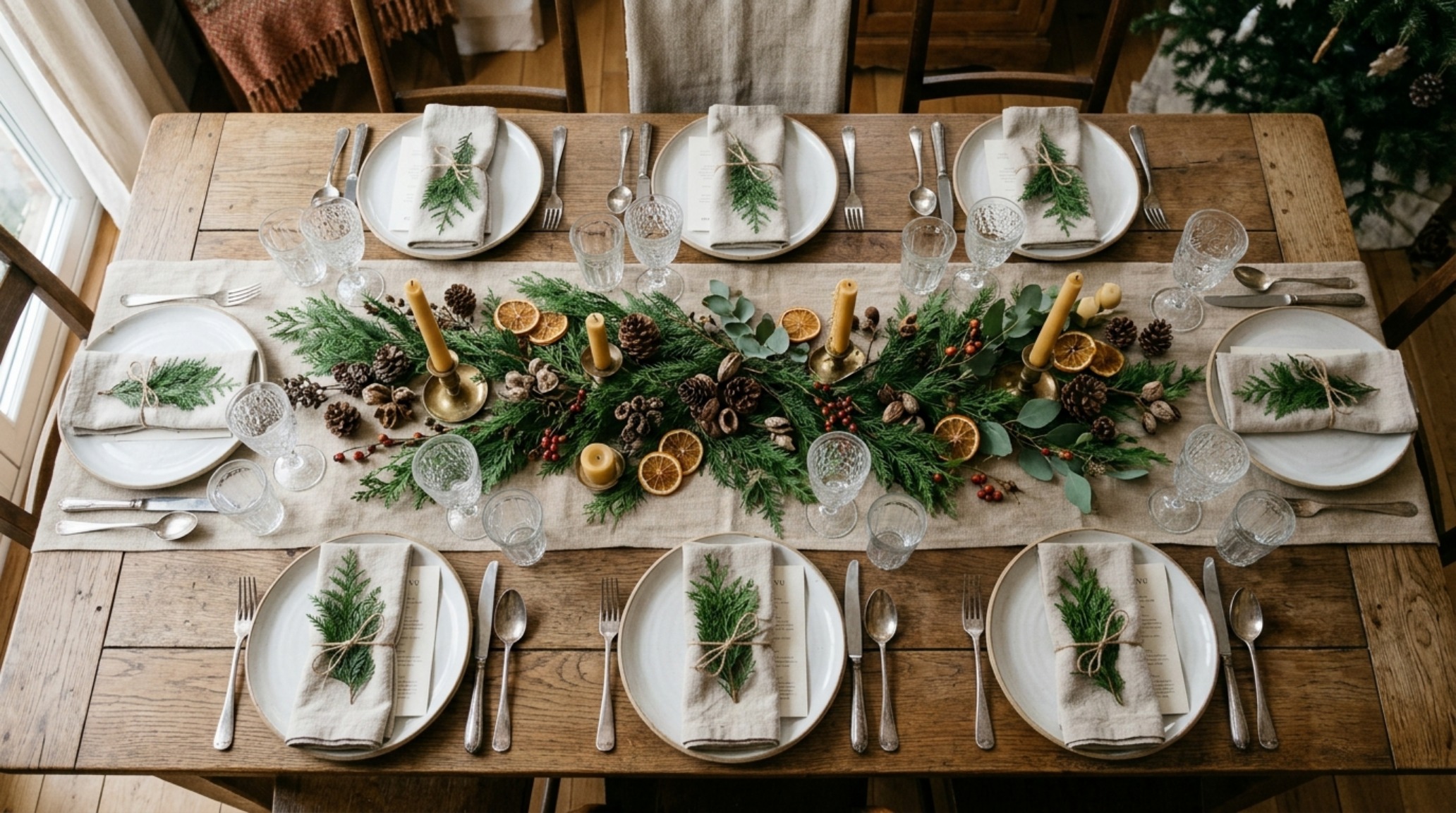
In urban environments where every square inch is a premium, the traditional sprawling feast requires a radical rethink of spatial density. Minimalist holiday dining ideas aren’t about lack; they are about the luxury of negative space. When working with a 36-inch standard walkway clearance, the last thing you want is decor that spills over the edge of the table or requires bulky storage after the event. The scatter approach thrives here: by using individual ‘vignettes’ at each place setting—perhaps a single sprig of dried lunaria tucked into a linen napkin—you distribute the festive weight across the entire surface rather than concentrating it in the center.
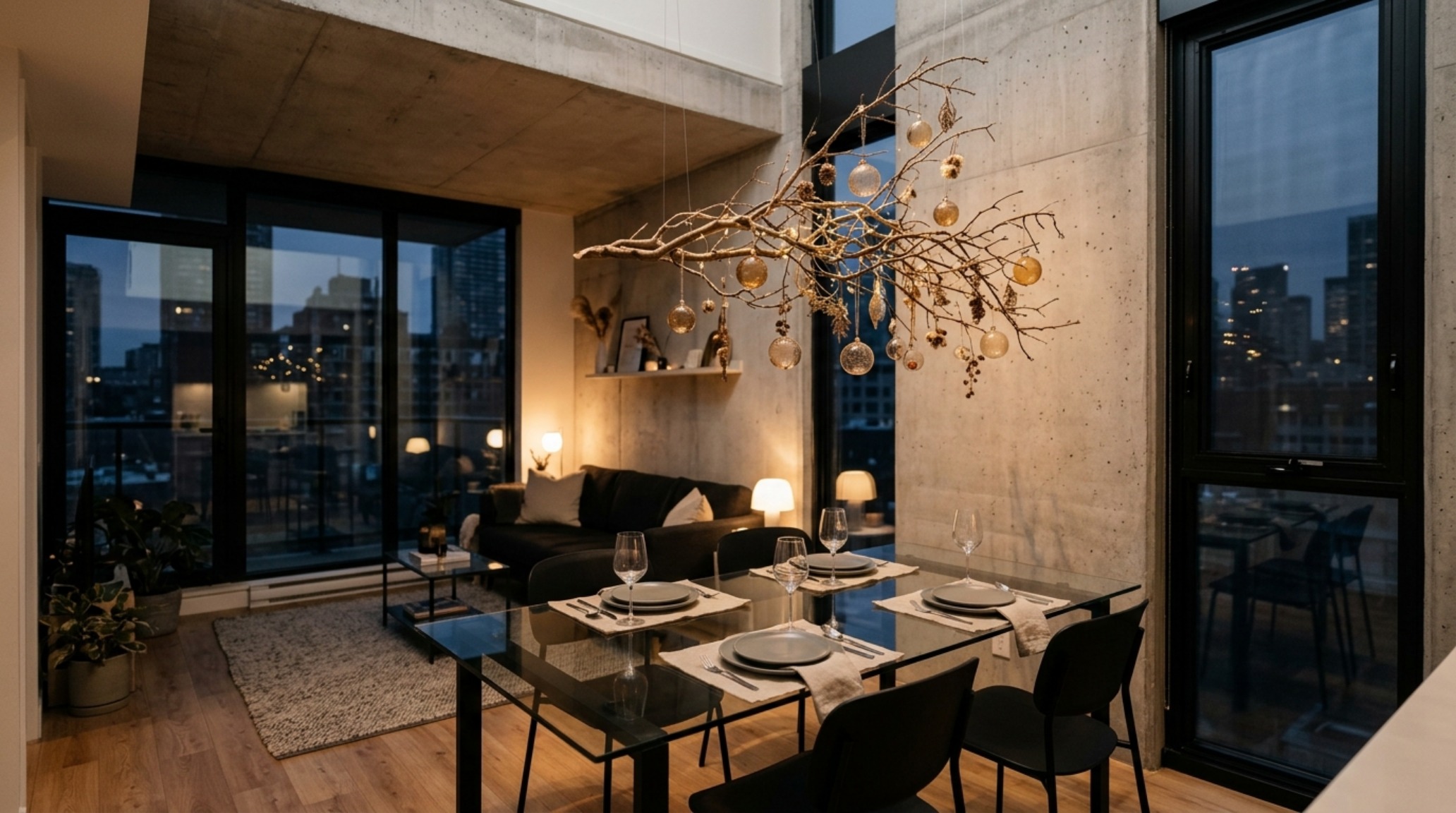
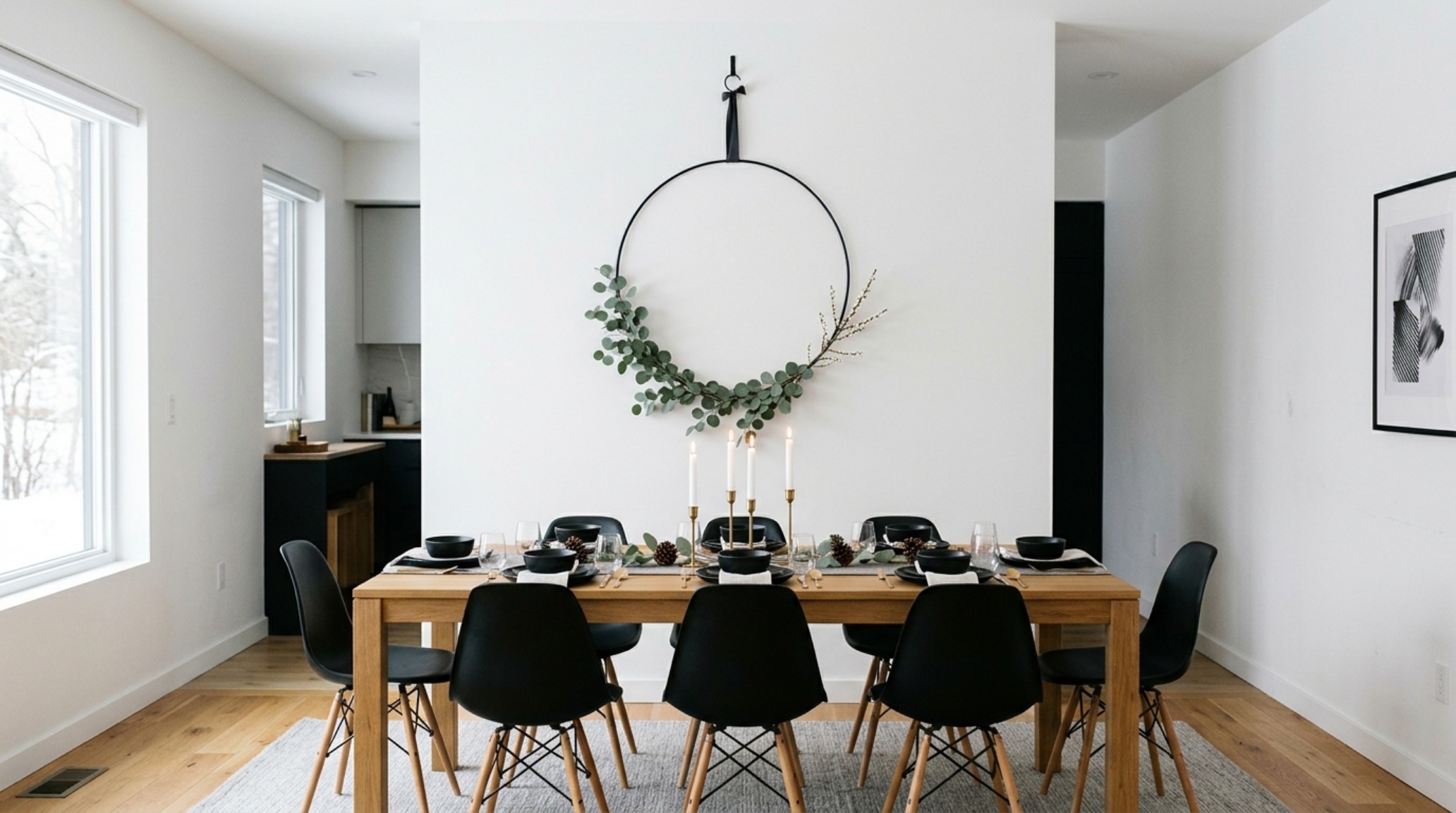
Consider the ‘floating’ element. Instead of taking up precious table real estate, utilize the vertical plane. A sculptural branch suspended from a light fixture with invisible wire can carry the weight of ornaments and greenery, leaving the table surface entirely free for food and movement. This preserves the 18-inch ‘reach’ zone, ensuring that guests can access shared plates without straining or risking a sleeve in a candle flame. It is a high-utility solution that maintains the visual drama of a grand installation.
Tactile Holiday Table Styling & The Sensory Foundation
The success of a tablescape is often found in the things you don’t notice immediately—the weight of the flatware, the temperature of the stone coasters, the softness of the light. Tactile holiday table styling focuses on the haptic experience of the guest. We are moving away from the plasticized sheen of mass-produced ornaments toward materials that feel grounded and real. Honed marble, unlacquered brass, and raw silk create a sensory depth that plastic tinsel can never replicate.
Lighting is the most critical component of this tactile environment. I always specify 2700K warm ambient lighting with a high CRI (90+) rating. This ensures that the colors of the food look vibrant and the skin tones of your guests look healthy and warm. Avoid overhead pot lights which create harsh shadows; instead, rely on the ‘three-layer’ approach: low-level candlelight for intimacy, mid-level lamps on sideboards for depth, and perhaps a dimmable pendant for overall structure. This layering creates a soft ‘shadow play’ across the table, making even the simplest arrangement feel cinematic.
Architectural Christmas Decor: Structural Elegance
When we talk about architectural christmas decor, we are referring to elements that have a clear sense of form, scale, and proportion. It is the antithesis of the ‘cluttered’ look. It might be a set of geometric wooden trees that echo the brutalist lines of a modern fireplace, or a series of glass cloches containing nothing but a single, perfectly formed pinecone. These pieces act as sculptural anchors, providing visual interest through their silhouette rather than their volume.
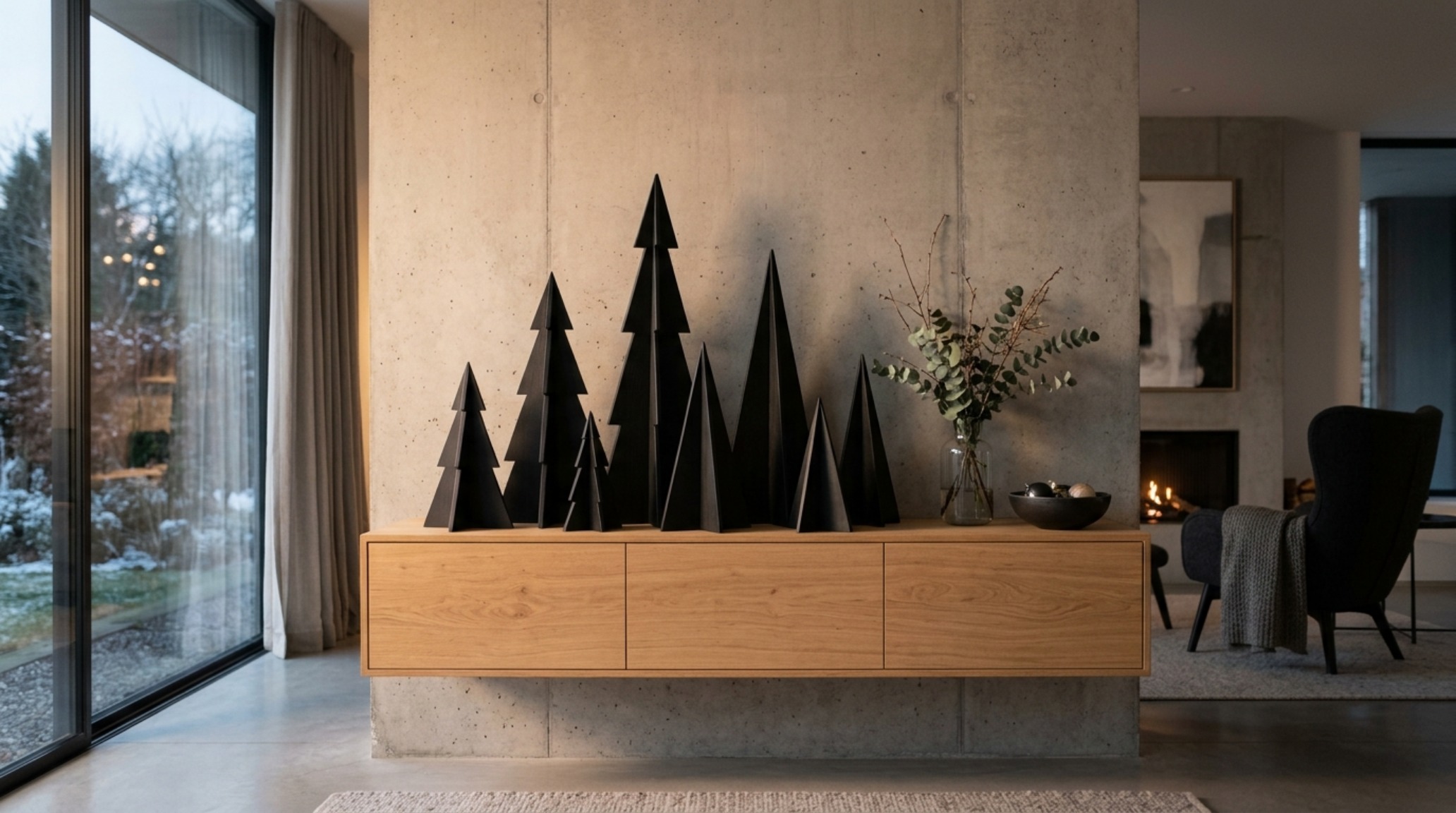
The key to making this work is consistency in the material palette. If you choose brass, ensure all metallic accents—from the napkin rings to the candle snuffers—share that same warm, slightly oxidized finish. This material cohesion creates a sense of calm. When the environment feels architecturally sound, the host feels more at ease, and that tranquility translates directly to the guest experience. We are designing for the flow of conversation and the ease of the evening.
Curated Visual Chronicle & Material Composition
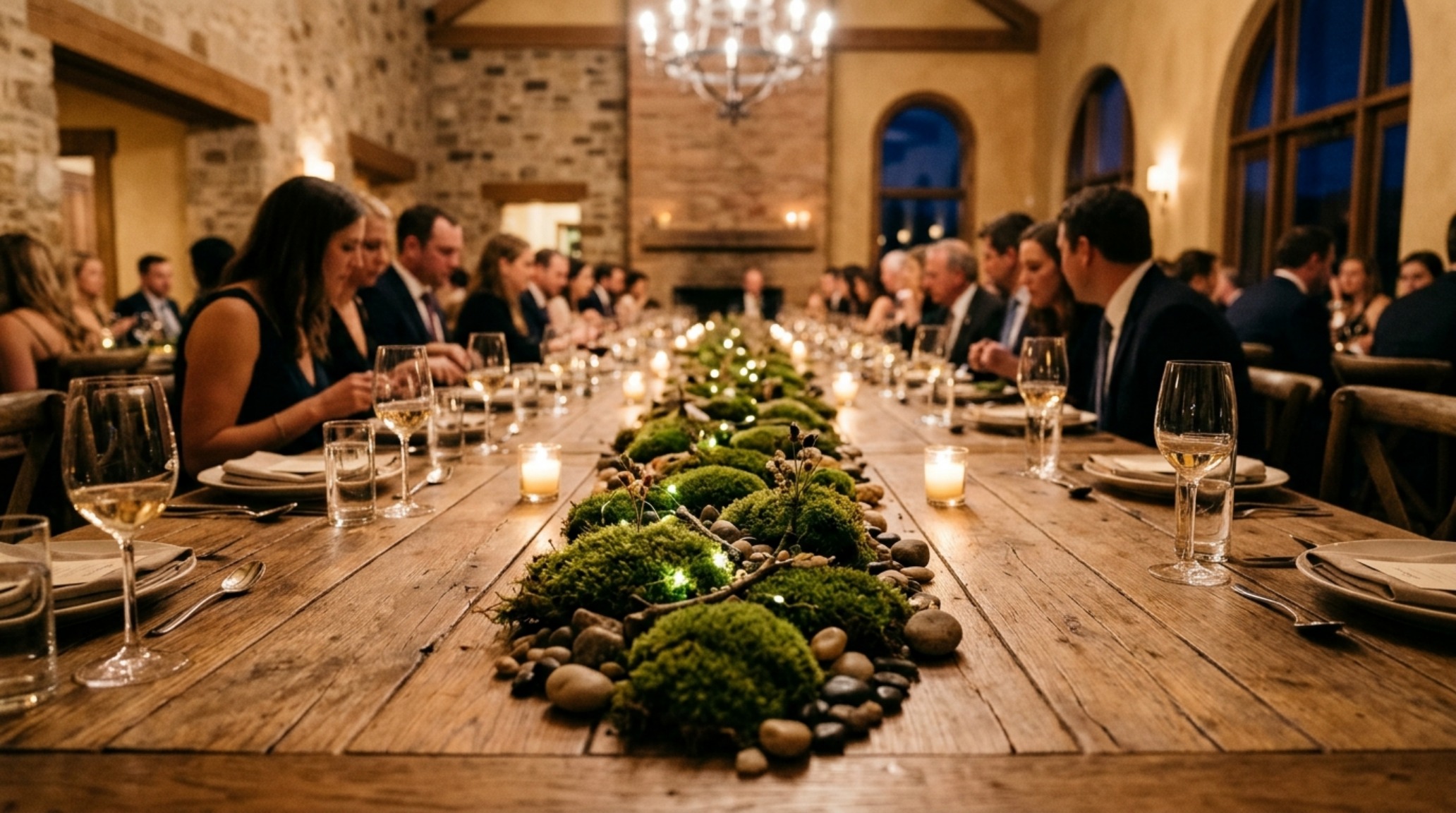
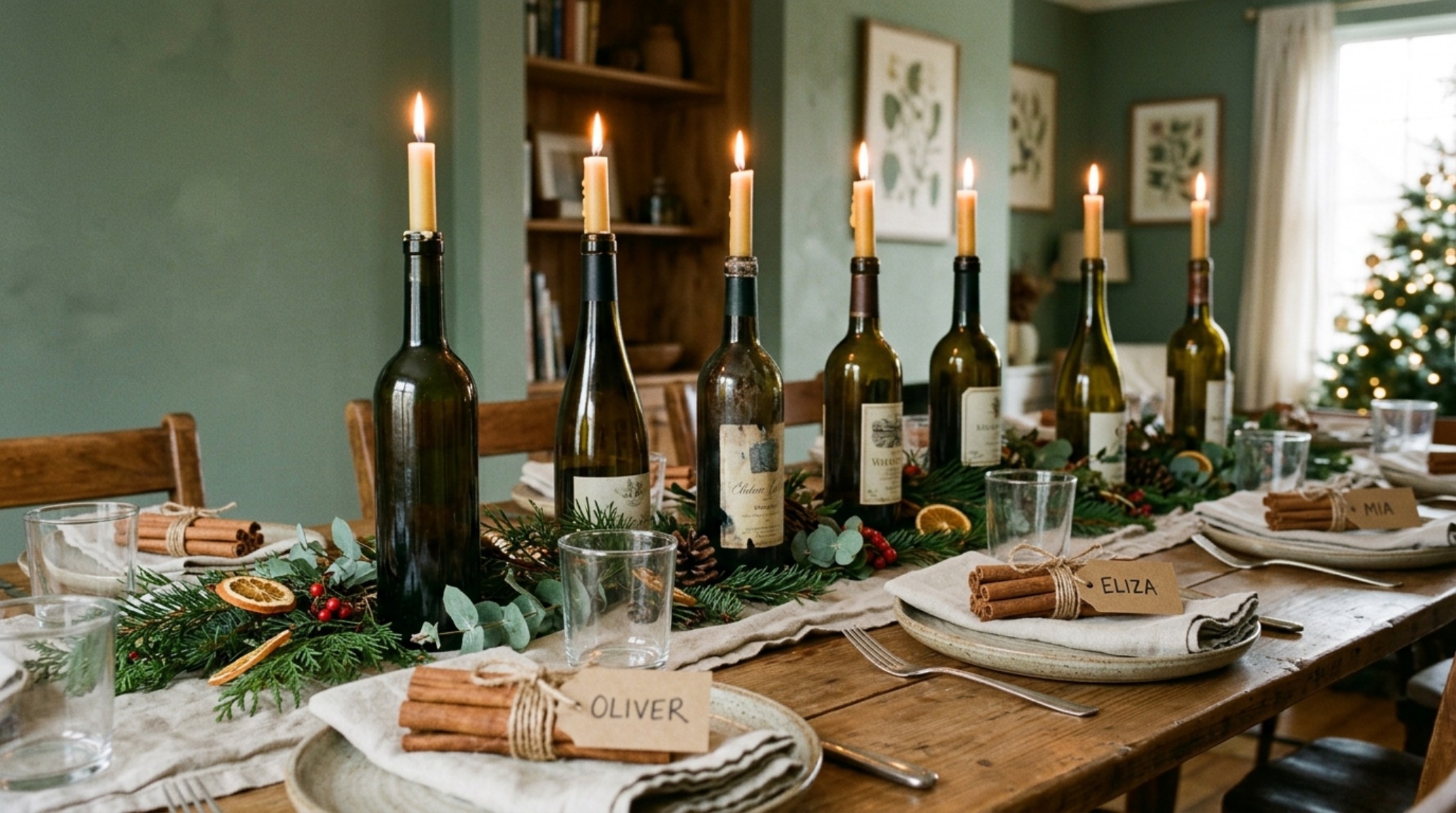
A successful holiday table is a study in contrasts: the hardness of stone against the softness of moss; the flicker of a flame against the stillness of a dark wood surface. To achieve this, one must curate the material selection with the same rigor used in a kitchen renovation. We look for ‘living’ finishes that will age beautifully over the course of the evening—linen that wrinkles slightly, candles that drip with character, and silver that catches the low light. This is the difference between a table that looks like a showroom and one that feels like a home.
Integrating a sustainable christmas tablescape philosophy further refines this selection. Moving away from ‘one-season’ disposables toward heirloom-quality pieces is the ultimate luxury. High-quality linen napkins, hand-blown glassware, and locally sourced greenery aren’t just ethical choices; they are aesthetic ones. They carry a weight and a story that synthetic alternatives lack. By investing in pieces that serve a functional purpose year-round, you ensure your holiday decor is a natural extension of your home’s existing architectural language.
Technical Specification & Material Matrix
Curated architectural summary documenting material selections, color swatches, and spatial flow.
Designing an ergonomic tablescape is ultimately an act of hospitality. It is a commitment to the guest’s comfort, ensuring that the physical environment supports the emotional resonance of the evening. When we strip away the excess and focus on the cadence of the meal, the table decorations for christmas become more than just seasonal accents—they become the quiet scaffolding for a memorable connection. As the plates are cleared and the light softens, the architectural integrity of the space remains, a silent partner in the art of the host.
Editorial Silo • Recommended Architecture Studies
- Beds That Save Space: The Architectural Blueprint & Spatial Flow Guide — Archival Design Case Study
- The Closed-Loop Life: Mastering the Functional Ergonomics of Self Sustaining Homes — Archival Design Case Study
Curated Visual Chronicle
A high-resolution study in spatial proportions, tactile materiality, and light choreography curated for enduring modern living.



Curated Visual Lookbook
Design Gallery & Spatial Studies
A visual curation of architectural arrangements, lighting concepts, and material palettes featured in this space.