The Evolution of the Domestic Archive: From Storage to Spatial Identity
For decades, the residential library was a mausoleum of mahogany—a static, dust-gathering monument to status rather than a lived-in sanctuary. These heavy, monolithic structures functioned as architectural punctuation marks, closing off rooms and absorbing light. Today, a profound shift has occurred. The rigid, formal conventions of the past have been dismantled in favor of a more fluid, expressive approach to book shelving that prioritizes tactile materiality and emotional resonance. This modern standard is less about displaying a collection and more about curating a sensory environment where the architecture of the shelf and the texture of the page coexist in a deliberate, aesthetic dialogue.
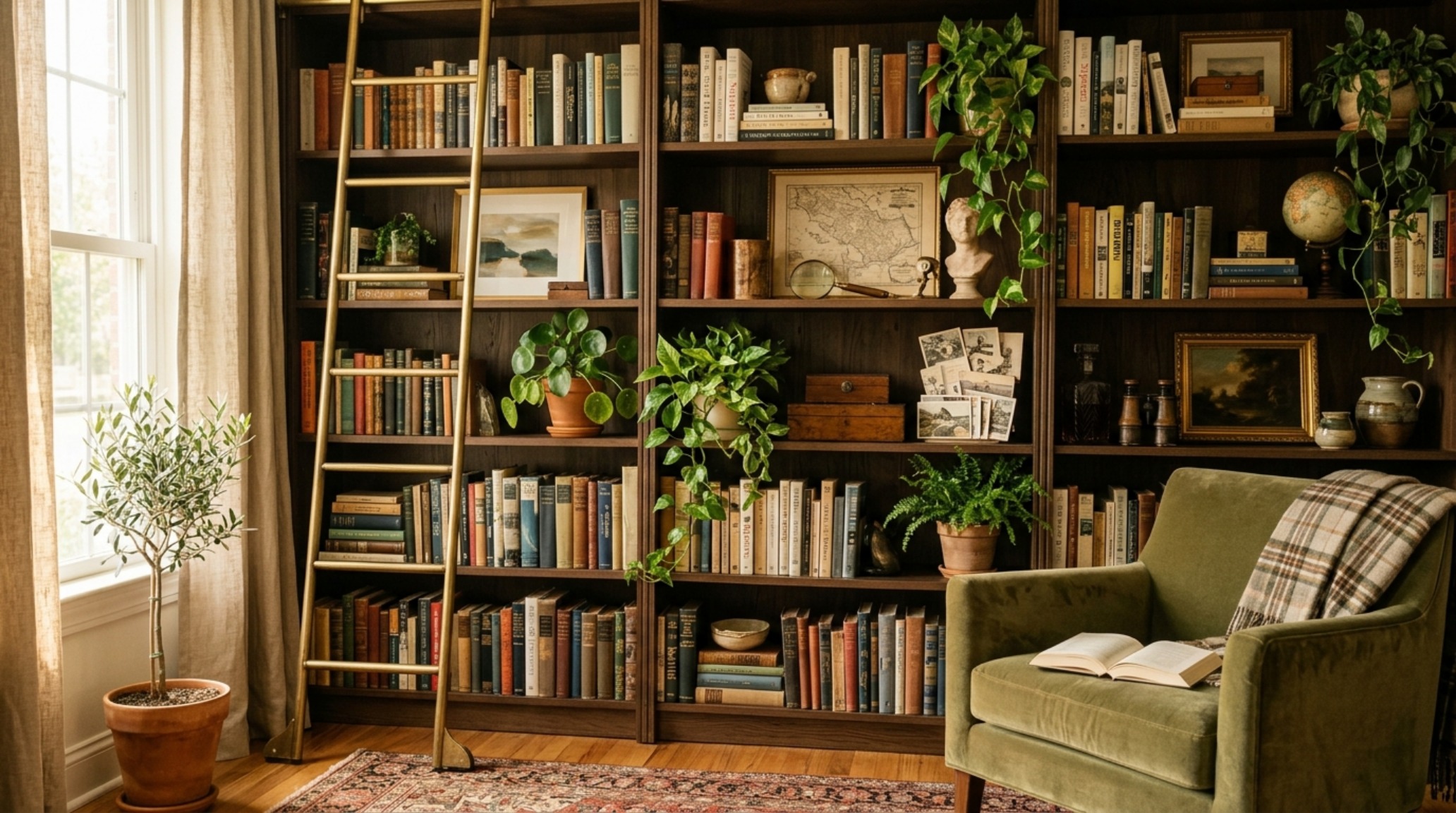
We are currently witnessing the rise of the ‘Bookshelf Wealth’ aesthetic, a concept popularized by Architectural Digest that celebrates the curated, the collected, and the intentionally imperfect. It is the antithesis of the ‘staged’ home; it is a design philosophy that values the authenticity of a well-read spine and the architectural integrity of the vessels that hold them. By synthesizing this lived-in warmth with the structural innovation of contemporary joinery, we can transform any wall into a dynamic landscape of personal history and material depth.
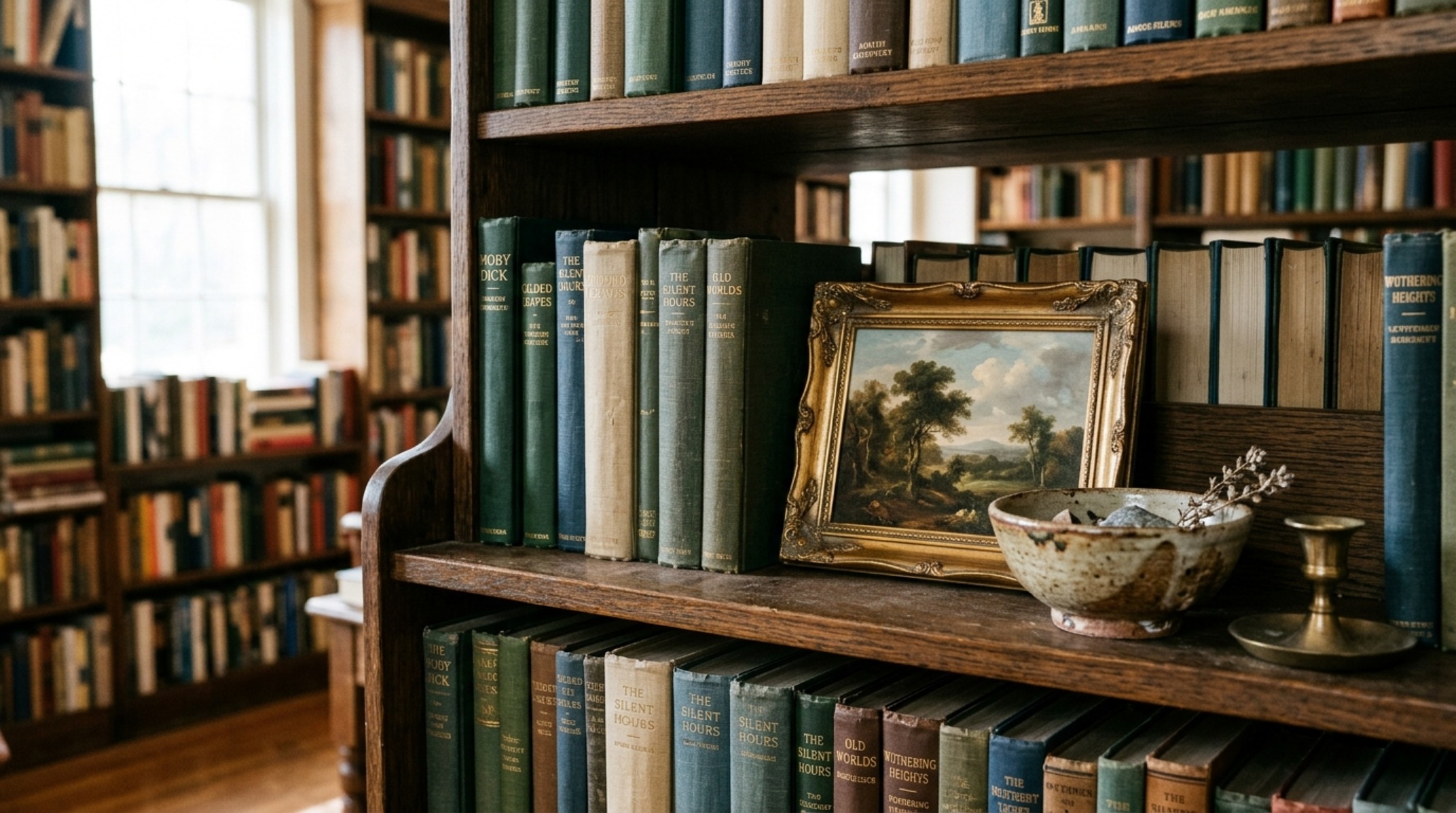
Bookshelf Wealth Aesthetic: The Art of the Lived-In Curation
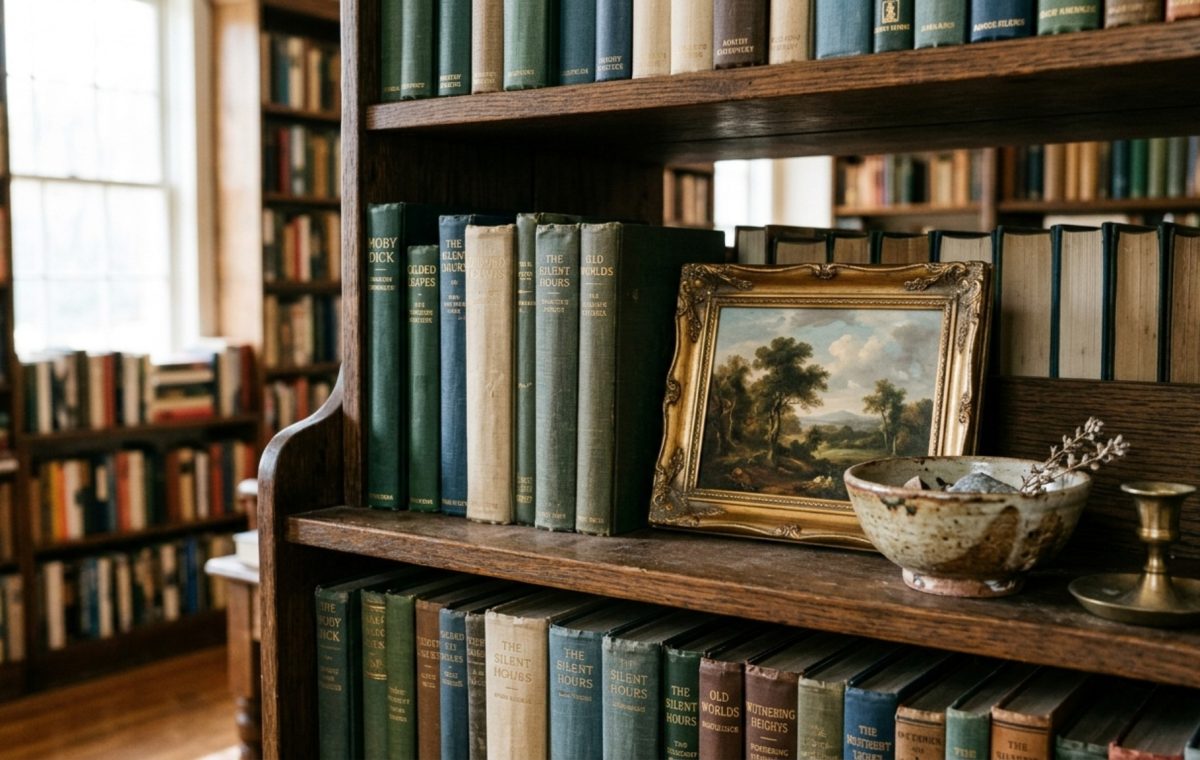
At its core, the bookshelf wealth aesthetic is about rejecting the clinical Minimalism that has dominated interiors for the last decade. It suggests that a home is wealthiest when it is filled with things that tell a story. This isn’t about buying a color-coordinated set of faux-books to fill space; it’s about the ‘editing’ process. To achieve this look, one must balance the density of a full library with ‘negative space breathing room.’ In professional styling, we often use the ‘two-thirds rule’—filling two-thirds of a shelf with books (varying between vertical and horizontal stacks) and leaving the final third for a meaningful object, a piece of stoneware, or simply empty space to let the eye rest.
The tactile experience is paramount here. Imagine the contrast of a rough-hewn ceramic bowl against the smooth, matte finish of a first-edition dust jacket. When we design for bookshelf wealth, we aren’t just looking at the shelf as a flat surface; we are looking at the spatial cadence of the entire wall. The depth of the shelf—standardized at 11 to 12 inches—allows for this layering of objects in front of the books, creating a three-dimensional vignette that invites the hand to reach in and explore.
Built-in Library Design: Architectural Integration and Flow
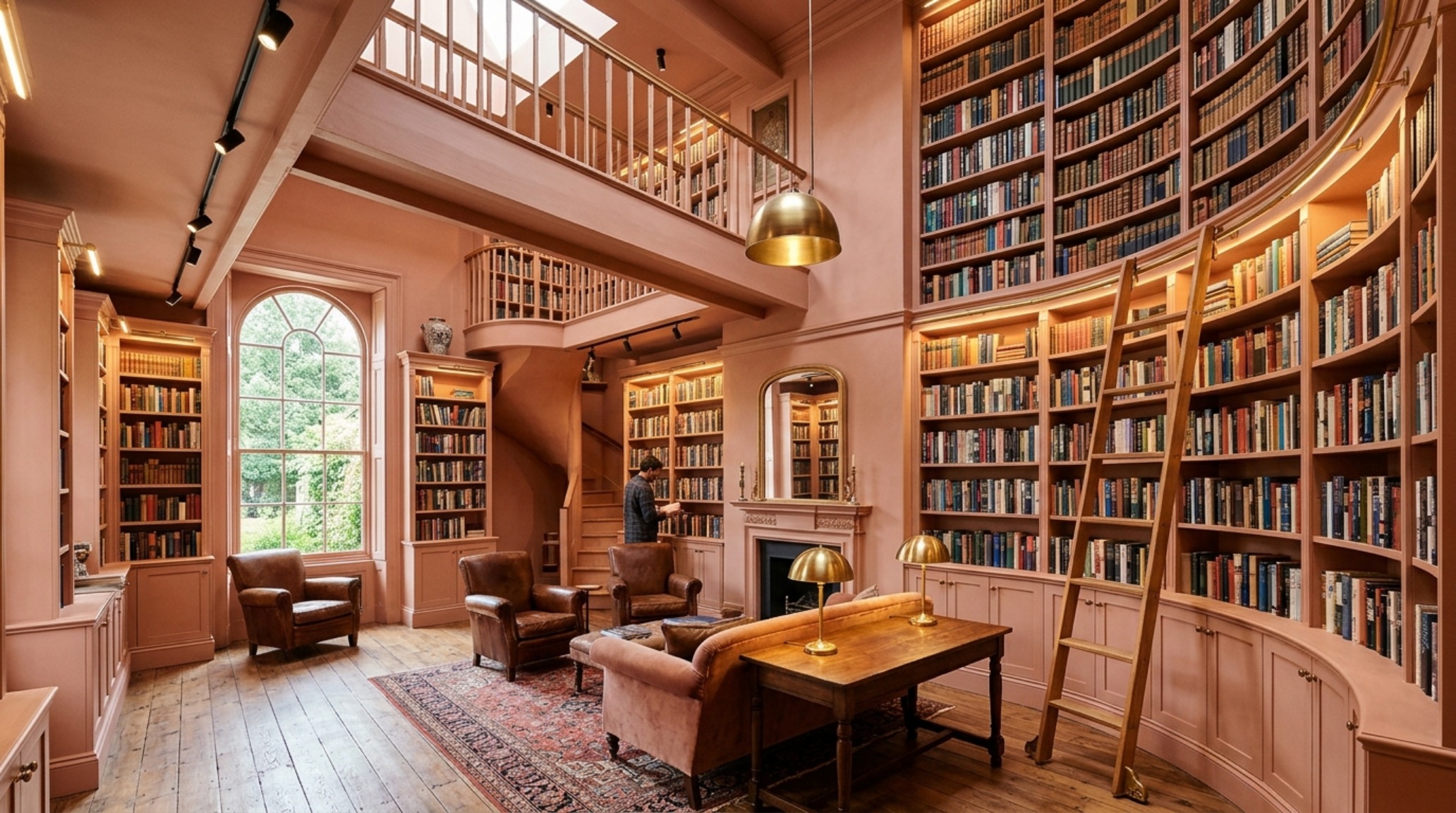
When transitioning from loose furniture to a permanent structural asset, built-in library design requires a deep understanding of architectural clearances and spatial flow. A library should never feel like an intrusion into the room. For a library wall in a primary circulation path, maintaining a 36-inch standard walkway clearance is non-negotiable. This ensures that even when the shelves are full, the room retains its breathability. We often look to the structural innovation seen in Dezeen-featured projects, where shelving is integrated into the wall’s very fabric, sometimes even serving as a partition between rooms.
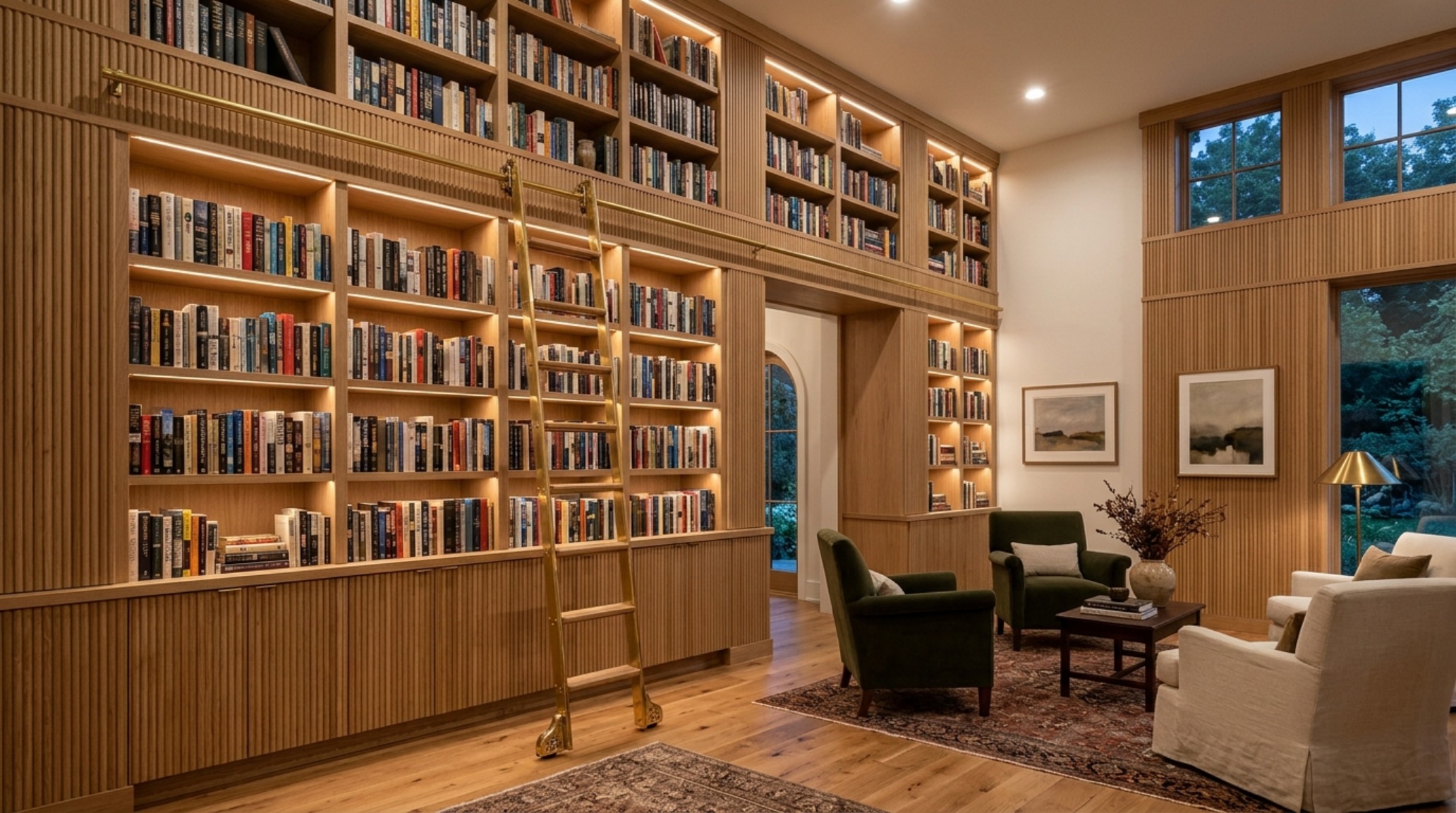
Consider the use of floor-to-ceiling joinery. By taking the shelving all the way to the crown molding, you draw the eye upward, emphasizing the verticality of the space. To prevent these large-scale installations from feeling oppressive, we employ the House Beautiful technique of ‘color drenching.’ By painting the shelving, the backing, and the surrounding walls in a singular, sophisticated hue—like Farrow & Ball’s Setting Plaster or Benjamin Moore’s Swiss Coffee—the cabinetry recedes into the architecture, allowing the textures of the books to become the primary visual interest.
Spatial Perspectives & Material Curation
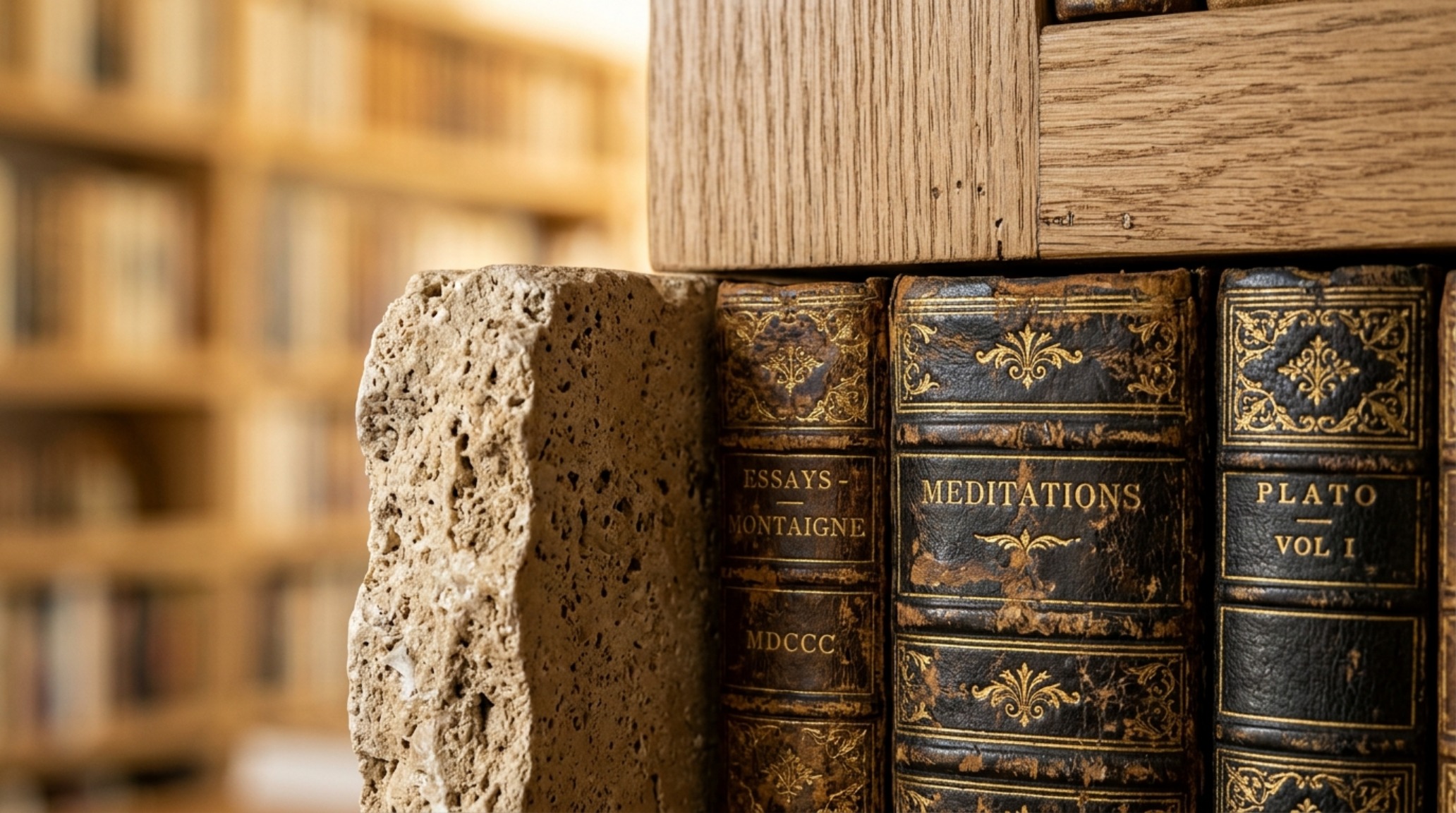
Materiality is the bridge between the structural and the emotional. In a library, the choice of timber or stone dictates the entire atmosphere. A fluted white oak provides a rhythmic, mid-century modern energy, while a dark, wire-brushed walnut offers a sense of gravitas and history. We often specify a honed travertine or a slim marble slab for the ‘reach-height’ shelf—usually around 30 to 36 inches from the floor—to provide a cool, tactile counterpoint to the warmth of the wood.
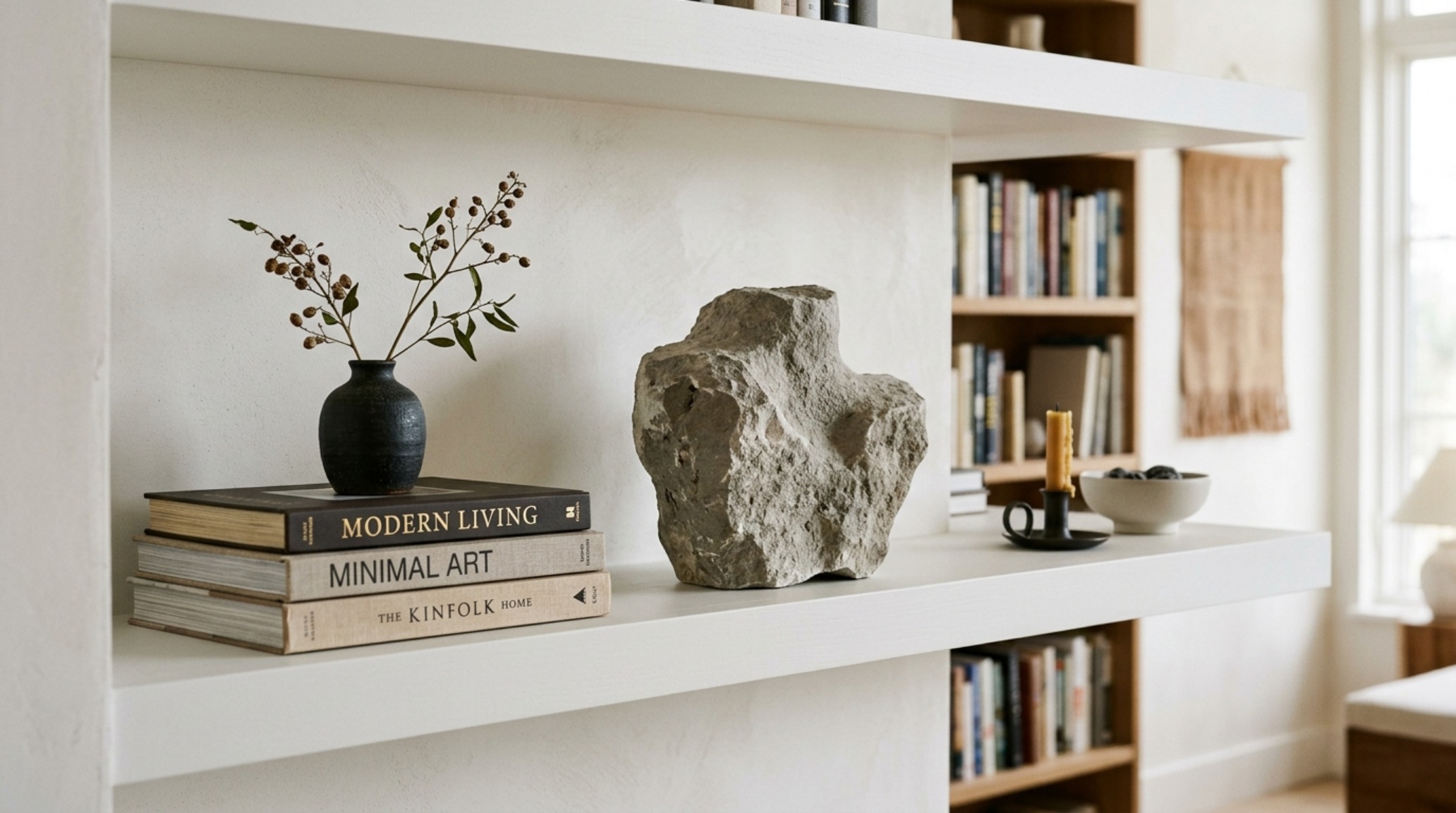
The backing of the book shelving is another opportunity for tactile expression. Moving away from standard painted MDF, we are seeing a surge in the use of grasscloth wallpapers, cork, or even micro-cement behind the books. This adds a layer of ‘shadow play’ when the lighting hits the shelf, creating a depth that paint alone cannot achieve. It turns every shelf into a miniature stage for the objects it holds.
Modern Shelf Styling Tips: Balancing Form and Utility
The secret to high-concept styling lies in the rhythm of the arrangement. When implementing modern shelf styling tips, start with the ‘heavy’ elements first. Larger art books and oversized folios should ground the bottom shelves, while lighter paperbacks and delicate ceramics move toward the top. This follows the natural visual weight of a room. Avoid the trope of ‘rainbow’ organizing; instead, group books by subject or spine texture to maintain an authentic, bibliophile-approved look.
Incorporate the ‘zig-zag’ method: if you have a horizontal stack of books on the far left of one shelf, place the horizontal stack on the far right of the shelf below it. This directs the eye in a melodic path across the wall. To add a professional ‘AD’ touch, lean a small framed oil painting against the books or hang a miniature artwork directly onto the shelf’s vertical uprights. This layering breaks the linear monotony of the shelving and adds an unexpected, gallery-like quality to the room.
Small Space Book Storage: Maximizing Vertical Sightlines
Not every home has the luxury of a dedicated library wing, but small space book storage can be equally impactful when executed with precision. The key is to utilize ‘dead space’—the areas above door frames, the return of a hallway, or the awkward niche under a staircase. In these compact environments, the 18-inch reach rule is essential; keep the books you use most frequently within easy arm’s length, while using the higher, less accessible shelves for long-term storage or decorative objects.
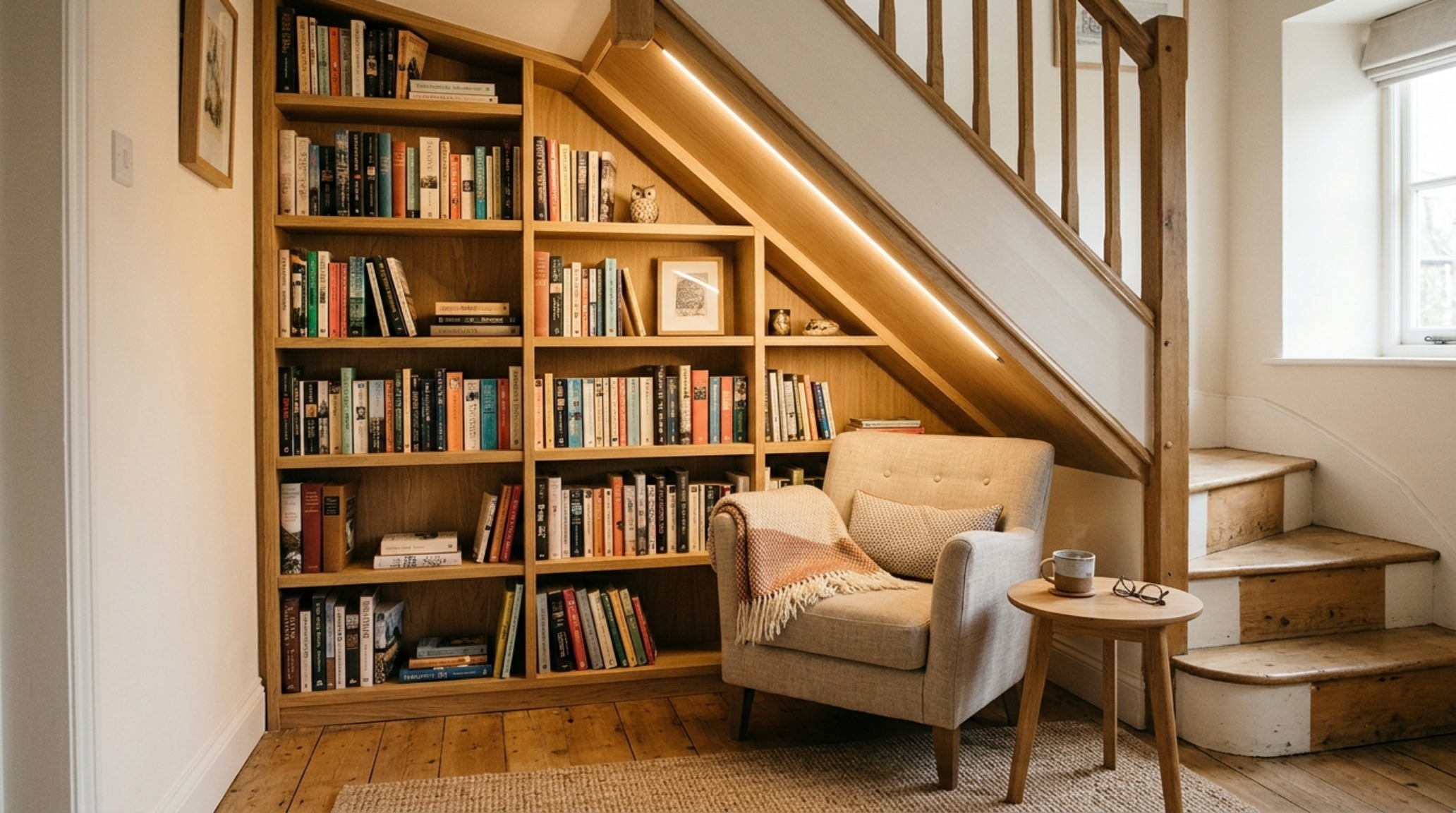
For a studio or a small apartment, consider using ‘floating’ units that expose the floor plane. This creates an illusion of more square footage while providing the necessary storage. By keeping the base of the shelving at least 6 to 8 inches off the ground, the floor continues underneath, preventing the ‘boxed-in’ feeling that traditional floor-standing units can create. Lighting also plays a critical role here—integrated LED strips tucked into a 1/2-inch channel at the front of the shelf can make a small niche feel like a luminous, intentional design feature.
Floating Book Shelving Ideas: Gravity-Defying Elegance
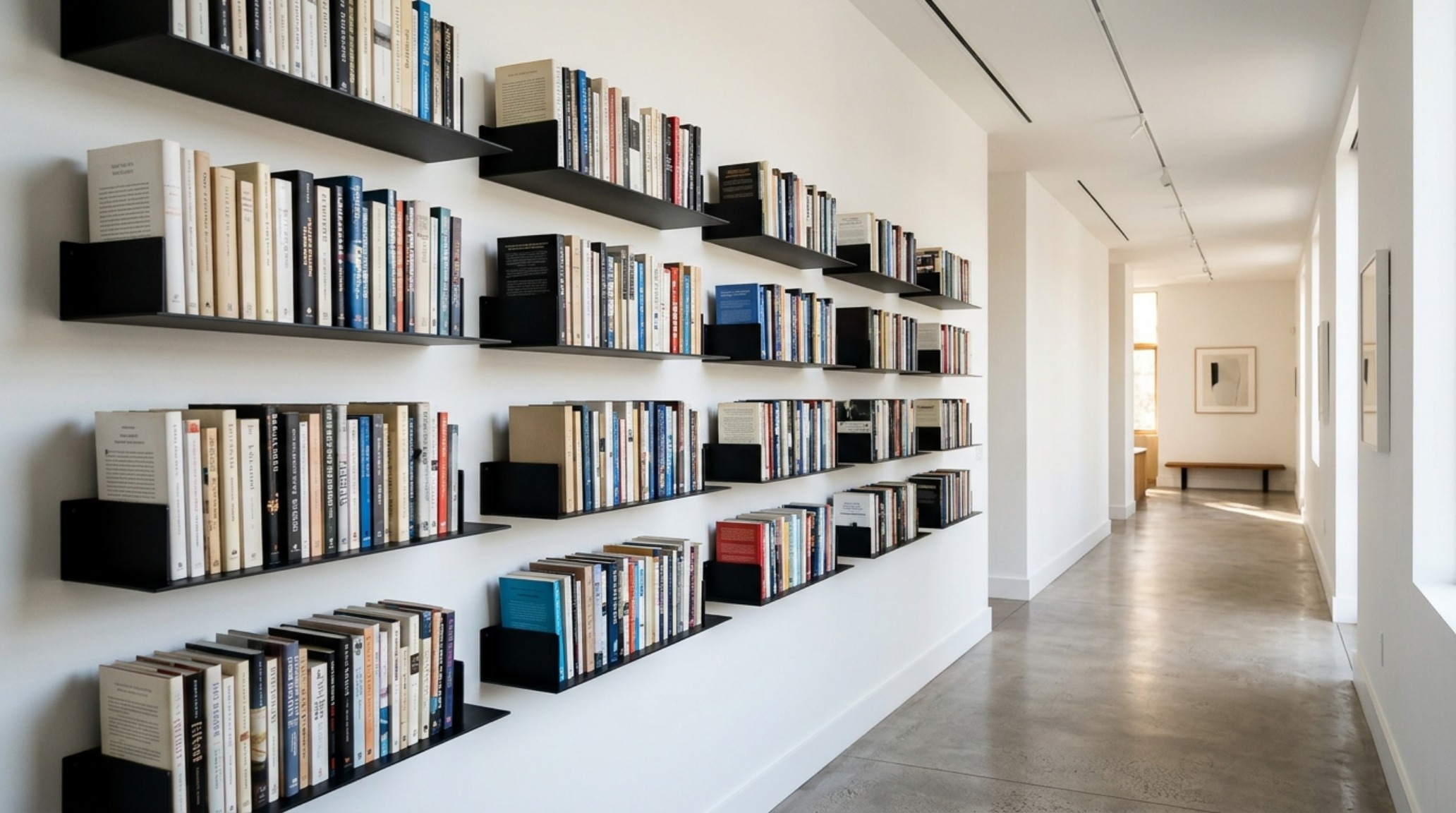
For a more contemporary, ethereal look, floating book shelving ideas offer a way to display collections without the visual weight of traditional cabinetry. Using concealed steel brackets, these shelves appear to grow out of the wall. This is a favorite technique in Houzz-inspired practical renovations where the goal is to maintain a clean, minimalist profile. When opting for floating shelves, materiality becomes even more critical; a thick, 2-inch slab of reclaimed timber or a slim, 1/4-inch powder-coated steel plate can completely change the room’s energy.
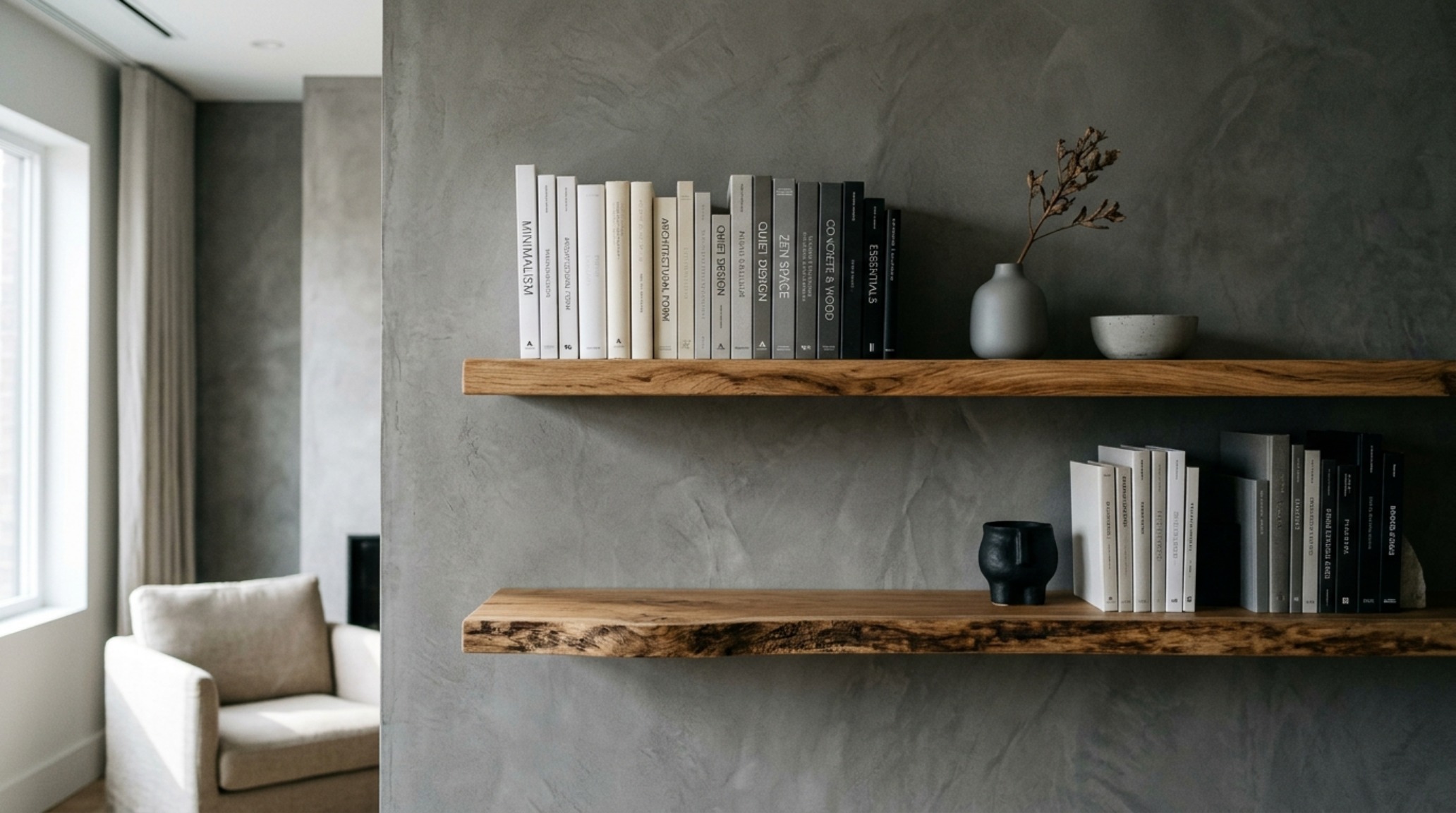
When styling floating shelves, ‘editing’ is your most powerful tool. Because the structure itself is so light, the contents must be carefully curated to prevent the arrangement from looking cluttered. Use clear glass bookends or heavy stone spheres to secure the books, and vary the heights of your objects to create a dynamic silhouette against the wall. The aim is to create a composition that feels balanced yet effortless.
Bespoke Joinery for Books: The Custom Advantage
Ultimately, the most successful libraries are those designed with bespoke joinery for books. Customizing the shelf heights to fit your specific collection—from 8-inch pockets for mass-market paperbacks to 15-inch openings for art monographs—ensures that no space is wasted. This is where the ergonomics of the home library truly shine. We often include a pull-out ‘browsing shelf’ at a 30-inch height (standard desk height), allowing the user to rest a heavy book while searching for a reference without having to carry it to a table.
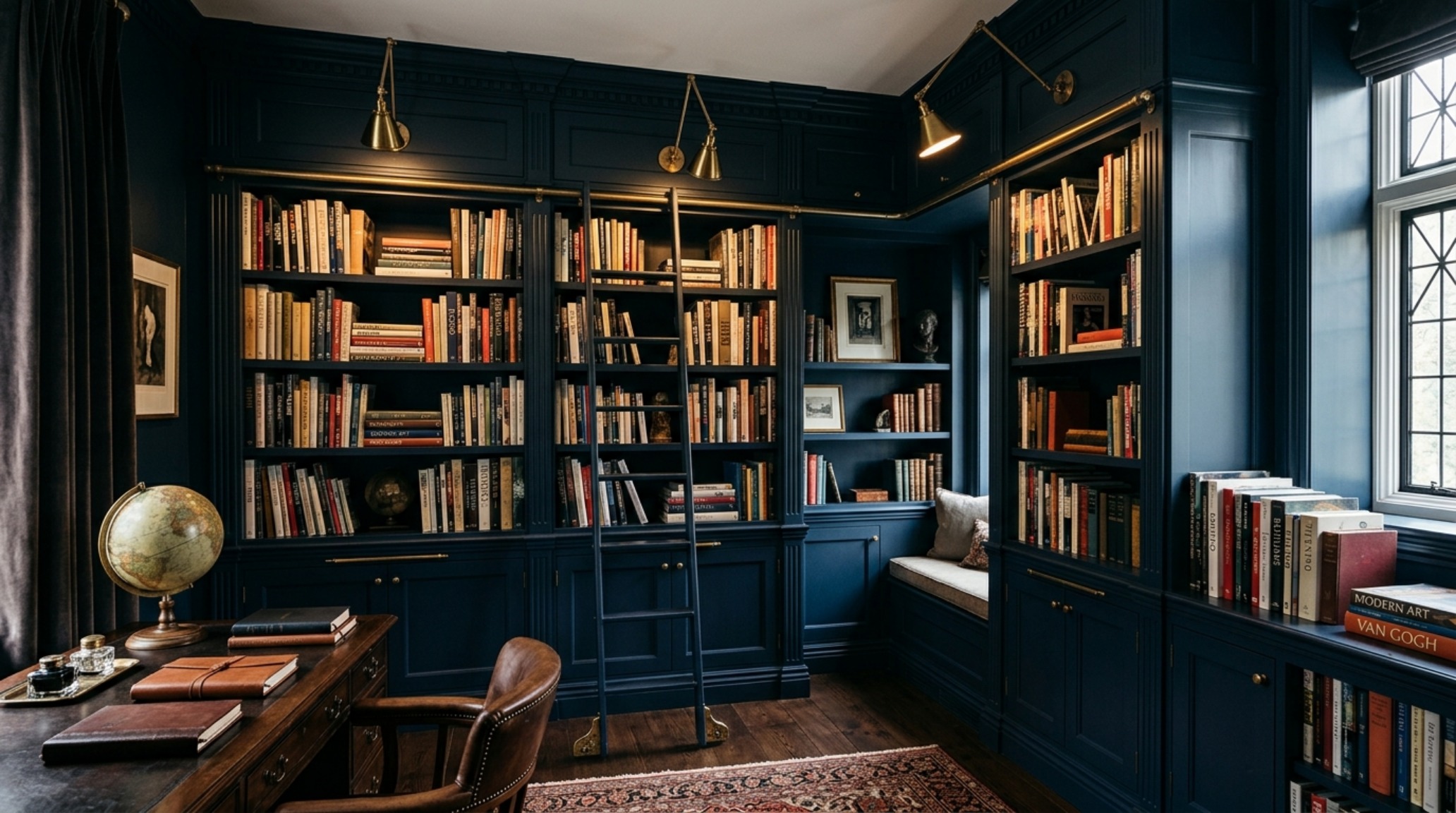
Bespoke design also allows for the seamless integration of technology. We specify 2700K warm ambient lighting for a cozy, residential feel, ensuring a high CRI (Color Rendering Index) of 90+ so that the colors of the book spines and art pieces are rendered accurately. Directional library lamps—mounted to the header of the shelving—provide a focused 3000K task light for reading titles, creating that classic ‘old world’ charm within a modern framework.
Design Anatomy: Surfaces, Swatches & Clearances
A concise technical ledger of paint hex codes, architectural finishes, and dimensional standards.
As we continue to navigate an increasingly digital world, the physical presence of the book has become more precious than ever. Book shelving is no longer just a utility; it is an architectural commitment to the things we value, a tactile landscape that evolves with us. By embracing the principles of bookshelf wealth—authenticity, material depth, and thoughtful curation—we create spaces that don’t just hold our collections, but actively reflect the texture of our lives. The modern library is a living archive, an ever-shifting mosaic of ink, wood, and light that remains the most intimate expression of home.
Editorial Silo • Recommended Architecture Studies
- Beds That Save Space: The Architectural Blueprint & Spatial Flow Guide — Archival Design Case Study
- The Closed-Loop Life: Mastering the Functional Ergonomics of Self Sustaining Homes — Archival Design Case Study
Curated Spatial Visuals
A curated lens on enduring residential architecture, tactile finishes, and serene volume.
Curated Visual Lookbook
Design Gallery & Spatial Studies
A visual curation of architectural arrangements, lighting concepts, and material palettes featured in this space.