The Alchemy of Aniline: Why Materiality Matters
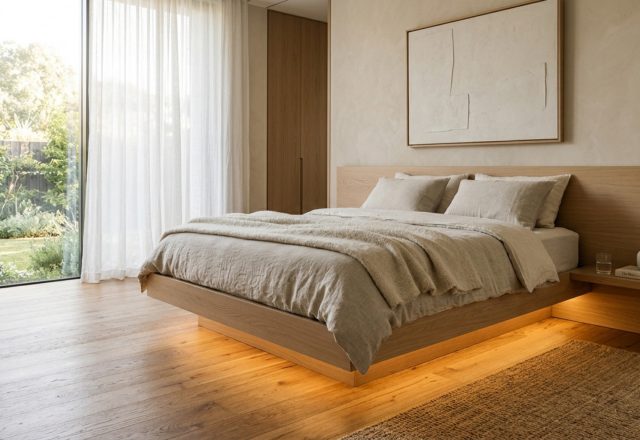
The way the late afternoon sun filters through a linen-draped window, casting long, amber shadows across a well-worn living room, often dictates the soul of a home. In this quiet interplay of light and shadow, taking care of leather furniture becomes less of a chore and more of a rhythmic architectural ritual. We often treat our interior surfaces as static elements, yet a premium aniline hide is a living, breathing landscape that responds to every touch, every spill, and every ray of light. Unlike the corrected-grain leathers that feel plasticized and cold, full-grain aniline celebrates the inherent topography of the hide—the stretch marks, the subtle grain variations, and the story of the animal itself.
When we discuss the sensory depth of a space, we are really talking about the relationship between time and texture. A leather sofa is perhaps the only piece of furniture that arguably improves as it ages, provided we understand the master-level nuances of its materiality. It is an investment in a narrative. The tactile grounding provided by a cognac-toned sofa against a backdrop of Farrow & Ball Setting Plaster creates a warmth that synthetic materials simply cannot replicate. This is the starting point for a deeper understanding of how we curate our environment through the lens of longevity and organic evolution.
Beyond the Surface: The Science of the Hide
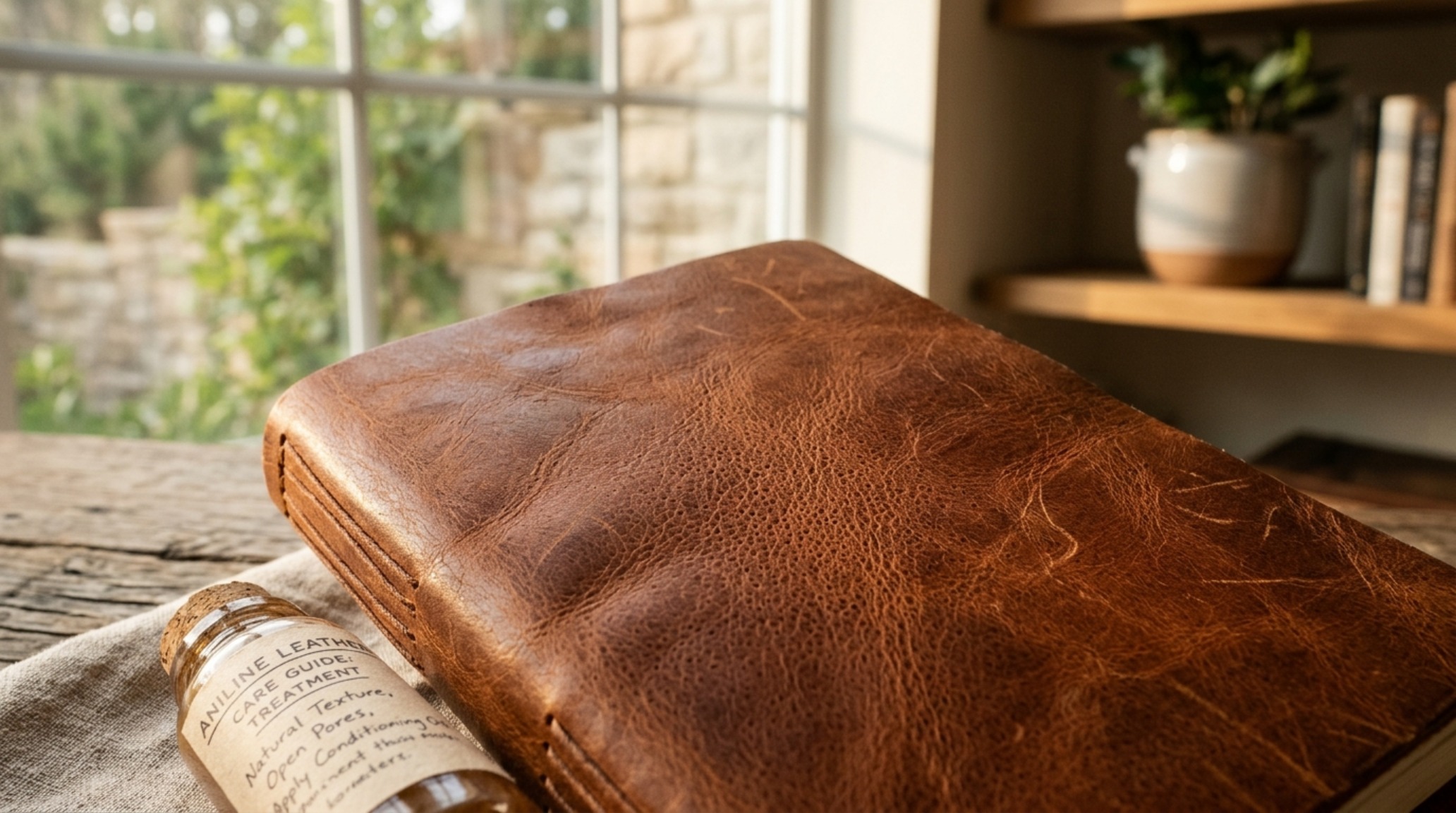
To truly master the art of leather curation, one must understand what is happening at a cellular level. Premium hides are tanned using oils and waxes that penetrate deep into the fibers, leaving the surface open and porous. This breathability is what allows the leather to adjust to your body temperature, but it also makes it a magnet for the environment. Taking care of leather furniture requires a shift in perspective—we aren’t just cleaning a surface; we are nourishing a biological structure. When the leather feels dry or ‘tight,’ it is literally thirsty for the lipids lost to evaporation and friction.
Aniline Leather Care Guide: Embracing the Living Finish
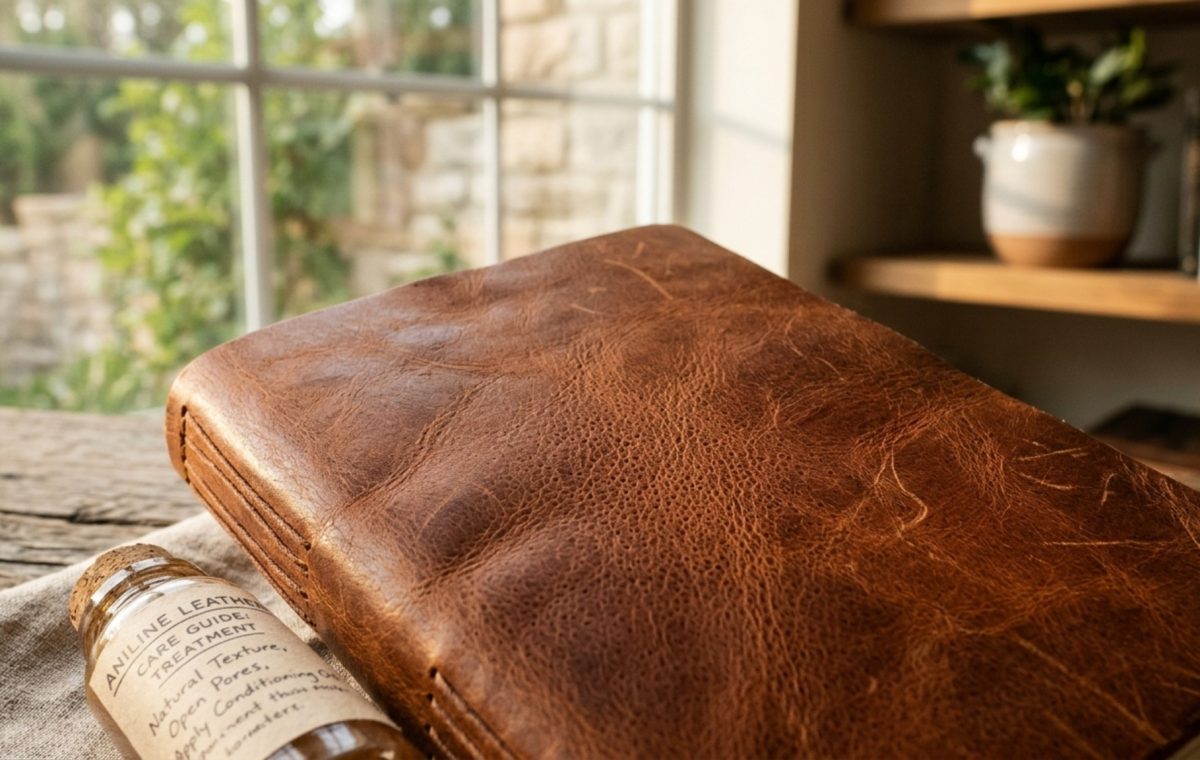
For those who prefer the raw, unadulterated beauty of ‘naked’ leathers, an aniline leather care guide is an essential manual for aesthetic preservation. Because these leathers lack a heavy protective topcoat, they are prone to developing a patina—a softening of the color and a deepening of the texture that occurs over years of use. This is not a defect; it is the ultimate hallmark of luxury. However, the porous nature of aniline means that oils from your skin and dust from the air can settle into the grain, potentially darkening areas of high contact.
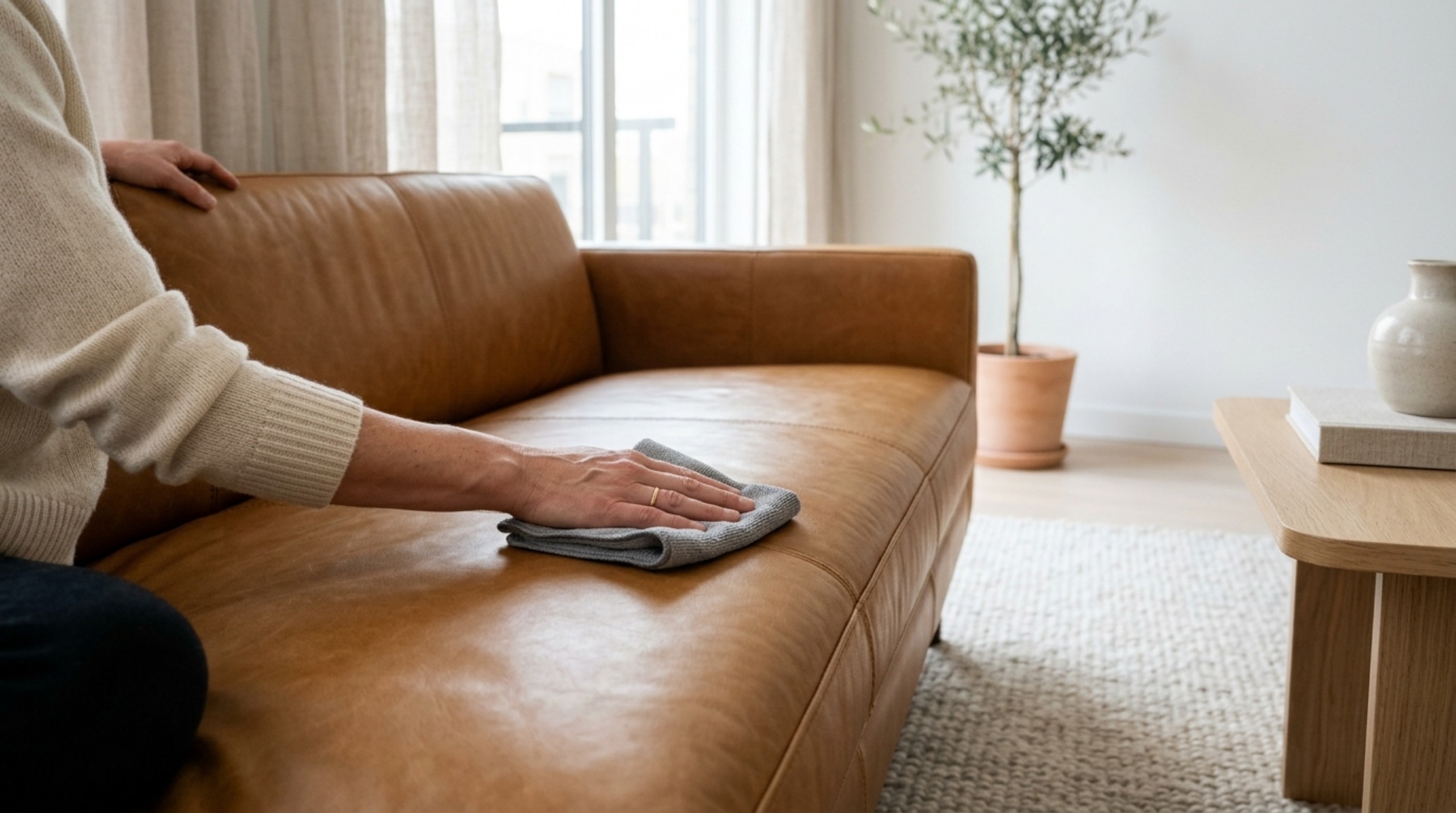
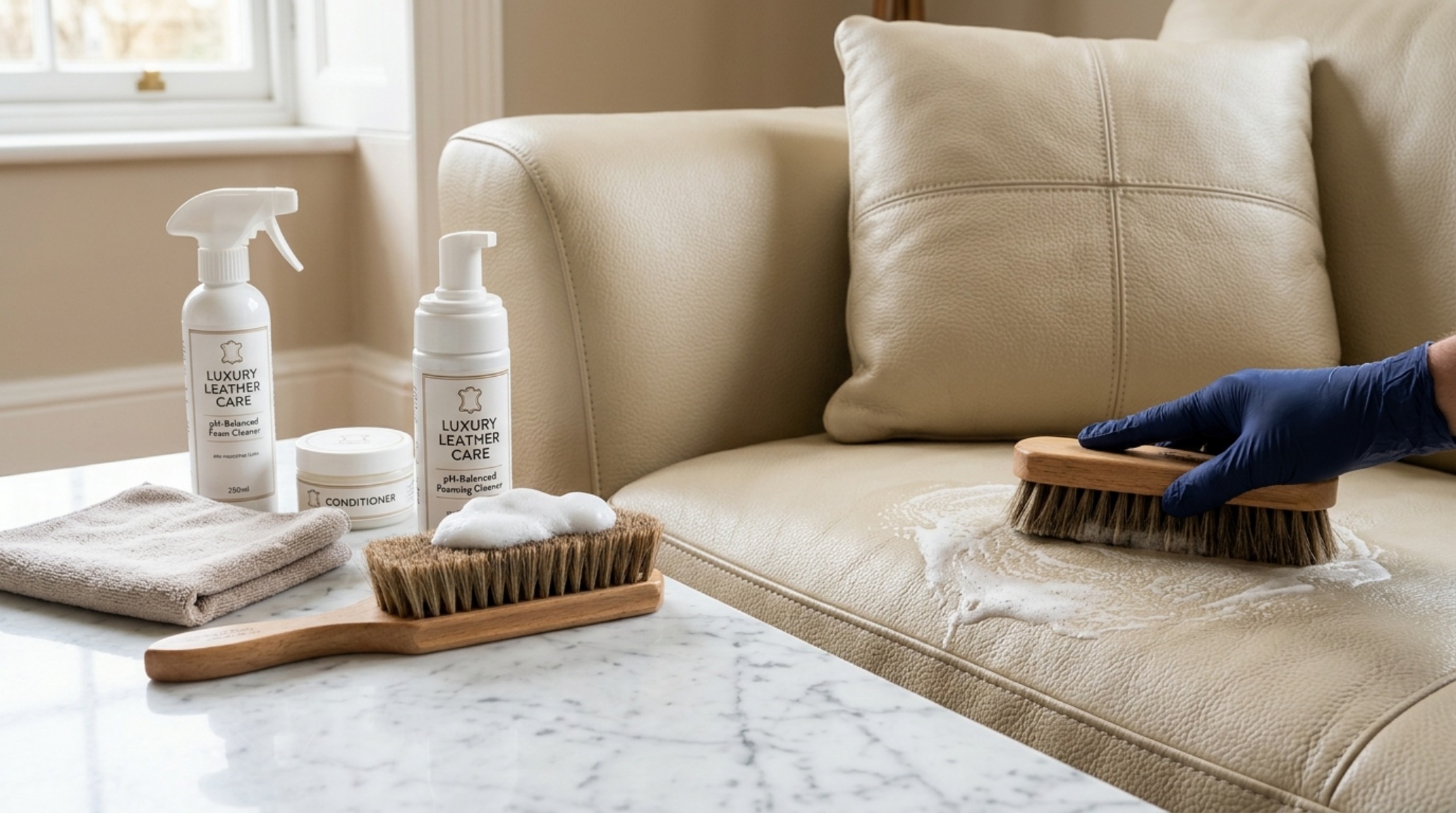
The first rule of maintaining this finish is the ‘gentle touch’ approach. You should never use harsh chemicals or ‘all-purpose’ cleaners that sit under your sink. These can strip the natural oils and cause the leather to crack prematurely. Instead, look for pH-balanced cleaners specifically formulated for aniline hides. Use a soft, lint-free microfiber cloth and work in circular motions, never scrubbing. The goal is to lift surface debris without driving it deeper into the pores. This ensures the hide remains supple and the breathability remains uncompromised, maintaining that signature buttery feel that defines high-end upholstery.
The Ritual of Conditioning
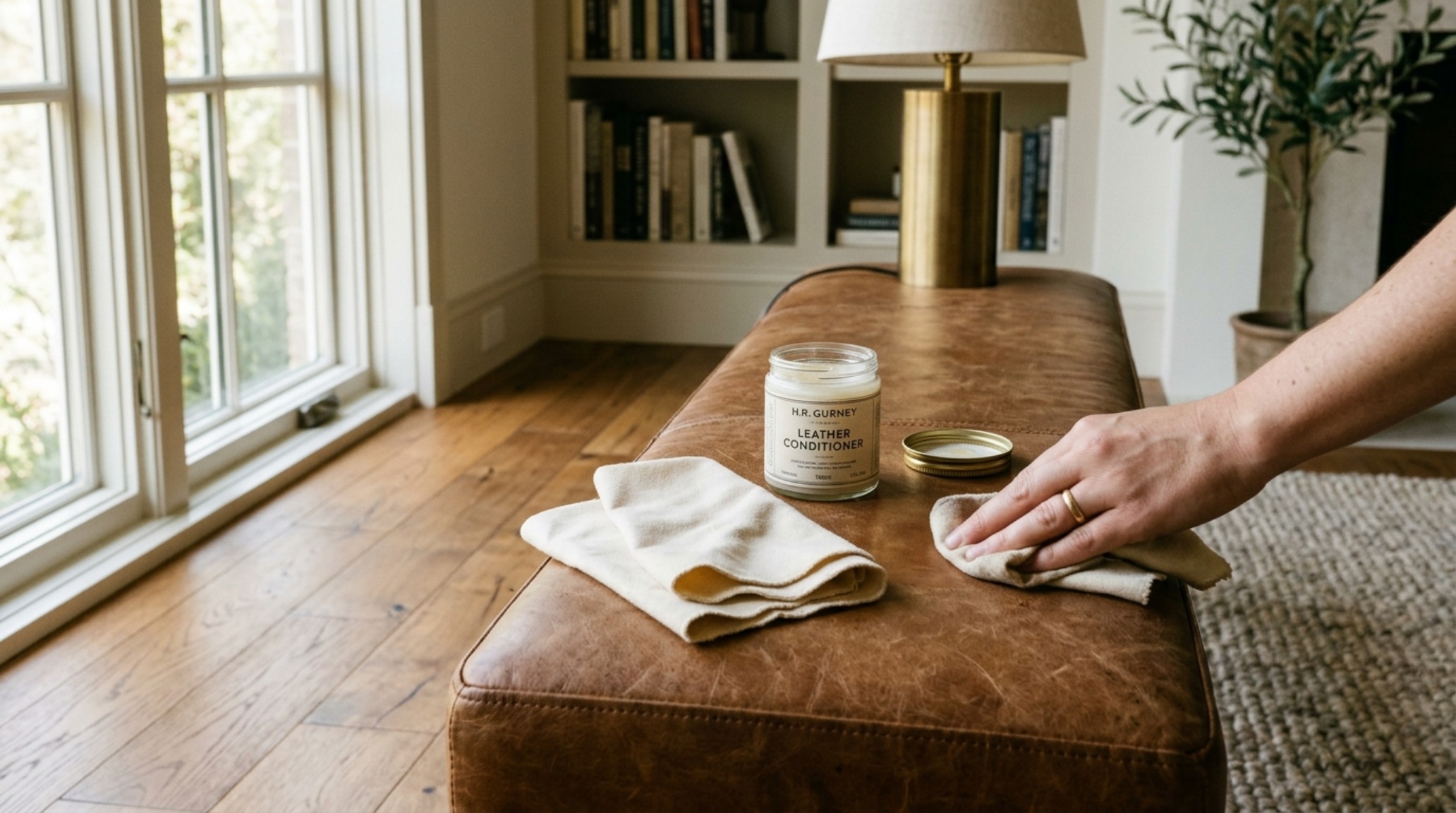
Conditioning is where the master patina is truly cultivated. Once or twice a year, depending on the humidity of your home, applying a high-quality leather cream serves as a restorative mask. This ritual enhances the sensory warmth of the piece. As you work the cream into the leather, you’ll notice the color temporarily deepen, only to settle into a rich, luminous glow as it dries. It’s about replenishing the fats and oils that keep the collagen fibers flexible. Think of it as a spatial investment; a well-conditioned chair can last eighty years, whereas a neglected one might show signs of structural fatigue in ten.
Protecting Leather from Sunlight: Managing the Luminous Threshold
Natural light is the architect’s greatest tool, but for leather, it is a double-edged sword. Protecting leather from sunlight is a critical component of spatial planning that many homeowners overlook until the damage is visible. UV rays act as a bleaching agent, breaking down the chemical bonds of the dyes in the hide. This can lead to uneven fading, where the side of the sofa facing the window becomes a pale ghost of its original self, while the sheltered side remains vibrant.
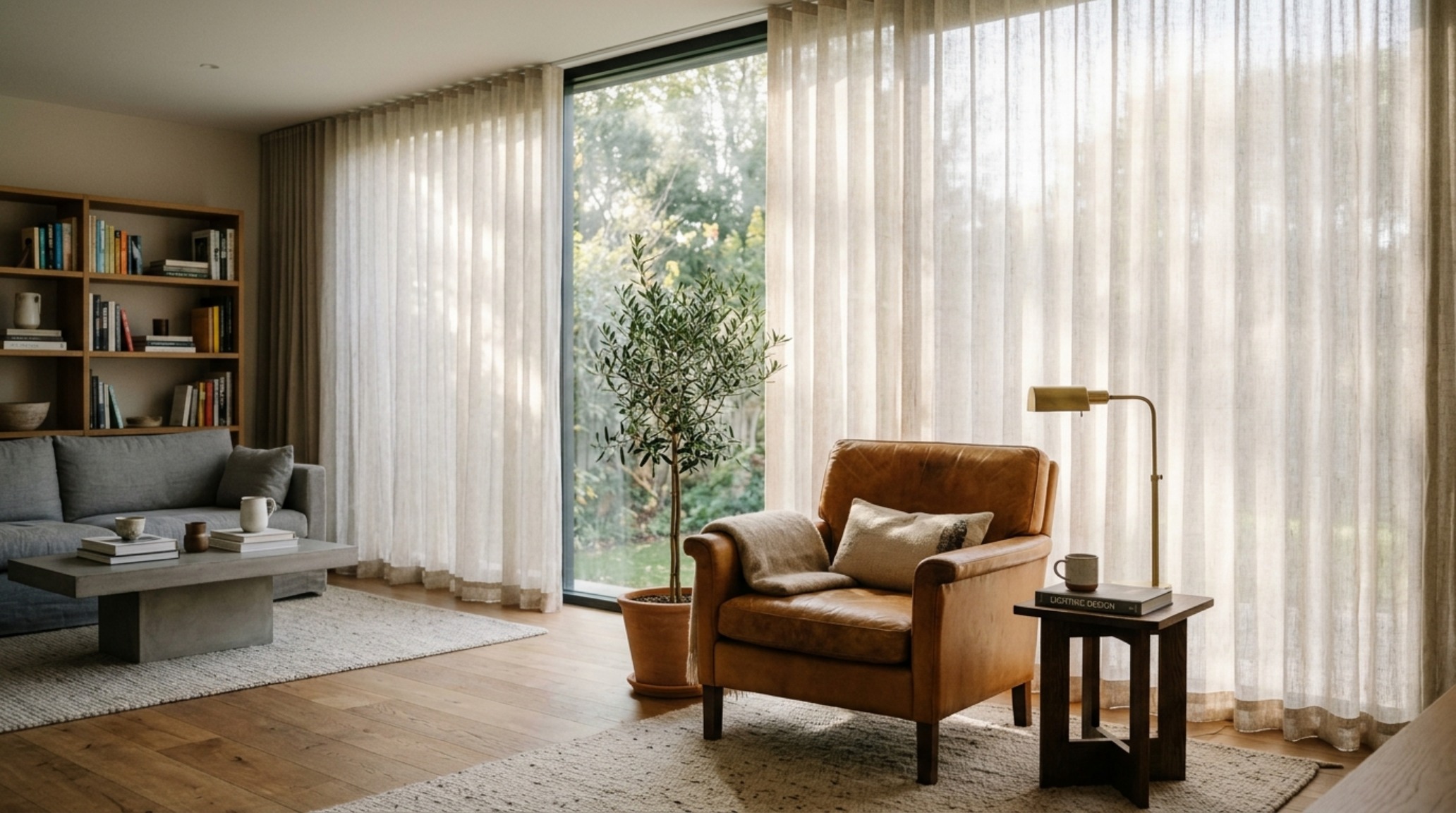
In a room with high-CRI 90+ lighting and large glass expanses, architectural clearances become vital. Ideally, leather pieces should be placed at least 20 to 30 inches away from direct heat sources like radiators or fireplaces, and positioned to avoid the ‘hot spots’ of mid-afternoon sun. If your spatial layout demands that the leather sit near a window, consider high-quality UV-filtering window films or sheer drapery. Even a light linen curtain can diffuse the intensity of the rays, preserving the rich pigments of the leather while still allowing the room to feel airy and bright. This isn’t just about protection; it’s about managing the ‘shadow play’ of the room to ensure the leather ages gracefully and uniformly.
How to Maintain a Leather Sofa: Daily Rituals of Tactile Luxury
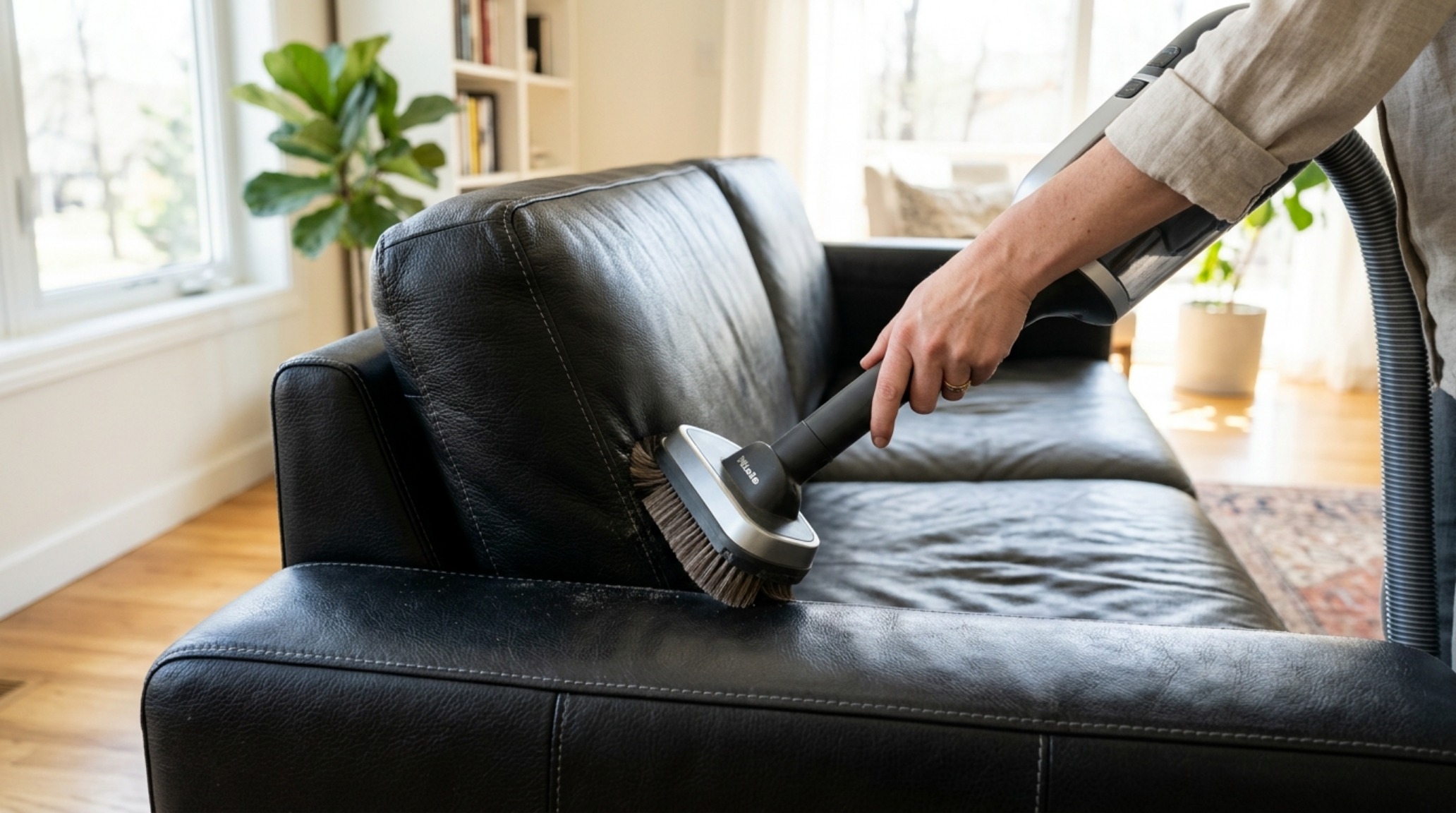
In the world of high-end design, the most effective maintenance is often the simplest. Learning how to maintain a leather sofa involves a commitment to ‘spatial hygiene.’ Dust is surprisingly abrasive; under a microscope, a dust particle is a jagged shard of silica that, when sat upon, grinds into the leather fibers like sandpaper. A weekly vacuuming using a soft brush attachment is the most important thing you can do for your furniture’s longevity. Ensure you reach into the deep crevices—the 18-inch reach behind seat cushions—where crumbs and debris tend to migrate.
“True luxury is the ability to live with beautiful things without the fear of using them. A leather sofa should be the heartbeat of a room, gaining character with every guest and every quiet evening.”
In addition to vacuuming, the ‘buffing’ technique is a professional secret for maintaining that matte, expensive sheen. Using a dry, clean cloth to gently buff the leather once a week redistributes the natural oils that rise to the surface from body heat. This prevents ‘dead spots’ from forming and keeps the patina looking intentional rather than neglected. It’s a rhythmic, five-minute task that keeps the material’s sensory depth at its peak.
Cleaning High-End Leather Upholstery: The Art of Gentle Restoration
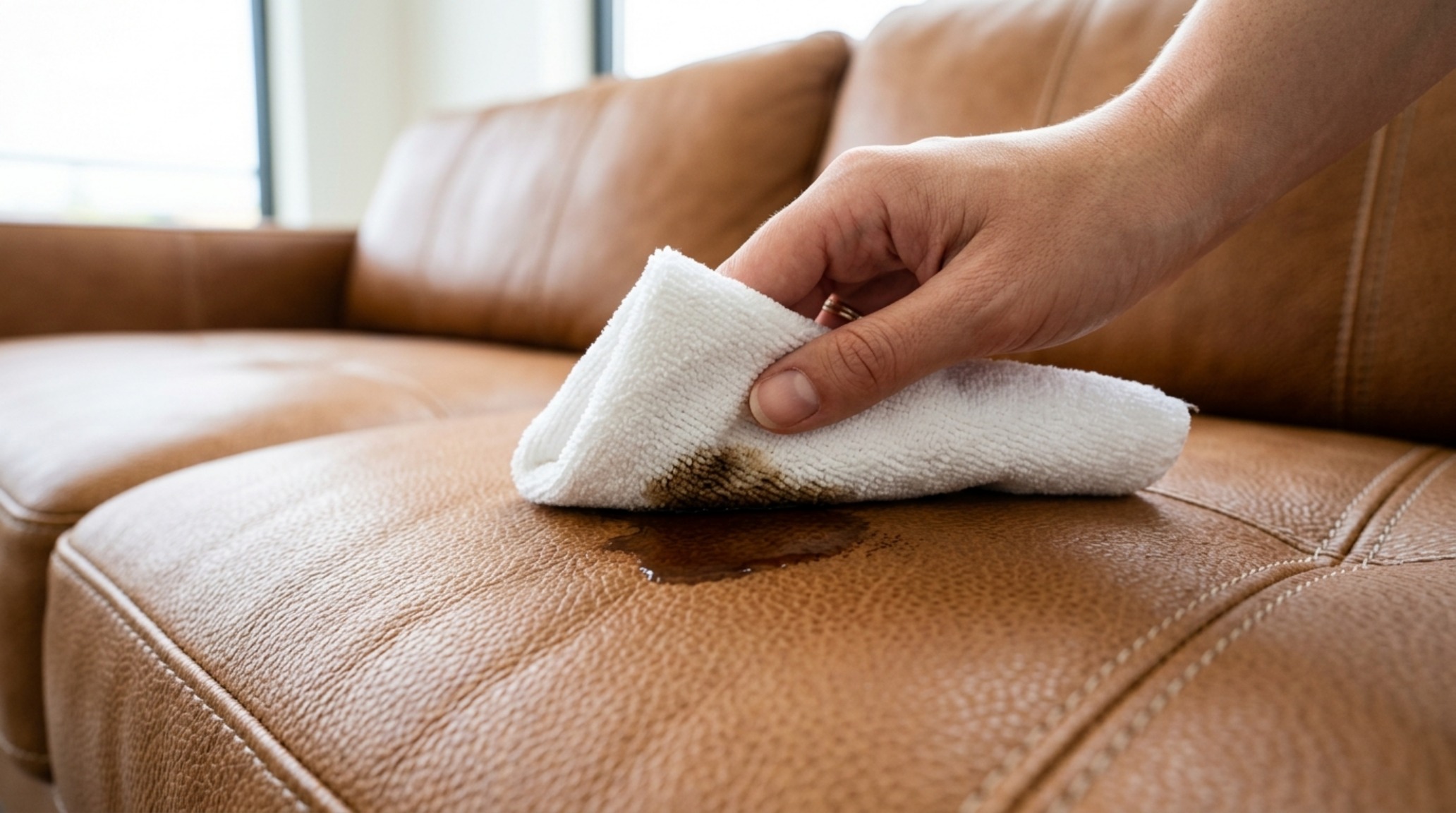
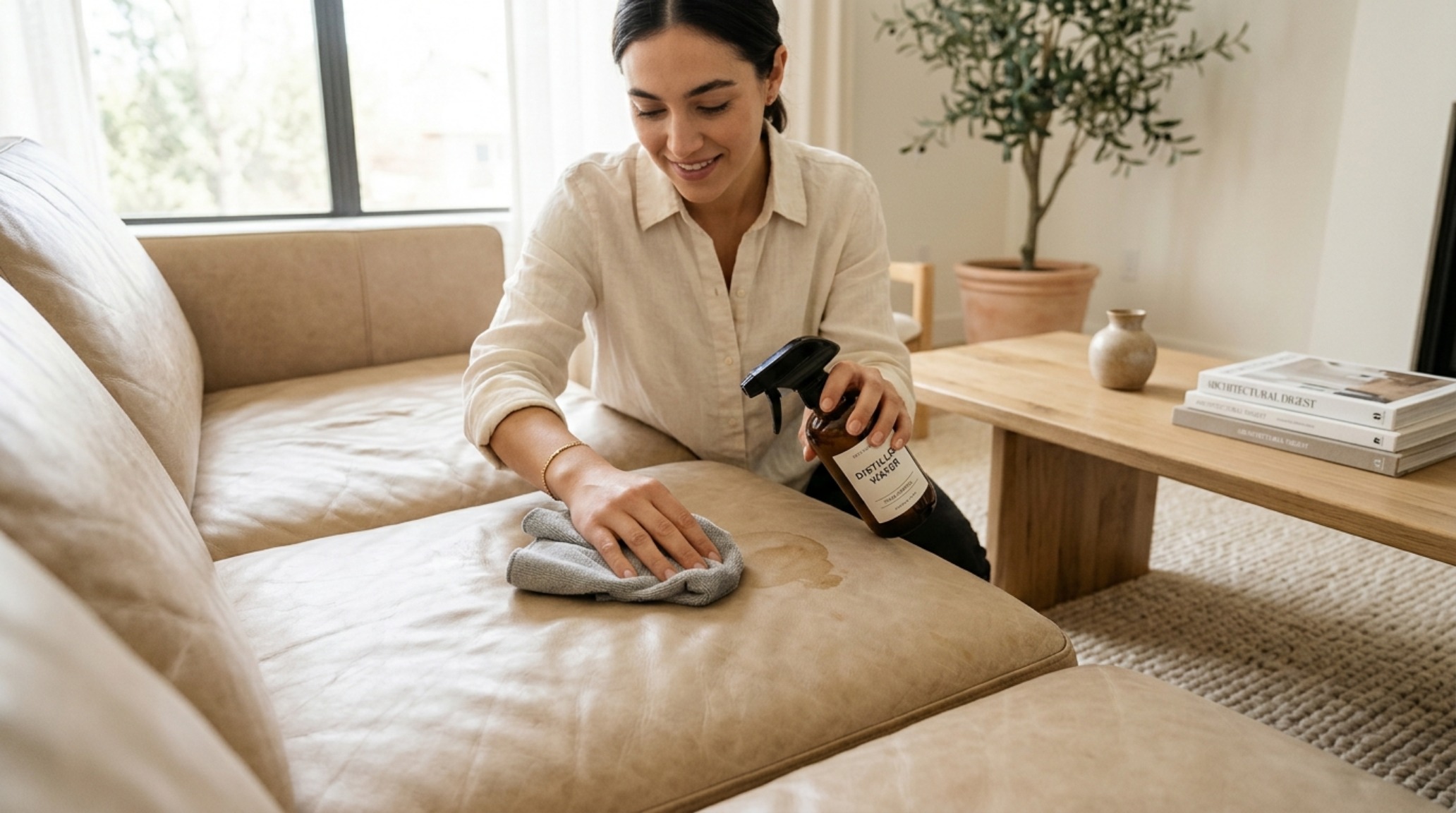
Accidents are inevitable in a lived-in home, but cleaning high-end leather upholstery requires a surgical level of precision. When a spill occurs on an aniline or semi-aniline surface, the clock is ticking. Because the material is porous, liquid will travel downward through the grain. The immediate response should always be to blot—never rub. Use an absorbent white cloth to soak up the moisture, moving from the outside of the spill toward the center to prevent a ‘tide mark’ from forming.
For more stubborn marks, the use of distilled water is a non-negotiable rule. Tap water often contains minerals and chlorine that can leave permanent rings on sensitive leather. If you must use a cleaner, ensure it is a specialized foam rather than a liquid, as foam allows you to clean the surface without over-saturating the hide. This level of care respects the structural integrity of the piece, ensuring that ‘taking care of leather furniture’ remains a process of enhancement rather than damage control.
Navigating the Scuff: The Beauty of Imperfection
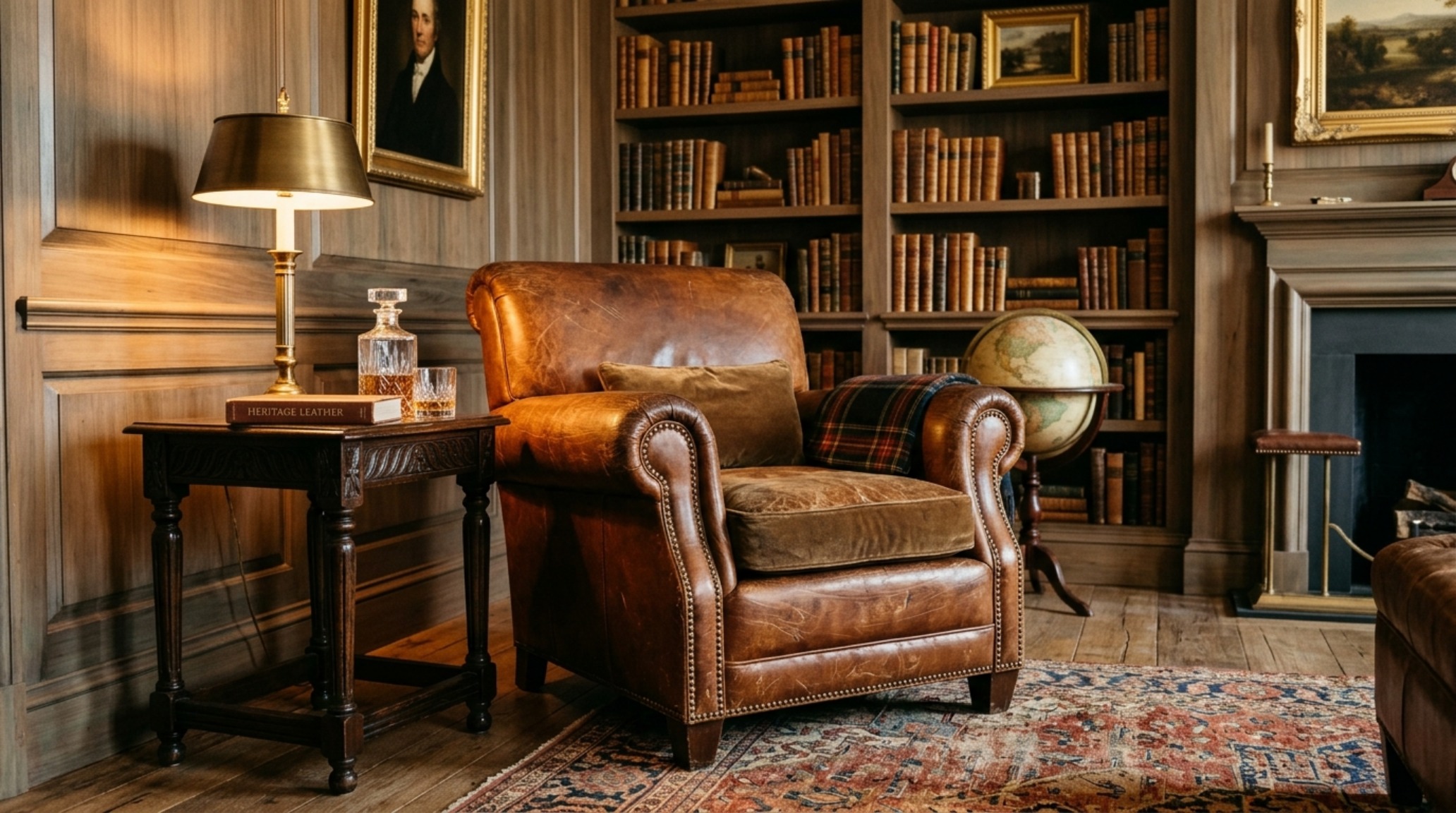
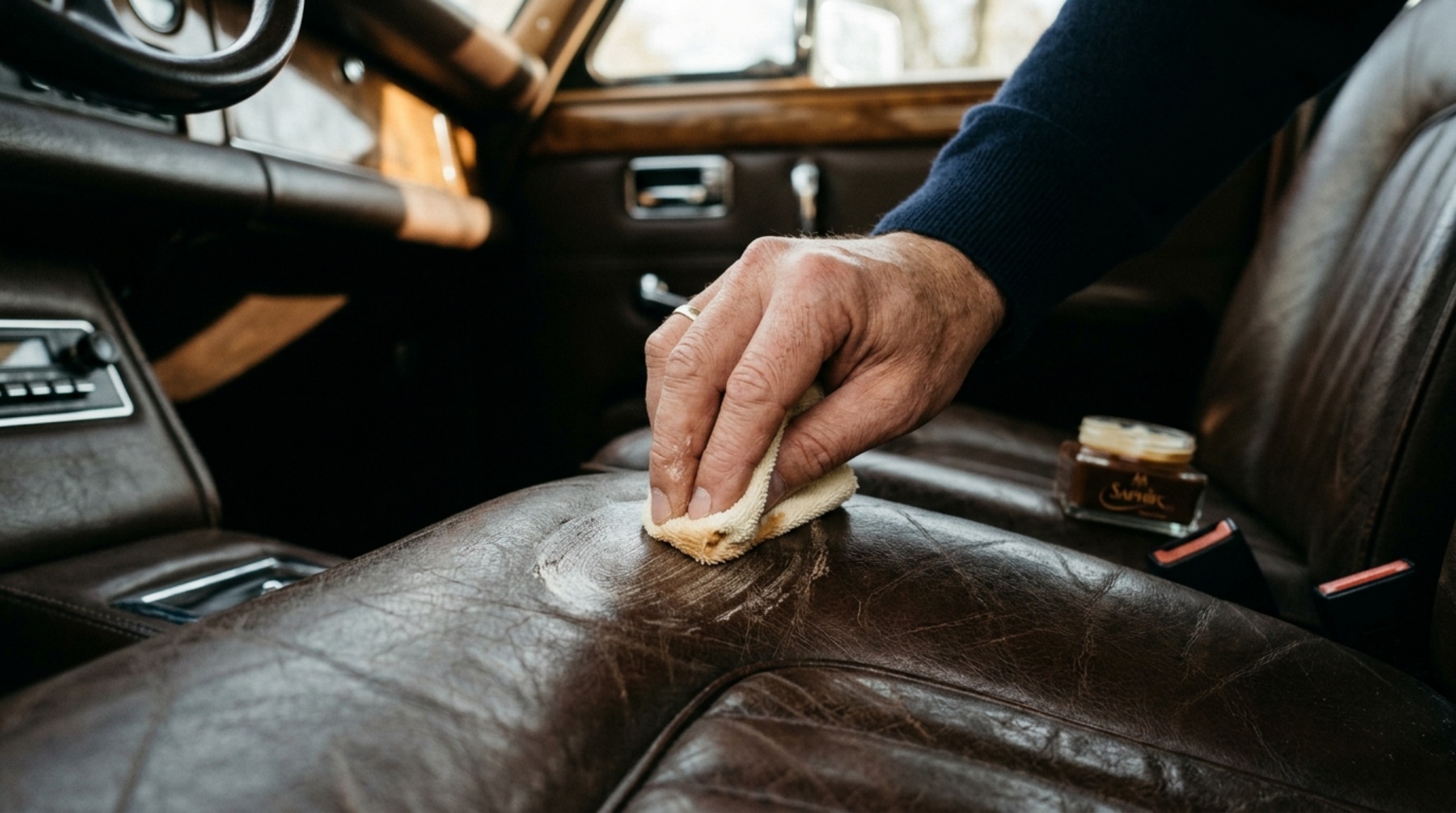
One of the most profound aspects of premium leather is its ability to heal. Minor scuffs from a fingernail or a rogue toy can often be ‘massaged’ away. The heat from your fingertip, combined with a gentle circular rubbing motion, can redistribute the waxes in the hide to cover the scratch. This is the ‘Master Patina’ in action—where daily use doesn’t detract from the piece but instead adds a layer of narrative texture. These small marks become the visual history of the home, a soft-focus chronicle of family life that makes a room feel authentic and grounded.
Leather Furniture Investment Value: The Heirloom Narrative
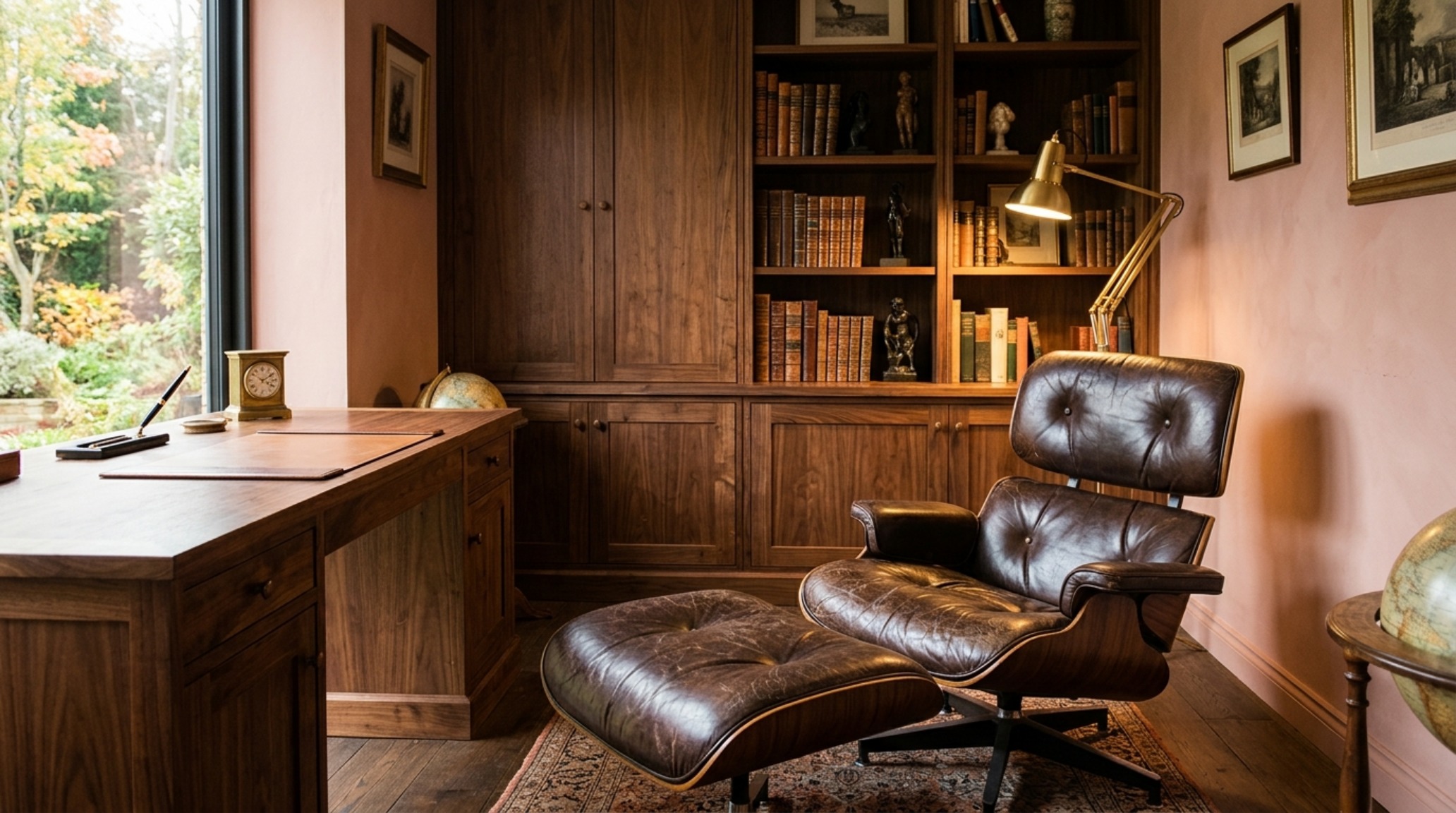
When we discuss leather furniture investment value, we aren’t just talking about the retail price; we are talking about the ‘cost per year’ of ownership. A high-quality kiln-dried hardwood frame upholstered in full-grain aniline leather is a multi-generational asset. Unlike fabric upholstery, which may snag, pill, or become dated, leather transcends trends. It acts as a neutral architectural anchor, capable of pivoting from a minimalist Scandinavian aesthetic to a moody, academic library vibe with ease.
Furthermore, the resale value of ‘vintage’ leather pieces from designers like De Sede or B&B Italia often exceeds their original purchase price precisely because the patina is so coveted. A ‘new’ leather sofa can feel a bit sterile, but one that has been carefully tended to for twenty years possesses a depth and soul that cannot be manufactured. By prioritizing taking care of leather furniture today, you are essentially curating a future heirloom. You are preserving a tactile experience that will only become more evocative as the decades pass.
Tactile Palette, Finish Guide & Clearances
Summary of authentic finishes, designer paint selections, and standard architectural clearances.
Architecture is often thought of as the bones of a space, but the materials we choose are its skin. In the context of a home, the way we interact with these materials defines our daily comfort and the lasting resonance of our surroundings. Taking care of leather furniture is an exercise in mindfulness—a way to slow down and appreciate the slow, beautiful evolution of a piece that is as much a part of the family as the architecture itself. As we move toward more sustainable, long-term thinking in design, the master patina stands as a quiet defiance against the disposable, a celebration of the enduring, and a tactile reminder of the beauty found in a life well-lived.
Editorial Silo • Recommended Architecture Studies
- Beds That Save Space: The Architectural Blueprint & Spatial Flow Guide — Archival Design Case Study
- The Closed-Loop Life: Mastering the Functional Ergonomics of Self Sustaining Homes — Archival Design Case Study
Refined Living Space Catalog
An evocative photographic exploration balancing structural discipline with inviting tactile softness.

Curated Visual Lookbook
Design Gallery & Spatial Studies
A visual curation of architectural arrangements, lighting concepts, and material palettes featured in this space.