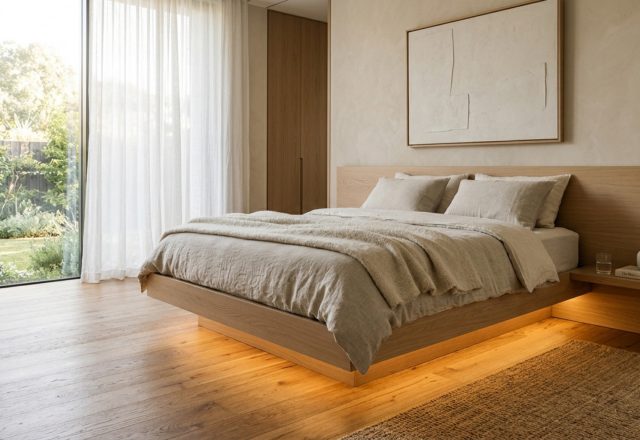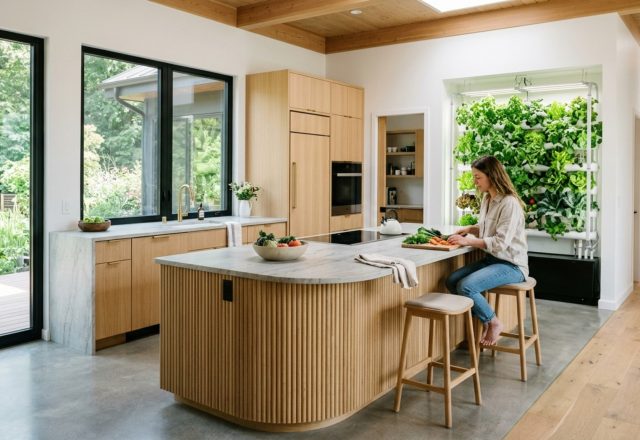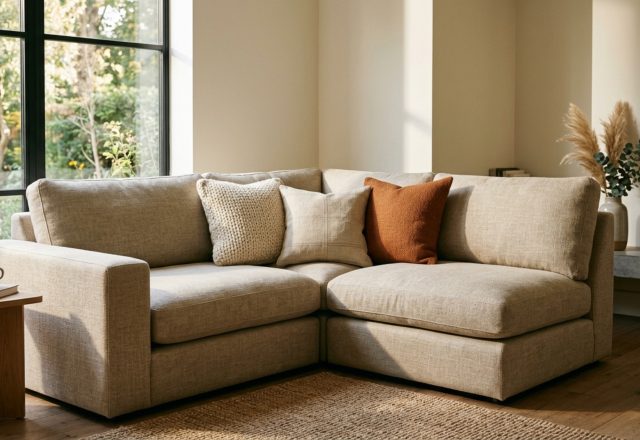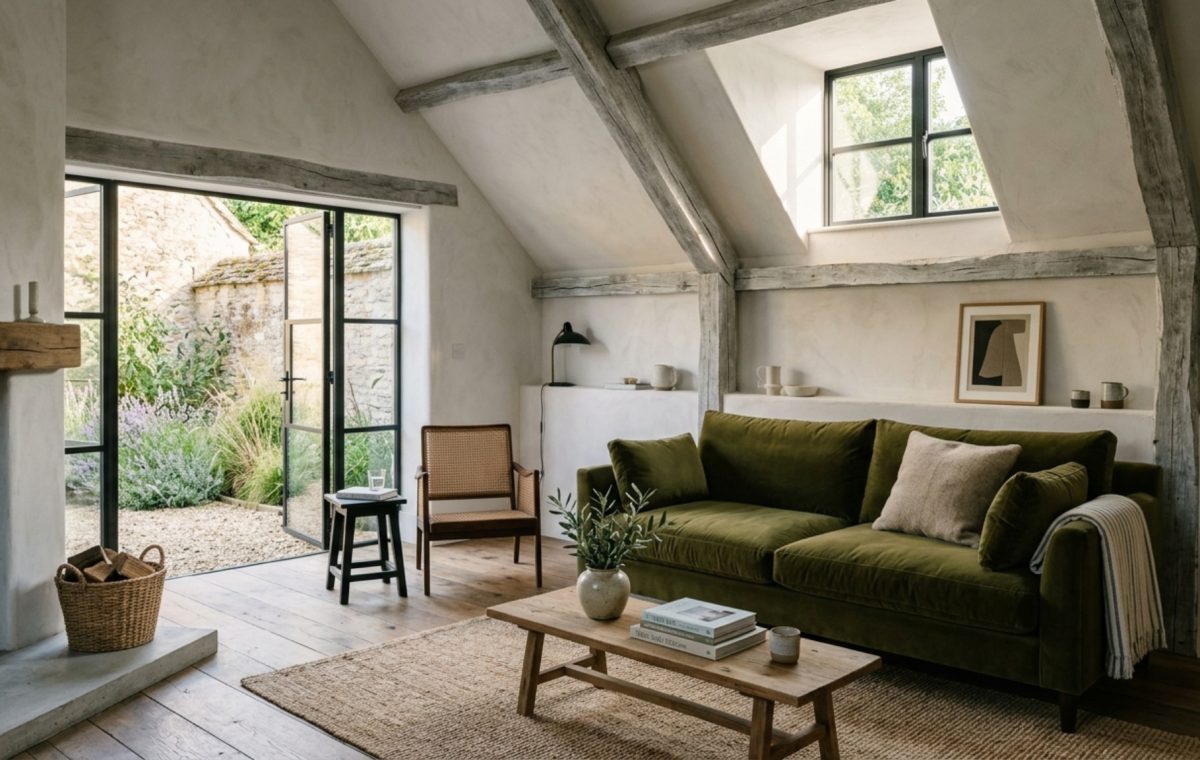
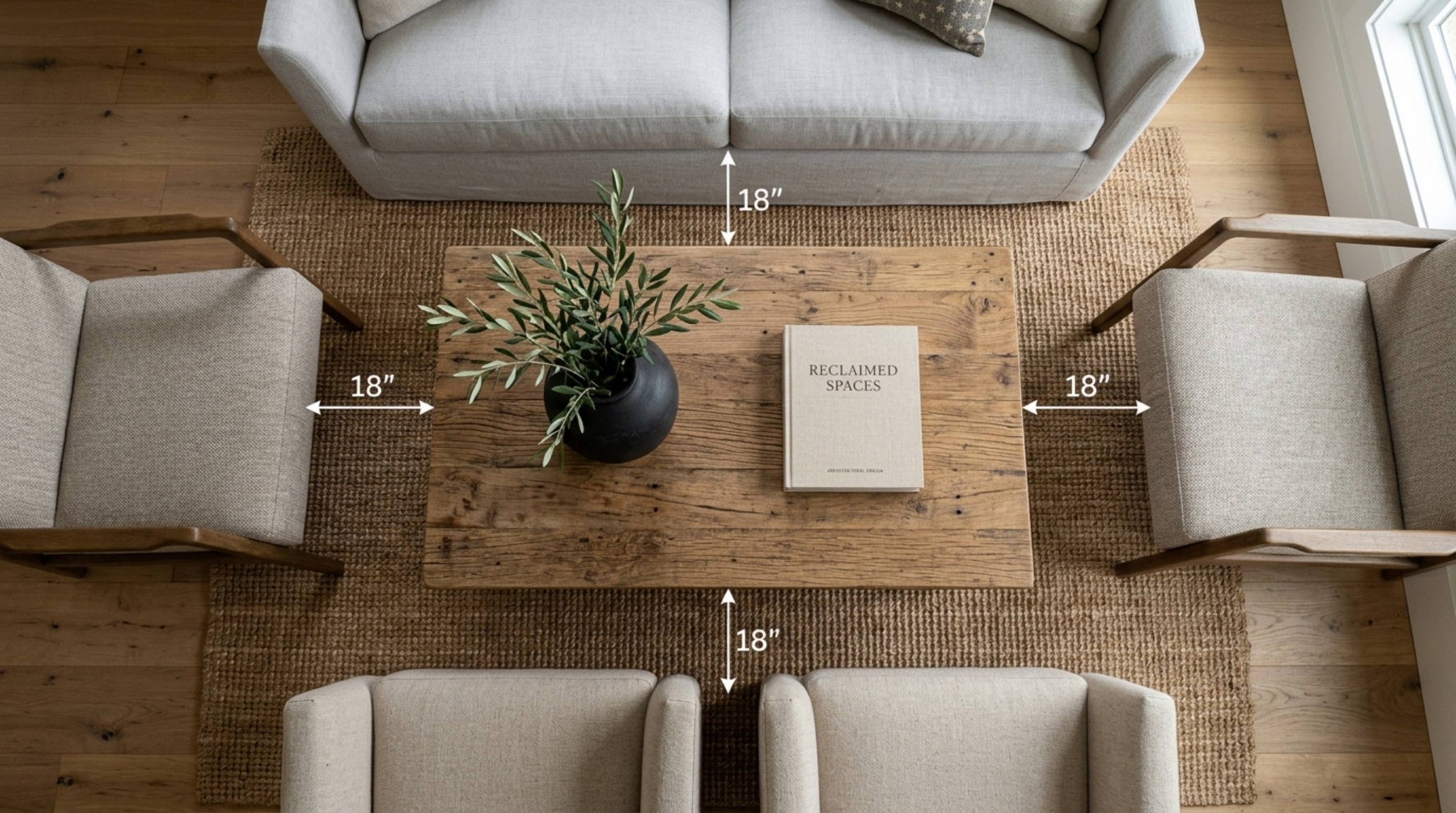
Navigating a floor plan requires more than just aesthetic intuition; it demands an understanding of the body’s movement through space. When we respect the 36-inch standard for primary circulation paths and allow for the 18-inch reach between a sofa and a central surface, the selection of modern rustic furniture becomes an architectural decision rather than a decorative one. These pieces, with their heavy mass and weathered textures, act as the gravitational anchors of a room, defining the flow of traffic and the visual tempo of the home. By placing a substantial, reclaimed piece at the intersection of these invisible lines, we create a haptic experience that feels grounded and intentional. This design philosophy isn’t about clutter; it is about the curated collision of the ancient and the avant-garde.
The Visual Narrative & Detail Studies of Modern Rustic Furniture
In the contemporary interior, luxury is no longer defined by the pristine or the untouchable. Instead, it is found in the conversation between a perfectly mitered edge and a surface scarred by a century of use. This tension—the ‘precision of the patina’—is where the soul of a home resides. To master this, one must understand the spatial cadence of a room. It is the rhythmic alternation between the ‘breathing room’ of negative space and the dense, textural weight of a hand-hewn timber piece. When sourcing modern rustic furniture, I often look for pieces that possess ‘structural honesty’—items where the joinery is visible and the material’s history is the primary ornament. This approach aligns with the architectural rigor seen in the works of masters like Axel Vervoordt, where the void is as important as the object.
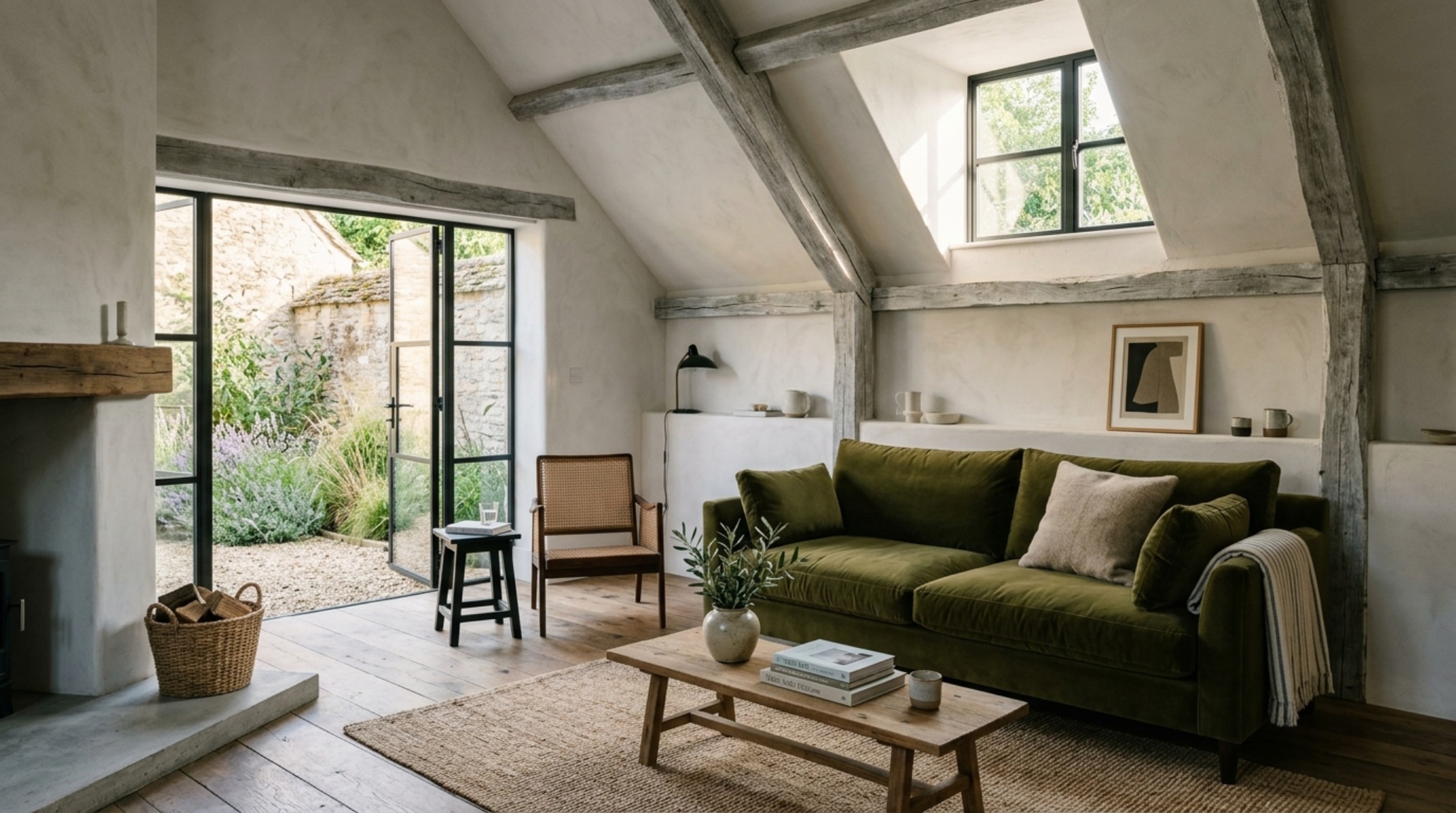
Rustic Minimalist Living Room: Opening Sightlines and Floor Planes
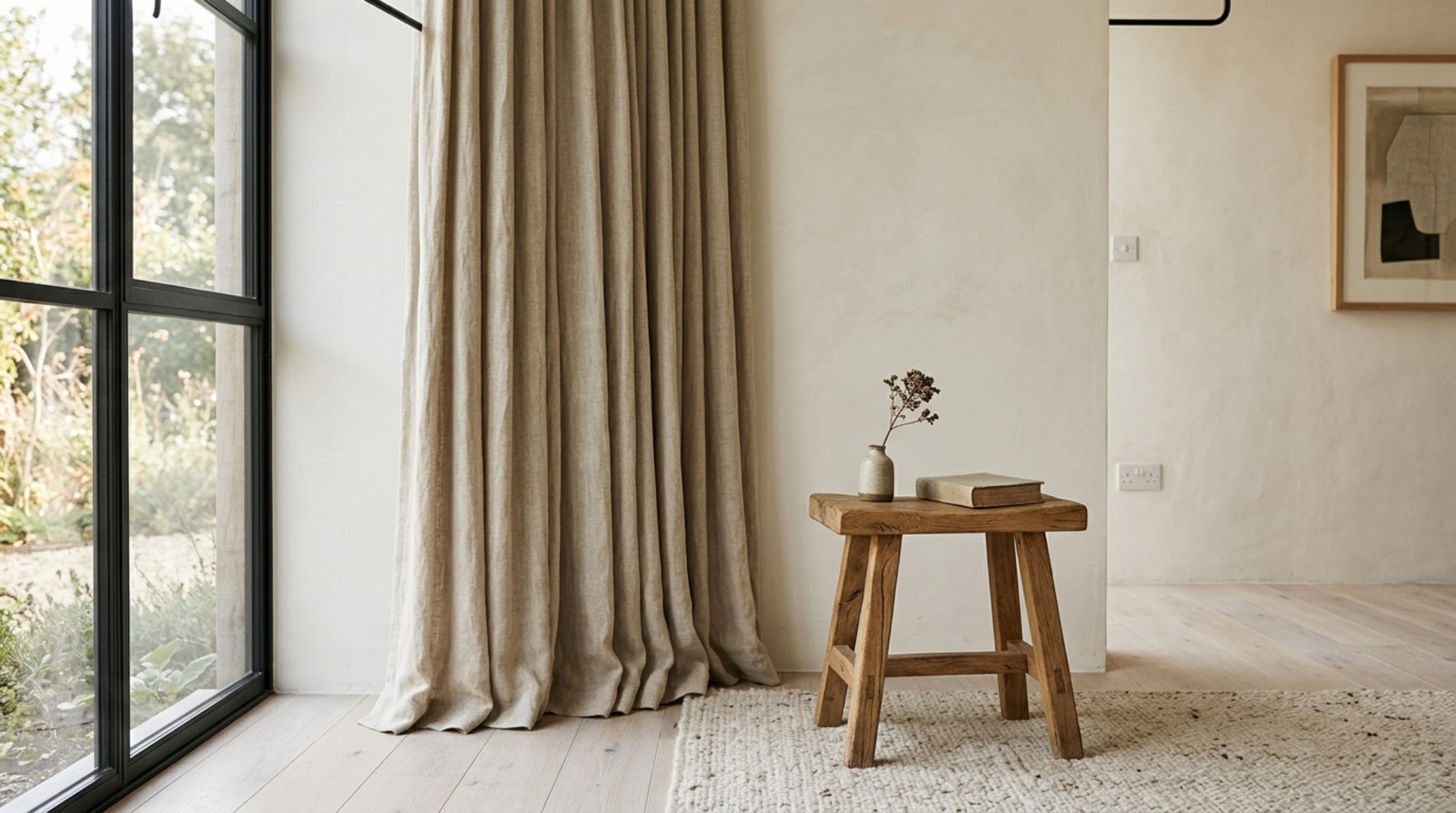
Creating a rustic minimalist living room requires a ruthless edit. We begin with the floor plane, often utilizing wide-plank white oak or honed limestone to establish a neutral foundation. Against this backdrop, we introduce a low-profile sofa upholstered in a dense, mossy mohair or a heavy Belgian linen. The key to the ‘modern rustic’ aesthetic is the contrast between the liquid smoothness of the upholstery and the jagged, silvered grain of an antique wood stool or side table. To maintain a sense of calm, keep sightlines clear. Avoid tall, obstructing pieces in the center of the room; instead, allow the eye to travel across the varied textures of the furniture, ending at a large-scale window or a curated plaster wall finished in Farrow & Ball Setting Plaster for a soft, earthy glow.
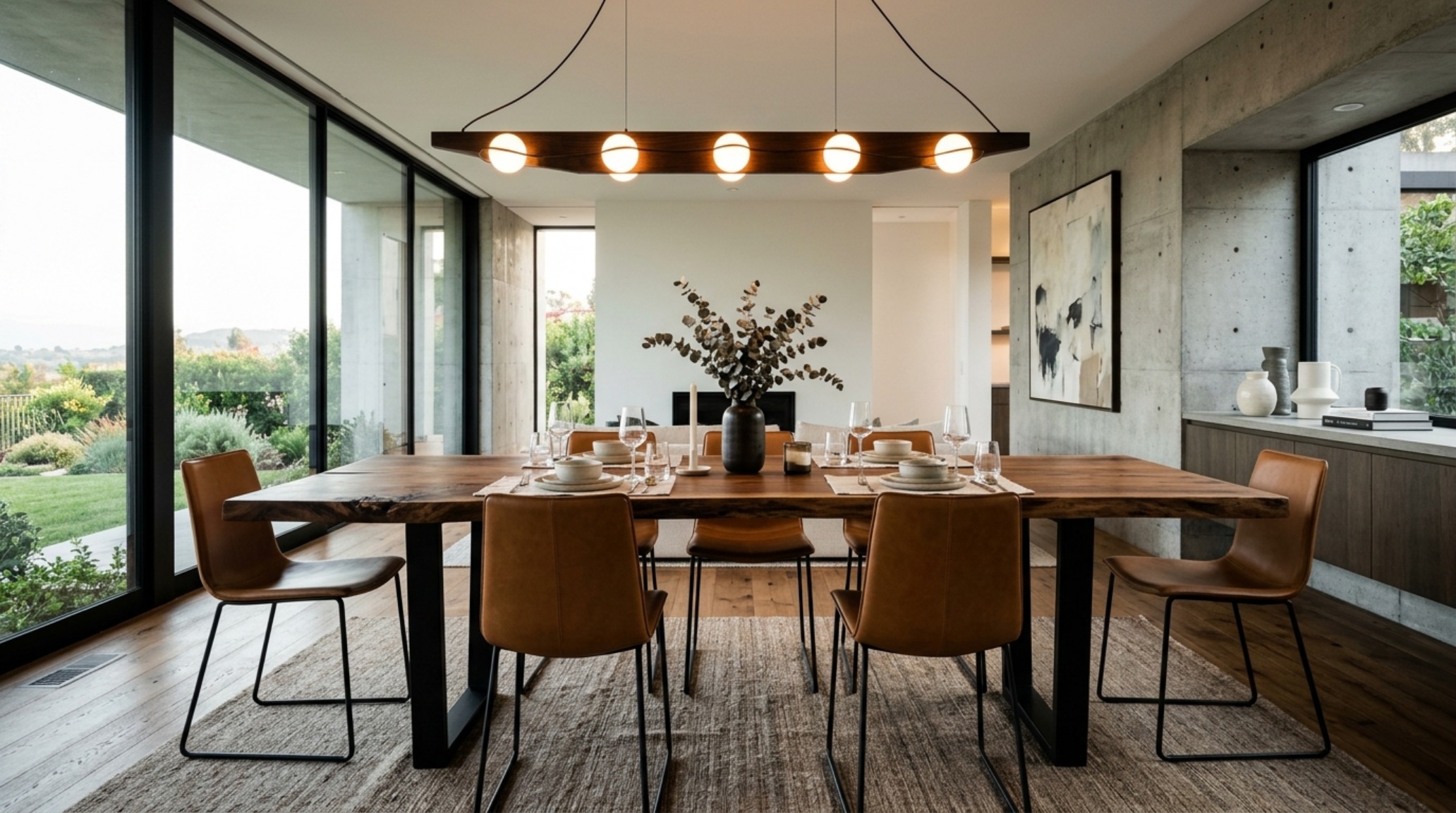
Live Edge Dining Table Modern: Sculptural Geometry in the Social Core
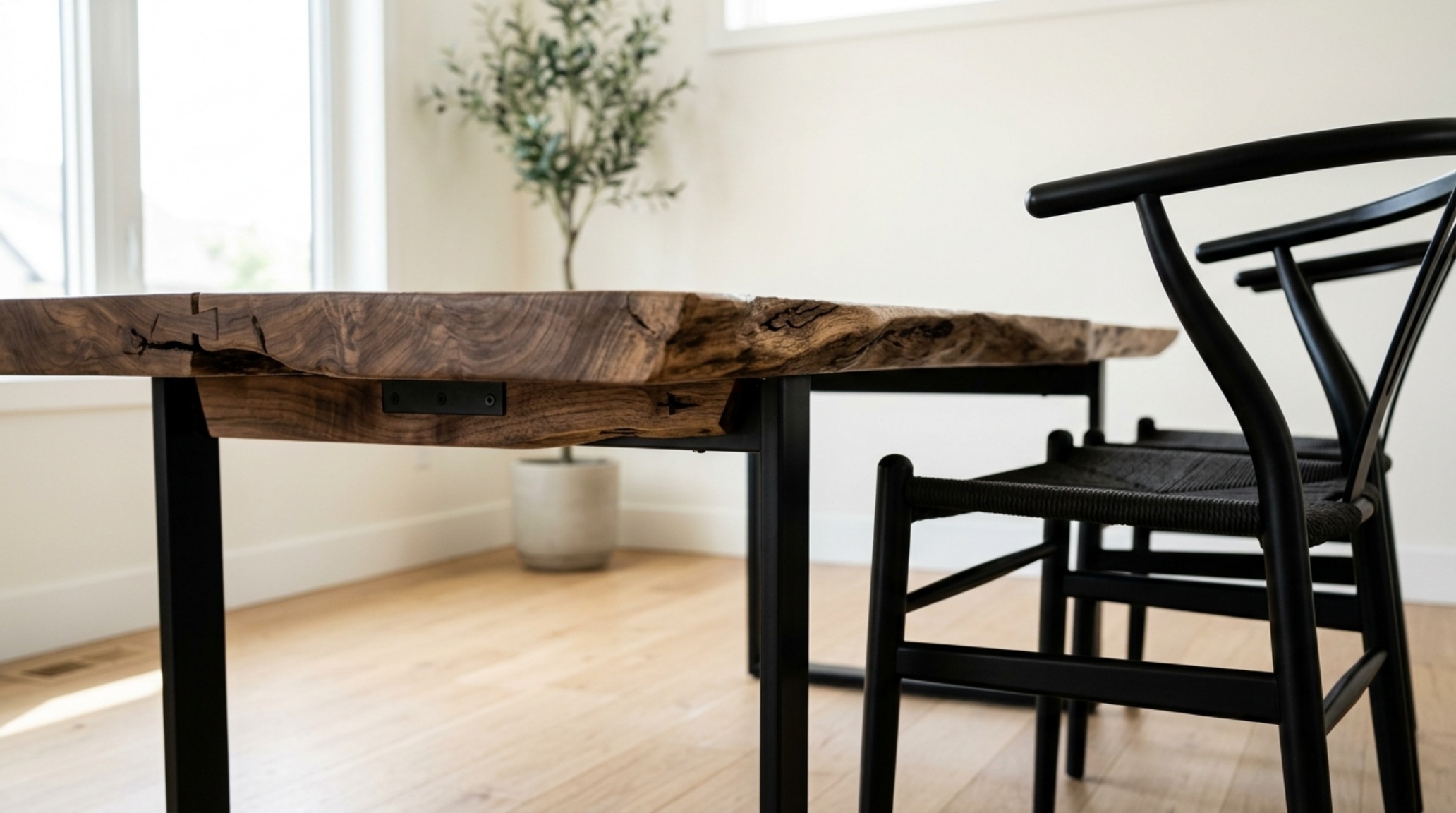
The dining room is often the most demanding space in terms of ergonomic clearances. To accommodate a live edge dining table modern in its execution, one must account for a minimum 30-inch clearance behind each chair to allow for comfortable egress. A live edge slab is a piece of living sculpture; its organic perimeter provides a necessary antidote to the rigid right angles of modern architecture. When pairing such a table with seating, I recommend high-back chairs in a matte black finish or slim-profile leather slings. This creates a visual ‘frame’ around the wood’s natural movement. Lighting is the final architectural layer here: a linear suspension lamp with a high CRI of 90+ ensures that the deep ochres and burnt umbers of the wood grain are rendered with absolute fidelity. Position the fixture 30 to 36 inches above the tabletop to create an intimate pool of light that draws guests into the tactile experience.
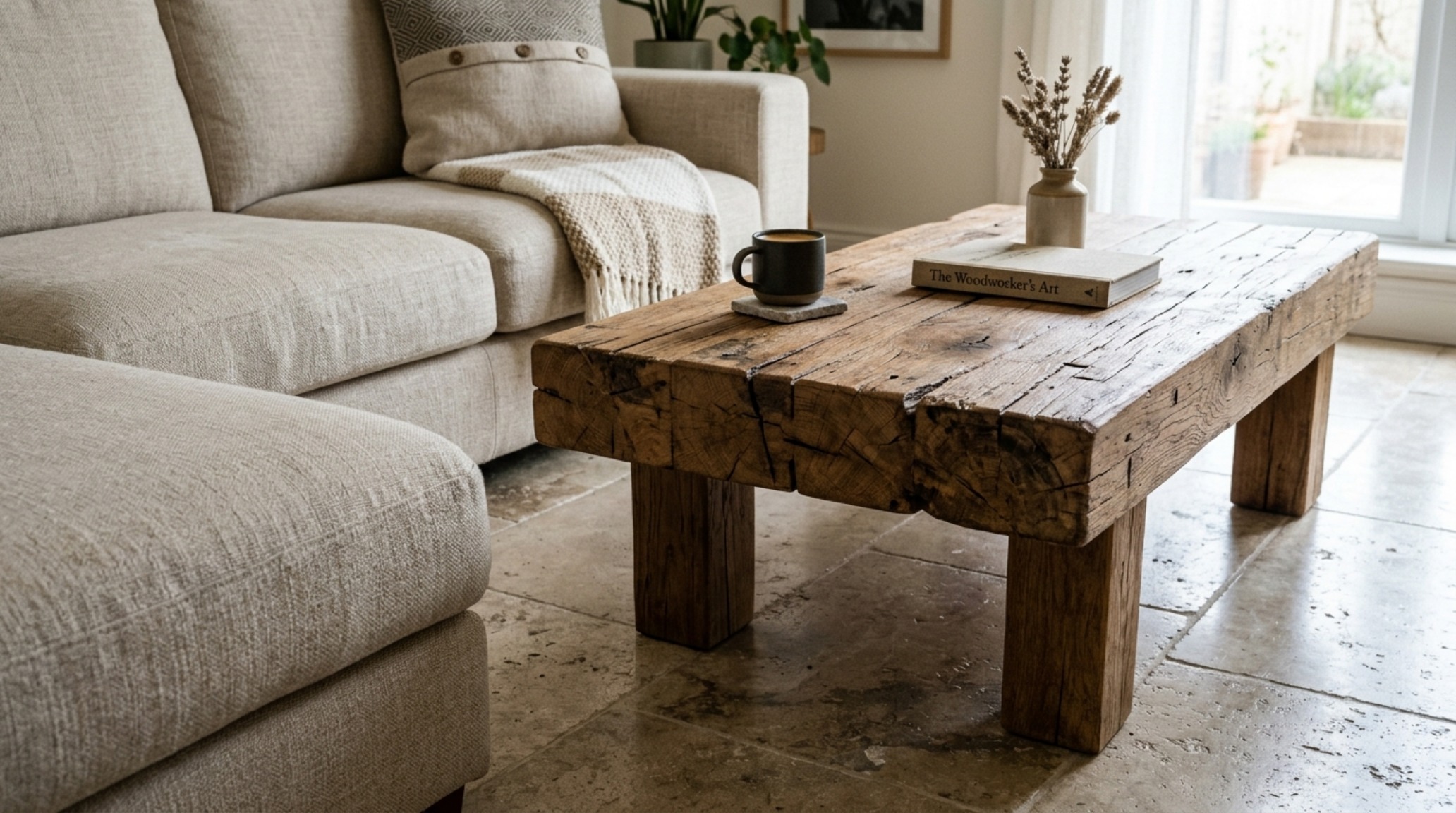
Reclaimed Timber Coffee Table: Establishing a Central Tactile Horizon
In the center of the seating group, a reclaimed timber coffee table serves as a tactile horizon. This is where the 18-inch reach rule is paramount—any further, and the piece loses its functional connection to the seating; any closer, and the circulation feels cramped. A truly modern rustic piece often utilizes a ‘blocky’ or monolithic form, letting the weight of the timber speak for itself. I prefer pieces that have been finished with a clear matte wax rather than a heavy polyurethane, allowing the natural scent and coolness of the wood to remain accessible. To elevate this rustic anchor, style it with precision: a single, oversized ceramic bowl or a stack of thick architectural monographs provides the necessary ‘high-finish’ counterpoint to the raw wood below.
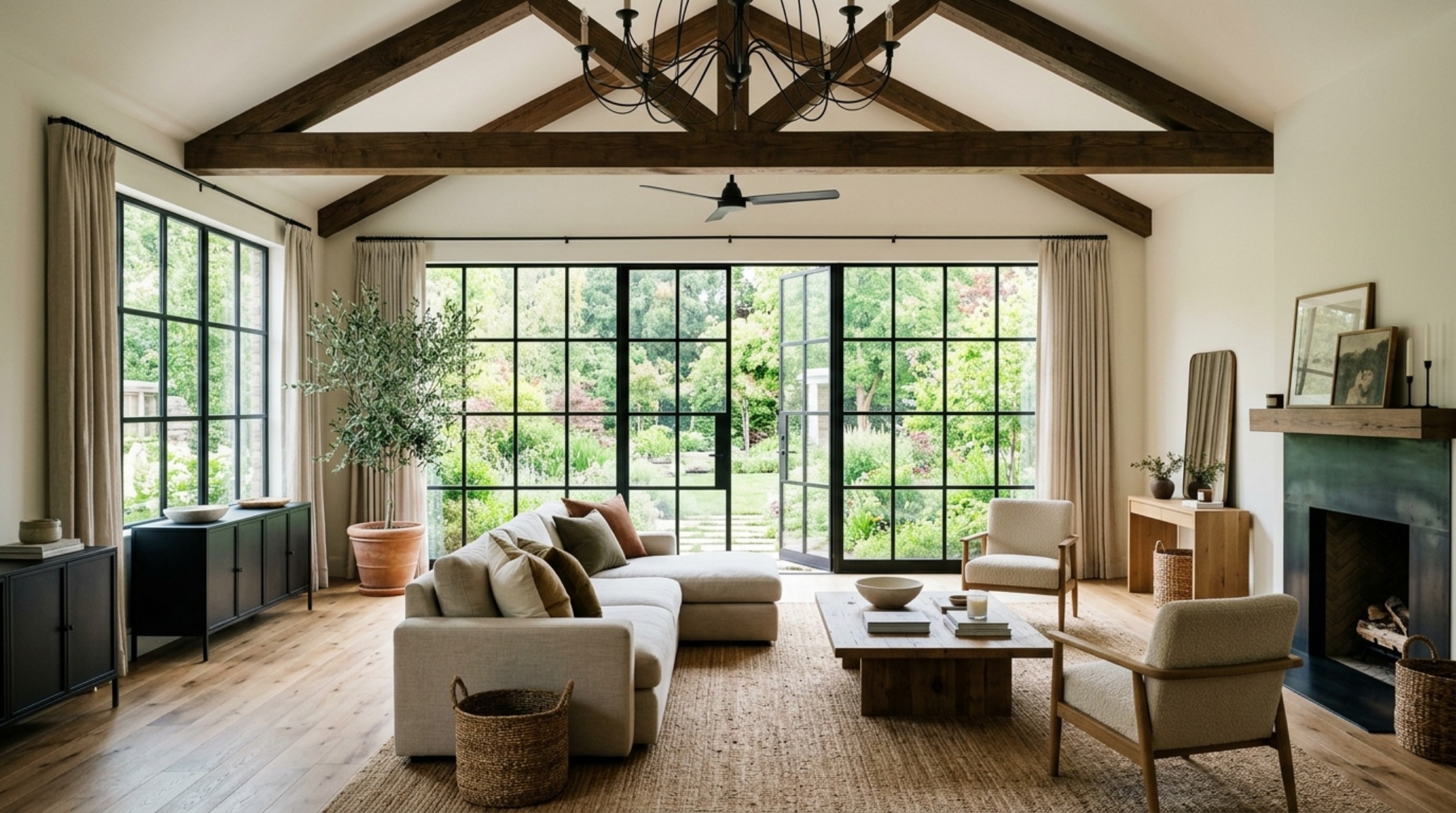
Modern Farmhouse Interior Design: Structural Volume and Softened Silhouettes
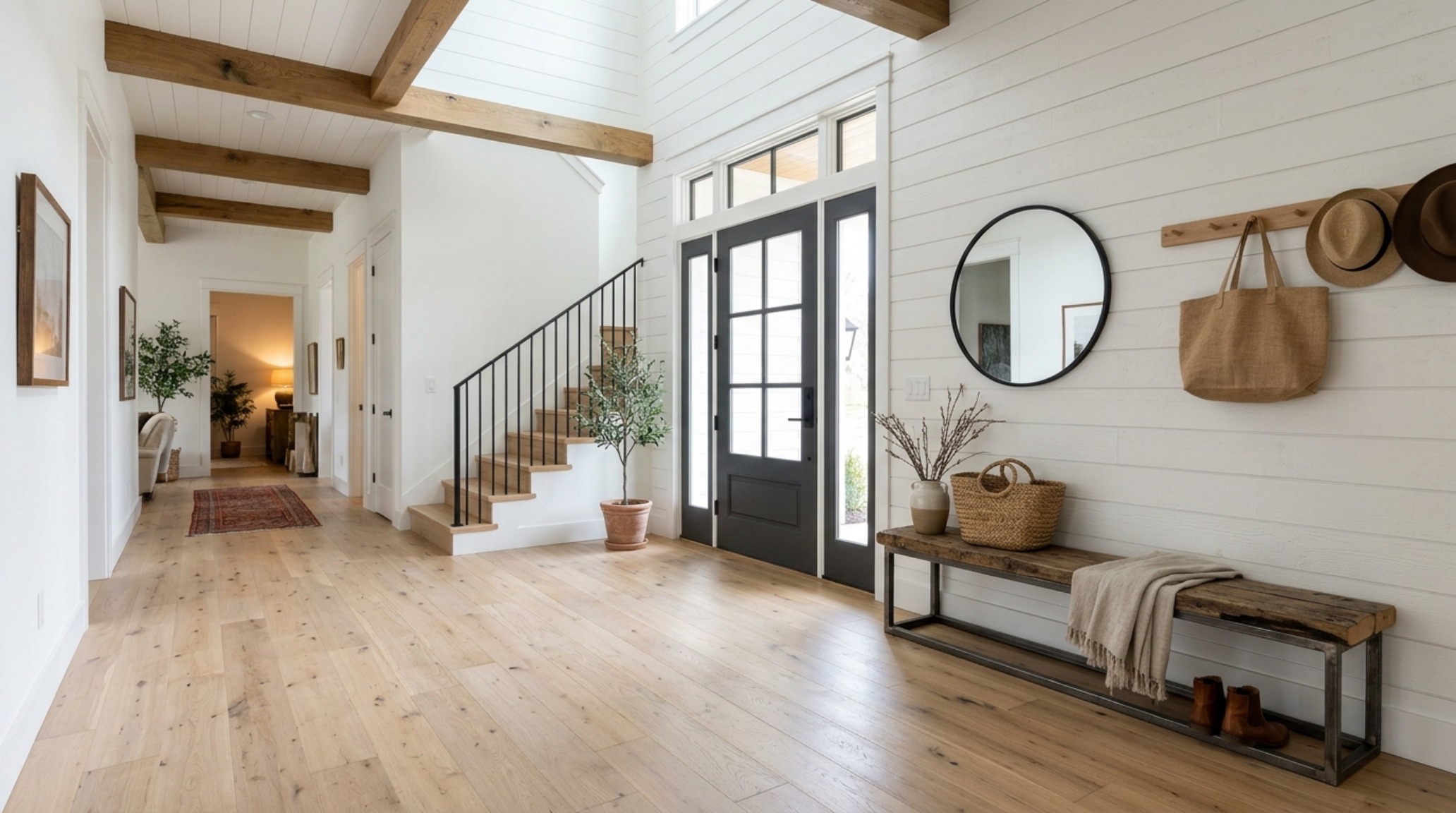
True modern farmhouse interior design is less about literal farm motifs and more about the celebration of volume and light. Think of soaring cathedral ceilings articulated with reclaimed beams, grounded by the matte softness of Benjamin Moore Swiss Coffee walls. In these voluminous spaces, modern rustic furniture must be scaled appropriately. A standard 84-inch sofa might disappear in a 20-foot-wide living area; instead, we look for modular configurations that can hold their own against the architecture. The secret to making these large spaces feel intimate is ‘zoning’ through texture. Use large-scale jute rugs to define seating areas and introduce blackened steel accents to provide a crisp, modern outline to the organic warmth of the wood.
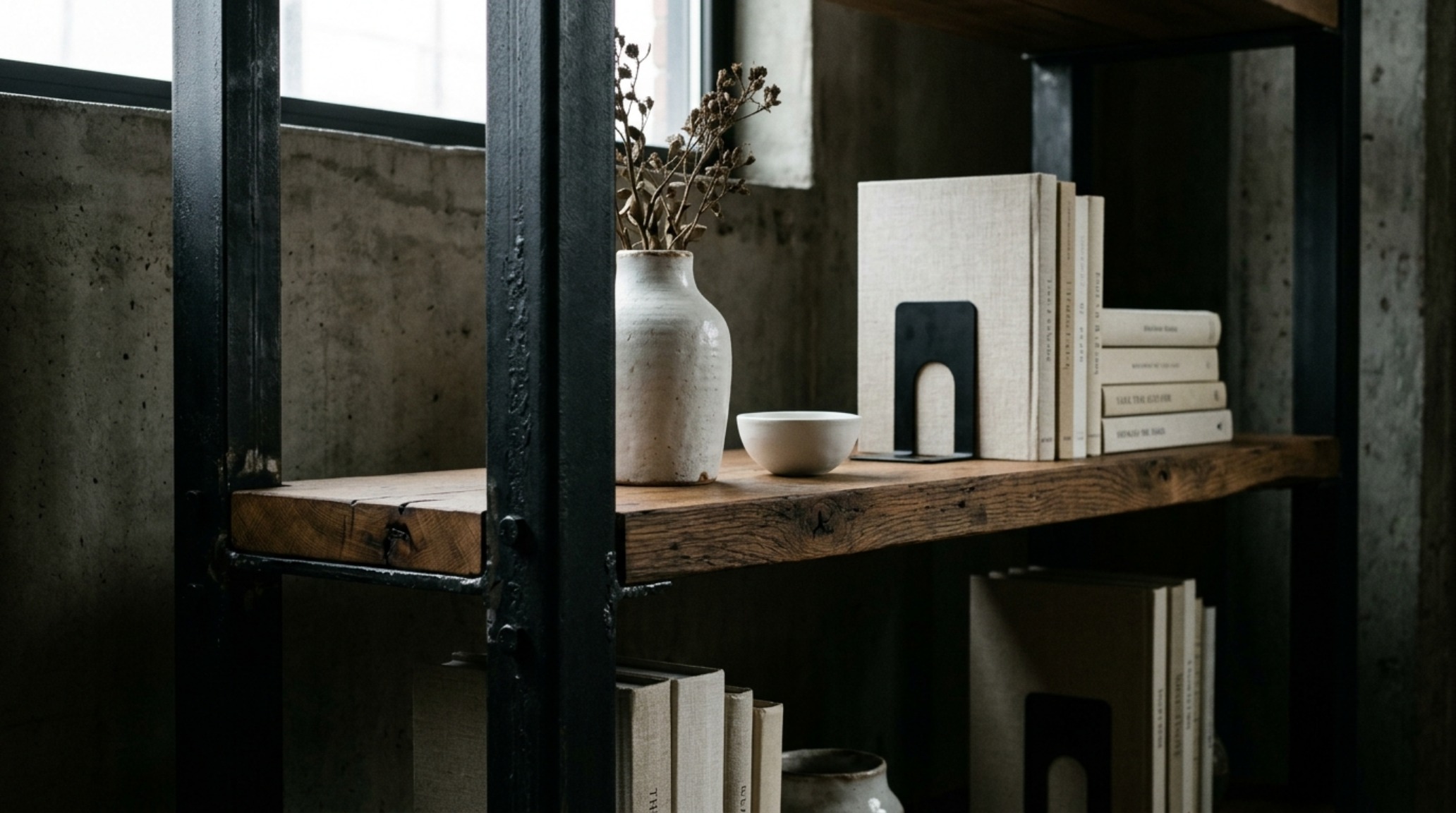
Black Metal and Wood Furniture: The Precision of Industrial Joinery
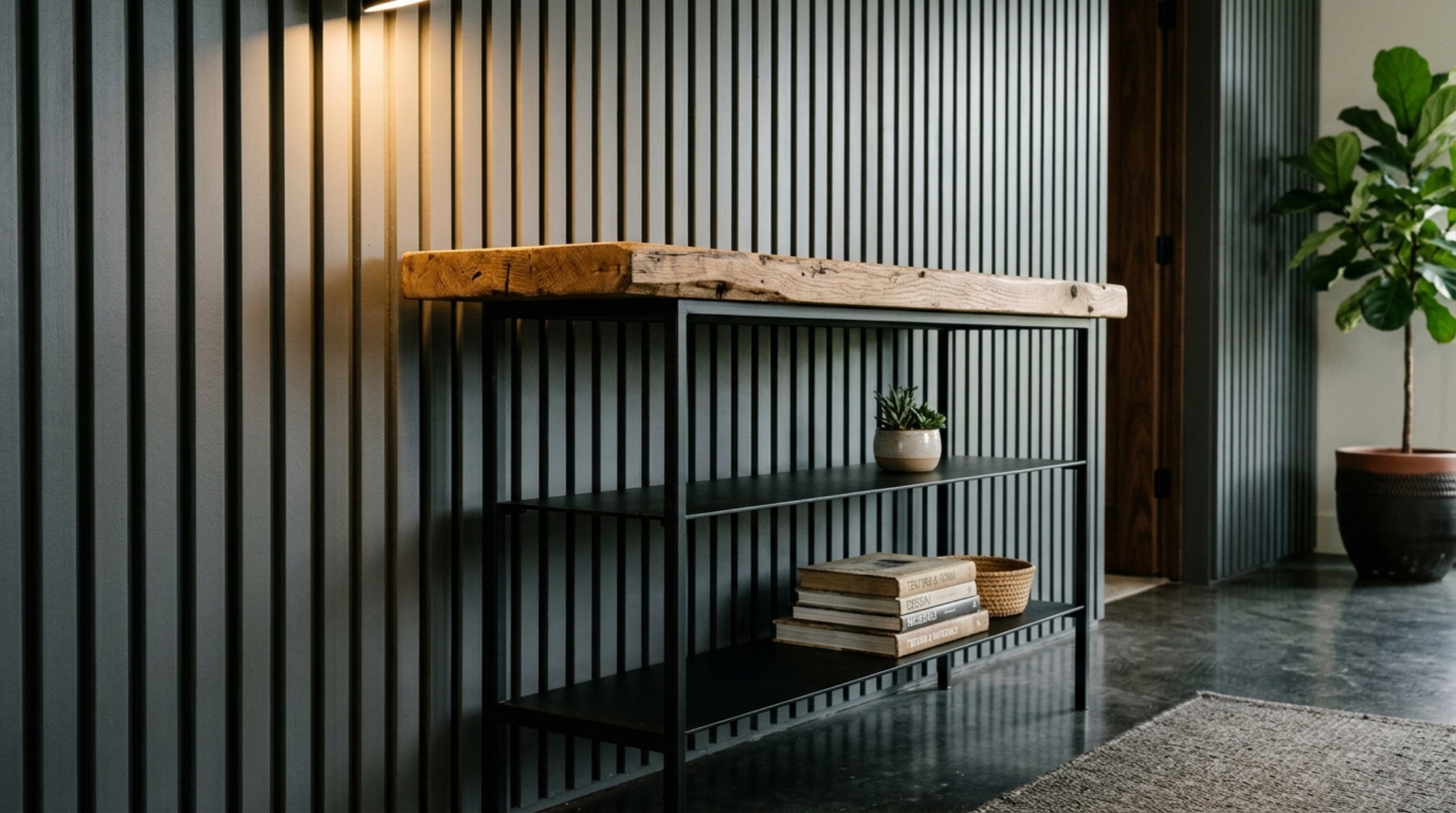
The marriage of steel and timber is a hallmark of the modern rustic dialect. Black metal and wood furniture brings a necessary architectural ‘line’ to a room. A slim, blackened steel bookshelf filled with aged oak boards provides vertical rhythm without adding visual bulk. This is particularly effective in smaller rooms where preserving the floor plane is essential for a sense of airiness. The industrial component provides the ‘precision,’ while the wood provides the ‘patina.’ When selecting these pieces, pay close attention to the finish of the metal—a hand-rubbed oil finish or a cold-rolled steel has a depth that a flat black powder coat cannot replicate. This subtle variation in texture is what separates a designer-led space from a commercial showroom.
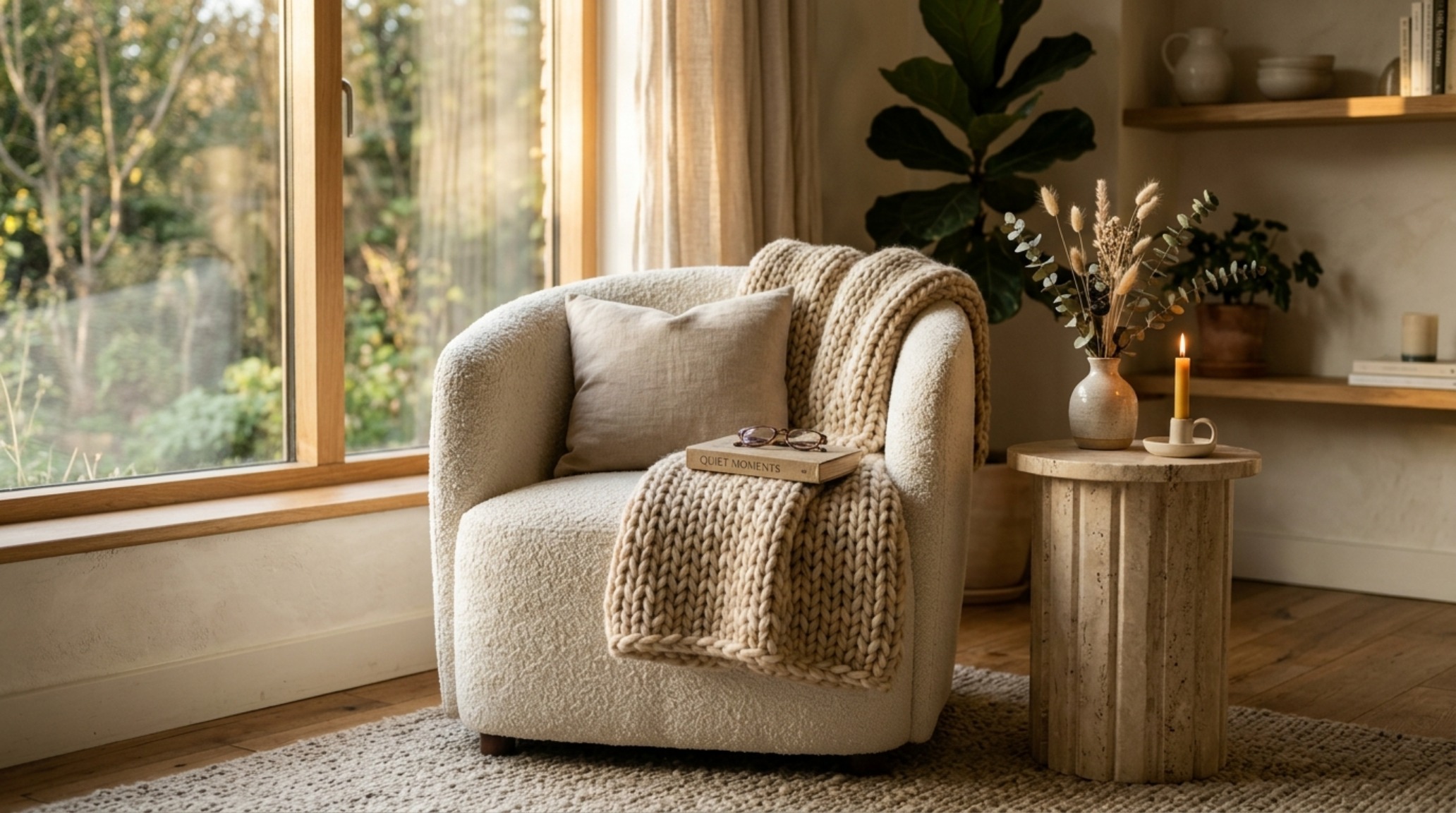
Warm Minimalist Home Decor: Layering the Sensory Palette
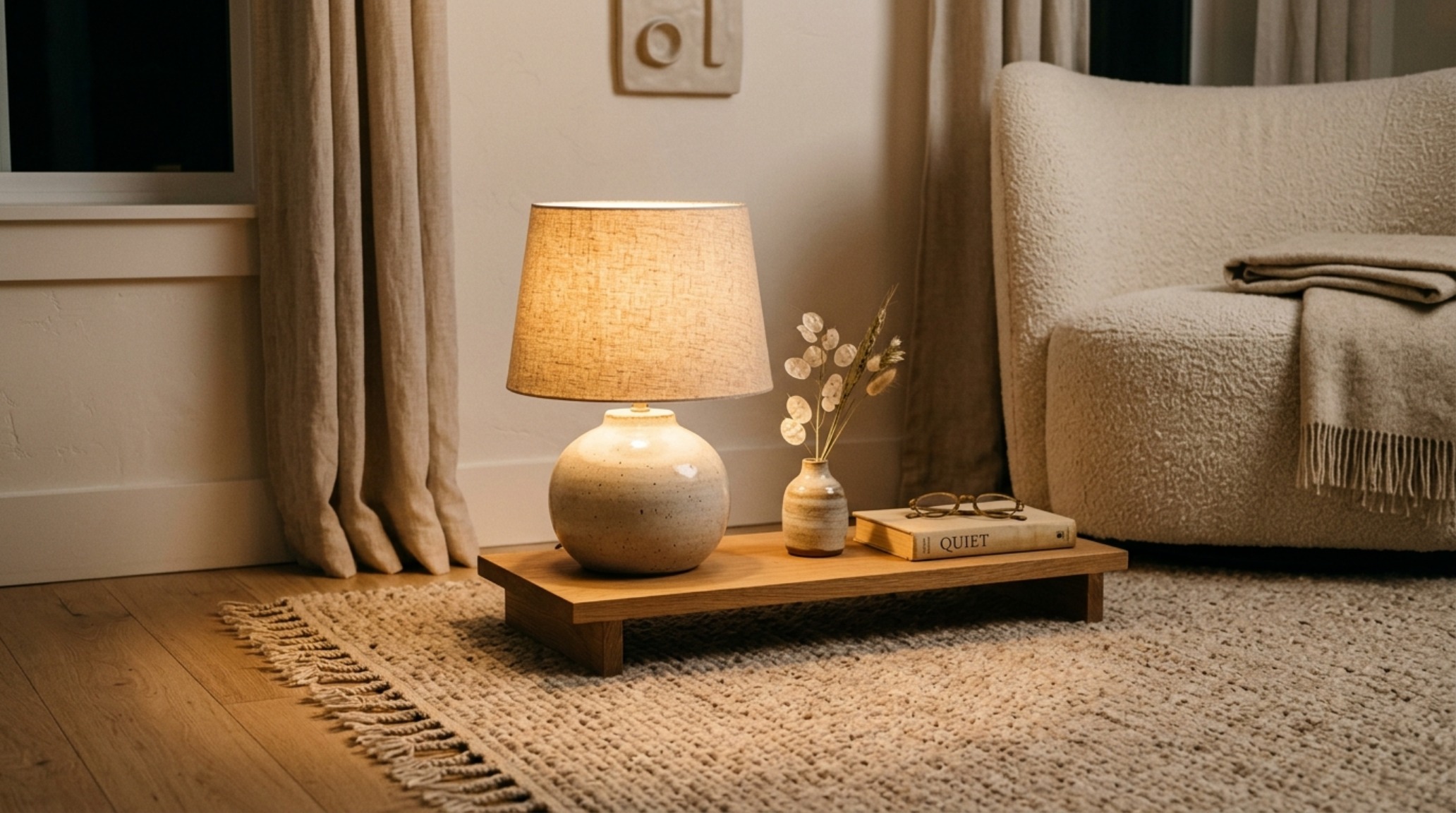
To prevent a room filled with modern rustic furniture from feeling too austere, we layer in warm minimalist home decor. This is the ‘soft architecture’ of the home. Think of heavy wool throws, shearling cushions, and hand-knotted rugs in a palette of oatmeal, slate, and bone. These elements provide the acoustic dampening necessary in spaces with high ceilings and hard surfaces. Lighting should be layered at three levels: ambient, task, and accent. I always specify 2700K bulbs for ambient lamps to mimic the golden hour glow, ensuring the wood tones feel rich rather than sallow. A single, well-placed floor lamp with a linen shade can transform a collection of furniture into a cozy, inhabited vignette.
Interior Architecture Specification Sheet
Key material specifications, color codes, lighting kelvin, and ergonomic clearances.
The evolution of our homes is shifting toward a slower, more considered form of living. By integrating modern rustic furniture, we aren’t just filling rooms; we are curated a spatial biography that values the marks of time as much as the clean lines of today. This balance of patina and precision allows a space to feel both historically grounded and forward-looking. As we continue to blur the lines between the organic and the industrial, the home becomes a sanctuary of tactile honesty, where every surface tells a story and every clearance invites movement. In the end, the most successful interiors are those that allow us to feel the weight of the wood beneath our hands and the clarity of the space around us, creating a living architecture that breathes.
Editorial Silo • Recommended Architecture Studies
- Beds That Save Space: The Architectural Blueprint & Spatial Flow Guide — Archival Design Case Study
- The Closed-Loop Life: Mastering the Functional Ergonomics of Self Sustaining Homes — Archival Design Case Study
Spatial Form & Lighting Chronicle
Visual exploration of sightlines, tactile surfaces, and ambient illumination crafted for timeless spaces.
Curated Visual Lookbook
Design Gallery & Spatial Studies
A visual curation of architectural arrangements, lighting concepts, and material palettes featured in this space.