The Frustration of the Solid Wall
Old plaster ruins great renovation plans. Hit a century-old brick or stone wall, and chasing an electrical wire means masonry dust in every crevice and days of drywall patching. Most homeowners panic. They run to the hardware store, buy adhesive white plastic trunking, and stick it crookedly above the baseboard. It looks cheap. Worse, it eventually pulls the paint off when the foam tape dries out.
There is a better path. Stop hiding what cannot reasonably be hidden. Embrace exposed cable management as a tailored architectural detail.
Turning Necessary Friction into an Accent
Look closely at how classic European apartments tackle utility runs. They do not fight the wall. Instead, they treat the wire like picture rail moulding or brass hardware. The entire secret rests on three components: heavy-gauge fabric braided cord, precise pin tension, and authentic brass cable clips.
Surface wiring fails only when it looks accidental. When every clip sits at an exact, measured interval, human eyes read the run as intentional trim.
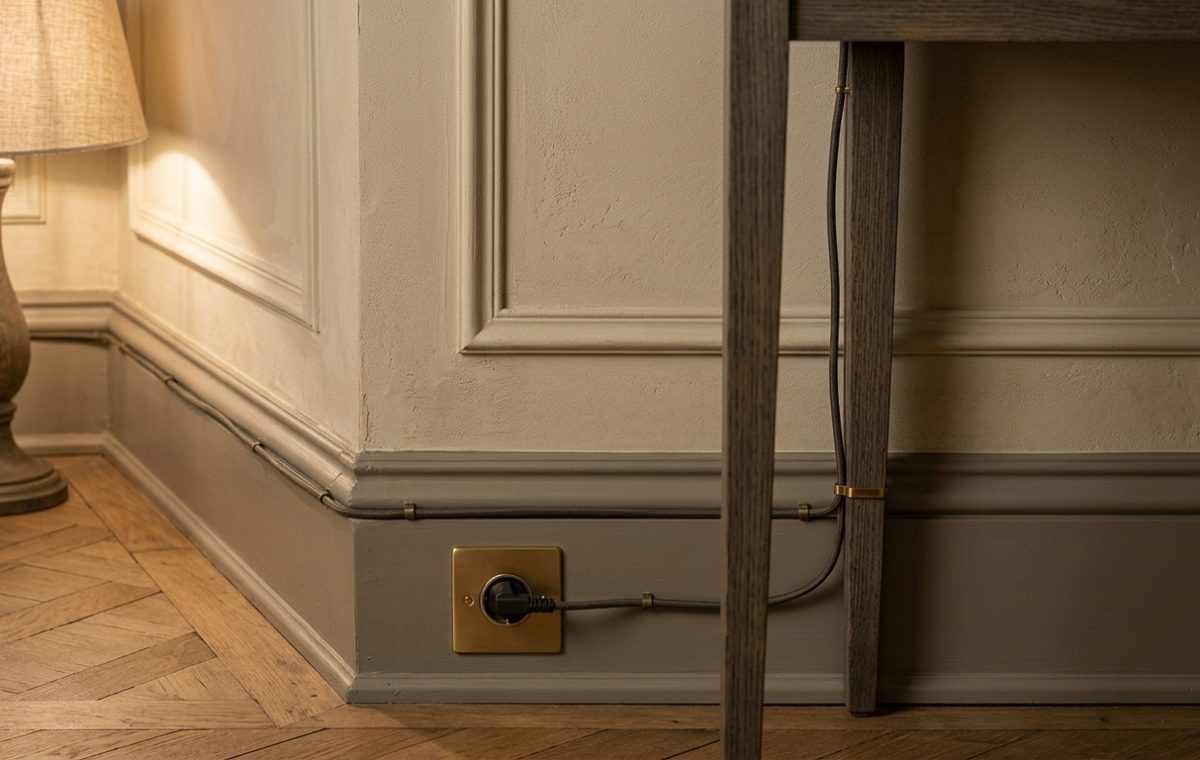
Notice how a well-routed line traces the step of the skirting board before climbing vertically behind furniture. In this room, the twisted brown fabric cord locks into small metal saddles pinned directly to the grey painted moulding. From there, it tracks straight into an unlacquered brass faceplate flush with the woodwork. It looks deliberate. It honors the room instead of trying to fool anyone.
The Practical Realities (and Trade-offs)
Before you run cords across your baseboards, understand the physics. Cable droop is your enemy. You cannot simply pull a standard plastic lamp wire taut and expect crisp lines. Plastic stretches, sags in summer humidity, and kinks at right angles.
- Cord selection: Only use round, cloth-covered cables with substantial inner insulation. The textile outer sleeve grips the clips and prevents friction burnishing against the wall.
- Clip spacing: Keep your spacing tight. Place a clip every six to eight inches along horizontal skirting board wire routing, and never make a 90-degree turn without a clip anchor right at the corner.
- Furniture integration: If a console table or desk sits over the line, trace the wire up the back of an interior leg with matched miniature brackets. It visually disappears into the furniture’s shadow line.
There are real trade-offs to keep in mind. Fabric cords collect dust. Over two or three years, a cloth-wrapped wire along a dusty floorboard will need a quick pass with a vacuum brush attachment during seasonal cleaning. In high-traffic hallways where boots and pets brush the baseboards, surface mounted wiring can get knocked out of loose clips if you skimp on pin depth.
Selecting the Hardware
Skip the cheap plastic push-in nail clips meant for coaxial television lines in garages. They turn yellow, crack under tension, and scream cut corners. Look for solid brass, patinated bronze, or blackened steel cable cleats sized specifically to the diameter of your cord. When you pair rich metal against muted woodwork, utility lines stop feeling like an afterthought and start acting like fine joinery. How are you handling the stubborn electrical runs in your older spaces?
Editorial Lookbook & Photo Collection