The Quiet Gravity of the Hearth
The quality of light in a room changes the moment it touches a surface with history. There is a specific, quiet magic in the way a low-angled winter sun grazes the jagged, uneven surface of a hearth, turning mineral deposits into tiny constellations of amber and grey. These fireplace design ideas with stone are not merely about heating a floor plan; they are about establishing a primal, tactile anchor that grounds the ethereal nature of modern living in something enduring and heavy.
When we design a living space, we often prioritize the visual—the sightlines and the color palettes. But the most successful rooms are those that prioritize the haptic. Stone, in its various states from the raw, jagged edges of fieldstone to the buttery, honed finish of French limestone, offers a sensory dialogue that paint and drywall simply cannot replicate. It provides what I call ‘spatial cadence’—a rhythm of shadow and light that shifts as you move through the room, creating a sense of permanence that feels both ancient and urgently contemporary.
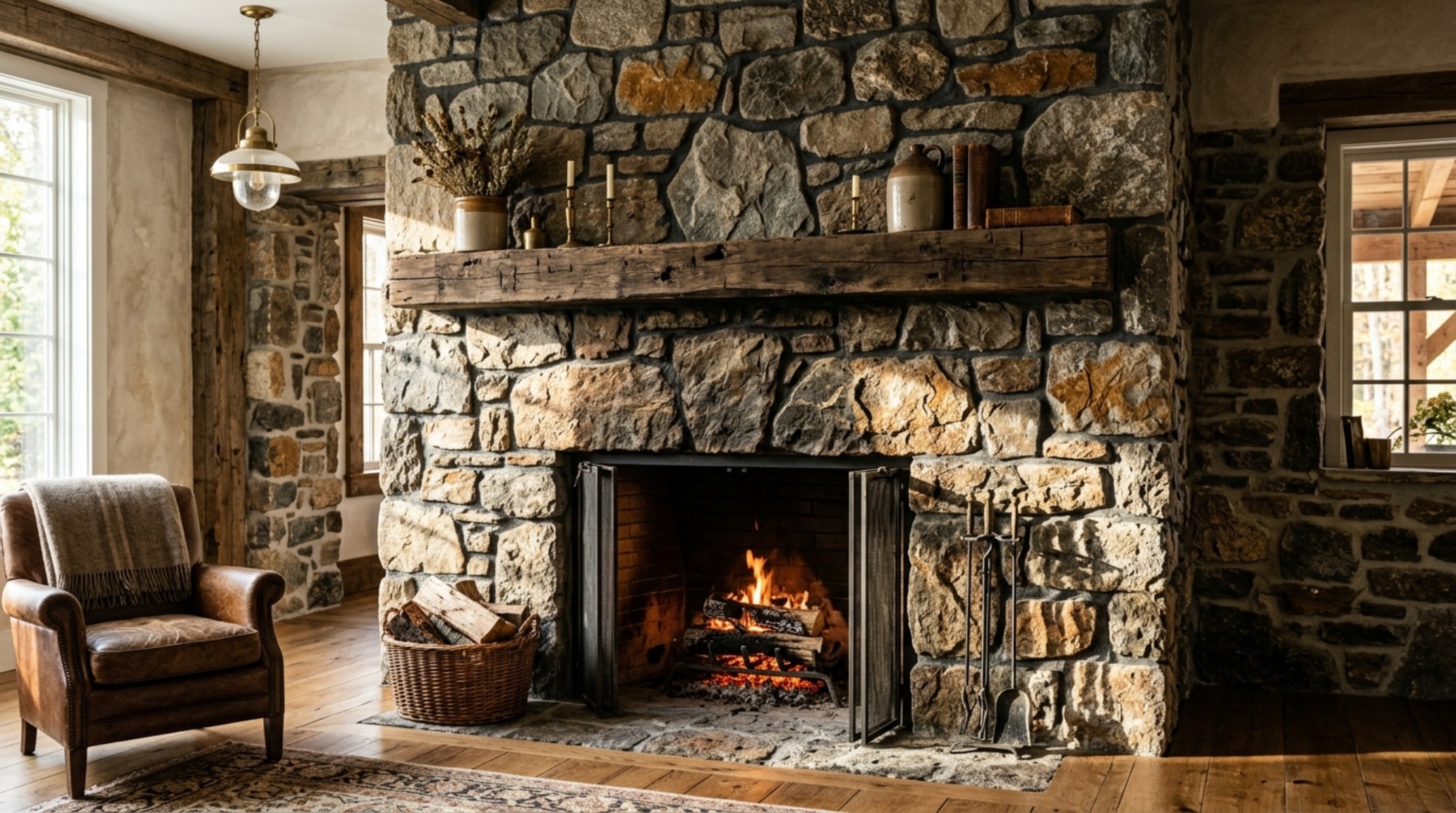
To understand the impact of stone is to understand the balance of temperature. A stone fireplace acts as a thermal mass, but its aesthetic contribution is equally weighted. In a room filled with soft linens, velvet upholstery, and warm oak flooring, the cold, hard reality of stone provides the necessary friction. Without that contrast, a room can feel untethered, drifting into a sea of mid-tones. With it, the space finds its center of gravity.
Architectural Vignettes & Spatial Flow: Rustic Fieldstone Styles
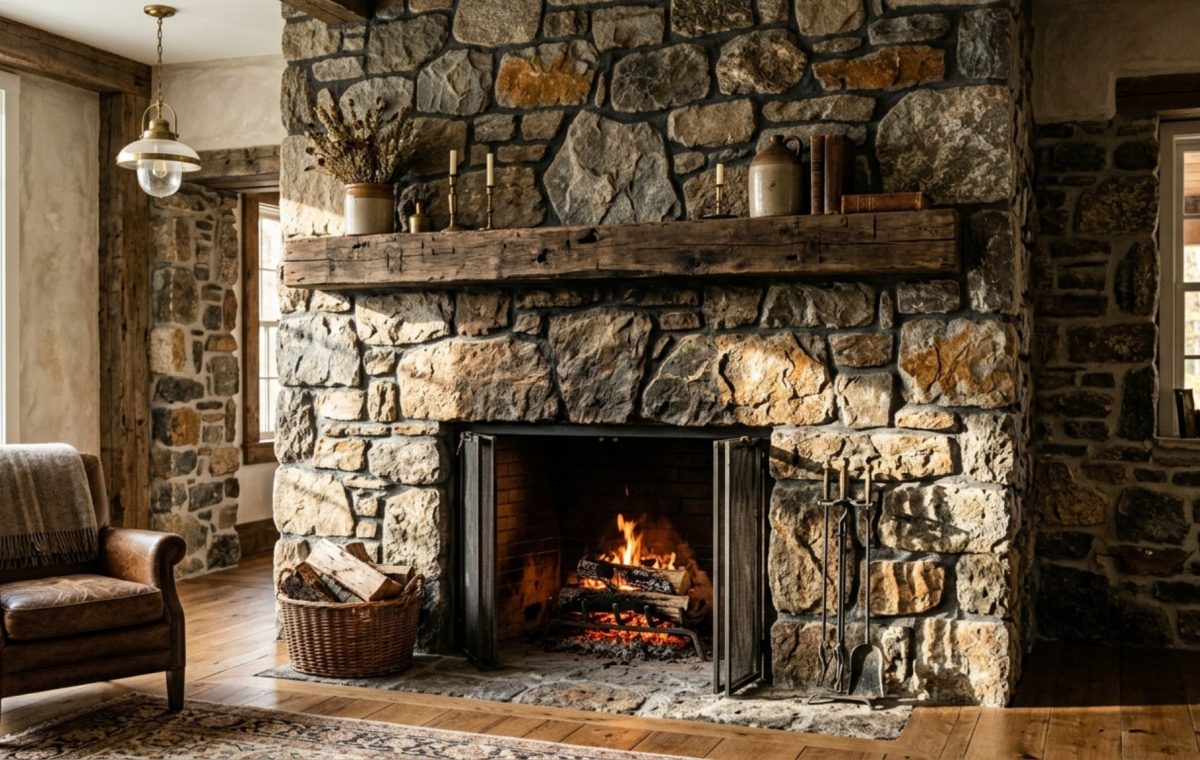
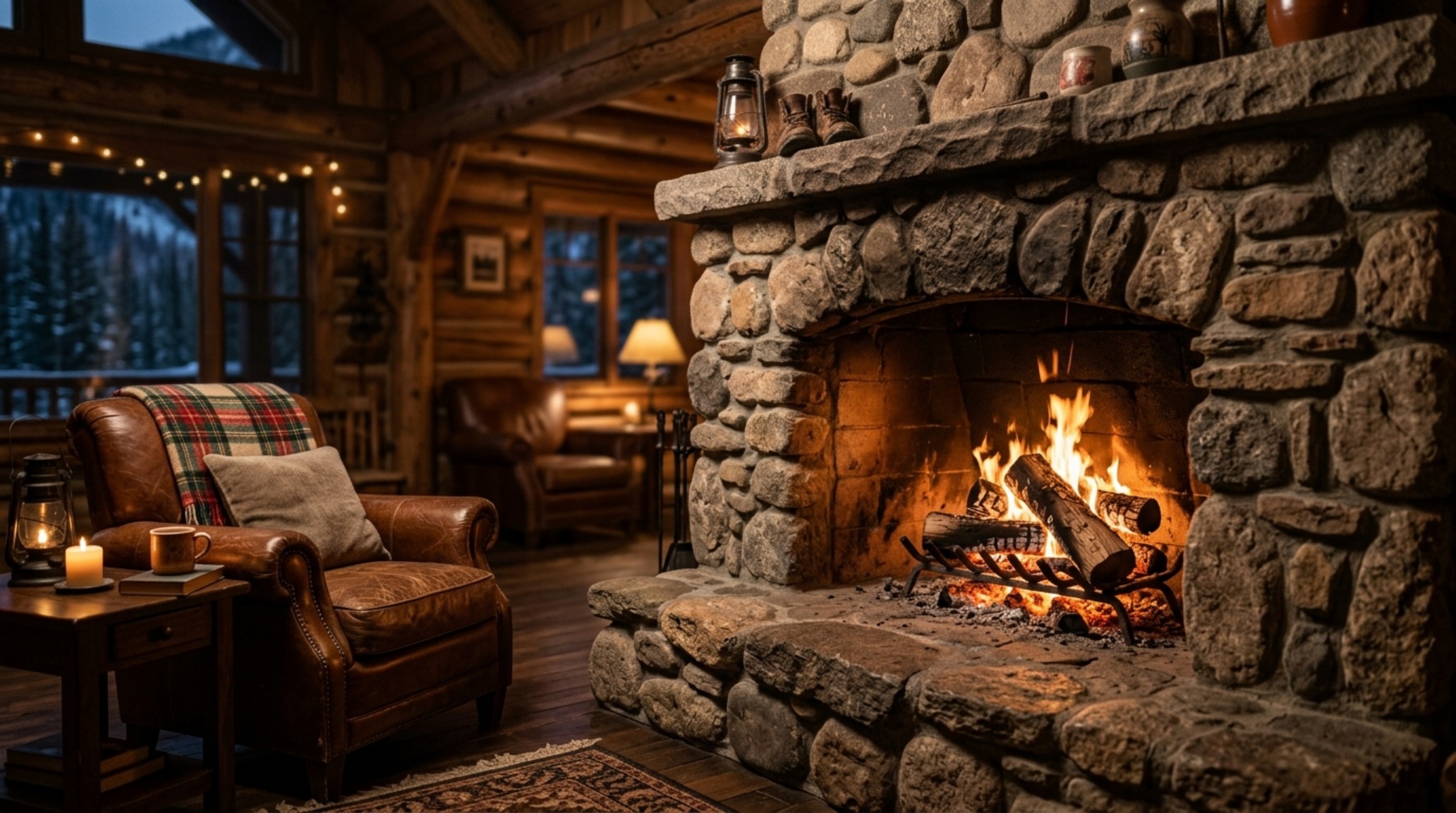
There is an inherent honesty in rustic fieldstone fireplace styles that evokes the rugged landscape of the Hudson Valley or the rolling hills of the Cotswolds. Fieldstone is characterized by its irregular shapes and varied thicknesses, demanding a master mason’s eye for ‘dry-stack’ aesthetics. The goal here is not perfection; it is a curated ruggedness. When utilizing fieldstone, the mortar should be deeply raked to allow the stones to cast individual shadows, creating a 3D effect that feels like an extension of the natural earth.
In a recent project, we paired a massive fieldstone hearth with walls painted in Farrow & Ball Setting Plaster. The dusty, terracotta undertones of the walls drew out the warmth in the granite and schist, while the 2700K ambient lighting—carefully hidden in recessed coves—highlighted the texture without flattening it. When working with such heavy materials, architectural clearances are paramount. We maintained a 36-inch primary circulation path around the hearth to ensure the stone felt monumental rather than intrusive, allowing the room to breathe despite the material’s visual weight.
Visual Narrative & Detail Studies: Floor to Ceiling Stone Fireplace Pictures
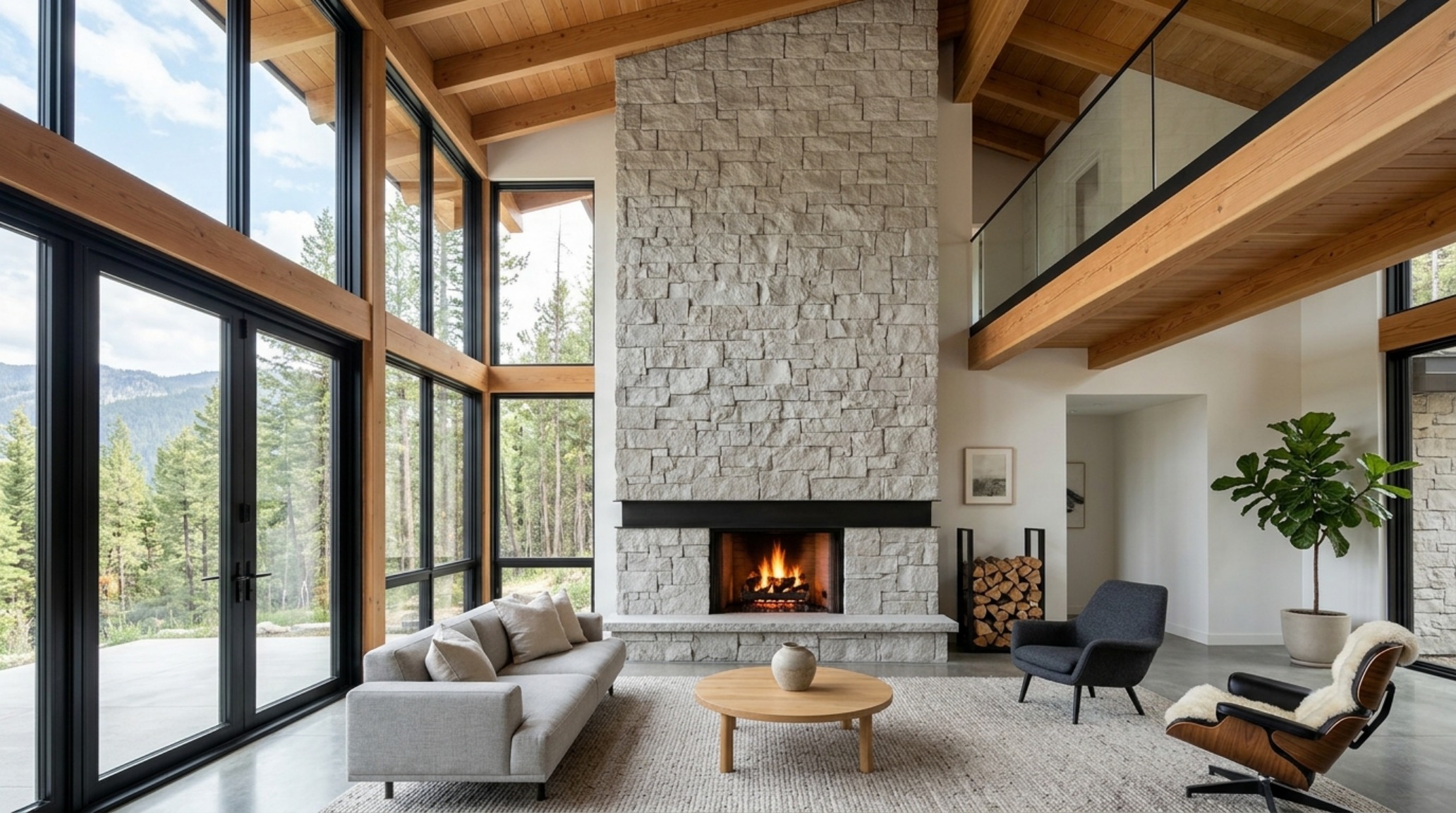
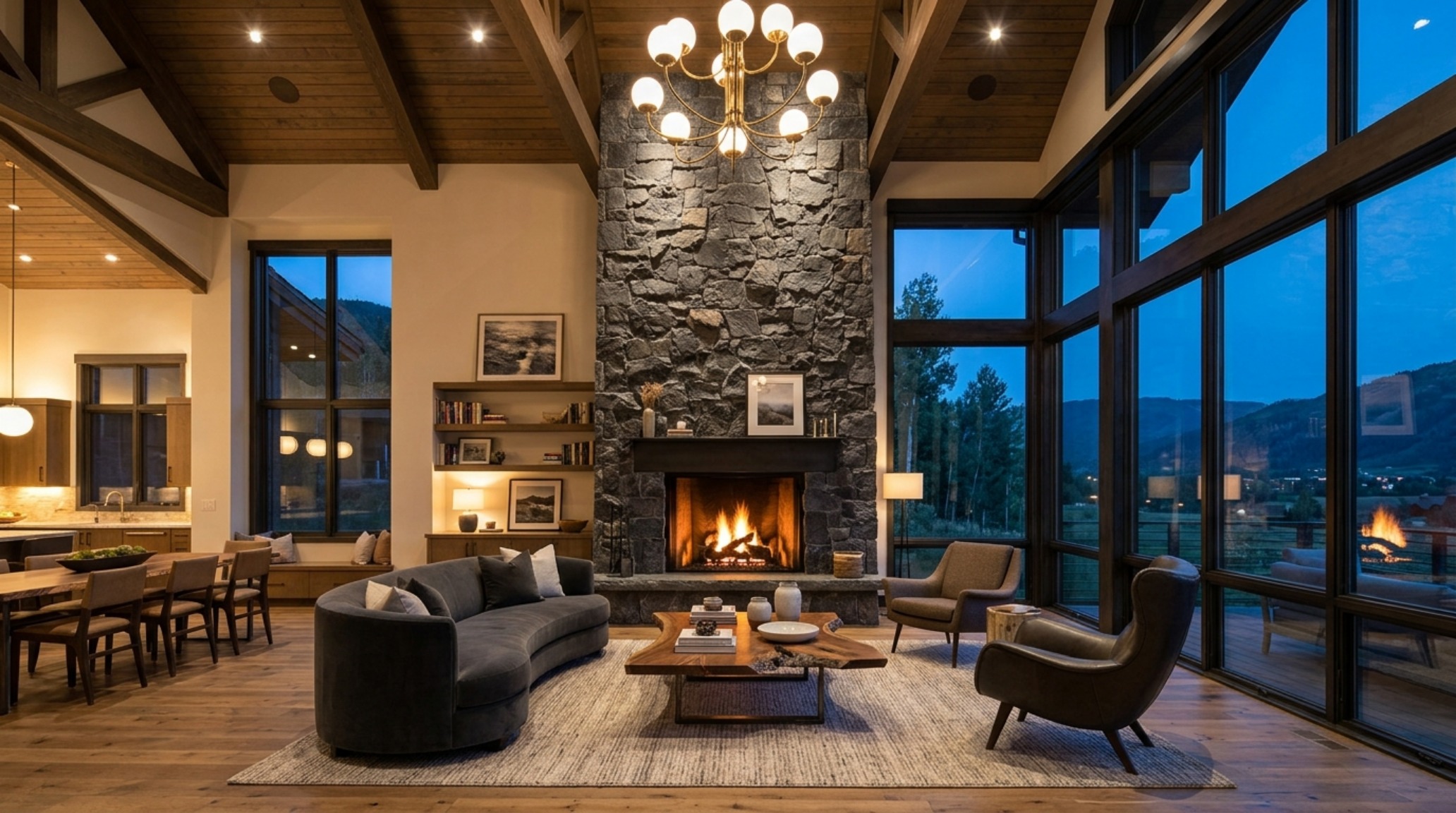
Verticality is a powerful tool in interior architecture. When we look at floor to ceiling stone fireplace pictures, the immediate takeaway is the sense of expanded volume. By taking the stone all the way to the rafters, you draw the eye upward, celebrating the height of the room and creating a continuous textural plane. This approach works exceptionally well in great rooms where the ceiling height exceeds twelve feet. It transforms the fireplace from a mere utility into a structural spine for the home.
To prevent a floor-to-ceiling installation from feeling overbearing, consider the ‘negative space breathing room.’ Intersperse the stone with strategic voids—perhaps a built-in wood niche or a cantilevered stone bench. We often specify a 12-inch deep hearth at a 18-inch height, which doubles as extra seating during large gatherings, effectively integrating the fireplace into the social flow of the room. The transition between the stone and the ceiling should be seamless; a shadow gap or a minimal ‘J-bead’ trim allows the stone to meet the plaster with a clean, architectural precision.
The Visual Concept Gallery: Modern Limestone Fireplace Mantel
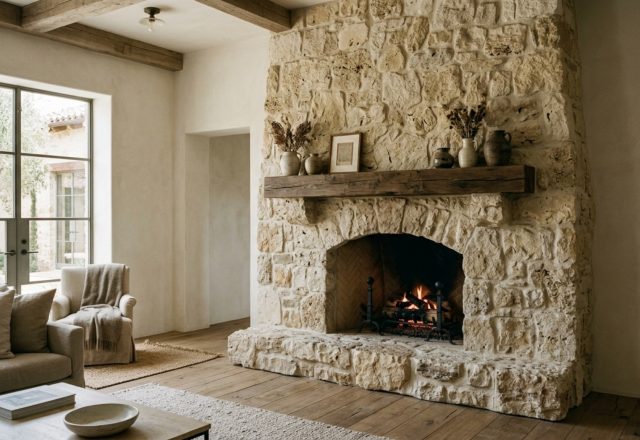
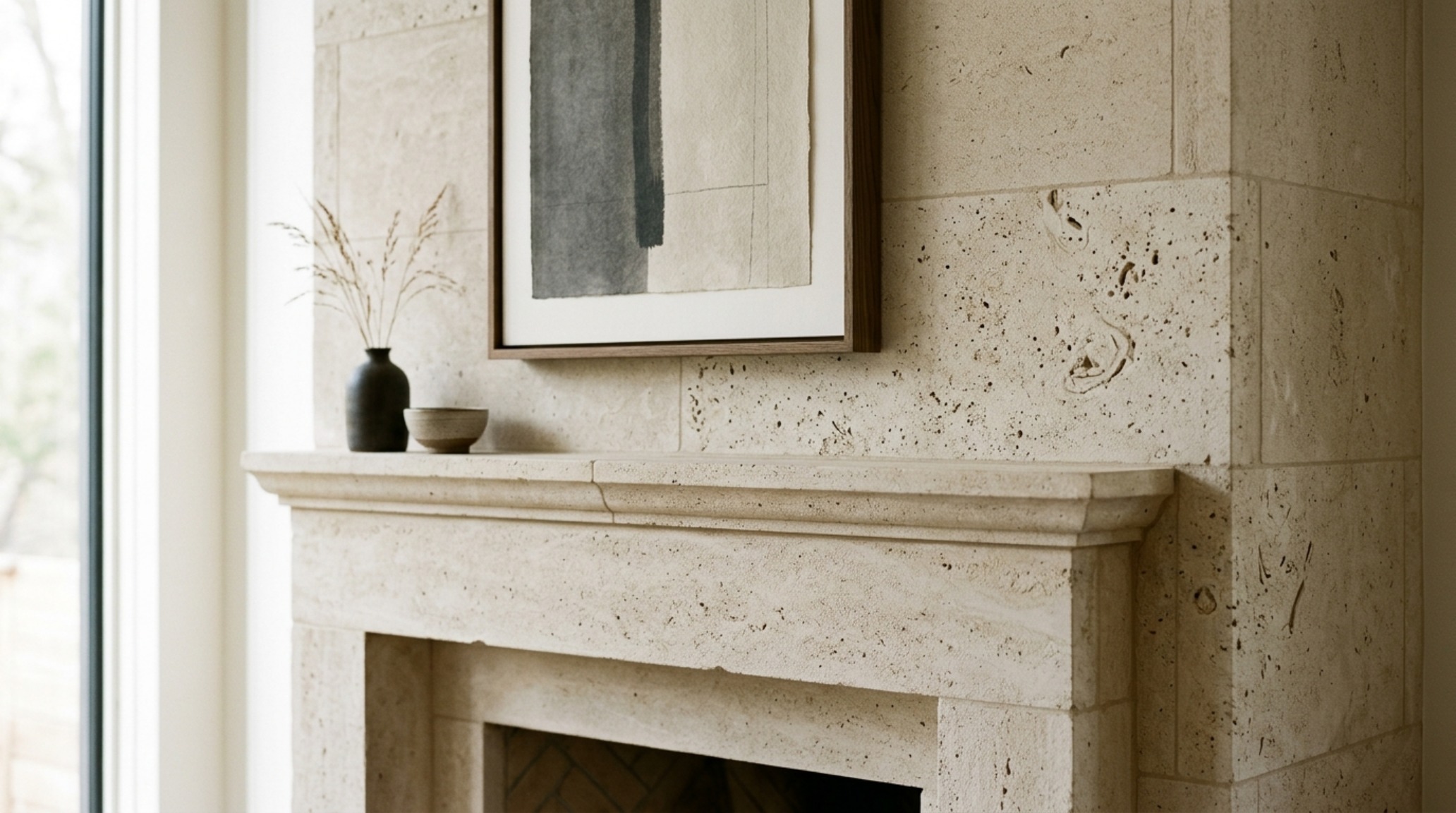
On the opposite end of the textural spectrum lies the modern limestone fireplace mantel. Limestone, specifically varieties like Indiana Buff or French Caen, offers a monolithic, sculptural quality. It is the choice for the organic minimalist. The beauty of limestone is its subtlety—the way it absorbs light rather than reflecting it, creating a soft, ethereal glow. This is where precision matters. The joints should be razor-thin, and the finish should be ‘honed’ to a matte, suede-like texture.
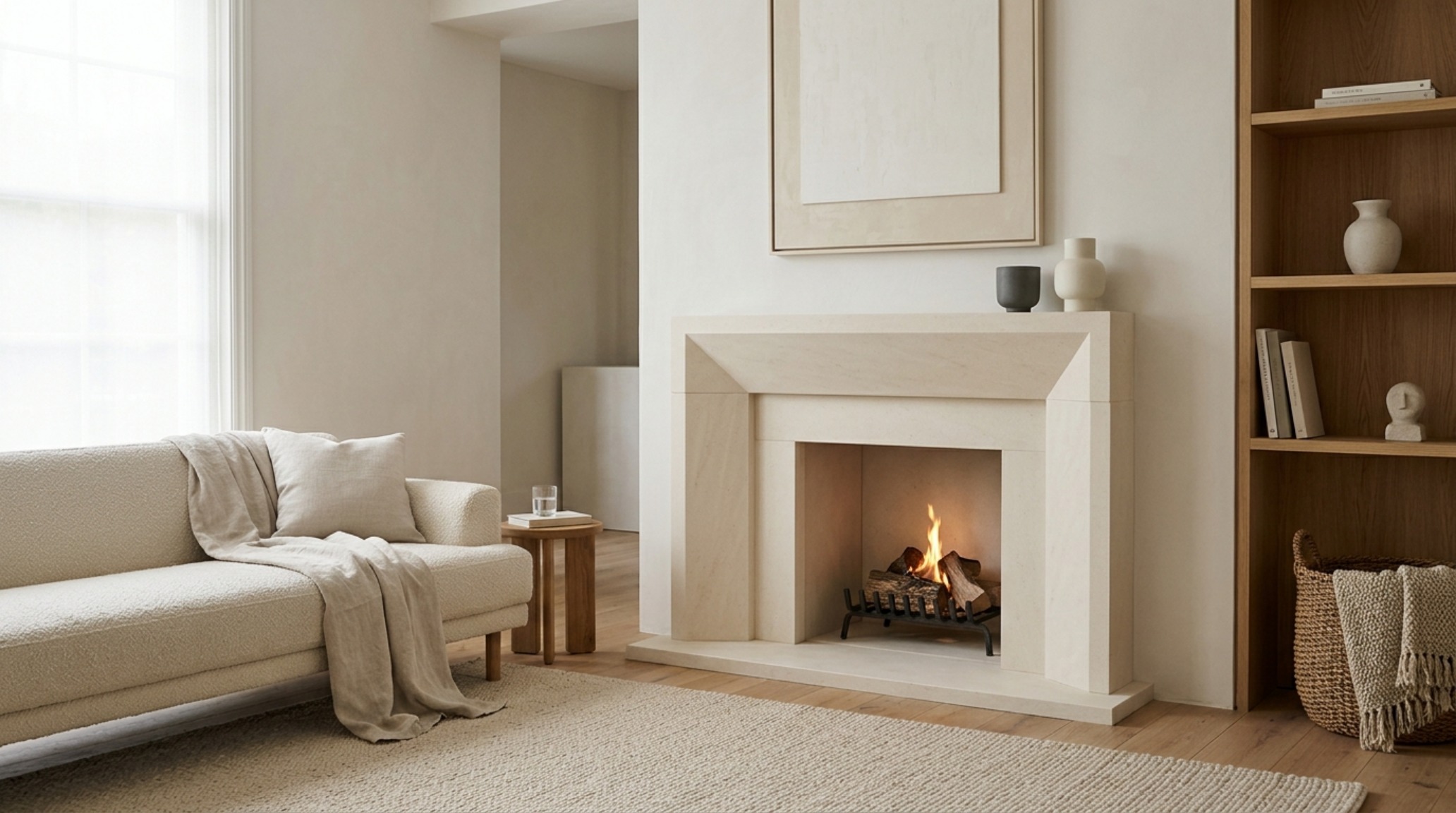
A limestone mantel allows for a more restrained architectural language. I often suggest pairing a mitered-edge limestone surround with walls in Benjamin Moore Swiss Coffee at 75% strength. This creates a tonal, ‘white-on-white’ effect where the only distinction is the tactile difference between the smooth plaster and the slightly porous stone. Lighting here should be high CRI (92+), ensuring that the subtle fossils and mineral veining in the limestone are visible, rather than being washed out by poor quality LEDs.
Materiality, Form & Light Vignettes: Stacked Stone Fireplace Surround Ideas
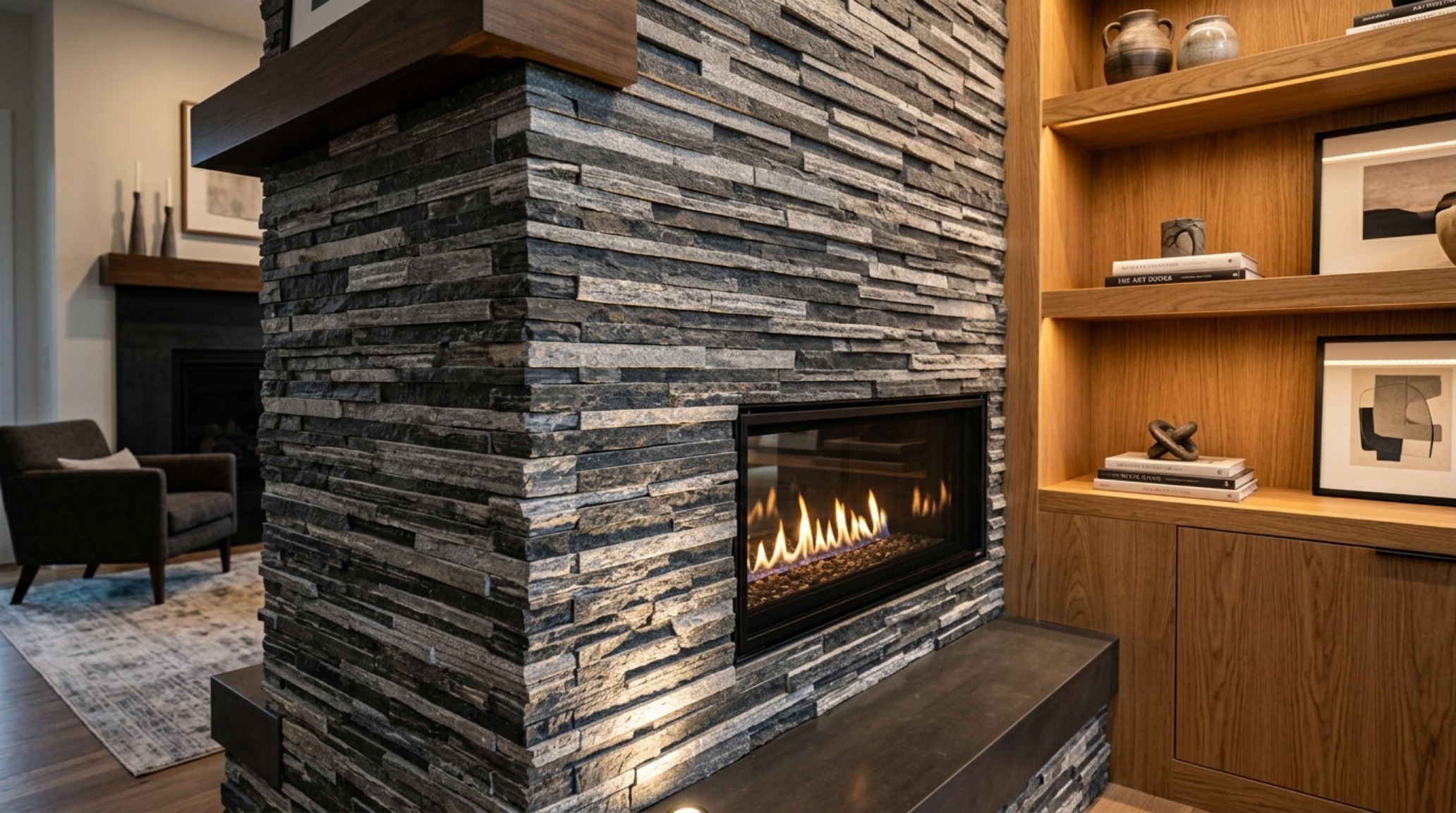
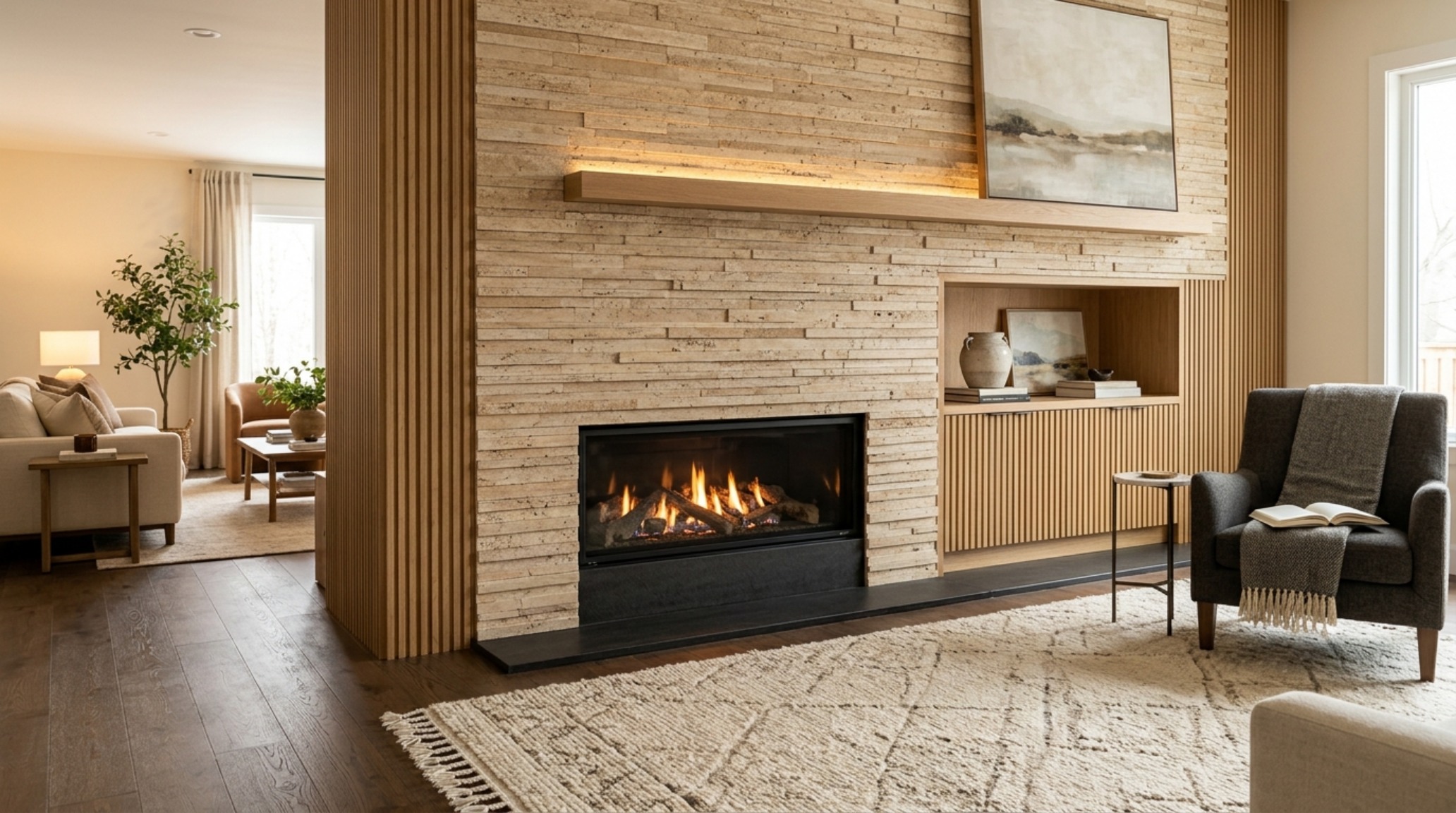
For those seeking a more rhythmic, contemporary texture, stacked stone fireplace surround ideas offer a compelling middle ground. This technique involves using thin, rectangular strips of stone—often slate, quartz, or travertine—arranged in a tight, linear pattern. It introduces a horizontal emphasis that can make a narrow room feel wider. The key to preventing stacked stone from feeling dated is to avoid ‘ledger stone’ panels that look overly manufactured. Instead, opt for individual pieces with slight variations in depth.
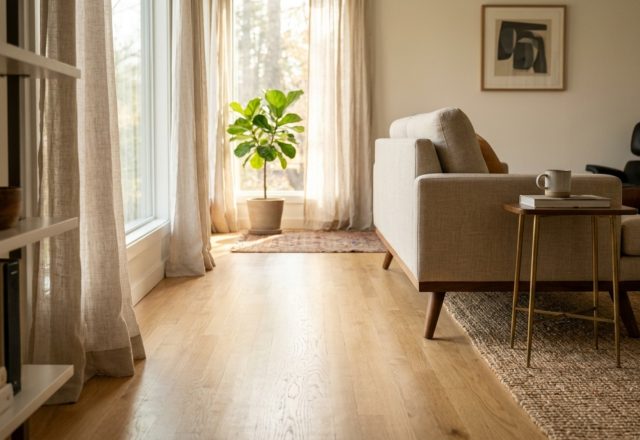
Placement is everything. A stacked stone surround shouldn’t exist in a vacuum. It needs to be balanced by smooth surfaces like wide-plank white oak flooring or a large-scale wool rug. In terms of spatial proportions, ensure your coffee table is placed at least 18 inches from the hearth edge. This ‘reach’ distance is standard for ergonomics, allowing for easy movement while maintaining an intimate connection to the fire’s warmth. If the stacked stone is dark—perhaps a Charcoal Basalt—use 3000K task lighting nearby to provide enough contrast so the corner doesn’t disappear into a ‘black hole’ of texture.
Architectural Perspectives Showcase: White Stone Fireplace Living Room Decor
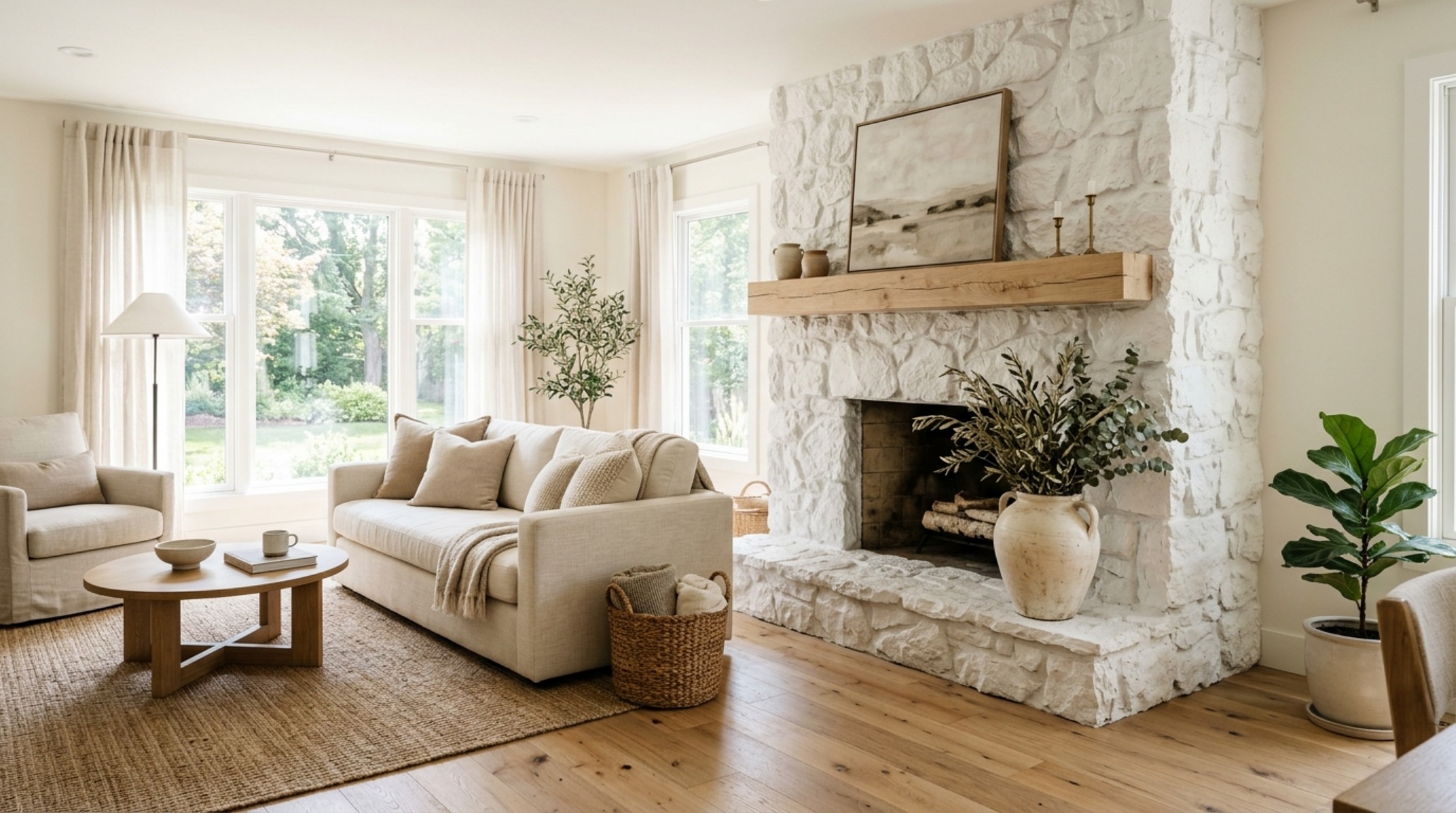
There is a refreshing airiness to white stone fireplace living room decor. Whether it’s a white-washed brick, a pale marble, or a textured quartz, white stone brings a sense of serenity and ‘Nordic’ calm to a space. It’s particularly effective in coastal or Scandinavian-inspired interiors where natural light is the primary material. White stone reflects light back into the room, making even small spaces feel expansive and breezy.
Styling a white stone hearth requires a light touch. Avoid heavy, dark oak mantels; instead, consider a floating beam of reclaimed driftwood or a sleek, powder-coated steel shelf. To maintain the ‘atmospheric warmth’ promised by the stone, introduce organic textures: a woven jute basket for logs, a shearling throw over a nearby chair, and perhaps a large-scale ceramic vessel in an earthy terracotta. The goal is to create a ‘visual temperature’ that feels inviting, not sterile. The white stone acts as the canvas, while the decor provides the brushstrokes of warmth.
Visual Anthology of Spatial Living: Thin Stone Veneer Fireplace Installation
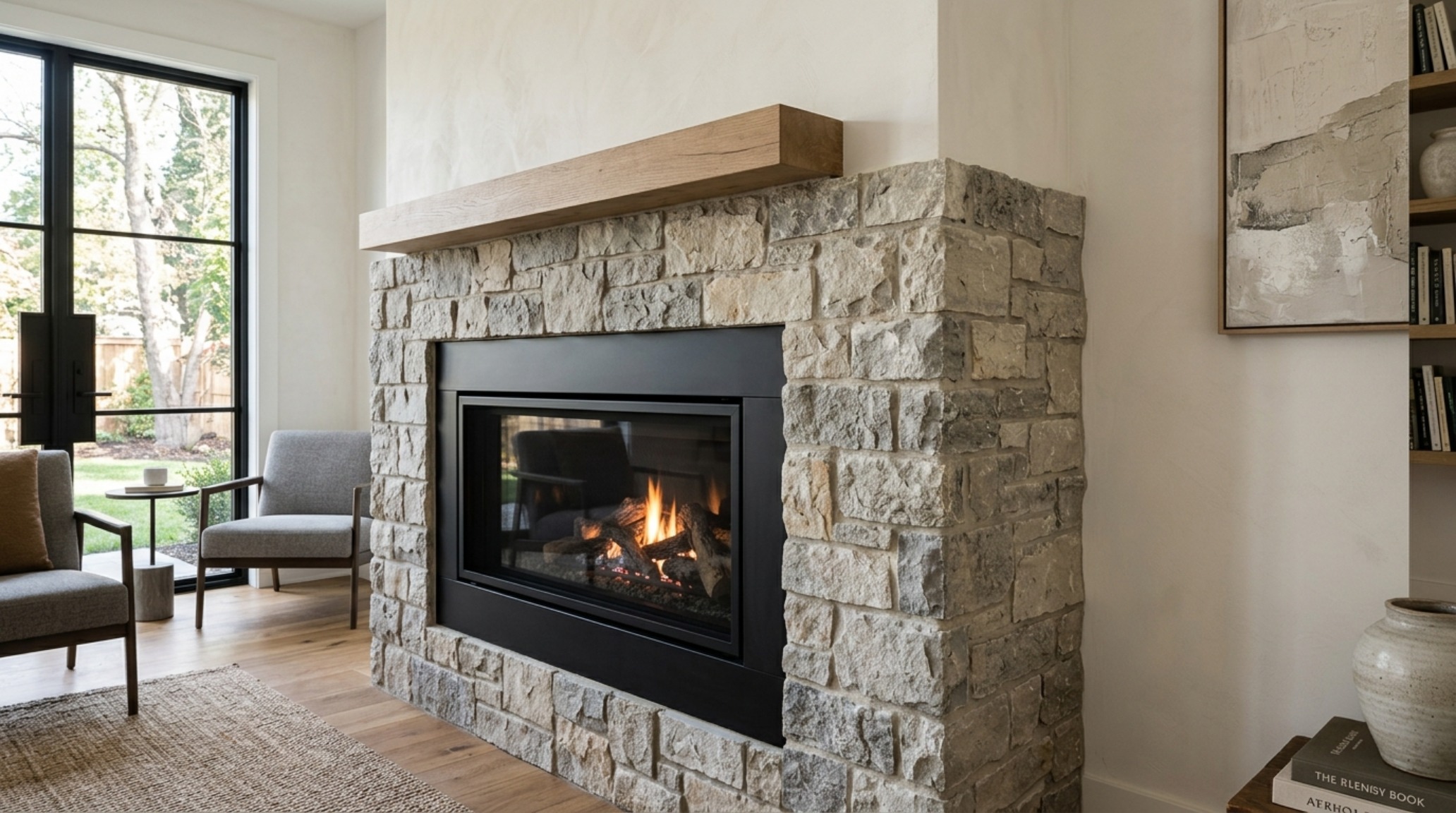
In modern renovations, weight and depth are often limiting factors. This is where thin stone veneer fireplace installation becomes a transformative tool. Modern veneers are no longer the ‘lick-and-stick’ products of the past. High-quality natural stone veneers are cut from real boulders, providing the exact same face texture and mineral complexity as full-bed stone but at a fraction of the thickness (usually 1 to 1.5 inches). This allows for a stone aesthetic in apartments or timber-frame homes where a massive masonry hearth isn’t structurally feasible.
When planning a veneer installation, the detail is in the corners. Use ‘L-shaped’ corner pieces to wrap around the fireplace breast; this hides the edge of the stone and gives the illusion of a solid, heavy block. It’s a masterstroke of architectural sleight of hand. Pair the veneer with a flush-mount linear gas fireplace for a sleek, ‘integrated’ look that bridges the gap between traditional materiality and modern technology. This combination is particularly successful in bedrooms or home offices where space is at a premium but the desire for a focal point remains high.
Spatial Specifications & Finishes Breakdown
Curated tactile palette, spatial dimensions, and atmospheric lighting index for this design scheme.
Ultimately, a fireplace is more than a structural necessity; it is a psychological sanctuary. By thoughtfully selecting stone that resonates with the broader material narrative of your home, you create a space that feels deeply rooted. Whether through the bold verticality of a floor-to-ceiling installation or the quiet elegance of a limestone mantel, these fireplace design ideas with stone invite us to slow down. They remind us that in an increasingly digital world, there is no substitute for the cool touch of stone and the flickering warmth of a well-tended fire—a design philosophy that prioritizes the soul as much as the aesthetic.
Editorial Silo • Recommended Architecture Studies
- Natural Nuance: Fireplace Design Ideas With Stone & Weaving Mediterranean Fossil Stone and Honed Textures for a Sensory-First Hearth — Archival Design Case Study
- Ergonomic Mastery: Functional & Space-Saving Hacks for Interior Decoration Ideas For Living Room — Archival Design Case Study
Sensory Space & Material Gallery
A photographic deep dive into spatial ergonomics, material balance, and authentic living atmosphere.
Curated Visual Lookbook
Design Gallery & Spatial Studies
A visual curation of architectural arrangements, lighting concepts, and material palettes featured in this space.