The Architecture of Arrival: Spatial Flow and the Formal Entry
Effective front door christmas decorating ideas must begin with an understanding of the site’s physical reality. Before a single branch of cedar is draped or a ribbon tied, one must consider the 36-inch standard walkway clearance that ensures safe passage for guests. The entry is a transitional volume, a threshold where the interior’s warmth meets the exterior’s architecture. When we approach holiday design through the lens of spatial flow, we realize that the front door isn’t just a surface to be covered; it is a structural anchor that dictates the rhythm of the entire facade. Sightline alignment is paramount; the placement of oversized planters or topiary cones must respect the primary circulation path, ensuring that the swing of the door remains unobstructed and the visual weight is distributed with mathematical precision.
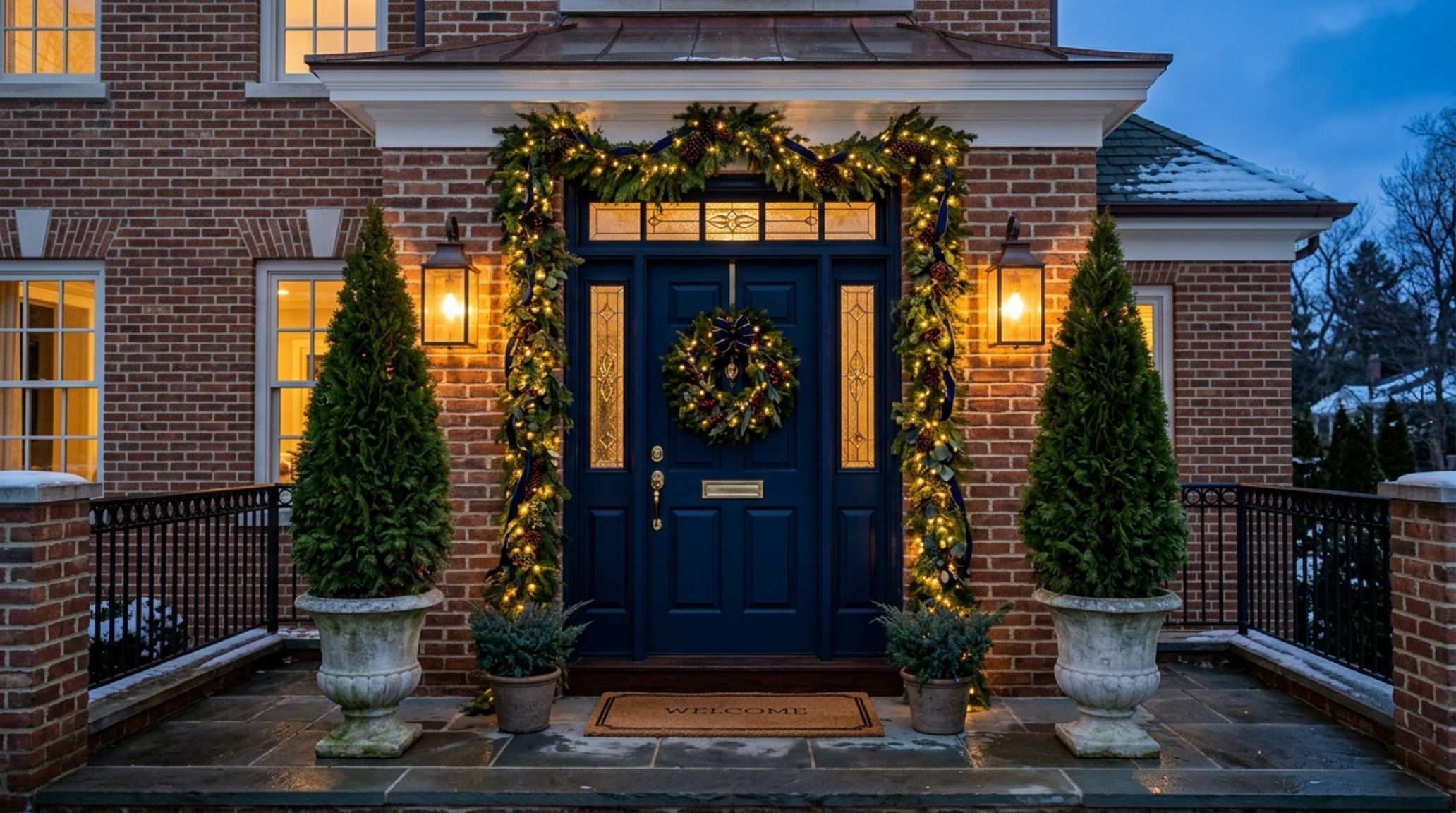
Architecture is, at its core, a study of proportions. In formal entrances, particularly those influenced by Georgian or Neoclassical styles, the golden ratio becomes our most reliable guide. A door that feels ‘swallowed’ by its decor lacks the gravity required for a high-end aesthetic. Conversely, decor that is too sparse feels like an afterthought. We look for the ‘spatial cadence’—the way the eye moves from the ground plane up to the lintel. By utilizing symmetrical flanking, we create a sense of permanence. This involves using heavy, weighted vessels—think honed travertine or aged lead—to ground the composition, providing tactile grounding that defies the ephemeral nature of seasonal trends.
Elegant Outdoor Holiday Entryway: The Geometry of Symmetry
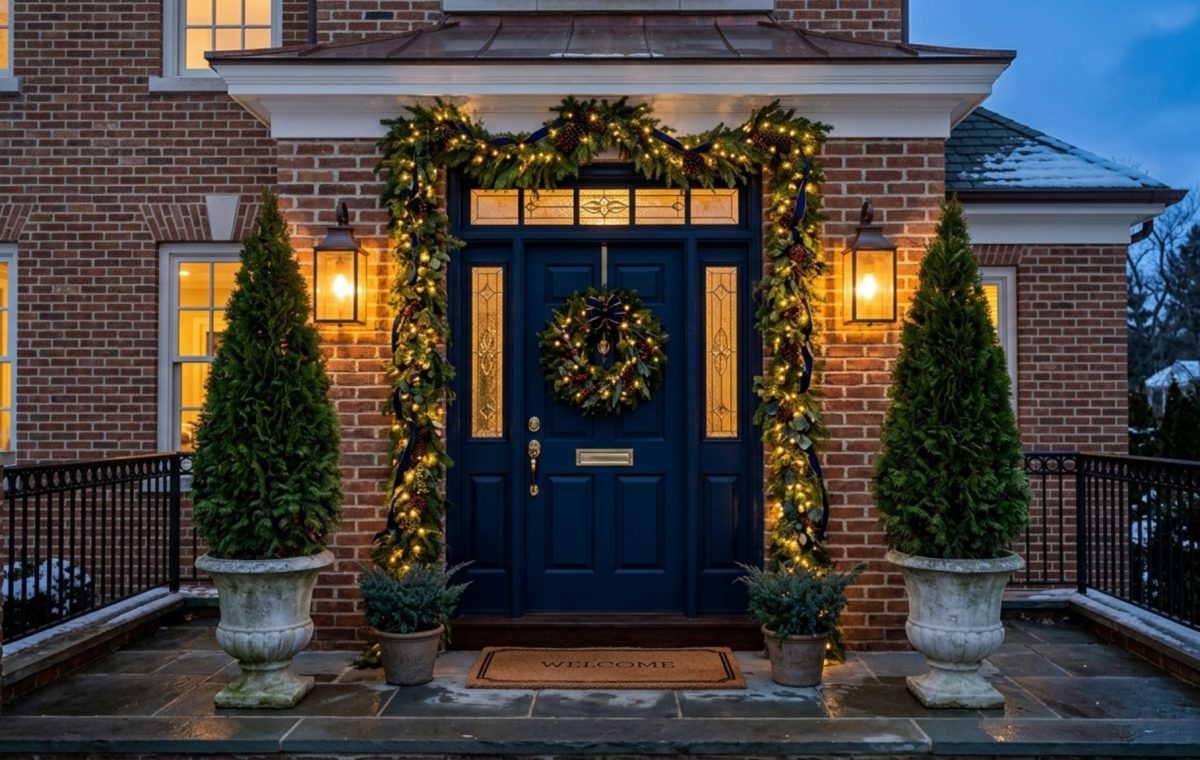
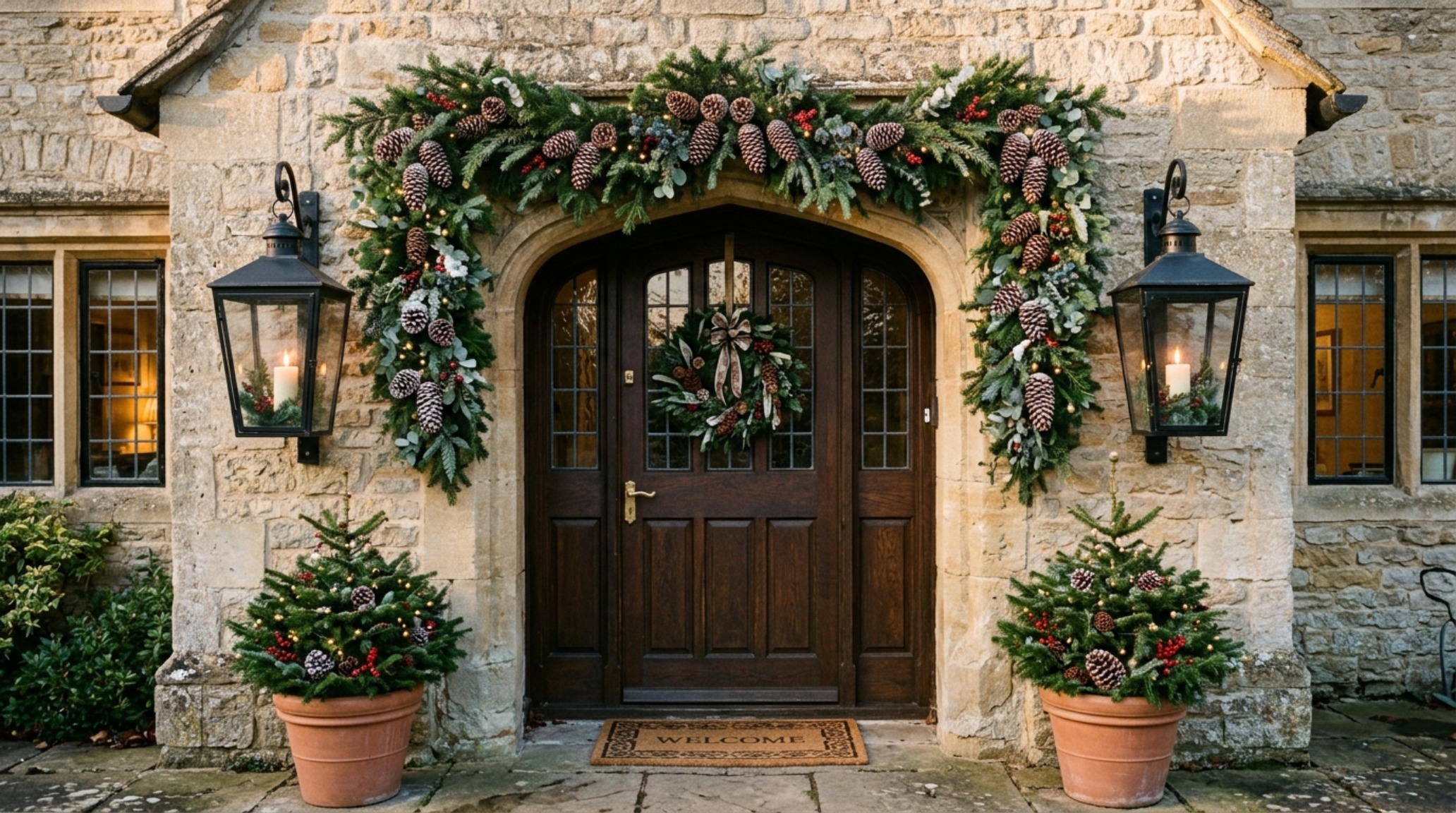
To achieve an elegant outdoor holiday entryway, one must lean into the structural rigor of the home itself. Symmetrical balance is the hallmark of formality. This is not merely about placing two identical trees on either side of the door; it is about respecting the architectural lines. If your home features a transom window or sidelights, your greenery should frame these elements rather than obscure them. We recommend architectural-grade garlands that follow the precise jamb lines of the doorframe. By using 2700K warm ambient lighting with a high CRI of 90+, you can highlight the texture of the masonry and the depth of the greenery without the synthetic blue-ish tint often found in lower-quality LEDs.
Consider the material palette. A formal entrance demands a certain weight. We often specify a mix of Noble Fir and Magnolia leaves for their structural rigidity and high-contrast undersides. When these are layered with oversized velvet ribbons in deep charcoal or midnight forest green, the result is a visual narrative that feels curated rather than cluttered. The negative space breathing room around the door handle and the lockset is essential; it allows the functional hardware—the solid brass or oil-rubbed bronze—to participate in the design rather than compete with it.
No-Drill Garland Hanging Solutions: Preservation of Architectural Integrity
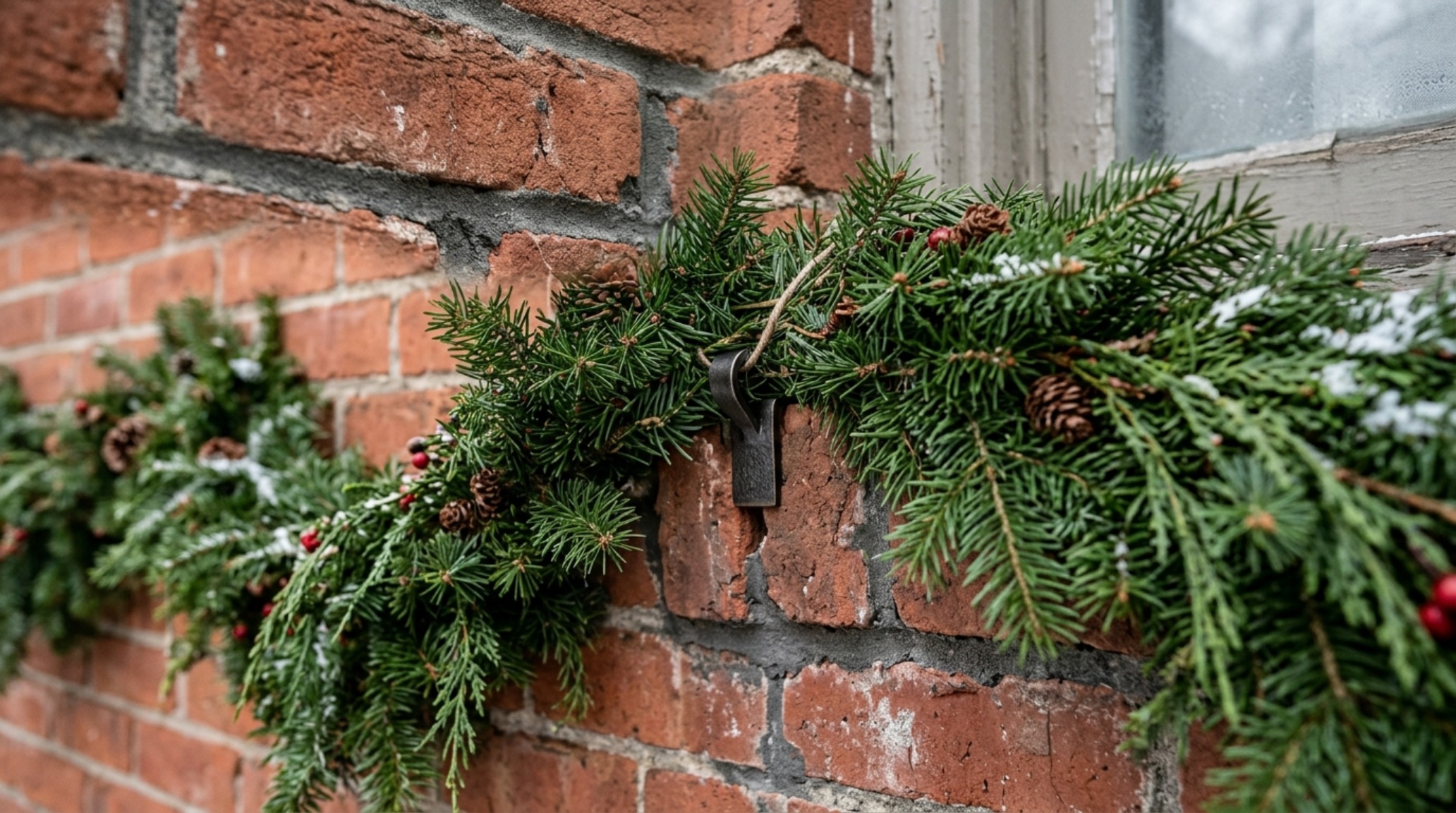
One of the greatest challenges for the discerning homeowner is the preservation of the building envelope. No-drill garland hanging solutions are not just a convenience; they are a necessity for protecting high-end millwork and historic masonry. For a formal entrance, we advocate for the use of tension-based garland hangers that distribute weight evenly across the door’s lintel. These adjustable steel frames sit securely within the door jamb, allowing for a lush, heavy drape of greenery without a single screw or nail. This technique maintains the crisp lines of the architecture while providing a robust anchor for multi-layered garlands.
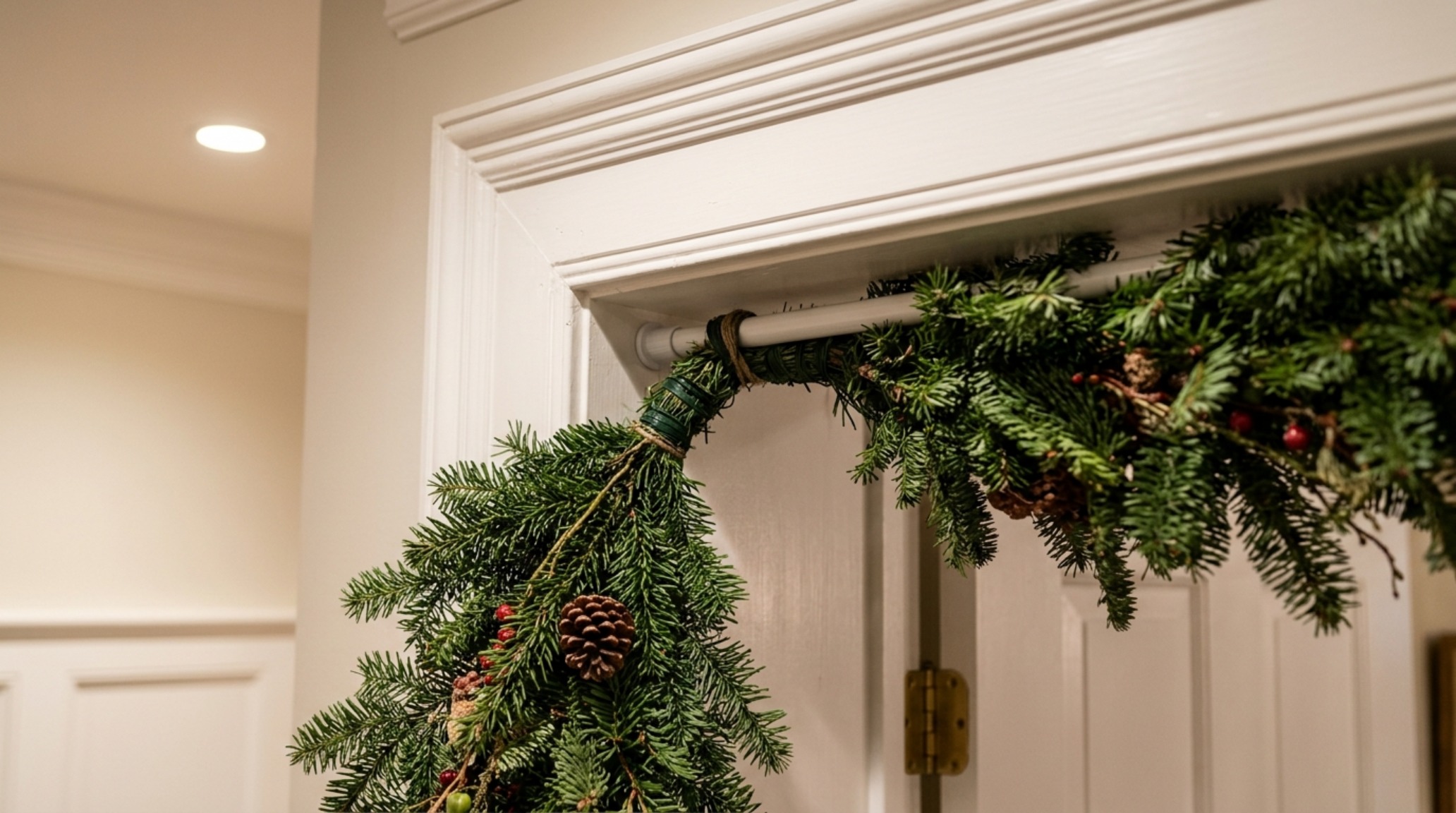
When the architecture doesn’t allow for tension rods, we turn to heavy-duty, UV-resistant adhesive hooks hidden strategically within the shadow lines of the molding. The key to a professional installation is ensuring the garland sits ‘on’ the trim, not ‘in front’ of it. This keeps the sightlines clean and prevents the decor from feeling like it is encroaching on the walkway. For those managing a 30-inch dining chair clearance equivalent on a narrow porch, keeping the greenery tight to the wall is vital for maintaining a 36-inch clear path of travel.
Minimalist Front Door Wreaths and the Power of Scale
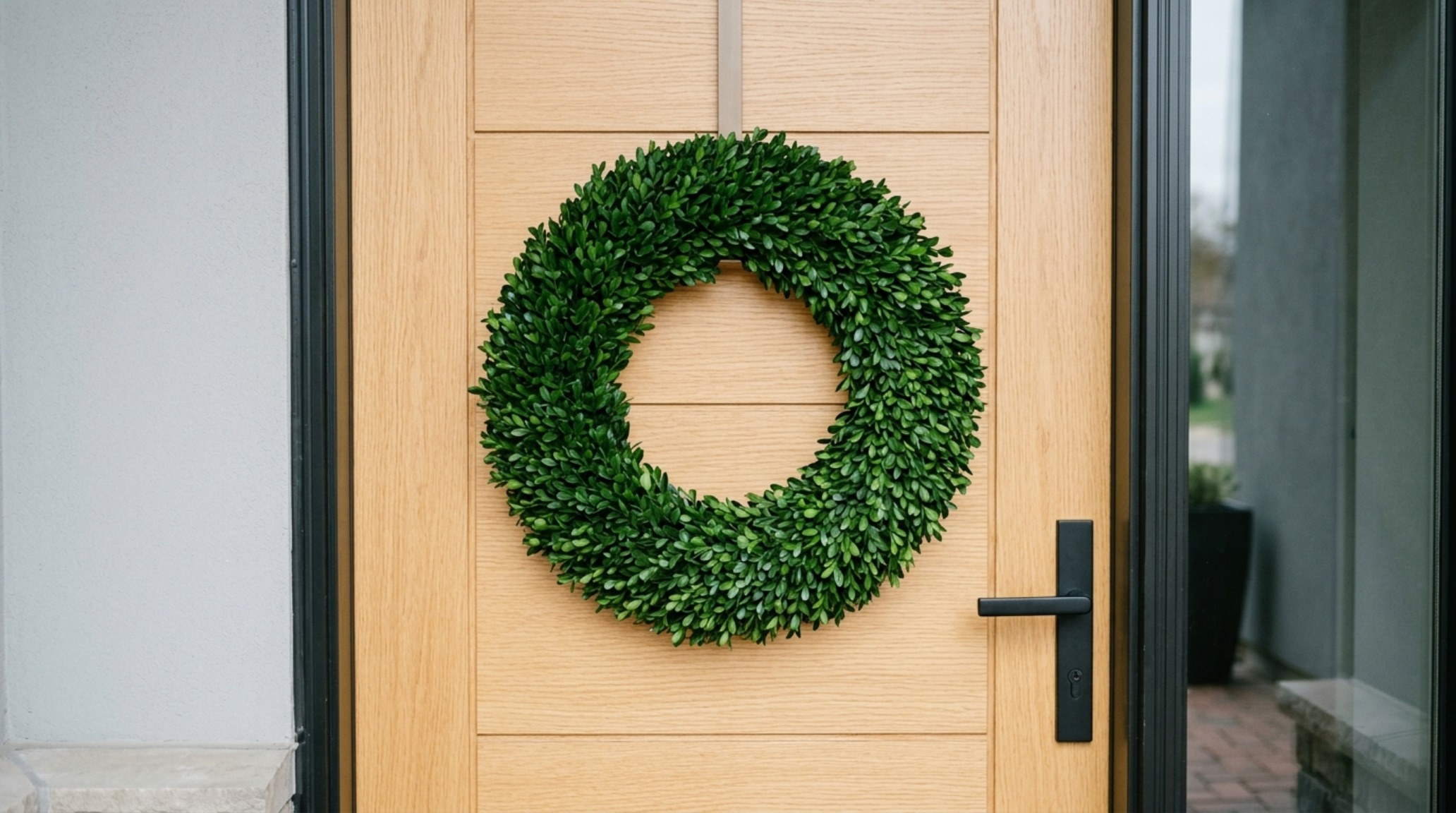
In contemporary formal design, the trend has shifted away from the ‘overstuffed’ look toward minimalist front door wreaths that emphasize form and scale. An oversized wreath—perhaps 36 to 48 inches in diameter—on a standard 36-inch door creates a bold, singular focal point. By choosing a wreath that respects the door’s original paneling, you allow the architecture to speak. We often see designers using a simple, asymmetrical arrangement of dried eucalyptus or olive branches on a thin wire frame. This creates a sense of airy lightness that contrasts beautifully with a heavy, dark-painted door in a shade like Farrow & Ball Railings or Benjamin Moore Black Tar.
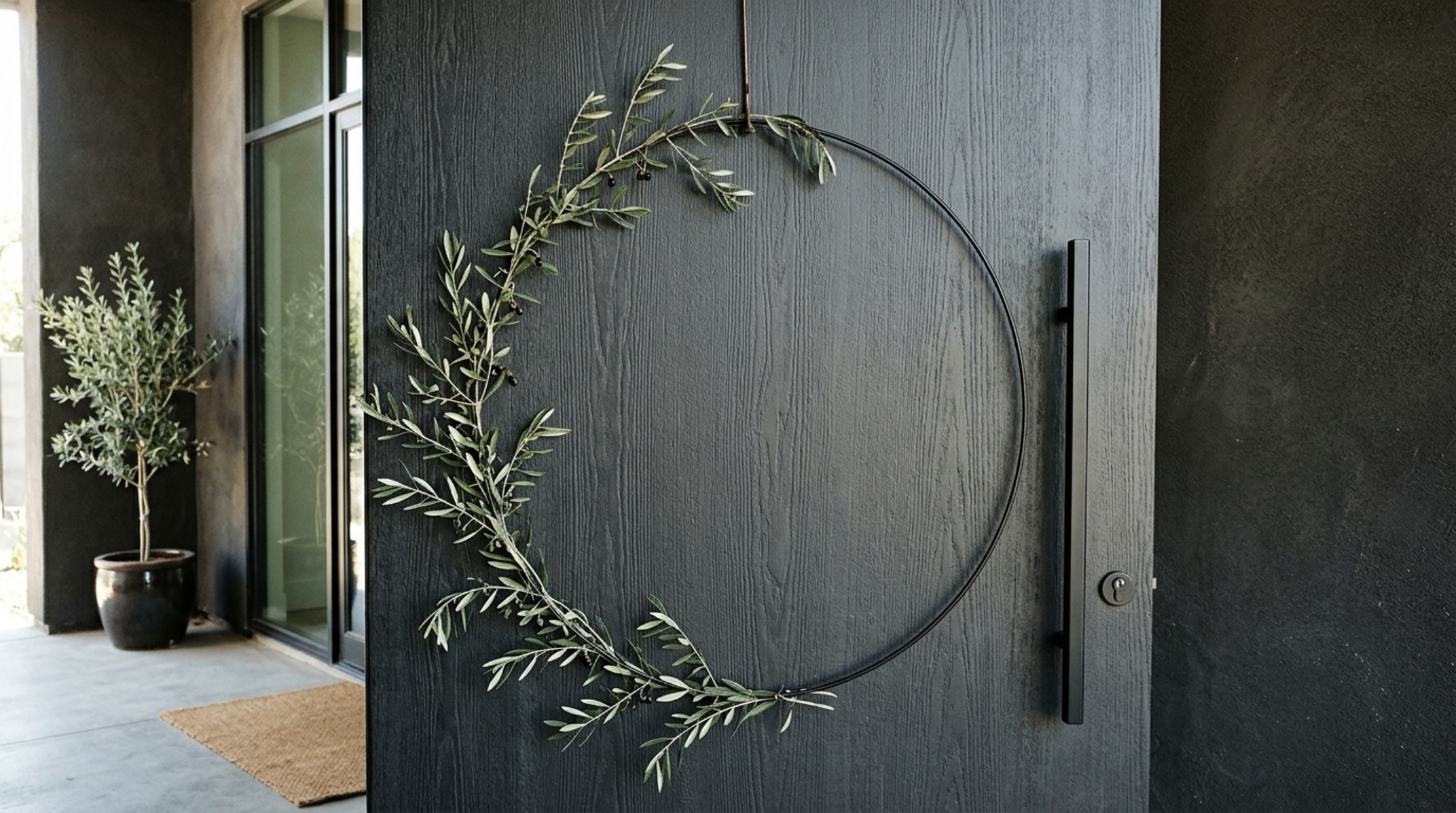
The placement of the wreath is equally critical. While the center of the upper panel is the traditional choice, hanging the wreath slightly higher can elongate the visual height of the entryway, drawing the eye upward toward the architectural crown molding. Use a long, wide silk or velvet ribbon—2 to 4 inches in width—to hang the wreath from the top of the door, creating a clean vertical line that reinforces the portal’s proportion.
Battery Operated Outdoor Holiday Lights: Mastering the Luminous Glow
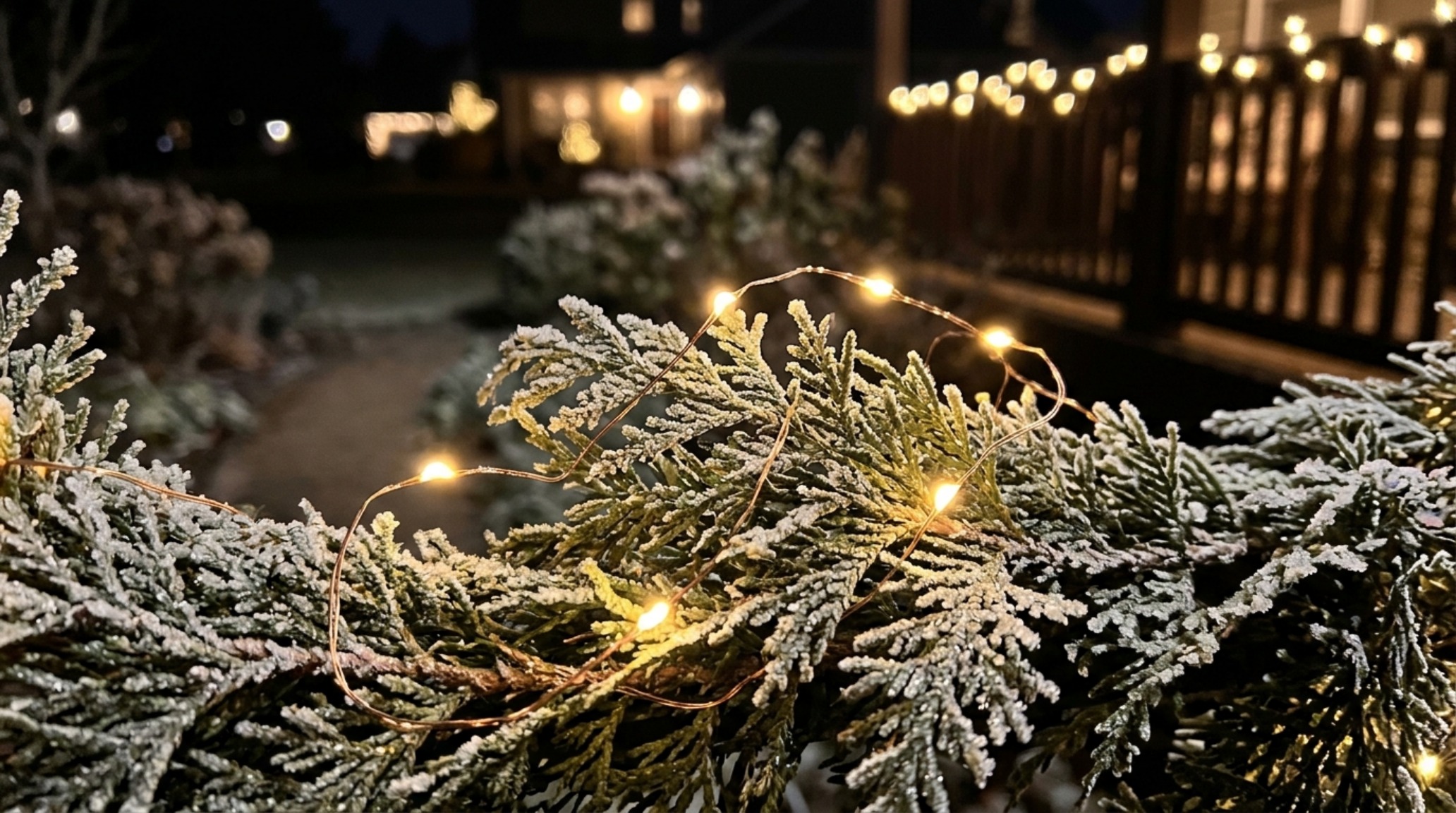
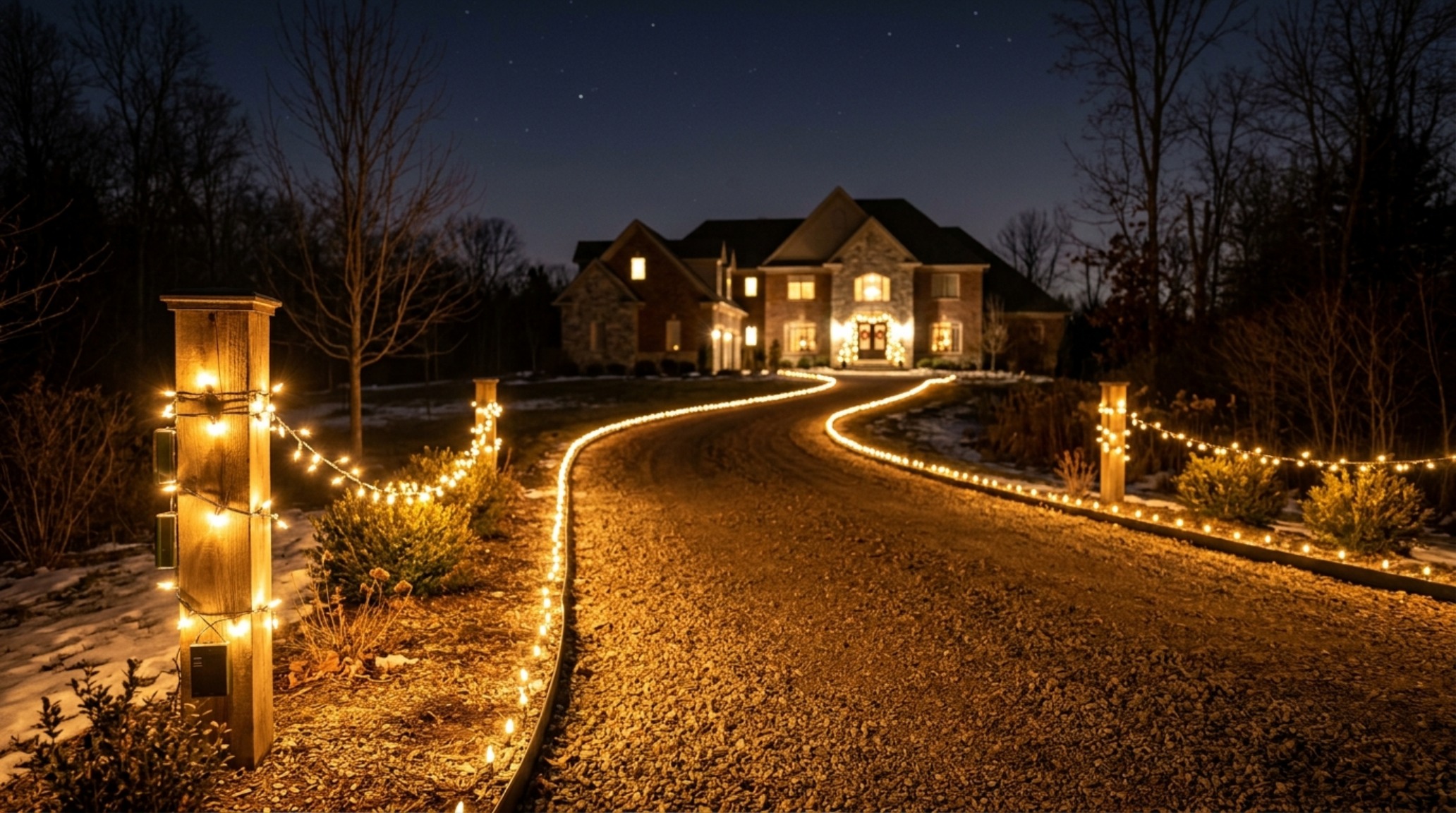
Lighting is the most emotive element of any holiday scheme. Battery operated outdoor holiday lights have evolved significantly, now offering the same warm, incandescent glow as traditional plug-ins but with the freedom of cord-free placement. This is essential for formal entrances where trailing orange extension cords would shatter the curated aesthetic. We look for ‘micro-fairy’ lights on silver or copper wire that can be woven deep into the foliage, creating a ‘grazing’ effect that highlights the 3-D texture of the needles.
Technically, you want to aim for a 2700K color temperature. This mimics the warmth of a candle flame and complements the natural stone or brick of the home. High-quality battery packs with integrated timers allow for a ‘set it and forget it’ approach, ensuring the home glows with a welcoming 3000K task lighting equivalent at the key entry point without manual intervention. This layer of light should be subtle; the goal is to define the form of the greenery, not to overwhelm the streetscape with glare.
Small Porch Christmas Styling: Maximizing Compressed Volumes
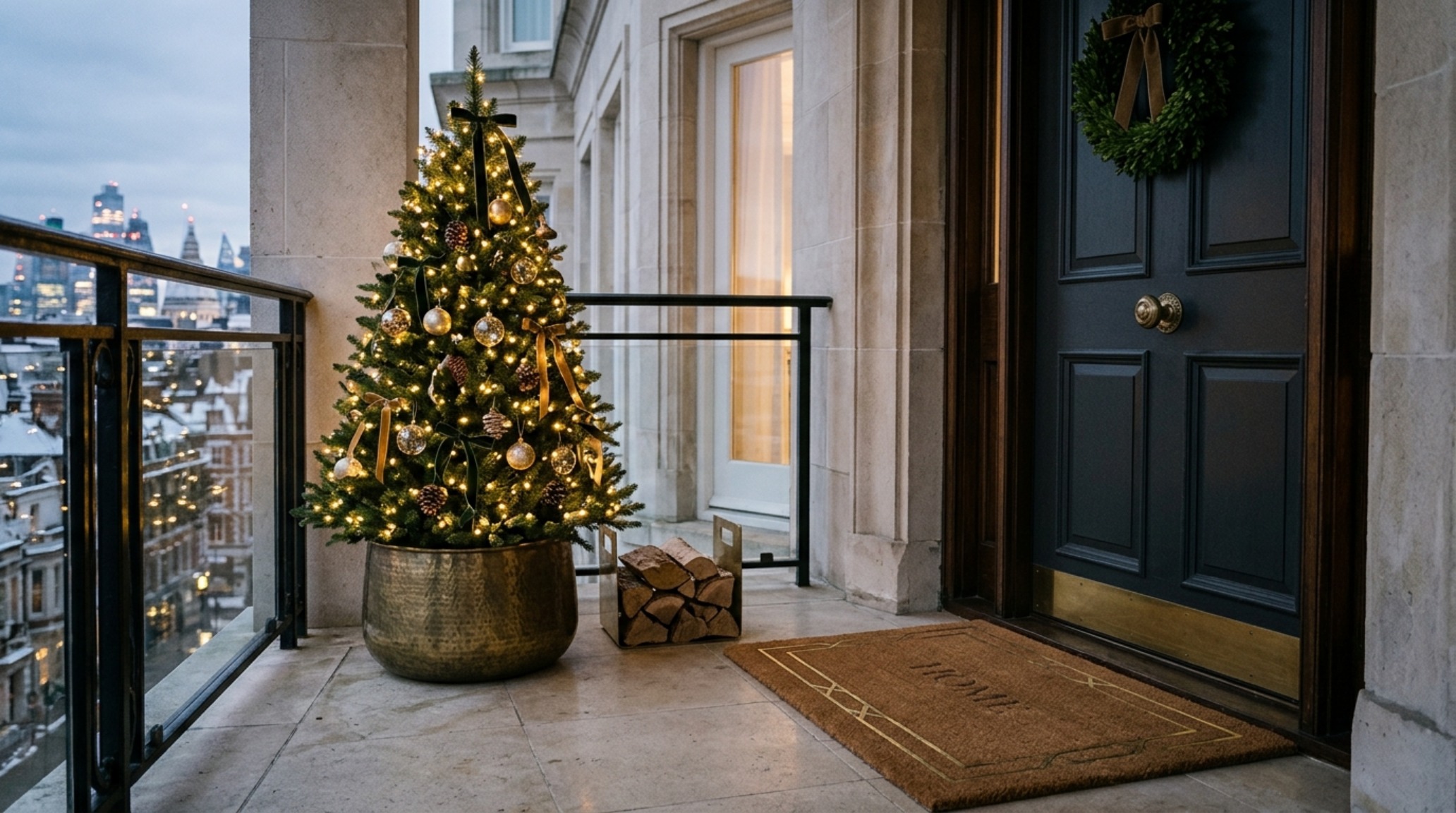
Even the most grand homes often feature compressed entry points. Small porch christmas styling requires a disciplined approach to verticality. When floor space is at a premium—perhaps less than 48 inches of depth—we move the decor off the ground and onto the vertical planes. Instead of wide planters, consider tall, slender obelisks or thin topiary spirals that occupy a minimal footprint while providing significant height. This maintains the 36-inch primary circulation path necessary for a functional entryway.
Utilize the ‘rule of three’ in varying heights to create interest without bulk. A tall birch pole arrangement in a slender bucket, a medium-sized lantern, and a small cluster of pinecones create a rhythmic vignette that feels complete but doesn’t obstruct the door’s swing. Mirrors can also be used strategically on a small porch to reflect the 2700K ambient lighting, making the space feel more expansive than its physical dimensions suggest.
Modern Farmhouse Christmas Porch: Textural Contrast and Neutral Palettes
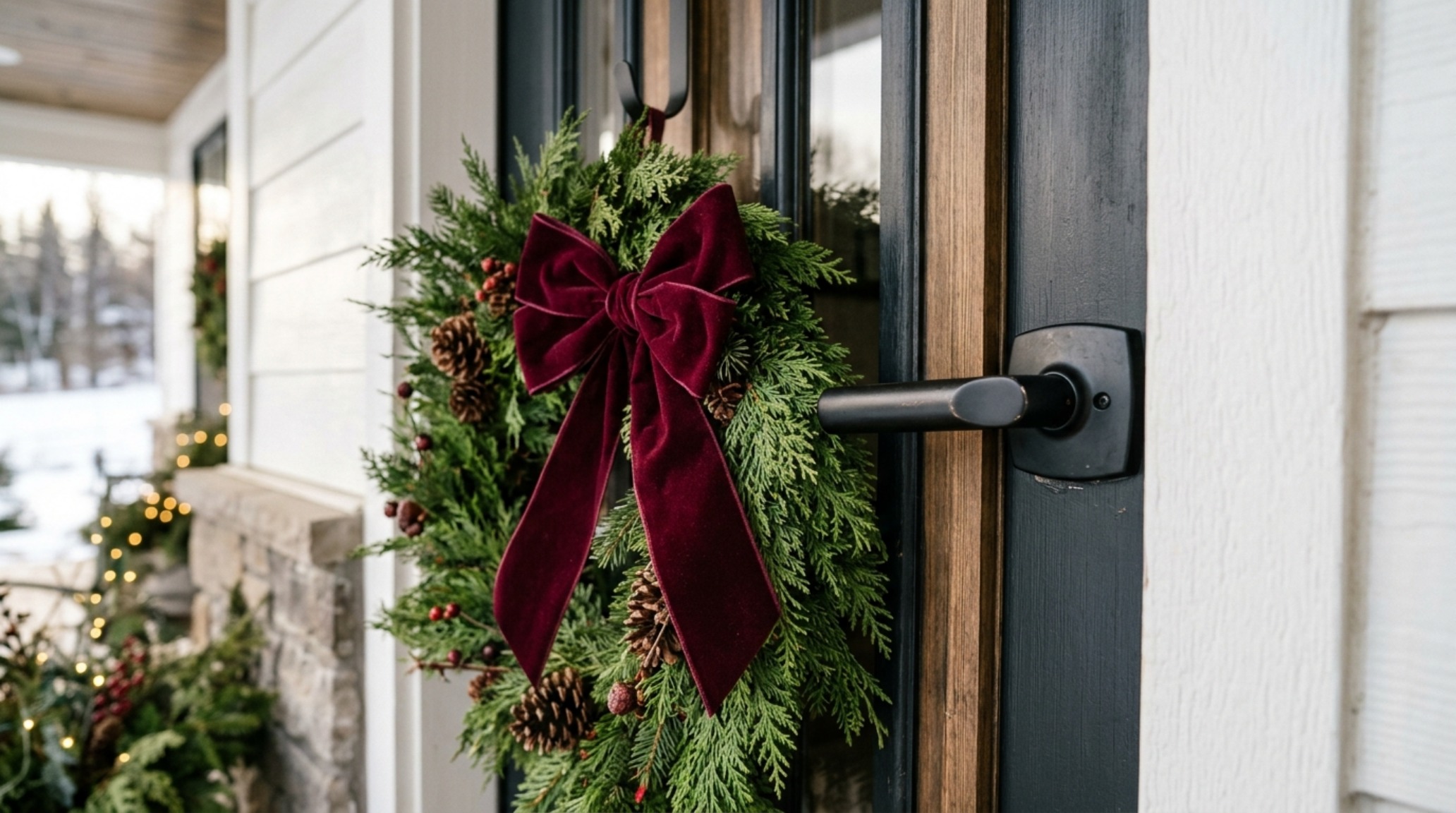
The modern farmhouse christmas porch aesthetic relies heavily on the juxtaposition of rustic textures and clean, modern lines. This style typically features a high-contrast palette—think stark white siding against black window frames (like Benjamin Moore Black Beauty). To decorate this space formally, we lean into monochromatic greenery—heavy on the cedar and pine—interspersed with natural wood elements and matte black lanterns. The texture of the greenery acts as the primary ‘color’, with the different shades of green providing depth against the neutral backdrop.
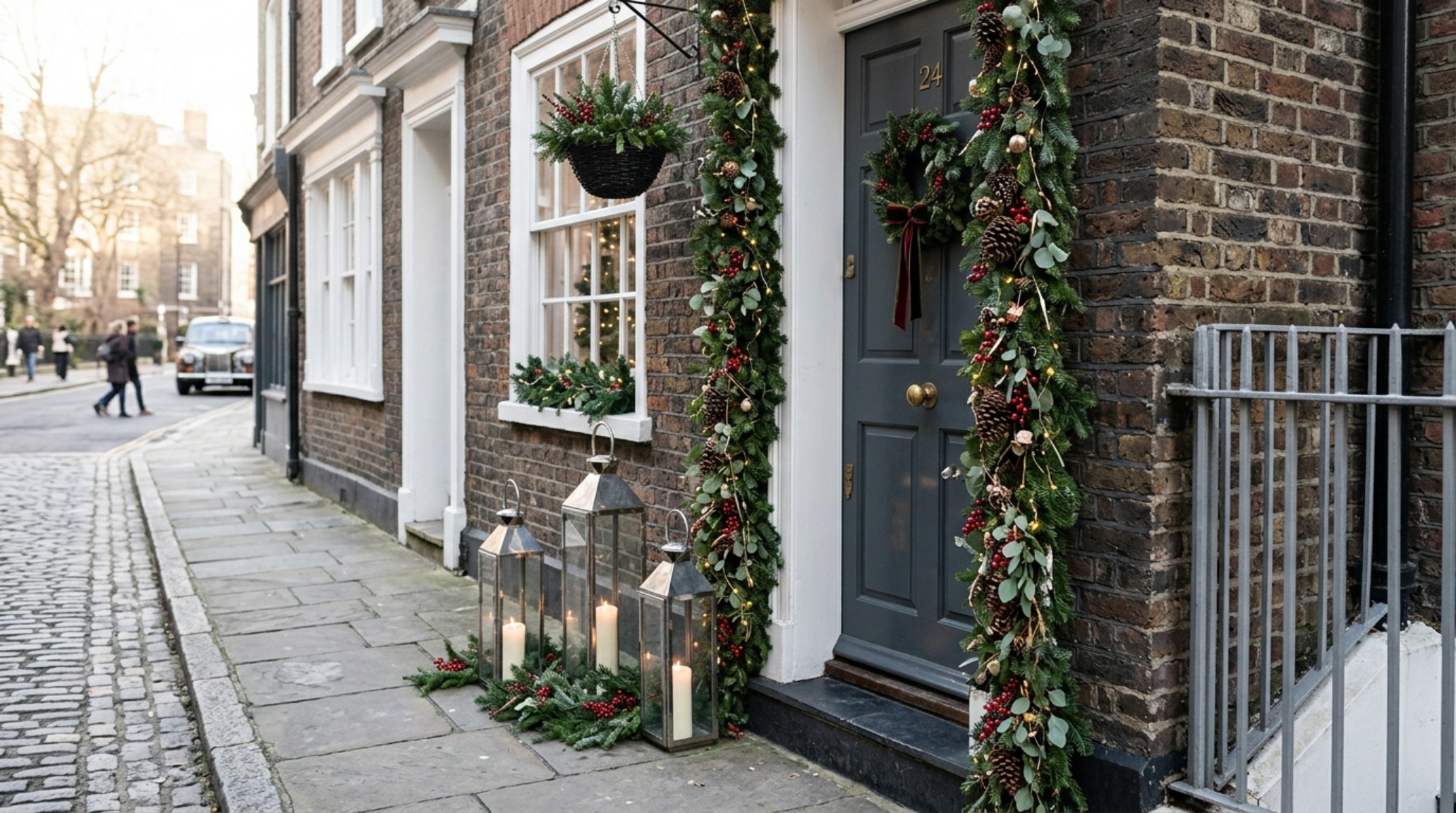
To avoid the ‘country’ cliché, keep the lines sharp. Instead of floppy bows, use structured, architectural ribbons. Instead of multi-colored lights, stick to a uniform warm white. The introduction of galvanized steel or raw wood textures should be balanced with the precision of the home’s architecture. This is where the ‘spatial cadence’ is most apparent; the repetition of black lanterns along a walkway creates a visual path that leads the guest directly to the focal point of the front door.
Architectural Details & Spatial Cadence: A Visual Anthology
In this curated visual chronicle, we examine how material choices influence the perception of space. The transition from the cold exterior to the warm interior is bridged by the tactile qualities of the entryway. Whether it is the roughness of a coir mat or the smoothness of a lacquered door, every element plays a role in the sensory experience of arrival. The following studies highlight the importance of ‘shadow play’—how the directional lighting hits the relief of the wreath and the folds of the garland to create a dynamic, evolving facade throughout the evening hours.
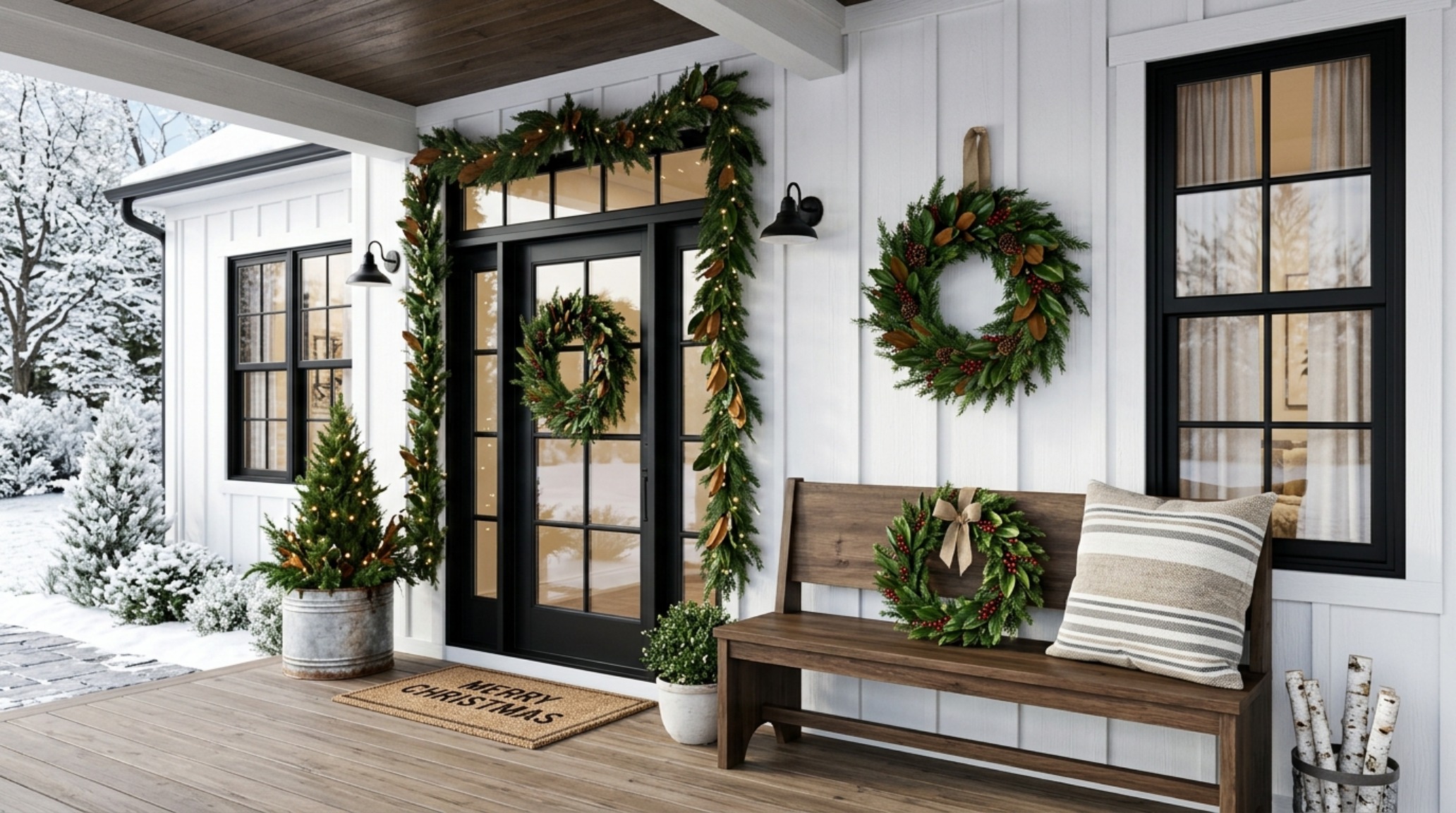
We see a return to ‘slow design’ in holiday decor—investing in high-quality, real-touch faux greenery that can be reused for a decade, or sourcing fresh boughs from local sustainable farms. The sustainability of materials is now as important as their aesthetic appeal. The use of real brass bells, heavy velvet, and authentic forest floor elements like oversized sugar pinecones adds a layer of ‘tactile grounding’ that synthetic, mass-produced decor simply cannot replicate.
Finishes, Material Specs & Palette Details
Detailed specifications outlining core tactile materials, lighting temperature, and room clearances.
Ultimately, the most successful front door christmas decorating ideas are those that treat the holiday season not as a departure from the home’s identity, but as a heightened expression of it. By focusing on the portal of proportion—the careful balance of light, scale, and material—we create an entrance that feels both timeless and celebratory. It is a reflection of the architecture’s inherent strength, draped in the seasonal ephemera of nature, resulting in a threshold that truly welcomes the soul before the door even opens.
Editorial Silo • Recommended Architecture Studies
- Beds That Save Space: The Architectural Blueprint & Spatial Flow Guide — Archival Design Case Study
- The Closed-Loop Life: Mastering the Functional Ergonomics of Self Sustaining Homes — Archival Design Case Study
Spatial Form & Lighting Chronicle
A curated visual breakdown of structural layout, layered lighting, and material compositions.
Curated Visual Lookbook
Design Gallery & Spatial Studies
A visual curation of architectural arrangements, lighting concepts, and material palettes featured in this space.