The Curse of the Tangled Tether
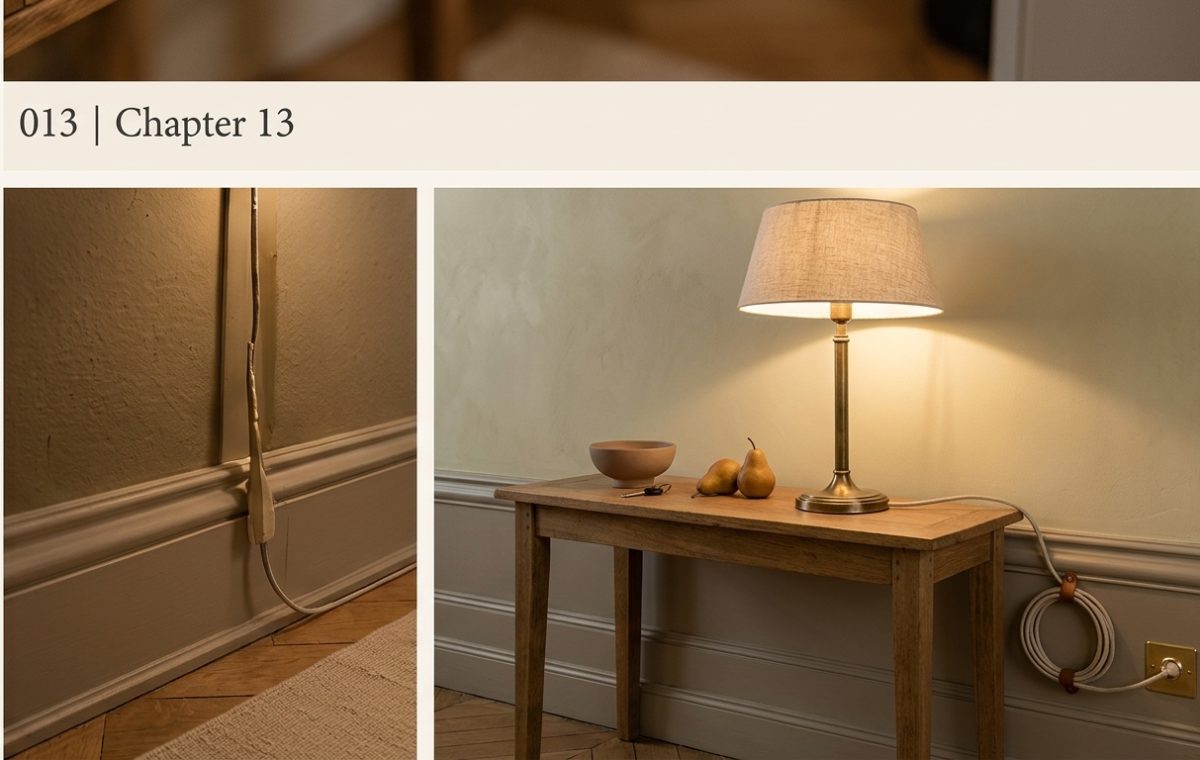
Most people treat electrical cords like a shameful secret. They stuff them behind heavy oak sideboards or tape them haphazardly to the back of a desk. It never works. Eventually, the dust bunnies congregate, and the visual clutter bleeds back into the room. Look at the image provided. There is a deliberate choice made here. The cord isn’t hidden; it’s managed. Using a leather clip to secure a coil against the baseboard turns a utility into a detail. This is the shift from hiding to integrating.
Stop Hiding, Start Organizing
Aesthetic cable storage isn’t always about making things invisible. Sometimes, it’s about making them intentional. When you have high-end interior design lighting, the cable is part of the package. If you can’t run it through the wall—which is a messy, expensive headache—you have to embrace the line. A taut, straight line following the architecture of your trim is far less distracting than a sagging loop of black plastic. Use clips that match your hardware or your furniture’s material. Leather, brass, or even painted wood can bridge the gap between a tech necessity and a design choice.
The Logic of the Coil
We’ve all seen the plastic boxes that look like oversized bread bins. They’re bulky. They take up floor space. Instead, consider lamp cord solutions that utilize the existing lines of your room. In the photo, the cord follows the vertical line of the table leg and then transitions into a neat coil. It’s practical. If you need to move the lamp, you just unclip it. There’s no wrestling with a tangled nest under the furniture. It’s about accessibility as much as it is about looks. Living room organization shouldn’t feel like a permanent construction project.
Small details like cord management define the boundary between a house and a home.
Materials Matter More Than Tech
Plastic zip ties are for server rooms, not living rooms. If you want hidden cables to actually look good when they peek out, upgrade your fasteners. Velcro straps in neutral tones or bespoke leather loops elevate the entire vignette. It shows you care about the last inch of your design. It’s the difference between a house that looks finished and one that looks like a work in progress. Have you ever noticed how a single stray wire can pull your eye away from a beautiful piece of art? That’s the power of visual friction.
Try looking at your most problematic corner today. Don’t reach for the duct tape. Instead, think about how that wire could follow the natural architecture of the room. Could a simple brass hook or a discreet leather strap make it look like it belongs there? It’s often the smallest adjustments that finally make a space feel calm.
Editorial Lookbook & Photo Collection