The Invisible Geometry of the Living Room
The way afternoon light filters through a sheer linen curtain, raking across the weave of a deep-seated sofa, reveals the hidden architectural requirements of a home. When we consider the placement of decorative pillows for couches, we aren’t merely accessorizing; we are performing an act of spatial engineering. Most living rooms suffer from a scale disconnect where the textiles feel like an afterthought, floating precariously on the surface of the furniture rather than grounding it. To understand why an arrangement fails, we must look past the color palette and examine the structural volume of the pieces themselves.
We often treat soft goods as the ‘jewelry’ of the room, but in the most successful interiors—the ones that feel effortlessly balanced in an Architectural Digest spread—pillows function as transitional architecture. They bridge the gap between the hard lines of a sofa’s frame and the human form. Without a rigorous spatial blueprint, even the most expensive textiles will look cluttered or, worse, inconsequential. Achieving that elusive designer look requires a departure from the generic and a move toward what I call ‘Pillow Math’—a system of graduated sizing and structural anchoring that respects the sofa’s silhouette.
The 2-2-1 Pillow Rule: Mathematical Precision in Comfort
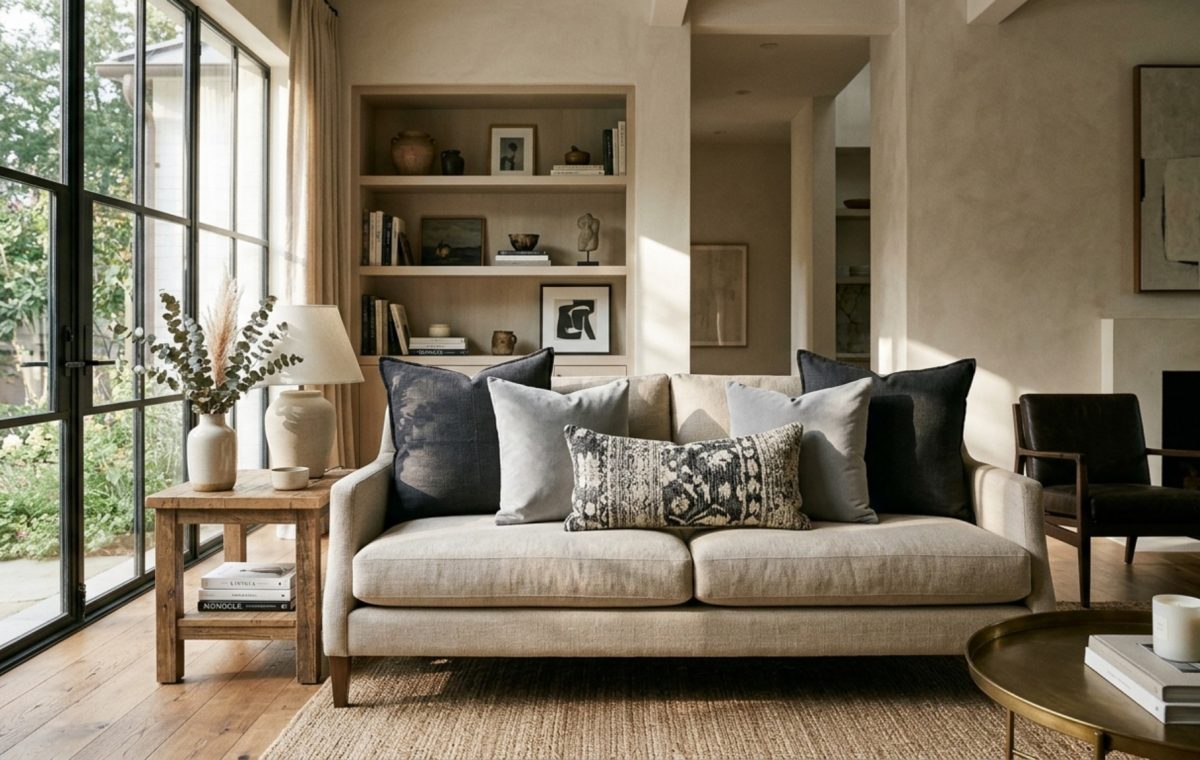
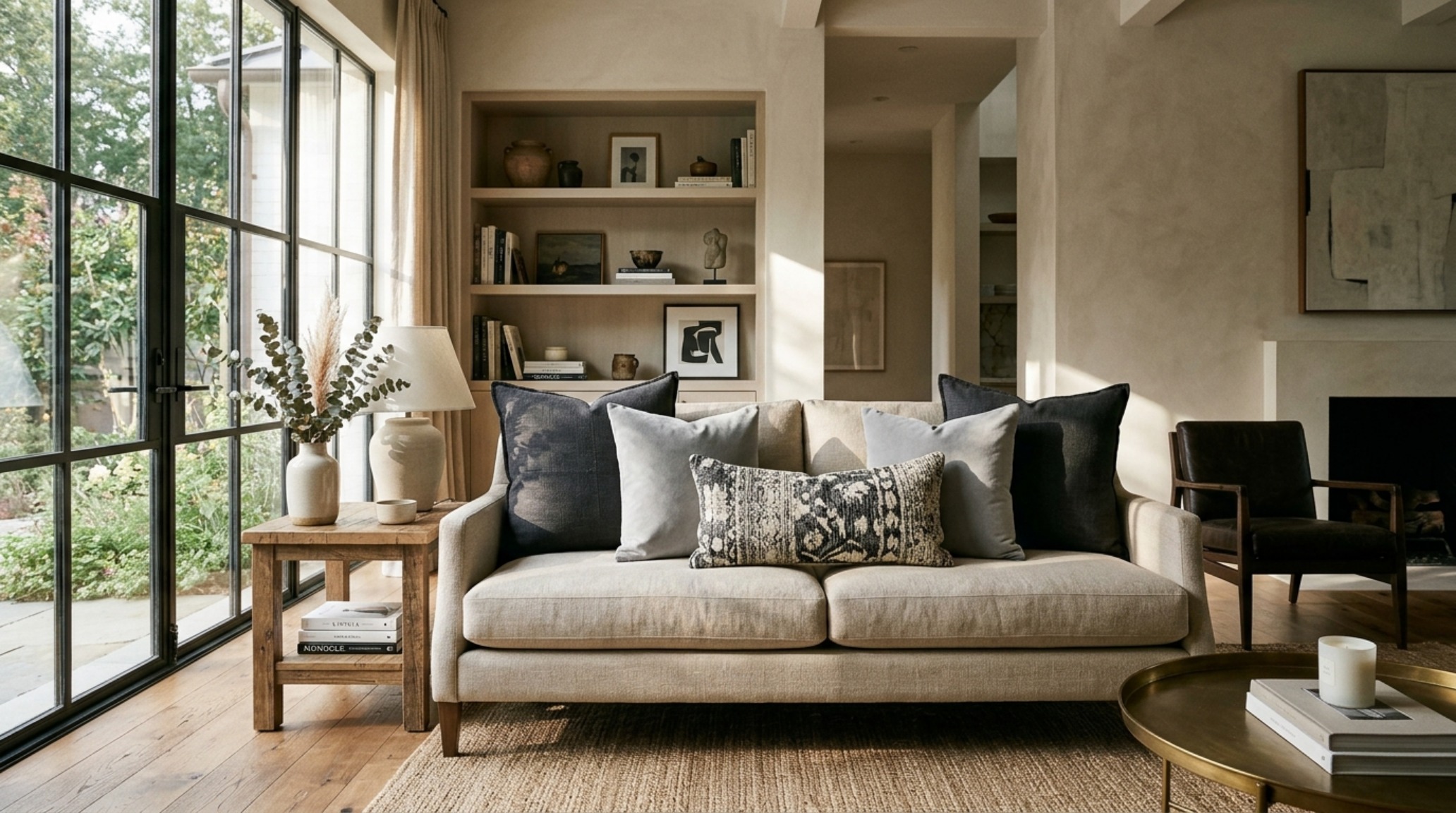
Designers often lean on the 2-2-1 pillow rule to establish immediate visual rhythm. This isn’t just a stylistic preference; it is a response to the human eye’s desire for symmetry balanced by a focal point. On a standard three-seater sofa, the formula involves two large pillows in the back corners, two slightly smaller ones overlapping them, and one singular ‘accent’ or lumbar in the center. This creates a mountain-peak silhouette that leads the eye toward the middle of the seating area, providing a sense of invitation and enclosure.
The secret to making the 2-2-1 arrangement feel modern rather than stiff lies in the ‘Corner Anchor.’ If your couch is 84 inches or longer, an 18-inch pillow—the retail standard—will look like a postage stamp. To command the space, you must start with a 24-inch or 22-inch foundation. These large decorative pillows for couches provide the necessary verticality to compete with the height of the sofa back, ensuring that the textiles don’t get ‘swallowed’ by the upholstery. By grounding the corners with significant volume, you create a framework where smaller, more intricate patterns can exist without feeling chaotic.
Large Sofa Pillows: Establishing Structural Foundation
When we talk about large sofa pillows, we are discussing the primary anchors of the spatial layout. These foundations should ideally be rendered in solid or ‘quiet’ textures—think a heavy-weight Belgian linen or a subtle bouclé. They act as a backdrop for the narrative you are about to build. In a room painted in a soft neutral like Farrow & Ball’s Pointing, these foundational pieces should provide enough contrast to define the sofa’s edges without breaking the visual flow of the room.
Consider the height of your sofa back. A low-slung, contemporary Italian-style sofa requires a different approach than a traditional English roll arm. For the low-back silhouette, your large anchors should sit just an inch or two above the frame, creating a soft, continuous line. This height consistency prevents the arrangement from looking jagged and maintains the architectural integrity of the furniture’s profile. When the scale is correct, the pillows look like they grew out of the sofa rather than being tossed upon it.
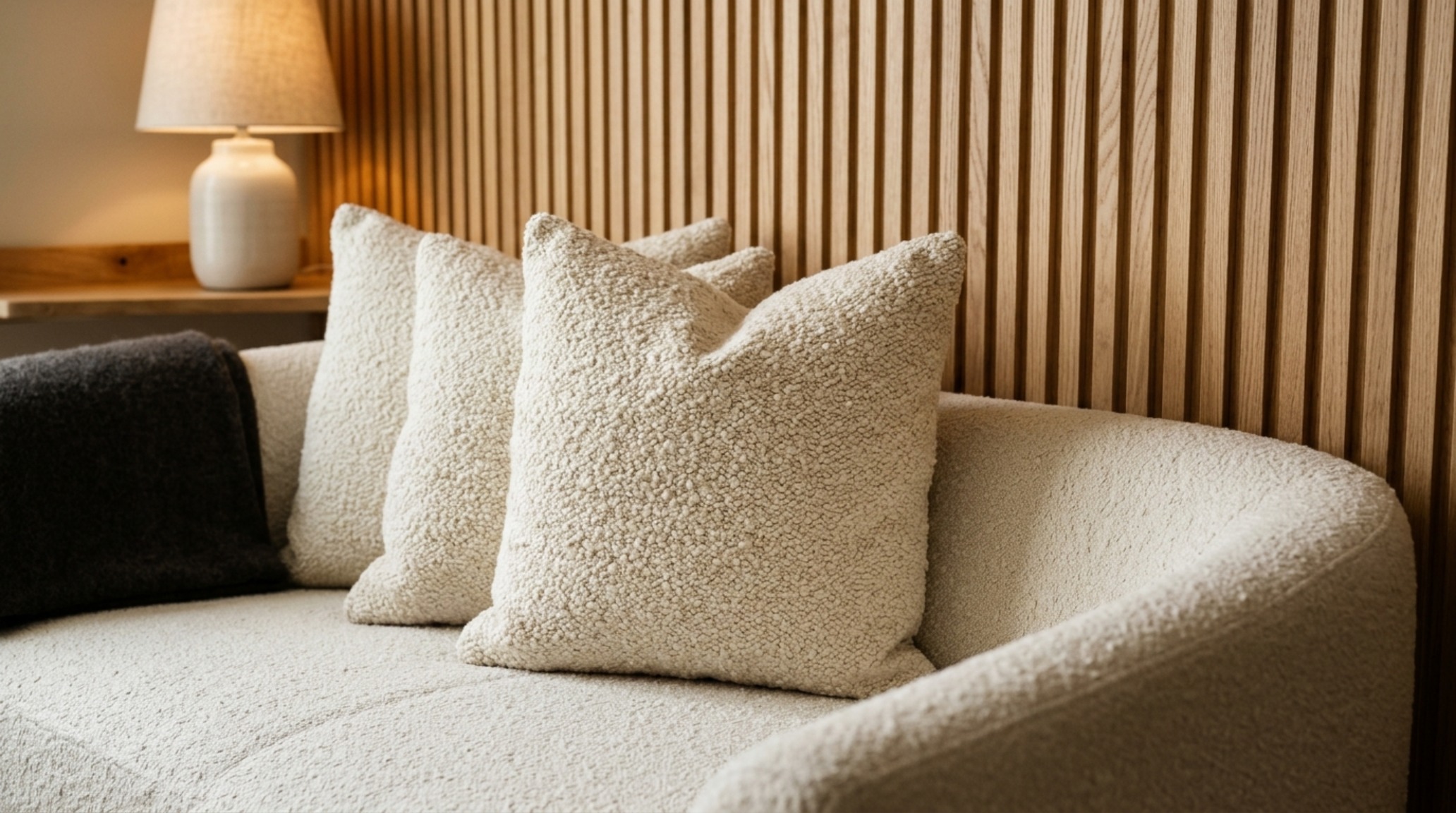
Beyond the visual, there is the tactile reality of depth. A deep sofa (40 inches or more) practically begs for these larger foundations to provide ergonomic support. Without them, the user is left floating in a sea of upholstery. By utilizing 24-inch inserts, you effectively ‘shorten’ the seat depth for conversation while allowing the user to lean back into a cloud of well-distributed weight. This is where decorative pillows for couches transition from aesthetic choices to functional necessities.
Tactile Narratives: Mixing Patterns on Sofa with Intentionality
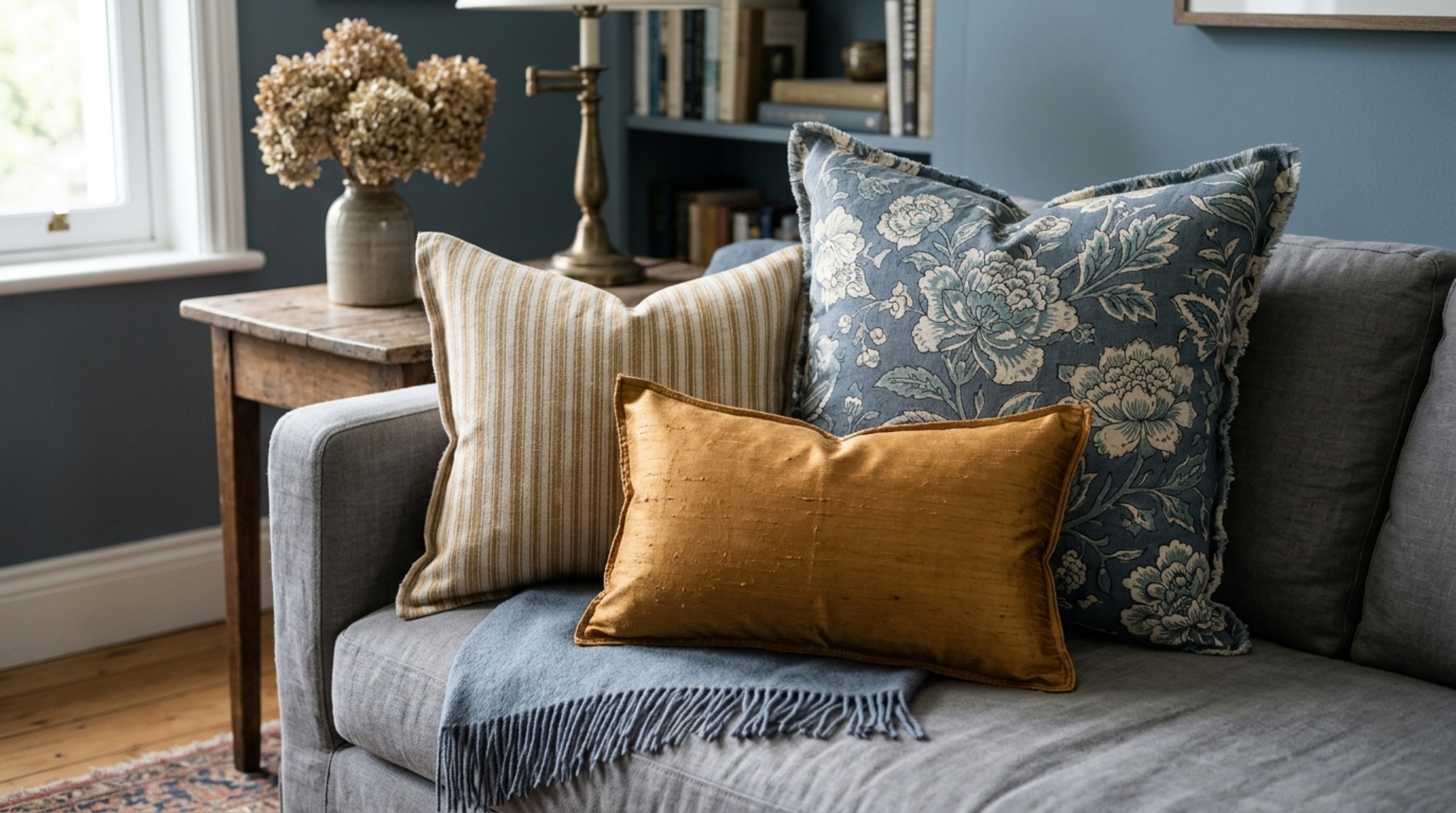
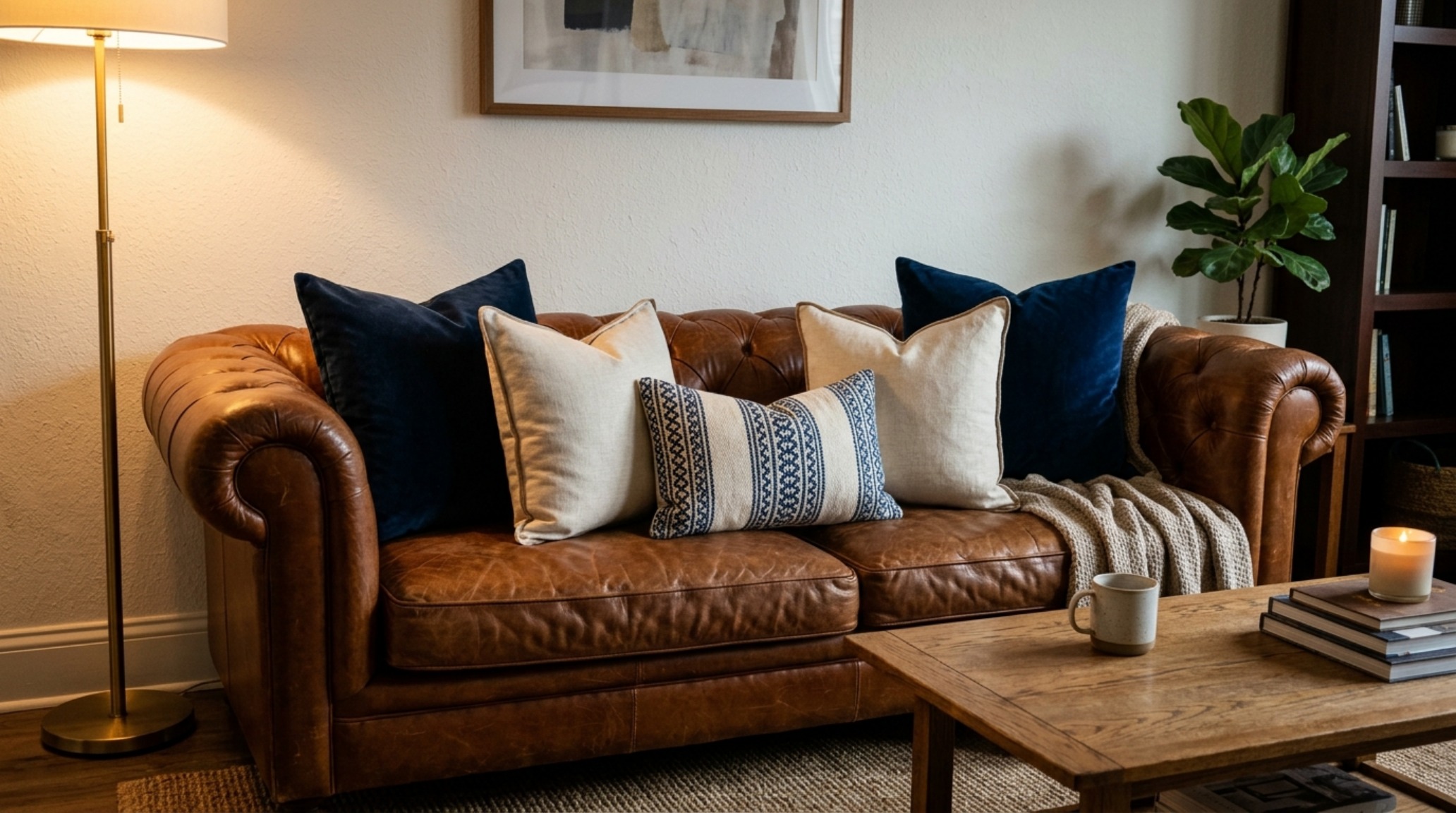
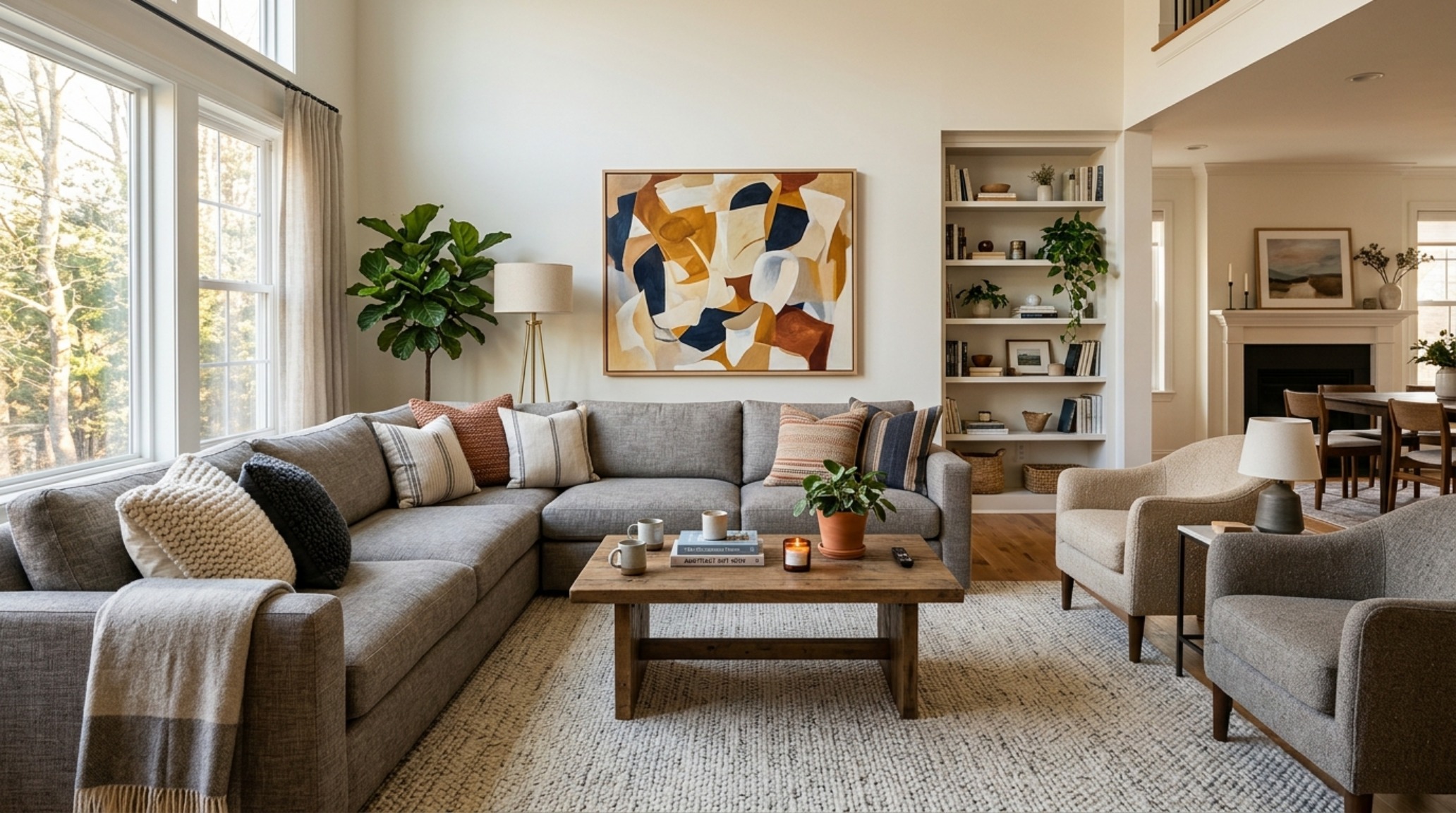
Mixing patterns on sofa surfaces is where most homeowners feel the most friction, yet it is the most potent tool for adding personality. The key is to vary the scale of the motifs. If your foundation pillow features a large-scale organic floral, your secondary layer should shift to a medium-scale geometric or a classic ticking stripe. The third layer, often the lumbar, is the place for a ‘hero’ textile—perhaps a vintage kilim fragment or a hand-embroidered silk.
To maintain cohesion, find a ‘thread of truth’—a single color that persists through every piece. If you are working with a palette of muted ochre and slate, ensure that even the busiest pattern contains a hint of one of those tones. This creates a visual bridge that allows disparate styles to coexist. I often suggest looking at the room’s fixed elements for inspiration; a rug with a subtle blue fleck or a piece of art with a bold charcoal stroke can dictate the pattern language of your decorative pillows for couches. The goal is a curated look that feels gathered over time, not a ‘set’ purchased from a single showroom floor.
The Technical Core: Best Pillow Inserts for Couches
We must discuss what lies beneath the surface, because the best pillow inserts for couches are the difference between a high-end editorial look and a flat, lifeless arrangement. Synthetic polyester fill is the enemy of architectural styling; it lacks ‘memory’ and loft, resulting in stiff shapes that resist the sofa’s contours. For that iconic ‘karate chop’ look—the soft indentation at the top that signifies luxury—you must use a high-quality down or down-alternative blend.
My professional standard is a 90/10 feather-down mix. The feathers provide the structure and ‘spring back,’ while the down provides the softness. For those with allergies, look for a heavy-weight gel-fiber insert that mimics the weight of down. Crucially, always size up your insert. If you have a 22-inch cover, use a 24-inch insert. This extra volume fills out the corners, preventing the dreaded ‘dog-ear’ look where the fabric hangs limp at the edges. When the insert is properly scaled, decorative pillows for couches maintain their plumpness and structural integrity even after an evening of use.
Corner Dynamics: How to Style Pillows on a Sectional
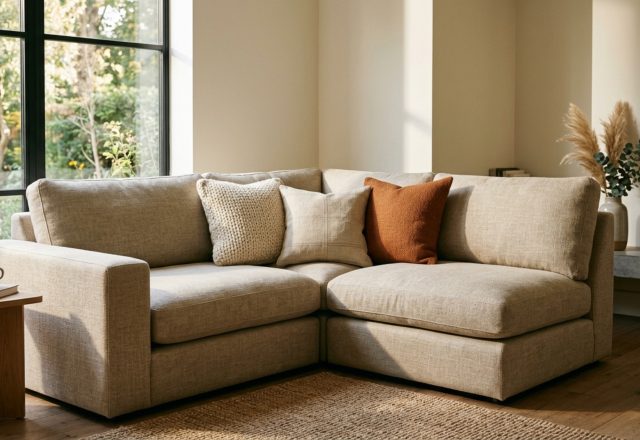
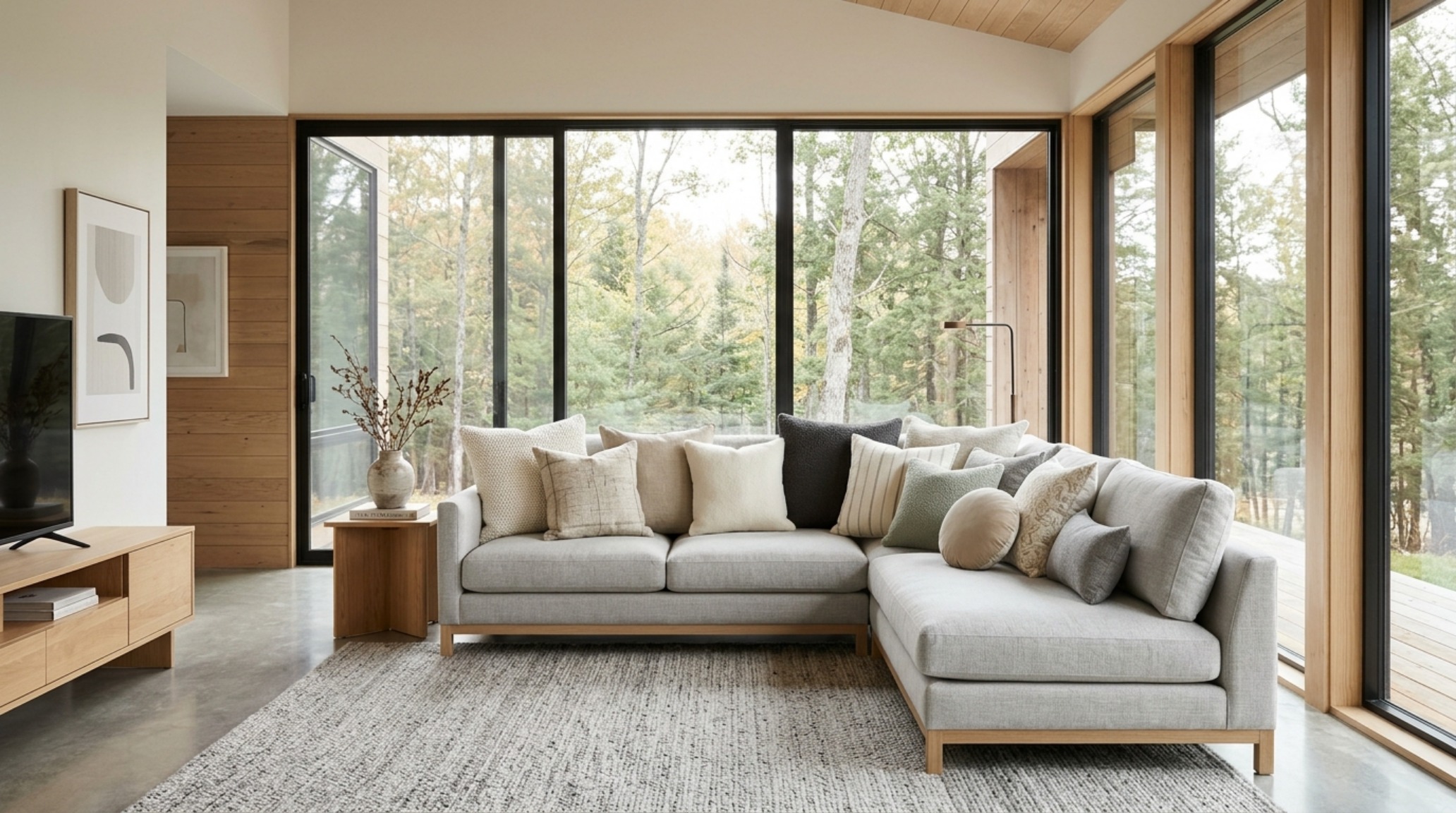
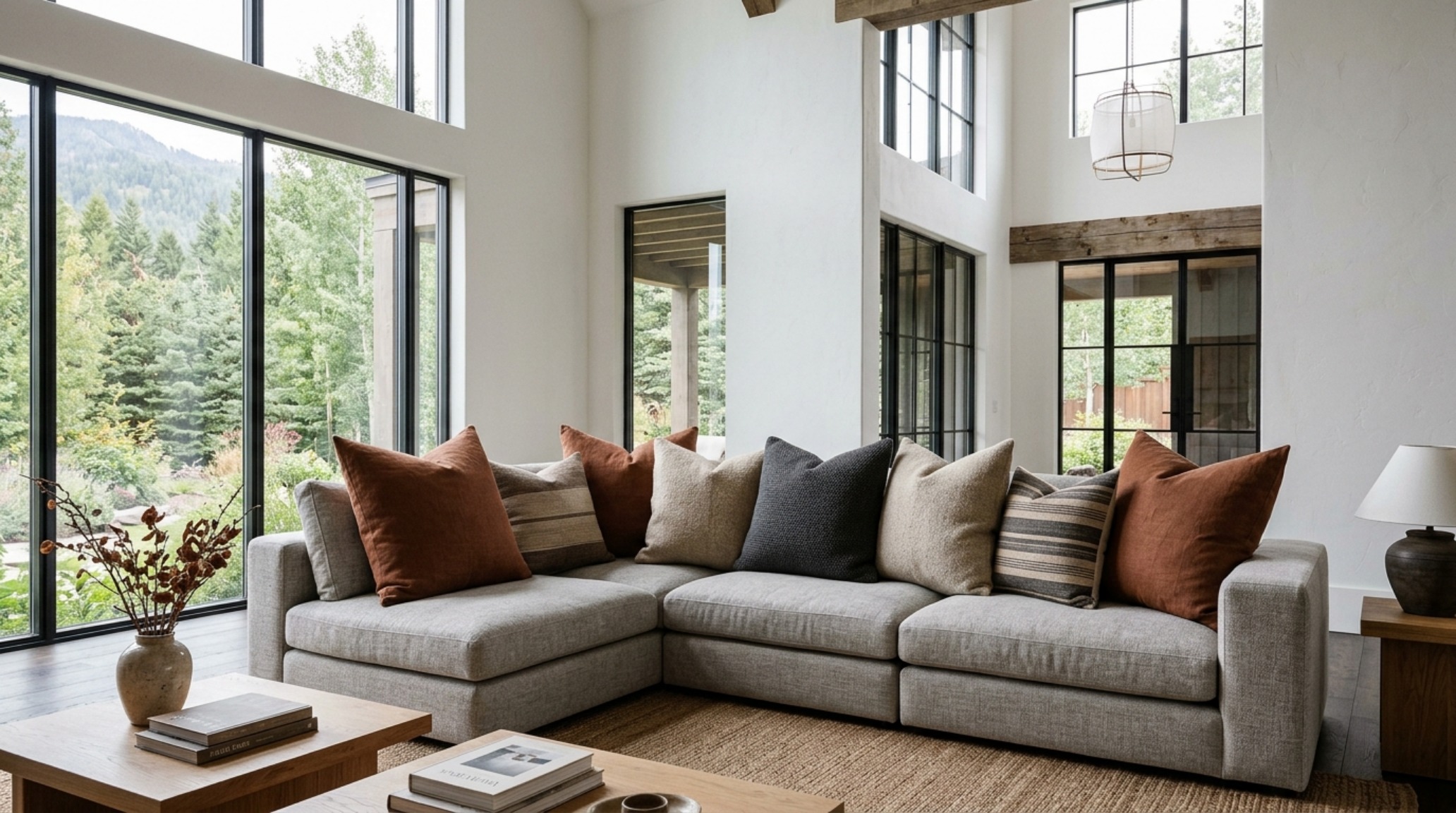
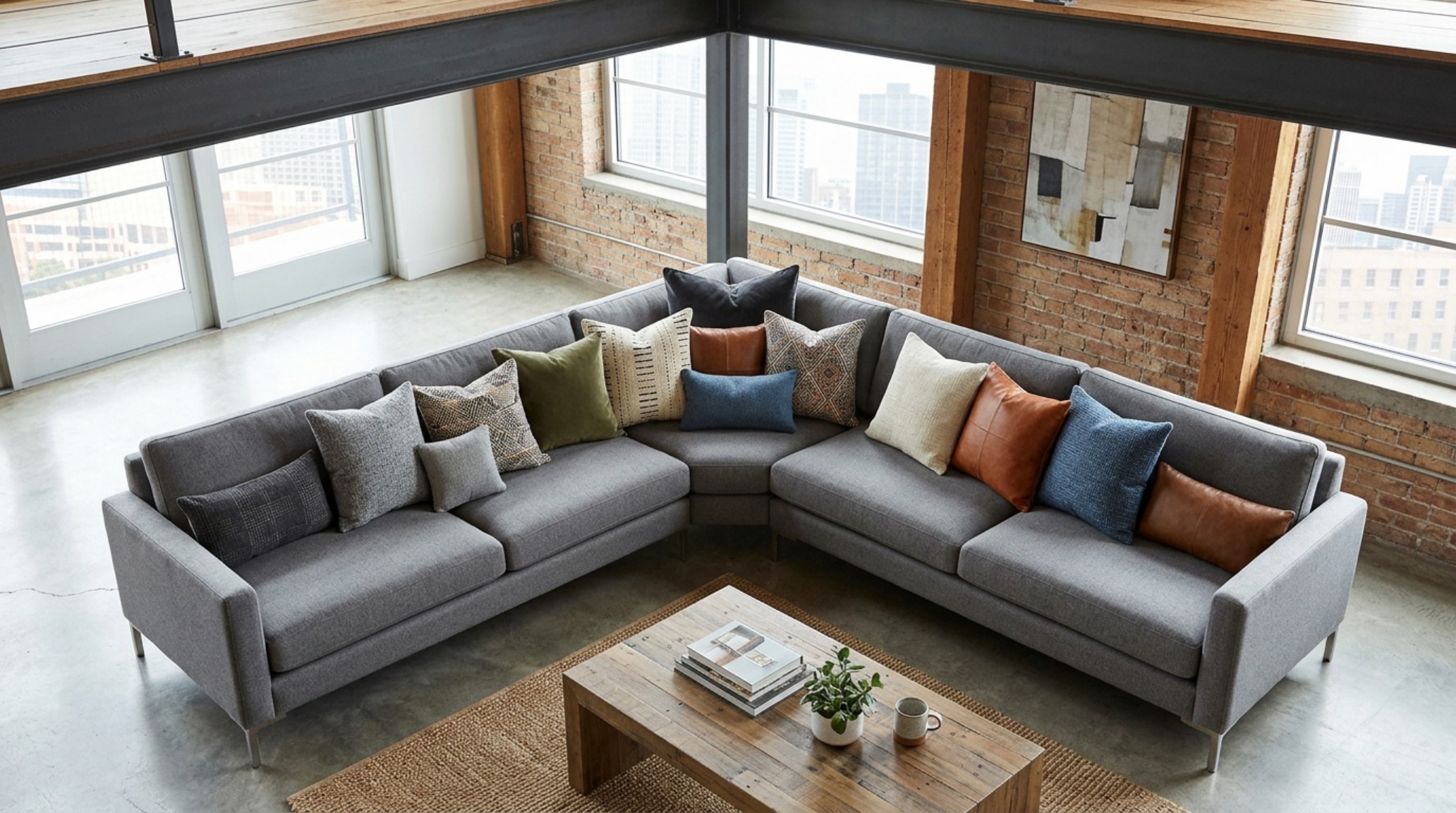
Sectionals present a unique architectural challenge because of the ‘dead zone’ in the corner wedge. Learning how to style pillows on a sectional requires understanding the intersection of two different axes. You cannot treat a sectional as one long continuous line; you must treat it as three distinct zones: the two ends and the center corner. The corner requires a ‘cluster’ approach rather than a line. Start with your largest 24-inch anchor in the very back, then layer a 22-inch and a 20-inch in front, creating a nested effect that softens the 90-degree angle.
By concentrating volume in the corner, you create a ‘den’ of comfort that draws people into the heart of the seating arrangement. The ends of the sectional should be styled more lightly—perhaps just a single large anchor and a smaller lumbar—to keep the sightlines open to the rest of the room. This distribution of weight ensures that the sectional doesn’t look like a monolithic block of fabric, but rather a dynamic, tiered landscape of texture and form. This spatial cadence is essential for maintaining airiness in large open-concept living areas.
Textured Couch Cushions and the Play of Light
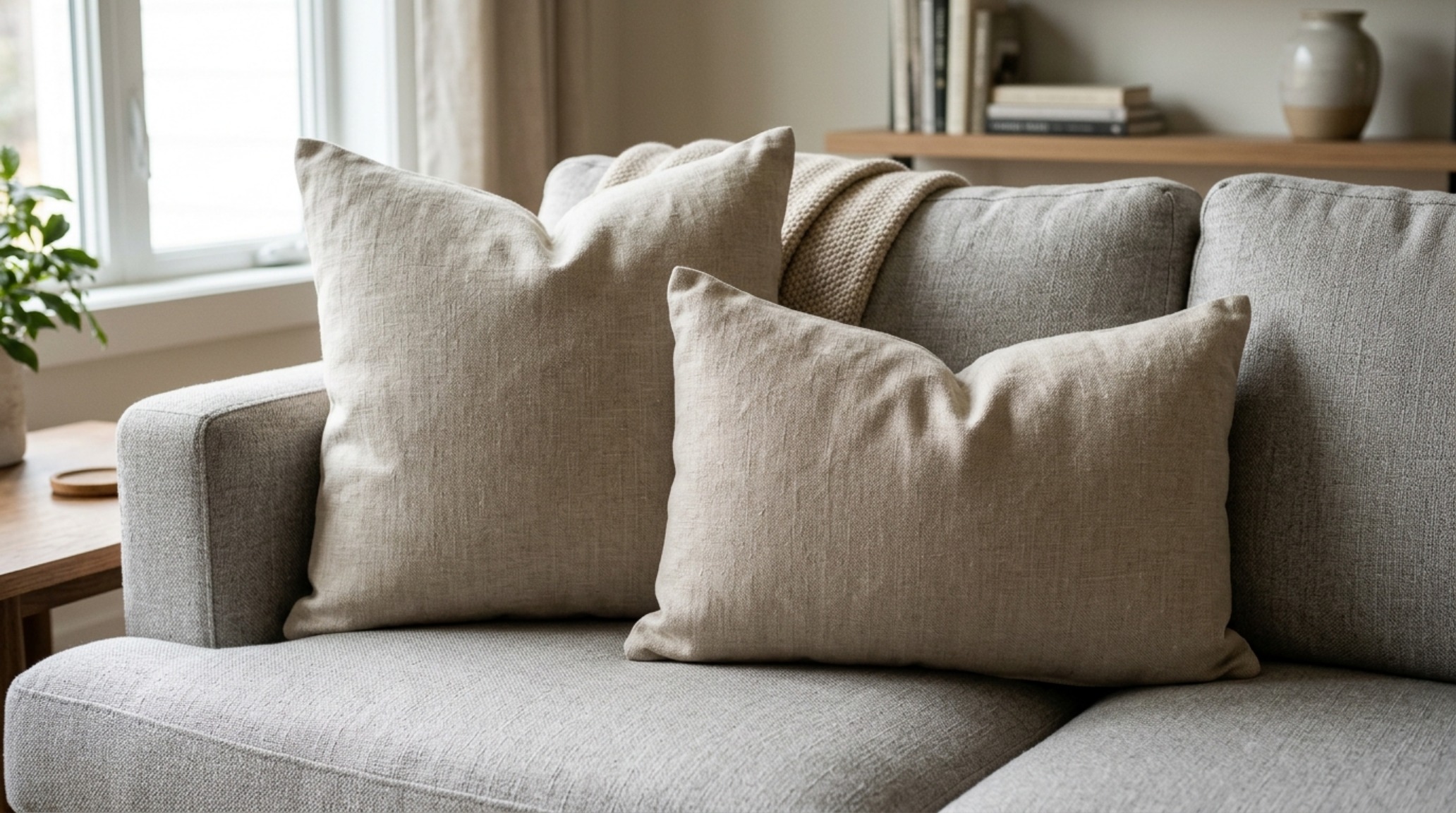
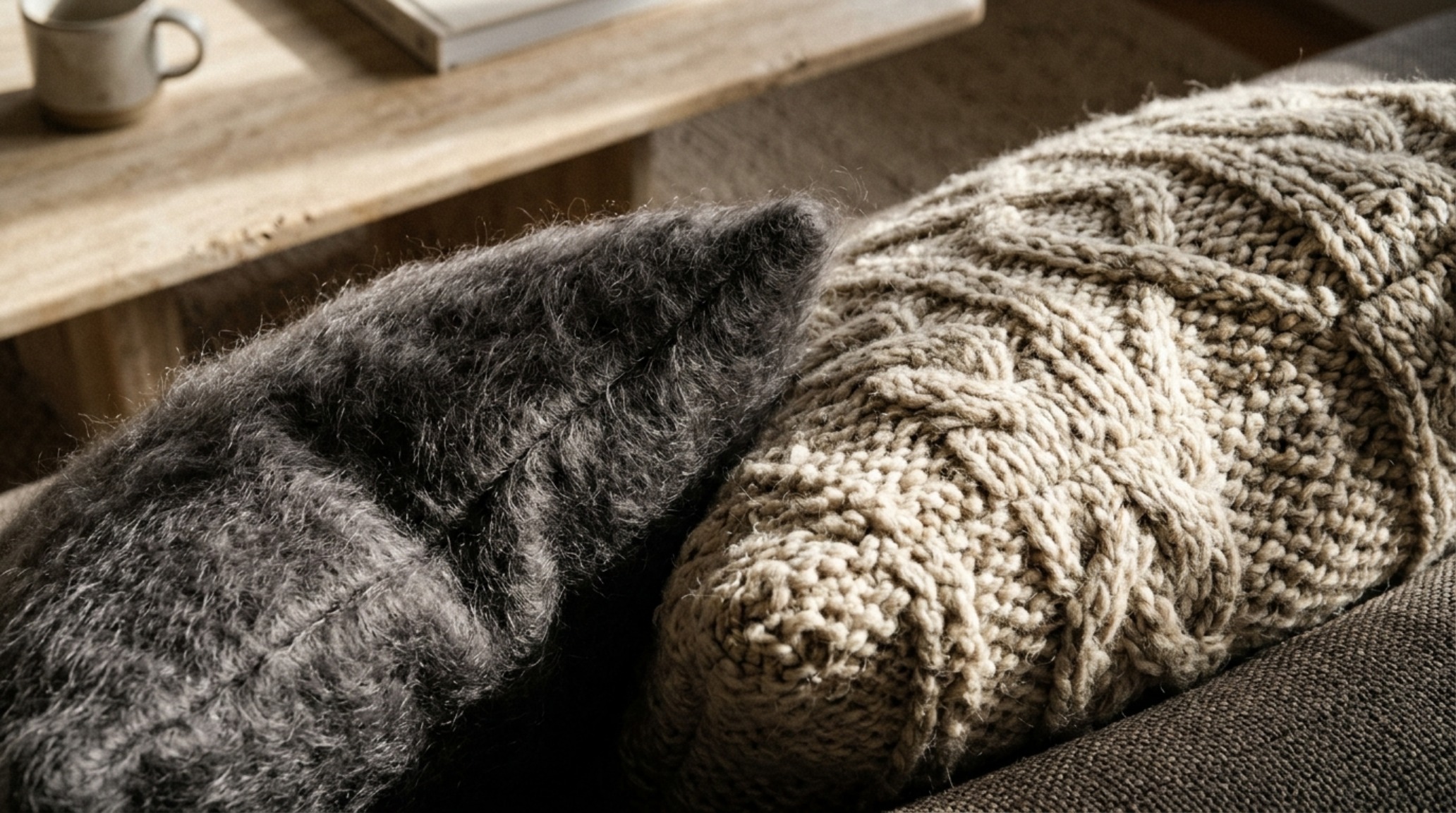
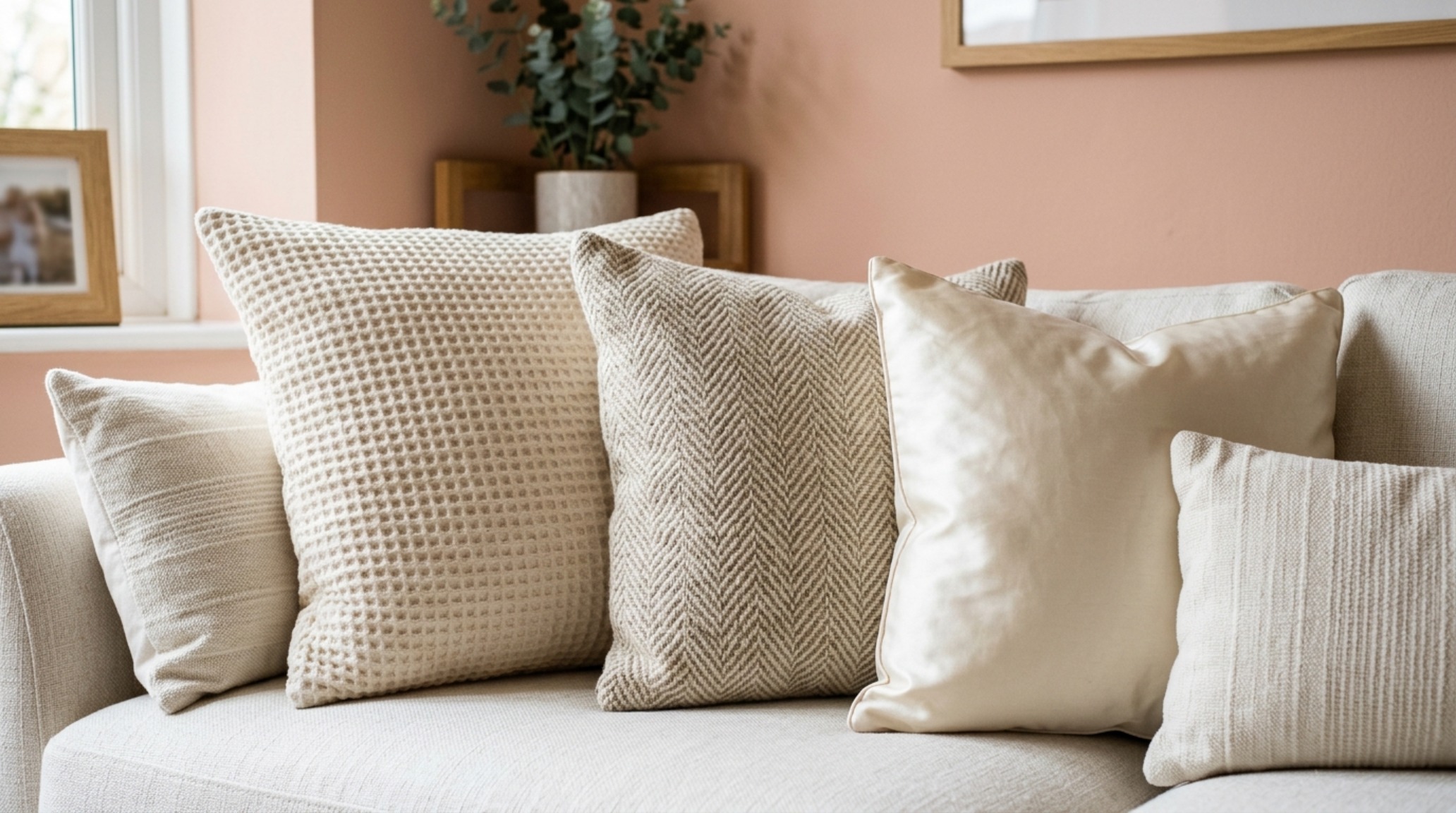
Color is secondary to texture when it comes to sophisticated styling. In a monochromatic room, textured couch cushions are what prevent the space from feeling flat and clinical. Think about the ‘hand’ of the fabric: the roughness of a heavy jute blend against the slickness of velvet, or the matte finish of organic cotton contrasted with the sheen of a silk embroidery. When these textures catch the light—especially 2700K warm ambient light—they create a play of shadows that adds depth and ‘soul’ to the furniture.
Using decorative pillows for couches as a vehicle for texture allows you to experiment with trends without committing to a full upholstery change. A mohair pillow in a deep forest green can completely transform a neutral linen sofa, providing a point of tactile grounding. During the winter months, I often lean into heavier textures like wool shearling or chunky knits to create a sense of ‘hygge,’ while swapping for lighter-weight silks and laundered linens in the spring. This seasonal rotation keeps the living room’s architecture feeling responsive to the world outside.
Spatial Perspectives & Material Curation
As we move through the room, we must consider the 360-degree experience. A sofa is rarely just a front-facing object; in open-concept homes, the back and sides are often visible. Ensure your pillow covers feature high-quality closures—preferably concealed brass zippers—and that the fabric is consistent on both sides. There is nothing that breaks the illusion of a designer space faster than a beautiful front and a cheap, ‘backing’ fabric visible from the kitchen island. High-end decorative pillows for couches are finished with the same attention to detail as a bespoke suit.
The final layer of the blueprint is the ‘Negative Space Check.’ Just because you can fit seven pillows on a sofa doesn’t mean you should. There must be ‘breathing room’ between the clusters to allow the sofa’s primary material—whether it’s a buttery leather or a refined weave—to speak. A crowded sofa is an uninviting one. By following the 2-2-1 rule or a modified version for your specific furniture scale, you ensure that every choice is intentional, leaving enough room for the most important element of any design: the people who live within it.
Structural Finishes & Design Anatomy
Architectural summary of tactile material selections, lighting specifications, and spatial ergonomics.
Ultimately, a home’s beauty is found in the tension between its architectural bones and the soft, human layers we apply over them. When we master the scale and volume of decorative pillows for couches, we aren’t just decorating; we are acknowledging the room’s inherent proportions and elevating them. It is a quiet, rhythmic dance of geometry and comfort that turns a house into a sanctuary, ensuring that every seat in the room feels like the best one in the house.
Editorial Silo • Recommended Architecture Studies
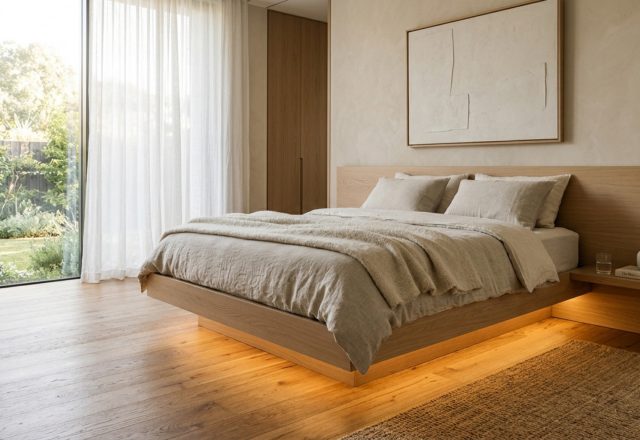
- Beds That Save Space: The Architectural Blueprint & Spatial Flow Guide — Archival Design Case Study
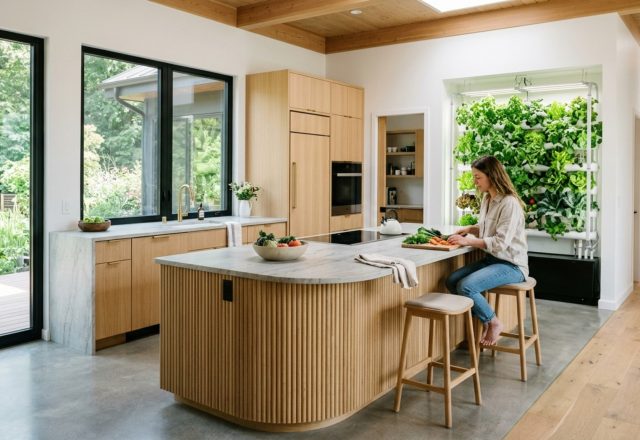
- The Closed-Loop Life: Mastering the Functional Ergonomics of Self Sustaining Homes — Archival Design Case Study
The Visual Architecture Journal
Visual perspectives honoring architectural weight, understated craftsmanship, and layered atmospheric warmth.
Curated Visual Lookbook
Design Gallery & Spatial Studies
A visual curation of architectural arrangements, lighting concepts, and material palettes featured in this space.