The Discipline of the Transitional Space
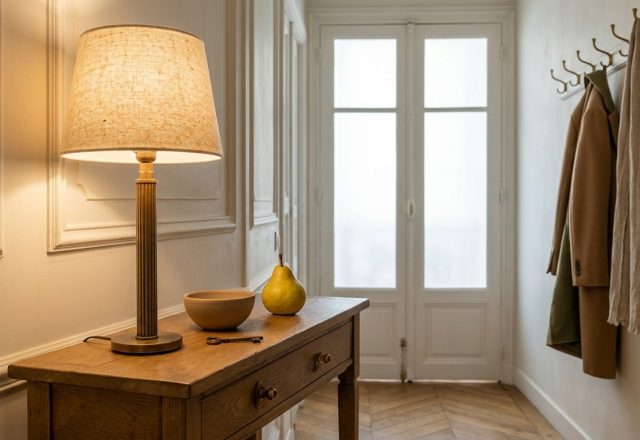
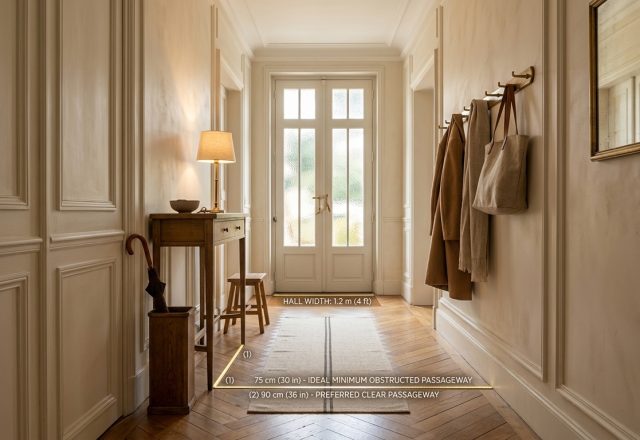
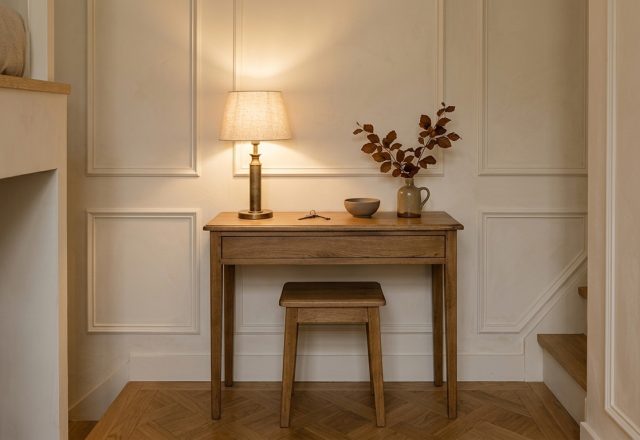
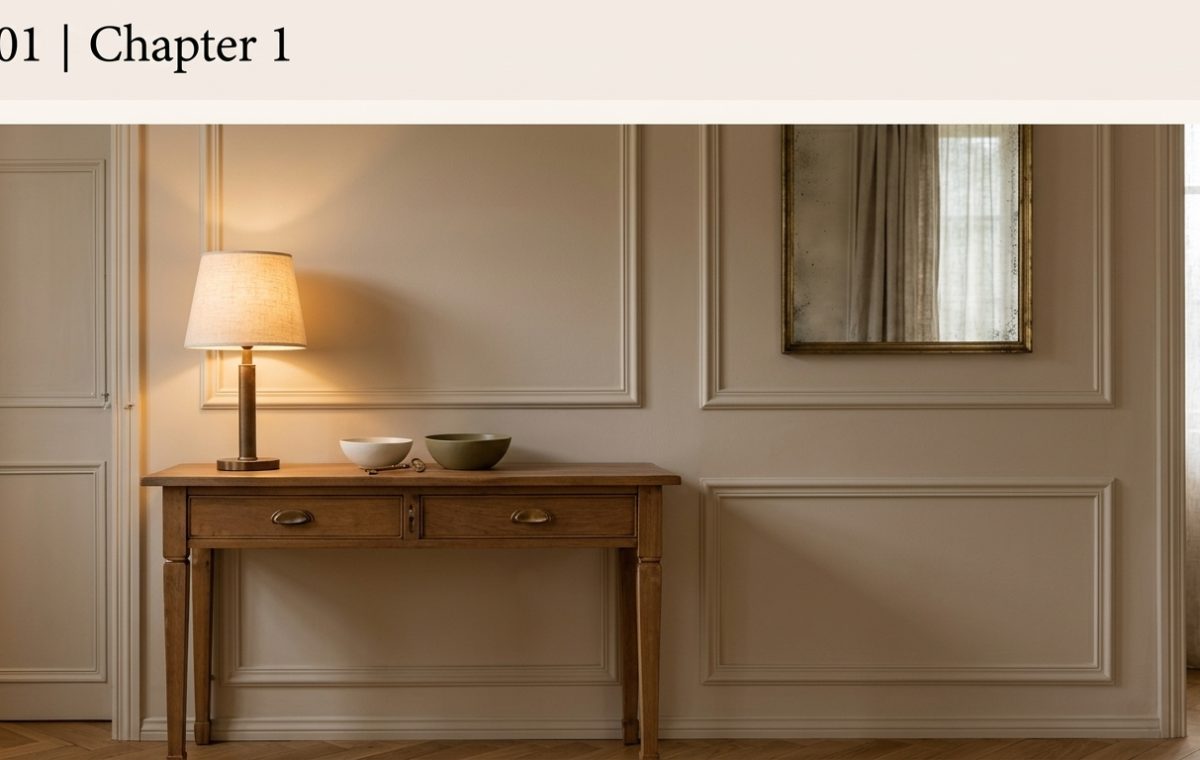
Most entryways suffer from one of two extremes. Either they surrender entirely to chaos—heaped shoes, scattered mail, and tangled dog leads—or they resemble sterile art galleries where setting down a key feels like an intrusion. The vignette above cuts straight through both traps. A slender entryway console table sits squarely inside the quiet cadence of classic picture frame moulding, anchored by nothing more than a warm linen-shaded lamp and two muted ceramic bowls. It feels lived-in yet remarkably composed.
Transitional spaces should not shout. They set the tone for everything that follows. When you enter a house, your nervous system immediately gauges light, proportion, and order. Stripping away the excess and letting architectural lines do the heavy lifting creates an immediate sense of decompression.
Scale, Height, and Millwork Rhythm
Notice the interaction between the wood console and the surrounding wall panels. The table top deliberately clears the lower rail of the moulding, nestling beneath the primary wall frames rather than clashing against them. This is not accidental. Measure your wall trim before buying furniture. A console table that overlaps box trim awkwardly will forever look like an afterthought, no matter how much you spend on styling accessories.
Wood species matter here too. Painted millwork painted in muted wall paint requires an organic counterbalance. Crisp taupe plaster paired with painted cabinetry can feel chalky and one-dimensional. A warm, open-grain oak or walnut table introduces depth that paint alone cannot replicate. The aged brass hardware on the twin drawers brings just enough soft glint to break up the matte surfaces without turning flashy.
Proportion always beats ornament. If the silhouette of the table and the rhythm of your wall moulding align, you need very few objects on top to make the space feel finished.
Lighting Over Decoration
Overhead pot lights ruin hallways. They cast severe downcast shadows, expose every speck of dust on the baseboards, and mimic the sterile glow of an office stairwell. Ambient lamp lighting completely changes the emotional weight of a foyer.
A single shaded lamp placed off-center washes texture directly across the paint and trim. It softens corners. It invites you inward. Notice how the light here does not highlight a curated stack of unread art monographs. Instead, it illuminates two simple dishes meant to catch keys, pocket knives, and loose change. That is functional honesty. A home must serve everyday routines without falling apart visually by 6:00 PM.
The Power of Asymmetry
Symmetry often feels stiff in narrow halls. You do not need paired lamps or identical topiaries flanking a mirror. By placing the light source to the left and balancing it with an antique mirror shifted to the right, the eye moves naturally across the wall. The mirror bounces natural light from an unseen window during the day, while the lamp takes over at dusk. How do you handle that delicate balance between practical drop-zone storage and visual calm in your own hallway?
Editorial Lookbook & Photo Collection