Most homeowners treat a hallway as dead transit space. You drop your keys, kick off your boots, and shuffle through as quickly as possible. When decorating, the instinctive reaction is either total neglect or overcrowding—shoving a clumsy chest of drawers against the baseboard and hoping no one bruises an elbow. It fails every time. The hallway shown here gets it right because it respects architectural rhythm over raw storage volume.
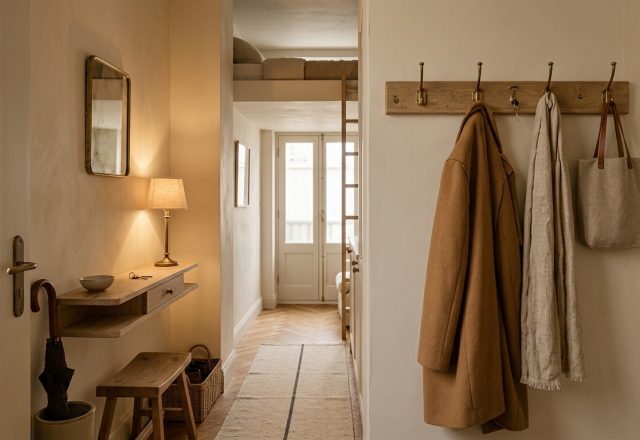
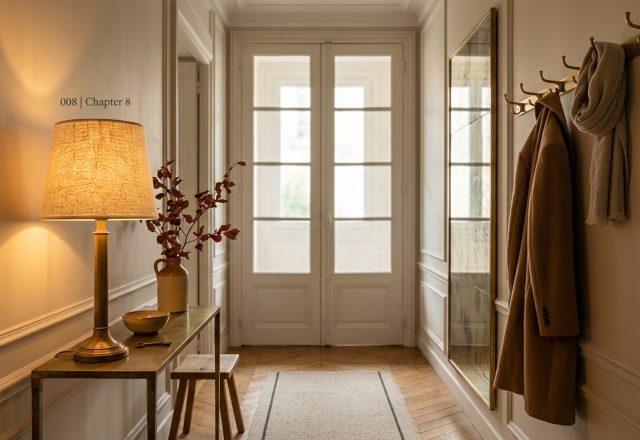
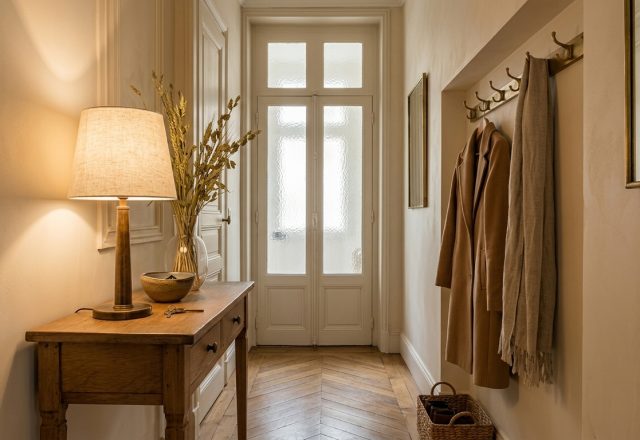
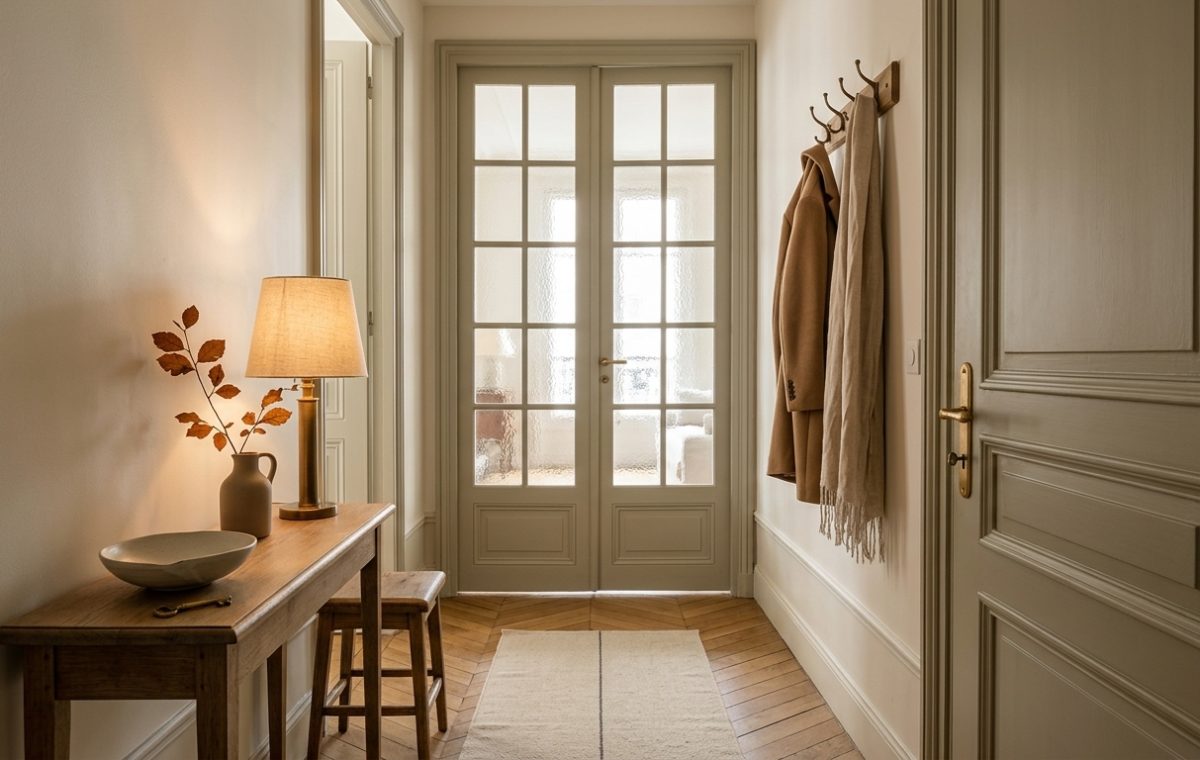
Look closely at the depth of the console table. It cannot be more than twelve inches deep. In tight corridors, every inch stolen from walking clearance makes the house feel claustrophobic. Pairing a shallow, raw-timber table with a tuck-away wooden stool allows functional drop-off space without breaking traffic lines. A single ceramic bowl collects daily pocket clutter, while console table styling remains understated with a brass lamp providing warm, eye-level illumination instead of the harsh interrogation glare of recessed ceiling cans.
Sightlines, French Doors, and Stolen Daylight
Windowless entries are notorious light traps. The quickest fix is borrowing natural daylight from adjoining rooms. Instead of solid interior panels, French interior doors with textured glass keep private living quarters secluded while drawing daylight straight down the center axis. Notice the flooring. Chevron or herringbone wood flooring does not merely look historic; the diagonal angles actively guide the eye forward, creating an optical elongation that stretches a modest footprint.
Editing What You Actually Hang
The coat hook dilemma is where most narrow hallway entryway ideas collapse into chaos. We want to hang twenty winter parkas, dog leashes, and sports bags on five pegs. That turns an elegant passage into a locker room. A simple wooden rail with well-spaced hooks demands strict discipline: one tailored overcoat, a daily scarf, maybe an umbrella. Everything else belongs in a bedroom closet. If you lack that secondary closet, choose hooks that sit flush to the wall and keep hanging items to what you wear this current week.
The Power of Architectural Shadows
Notice the millwork. Layered hallway wall molding and generous baseboards painted in the same tone as the door casing bring structural weight that flat drywall simply cannot match. When you bathe painted molding in soft transitional lighting rather than high-lumen overhead floods, the raised profiles cast quiet shadows that make the wall look deliberate, grounded, and established.
If you stand at your own front door right now, what is the first barrier your shoulder brushes against? Reclaiming an entrance rarely requires buying more elaborate organizers; it usually starts with stripping away five inches of unnecessary furniture bulk and letting the light travel from room to room unimpeded.
Editorial Lookbook & Photo Collection