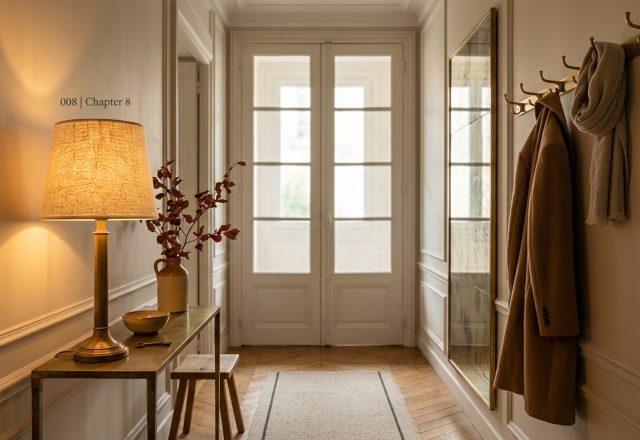
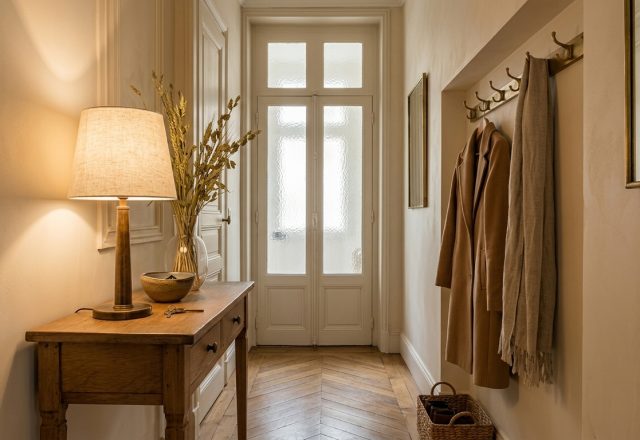
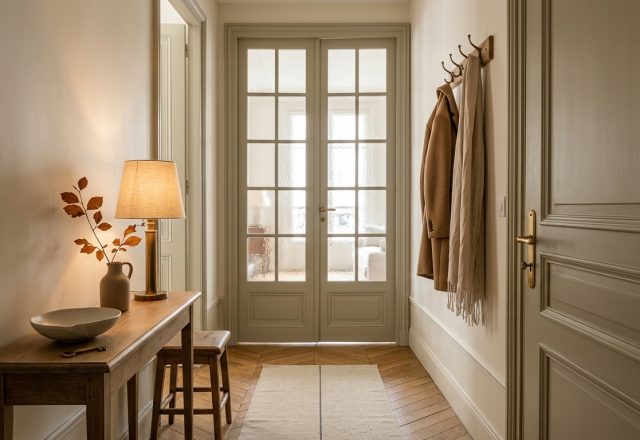
The single brass lamp glowing on a slim wooden console does more work here than an expensive overhead pendant ever could. Entryways are notoriously hard to get right. Treat them purely as utility closets, and you end up tripping over muddy trainers and winter gear the second you step through the front door. Strip them bare for the sake of minimalism, and you have nowhere to drop your keys or shed your coat. This space finds the sweet spot through thoughtful transitional hallway styling, leaning heavily on architectural rhythm rather than decorative clutter.
Let the Architecture Carry the Weight
Look at the walls before you look at the furniture. Notice the restrained boiserie and trim painted in a single, enveloping mushroom beige. When your wall surfaces have depth, you need remarkably few decorative objects to make a corridor feel finished. The chevron wood floors draw the eye straight toward the frosted glass doors at the rear, creating an immediate sense of arrival.
If your hallway feels flat or endlessly long, adding picture frame moulding breaks up long drywall expanses without eating an inch of valuable floor area. Paint everything—baseboards, door frames, walls, and crown—in the same low-sheen tone. The room instantly calms down.
The Anatomy of an Honest Drop Zone
Most entryways fail because people design for an idealized lifestyle instead of their real weekday habits. You come home exhausted. You have mail in one hand, car keys in the other, and a heavy tote bag cutting into your shoulder. Where does that reality go?
- A designated catchall: The shallow stone bowl on the console table stops loose coins and keys from scattering across the timber surface.
- Airy wall hooks: Traditional closed wardrobes eat up precious circulation room in narrow corridors. An open coat rack keeps seasonal outerwear accessible while forcing you to rotate coats rather than hoard them.
- The low-profile umbrella pot: A simple ceramic jar by the door catches wet brollies before they drip onto oiled timber.
- Tuck-away seating: That small timber stool slid under the table gives you a perch to pull off boots without blocking the walkway.
A hallway should be a decompression chamber between the noise outside and the quiet inside. Keep the furniture profile shallow and let the light do the greeting.
Lighting the Transition
Ceiling spots are clinical. They cast harsh downward shadows on faces and turn a welcoming vestibule into an interrogation room. By relying on a linen-shaded lamp perched on an entryway console table, the lighting stays anchored at eye level. It casts a gentle amber wash against the painted trim, signaling that the workday is done.
Down below, an unpretentious hallway runner rug introduces subtle texture and protects the parquet from grit. Runners in high-traffic halls should always be hard-wearing—wool flatweaves or jute blends handle scuffs best. How do you tackle the inevitable coat pileup when wet weather hits your front door?
Editorial Lookbook & Photo Collection