A hallway is rarely treated as a destination, which is precisely why most corridors feel like utilitarian tunnels. We rush through them with grocery bags, kick off damp shoes, and toss keys onto whatever flat surface happens to be nearby. Yet the architectural transition between entering a home and settling into it sets an immediate emotional baseline. When you solve the proportion problem, circulation stops feeling like wasted footage.
The Proportions of Shallow Furniture
Most people buy entryway consoles that are simply too deep. The moment a table exceeds fourteen inches in a corridor under four feet wide, people instinctively turn their shoulders as they walk past. That subtle physical hesitation ruins the flow of an entire floor plan.
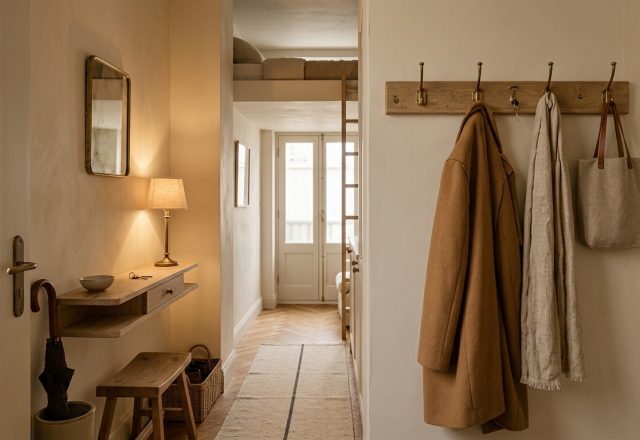
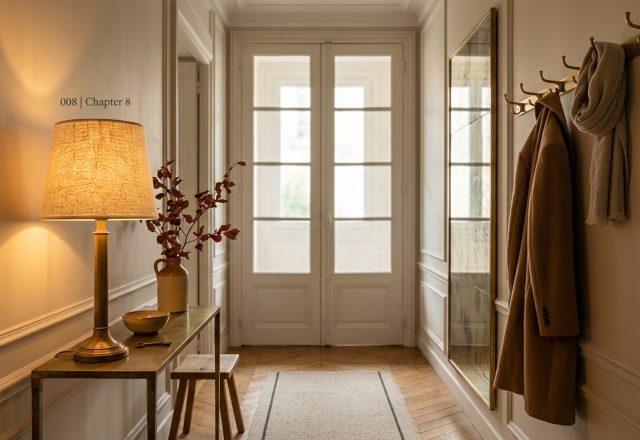
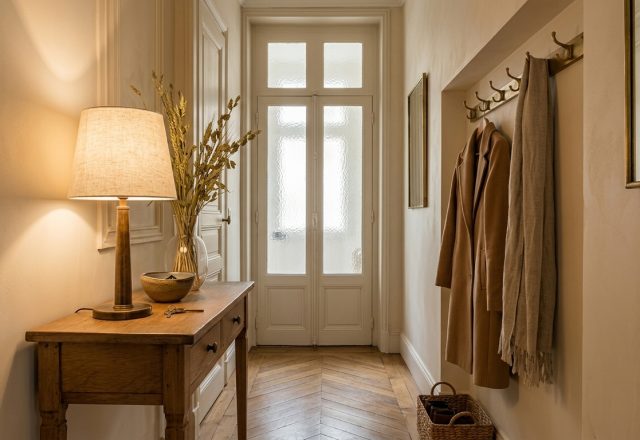
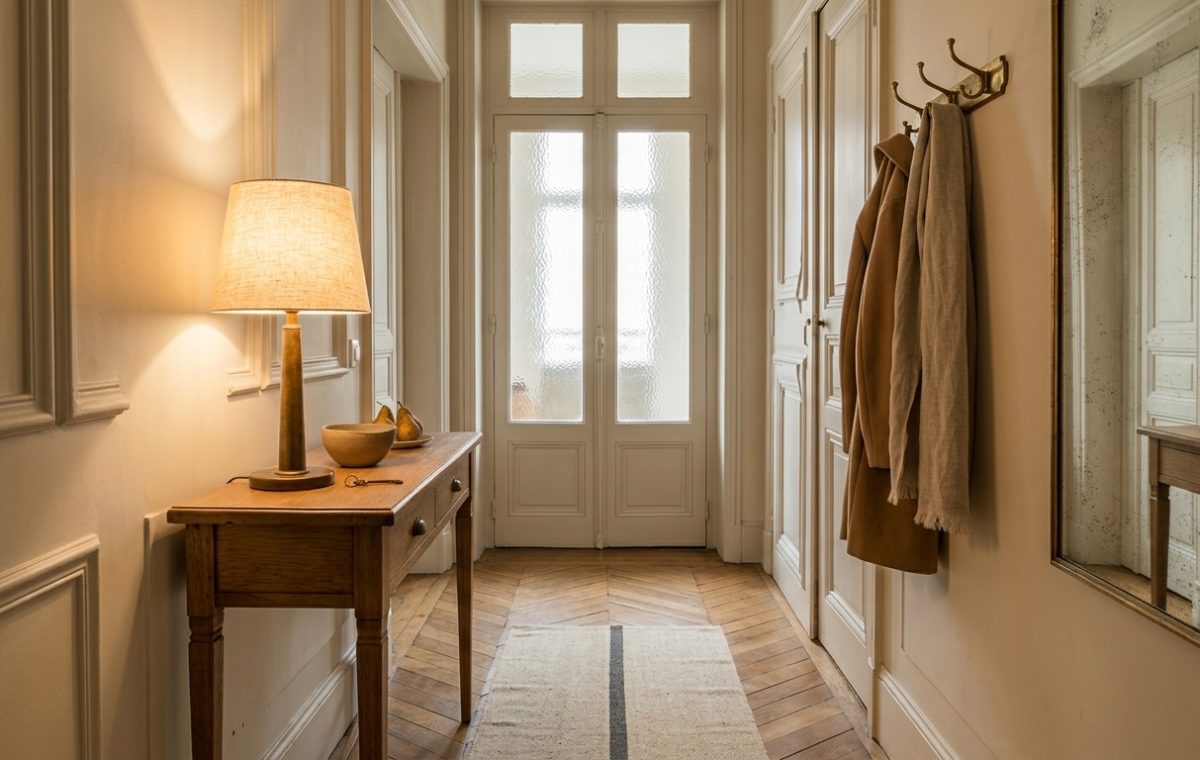
Notice the wooden console resting against the wainscoting here. It is deliberately narrow, sporting spindly tapered legs that let natural light wash underneath. A single drawer keeps visual clutter off the surface, while a brass lamp with a soft linen shade introduces an intimate eye-level glow. If you rely solely on overhead downlights, a narrow corridor instantly takes on the grim character of an office building. Table lamps soften corners and throw gentle shadows across painted paneling.
Grounding the Walkway
Floor treatments in high-traffic corridors face impossible demands: they need to dampen footsteps, hide outdoor grit, and keep the space from looking like a bowling alley. That is where a seasoned hallway runner rug earns its keep.
- Leave breathing room on the margins: Expose at least four to six inches of flooring on either side of the rug. Covering the herringbone parquet flooring entirely suffocates the room.
- Pick low-pile, dense weaves: Shag rugs create trip hazards and catch swinging doors. A flat-woven or vintage low-pile wool rug absorbs impact while permitting easy vacuuming.
- Invest in heavy-duty rug pads: Nothing destroys the quiet dignity of a tailored home faster than a runner that bunches up into an accordion every time someone walks down it.
A runner should guide the eye toward the light at the far end of the hall, not compete with the architecture framing it.
Breaking Up Endless Drywall
Tall ceilings paired with bare, uninterrupted drywall make corridors feel cold and echoey. Adding picture-frame molding or traditional wall molding ideas breaks the vertical plane in half. By keeping the lower paneling crisp and tailored, the wall acquires tactile depth without stealing precious inches of floor space.
Coat racks demand equal discipline. Piling ten heavy parkas on a hook by the door creates an aggressive visual bottleneck. Two tailored wool coats and a linen scarf look considered; an overstuffed winter stockpile looks messy. Keep seasonal rotation tight, tucking surplus layers into closets so the architecture can actually breathe.
Take a look at your own front corridor after dark tonight. Does it draw you forward into the warmth of the home, or does it feel like a gauntlet of discarded shoes and dark corners waiting for better lighting?
Editorial Lookbook & Photo Collection