We are currently witnessing a seismic shift in how we perceive the home. We have moved past the era of the ‘showroom’ aesthetic—those high-contrast, sterile environments that looked stunning in a grid but felt clinical to inhabit. Today, the design zeitgeist has pivoted toward the Sensory Sanctuary. It is a philosophy rooted in the visceral, where the success of a room is measured by how it lowers your heart rate upon entry. Central to this movement are sage green living room ideas, a design direction that leverages the psychological calm of nature and the architectural sophistication of muted tones to create spaces that breathe.
This isn’t merely about painting a wall and calling it a day. The ‘Holy Trinity’ of 2025 Organic Modern design—cream bouclé, raw travertine, and matte sage—requires a masterclass in layering. To achieve a space that feels both expensive and effortless, one must understand the interplay between material honesty and atmospheric lighting. We are building a retreat that functions as a functional luxury statement, specifically solving the spatial constraints of modern living through tactile grounding and rhythmic placement.
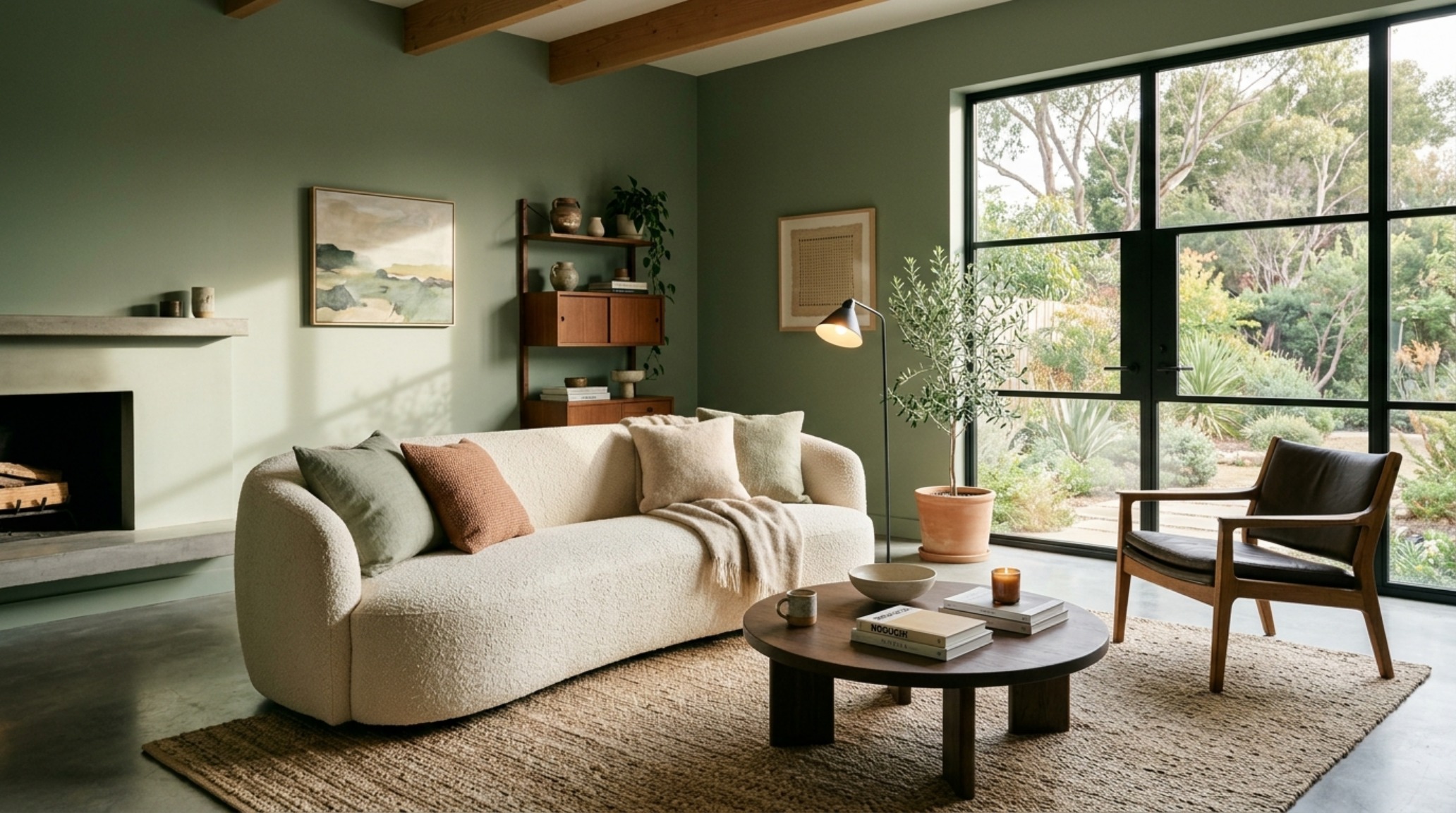
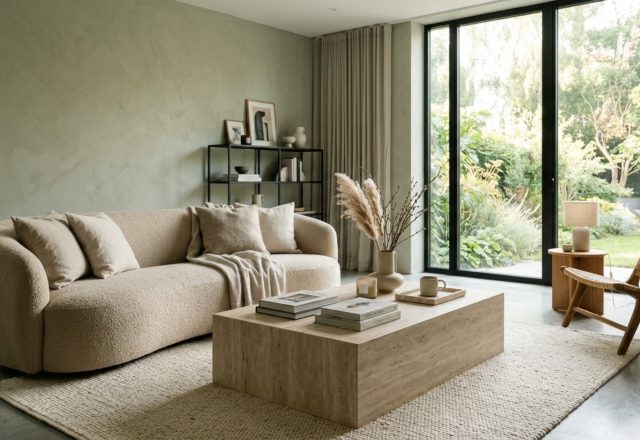
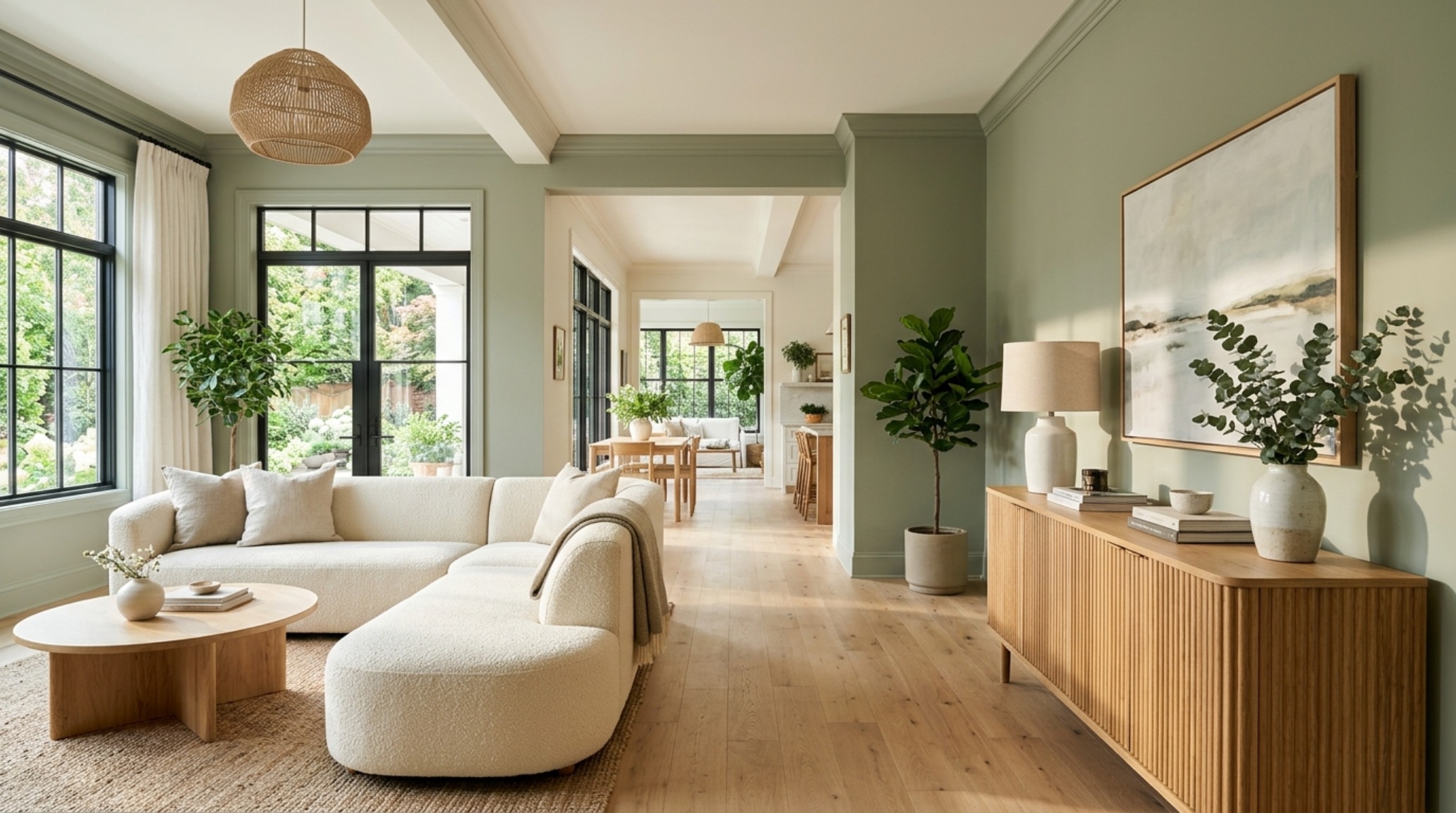
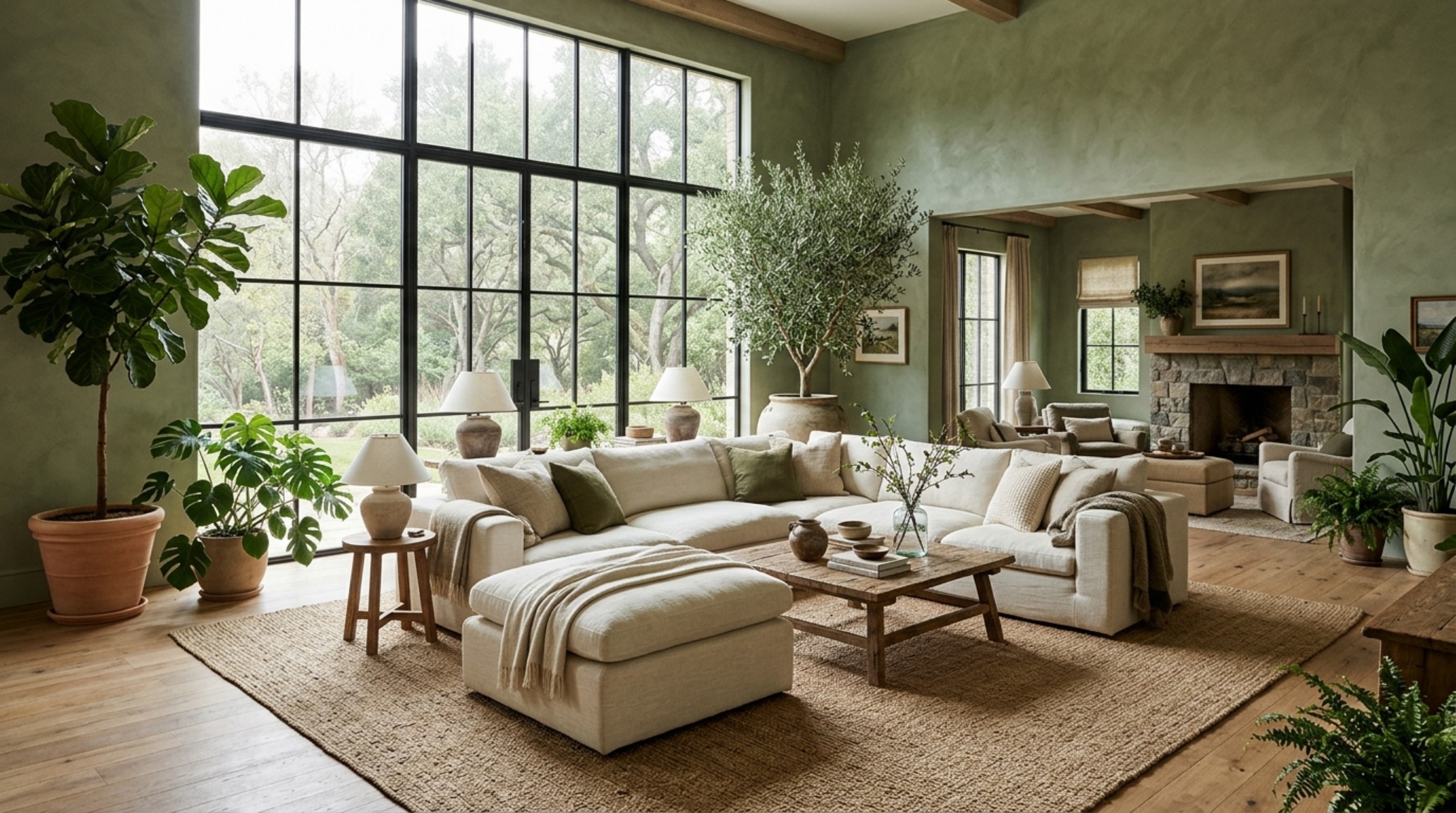
When we look at the image above, the spatial cadence is immediately apparent. The low-profile beige sofa, upholstered in a heavy-weight cream bouclé, acts as the gravitational center of the room. By keeping the furniture silhouettes low, we maintain clear sightlines, which is vital for the ‘Warm Minimalism’ approach. This specific layout respects the 36-inch standard walkway clearance, ensuring that despite the richness of the textures, the room never feels cluttered or claustrophobic.
Mastering the Palette: Why Sage Green Living Room Ideas Dominate Modern Design
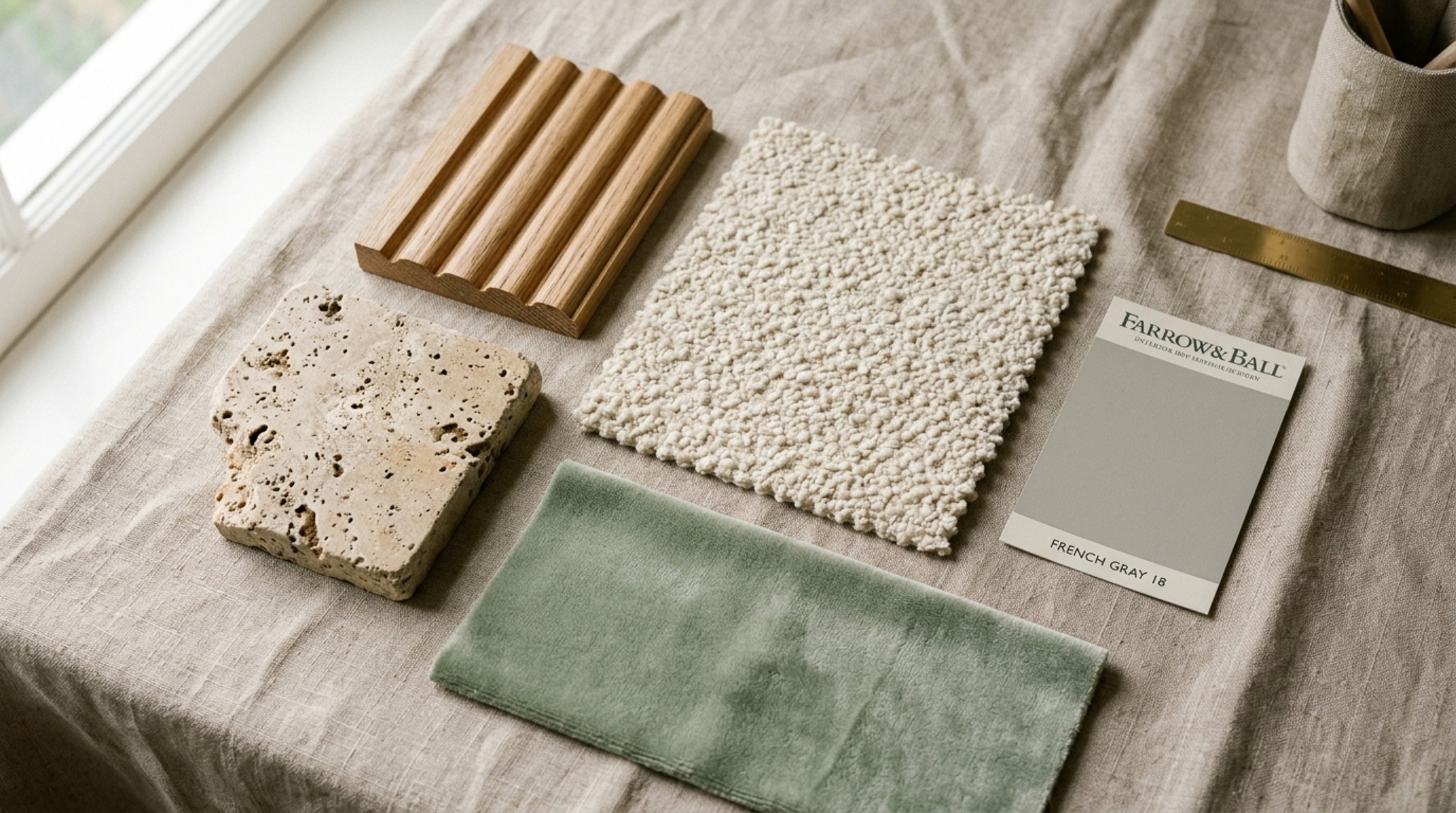
The allure of sage green lies in its chameleonic nature. Depending on the light, it can shift from a cool, silvery eucalyptus to a deep, mossy forest floor. However, the pitfall many homeowners encounter is the ‘cold hospital’ effect. This happens when a cool-toned green is paired with high-Kelvin, blue-tinted lighting. To transform sage into a sanctuary, we must lean into the warmth. Choosing a paint like Farrow & Ball’s French Gray or Benjamin Moore’s Saybrook Sage provides a complex base that contains significant yellow and gray undertones.
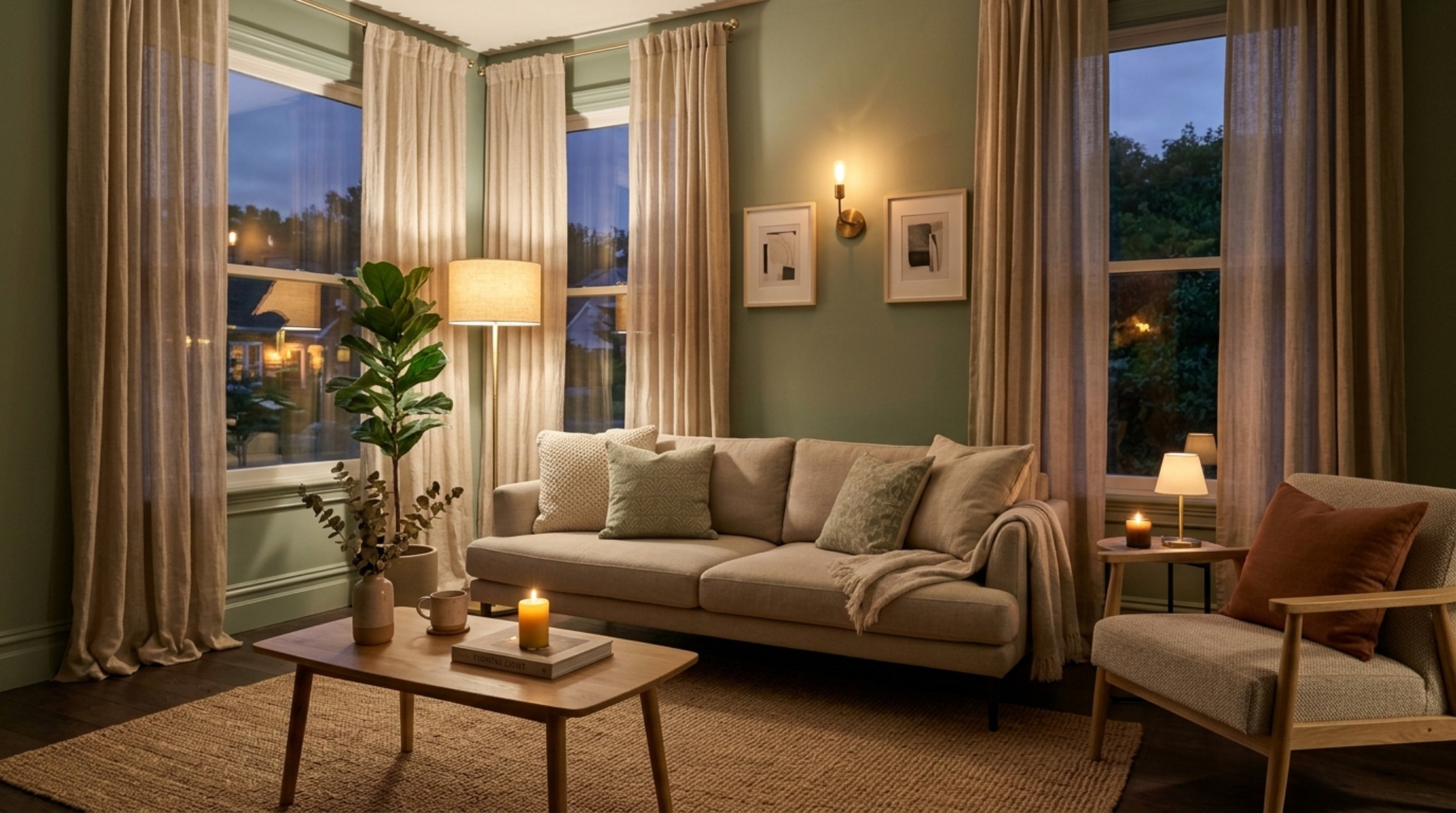
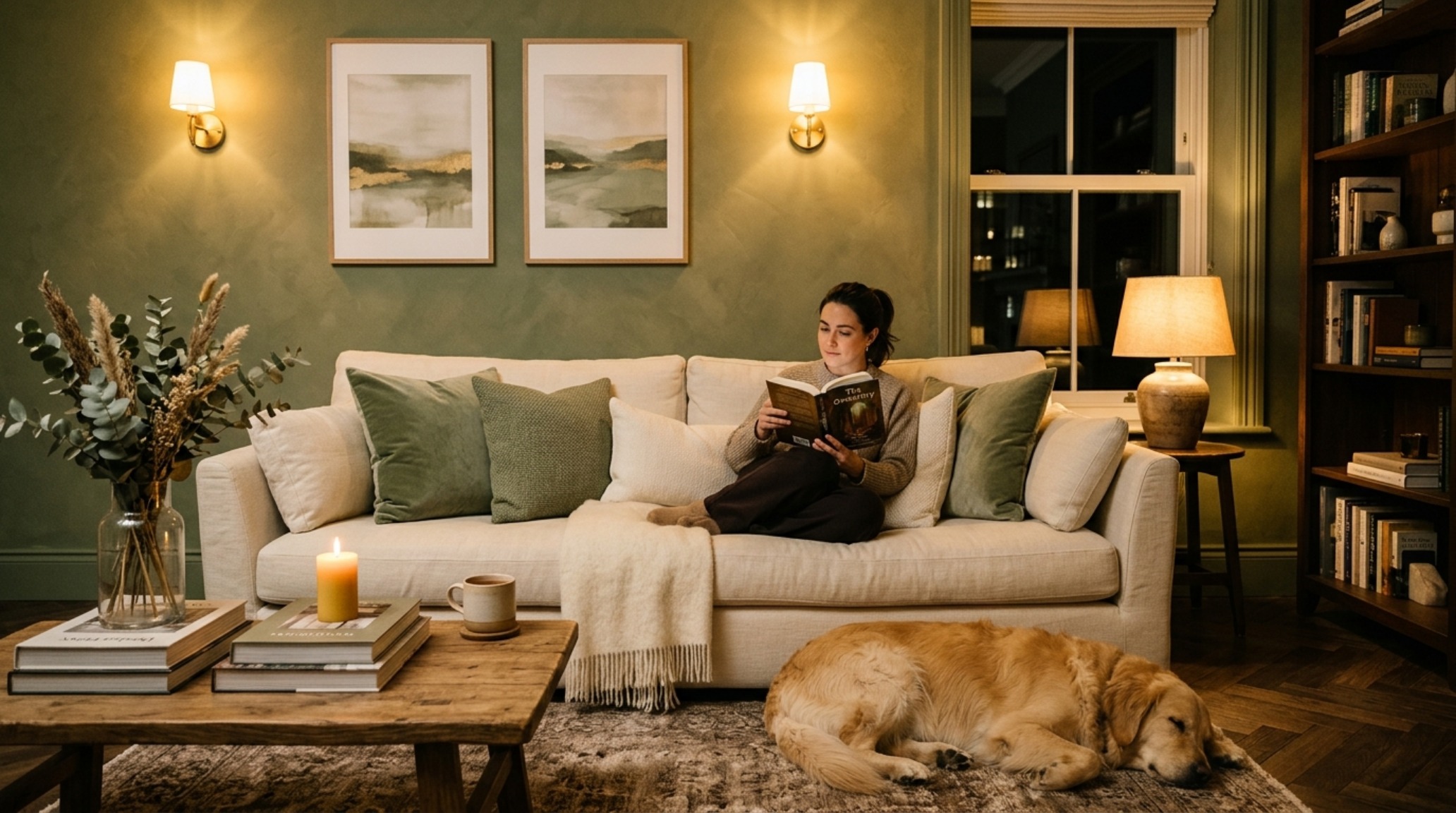
These undertones are the secret to the ‘glow-from-within’ effect. When you pair these walls with a 2700K lighting strategy, the warm, golden wavelengths of the light hit the yellow pigments in the sage paint, making the walls appear to radiate a soft, sun-drenched heat even after the sun has set. This is biophilic design at its most technical level—using the science of the color spectrum to mimic the golden hour of the natural world.
The Material Matrix: Bouclé, Travertine, and Velvet
Texture is the substitute for color in a monochromatic or tonal space. If the walls are matte sage and the sofa is beige, the interest must come from the ‘hand-feel’ of the surfaces. We recommend a hierarchy of textures. Start with the ‘grounding’ texture: a large-scale jute or high-pile wool rug in a bone or oatmeal shade. Next, introduce the ‘comfort’ texture: the bouclé sofa. The nubby, irregular loops of the bouclé catch shadows, providing a visual depth that flat linen cannot achieve.
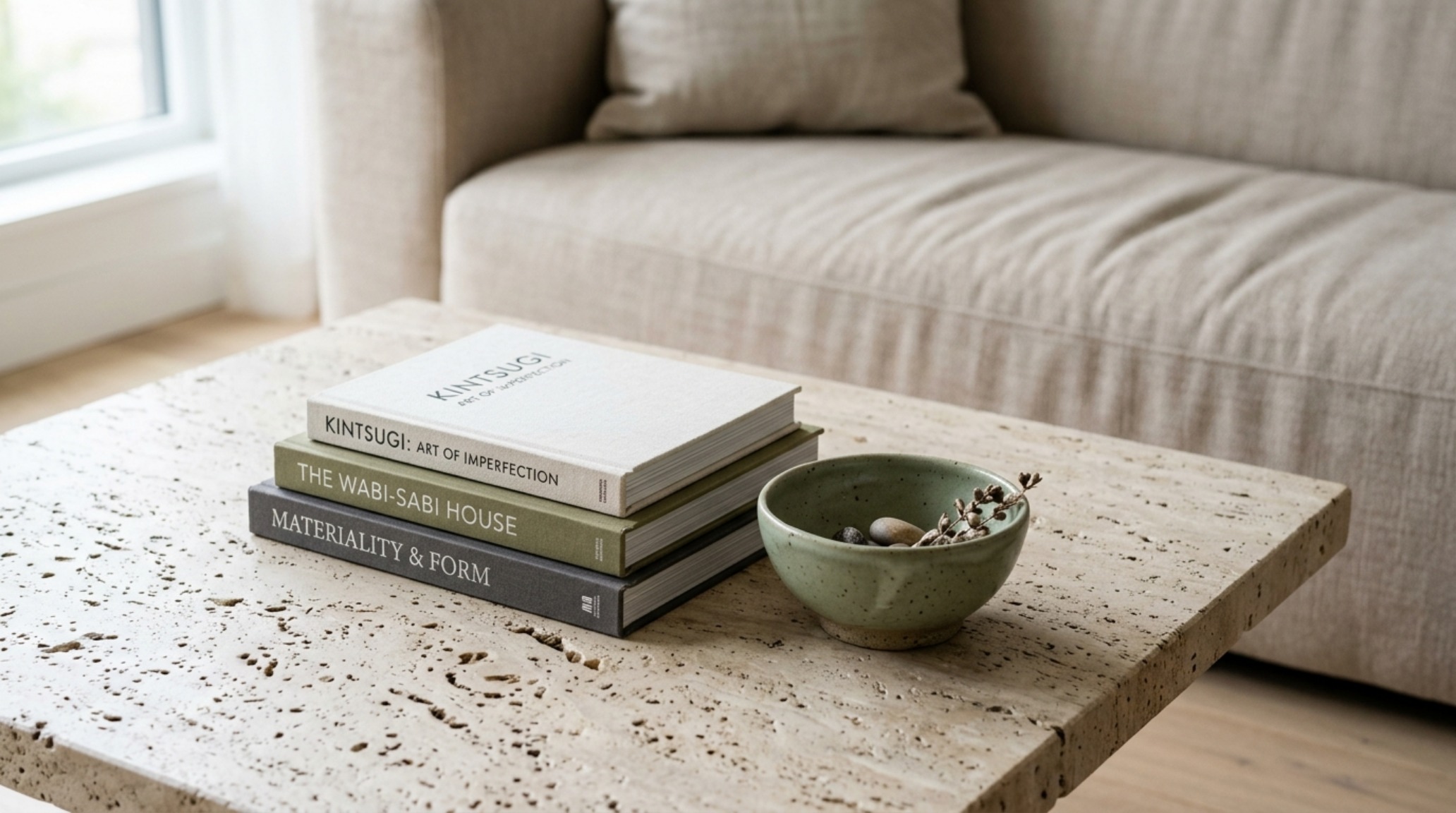
As seen in the architectural detail above, the introduction of raw travertine provides the necessary ‘structural’ texture. A coffee table with a honed but unfilled travertine surface introduces a porous, geological element that anchors the softer fabrics. Notice the 18-inch coffee table reach; this is a non-negotiable architectural clearance that ensures the room remains functional for daily rituals. The matte finish of the stone prevents harsh glare, maintaining the quiet luxury ethos that defines this earthy retreat.
The Lighting Architecture: The 2700K Glow-From-Within
Lighting is the invisible architecture of a room. In a sage-and-beige environment, your goal is to eliminate ‘flatness.’ This is achieved through layering. Never rely on a single overhead source. Instead, utilize a high CRI (Color Rendering Index) of 90+ to ensure the colors remain true to life. 2700K is the sweet spot for a living room; it mimics the warmth of a candle or a setting sun, which is essential for triggering the body’s circadian rhythm into ‘rest mode.’
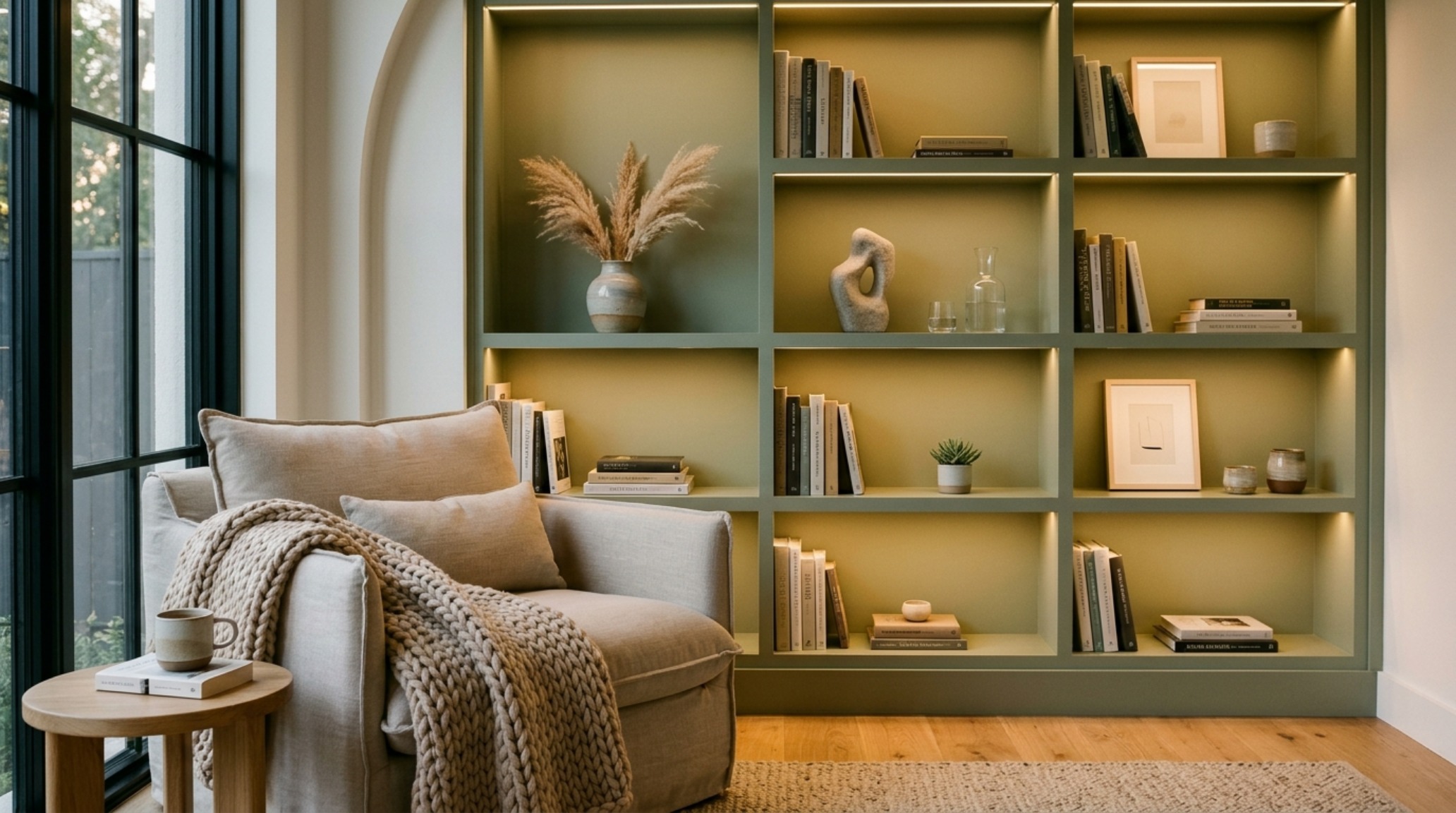
Strategic placement involves creating ‘islands of light.’ Position a floor lamp with a linen shade near the sofa to create a diffused ambient glow. Supplement this with directional picture lights over textured art and low-level task lighting on side tables. By keeping the light sources at varying heights—floor, table, and eye-level—you create shadow play that highlights the fluted oak details or the velvet sheen of your accent pillows. This atmospheric layering is what separates a ‘decorated’ room from a ‘designed’ sanctuary.
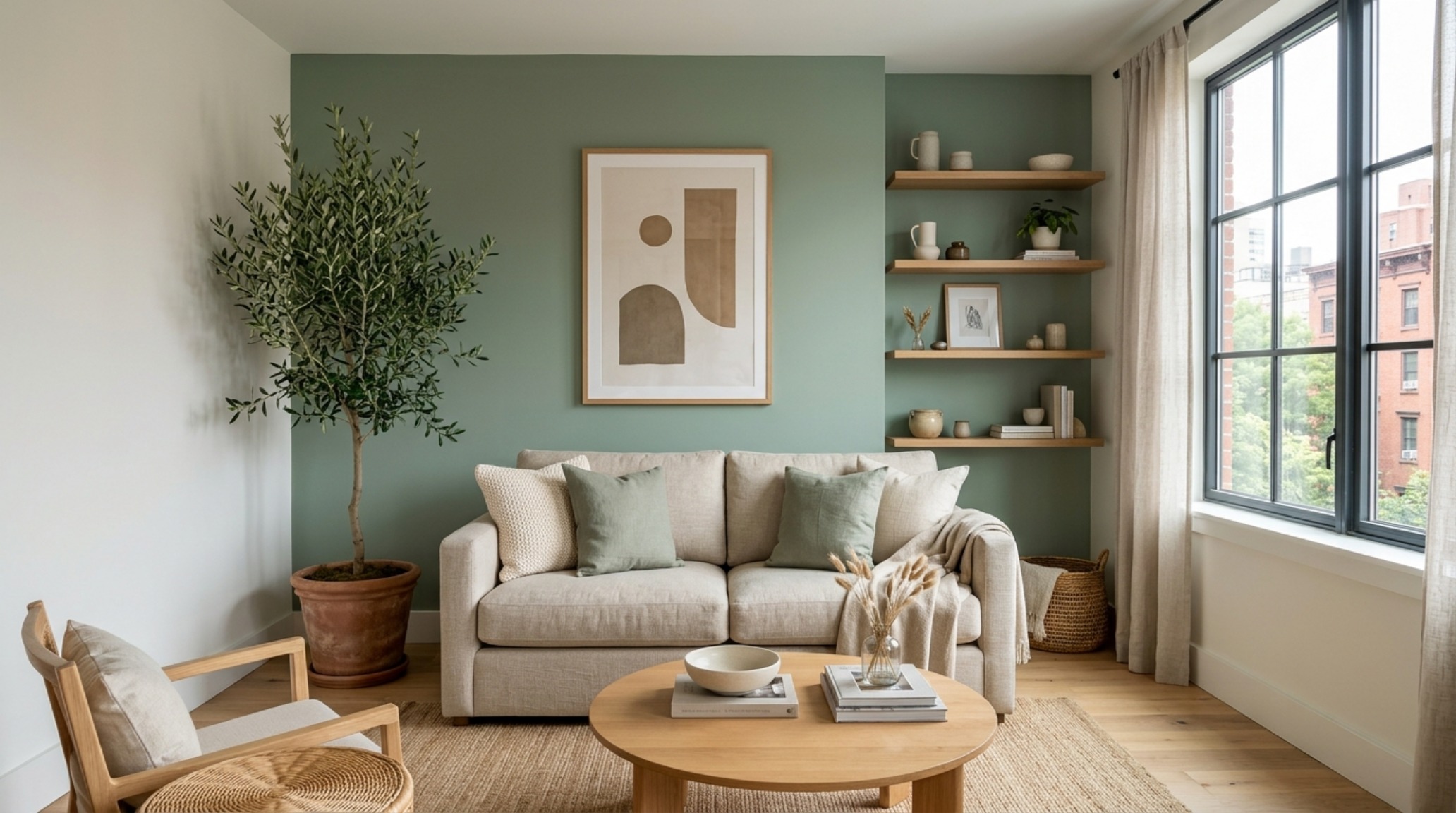
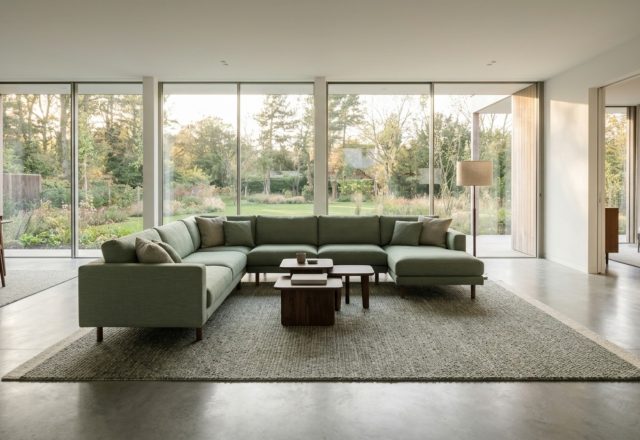
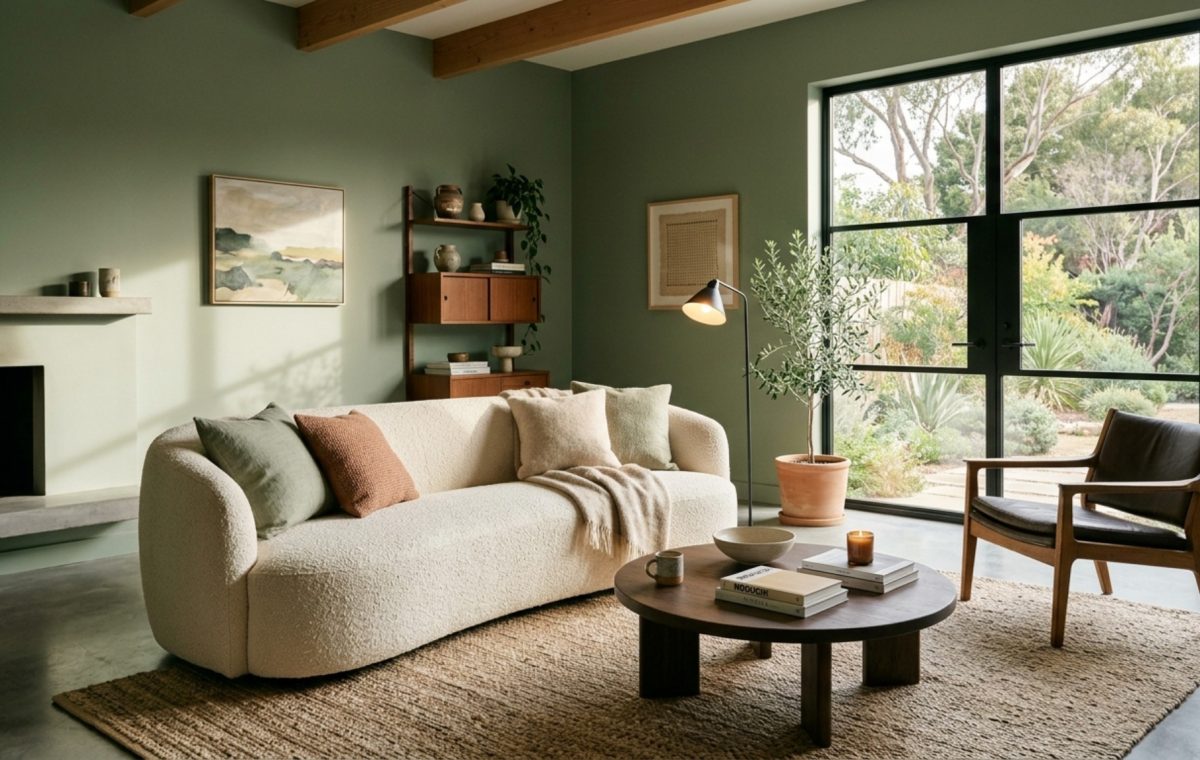
In smaller urban dwellings, these sage green living room ideas must work harder. In the composition above, we see how ‘negative space breathing room’ is utilized. By choosing a sage green accent wall behind a beige sofa, we create a sense of depth that actually makes the room feel larger. The green recedes visually, while the light-colored furniture moves forward. To prevent the small space from feeling boxy, we incorporate verticality—a tall, slender olive tree or a floor-to-ceiling sheer curtain in a sand tone helps draw the eye upward, celebrating the volume of the space rather than its footprint.
Tactile Contrasts: Pairing Sage Velvet with Matte Surfaces
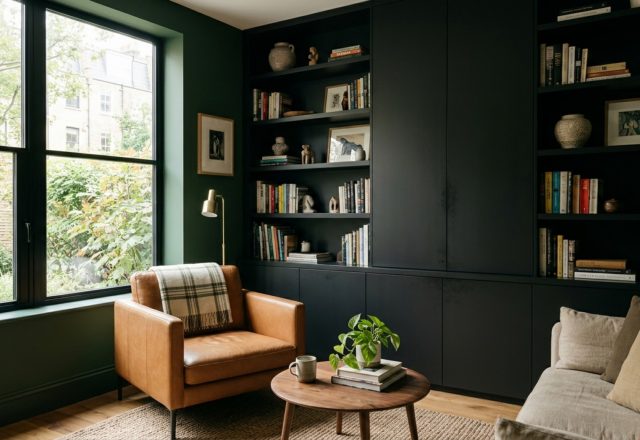
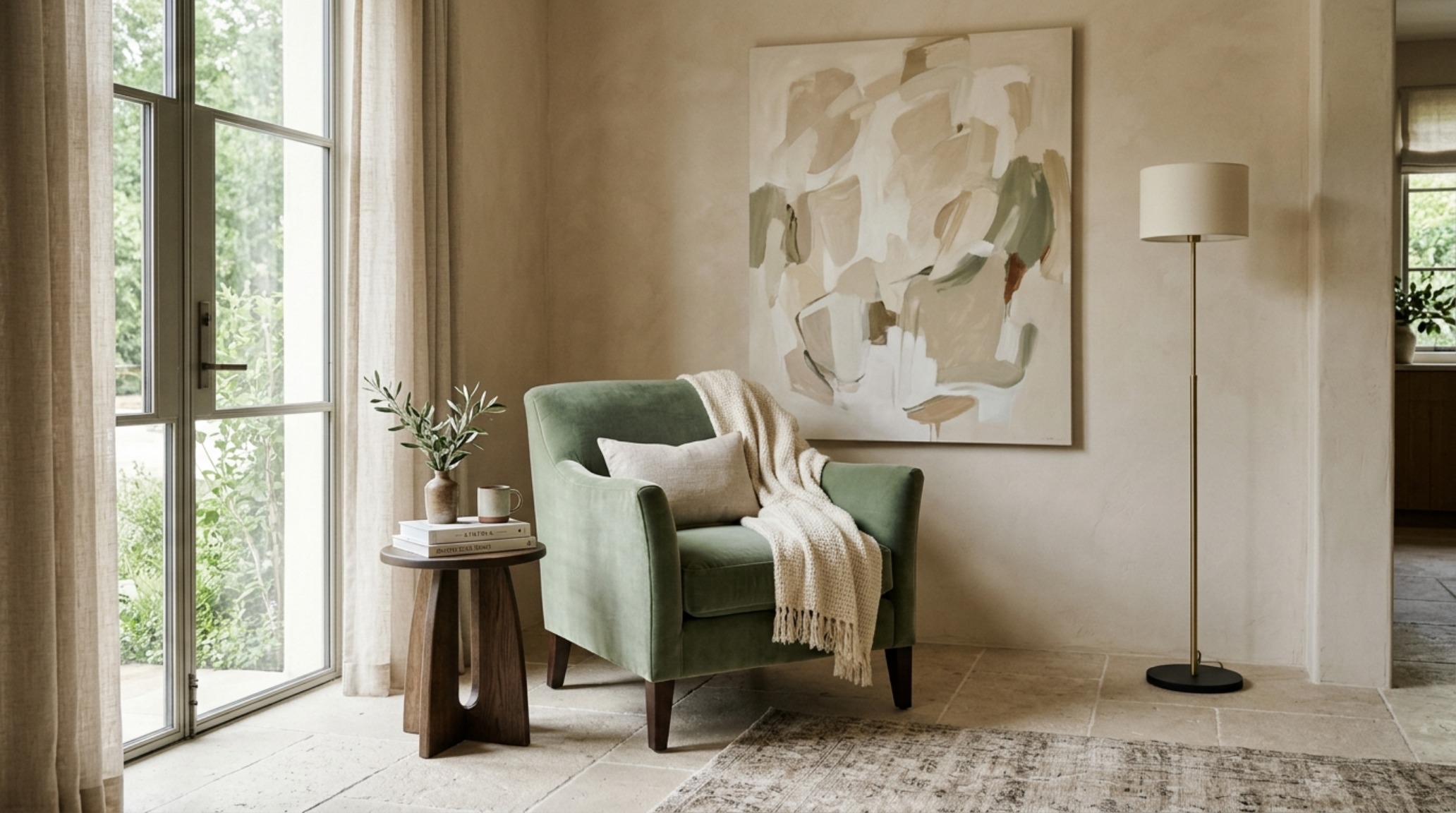
While the bouclé provides the main textural body, the ‘jewelry’ of the room comes from sage velvet accents. Velvet has a unique relationship with light; it absorbs and reflects it simultaneously, creating a sense of movement. A pair of sage velvet throw pillows or a single occasional chair in a deep forest velvet adds a layer of sophistication. When these sit against a matte-painted wall, the contrast in sheen creates a sophisticated, tonal vibration that feels incredibly intentional.
We also look to hardware to bridge the gap between the organic and the architectural. Brushed brass or blackened bronze elements—in the form of lamp stems, furniture legs, or tray edges—provide a sharp, clean line that prevents the room from feeling too ‘soft.’ These metals act as the ‘punctuation marks’ in your design sentence, providing clarity and a touch of modern discipline to the organic warmth.
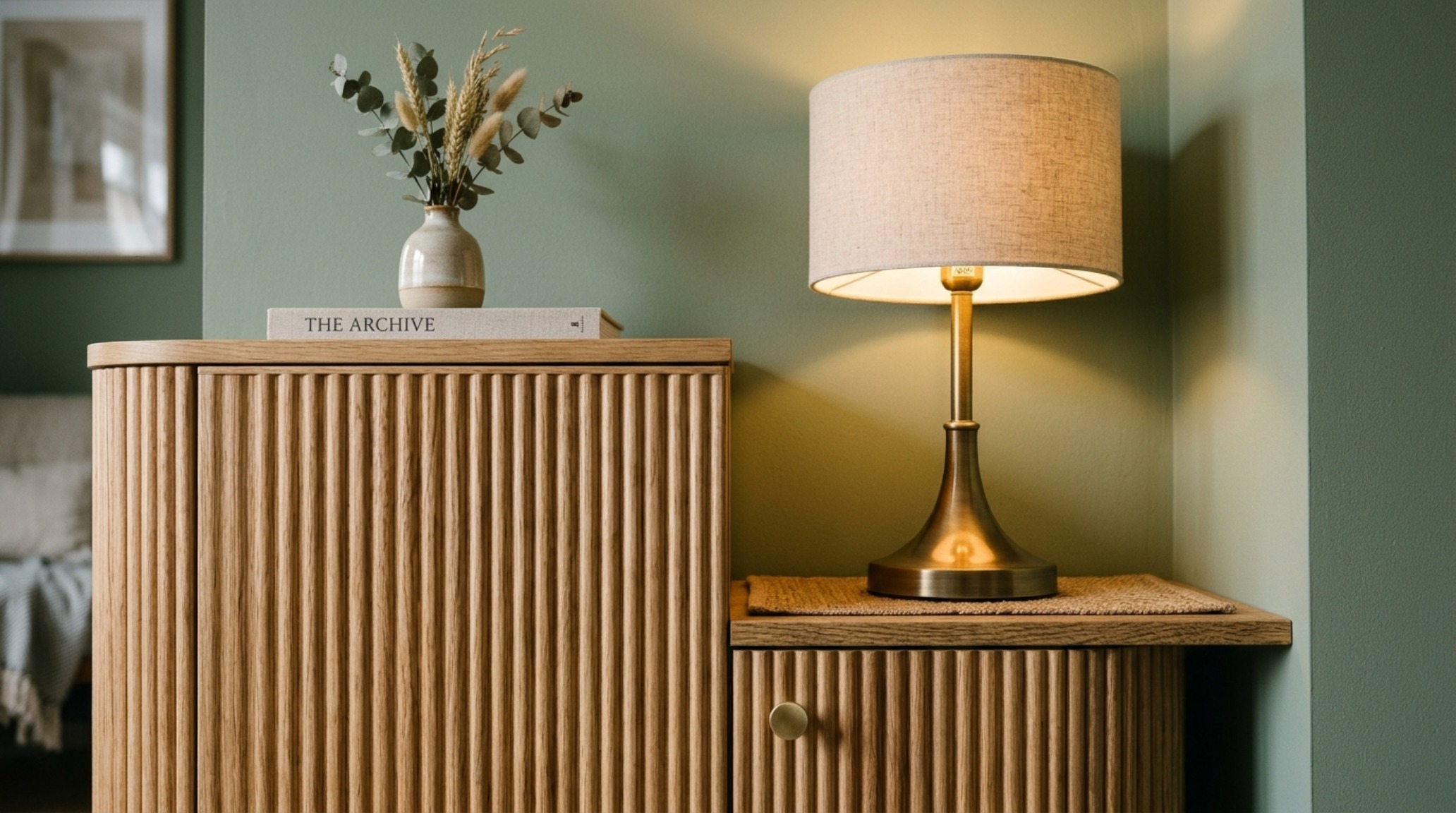
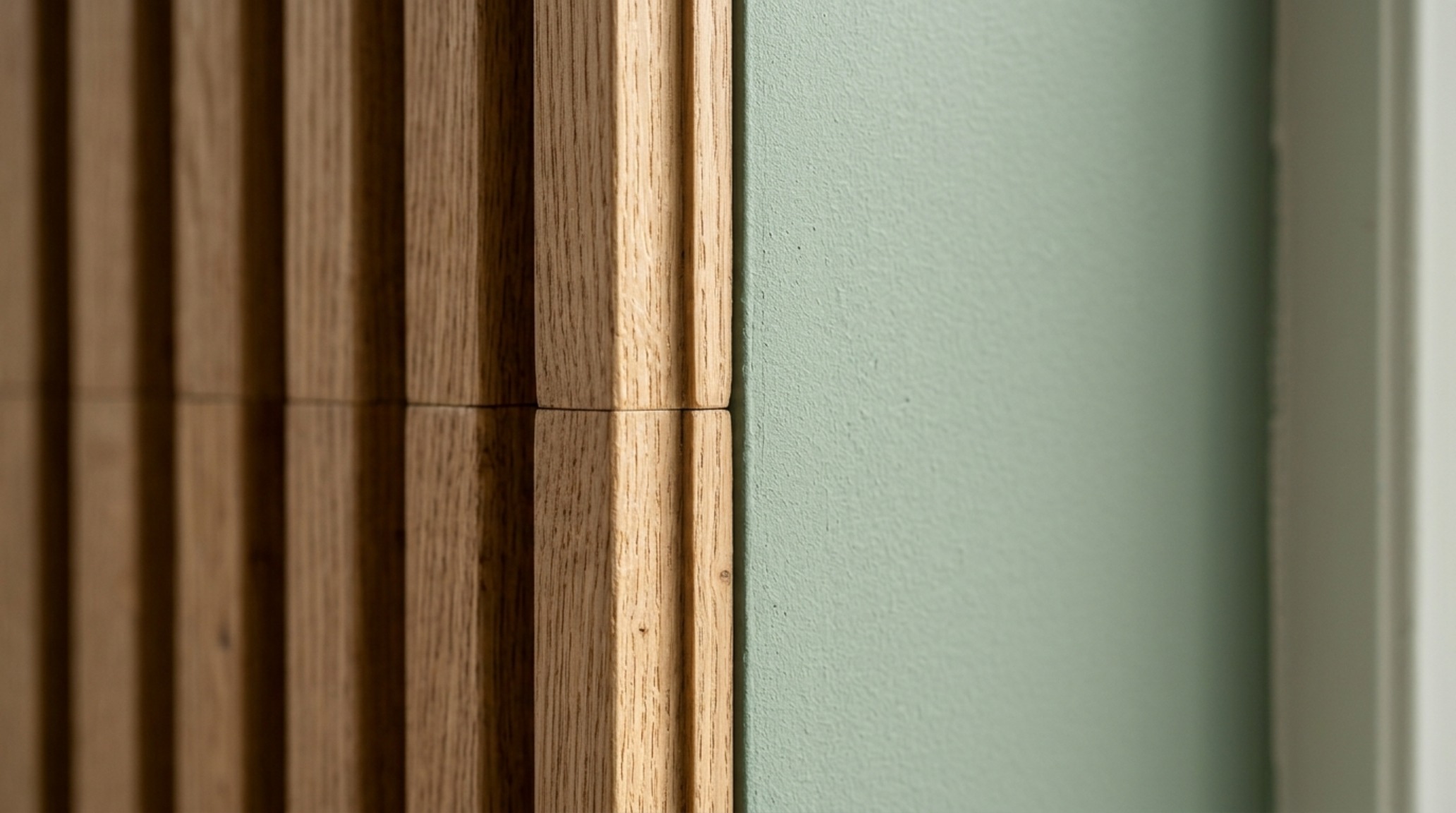
The interaction of light and shadow on fluted surfaces, as demonstrated in the image above, is a hallmark of the 2025 aesthetic. Whether it’s a fluted white oak media console or a ribbed ceramic vase, these vertical grooves create a rhythmic pattern that the eye finds inherently soothing. This is spatial cadence in action—using repetition and texture to guide the viewer through the room.
Architectural Specification & Material Matrix
Curated tactile palette, spatial dimensions, and atmospheric lighting index for this design scheme.
Ultimately, the beauty of these sage green living room ideas lies in their longevity. This is not a trend that will feel dated by next season because it is built on the foundations of human comfort and architectural integrity. By prioritizing the sensory experience—the way the light hits a limewashed wall, the softness of a bouclé seat, the cool touch of a stone table—we create a home that does more than just look good. We create a home that feels like an exhale. As we look toward the future of interior design, the most enduring luxury will not be the rarest material or the loudest color, but the quiet, intentional harmony of a space designed for the soul.
Editorial Silo • Recommended Architecture Studies
- Tactile Serenity: Fusing Sage Green with Raw Earth Textures and 2700K Ambient Mastery — Archival Design Case Study
- The Architectural Anchor: Engineering Spatial Flow and Visual Symmetry with Sage Green Geometries — Archival Design Case Study
Architectural Inspiration Lookbook
A high-resolution study in spatial proportions, tactile materiality, and light choreography curated for enduring modern living.
Curated Visual Lookbook
Design Gallery & Spatial Studies
A visual curation of architectural arrangements, lighting concepts, and material palettes featured in this space.