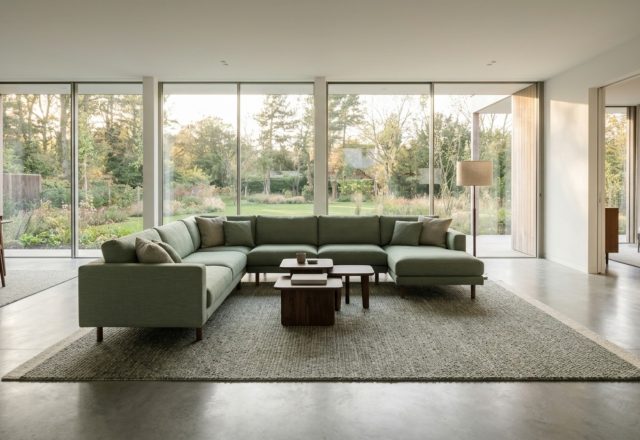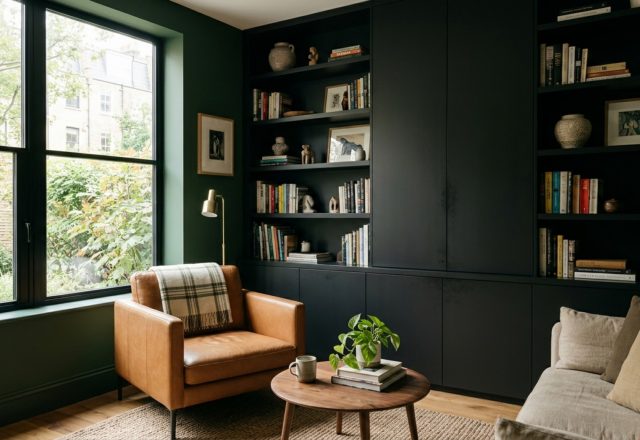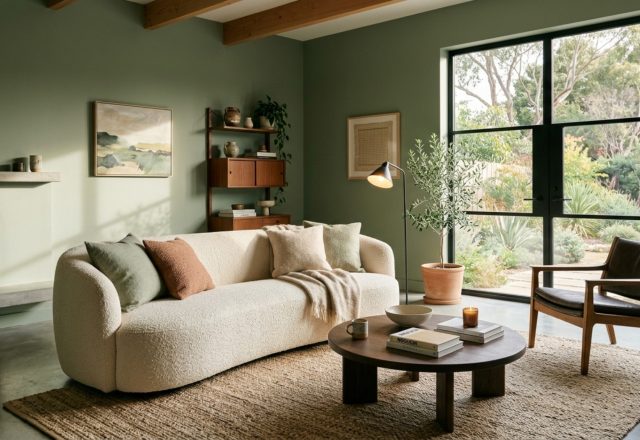
There is a specific, quiet magic that occurs when the eye rests upon a perfectly executed sage green living room. It is a color that does not demand attention but rather commands a sense of physiological calm. In the current design zeitgeist, where our homes have become multi-functional sanctuaries, the search for sage green living room ideas has evolved beyond simple paint selection. We are no longer just looking for a color; we are seeking a spatial atmosphere. By synthesizing the structural depth of architectural design with the tactile warmth of the ‘Organic Modern’ movement, we can transform sage from a mere pigment into a comprehensive tool for creating high-end, high-comfort living environments. This approach relies on a sophisticated interplay between muted greens, the raw honesty of earth-toned materials, and a disciplined adherence to the 2700K lighting rule.
The Alchemy of Sage and Stone: Why Texture is Non-Negotiable
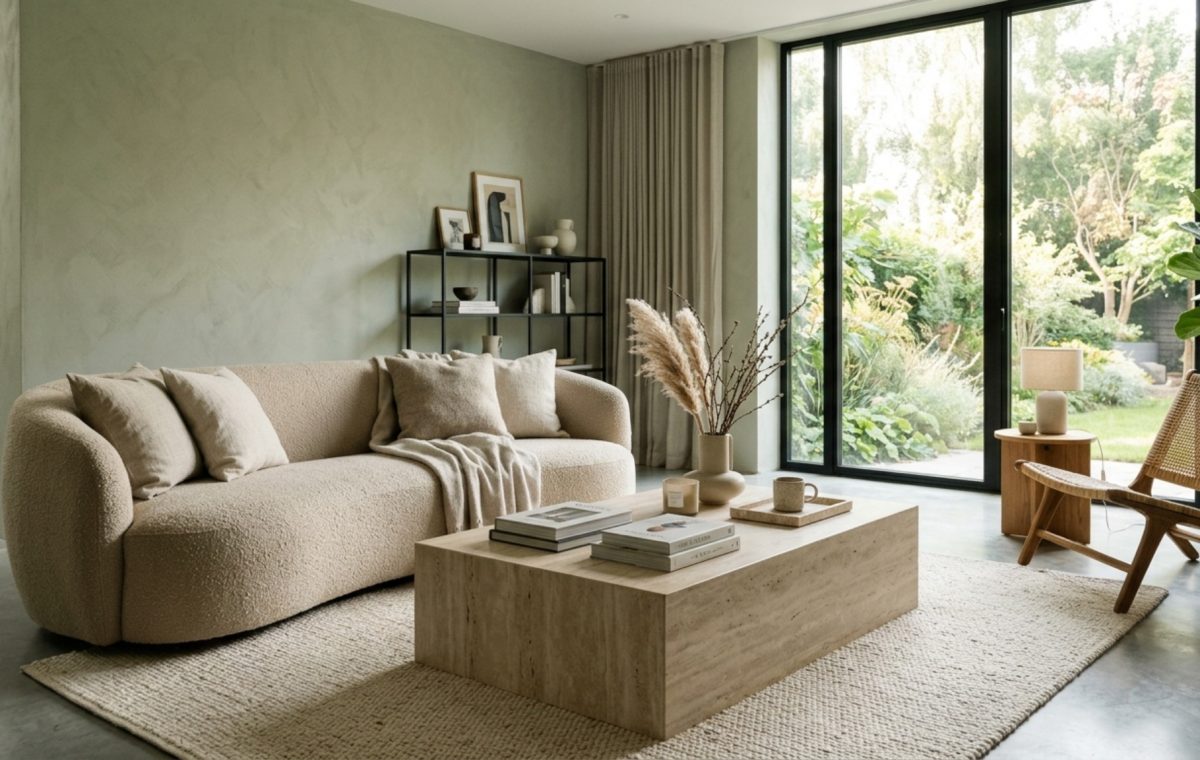
Color alone is a flat experience. To achieve a sense of ‘Quiet Luxury,’ the visual weight of sage green must be balanced by the physical presence of texture. Imagine a wall finished in Farrow & Ball’s French Gray—a color that fluctuates between green and grey depending on the movement of the sun. Against a smooth, drywall finish, it is pleasant. But against a lime-washed surface or paired with a vertical slatted oak feature, it becomes an architectural event. The organic modern aesthetic thrives on this high-contrast tactile layering.
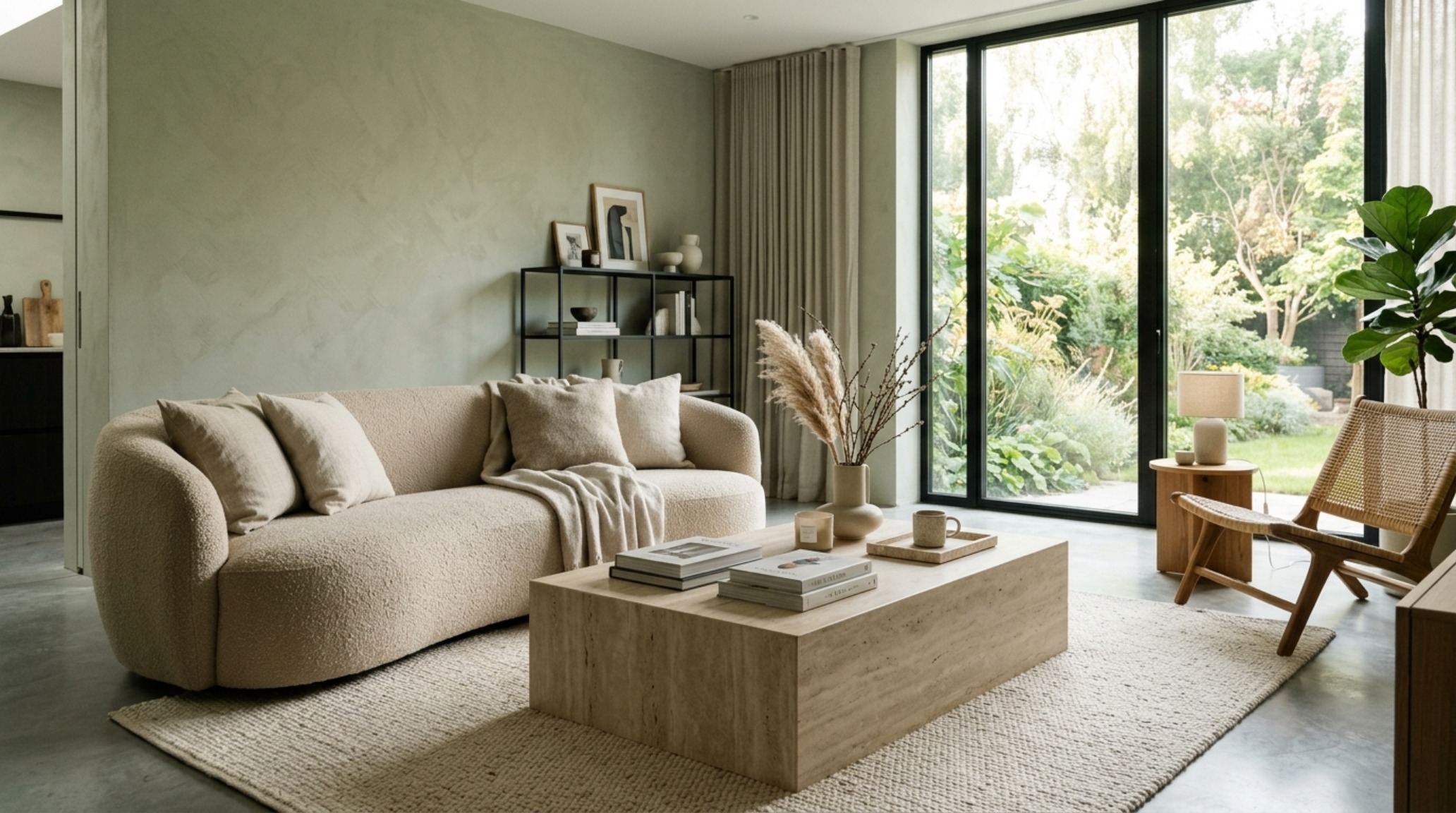
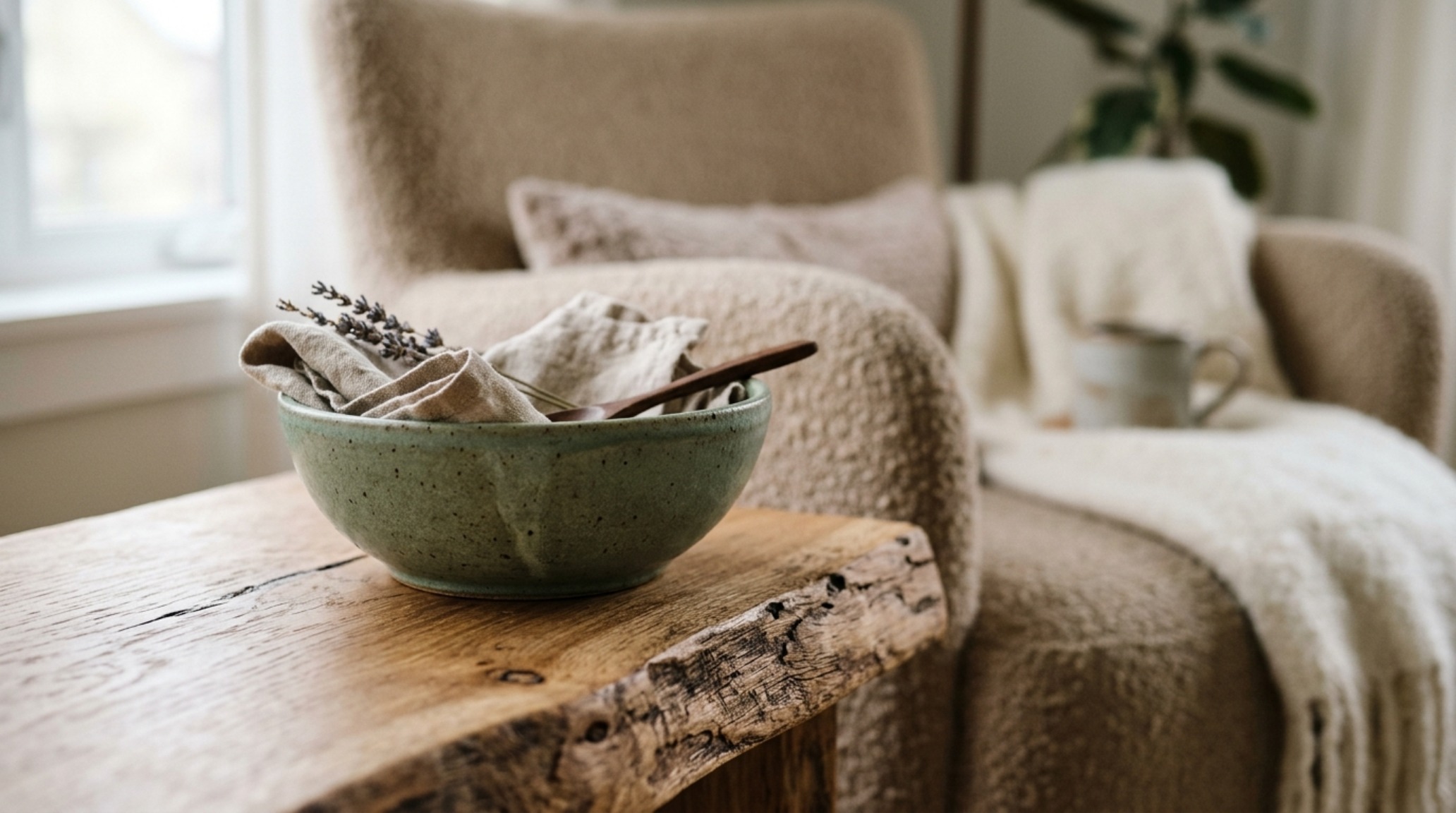
When selecting furniture to ground these sage green living room ideas, look toward materials that tell a story of origin. A beige bouclé sofa provides a nubby, irregular surface that catches the light in a way that velvet or flat linen cannot. When you place a honed travertine coffee table at the center of this arrangement—noting the 18-inch standard reach for ergonomic comfort—the coldness of the stone is softened by the warmth of the surrounding green. This is tactile grounding in its purest form. The ‘Organic Modern’ intersection is exactly here: where the precision of architectural lines meets the raw, unrefined beauty of nature.
Mastering the Glow: The 2700K Lighting Rule for Green Interiors
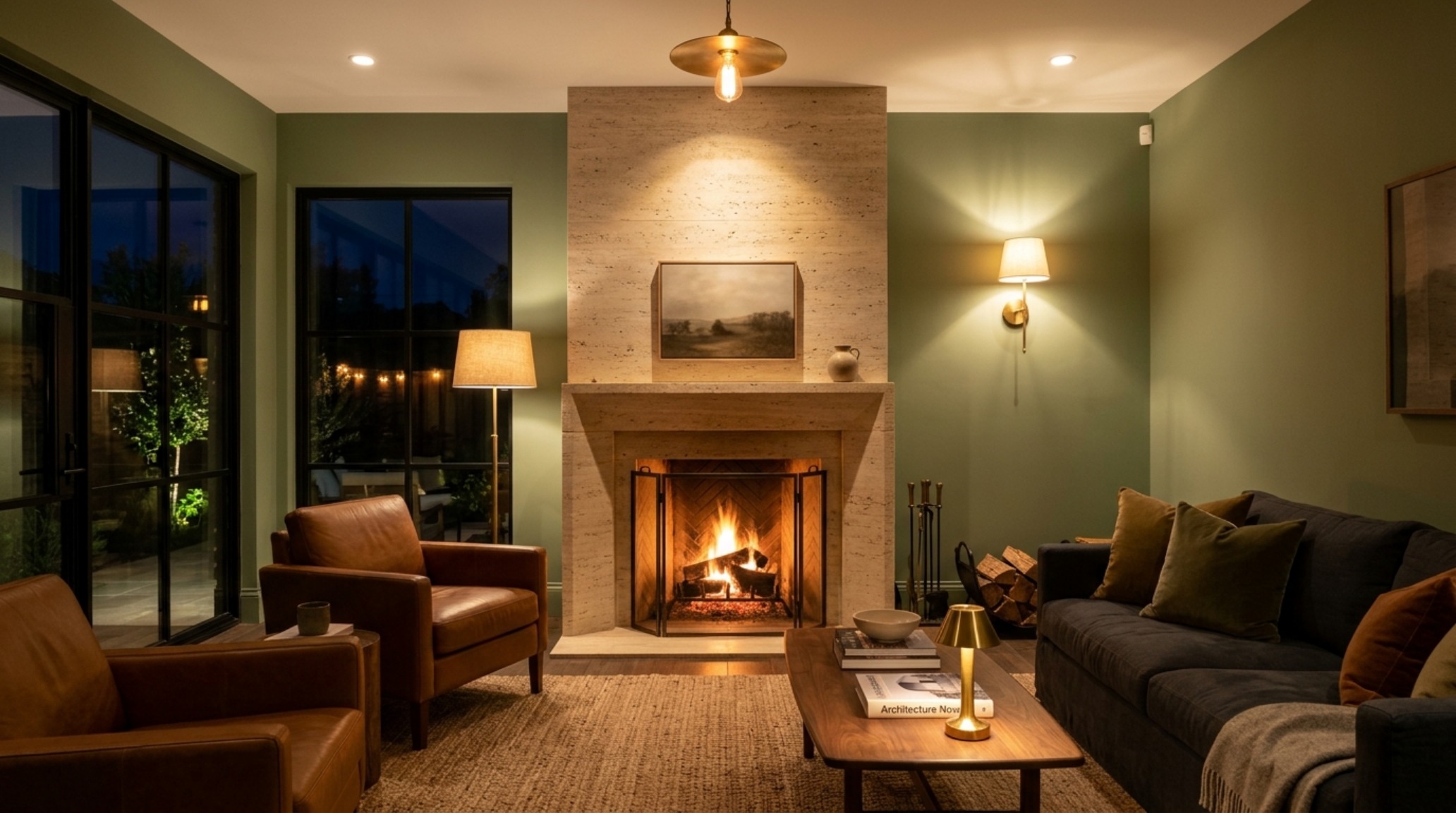
The most common failure in green-centric design is the neglect of color temperature. Green is a fugitive color; it shifts its personality under different light sources. Standard ‘Daylight’ bulbs (5000K) or even ‘Cool White’ (4000K) can strip sage of its organic warmth, leaving it looking sickly, clinical, or unnecessarily cold. To maintain a biophilic interior design ethos that feels inviting after sunset, the 2700K ambient mastery is non-negotiable.
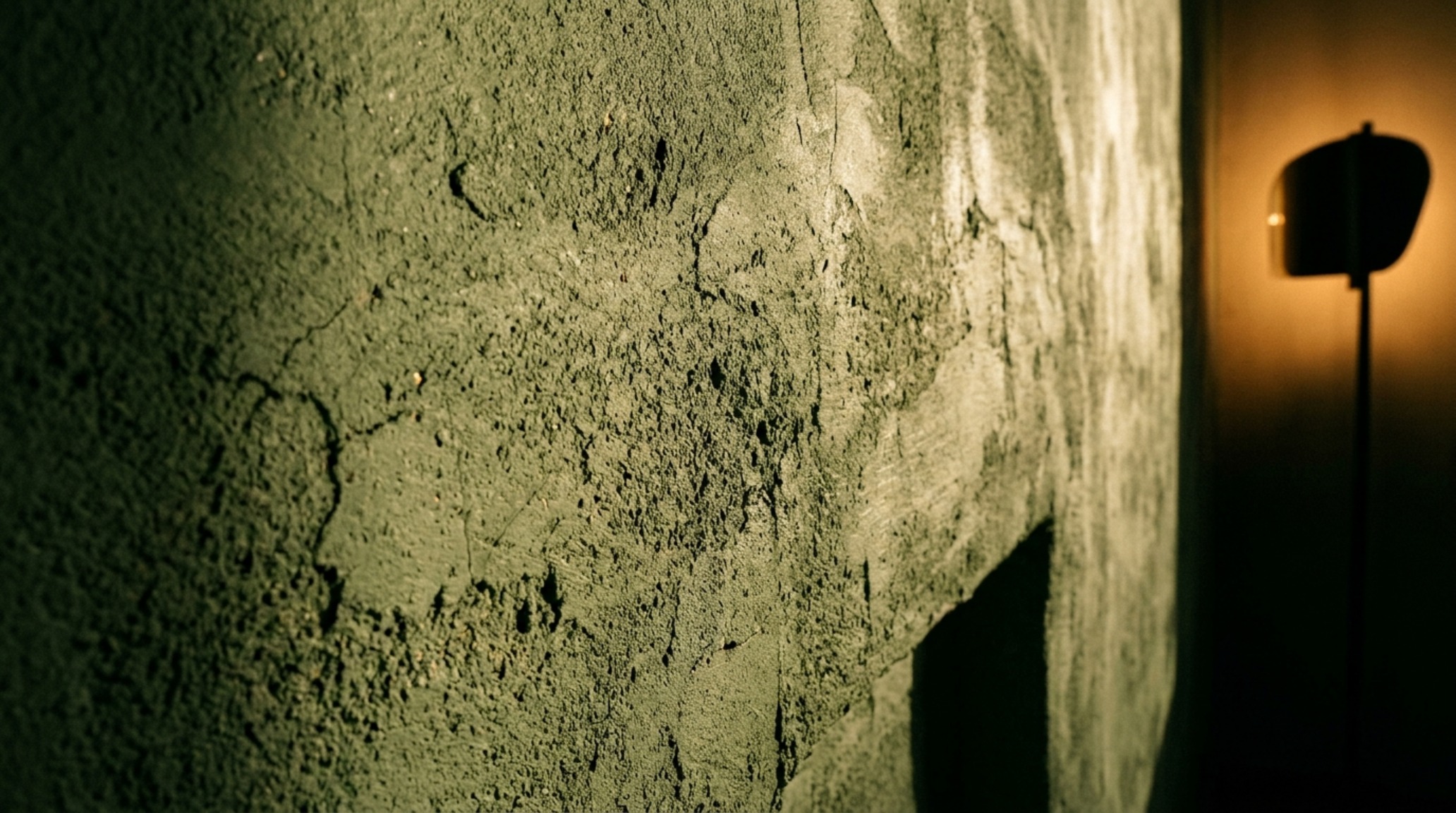
Lighting at 2700K mimics the golden hour of a setting sun. It introduces a subtle amber undercurrent that reinforces the yellow pigments within sage green, making the room feel like it’s glowing from within. However, temperature is only half the battle. High-end spaces require a High Color Rendering Index (CRI) of 90 or above. A high CRI ensures that the subtle nuances of your Benjamin Moore Saybrook Sage walls aren’t flattened by poor-quality LED chips. In a warm minimalist living room, lighting should be layered: recessed architectural downlights for general illumination, diffused directional spots for art, and low-level lamps for intimacy. This creates ‘shadow play,’ where the corners of the room recede naturally, emphasizing the spatial cadence of the furniture layout.
Spatial Cadence and the 36-Inch Rule
Architecture is as much about the space between objects as the objects themselves. In high-end living environments, ‘negative space’ acts as a breathing room for the eyes. When designing with sage green, it is easy to over-clutter with plants and accessories. Instead, focus on sightline alignment. Maintain a primary circulation path of at least 36 inches. This isn’t just a building code requirement; it’s a psychological one. A room that is easy to navigate feels inherently more luxurious and serene.
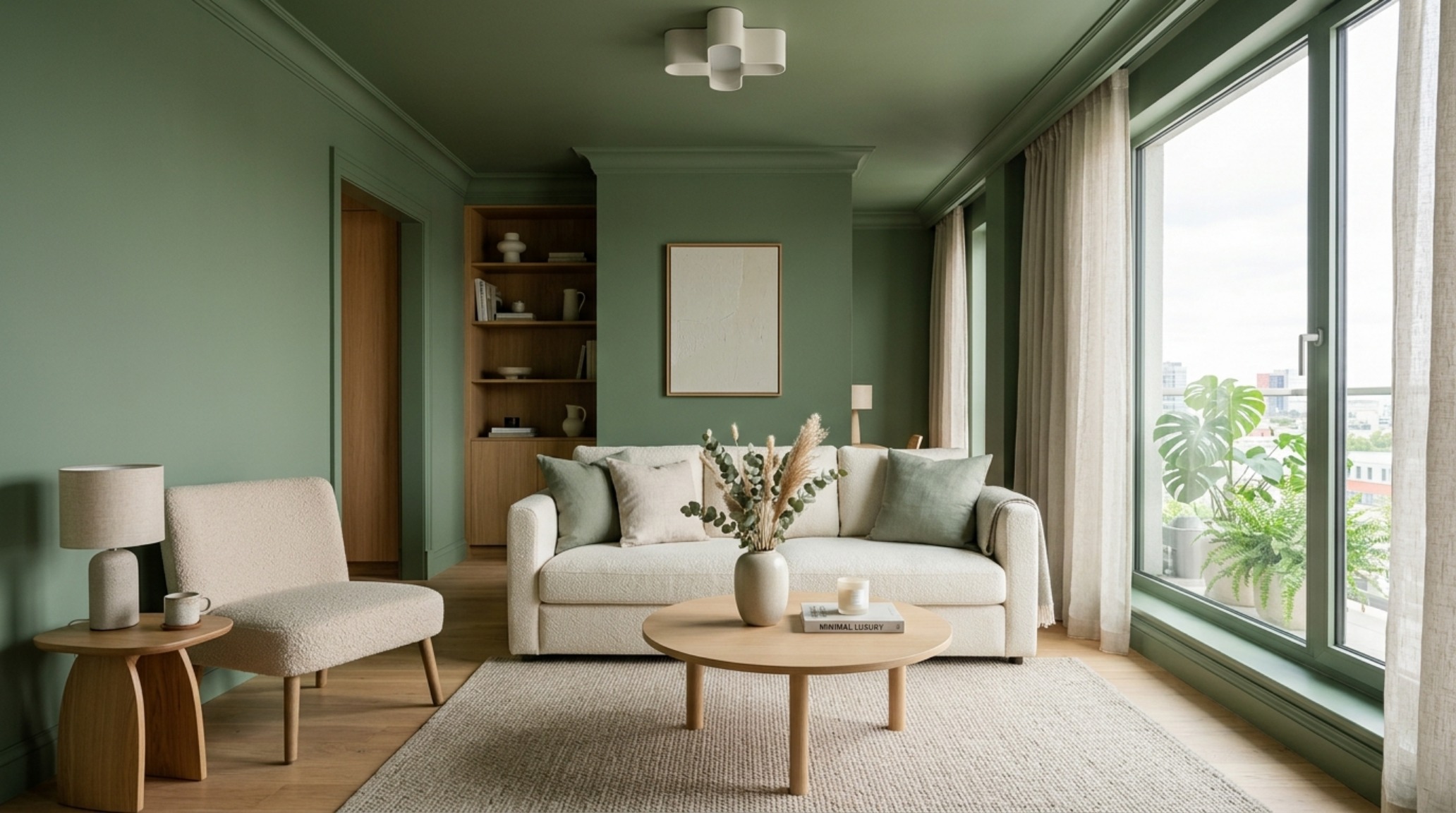
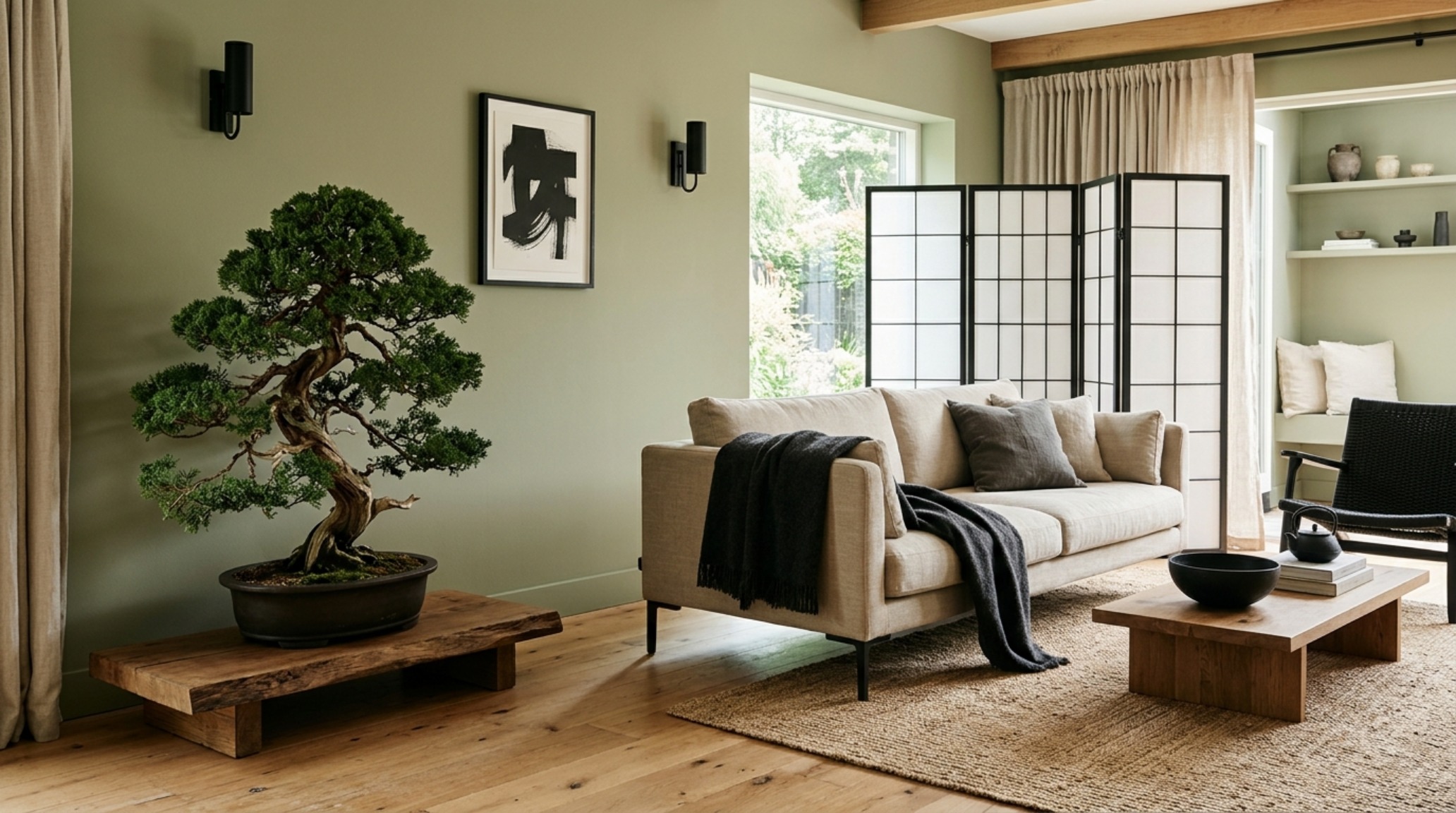
For small, high-end living environments, the use of sage green can actually be a spatial tool. Using a ‘color drenching’ technique—where the walls, baseboards, and even the ceiling are painted in the same muted green—blurs the boundaries of the room. This lack of visual interruption makes a small space feel expansive yet enveloping. Pair this with a low-profile beige sofa and transparent elements like a glass-topped table or thin-framed brushed brass shelving to keep the floor plan feeling light and airy.
The Earth Tone Palette: Beyond the Green
Sage green does not live in a vacuum. Its best supporting actors are found in the earth tone home decor spectrum. Think of Farrow & Ball’s Setting Plaster or a warm terracotta as an accent. These pinkish-beige tones are the natural complementary opposites of green on the color wheel. When used in small doses—perhaps a single ceramic vase or a textured throw—they provide a ‘visual pop’ that feels organic rather than jarring. This palette is the cornerstone of the Japandi sage green living room inspiration that has dominated Pinterest, combining Japanese functionalism with Scandinavian rusticism.
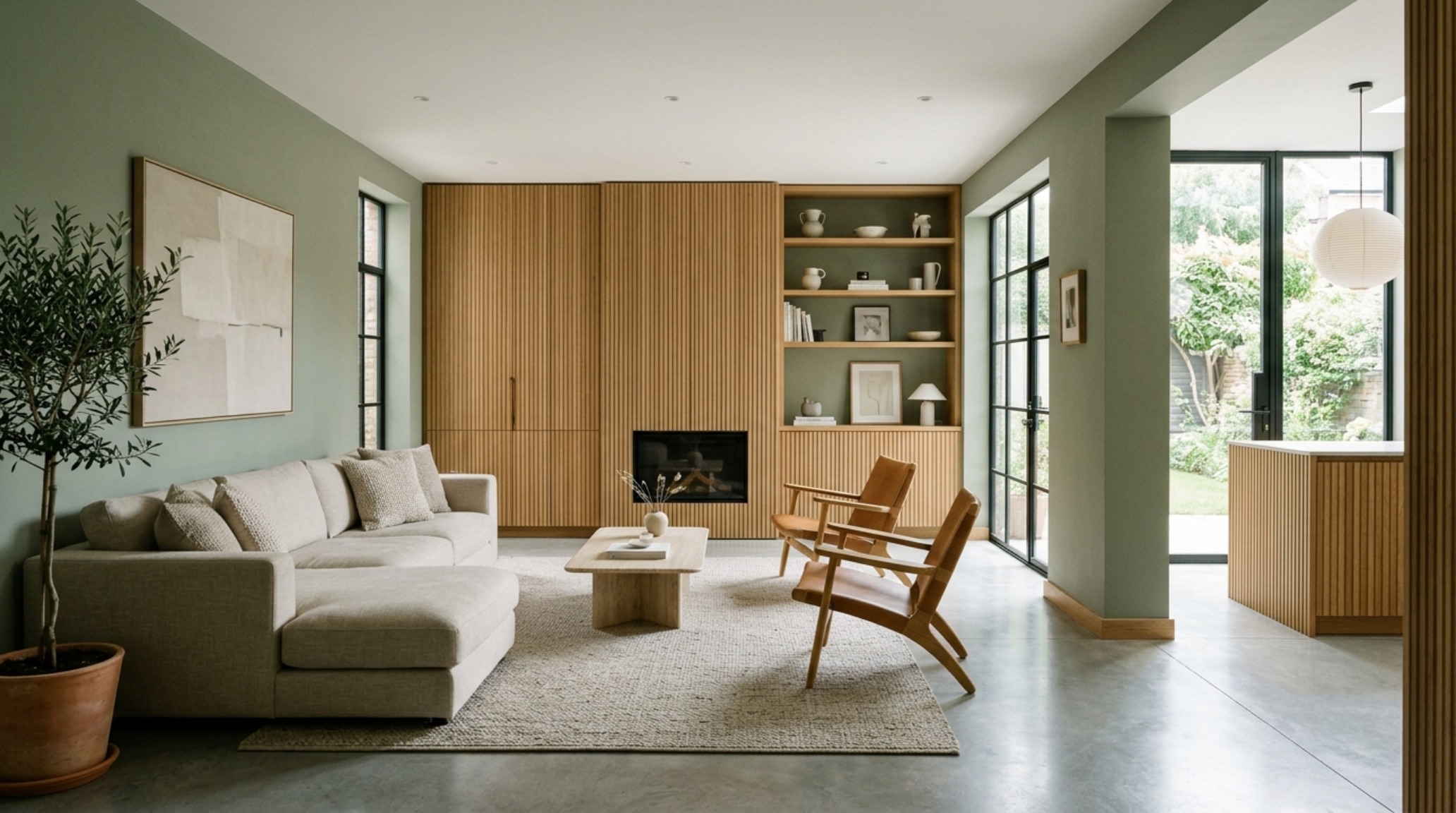
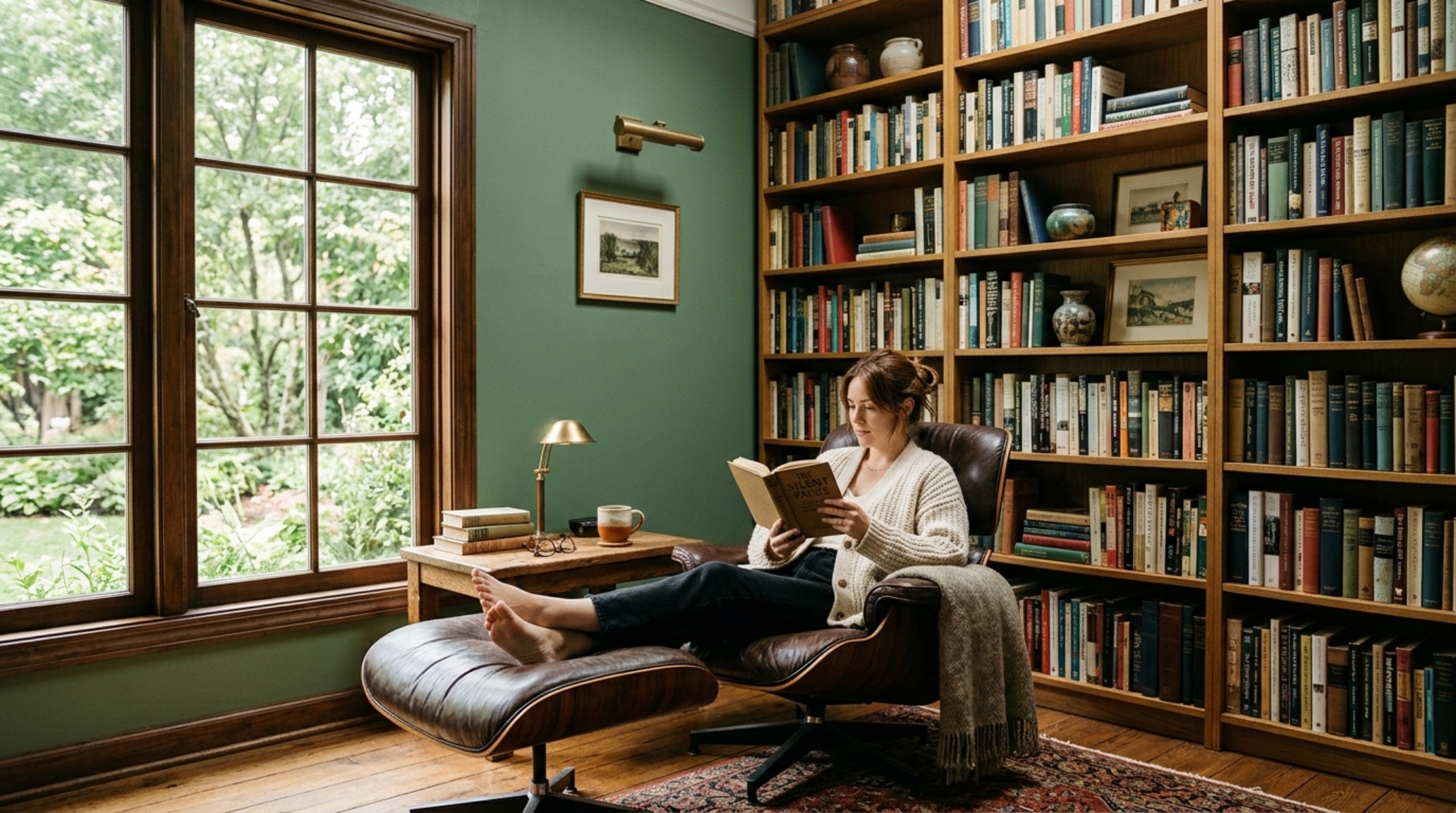
Integrating biophilic interior design isn’t just about adding a fiddle leaf fig in the corner. It’s about ‘sightline alignment’ with the outdoors. If your living room overlooks a garden, the sage green walls should act as a frame, pulling the exterior greenery inside. If you lack a view, use fluted oak wall panels to mimic the verticality of a forest. This structural depth, combined with the soft, diffused light of a 2700K fixture, creates a sensory sanctuary that prioritizes human comfort over sterile perfection.
Architectural Specification & Material Matrix
Curated tactile palette, spatial dimensions, and atmospheric lighting index for this design scheme.
Ultimately, the most successful sage green living room ideas are those that view the home as a living organism rather than a static showroom. By embracing the ‘Organic Modern’ philosophy, we allow our spaces to breathe. We move away from the frantic pace of digital life and toward a tactile serenity that grounds us in the present moment. Whether it is the way the light catches the weave of a bouclé chair or how the sage walls soften as the 2700K lamps flicker to life, these design choices create more than just an aesthetic—they create a sanctuary for the soul. Design, at its best, is an act of preservation: preserving our peace, our focus, and our connection to the raw, beautiful world outside our windows.
Editorial Silo • Recommended Architecture Studies
- The Architectural Anchor: Engineering Spatial Flow and Visual Symmetry with Sage Green Geometries — Archival Design Case Study
- The Infinite Small Room: Ergonomic Stealth Storage in Deep Moody Enclaves — Archival Design Case Study
Architectural Inspiration Lookbook
A high-resolution study in spatial proportions, tactile materiality, and light choreography curated for enduring modern living.
Curated Visual Lookbook
Design Gallery & Spatial Studies
A visual curation of architectural arrangements, lighting concepts, and material palettes featured in this space.