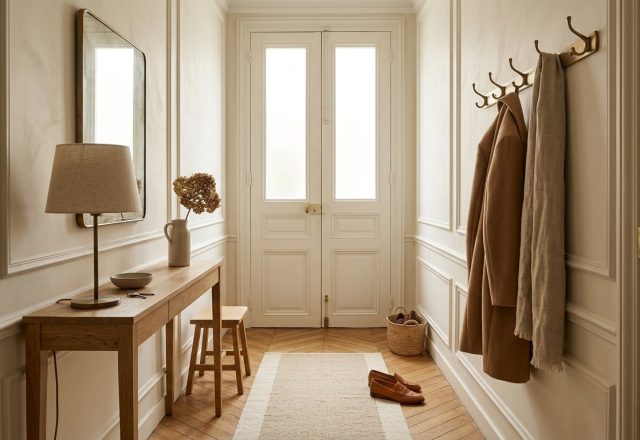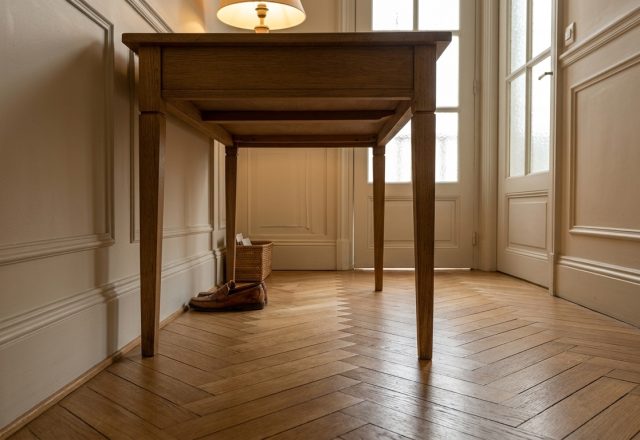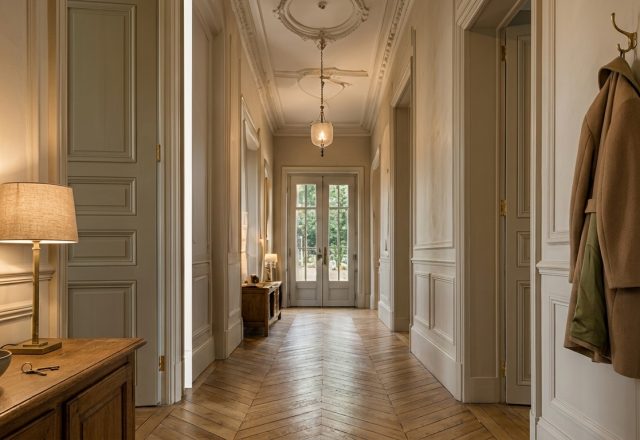
Most entryways become chaotic dumping grounds within forty-eight hours of move-in, yet classic European layouts manage to keep calm with surprisingly little hardware. Look down any classic Haussmann apartment corridor. You do not see endless built-in laminate cubbies or towering storage systems. Instead, you see architectural discipline doing the heavy lifting. The tall ceilings, beige wainscoting wall panels, and original herringbone parquet flooring establish baseline character before a single piece of furniture enters the frame.
That restraint is entirely deliberate. When the walls carry dimensional depth and natural shadow lines, the eye relaxes. You only need a lean console table—just deep enough for keys and a ceramic pitcher—paired with a row of patinated brass pegs for everyday outerwear. There is an honest trade-off here: you cannot hide clutter behind cabinet doors you have not built. Drop three pairs of mud-caked trainers or a week of unopened mail here, and the space immediately feels neglected. It demands daily discipline.
The Reality of High-Traffic Runners
Long, narrow corridors demand physical protection. A bare oak floor looks spectacular in real estate listings, but street grit and winter soles will strip that wax finish within months. A sturdy hallway runner rug solves the wear problem while deadening the hollow acoustic slap typical of tall, plaster-walled apartments.
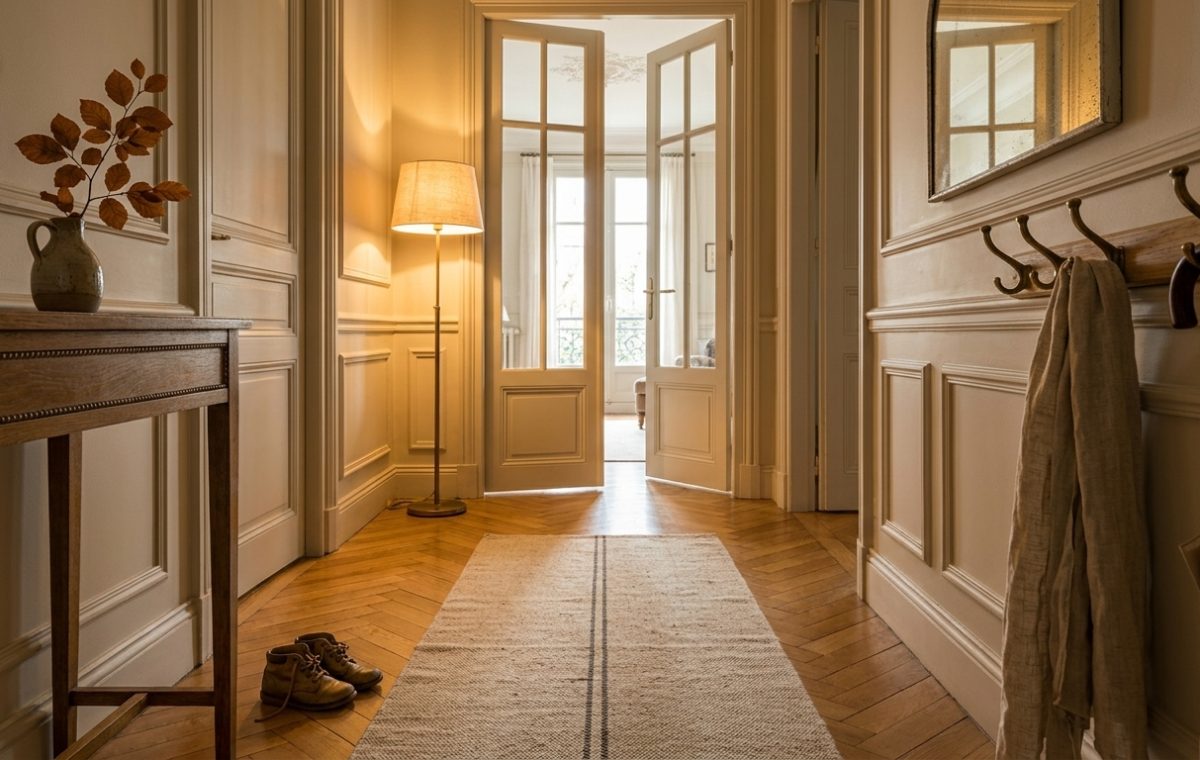
Notice the runner here: dense, flat-woven, and anchored with a quiet stripe down the center. It functions like canvas workwear rather than delicate decor. Skip high-pile wool runners in an entrance corridor. Thick rugs trap gravel, absorb dampness from wet boots, and constantly catch under the swing of interior doors. Pairing a low-profile flatweave with an anti-slip felt pad underneath prevents shifting on polished timber while letting the adjacent French door entryway swing open without catching.
Light the Path, Not the Ceiling
Modern renovations often default to grids of recessed ceiling spotlights. Resist that impulse. Blasting an eight-foot-wide corridor with downlights flattens architectural moldings, washes out wall colors, and makes an entryway feel like an airport terminal.
Instead, treat the circulation zone like a living space. A standing floor lamp with a linen drum shade introduces warm ambient lighting right at eye level. It grazes the painted boiserie, throwing soft shadows across the woodwork and creating an intimate path toward the living quarters. By day, tall glazed doors borrow sunlight from exterior rooms and pass it into the interior spine of the home. At dusk, that single glowing lamp does all the welcoming.
A well-planned corridor relies on friction reduction. How many steps does it take to hang a damp mackintosh, slide an umbrella onto a hook, or unlace your boots? Keep the ritual simple, respect the floor beneath you, and let the architecture shoulder the visual weight.
Editorial Lookbook & Photo Collection