The Optical Trick of the Zigzag
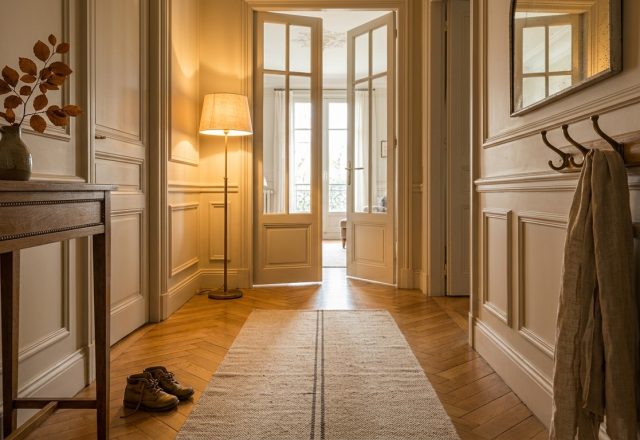
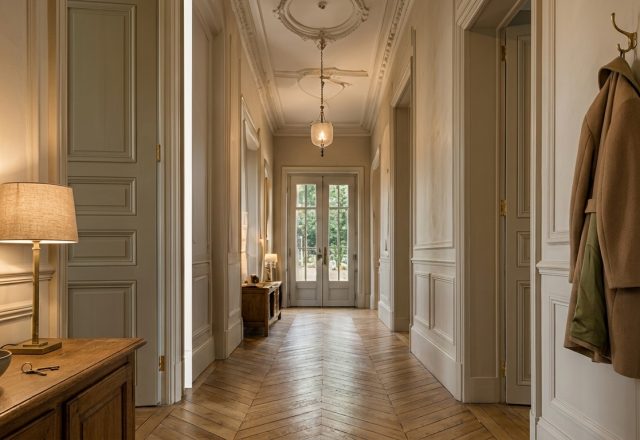
Most hallways get treated as dead transit zones. People dump their mail, kick off their shoes, and rush into the main living quarters. Yet an intentional floor pattern changes how quickly someone walks through the front door. Look down at a well-laid run of herringbone parquet flooring. The angled blocks break the tunnel effect typical of long, narrow corridors. Instead of funnelling your gaze straight down a dull runway, the interlocking grain pushes the eye outward toward the skirting boards. The space breathes.
It is subtle geometry. By angling rectangular boards at 90 degrees, you create directional tension. Light catching the wood from an adjoining French door hits alternating planks from different angles, making some staves appear honey-toned while others look deep amber. It feels alive underfoot.
Balancing Leggy Furniture with Strong Patterns
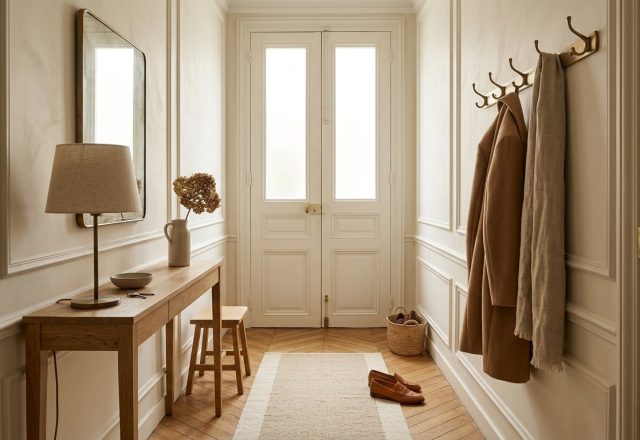
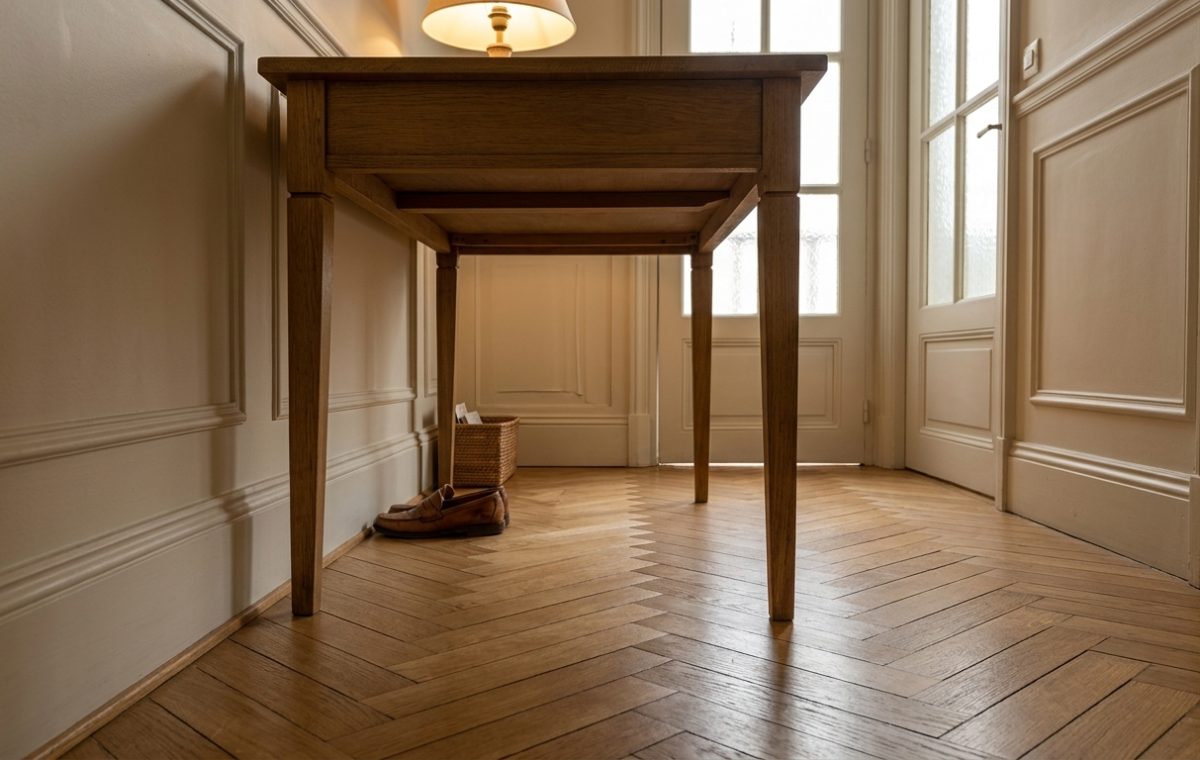
Patterned timber demands restraint above the baseboard. When the floor does the heavy lifting, heavy boxy furniture suffocates the room. A tapered entryway console table works because it preserves sightlines down to the floorboards. You want air circulating underneath. Notice how a pair of worn leather loafers resting casually near a wicker basket looks grounded rather than messy. That happens because open-legged furniture frames the floor rather than smothering it.
Proportion matters more than ornamentation. If your console table has thick, chunky pedestal legs, it will battle the directional lines of the parquet below. Pick slender tapered legs every single time.
Wainscoting and Lighting: The Supporting Cast
High-contrast floors need grounding walls. Classic wall moulding provides the exact vertical structure required to tame the rhythmic energy of chevron or herringbone. Painted panel moulding gives flat drywall architectural depth, creating shadows that echo the bevels in solid oak flooring. When you wash those wall details in warm, indirect lamplight rather than harsh recessed spotlights, the entryway shifts from utilitarian airlock to welcoming foyer. Soft light turns wood wax and satin paint into tactile surfaces.
The Upkeep Reality of Entry Timber
Let us be candid about maintenance. High-traffic entries are brutal on natural oak. Wet soles, street grit, and pet claws will test any finish within six months. Polyurethane forms a tough shell, but once it scratches, repairing a spot means stripping the board. A hardwax oil finish requires more regular attention—buffing high-friction paths twice a year—yet it allows you to spot-repair wear patches without sanding the whole hall back to bare timber. You accept the patina as part of the story. Do you prefer the lived-in warmth of aging timber in an entryway, or do you find yourself stressing over the first inevitable scuff?
Editorial Lookbook & Photo Collection