The Anatomy of a Well-Crafted Stairway
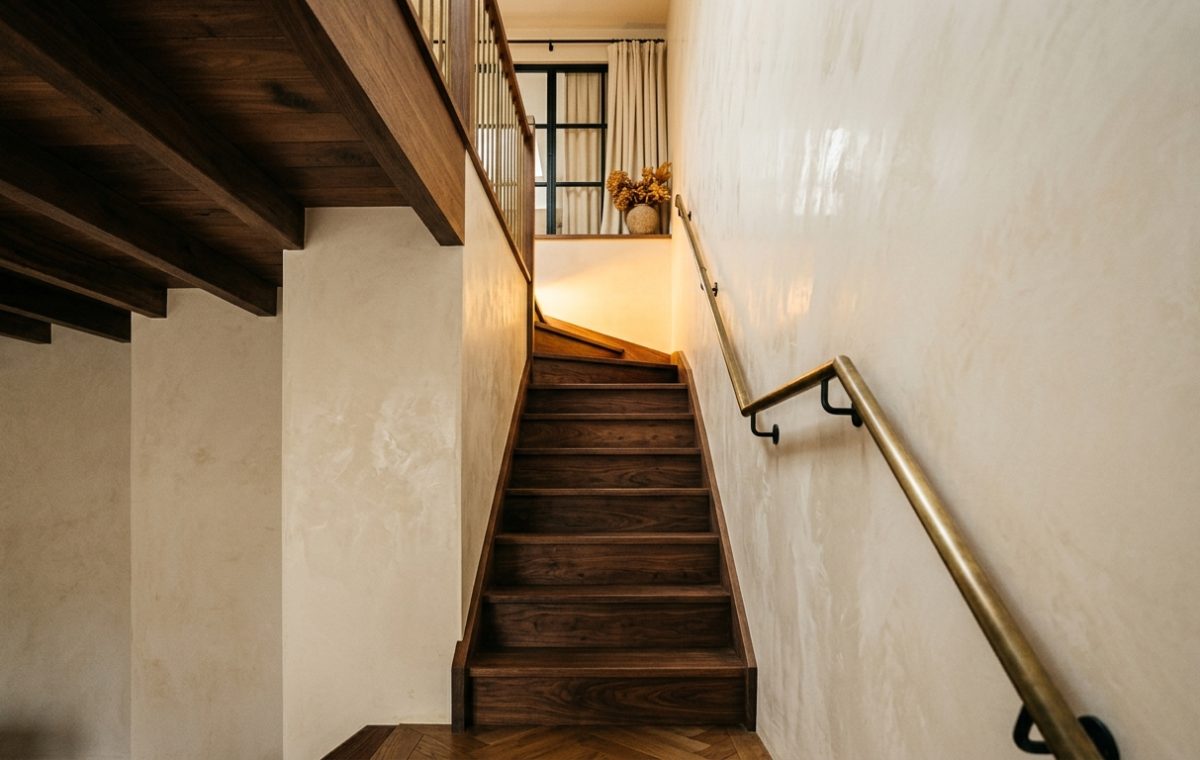
Staircases are often treated as mere functional connectors between floors. They consume square footage. They collect dust. Yet, when given proper design attention, a vertical transition transforms into the architectural spine of a home. Rich wooden treads anchored against soft, neutral plaster set a quiet tone before you even reach the upper landing.
Notice how the grain of the timber runs horizontally, grounding the vertical climb. Solid timber steps demand respect. They refuse to squeak if installed properly, and they age with a grace that engineered laminates simply cannot replicate. Wood brings warmth to stark modern layouts, grounding high ceilings without weighing down the visual field.
Balancing Materials and Textures
Contrast makes an interior sing. Here, heavy wooden stair treads meet delicate brass handrails fastened with minimal black brackets. This pairing keeps the staircase from feeling heavy or oppressive. A bulky banister would choke the narrow corridor. Instead, a slim metallic rail guides the hand effortlessly upward, letting the textured wall finish remain the star.
Wall texture plays a massive role in stairwells. Flat white paint turns a hallway into a hospital ward. Plaster with subtle movement catches the shifting daylight from the upper window, casting soft shadows that change from morning to dusk. Maintenance is worth considering here; high-traffic walls take a beating from hands and bags, so a scrubbable lime wash or durable Venetian plaster pays for itself within the first year.
- Choose dense hardwoods like white oak or walnut for minimal denting.
- Keep handrail profiles slim to maintain ergonomic comfort and clean lines.
- Incorporate low-profile stair lighting to prevent nighttime missteps without blinding glare.
Lighting the Vertical Journey
Dark stairwells invite accidents. Solving this requires more than a single flush-mount ceiling fixture dangling overhead. Integrated stair lighting—whether tucked neatly beneath the nosing or washing softly down the wall—creates safety while adding drama. Natural light from a high-set window floods the upper turn, bouncing off warm wood tones and making small footprints feel expansive.
How does your current entryway handle the transition between floors? Take a close look at your stair treads today. Are they begging for a simple stain refresh, or is it time to rethink the entire vertical volume of your home?
Editorial Lookbook & Photo Collection