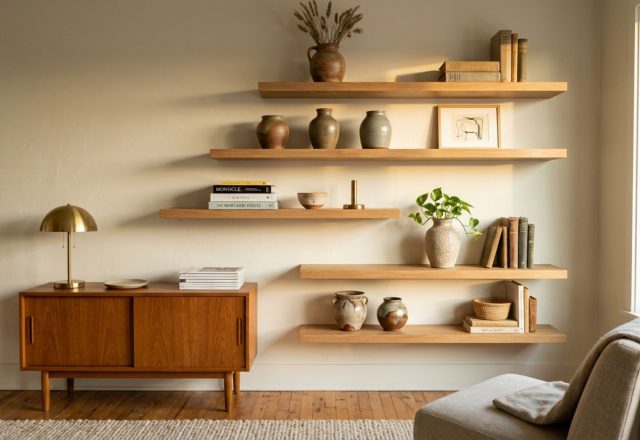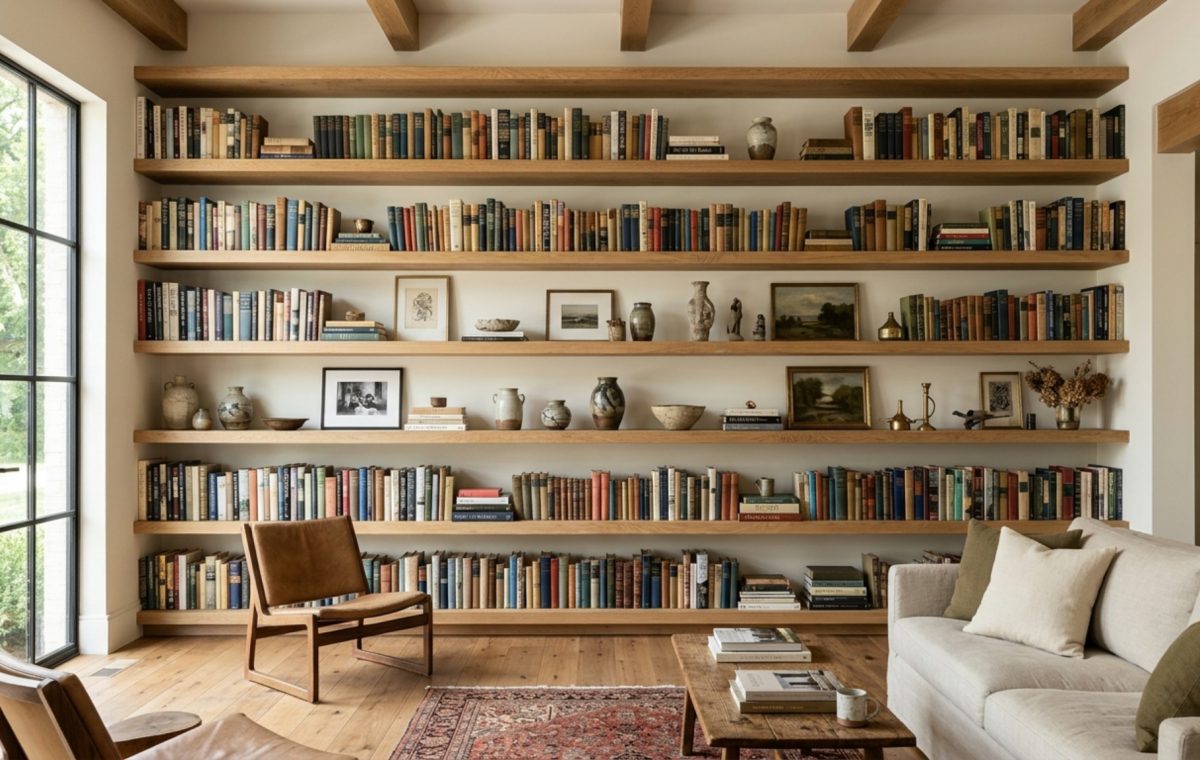
There is a specific, quiet resonance that happens when a home feels lived in rather than curated for a catalog. Currently, the design world is captivated by a concept known as ‘Bookshelf Wealth,’ but to the trained architectural eye, this isn’t merely a viral trend; it is a return to the soulful, structural integrity of the home library. At its heart, this aesthetic is about the intersection of personal history and intentional design. When we explore living room floating shelves ideas, we aren’t just looking for storage solutions; we are looking for a way to ground a room’s volume, create rhythm on a blank vertical plane, and tell a story through materiality and light.
The Architectural Anatomy of Bookshelf Wealth
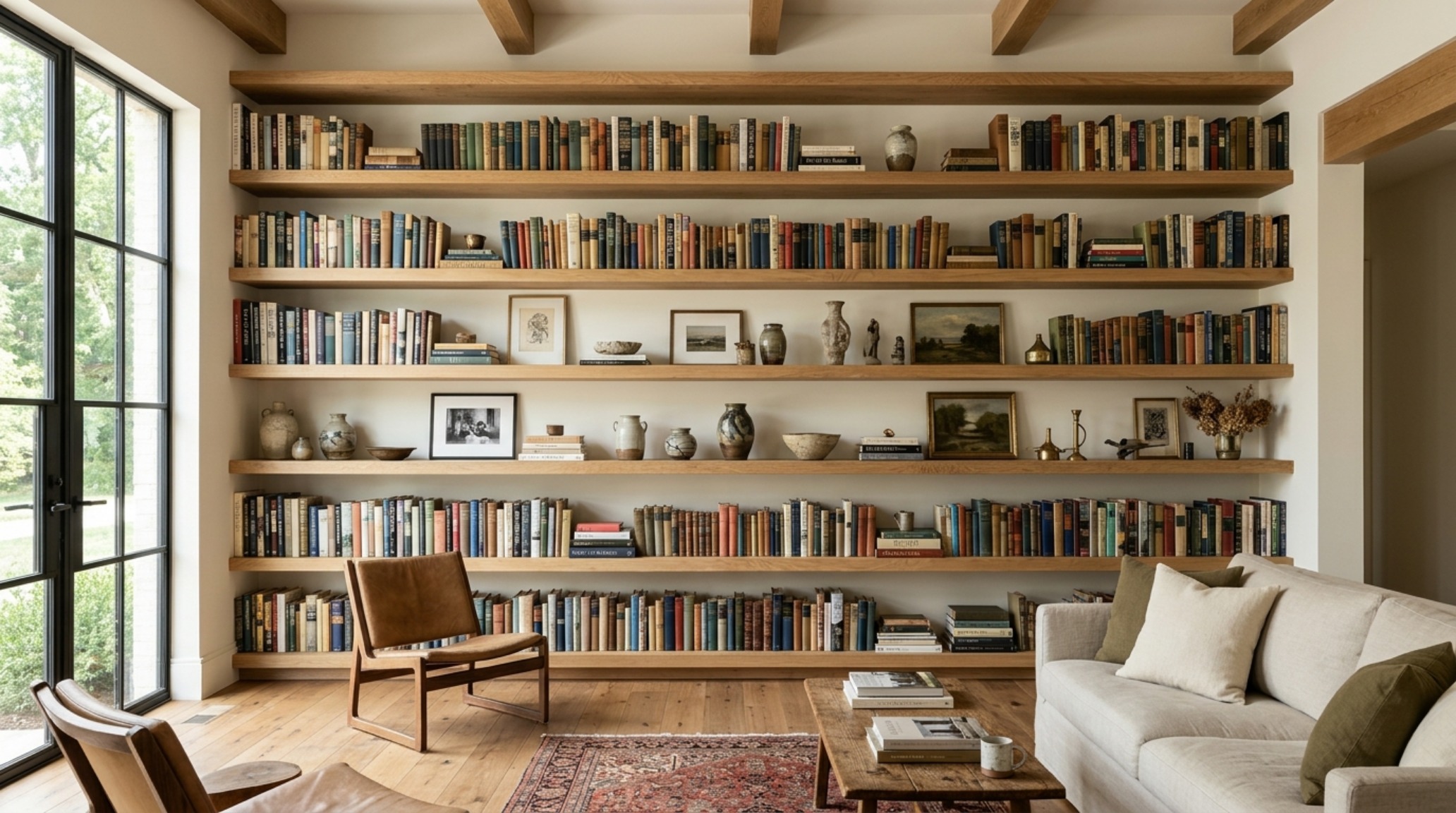
To understand what is bookshelf wealth aesthetic, one must look past the books themselves and examine the framework holding them. In architectural terms, bookshelf wealth is defined by ‘built-in permanence.’ Even when using living room floating shelves ideas architecture focuses on the shelf as an extension of the wall rather than an accessory. We look for shelves that possess a ‘heft’—usually a thickness of at least 2 to 3 inches—to provide a sense of structural gravity.
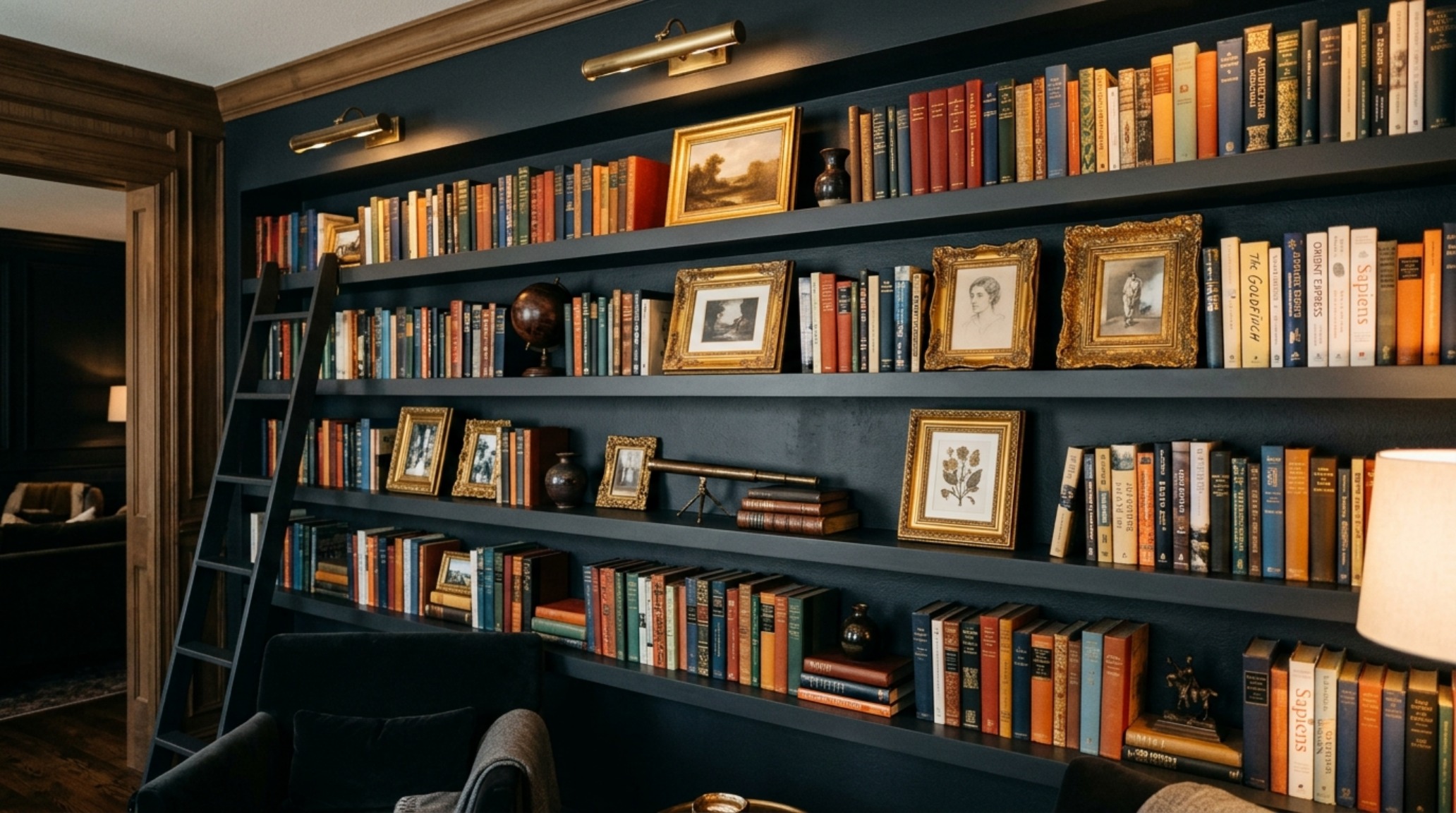
The spatial cadence of a well-designed shelf wall relies on the tension between the objects and the ‘negative space breathing room’ around them. If every inch is packed, the eye becomes exhausted. If it is too sparse, the room feels clinical. The objective is a curated density. Think of your shelves as a grid where some ‘cells’ are dense with vertically and horizontally stacked vintage hardcovers, while others hold a single, significant piece of ceramic or a framed sketch, allowing the wall color—perhaps a soft Benjamin Moore Swiss Coffee—to peek through and provide visual relief.
Living Room Floating Shelves Ideas Layout and Sightline Alignment
When planning your living room floating shelves ideas layout, the first consideration is the primary sightline. When you enter the room, where does the eye naturally land? A common mistake is to stop the shelving too low or to start it too high. To achieve a truly integrated look, floating shelves should often span the entire width of an alcove or a designated architectural ‘zone,’ creating a horizontal rhythm that widens the room.

We often use the 1/3 rule in architectural styling: one-third books, one-third art and objects, and one-third empty space. This ratio ensures the ‘wealth’ feels authentic and earned, not forced. From an ergonomic perspective, the most ‘valuable’ real estate on your shelving unit is between 30 and 70 inches from the floor—the ‘touch zone.’ Objects placed here should be tactile and frequently handled, while the highest shelves are reserved for larger, sculptural pieces that define the room’s upper atmosphere.
The Tactile Language: Luxury Living Room Floating Shelves Ideas Textures
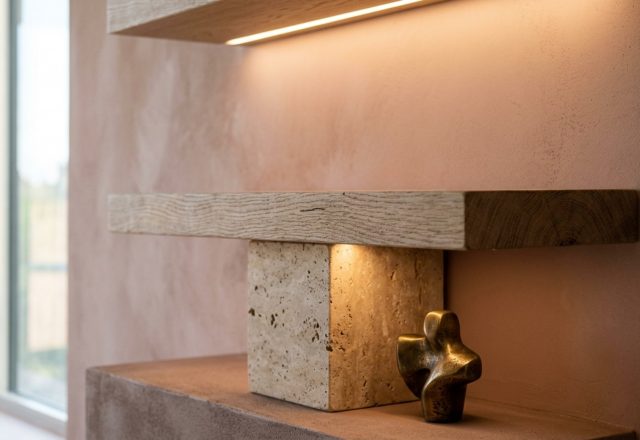
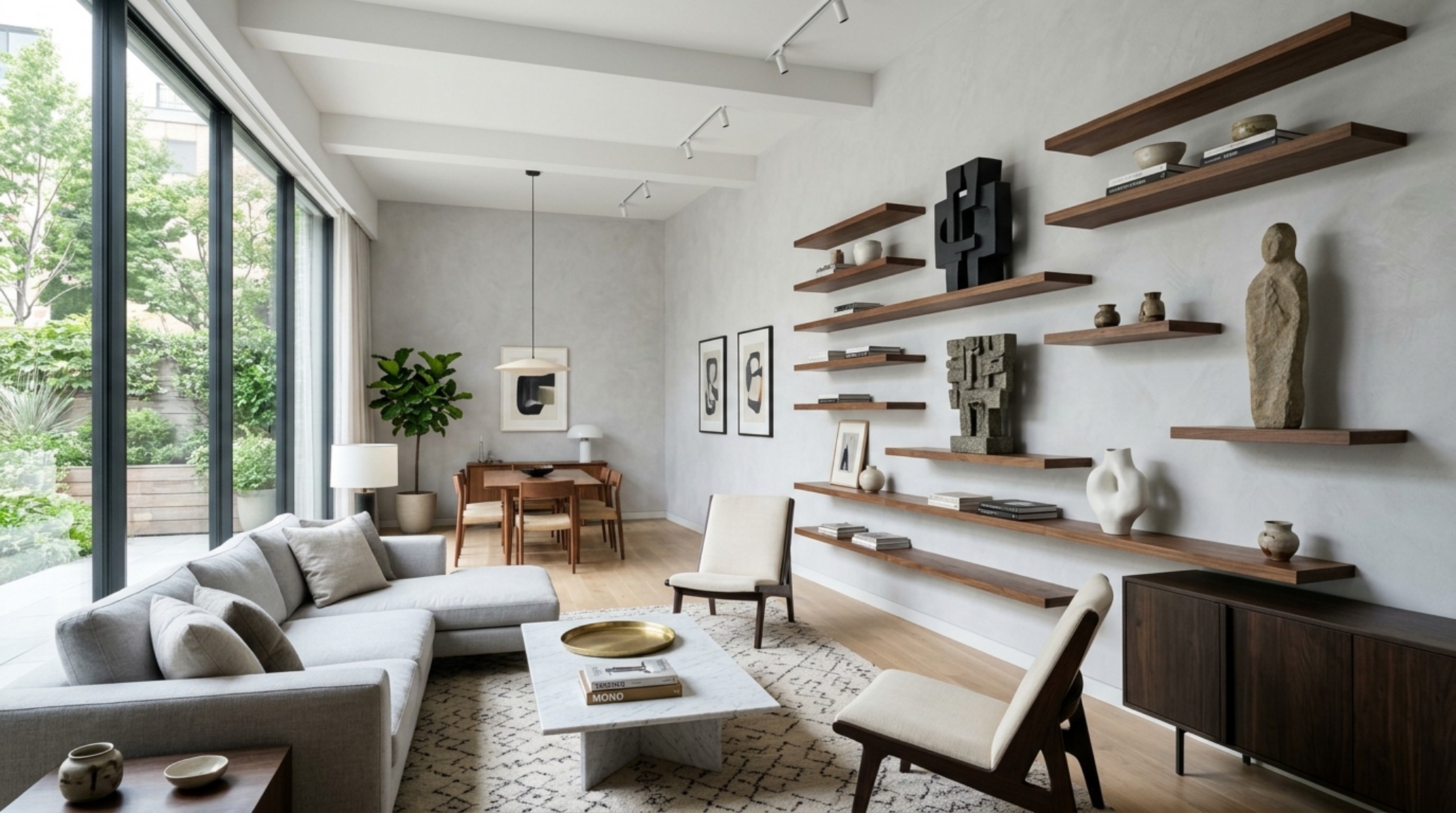
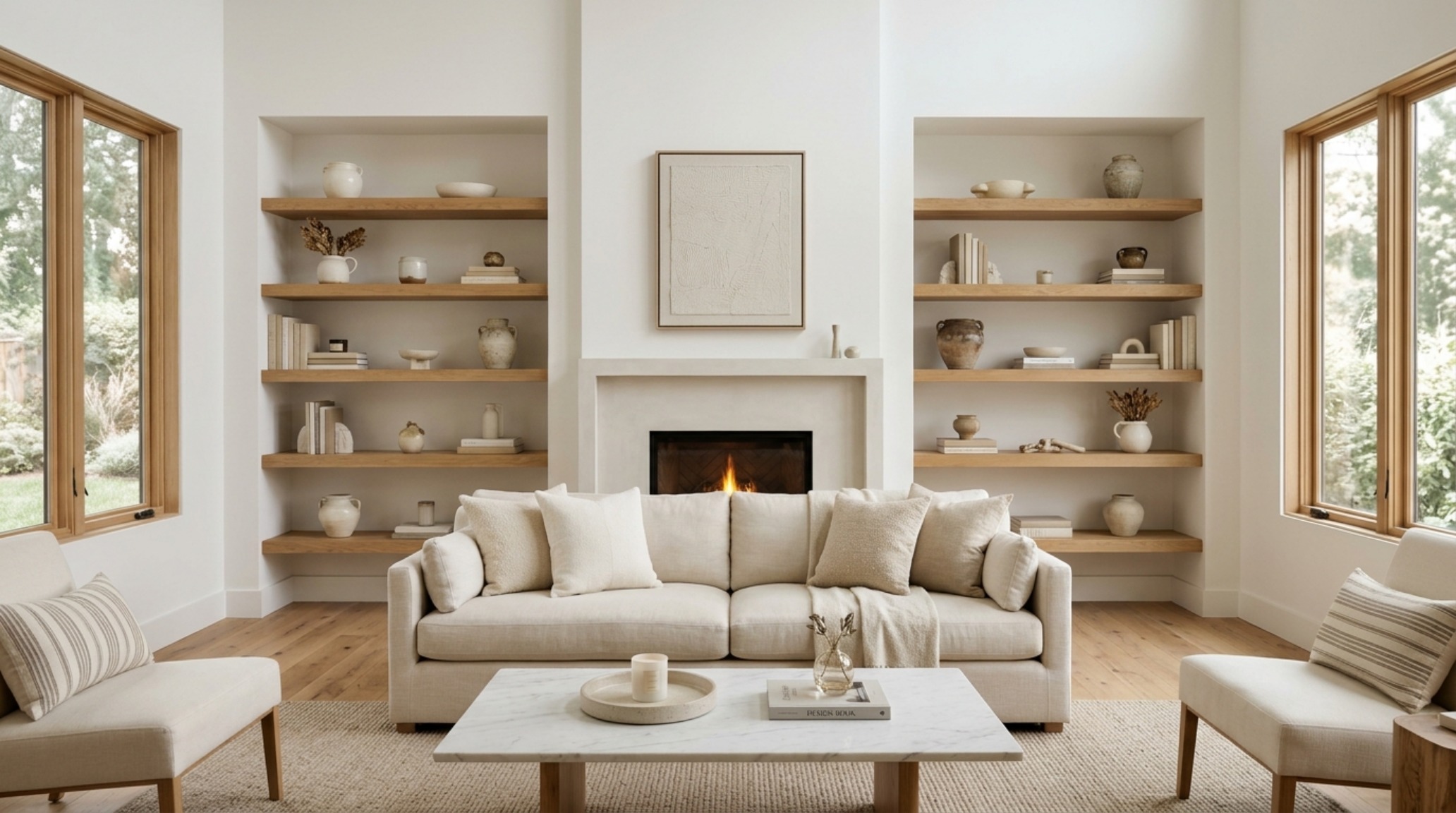
The ‘wealth’ in this aesthetic is often communicated through a luxury living room floating shelves ideas textures palette. We are seeing a move away from the high-gloss, sterile whites of the mid-2010s toward more ‘honest’ materials. Imagine thick-cut, rift-sawn White Oak with a clear matte finish, or even honed Silver Travertine slabs used as floating ledges. These materials provide a ‘tactile grounding’ that synthetic laminates simply cannot replicate.
The backdrop of the shelves is equally important. To add depth, consider ‘shadow play’ by painting the back of the shelving area one shade darker than the surrounding walls, or applying a subtle textural finish like Portola Paints Roman Clay. This creates a stage-like effect for your collection, making the objects ‘pop’ against a soft, plaster-like matte surface. When the light hits these varied textures—the rough edges of a vintage book, the smoothness of a marble bust, the grain of the oak—the room gains a three-dimensional quality that feels incredibly sophisticated.
Living Room Floating Shelves Ideas Ergonomics and Clearances
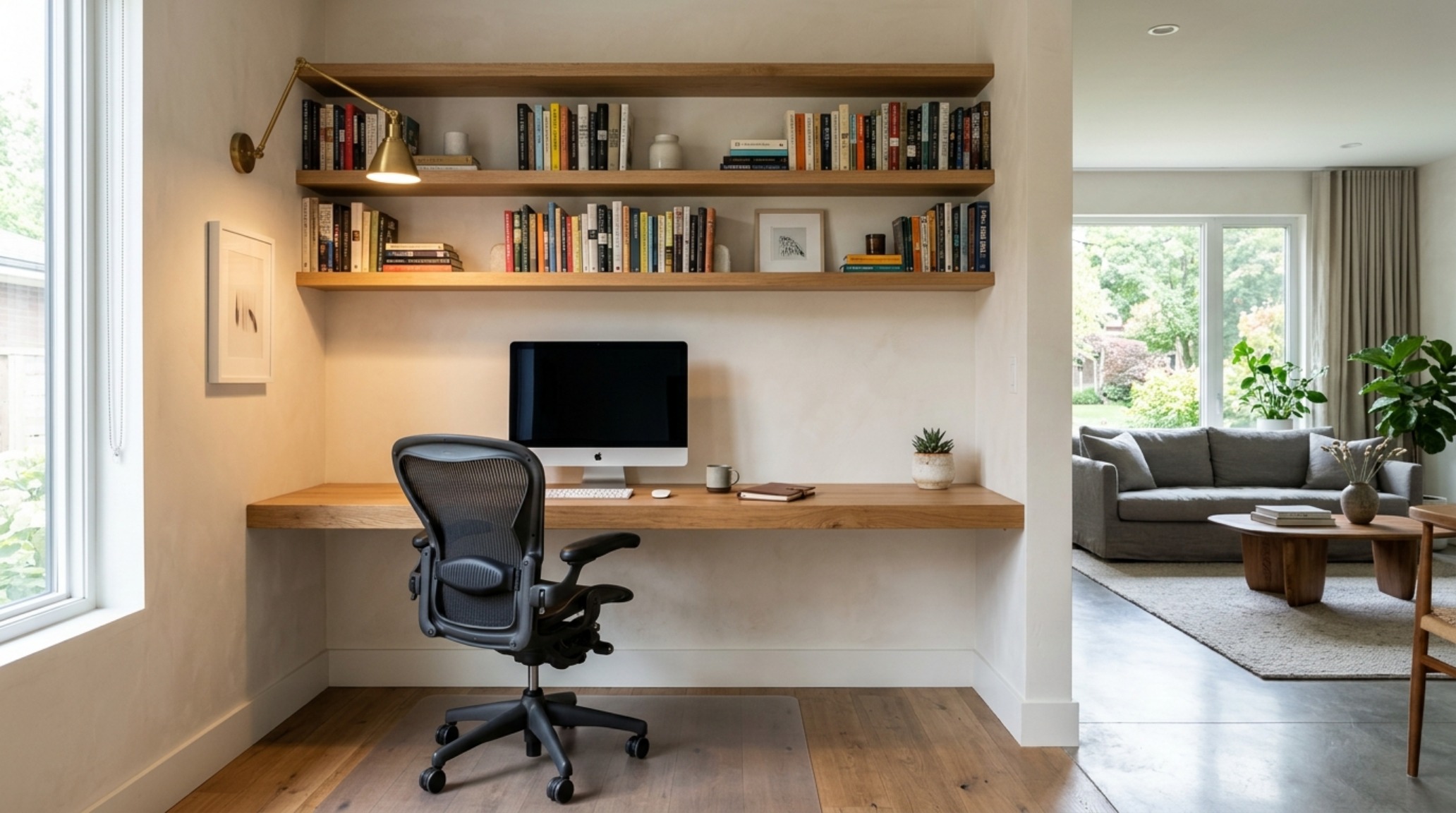
Good design is useless if it impedes movement. In a standard residential setting, living room floating shelves ideas ergonomics must respect the 36-inch primary circulation rule. If your shelves are located in a high-traffic hallway or behind a sofa, they should not protrude more than 10 to 12 inches from the wall to prevent ‘spatial choking.’ For shelves positioned behind a seating area, ensure at least 15 to 18 inches of clearance between the back of the sofa and the shelf edge to allow for comfortable head movement and ‘reach room.’
If you are integrating a desk component into your shelving—a popular choice for the modern ‘cloffice’—the floating shelf serving as the desktop should be exactly 29 to 30 inches from the floor. This architectural precision ensures that the ‘bookshelf wealth’ aesthetic serves your lifestyle as much as your eyes.
The Luminary Layer: Living Room Floating Shelves Ideas Lighting Guide
Lighting is the ‘invisible architecture’ that transforms a shelf from a storage unit into a focal point. A comprehensive living room floating shelves ideas lighting guide focuses on layers. Avoid harsh overhead recessed lights that create unflattering downward shadows. Instead, look toward integrated LED tape lighting recessed into a channel at the front-underside of each shelf. This provides a ‘wash’ of light over the objects below.

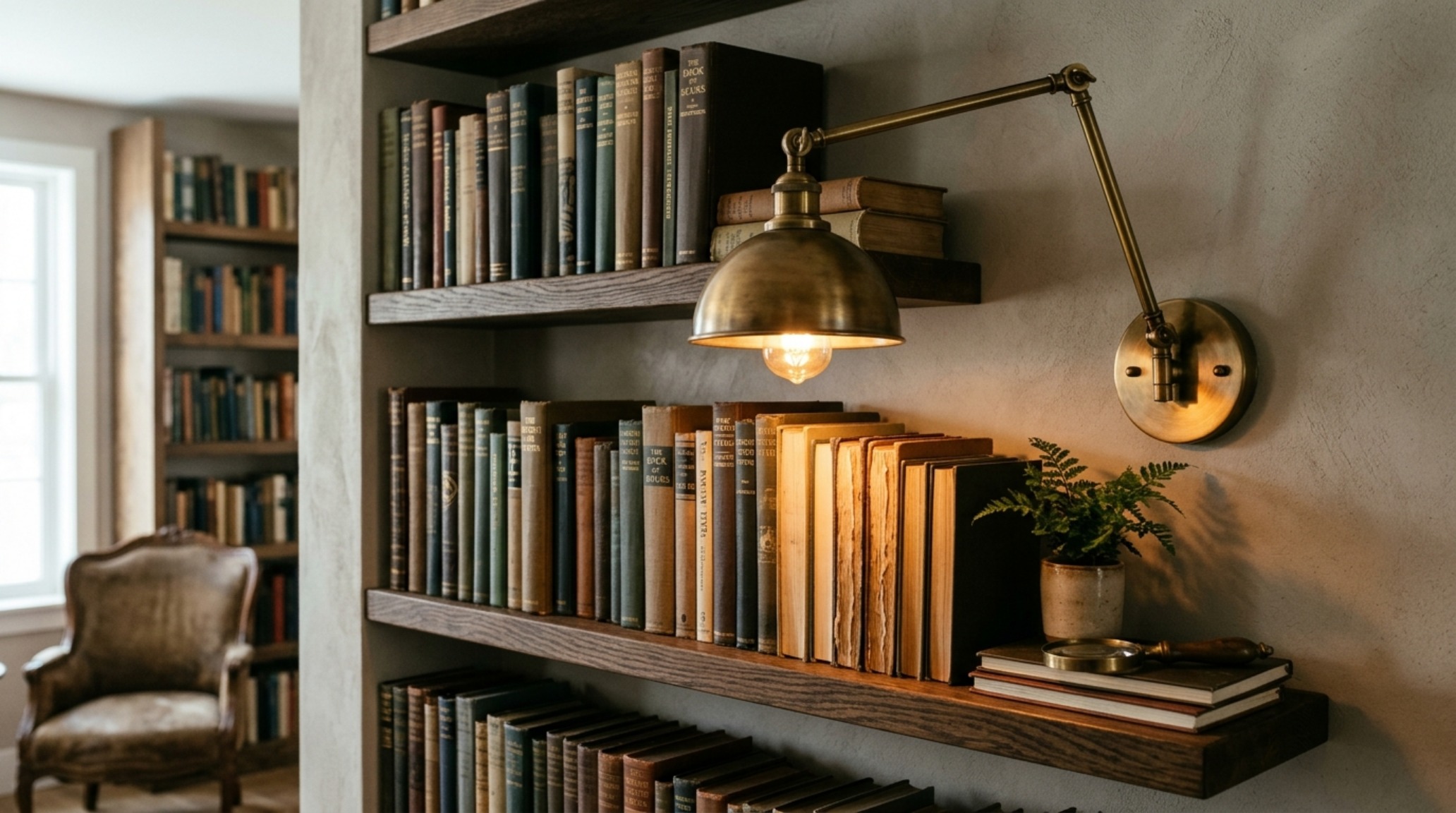
Technical specifications matter here: always opt for a 2700K ‘Warm Ambient’ temperature for residential living spaces to mimic the glow of a library at sunset. Furthermore, ensure your LEDs have a High CRI (Color Rendering Index) of 90+. This ensures that the deep ochres of your book spines and the subtle terracottas of your ceramics look true to life, rather than washed out or greyed. For an added layer of ‘architectural jewelry,’ consider mounting slender library sconces, such as those in a hand-rubbed brass finish, directly to the wall or the shelf frame to provide task lighting and a sense of traditional scale.
Modern and Small Space Living Room Floating Shelves Ideas
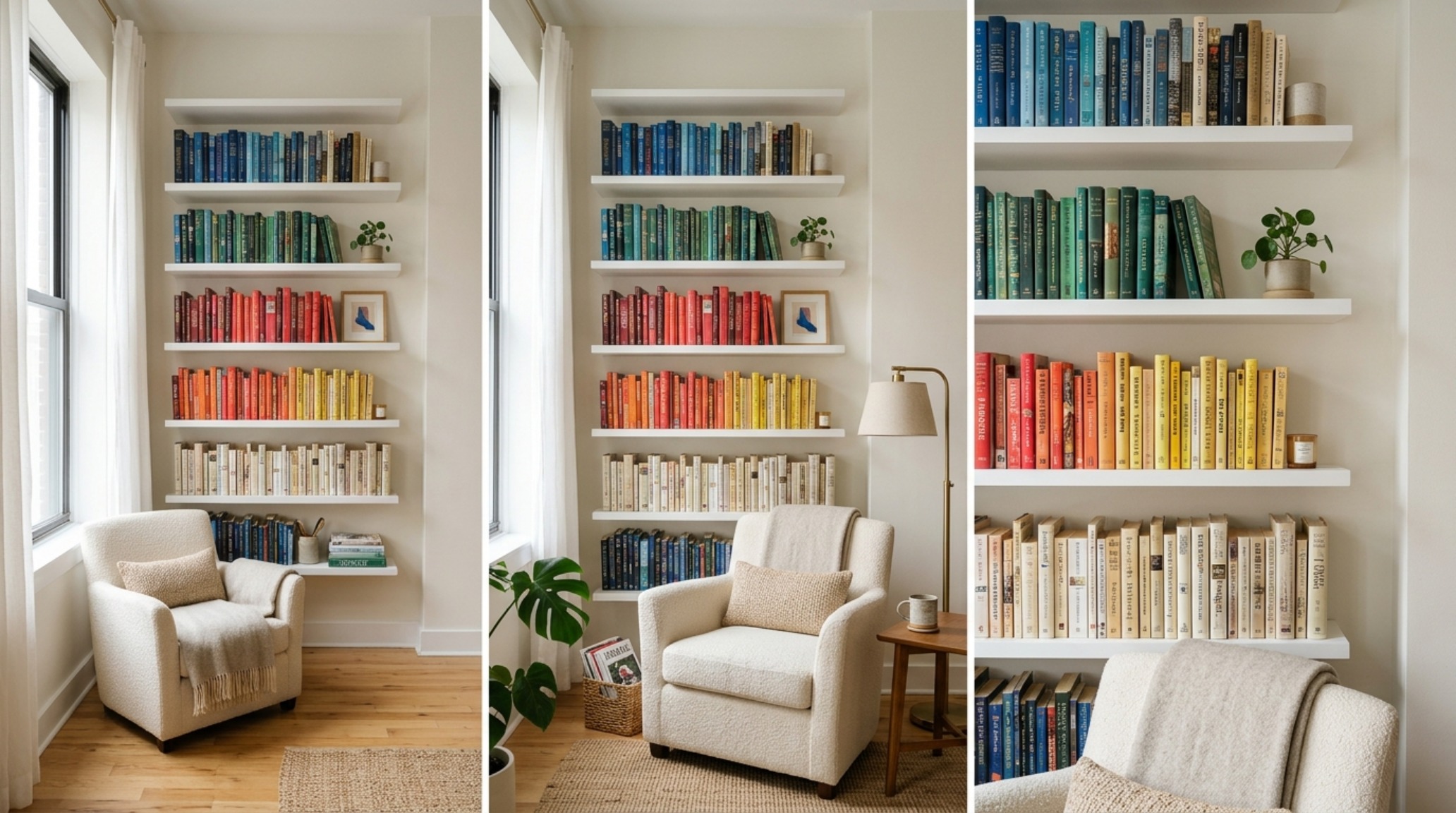
In urban environments, we often deal with ‘spatial economy.’ Small space living room floating shelves ideas should prioritize verticality. By taking shelves all the way to the ceiling, you draw the eye upward, making a 400-square-foot living room feel significantly loftier. In these scenarios, ‘thin’ is the enemy; thicker shelves actually make a small space feel more ‘custom’ and intentional.
For modern living room floating shelves ideas ideas, consider asymmetry. Rather than perfectly stacked horizontal lines, staggered shelving lengths create a dynamic ‘staircase’ effect. This allows for taller objects, like a large-scale fiddle leaf fig or a tall piece of contemporary sculpture, to break the horizontal plane, adding a sense of ‘spatial flow’ that feels curated over decades rather than purchased in a single weekend.
Architectural Specification & Material Matrix
Curated tactile palette, spatial dimensions, and atmospheric lighting index for this design scheme.
Ultimately, achieving the perfect bookshelf wealth aesthetic isn’t about the quantity of things you own, but the quality of the framework you provide for them. By integrating these living room floating shelves ideas with a focus on architectural sightlines, honest materiality, and precise lighting, you create a space that transcends the ephemeral nature of internet trends. A home library should feel like a sanctuary—a structural embrace of one’s intellectual and aesthetic journey, standing firm as the rest of the world’s styles shift and fade. True design longevity is found in that quiet balance between the objects we love and the intentional, enduring spaces we build to hold them.
Editorial Silo • Recommended Architecture Studies
- The Gallery Rail Renaissance: Redefining Living Room Floating Shelves Ideas with Structural Discipline — Archival Design Case Study
- Small Space, Big Soul: Nate Berkus-Inspired Functional Hacks for Modern Wall Shelving — Archival Design Case Study
Architectural Inspiration Lookbook
A high-resolution study in spatial proportions, tactile materiality, and light choreography curated for enduring modern living.
Curated Visual Lookbook
Design Gallery & Spatial Studies
A visual curation of architectural arrangements, lighting concepts, and material palettes featured in this space.