The Anchor of the Room
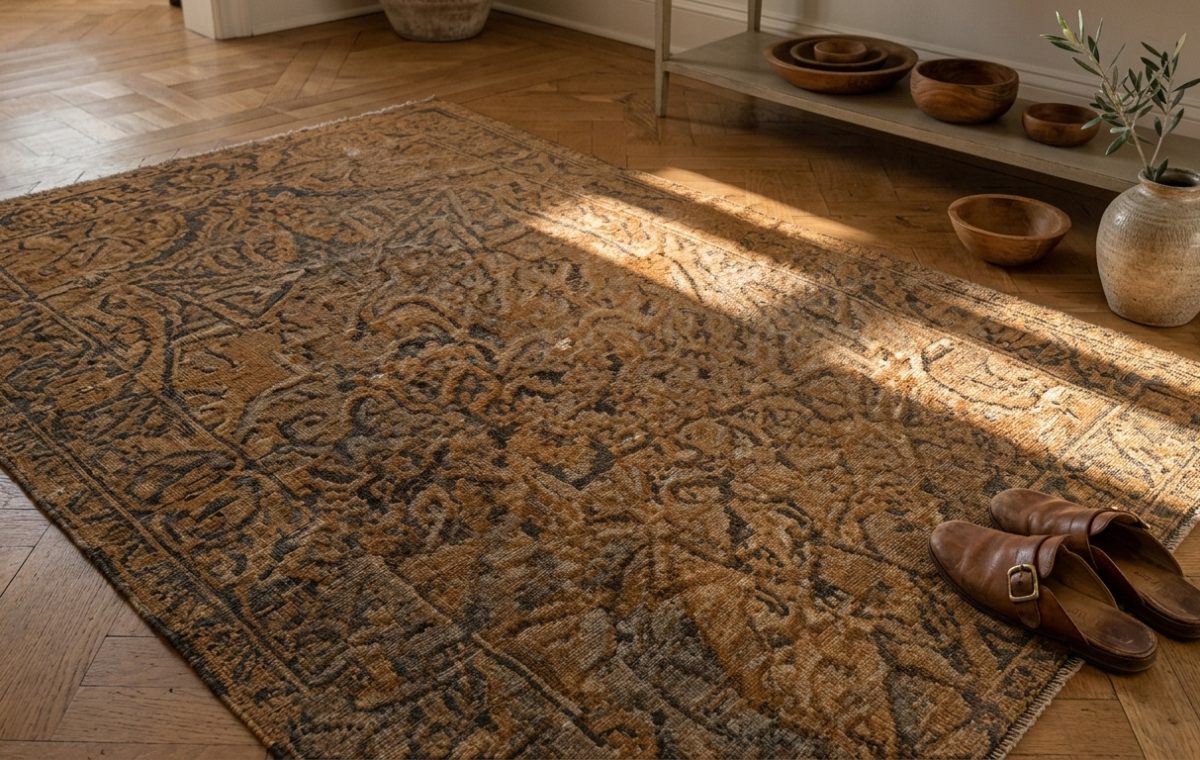
A good rug does more than cover cold floorboards. It acts as the gravity of a room. Notice how a faded, tobacco-brown vintage wool area rug naturally draws the eye down, instantly grounding the space. It rests effortlessly over traditional herringbone hardwood floors, absorbing harsh light and softening every step.
Most people buy rugs that are too small. They float in the middle of the room like lonely islands. Real styling demands commitment. Let your furniture breathe by pulling front legs onto the fabric, or let a large piece span deep across the floor plan. If your rug feels mismatched, look closely at the secondary tones woven into the faded motifs. Those hidden shades of charcoal and muted amber are your cheat codes for choosing throw pillows, ceramics, and wall paint.
Living with Patina
Distressed textures are forgiving. High-traffic zones destroy cheap synthetic fibers within months, but heavy wool takes a beating and simply looks better for it. Leather slip-on shoes tossed casually near the edge tell a story of real living. Perfection is exhausting. A faded motif hides everyday dust better than a solid cream carpet ever will. You stop stressing about minor spills.
Maintenance requires patience. Natural fibers shed at first. Regular vacuuming without a harsh rotating brush keeps the weave intact. Rotate the piece every six months so sunlight hits the fibers evenly. Otherwise, you end up with harsh fading lines near sunny windowsills.
Designing Around Texture
Layering textures prevents a room from feeling flat. Pair the rough, dense pile of an antique rug against smooth wooden bowls or a heavy ceramic olive jar resting on a low shelf. The contrast creates visual depth without relying on loud colors or trendy gimmicks.
How do you usually handle awkward floor transitions in your own home, and do you prefer high-pile comfort or low-profile vintage durability?
Editorial Lookbook & Photo Collection