Curating a Quiet Corner
Most reading rooms feel either too sterile or wildly cluttered. Finding that middle ground requires restraint. Take a look at how a simple wooden bowl filled with textured pears anchors an entire round table. It grounds the furniture piece without screaming for attention. Surrounding walls feature built-in shelving packed tight with well-worn spines and framed art. This arrangement proves that old paper and warm wood create an instant sense of history.
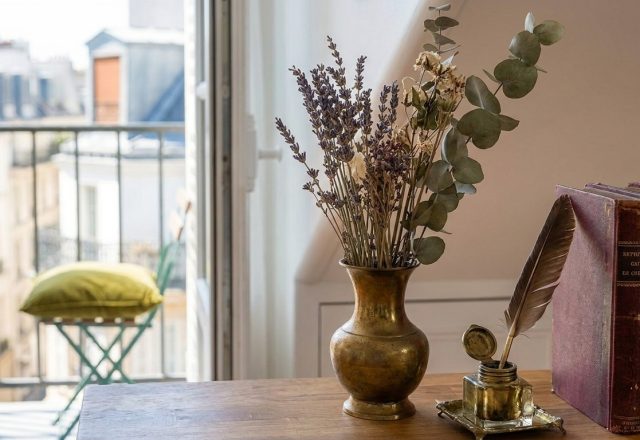
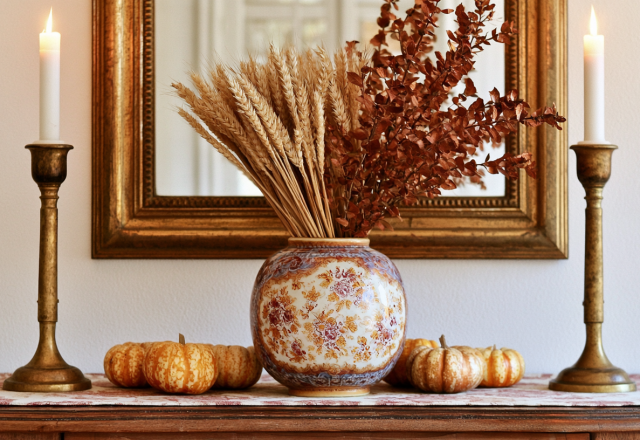
We forget that styling is a slow exercise. It takes years to collect enough mismatched volumes to fill a wall alcove. A flickering candle adds a soft glow against the plaster. Dried botanical stems in an amber glass vase bring organic height without blocking the framed picture hanging above. Nothing feels forced here. Everything looks collected over decades rather than bought in a single afternoon.
Practical Realities of Heavy Shelving
Books are heavy. If you plan to replicate wall-to-wall built-ins, check your wall anchors first. Sagging shelves ruin the illusion of effortless design. Dust also loves old paper and narrow crevices. Expect to spend a Saturday morning clearing off the shelves every few months. It is tedious work, but holding those heavy spines makes the upkeep worth the trouble. Keep a soft-bristled brush handy.
Lighting matters just as much as the books themselves. Overhead recessed bulbs often feel too harsh for a quiet reading space. Rely on low-level illumination instead. A taper candle on the mantel or a shaded wall sconce casts long, soft shadows across the room. How do you plan to balance your own book collection against the open floor space in your study?
Editorial Lookbook & Photo Collection