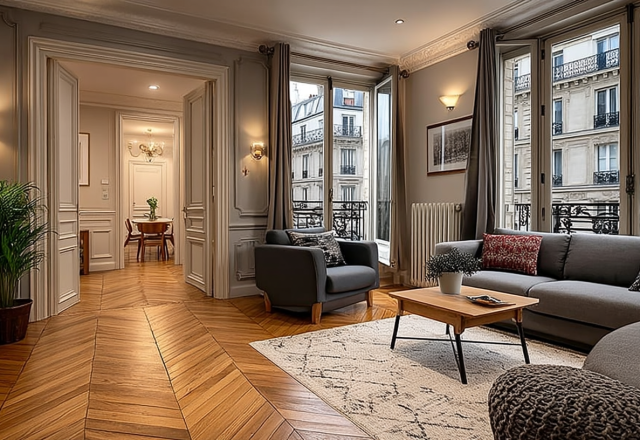
Living in a city apartment brings distinct layout challenges. Floor space runs tight. Natural light dictates your mood. Yet, urban living also forces a clarity of purpose that sprawling suburban houses rarely demand. When every square foot counts, furniture selection stops being about passive filling and starts feeling like an editorial curation.
Balancing Textures and Heavy Woodwork
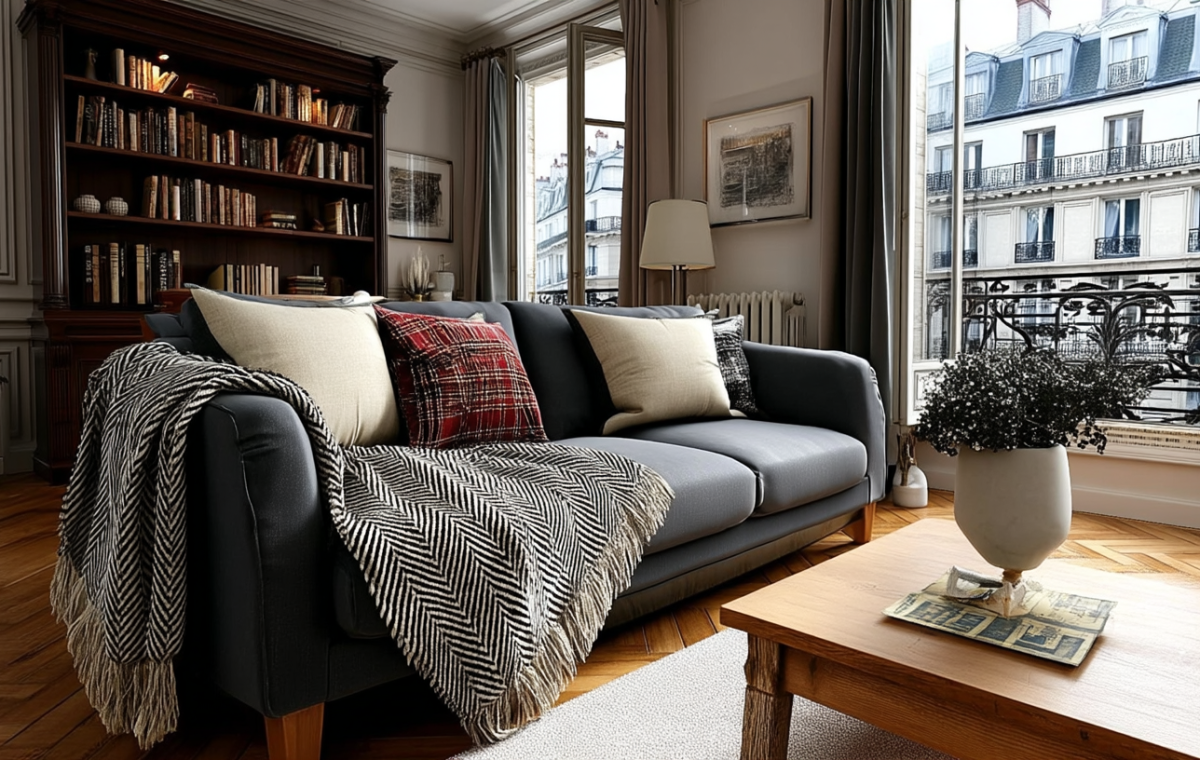
Take a look at how dark wood bookcases anchor a room without swallowing every ounce of light. Heavy timber shelving creates architectural weight. Pair that depth with lighter floors, herringbone parquet, or neutral throws. Contrast stops a room from feeling flat. Throw blankets with high-contrast zig-zag patterns do heavy lifting here, injecting motion into a static seating arrangement.
We often buy furniture that matches on paper yet clashes in practice. A charcoal sofa paired with a warm oak coffee table demands a bridge. That bridge is usually texture, not color. Raw linen cushions, a ceramic vase holding dried botanicals, and heavy drapes frame the Parisian-style windows outside.
Real Upkeep and Daily Realities
Let us be entirely honest about styling a functional home. Open shelving looks gorgeous in photography, but collecting dust on top of three hundred books is a weekly chore. Similarly, pale throw pillows near a drafty city window will attract grime faster than expected. Practical styling means choosing machine-washable fabrics or leaning into patterns that camouflage everyday wear.
- Mix heavy wood tones with light neutral textiles.
- Use textured throws to break up solid upholstery blocks.
- Keep surfaces clear of clutter except for purposeful focal points.
Arranging your seating away from direct foot traffic corridors preserves sanity in tighter floor plans. A low coffee table keeps sightlines open, making the room breathe even when multiple people occupy the space.
How are you balancing open sightlines with storage needs in your own home right now?
Editorial Lookbook & Photo Collection