The First Touch Point of Any Home
Most visitors never consciously look at your entryway latch. They grab it. That tactile moment shapes their entire mental image of your space before a single polite greeting is exchanged. A flimsy handle immediately signals neglect. A heavy, solid metal lever does something entirely different. It grounds the space. It forces you to pause.
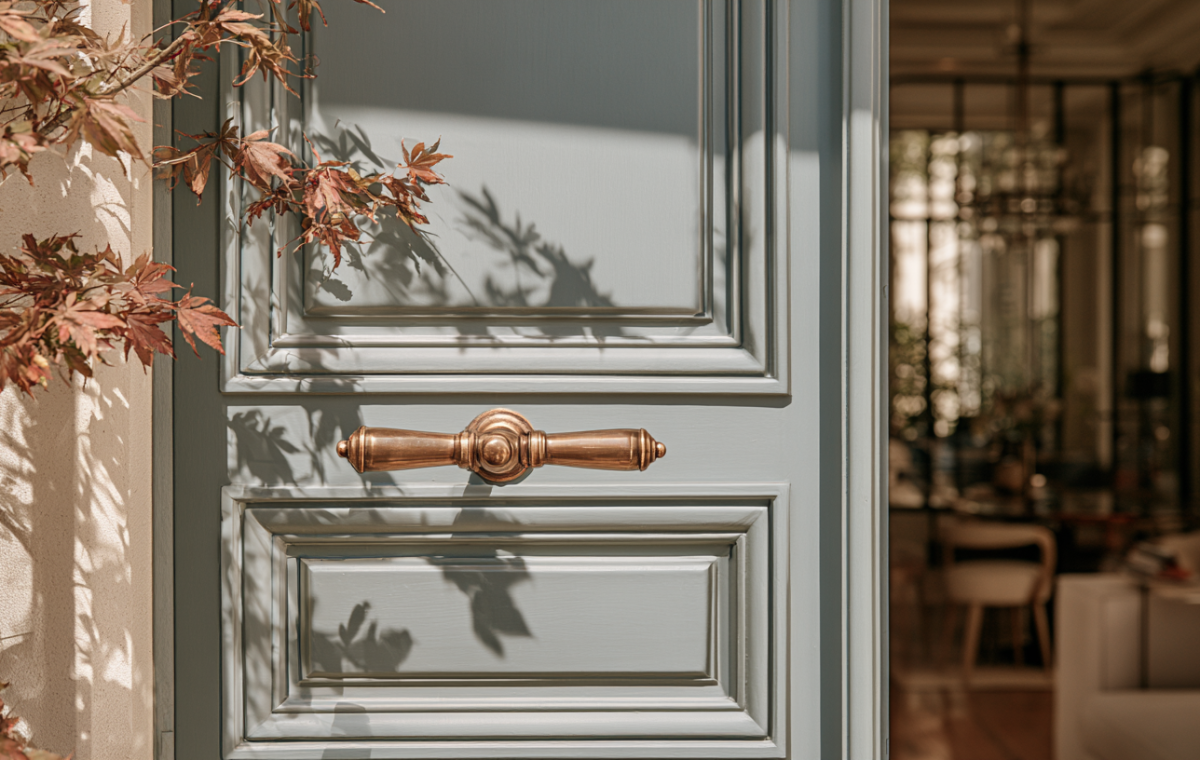
We obsess over paint colors and expensive siding while ignoring the literal hardware we touch every single day. Look closely at a warm brass handle catching mid-afternoon sunlight against soft grey-blue panels. The patina tells a story. It proves that utility and craftsmanship can share the same physical footprint. When you invest in heavy brass or forged iron, you are buying weight, longevity, and a daily sensory reminder that quality matters.
Balancing Exterior Elements and Interior Light
An entryway is rarely just a barrier. It is a portal between two entirely different worlds. When a paneled door cracks open, the harsh exterior light softens as it bleeds into a curated interior hallway. Notice how seasonal foliage casts organic shadows across structured geometric wood moldings. This juxtaposition saves a facade from looking too stiff or overly formal.
Hardware should bridge these two zones seamlessly. If your exterior features warm metallic pulls, echo those tones inside through light fixtures or decorative accents. Avoid matching everything blindly. A slightly weathered finish hides fingerprints better and develops character over years of constant slamming, turning, and pulling.
Choosing Metals That Age Gracefully
Shiny lacquered brass looks great in a showroom catalog for about three weeks. Then the coating fails, moisture gets underneath, and it looks like cheap plastic. Raw brass, bronze, and unlacquered copper take a beating and look better for it. They respond to climate, touch, and time. Yes, they require acceptance of natural tarnishing. That is the point.
Think about how your hands interact with the door on rainy mornings or hot summer afternoons. The grip needs to feel substantial. If it wobbles, tighten the internal screws immediately before the threads strip out completely. Hardware failure is almost always an installation shortcut rather than a material defect.
How does your current entryway hardware feel when you walk through the door after a long day?
Editorial Lookbook & Photo Collection