CURATORIAL CRITIQUE & DESIGN ANTHOLOGY
In the quiet evolution of the modern residential sanctuary, we have moved beyond the sterile constraints of mid-century mimicry toward a more visceral, emotive architecture. Observing the way light interacts with a room, it becomes evident that the soul of a home resides not in its square footage, but in its tactile intersections. As an architectural curator, I find that the most profound spatial shifts often occur through the selection of bespoke millinery and furniture. Specifically, unique cabinets have transitioned from mere storage vessels into pivotal anchors of atmospheric design. They are the artifacts that ground a room, providing both a visual focal point and a physical touchstone that invites the hand to linger on a fluted grain or a honed stone edge.
Materiality as a Sensory Language
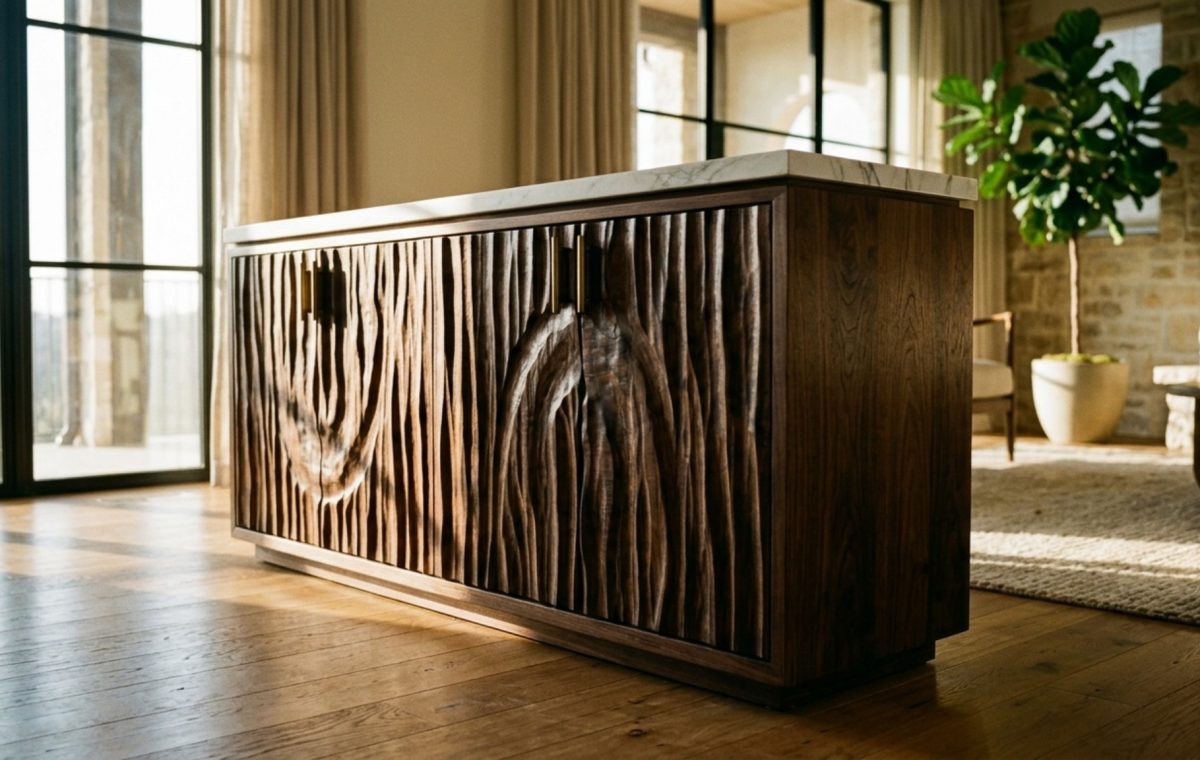
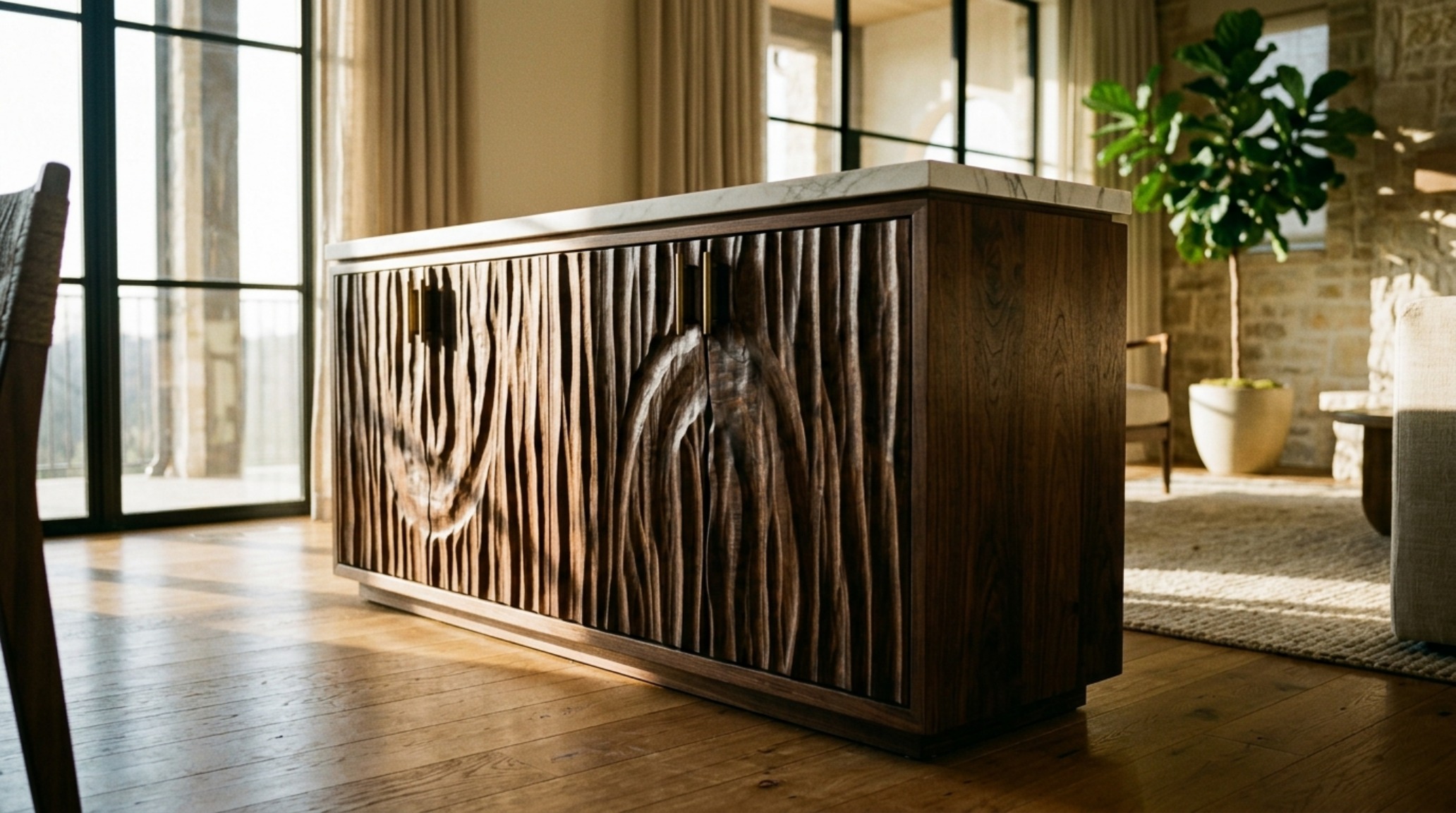
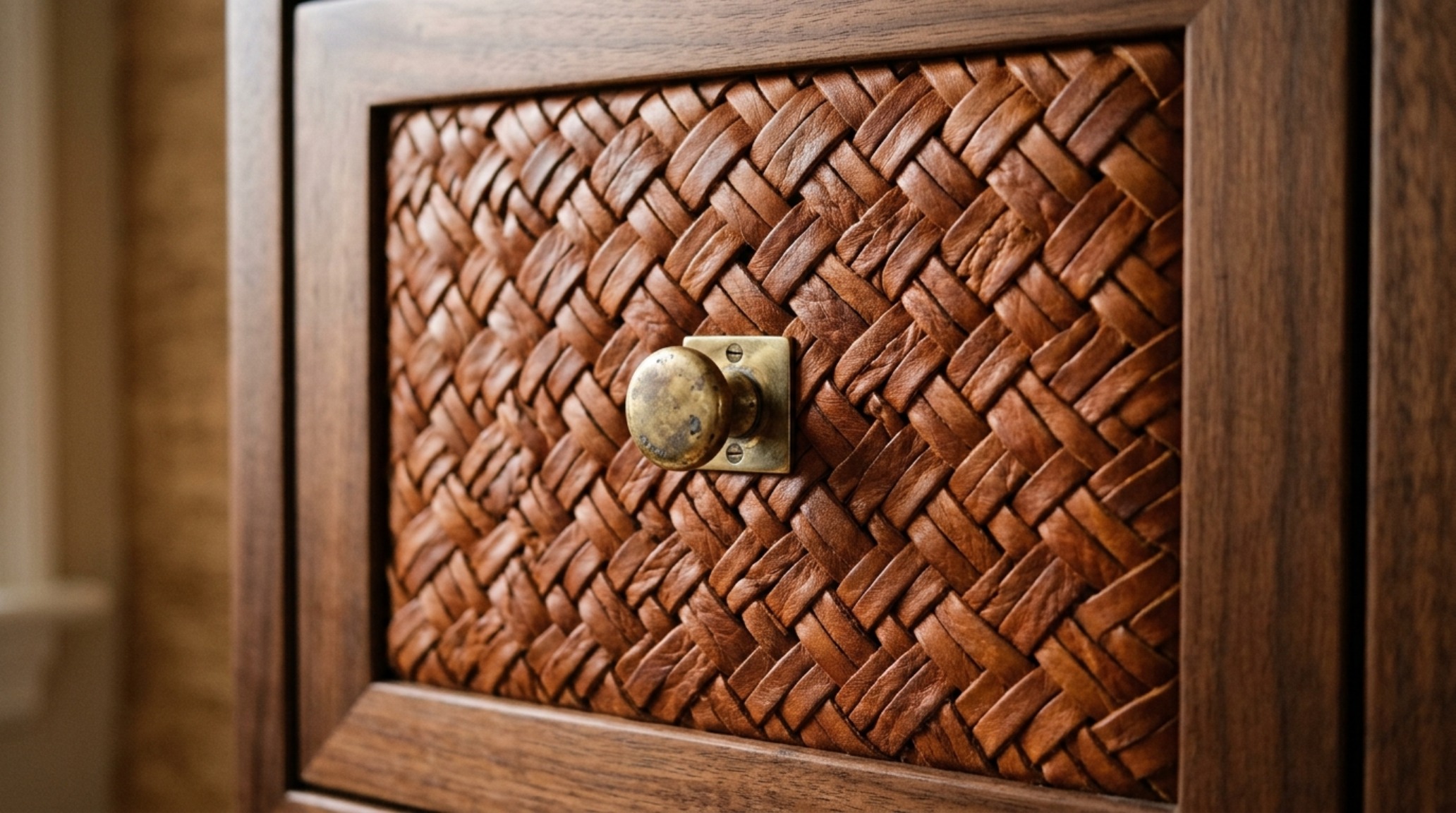
The dialogue between a room and its inhabitant is written in textures. When we consider luxury unique cabinets textures, we are looking for a tension between the raw and the refined. Imagine a monolithic credenza wrapped in hand-applied parchment or a set of kitchen uppers finished in a deeply brushed European oak. These choices are intentional; they resist the flatness of mass production. In a recent project, the use of a reclaimed elm cabinet—with its deep fissures and silver-grey patina—provided the necessary weight to balance a room otherwise dominated by floor-to-ceiling glass. This is the essence of tactile grounding.
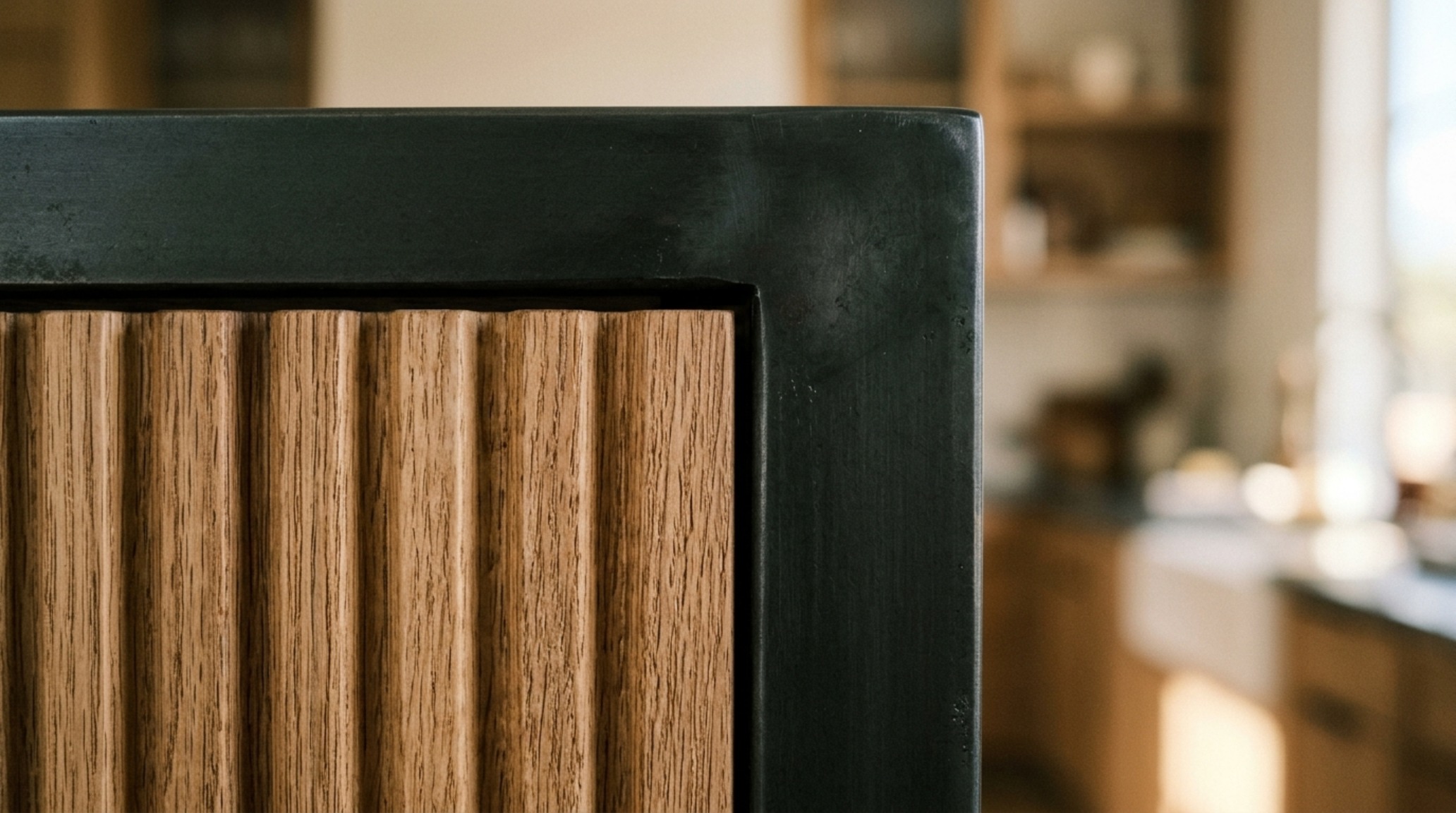
Architectural integrity requires us to respect the grain. Whether it is the rhythmic repetition of fluted panels that catch the morning sun or the cool, silent authority of a Nero Marquina marble top, these materials dictate the mood. A cabinet is no longer just a box; it is a composition of negative space and shadow play. By integrating materials like unlacquered brass hardware that will age and darken with use, we acknowledge the passage of time within our living spaces.
Small Space Unique Cabinets: Opening Sightlines & Floor Plane
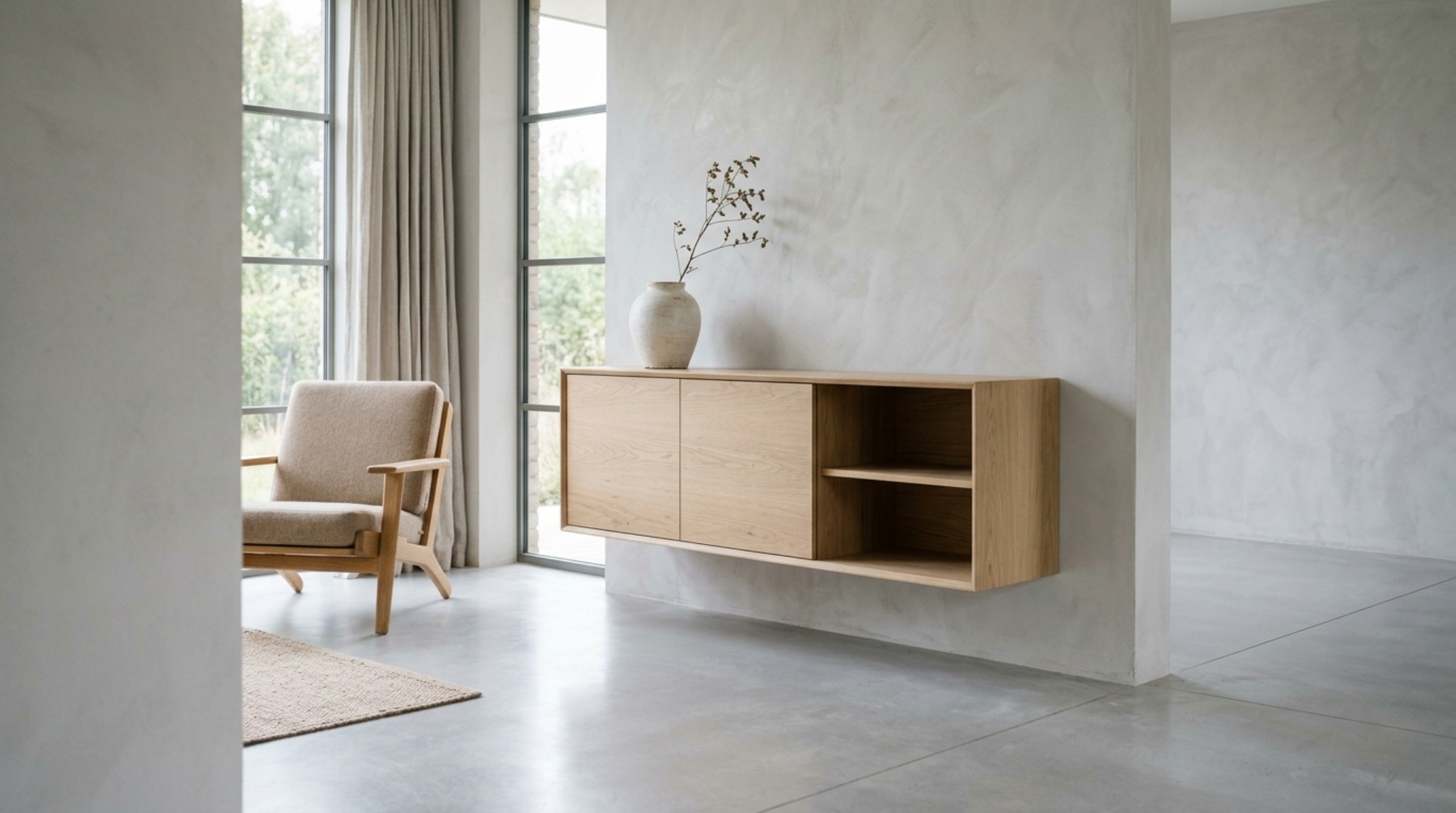
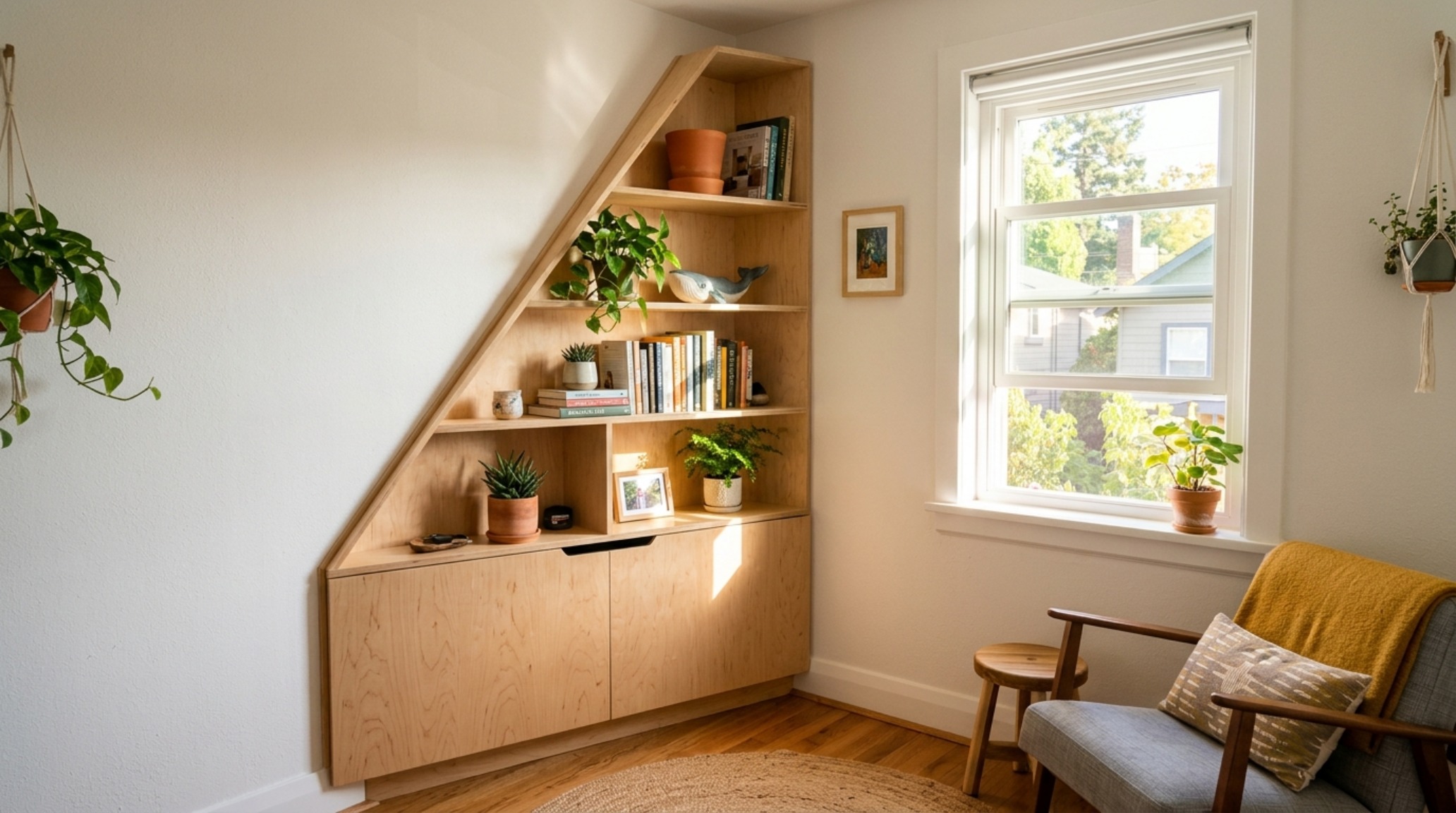
In the context of urban density, the challenge of the small footprint necessitates a shift toward verticality and transparency. Utilizing small space unique cabinets is less about downsizing and more about spatial choreography. To maintain a sense of airiness, I often specify floating cabinetry. By exposing the floor plane underneath a piece, the eye perceives the room as larger than its physical boundaries. A wall-mounted console in a narrow entryway, perhaps finished in a soft Benjamin Moore Swiss Coffee, disappears into the architecture while providing essential utility.
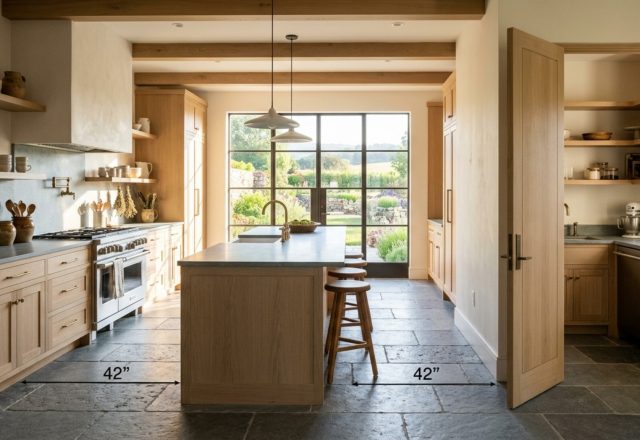
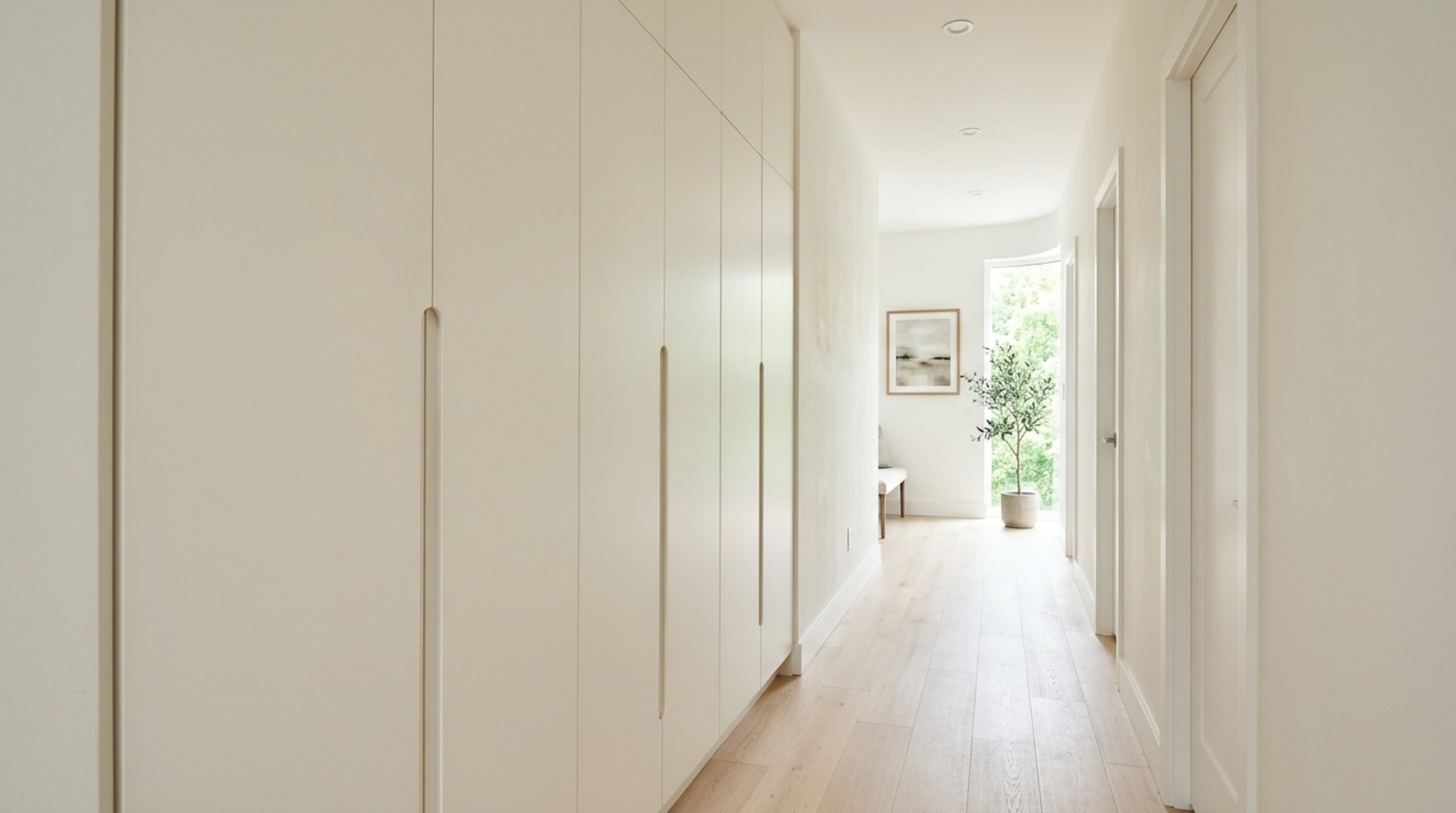
Clearance is the silent architect of comfort. Even in the most compact layouts, we must adhere to the 36-inch standard walkway clearance to ensure a natural flow. When a cabinet is placed in a high-traffic zone, its edges should be considered—rounded corners or recessed pulls prevent physical friction in tight quarters. The goal is to create a spatial cadence where every piece of furniture feels like an organic extension of the walls rather than an intrusion upon the path.
“Design is a constant negotiation between the light we desire and the shadows we require for depth. A cabinet without a lighting plan is merely a silhouette.”
Unique Cabinets Lighting Guide: The Science of Kelvin and CRI
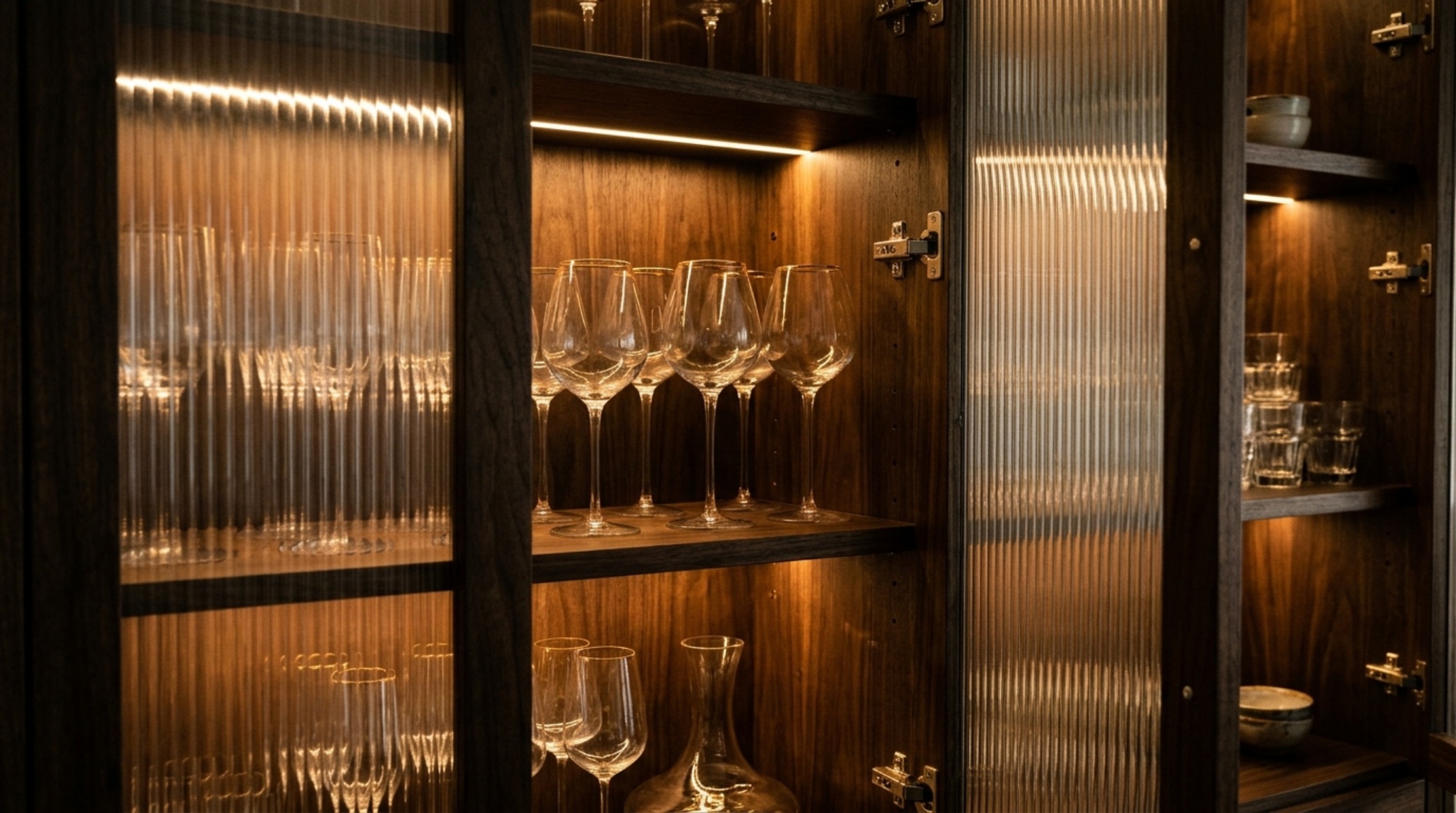
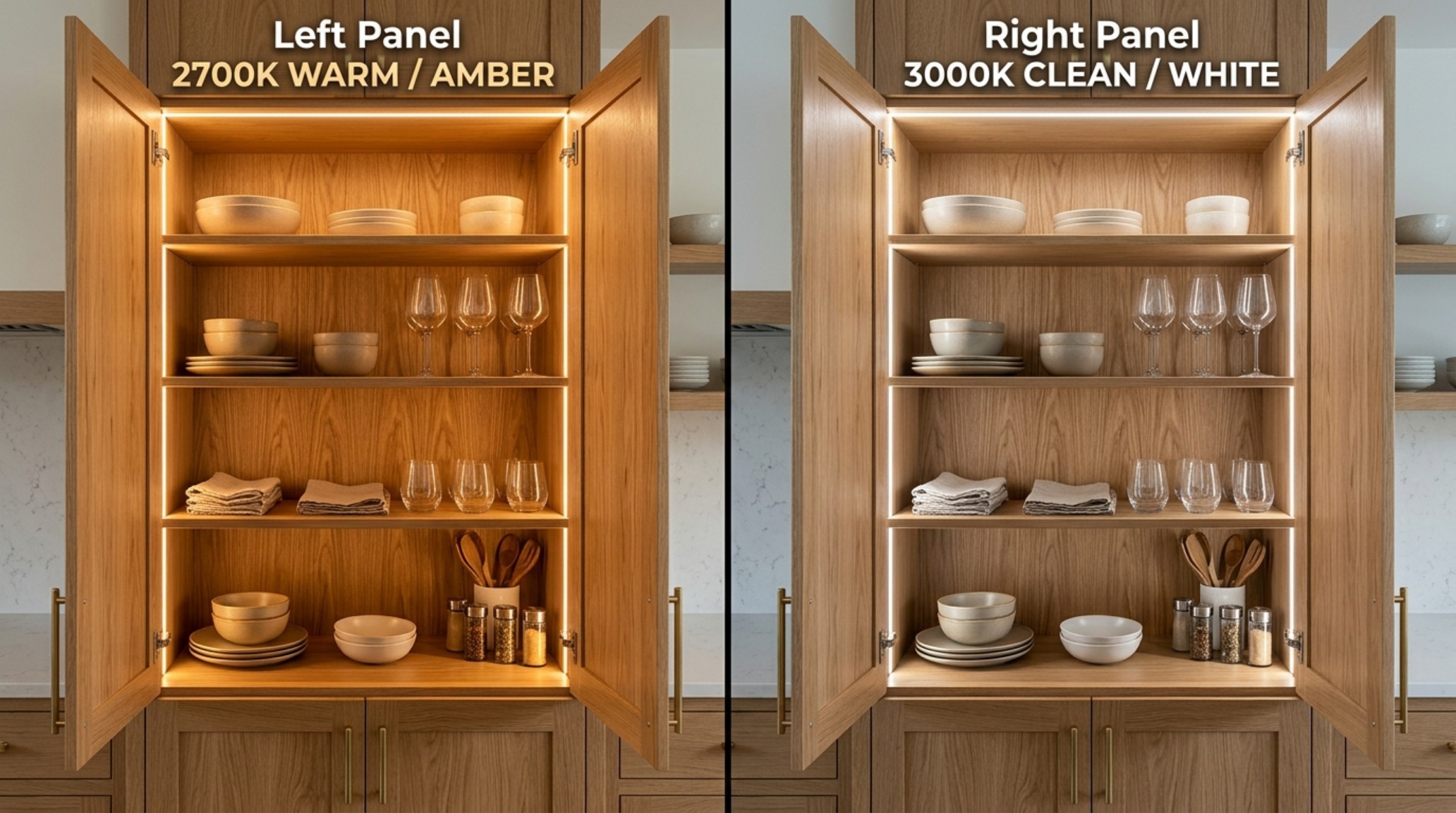
Atmosphere is arguably the most critical component of a design, yet it remains the most misunderstood. Through a comprehensive unique cabinets lighting guide, we can dissect how color temperature transforms a piece of furniture from functional to ethereal. For residential sanctuaries, I strictly advocate for 2700K (Warm Ambient) for general mood lighting. This temperature mimics the soft, amber glow of the golden hour, softening the edges of hard materials like stone or metal.
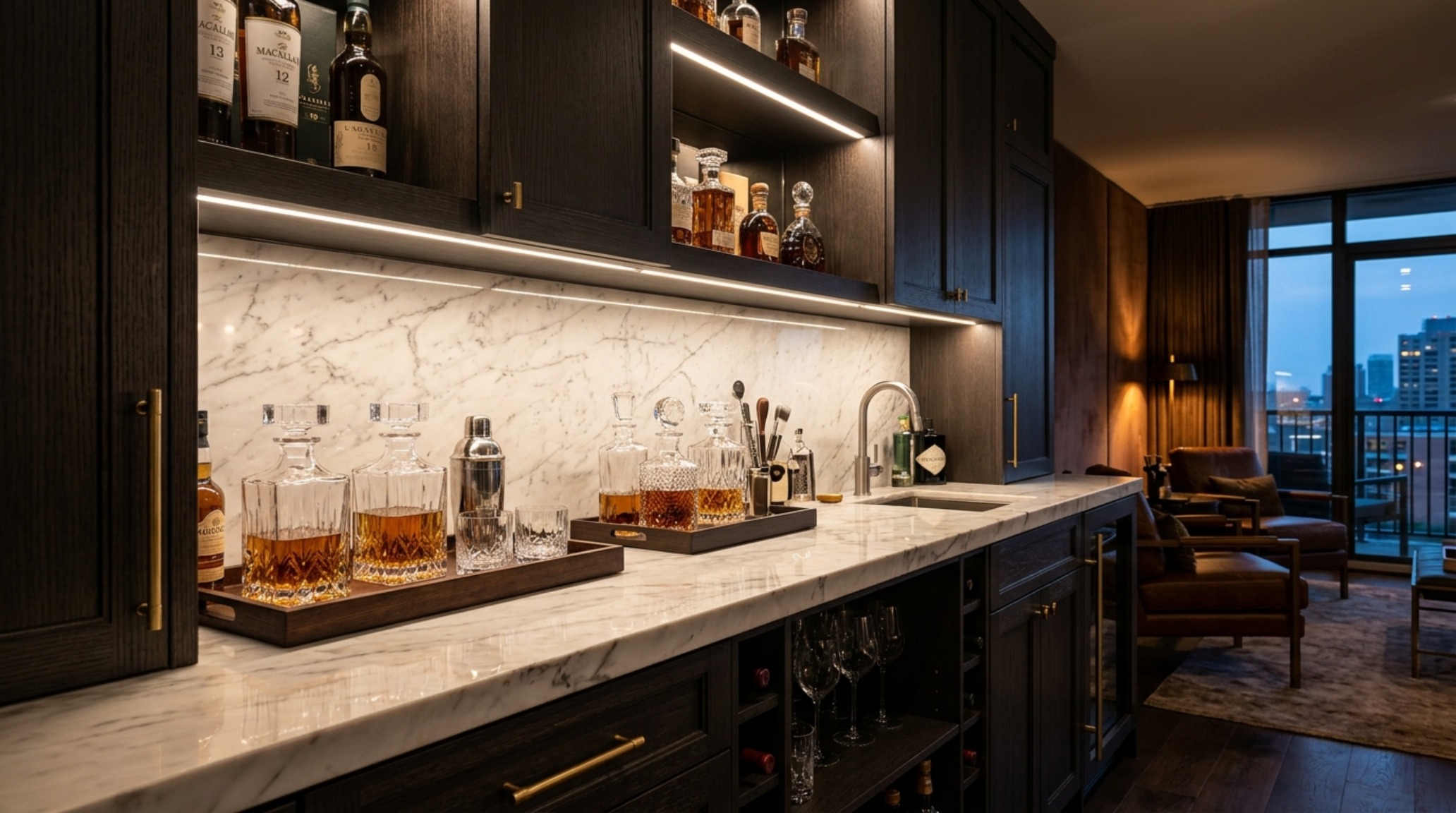
However, functional areas—such as the interior of a bar cabinet or a kitchen workstation—demand 3000K (Soft White) for clarity. The key is the Color Rendering Index (CRI). To ensure that the rich walnut of your cabinetry doesn’t look muddy or gray, aim for a CRI of 90+. High-quality LED ribbons hidden within a 45-degree recessed channel provide a diffused wash of light that highlights the texture of the back panel without creating harsh hot spots. This directional lighting creates a sense of depth, turning a storage unit into a glowing vitrine.
Modern Unique Cabinets Ideas: Merging Form and Ergonomics
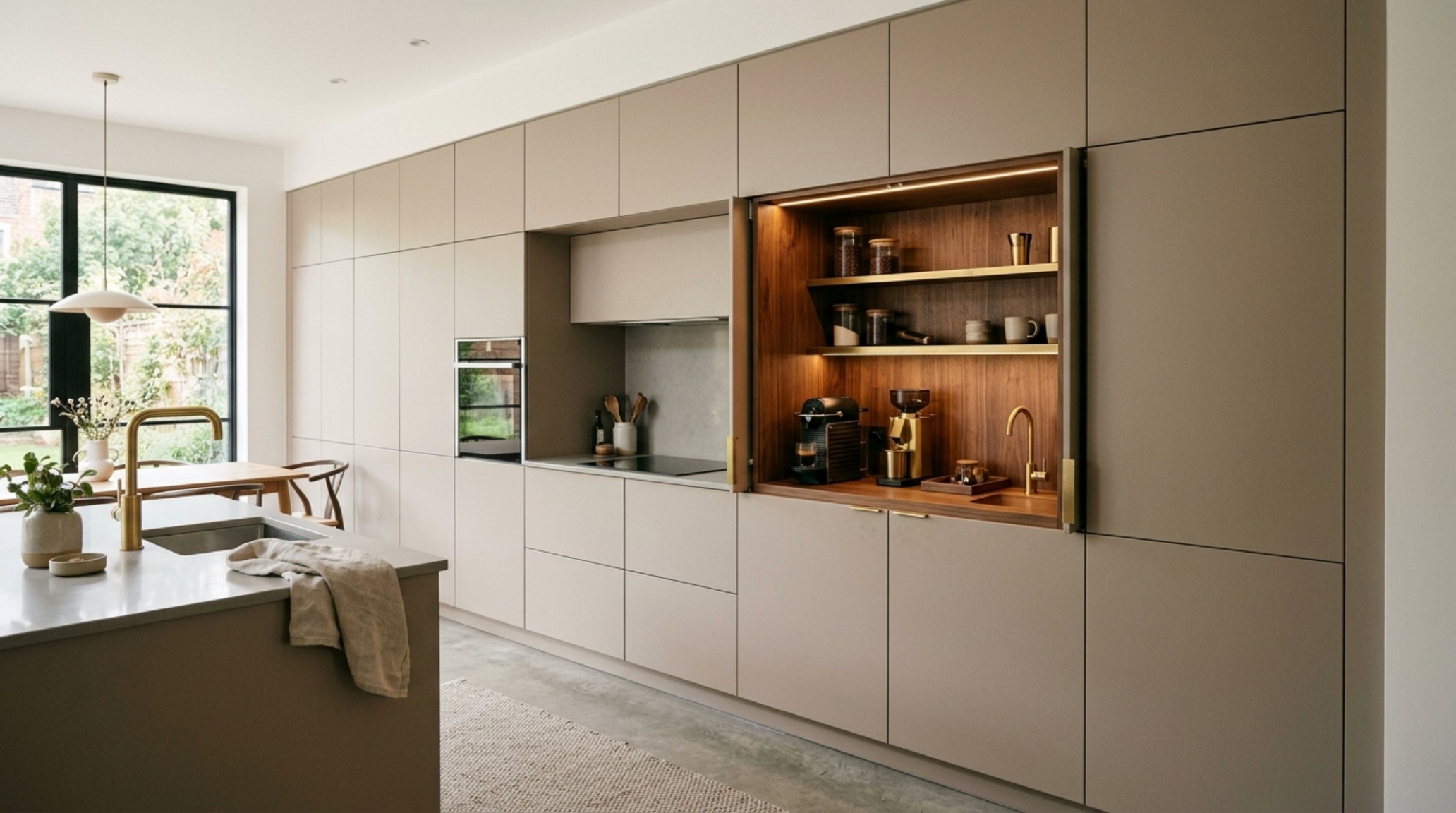
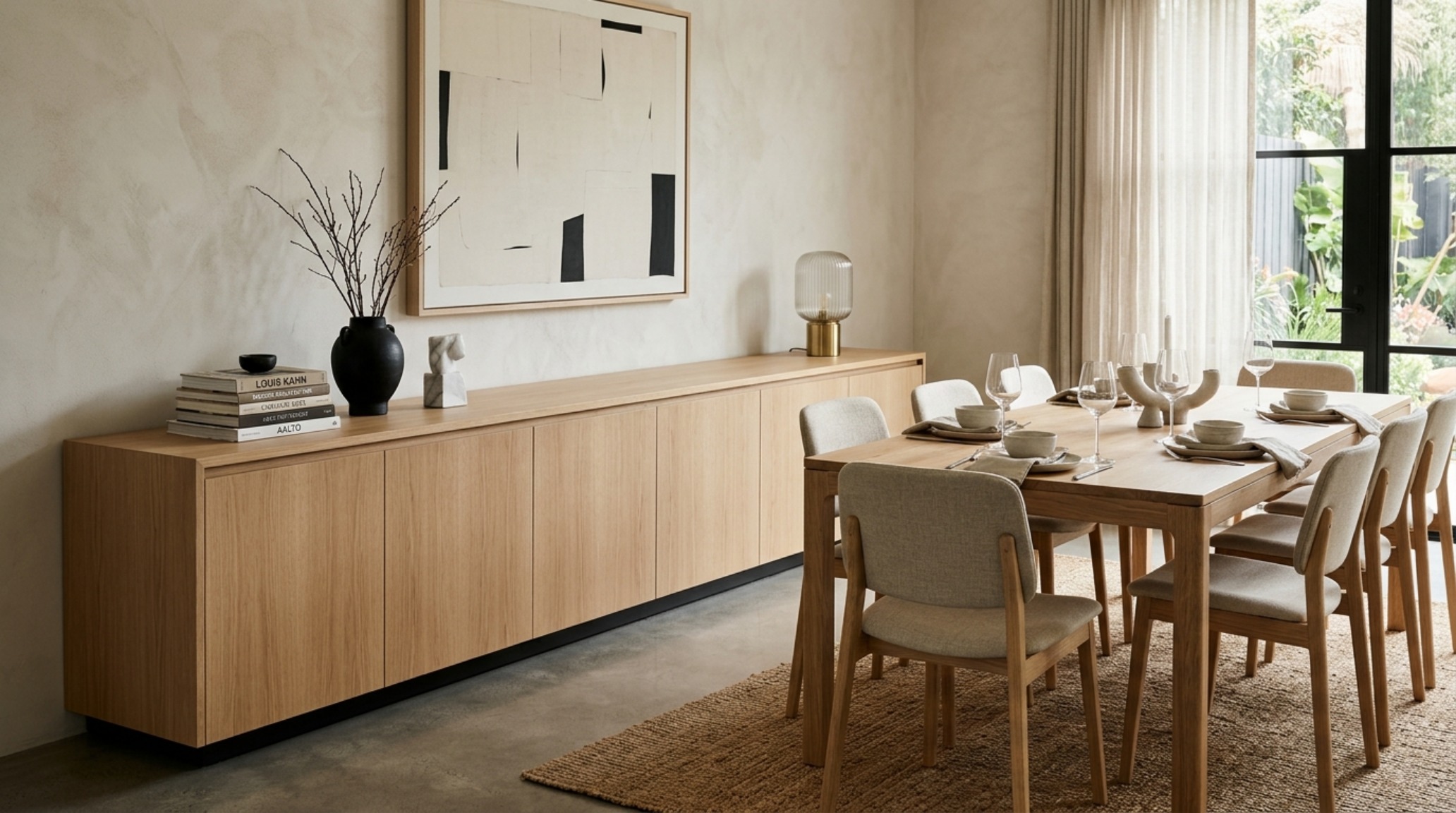
The current landscape of interior design is seeing a resurgence of the “hidden kitchen” and integrated joinery. Exploring modern unique cabinets ideas often leads us to pocket doors and seamless facades that conceal the clutter of daily life. In a contemporary dining room, a long, low-slung sideboard can act as both a serving station and a gallery plinth. I prefer pieces that sit at a 30-inch height, aligning perfectly with the standard dining chair back, maintaining a clean horizontal sightline across the room.
Material contrast is where the magic happens. Consider pairing a matte, dark charcoal finish like Farrow & Ball Railings with an interior lined in a warm, honeyed oak. This internal “reveal” provides a moment of delight when the doors are opened. It turns an everyday action into a sensory experience. Ergonomically, we must consider the reach. An 18-inch depth for a media cabinet or a sideboard is the sweet spot—deep enough for storage, yet shallow enough to avoid encroaching on the primary circulation paths.
Spatial Perspectives & Material Curation
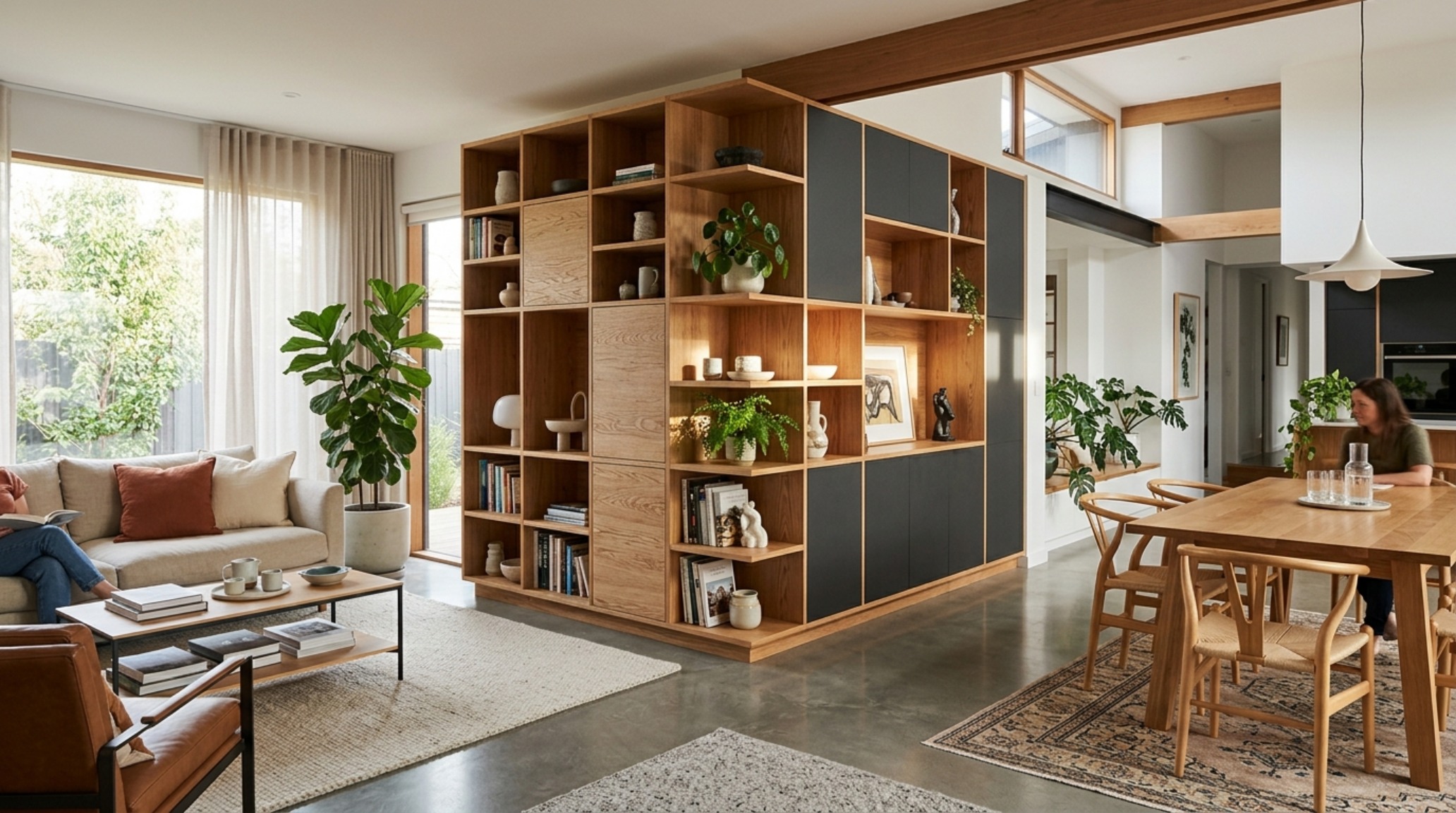
When we zoom into the micro-details of a piece, we see the true craftsmanship. The transition between a stone countertop and a wooden cabinet base should be celebrated with a shadow gap or a delicate brass inlay. This level of detail-oriented design is what distinguishes a custom piece from a mass-market alternative. In larger open-plan living areas, cabinets can also serve as spatial dividers. A double-sided cabinet unit can define the transition from a lounge to a dining area without the need for a solid wall, allowing light to filter through and keeping the conversation flowing.
We often talk about the “breathing room” around furniture. Placing a bold, sculptural cabinet against a wall painted in a soft, neutral lime-wash—like Portola Paints’ Saint Sauveur—allows the texture of the piece to vibrate against the softness of the wall. It’s about creating a hierarchy of focus. Not every element in a room can be the protagonist; some must play the supporting role of the quiet, textured background.
Architectural Vignettes & Spatial Flow
The movement through a home should feel intuitive. We achieve this by aligning our furniture with the architectural sightlines. When you stand at the entrance of a room, your eye should naturally travel toward a point of interest—perhaps a tall, reeded glass cabinet that catches the light from a nearby window. This visual destination anchors the space and provides a sense of purpose. In hallways, where space is a premium, recessed cabinets can be built directly into the wall, finished in the same color as the surrounding surfaces (try Farrow & Ball School House White) to create a seamless, monolithic look.
Functionality does not have to be boring. Integrating charging stations within a bedside cabinet or a specialized pull-out for a record player within a media unit ensures that modern technology doesn’t disrupt the historical or organic feel of a home. We are designing for the way we live now, which is a blend of the digital and the physical, the fast and the slow.
Design Anatomy & Specification Guide
Bespoke specification schedule outlining tactile textures, lighting ambiance, and ergonomic proportions.
Ultimately, the curation of a home is a deeply personal endeavor that balances the rigors of architecture with the warmth of human touch. When we select a piece of cabinetry, we are not just filling a void; we are choosing a companion for our daily rituals. The tactile interplay of wood, stone, and light does more than satisfy an aesthetic urge—it grounds us in the present moment. As the light shifts throughout the day, the shadows cast by a unique cabinet remind us that design is a living, breathing entity. In the quiet intersection of form and light, we find the true meaning of a sanctuary.
Editorial Silo • Recommended Architecture Studies
- The Materiality Manifesto: Curation, Color Theory, and Sensory Depth in Modern House Design Blogs — Archival Design Case Study
- The Architectural Blueprint: Mastering Spatial Flow with Monolithic Kitchen Tile Options — Archival Design Case Study
Atmospheric Interior Showcase
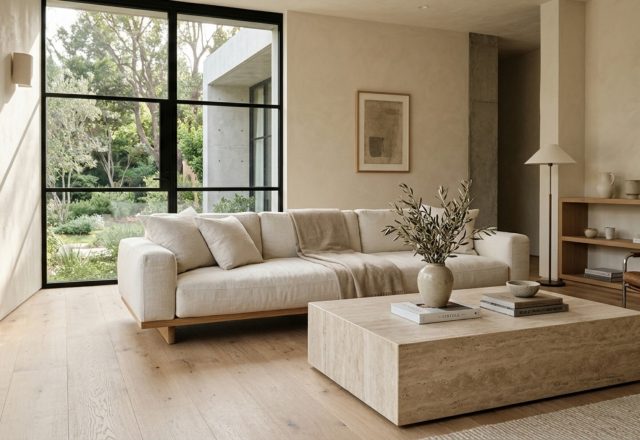
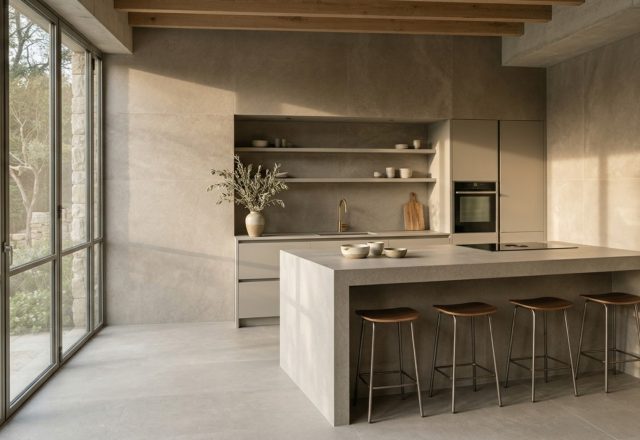
Visual documentation of honest materials, natural ambient lighting, and refined architectural balance.
Curated Visual Lookbook
Design Gallery & Spatial Studies
A visual curation of architectural arrangements, lighting concepts, and material palettes featured in this space.