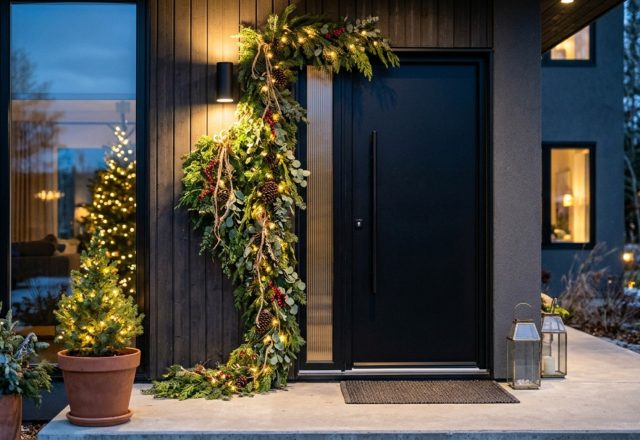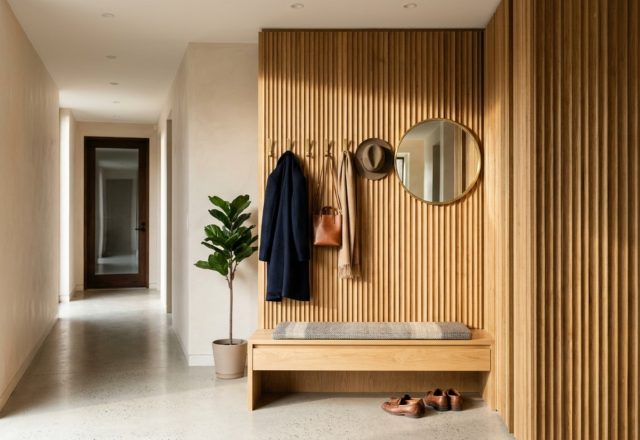
The Evolution of the Threshold: From Fortress to Fortified Portal
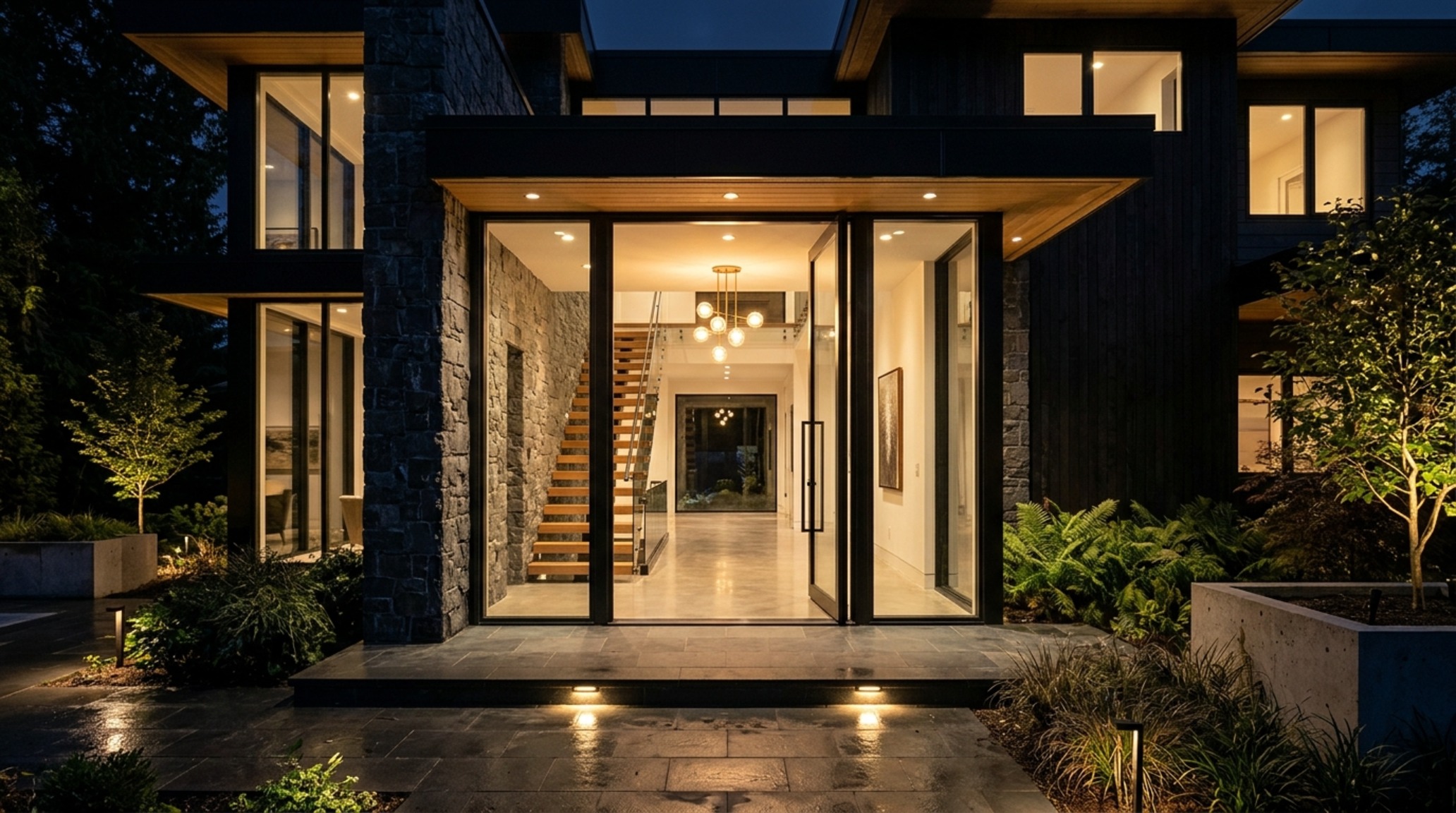
For centuries, the entry was a heavy, fortress-like barrier of solid oak and forged iron, designed for defense rather than dialogue. These historical bastions prioritized physical mass over aesthetic grace, often leaving interiors dark and disconnected from the streetscape. Today, the threshold has evolved into a high-performance machine—a fortified portal that reconciles invisible security with a welcoming, light-filled aesthetic. These elevated ideas for front doors shift the focus from mere utility to a sophisticated interplay of thermal engineering and smart-home synergy, allowing homeowners to embrace transparency without sacrificing the sanctity of the private sphere.
Modern entryway design is no longer just about choosing a paint color; it is an exercise in architectural choreography. We are seeing a move toward ‘hidden engineering,’ where the structural integrity of the door is buried within sleek, minimalist profiles. The contemporary entryway must perform multiple roles: it is a thermal barrier against fluctuating climates, a digital gatekeeper integrated with the home’s ecosystem, and the primary stylistic ‘handshake’ of the architecture. Achieving this balance requires a deep understanding of materiality, from the way light refracts through reeded glass to the tactile weight of a solid brass pull.
Contemporary Front Door Hardware: The Jewelry of the Facade
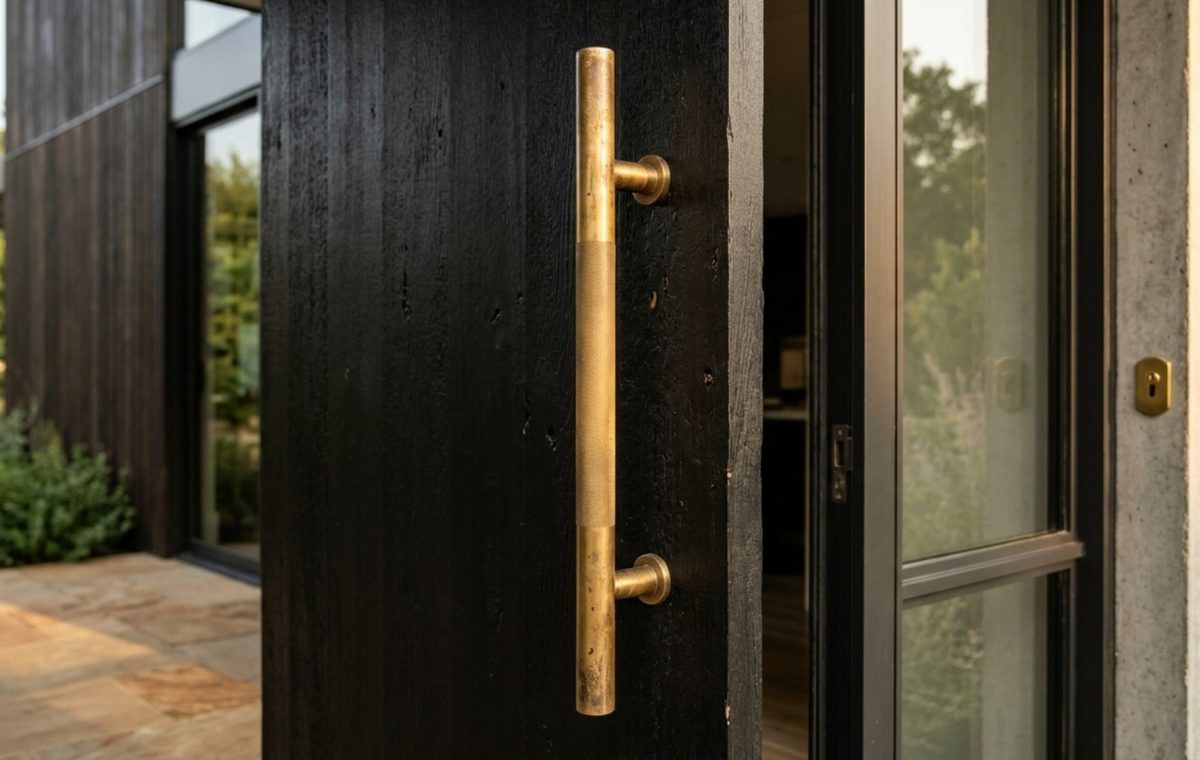
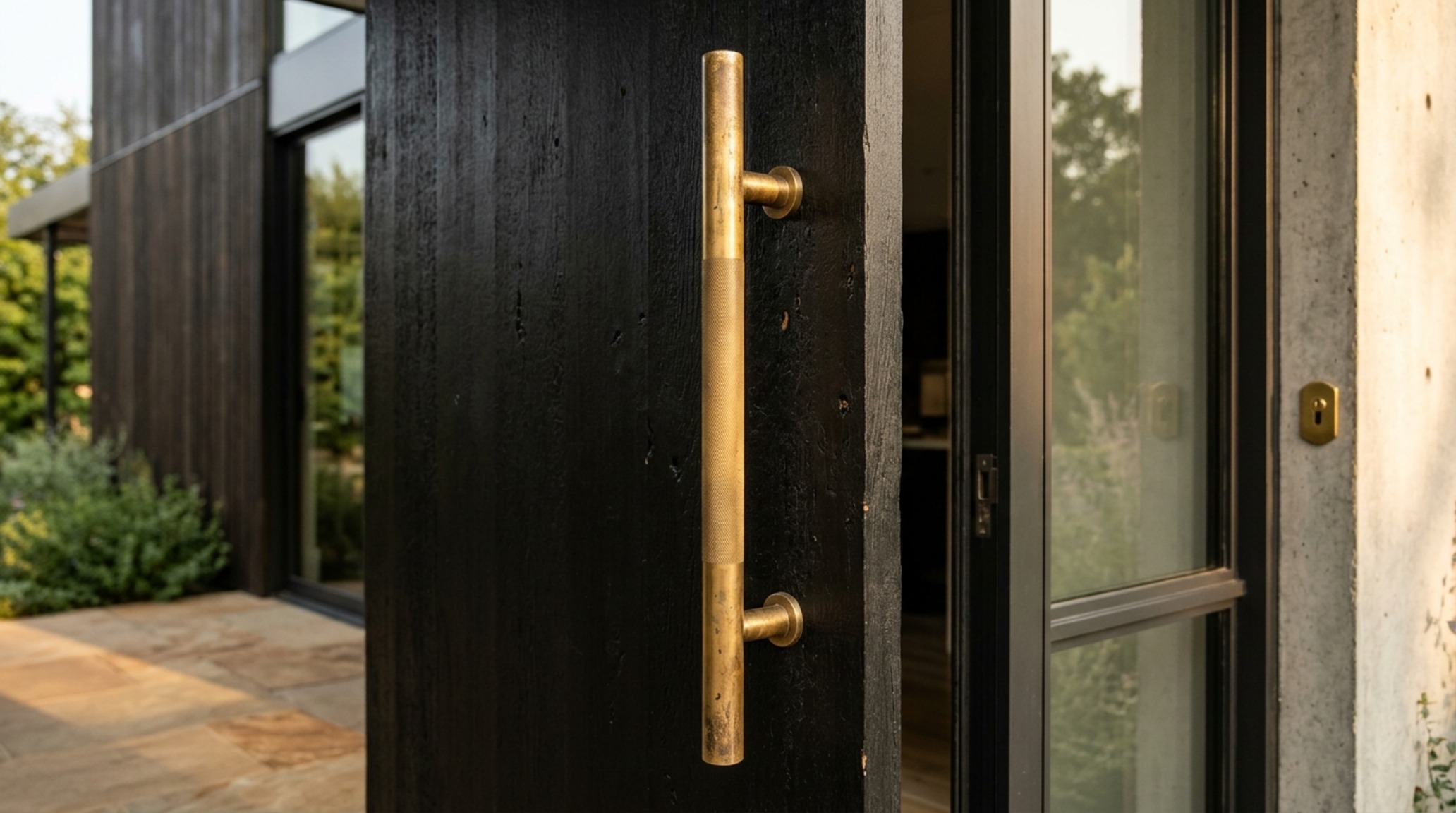
If the door is the body, the hardware is the jewelry. We are currently witnessing a shift away from the petite, purely functional handles of the past toward contemporary front door hardware that makes a definitive architectural statement. Oversized vertical pull bars, often extending 48 to 72 inches, create a sense of verticality that makes even standard eight-foot doors feel monumental. These pulls aren’t just about scale; they are about the tactile experience of entering a home. A solid, unlacquered brass or oil-rubbed bronze handle carries a thermal mass that feels substantial and permanent under the hand.
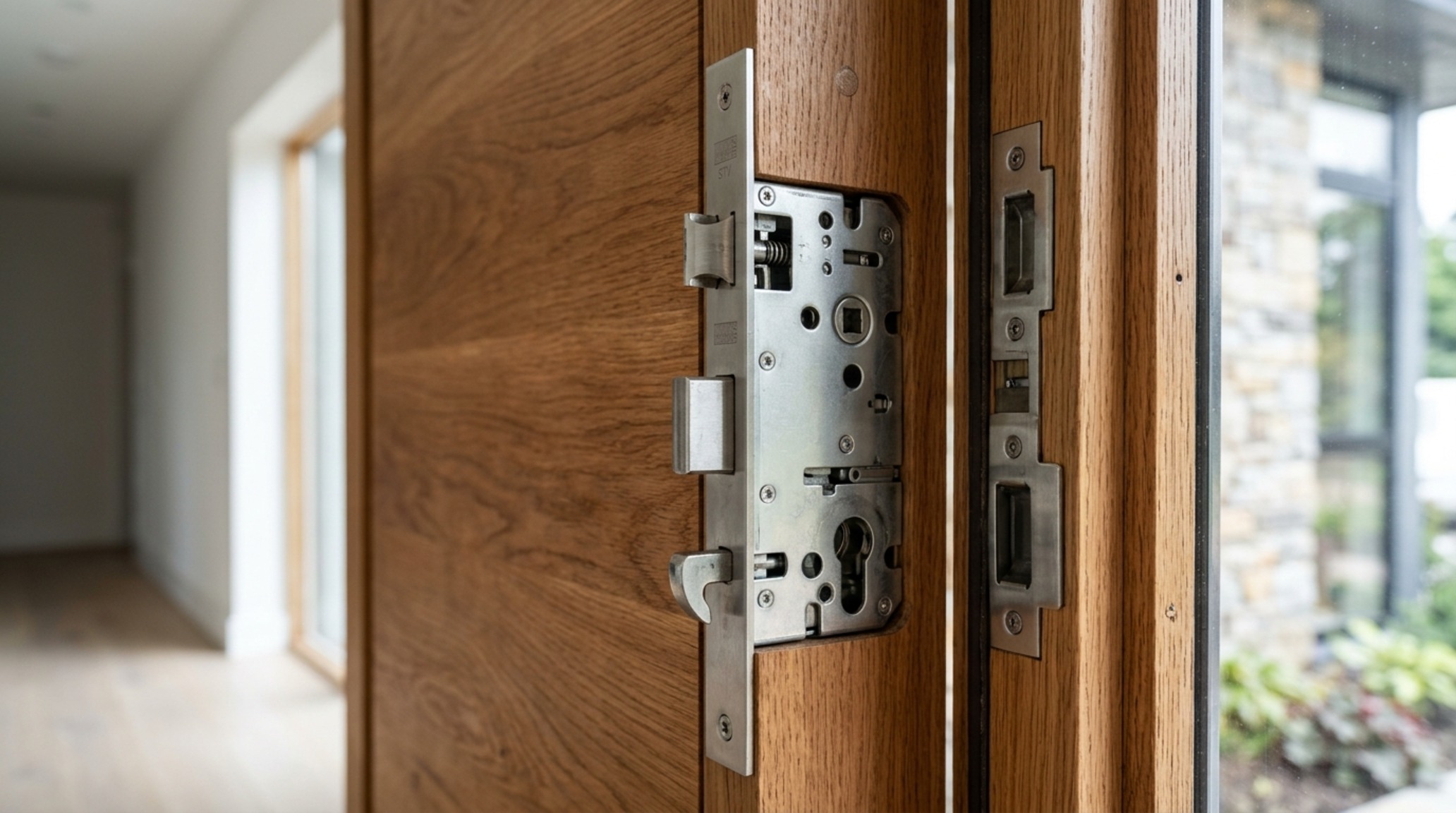
Beyond aesthetics, the engineering of modern hardware has pivoted toward the multi-point locking system. Unlike a traditional deadbolt that secures the door at a single strike plate, multi-point systems engage at three or more locations along the frame. This doesn’t just improve security; it ensures a tighter seal against the weatherstripping, preventing the common ‘warping’ that occurs in extreme temperature differentials. When selecting hardware, I always recommend looking for a high-quality finish like ‘Living Finishes’ which patina over time, or PVD (Physical Vapor Deposition) coatings for coastal environments where salt air would otherwise corrode standard plating within months.
Fiberglass vs Wood Front Doors: The Alchemy of Durability and Grain
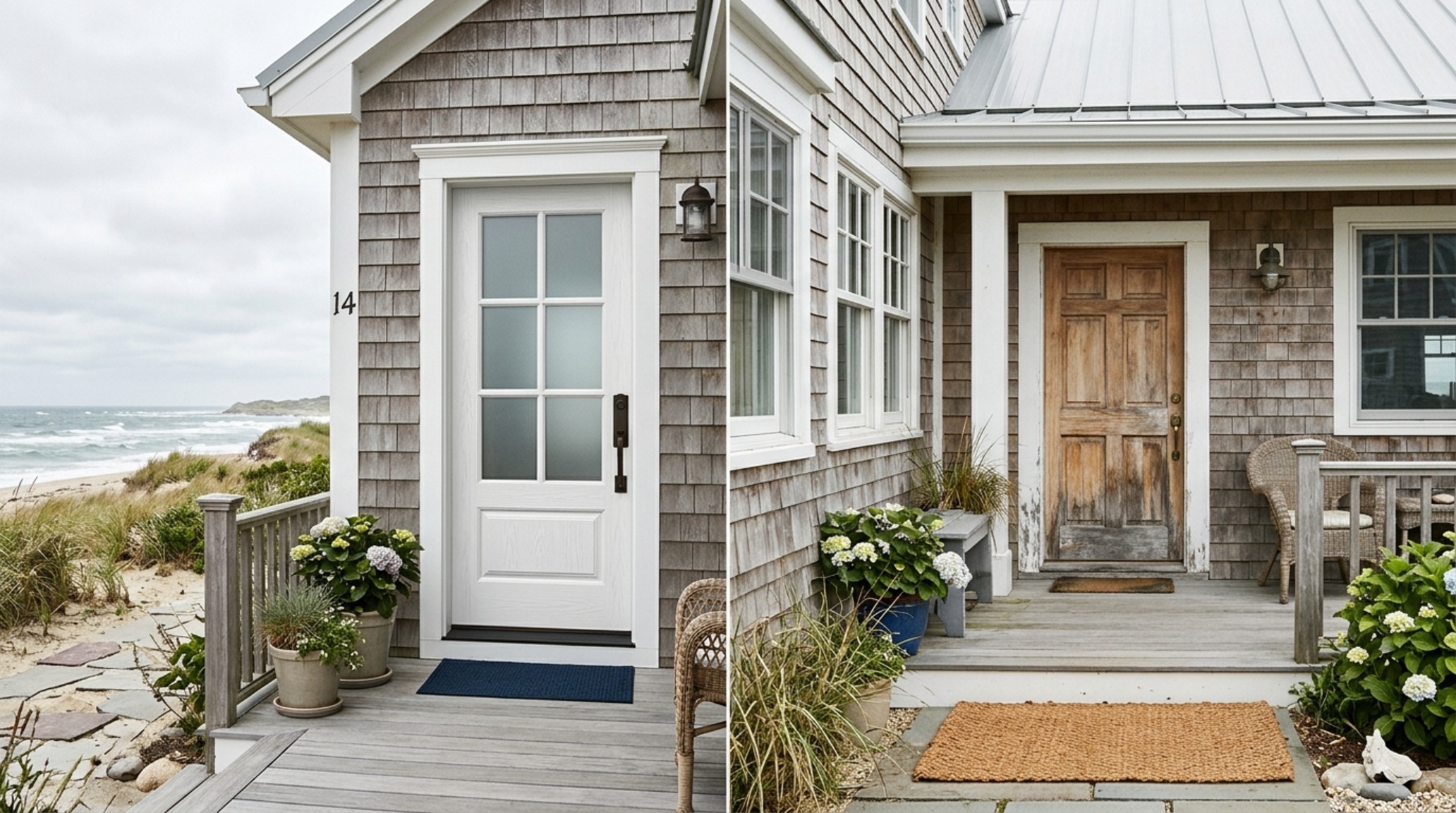
The debate between fiberglass vs wood front doors has reached a technological stalemate where the choice often comes down to the specific micro-climate of the porch. Authentic mahogany or white oak remains the gold standard for many architects due to its organic warmth and the way it takes a stain. There is a depth to a genuine wood grain that mimics the ‘spatial cadence’ of a well-designed interior. However, wood is a living material; it breathes, expands, and contracts. For south-facing entries with zero overhang, a solid wood door can become a maintenance liability, requiring refinishing every two to three years to prevent UV degradation.
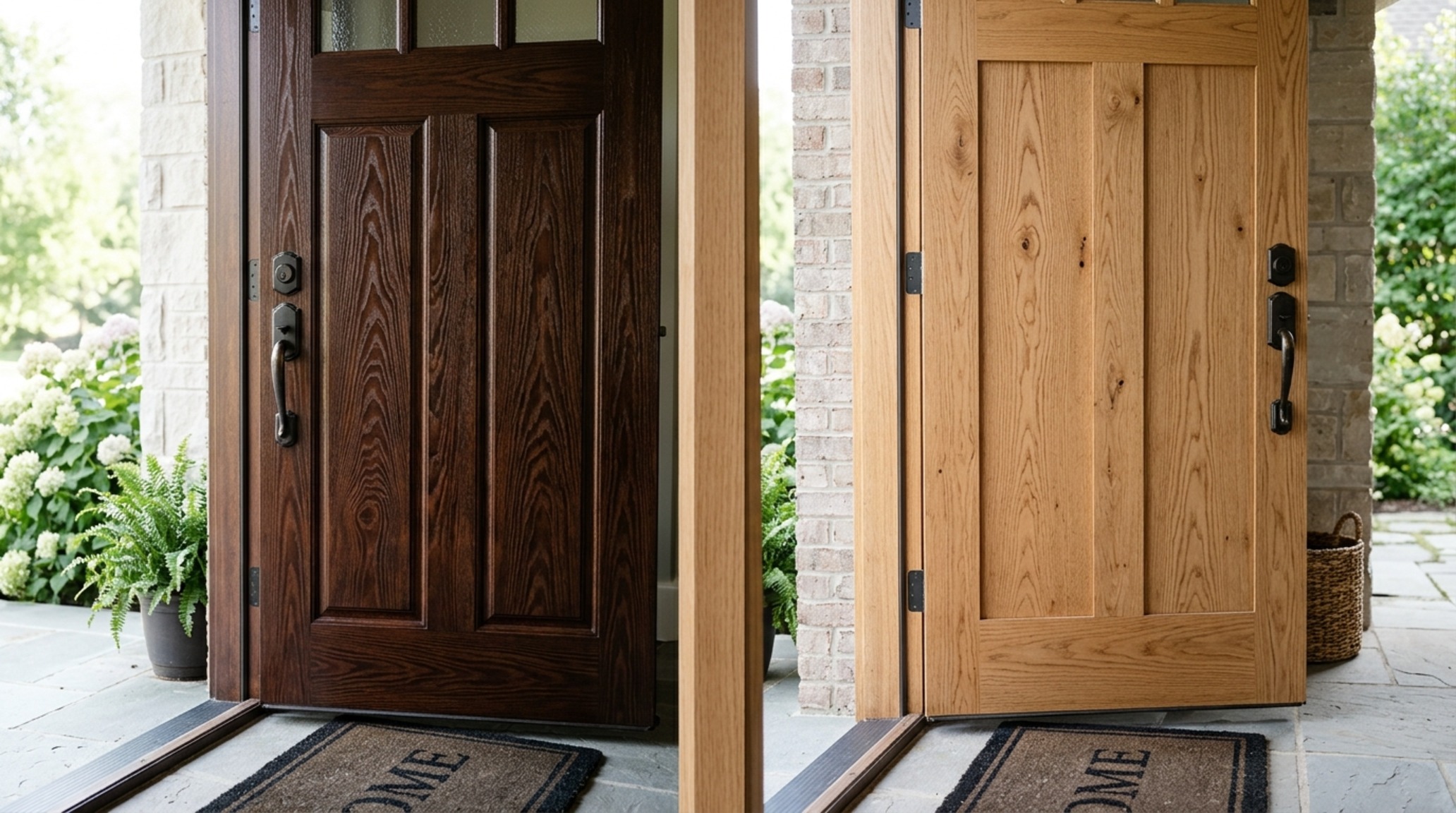
Conversely, modern fiberglass engineering has reached a point of ‘uncanny valley’ realism. High-definition graining techniques molded from real wood timber make it nearly impossible to distinguish from the real thing once painted or stained. Fiberglass offers a superior R-value—often four times that of a standard wood door—thanks to its polyurethane foam core. This makes it the pragmatic choice for those seeking ideas for front doors in regions with extreme seasonal swings. By incorporating a thermal break within the door’s construction, fiberglass prevents the transfer of cold from the exterior skin to the interior face, eliminating the condensation that often plagues metal-framed doors in winter.
Front Door Privacy Glass Ideas: Sculpting Light and Seclusion
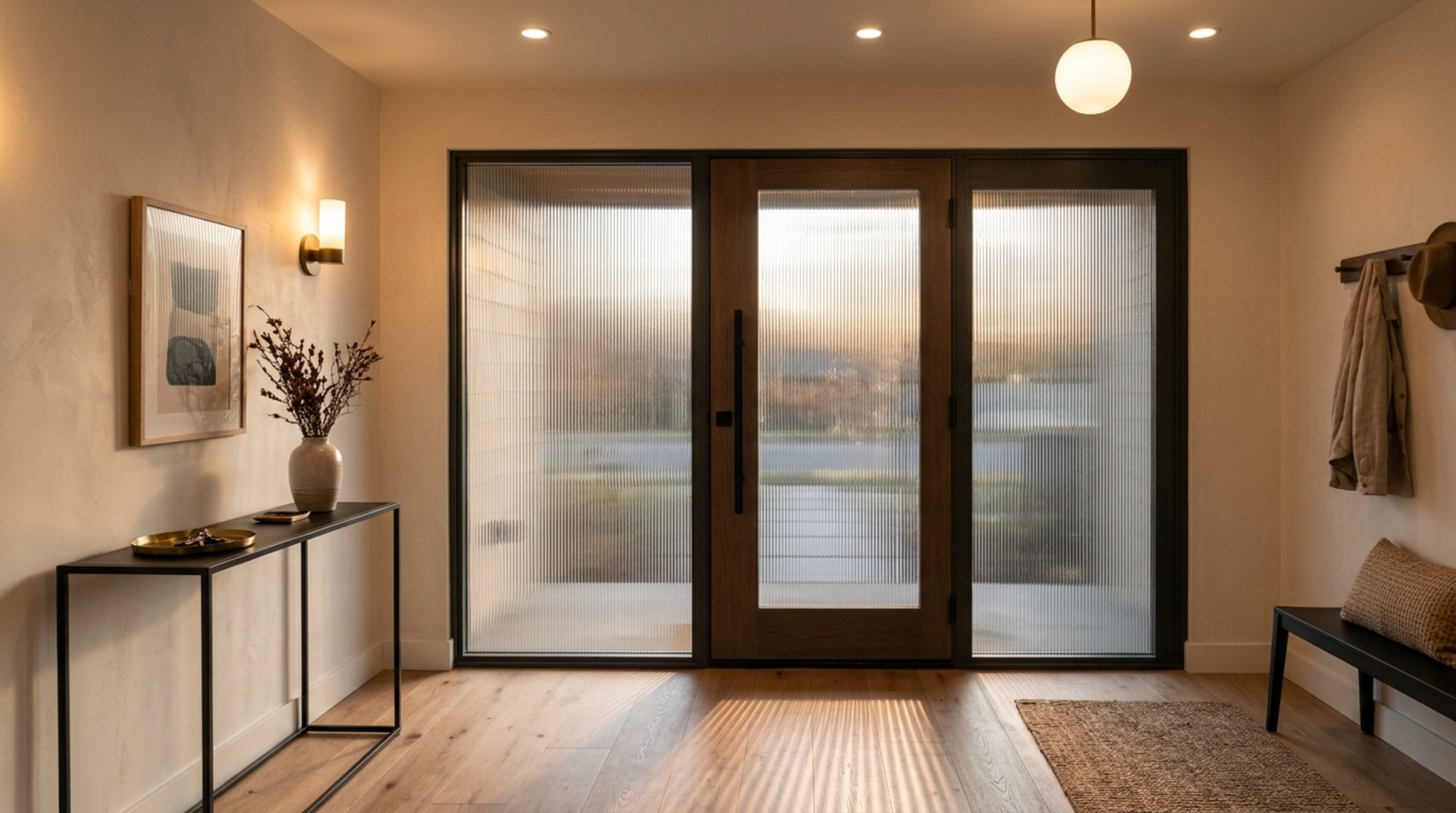
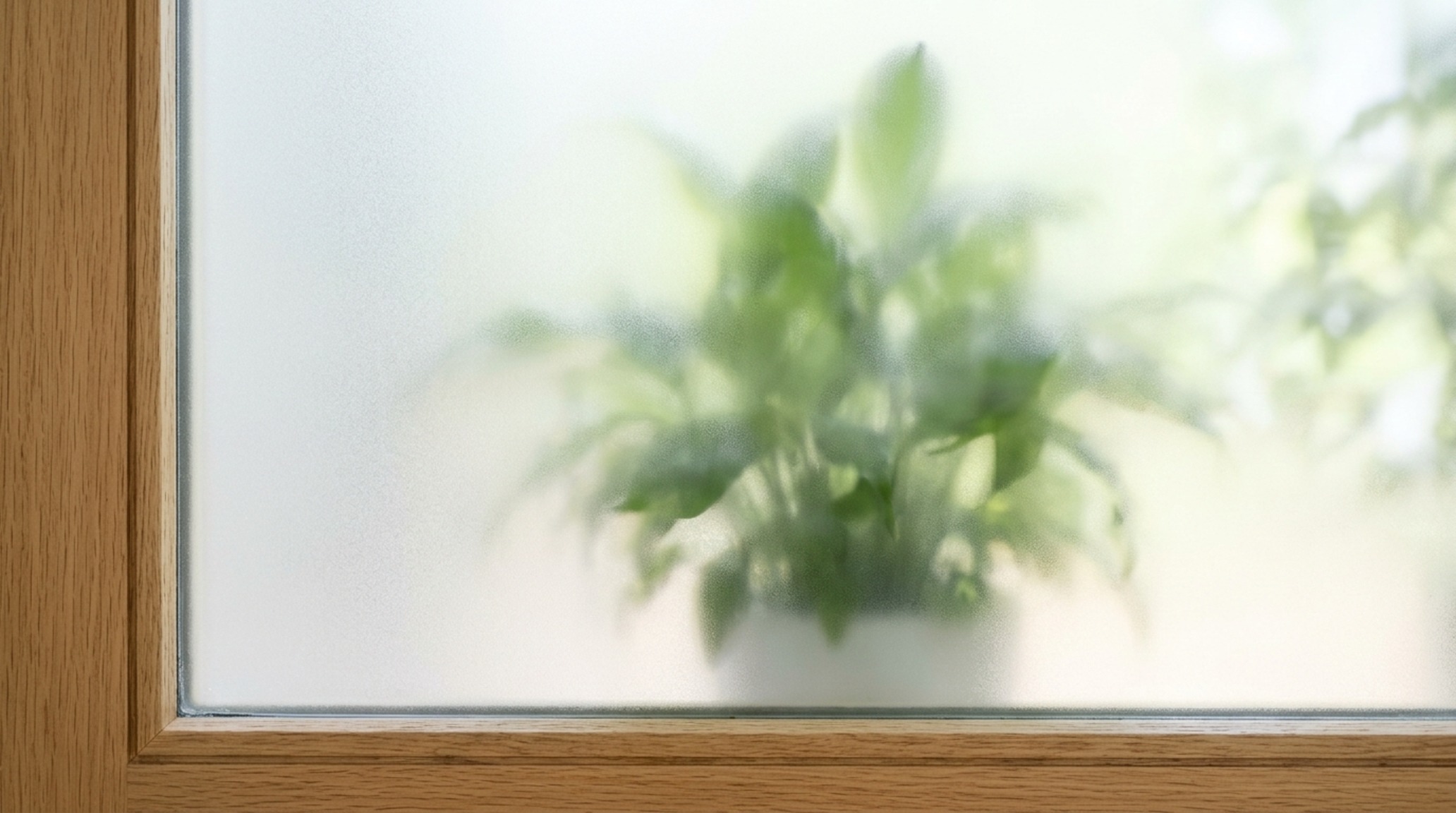
Natural light is the most coveted material in any entryway, yet the desire for brightness often conflicts with the need for privacy. This is where front door privacy glass ideas have evolved far beyond the dated ‘frosted’ look of the nineties. We are now seeing a massive resurgence in reeded, fluted, and rain-textured glass. These textures allow a soft, diffused glow to permeate the foyer while obscuring clear sightlines from the street. Reeded glass, in particular, creates a beautiful ‘shadow play’ as visitors approach, turning movement into an abstract architectural dance.
“Light is the silent architect of the entryway; it defines the transition from the public realm to the private sanctuary.”
For those seeking a more contemporary edge, acid-etched glass provides a velvet-like finish that is exceptionally durable and fingerprint-resistant. Another emerging trend is the use of ‘smart glass’ or switchable film, which can transition from transparent to opaque at the touch of a button or a signal from a smart-home hub. When planning the glazing, consider the ‘daylight factor.’ A 12-inch sidelite or a 36-inch transom can drastically reduce the need for artificial lighting during the day, creating a more biophilic and energizing atmosphere in the home’s primary circulation path.
Double Front Door Design Inspiration: Scale and Symmetry
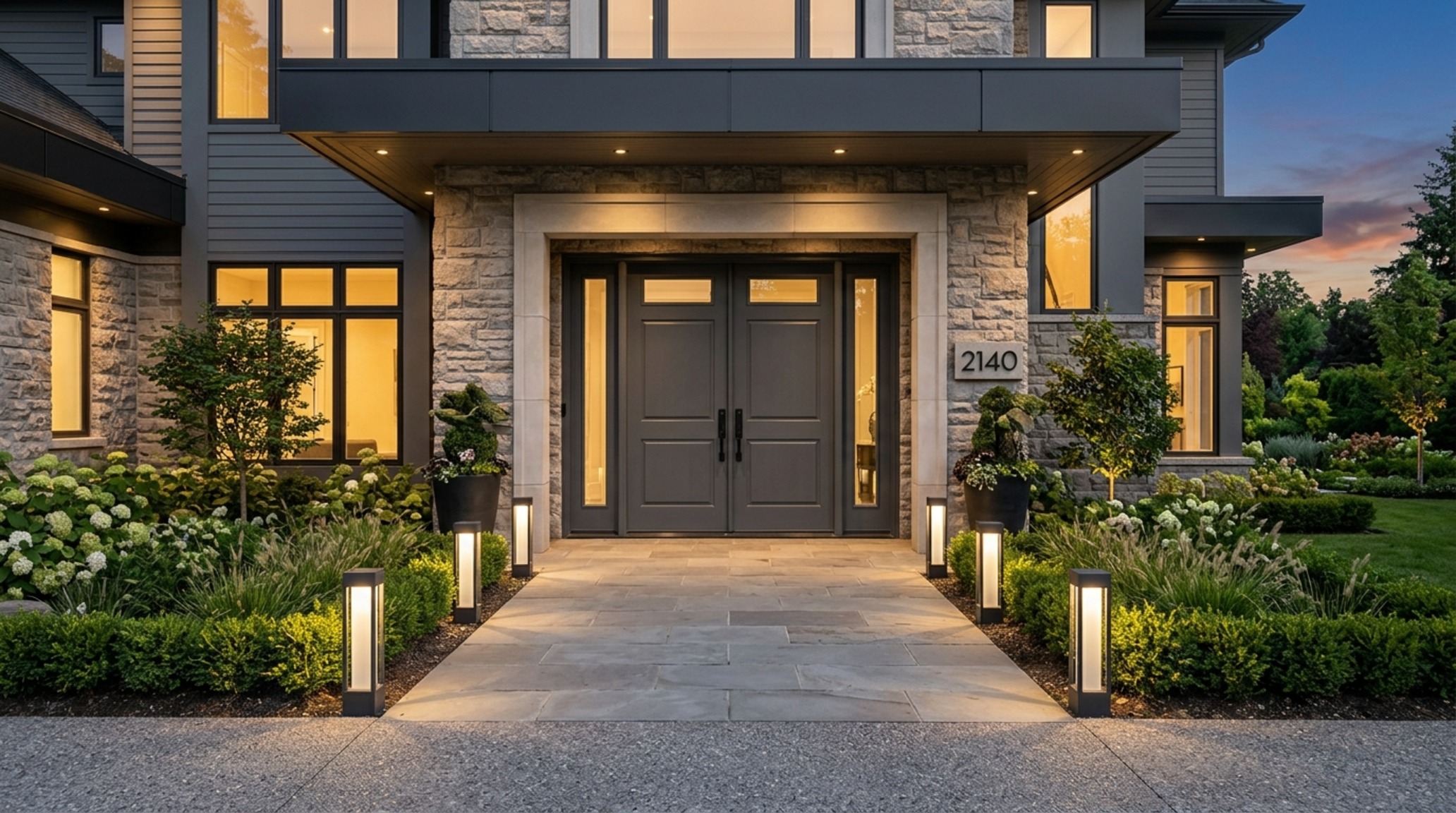
There is an undeniable sense of arrival associated with double front door design inspiration. In grander suburban or rural contexts, a pair of 36-inch doors provides a symmetrical anchor that balances the massing of the house. This layout allows for a 72-inch wide clear opening, which is not only practical for moving large furniture but also creates a ‘sightline alignment’ that can extend from the front curb through to the backyard view. The trick to making double doors feel modern rather than traditional is to simplify the ornamentation. Replace heavy raised panels with flat shaker profiles or vertical ‘shiplap’ grooves for a cleaner, more rhythmic aesthetic.
For homes where a full double-door system is too wide for the structural opening, a ‘door-and-a-half’ configuration (a standard door paired with a narrow operable sidelite) offers similar functionality with a smaller footprint. This ‘uneven’ pair is particularly effective in mid-century modern or transitional homes. Regardless of the configuration, ensure your landing is at least 60 inches deep. This provides ‘negative space breathing room’ for guests to stand comfortably while the doors swing inward, preventing that awkward ‘stepping back’ maneuver often required by poorly planned entryways.
Smart Lock Front Door Integration: The Invisible Sentinel
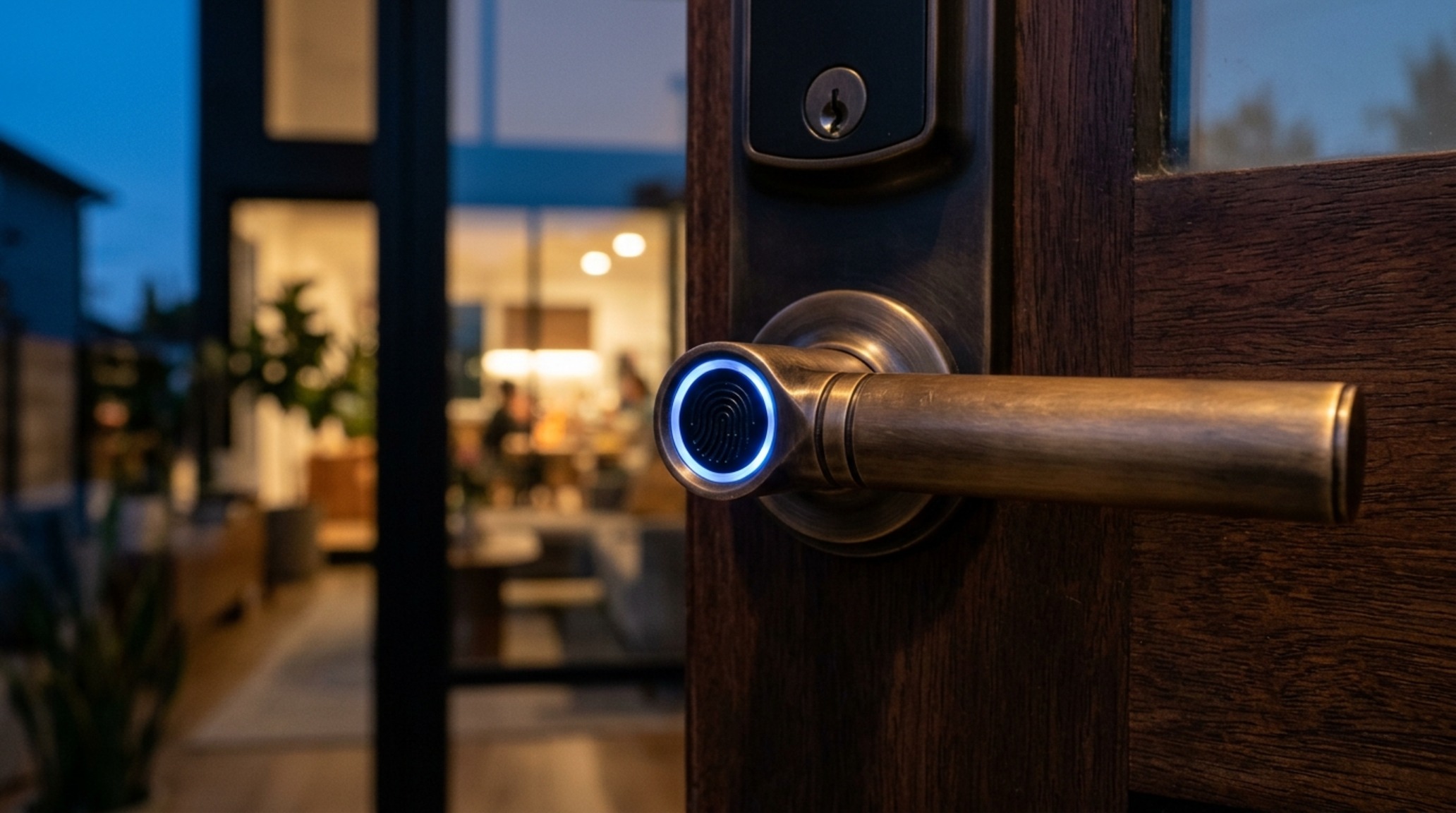
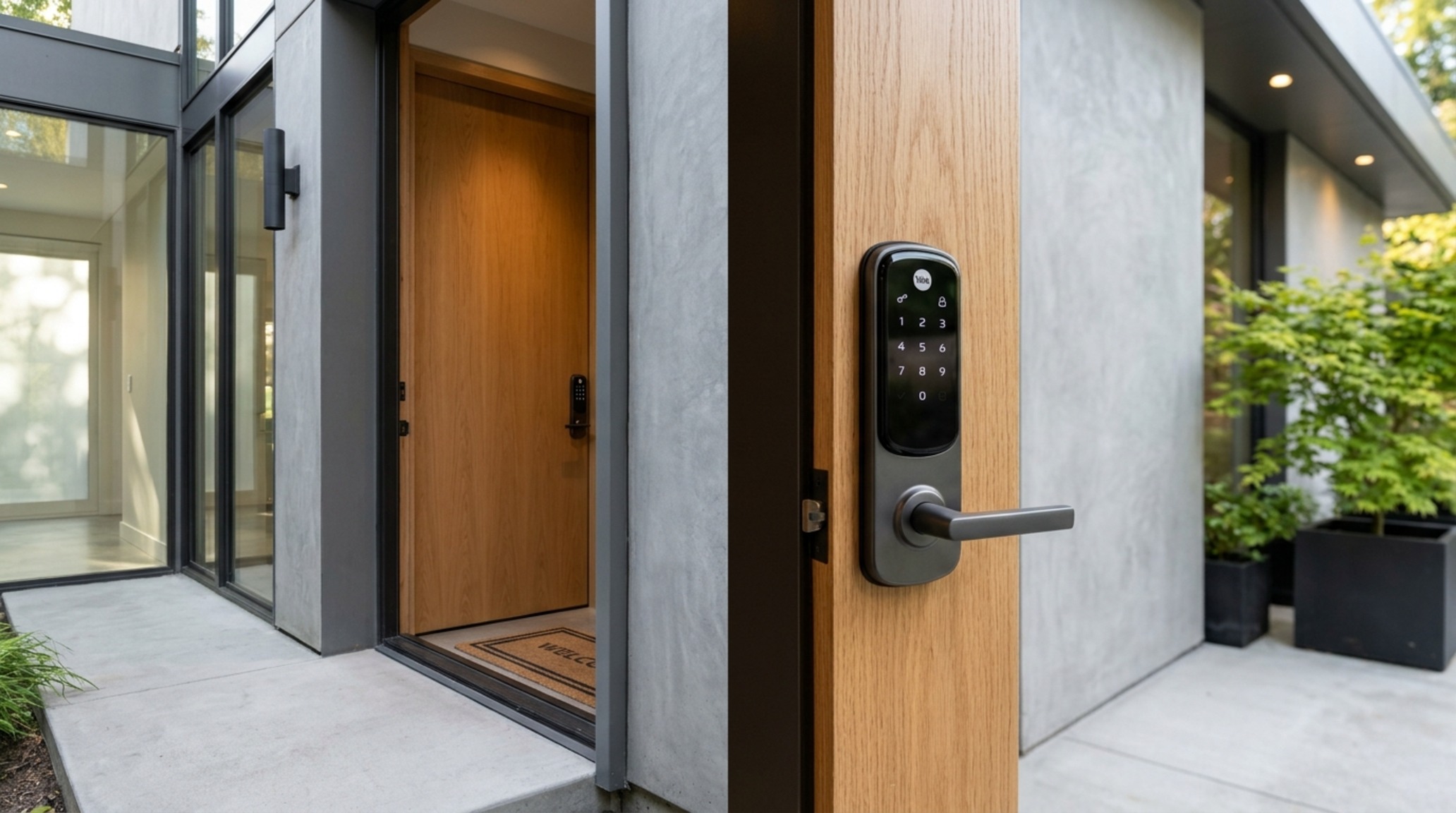
We are entering the era of the ‘invisible smart home.’ The most sophisticated smart lock front door integration no longer involves a bulky, plastic keypad bolted to the exterior. Instead, we are seeing ‘deadbolt-replacement’ tech where the smart components are housed entirely within the door’s bore hole or behind a minimalist, touch-sensitive plate. Biometric scanners—fingerprint readers integrated directly into the handle—allow for a frictionless entry that feels like something out of science fiction but operates with the reliability of a standard mechanical lock.
Integrating these systems with a broader home automation platform (like Control4, Crestron, or Apple HomeKit) allows for ‘scenes’ to trigger upon your arrival. As the smart lock disengages, the foyer lights can dim to a warm 2700K, the security system can disarm, and the climate control can adjust. This is the ‘fortified portal’ in action: a seamless blend of mechanical strength and digital intelligence. Always ensure your smart lock has a mechanical override—a hidden keyway—to ensure access during power failures or battery depletion.
Modern Front Door Color Trends: The Psychology of the First Impression
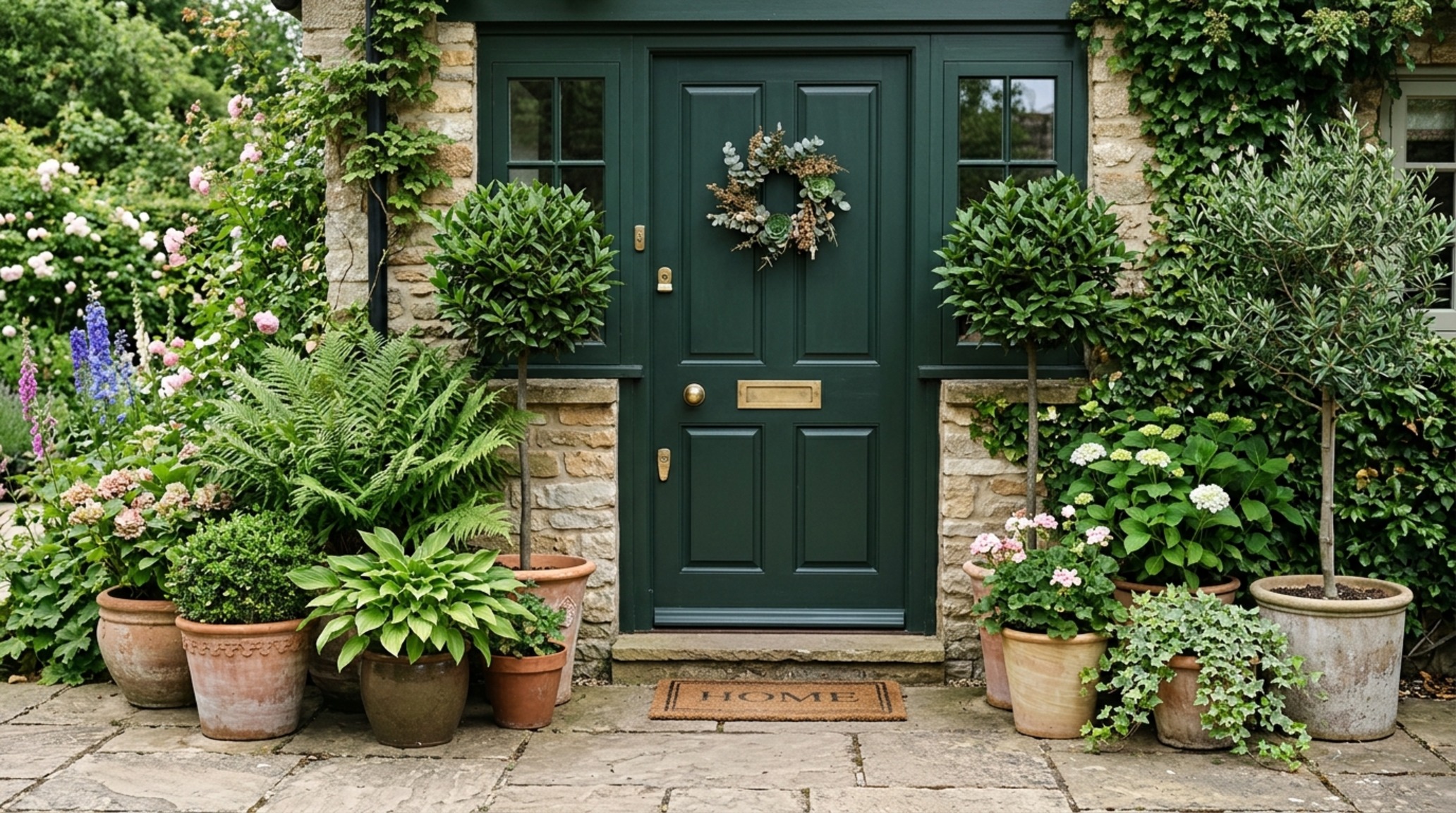
While the engineering is the soul of the door, the color is its personality. Current modern front door color trends are moving away from the high-gloss ‘red door’ clichés toward more grounded, earthy, and moody tones. We are seeing a lot of Farrow & Ball ‘Studio Green’ (a black-green that feels ancient and established) and Benjamin Moore ‘Iron Mountain’ (a soft, warm charcoal). These darker hues provide a ‘tactile grounding’ that makes the entryway feel substantial and secure.
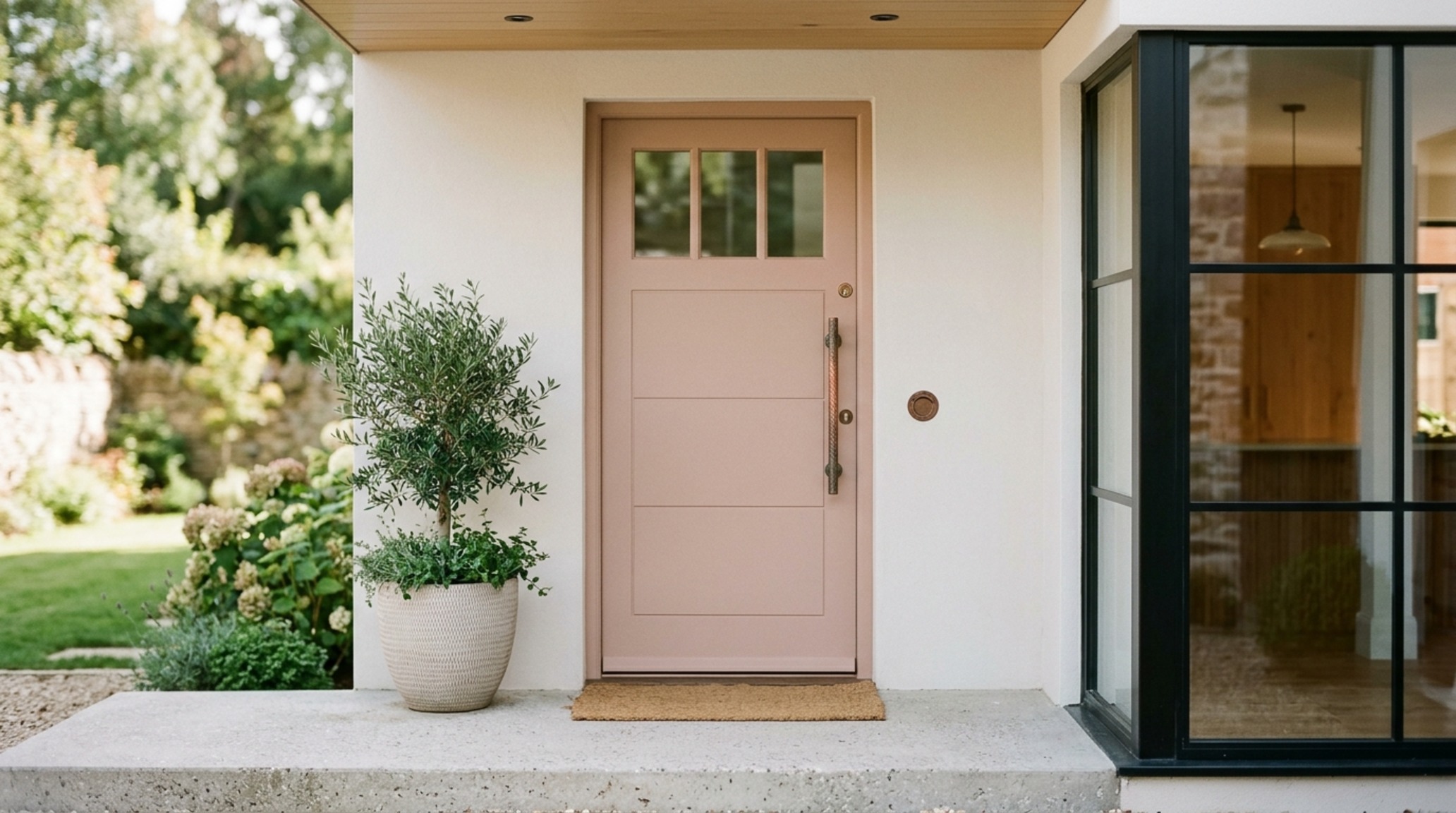
Alternatively, the ‘New Neutral’ palette involves softer, plaster-like tones. Shades like Benjamin Moore ‘Swiss Coffee’ or Farrow & Ball ‘Setting Plaster’ create a soft, inviting glow, especially when paired with natural oak or unlacquered brass hardware. The key is to consider the ‘light reflectivity value’ (LRV) of the paint. A very dark door on a north-facing house can look like a black hole, while a light-colored door in a high-glare environment can be blinding. Test your samples at different times of day to see how the ‘spatial cadence’ of the color changes as the sun moves across the facade.
Tactile Blueprint & Material Specifications
Architectural summary of tactile material selections, lighting specifications, and spatial ergonomics.
The portal to our home is far more than a physical entry point; it is a complex intersection of security, efficiency, and identity. By looking beyond the surface and investing in the ‘hidden engineering’ of modern door systems, we create a threshold that doesn’t just protect but also elevates the daily ritual of departure and return. Whether you are opting for the organic grain of a white oak pivot or the high-performance resilience of a thermal-break fiberglass door, the goal remains the same: a front door that stands as a silent sentinel of style and safety. In the end, the most successful ideas for front doors are those that make the boundary between the world and the home feel like a purposeful, beautiful choice rather than a mere necessity.
Editorial Silo • Recommended Architecture Studies
- The High-Functioning Foyer: Front Door Christmas Decorating Ideas & Ergonomic Elegance and Weather-Ready Holiday Fluidity — Archival Design Case Study
- The Fluid Foyer: Ergonomic Wall Mounted Coat Rack Plans for Seamless High-Traffic Living — Archival Design Case Study
Design & Materiality Gallery
Visual documentation of honest materials, natural ambient lighting, and refined architectural balance.
Curated Visual Lookbook
Design Gallery & Spatial Studies
A visual curation of architectural arrangements, lighting concepts, and material palettes featured in this space.