The Architecture of Atmosphere: Why Flow Precedes Festivity
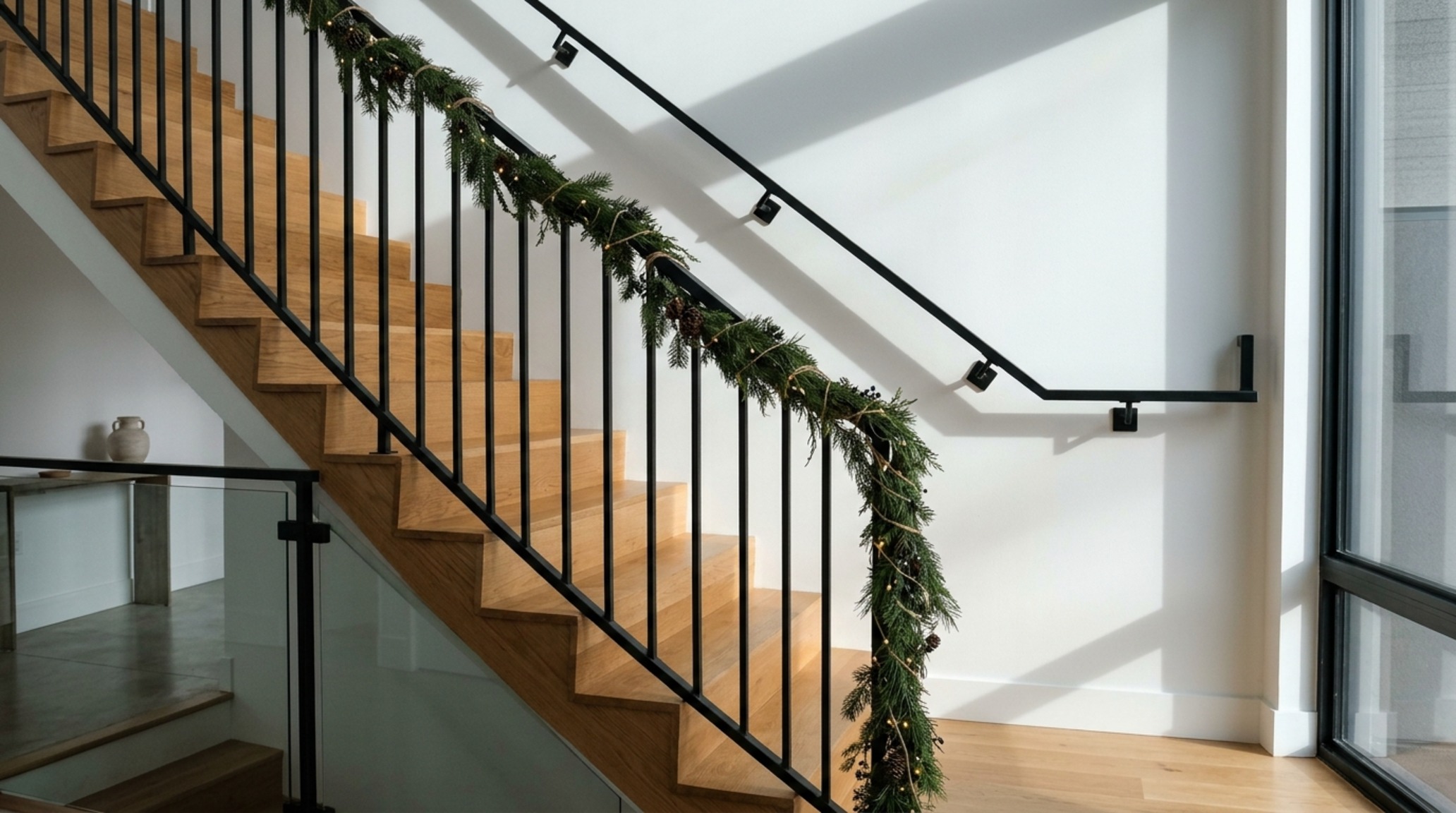
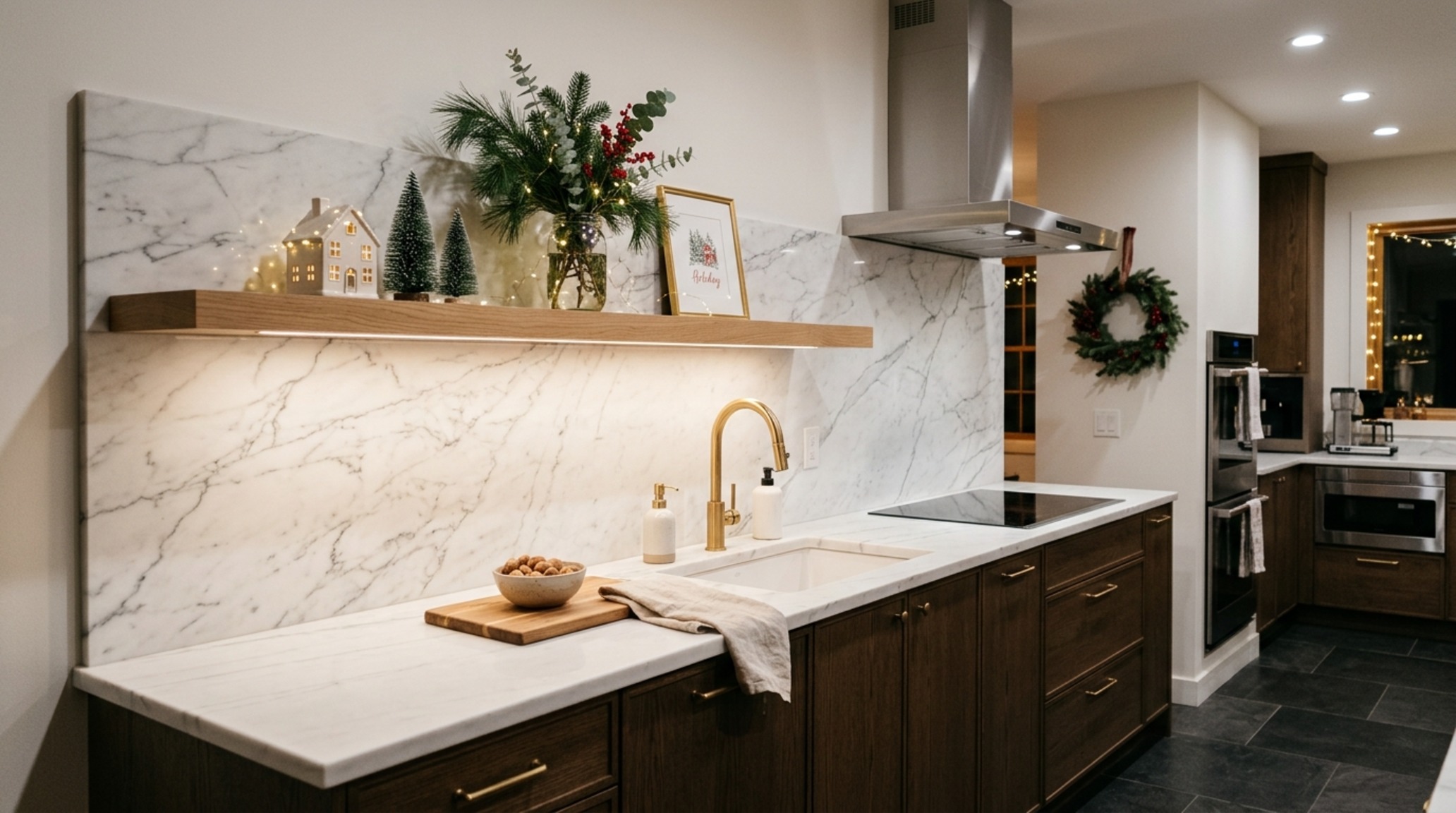
The most evocative pictures of christmas decor today serve as more than just visual inspiration; they are technical blueprints for how we reclaim the sanctuary of the home during the high-density demands of the season. We often approach the holidays as a layer of aesthetic excess, yet the most successful interiors—the ones that resonate with a sense of quiet luxury and effortless hospitality—are those where the festive elements respect the existing architectural cadence. When we study high-end holiday spreads, we aren’t just looking at ornaments; we are observing the strategic management of negative space and the preservation of critical circulation paths.
Integrating a six-foot Noble Fir or a sprawling tablescape into a modern residence requires more than a keen eye for color; it requires an understanding of ergonomics. In the design world, we often talk about the 36-inch rule—the minimum width required for a primary circulation path to feel comfortable rather than constricted. When holiday decorations begin to encroach upon these invisible boundaries, the home shifts from a place of rest to a series of logistical hurdles. The goal is to achieve a maximalist emotional impact through a minimalist physical footprint, ensuring that the festive spirit never compromises the lifestyle functionality of the inhabitants.
Small Space Festive Ergonomics: Navigating the Compact Interior
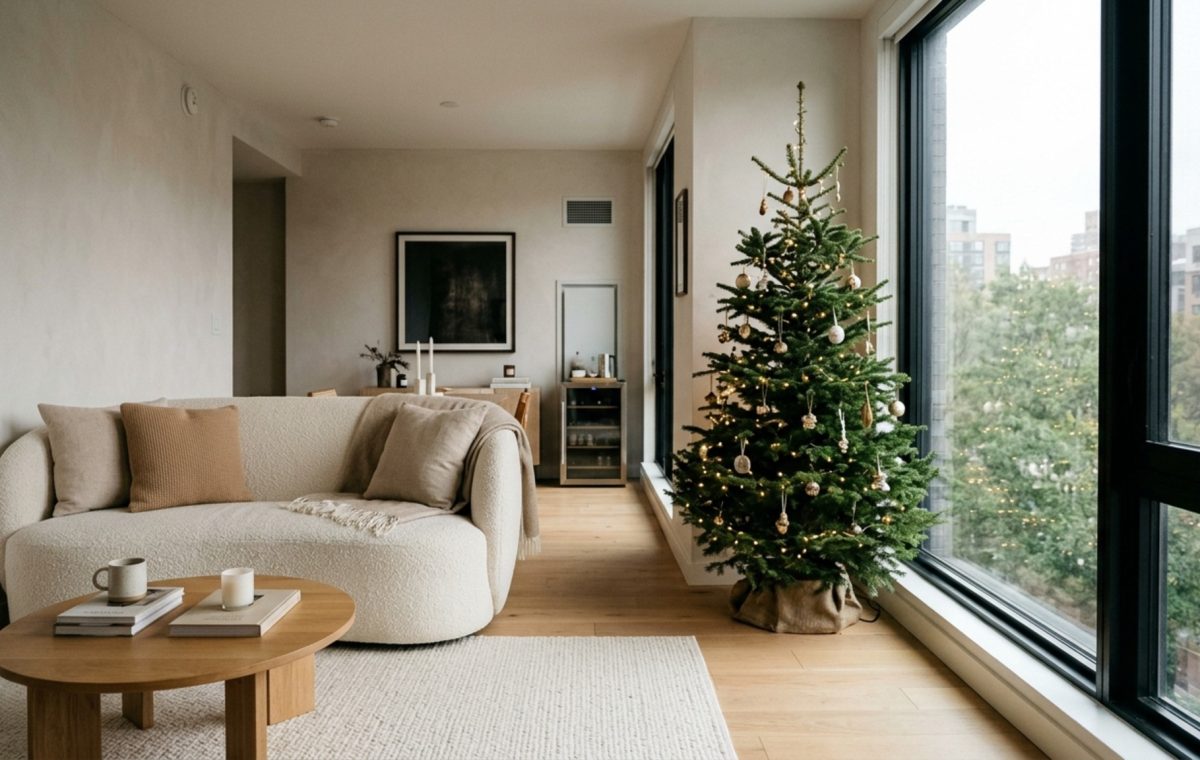
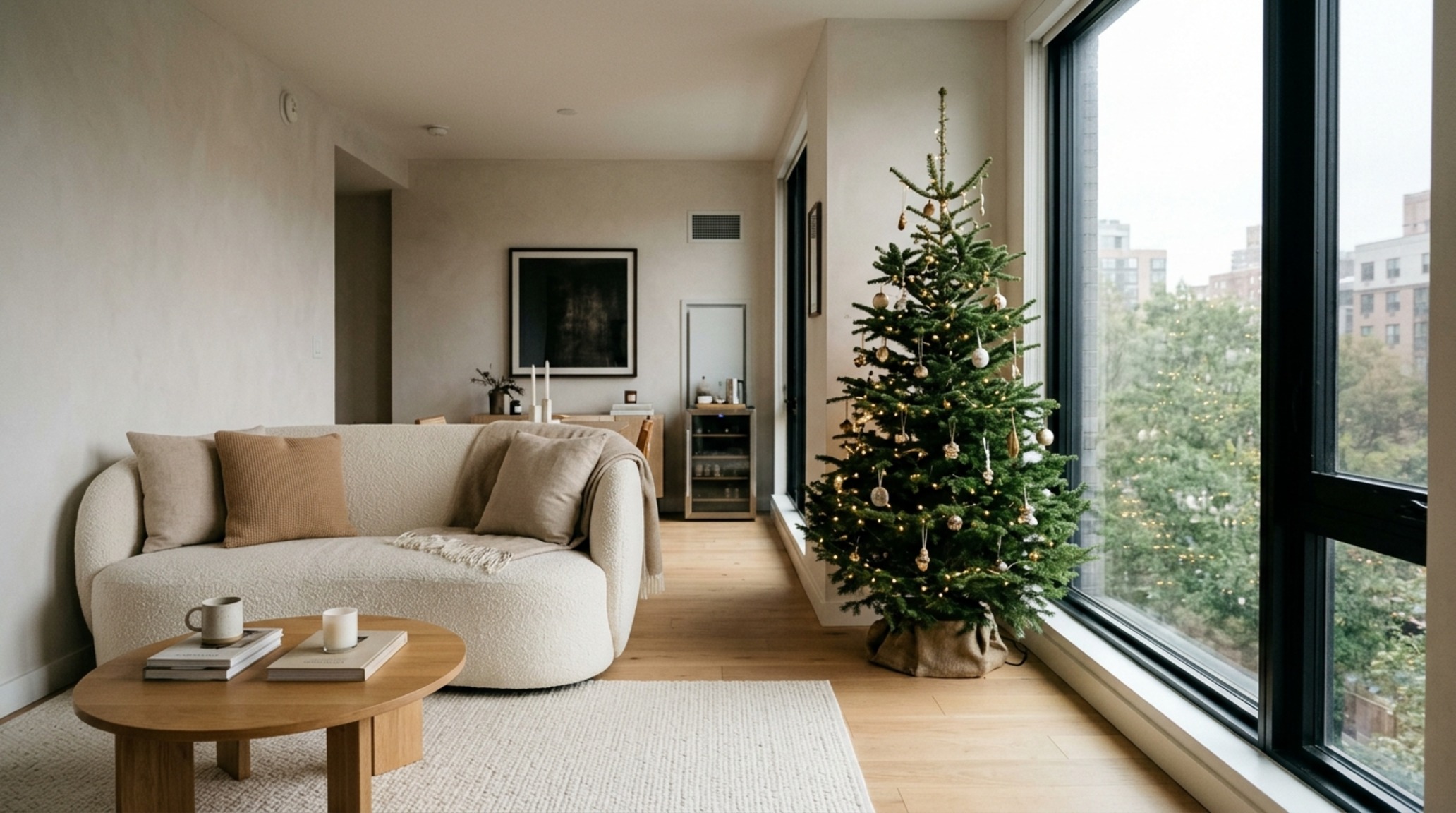
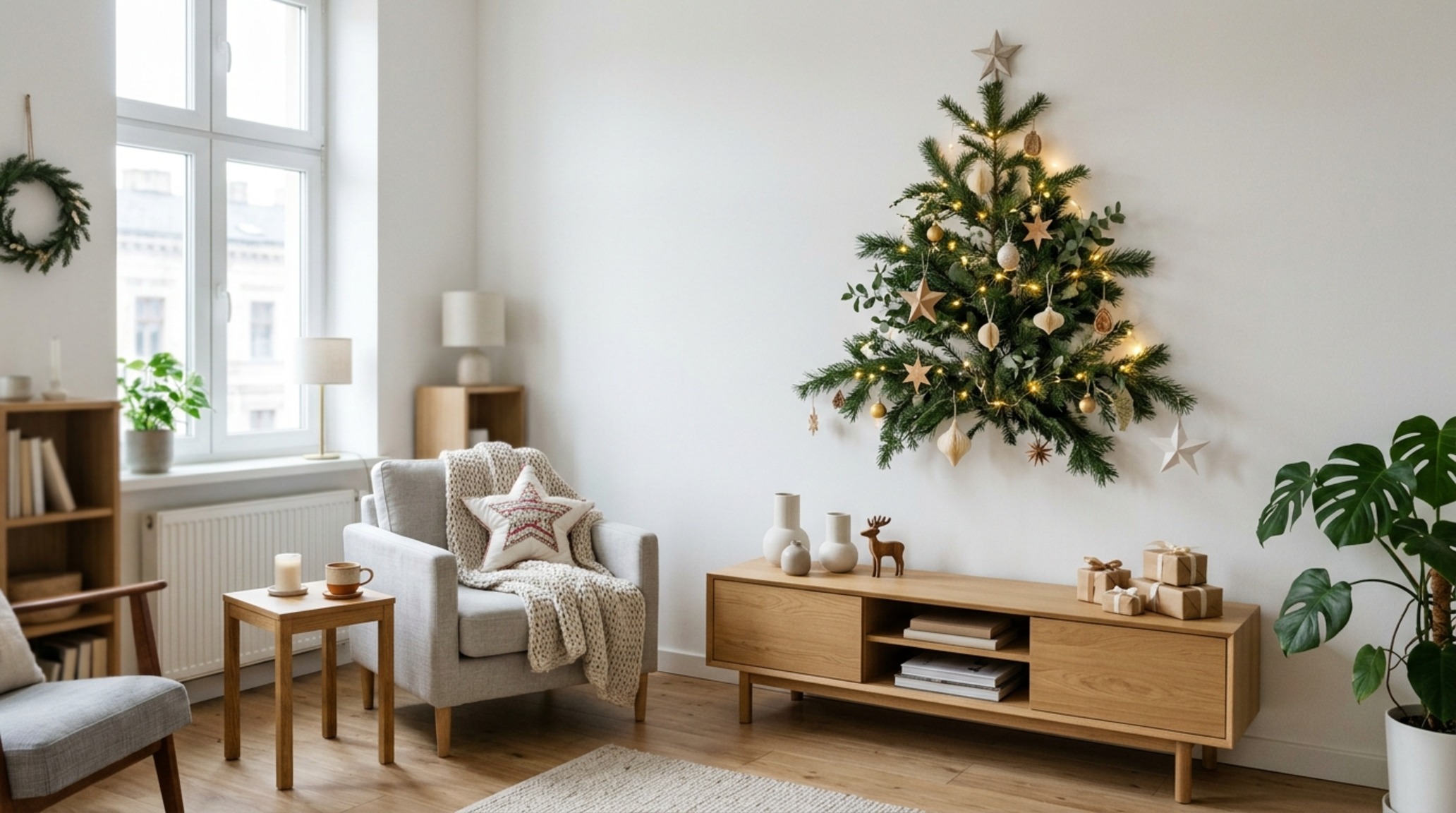
In high-density urban environments, the challenge of the holidays is often one of volume. Small space festive ergonomics dictates that we must look upward rather than outward. Instead of the traditional, wide-base Spruce that consumes four square feet of precious floor real estate, designers are opting for ‘pencil’ profiles or wall-mounted greenery that maintains the floor plane’s integrity. By keeping the floor clear, we preserve the sightlines that make a small room feel expansive.
Consider the placement of the tree in relation to the primary seating group. A common error is placing a tree in a corner that forces a sofa forward, breaking the 18-inch ‘reach’ distance between the seat and the coffee table. To maintain a fluid flow, consider ‘floating’ the tree near a window but away from the natural ‘desire lines’ of the room—those paths we instinctively walk from the door to the kitchen or the sofa to the sideboard. When the pictures of christmas decor feel truly right, it is because the furniture and the finery are in a state of ergonomic equilibrium.
Architectural Vignettes & Spatial Flow: The Art of the Mantle
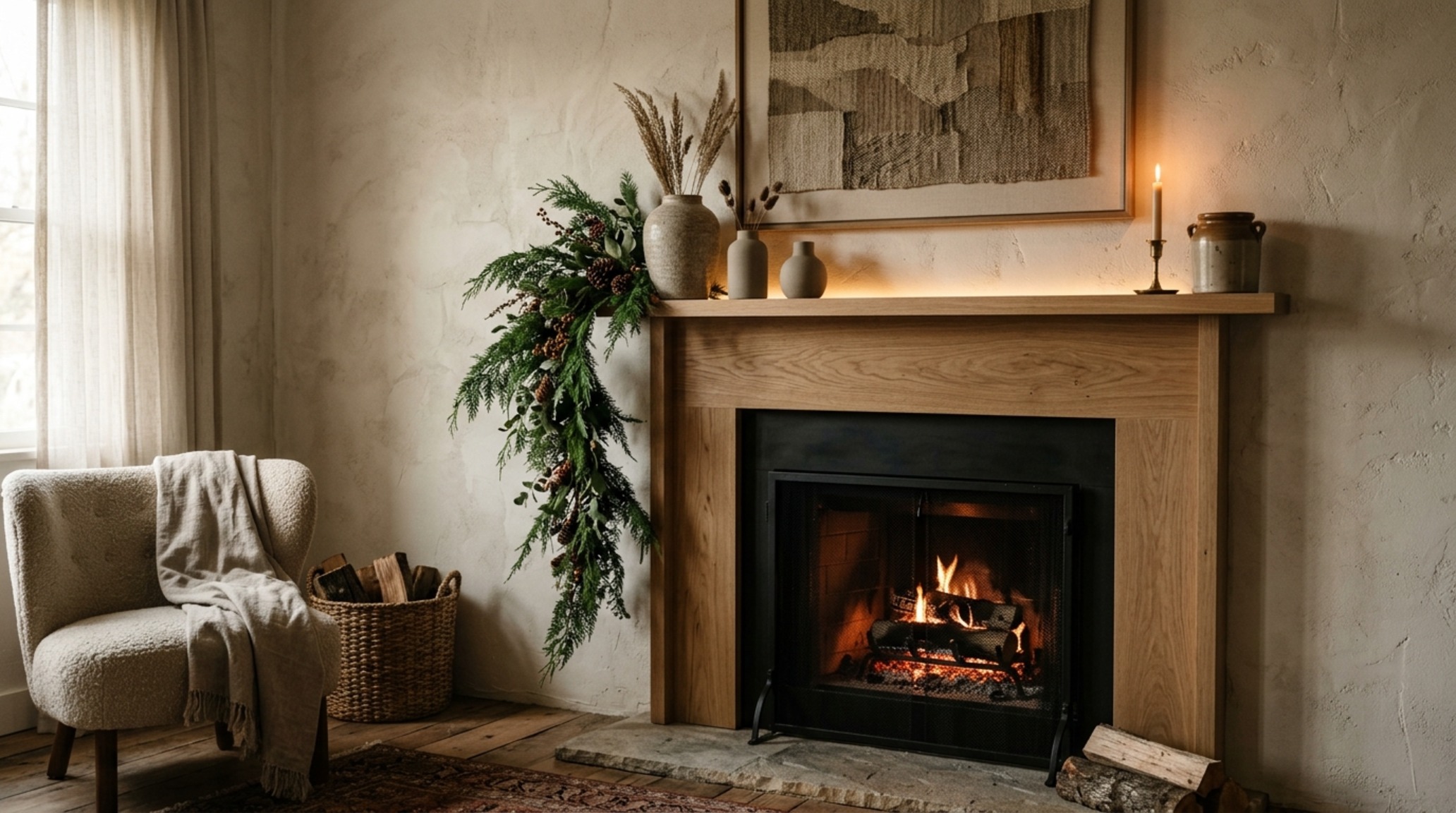
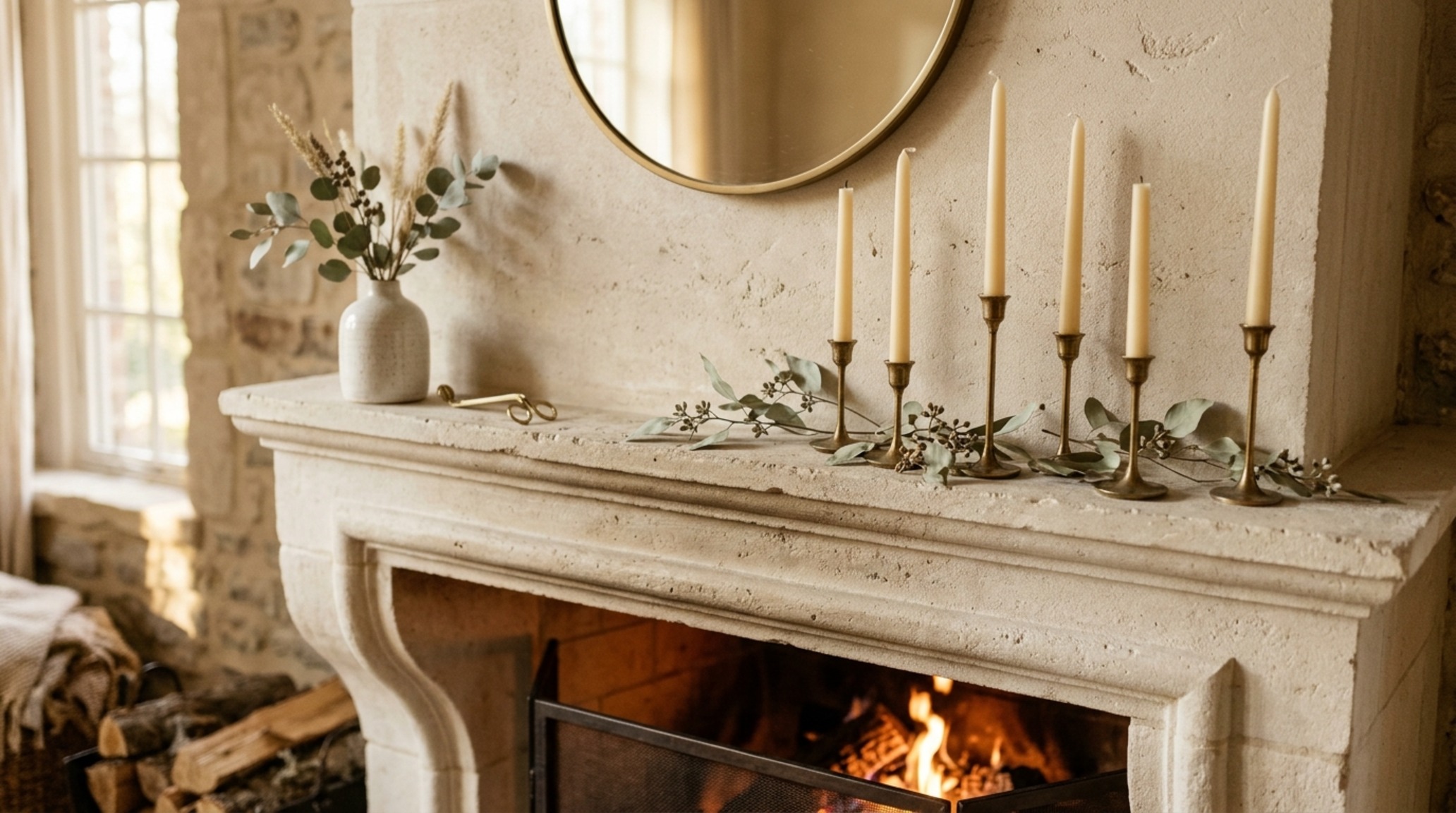
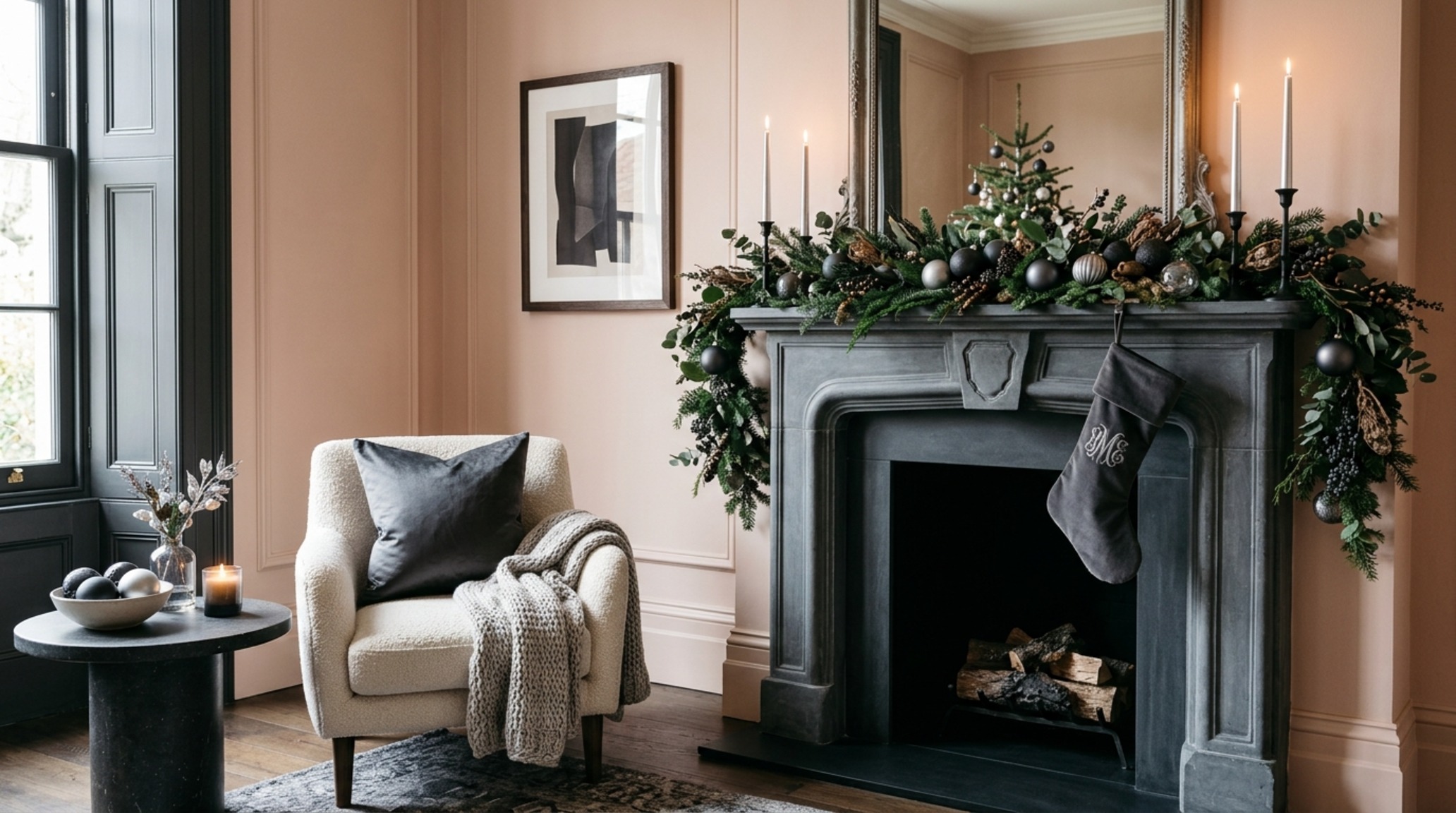
The fireplace remains the psychological hearth of the home, but its styling often suffers from over-crowding. Minimalist christmas mantle styling is an exercise in restraint and textural layering. Rather than a symmetrical explosion of trinkets, look toward the Japanese concept of Ma—the space between objects. A single, asymmetric drape of real cedar or Norfolk pine, spilling over one side of a honed limestone or white oak mantle, creates a dynamic sense of movement without cluttering the visual field.
When styling the mantle, lighting is your primary tool for depth. We move away from the harsh, flickering multi-colored LEDs of the past toward a sophisticated 2700K warm ambient glow. High CRI (Color Rendering Index) lighting, specifically 90+, ensures that the deep greens of the foliage and the subtle luster of metallic accents are rendered accurately. This isn’t just about ‘coziness’; it’s about the technical precision of light hitting a surface. A well-lit mantle acts as a secondary light source, reflecting off the wall to provide a soft, indirect wash that enhances the room’s overall atmospheric quality.

Luxury Holiday Color Swatches: A Palette of Materiality
Color in the festive home should feel like an extension of the existing interior’s DNA. The most sophisticated luxury holiday color swatches are currently moving away from the traditional high-contrast red and green toward a more tonal, ‘quiet luxury’ approach. Think of palettes like Benjamin Moore’s Swiss Coffee paired with deep, desaturated oxides, or Farrow & Ball’s Setting Plaster accented with aged brass and charcoal silks.
Texture provides the complexity that color used to. We see a rise in ‘tactile grounding’—the use of raw, organic materials to balance the shimmer of the season. Velvet ribbons in a matte moss green, hand-thrown ceramic ornaments with a crackle glaze, and untreated wood bead garlands add a layer of human touch. When these materials are captured in pictures of christmas decor, the camera picks up on the micro-variations in light and shadow, creating a visual richness that feels earned rather than manufactured.
Contemporary Holiday Floor Plans: Zoning for Hospitality
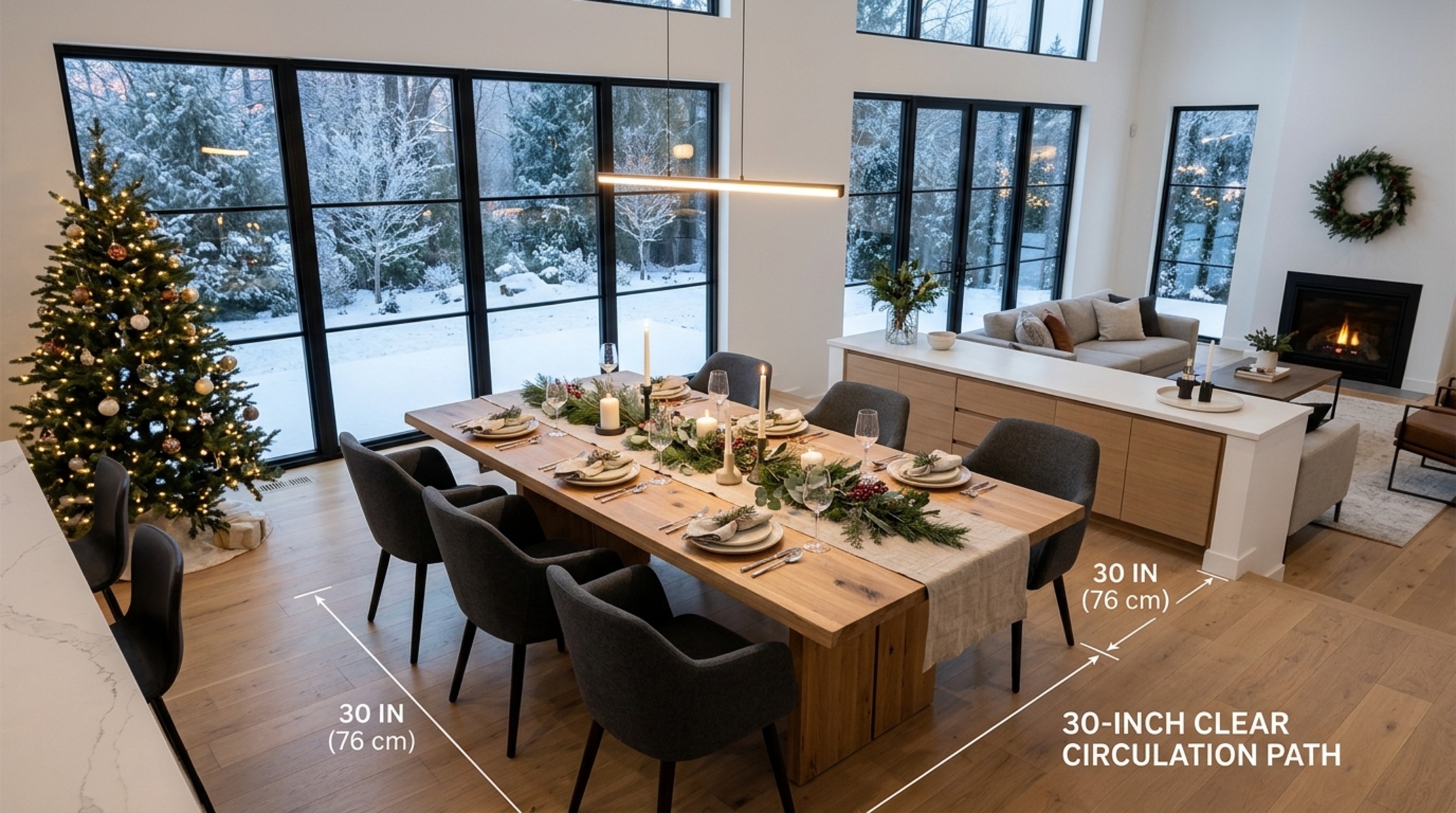
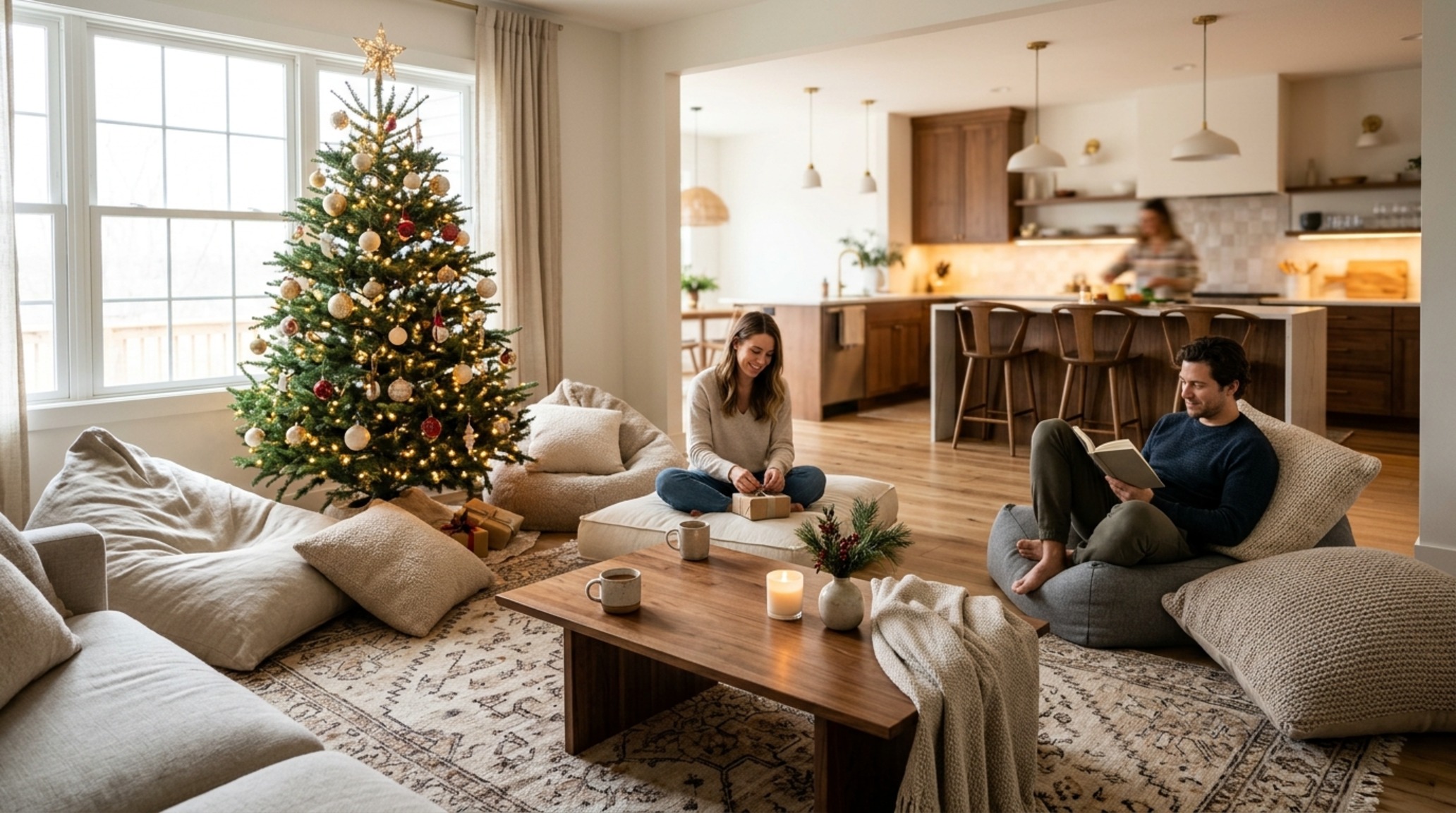
The holidays are, at their core, a social season. However, a room’s functionality often breaks down when guests arrive because the festive layout hasn’t accounted for ‘buffer zones.’ Contemporary holiday floor plans prioritize the ‘standing room’ around islands and bars. A 30-inch dining chair clearance is the absolute minimum for a guest to pull back a chair comfortably; if a buffet table or a decorative pedestal is placed too close, the entire dining experience feels cramped.
Strategic zoning allows for different modes of interaction. Create a ‘soft zone’ near the tree with floor cushions or a low ottoman, encouraging a slower, more intimate pace of conversation. Conversely, keep the ‘active zone’—the path between the kitchen and the dining table—entirely free of floor-based decor. It’s about creating a spatial narrative where the decoration guides the guest through the home, rather than acting as a barrier to their movement.
Cinematic Festive Photography Angles: Capturing the Narrative
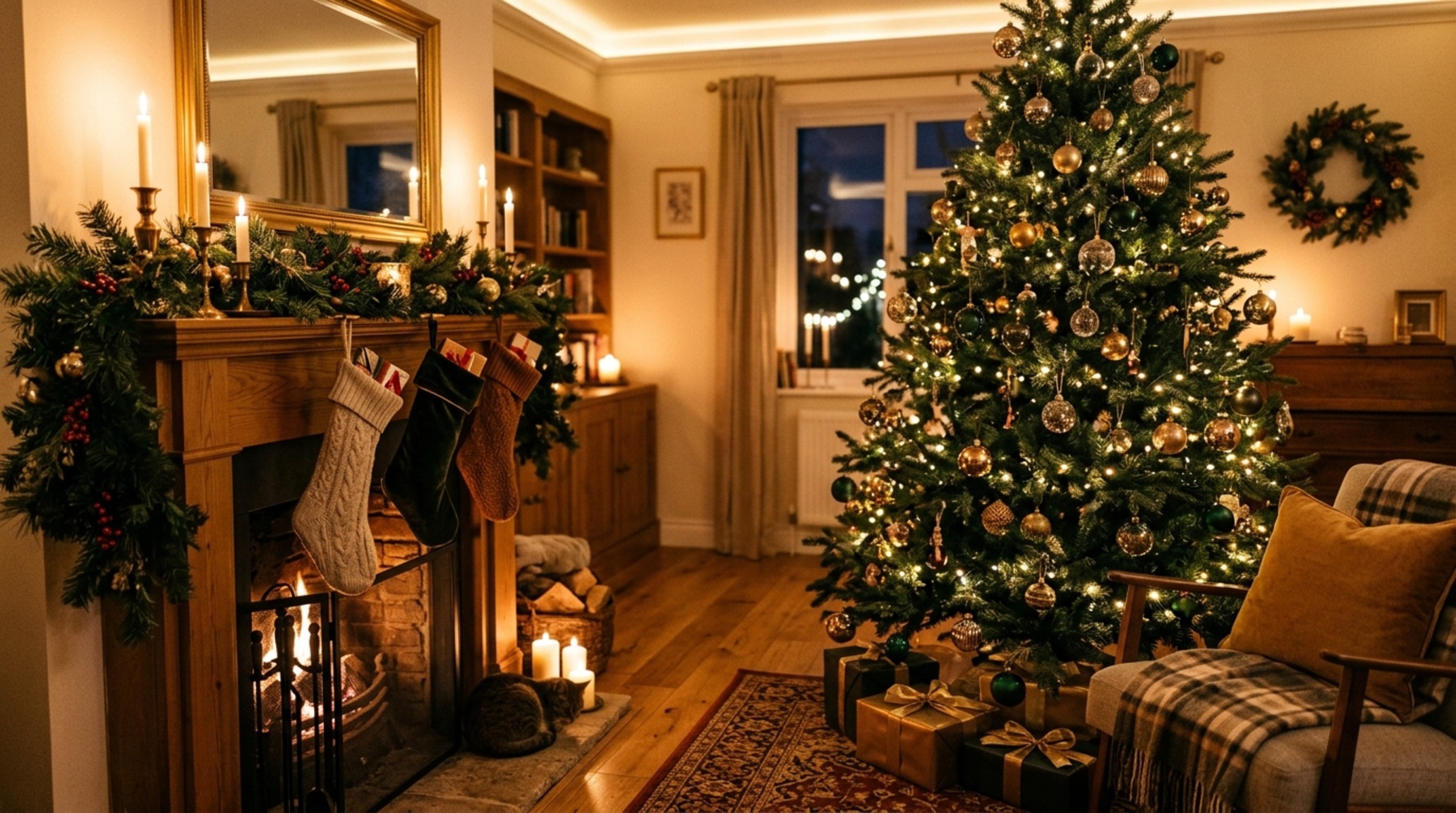
To document a home for a portfolio or a social narrative, one must master cinematic festive photography angles. Professional architectural photographers rarely shoot at eye level; instead, they drop the tripod to ‘chest height’ to better capture the relationship between the furniture and the floor plane. This perspective elongates the room and emphasizes the layering of the decor.
Focus on the ‘hero shot’—usually a wide-angle view of the primary living space—but balance it with ‘vignette studies.’ These are the close-up, shallow depth-of-field shots that highlight a specific material intersection: the way a silk ribbon rests against a fluted oak cabinet, or the glow of a candle reflected in a hand-blown glass ornament. These shots tell the story of the home’s materiality and the intentionality behind every placement. They remind us that the best pictures of christmas decor are those that evoke a sense of touch as much as a sense of sight.
Professional Christmas Gallery Design: The Curated Coda
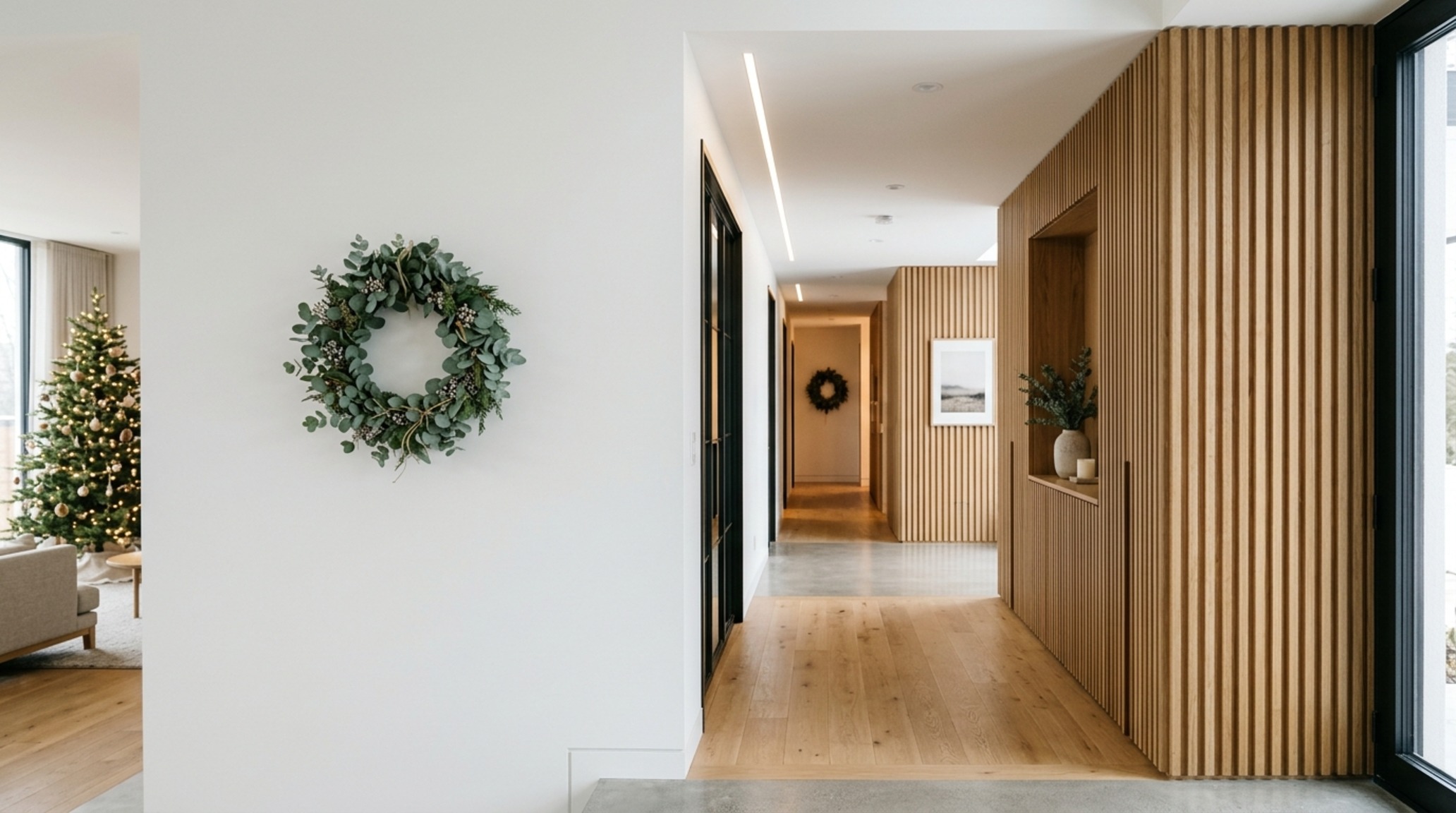
Designing a holiday home is an act of temporal architecture. It is the creation of a structure that exists for a few weeks but leaves a lasting psychological impact. By applying the rigors of professional design—clearances, lighting specs, and material integrity—we elevate the holiday experience from a chaotic seasonal shift to a refined expression of our personal aesthetic. Whether it’s the precise 18-inch reach from a velvet armchair to a side table holding a glass of mulled wine, or the way a 3000K task light illuminates a gingerbread-making station, the details are what define the ease of living.
Curated Materiality & Technical Dimensions Guide
Summary of authentic finishes, designer paint selections, and standard architectural clearances.
Ultimately, the most successful pictures of christmas decor aren’t those that show us a finished product, but those that invite us into a lived experience. They capture the fluid motion of a host moving through a room, the soft fall of light on a curated surface, and the quiet spatial harmony that allows the people within the home to remain the true focus of the season. In this architectural reflection of the holidays, we find that the most beautiful gift a home can give is the freedom to move, to breathe, and to gather without friction.
Editorial Silo • Recommended Architecture Studies
- Performance Modularity: Modular Shelf System & Engineering Seamless Living in the Modern Compact Home — Archival Design Case Study
- The Physics of the Curve: Structural Secrets of Earth-Sheltered Hobbit Home Designs — Archival Design Case Study
Curated Materiality & Proportion
An editorial exhibition documenting finishes, architectural lighting, and bespoke spatial detailing.

Curated Lookbooks & Architectural Studies
- Mastering Warm Entryway Design: A Practical Guide
- Smart Small Utility Room Design Ideas for Compact Homes
- The Architect’s Threshold: Mastering Scale and Symmetry in Front Door Christmas Decorating Ideas
- Styling a Vintage Home Library Desk with Timeless Details
- Free Standing Kitchen Pantry: The Architectural Blueprint & Spatial Flow Guide
- Autumn Kitchen Styling Ideas for a Warm Countertop
Curated Visual Lookbook
Design Gallery & Spatial Studies
A visual curation of architectural arrangements, lighting concepts, and material palettes featured in this space.