There is a profound shift occurring in the world of high-end residential interiors. For years, the ‘modern farmhouse’ aesthetic was defined by a somewhat sterile adherence to high-contrast white shiplap and perfectly symmetrical black-framed windows. However, as our collective design palette matures, we are seeing a move toward what I call the ‘Tactile Hearthside.’ This new era prioritizes sensory depth, where farmhouse fireplace decor ideas are no longer just about seasonal greenery, but about the fundamental interplay of raw materials, light temperature, and architectural shadow. We are moving away from the flat and the manufactured, seeking instead the ‘imperfect’ soul of hand-applied finishes and ancient masonry techniques.
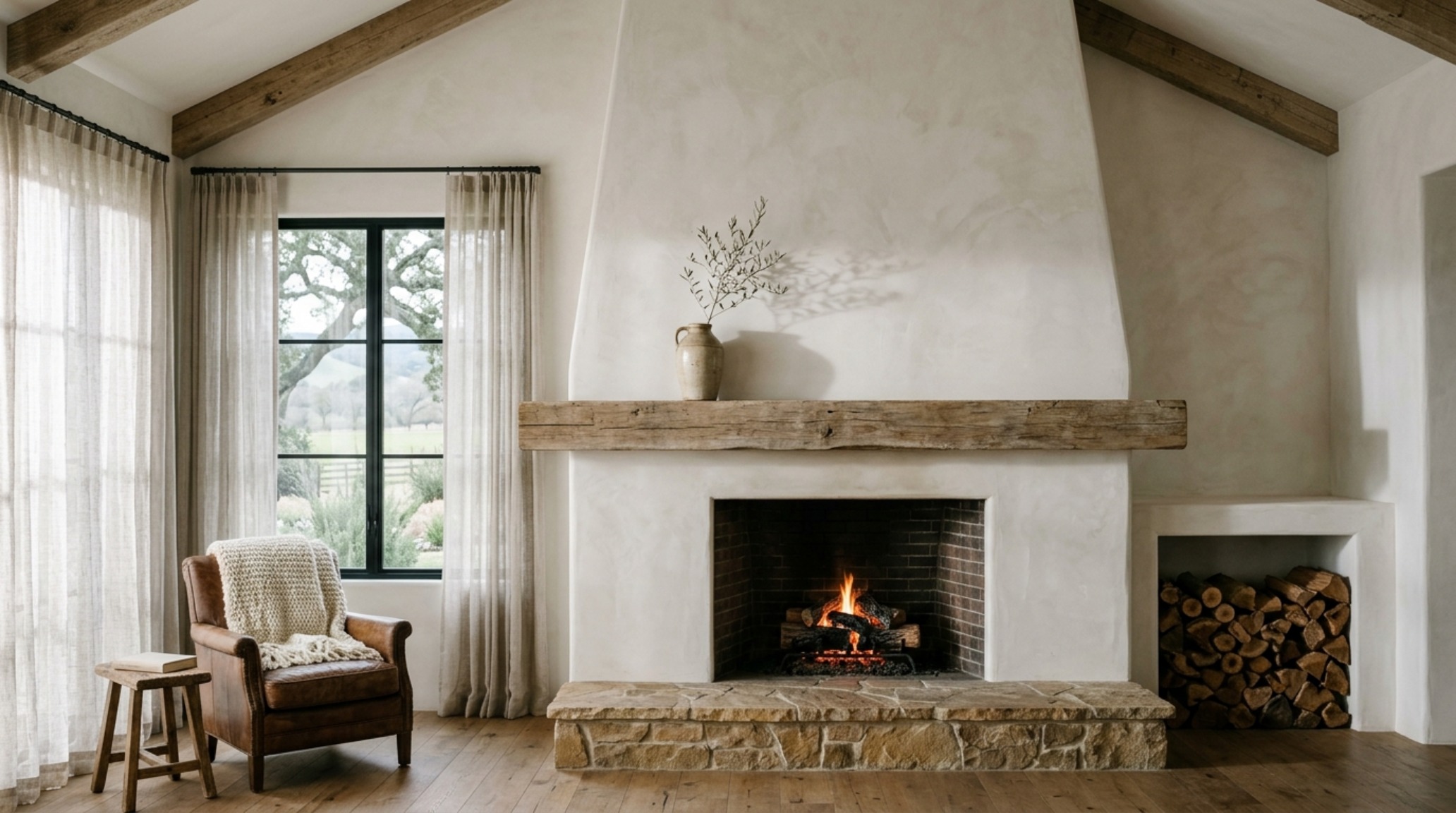
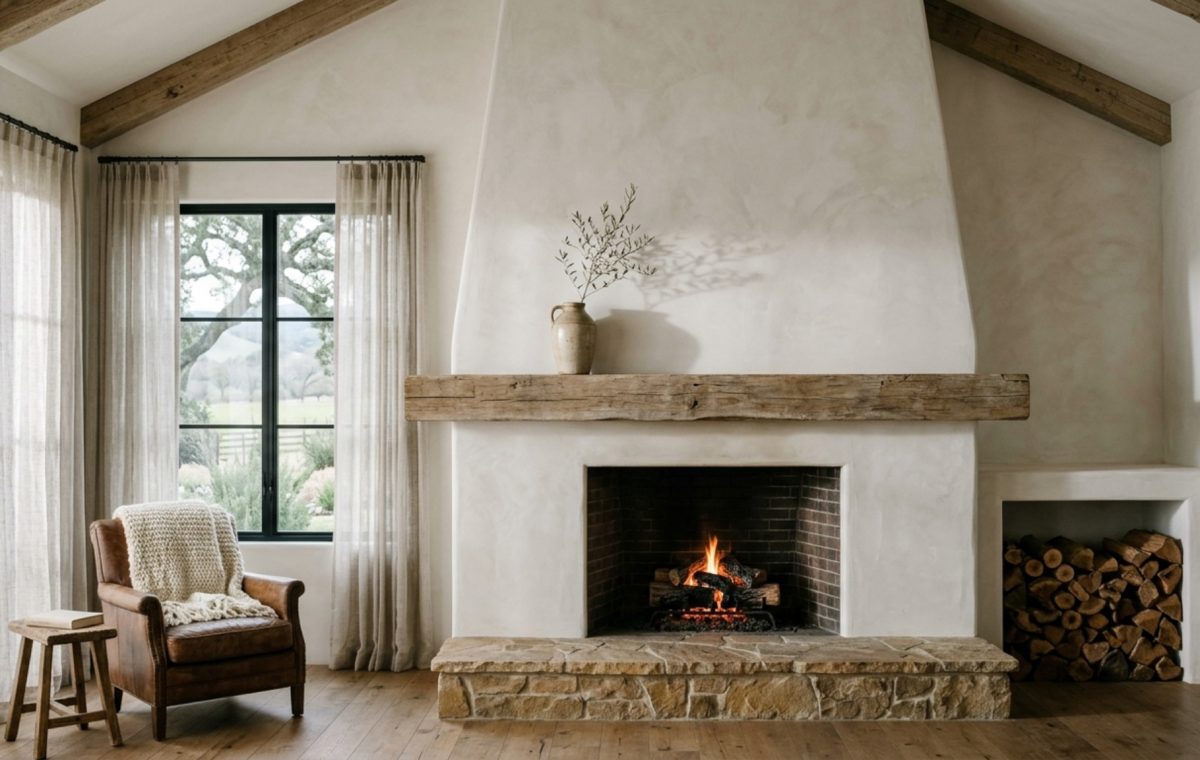
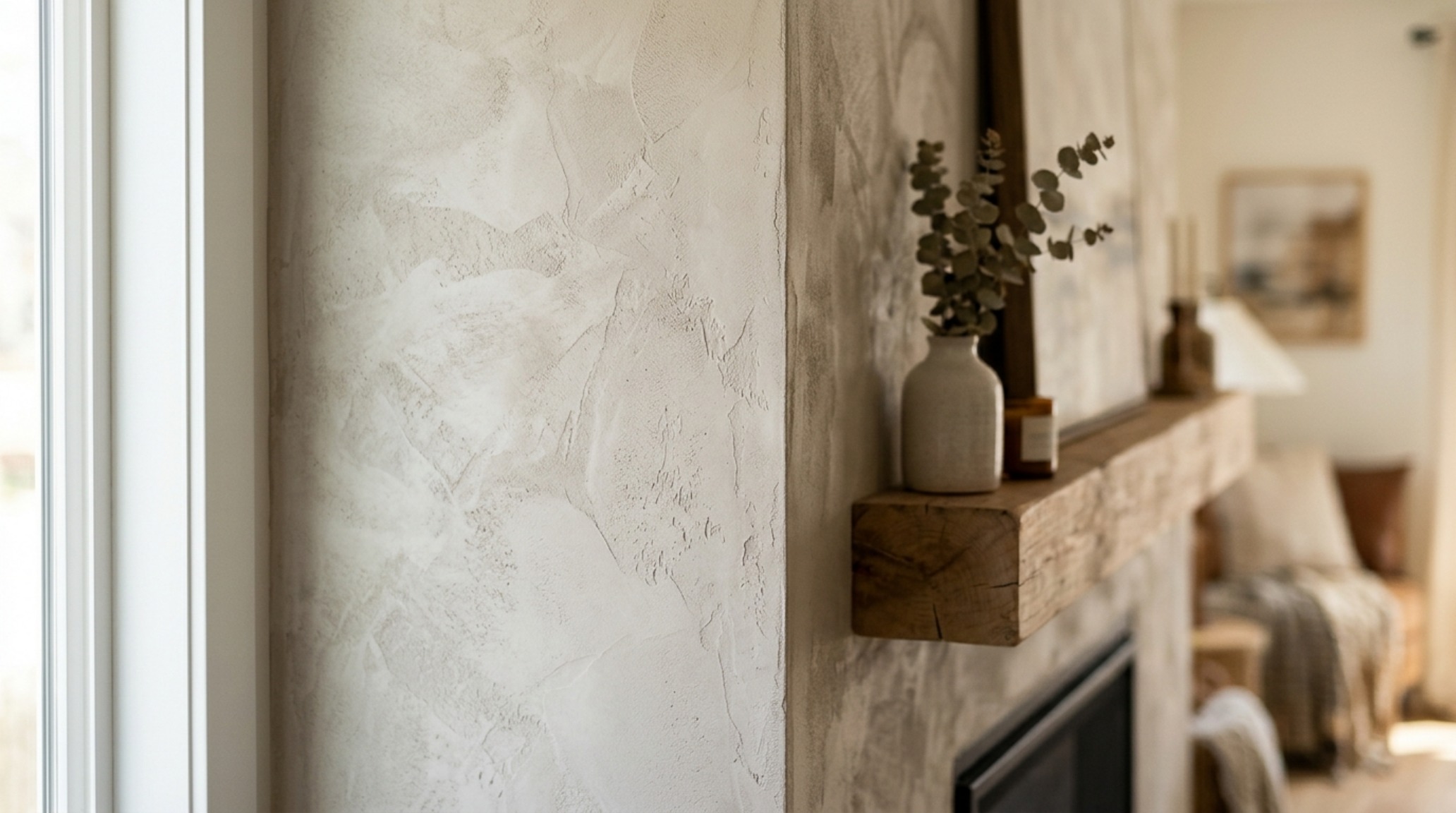
When we discuss the evolution of the farmhouse focal point, we have to talk about the death of the flat white wall. The transition from standard latex paint to the living, breathing finish of Portola Paints limewash or Roman Clay is transformative. These materials don’t just sit on the surface; they interact with the architecture. Limewash, specifically, creates a soft, sueded texture that absorbs and refracts light differently throughout the day. This provides a soft-focus backdrop that allows the fireplace to breathe, creating what designers call ‘negative space breathing room.’ It’s the difference between a house that feels ‘decorated’ and one that feels ‘composed.’
The Sensory Foundation: Materiality and Farmhouse Fireplace Decor Ideas
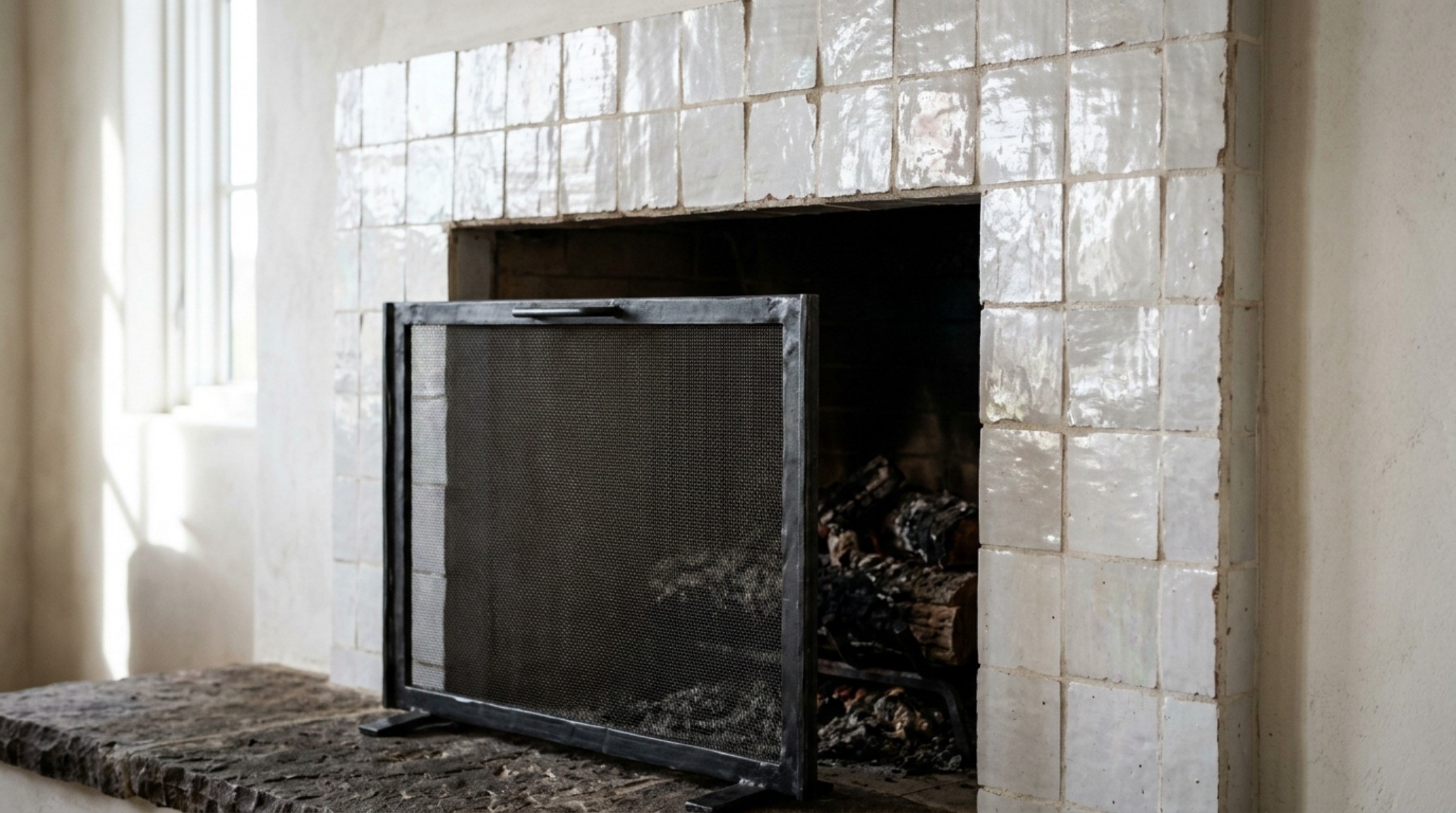
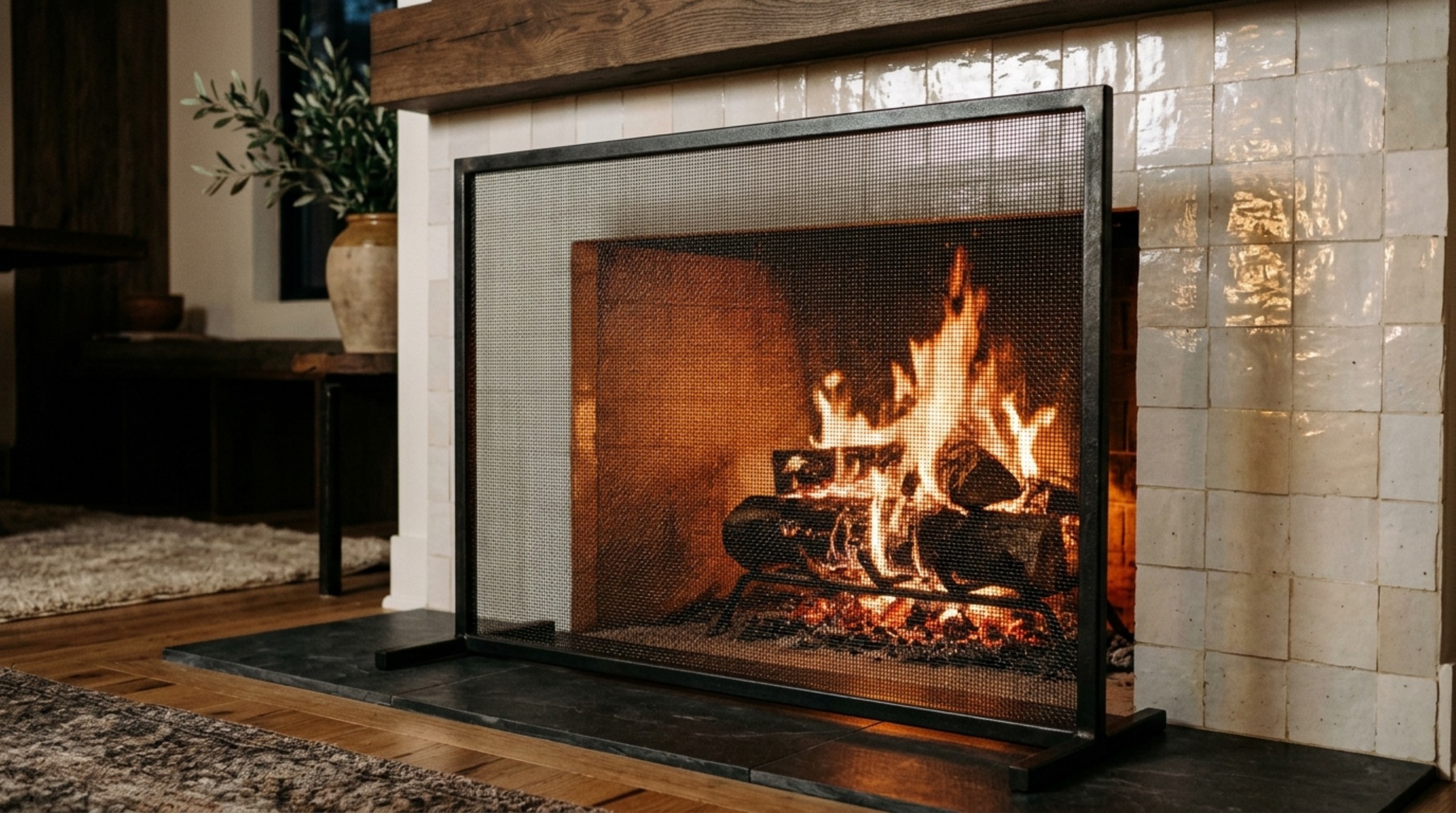
To master the organic modern aesthetic, one must embrace the tension between the rugged and the refined. This is most visible in the hearth’s construction. Gone are the days of uniform subway tile surrounds. Today’s most compelling living room focal points utilize the undulating, high-gloss surface of Zellige tiles. These Moroccan terracotta tiles, especially when used in tones like ‘Snow White’ or ‘Weathered White,’ offer a rhythmic imperfection that captures flicker from the flames. This tactile grounding is essential; it anchors the room in something ancient and handmade, contrasting sharply against the sleek, blackened steel of a custom fire screen.
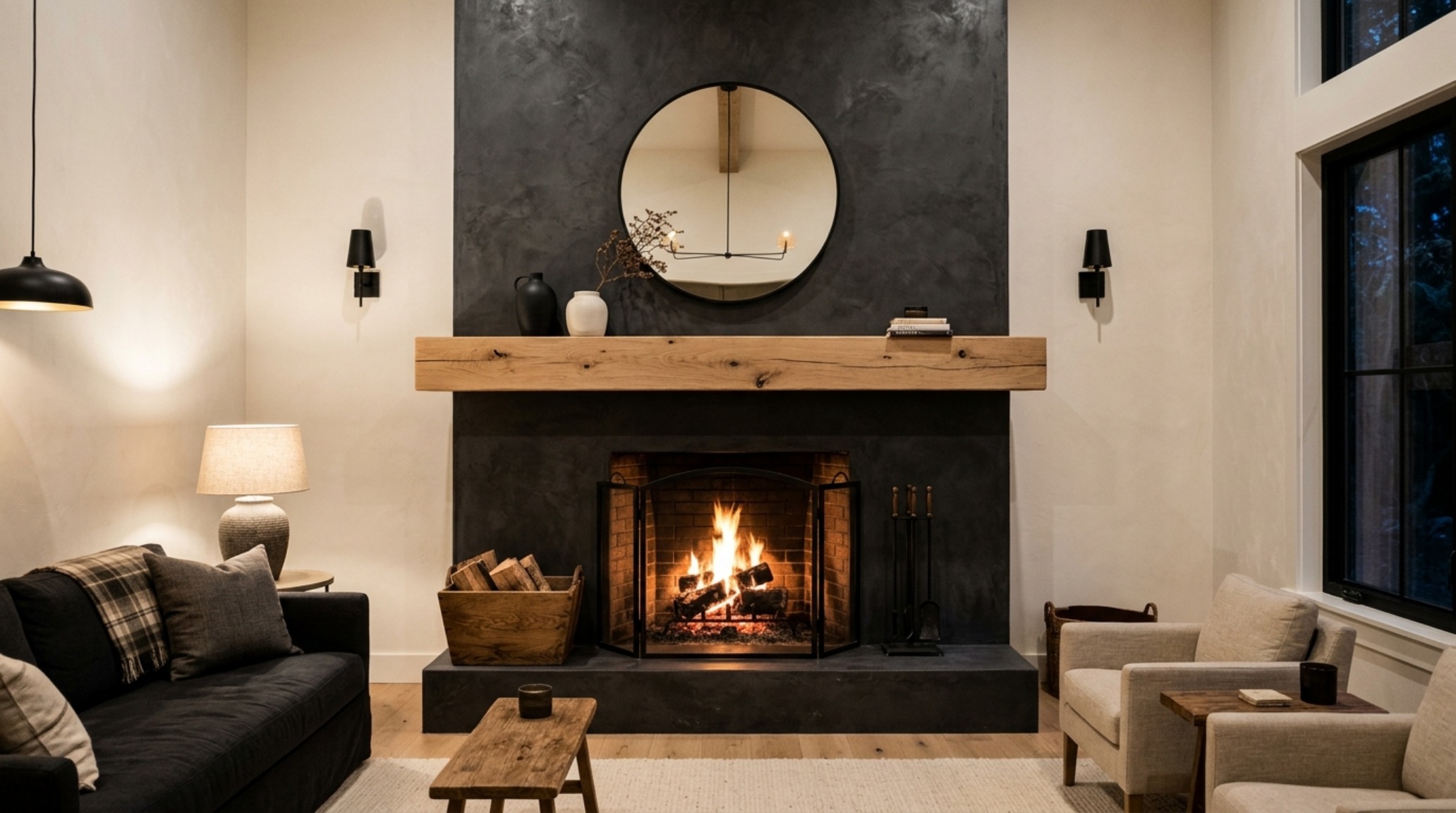
Consider the spatial cadence of your hearth. A common mistake is treating the mantel as a shelf for clutter. In the warm minimalist movement, the mantel is a horizontal plane meant to highlight a singular, high-quality material—like a beam of hand-hewn white oak or a thick slab of honed travertine. If you are looking for farmhouse fireplace decor ideas that feel curated rather than chaotic, focus on the ‘rule of three’ but apply it to texture rather than just objects. One oversized ceramic vessel with a matte finish, a singular piece of textural art, and perhaps a stack of linen-bound books. This allows the architectural lines of the fireplace to remain the primary narrative.
A significant part of this material matrix is the treatment of the masonry itself. The ‘mortar-smear’ or German Schmear technique has evolved from a DIY trend into a sophisticated architectural finish. By using a heavy mortar wash over irregular brickwork, you create a surface that feels like a centuries-old European cottage. This technique works exceptionally well when paired with modern farmhouse fireplace elements like a minimalist floating mantel. The rough, calcified texture of the brick provides a rugged counterpoint to the clean, straight lines of a 4K television or a sleek soundbar, effectively softening the digital edges of modern life.
Atmospheric Lighting: The 2700K Revolution
Lighting is the invisible architect of the home. In a tactile hearthside design, the goal is to highlight the relief of the materials. We strictly specify 2700K warm ambient lighting for fireplace surrounds. Why? Because 3000K or 4000K ‘daylight’ bulbs flatten the very textures we’ve worked so hard to install. At 2700K, with a High CRI (Color Rendering Index) of 90+, the warm undertones of limewash and the deep grain of white oak are amplified. We utilize diffused directional lighting—perhaps a small, discreet ceiling-mounted wash light or a pair of plaster sconces—to cast soft shadows across the mortar joints, creating a sense of drama that changes as the sun sets.
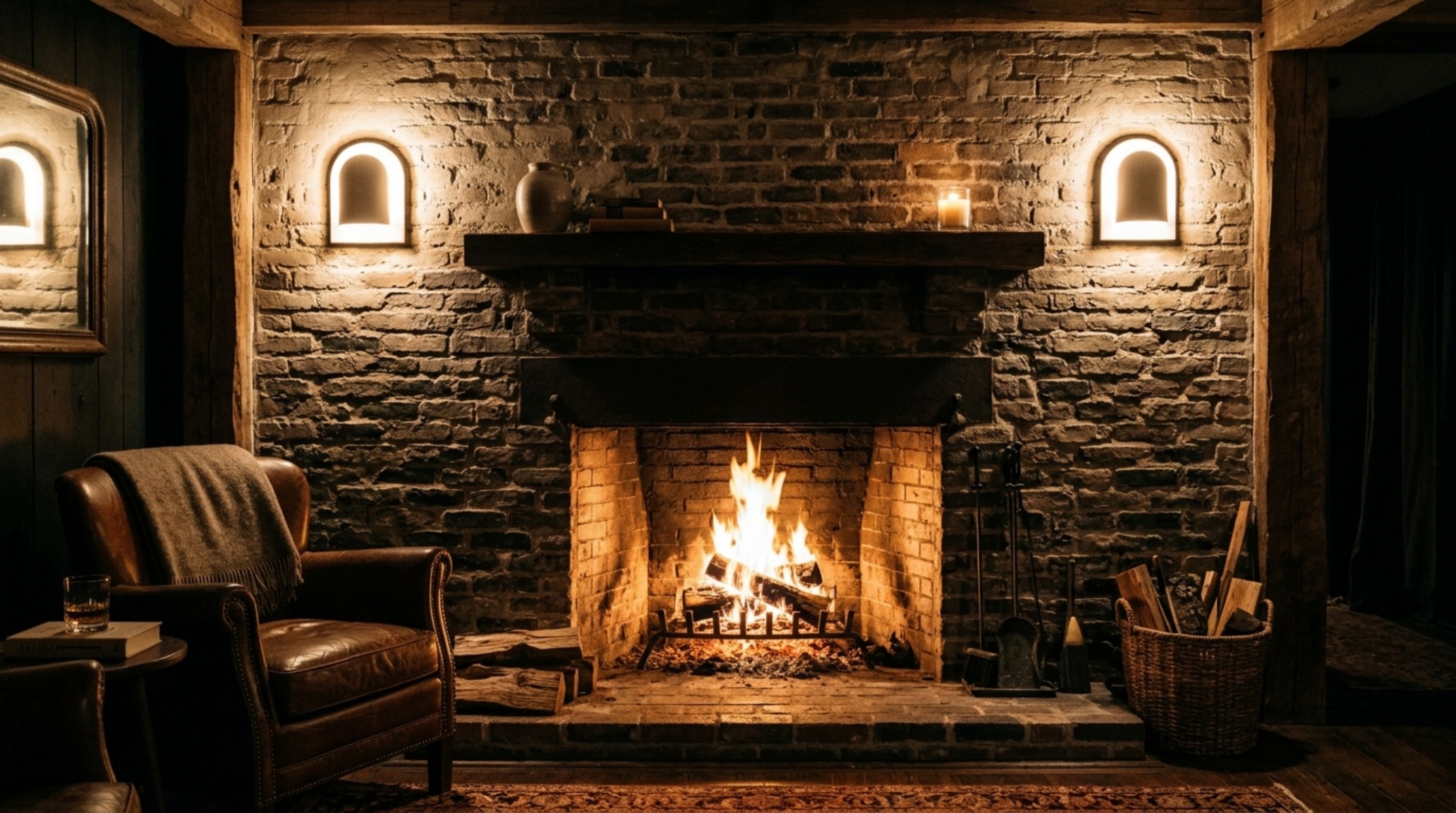
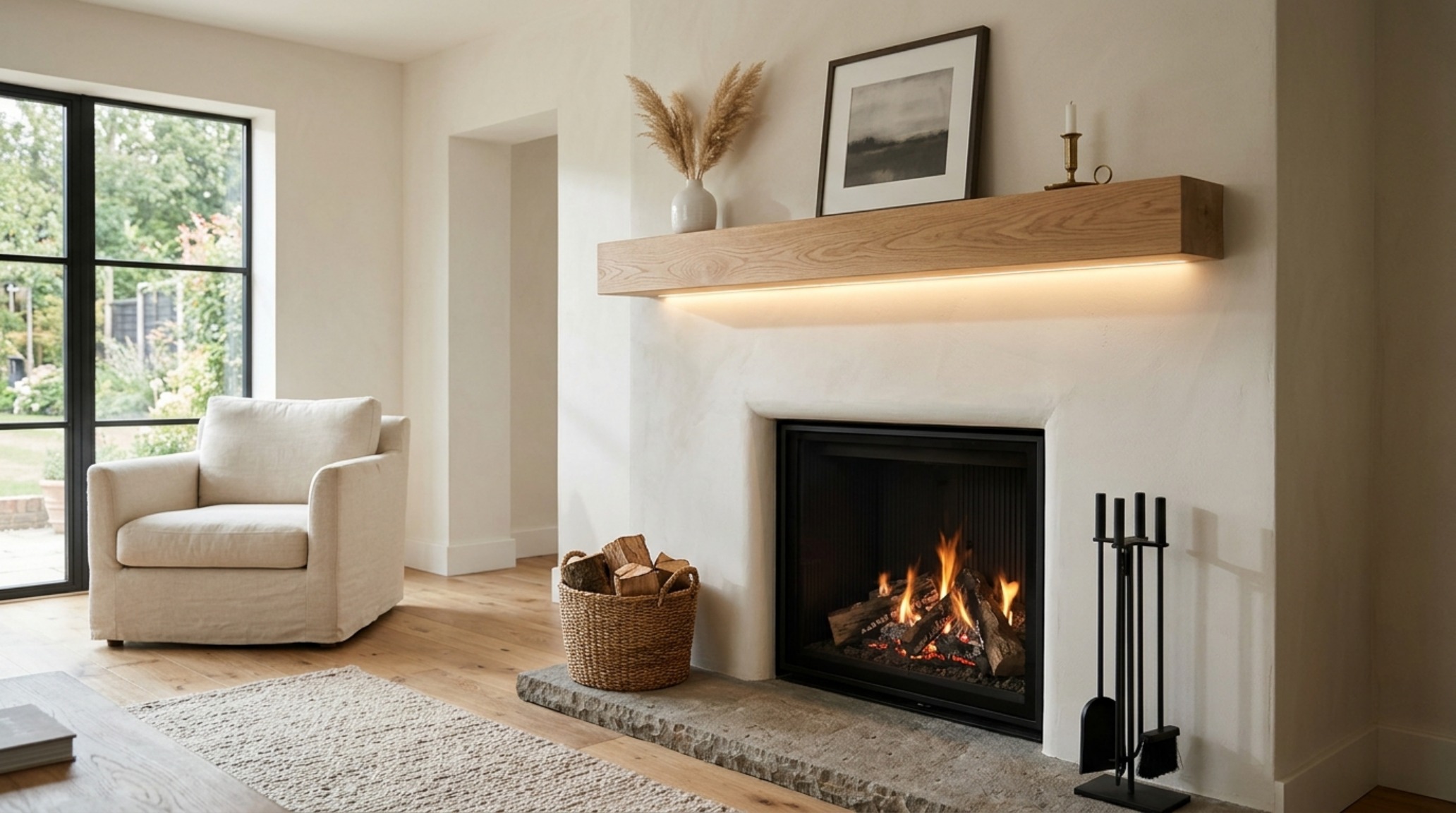
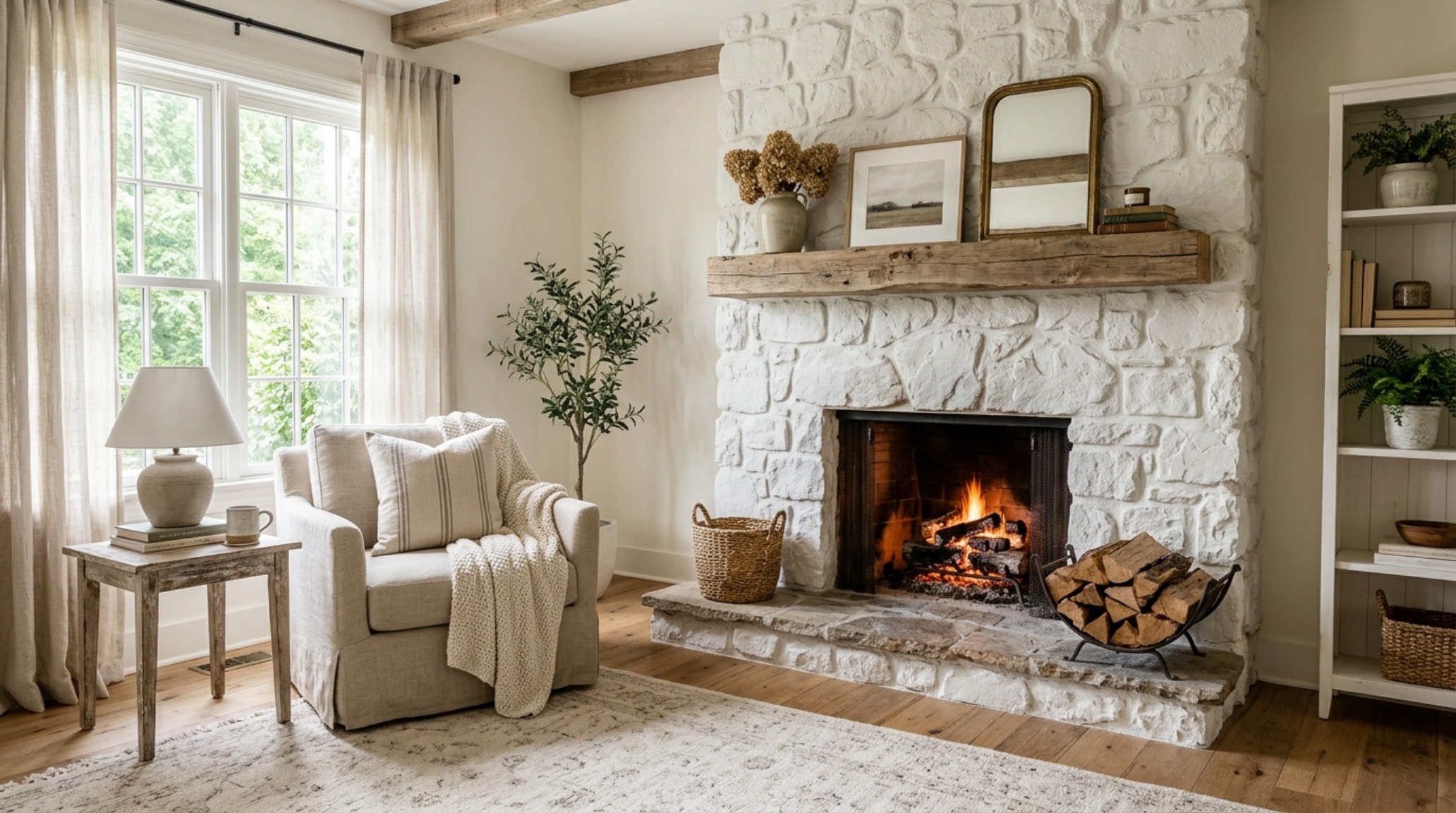
Beyond the ceiling, consider the role of integrated ledge lighting. Placing a dimmable LED strip (hidden by a small lip) along the back of a mantel can create a ‘halo’ effect, separating the fireplace from the wall and emphasizing the depth of the masonry. This technique is particularly effective with white stone fireplace living room ideas, as it prevents the stone from looking like a flat wallpaper and instead reveals the three-dimensional quality of each individual rock. It turns the entire structure into a glowing sculpture at night, perfect for low-light gatherings where the fire itself is the main event.
Spatial Proportions and Practical Clearances
While the aesthetic details are seductive, a truly professional interior is built on the foundation of architectural reality. Sightline alignment is the silent driver of comfort. For instance, if you are planning a modern farmhouse fireplace makeover, the height of your mantel should be determined by the ‘seated eye level’ of your primary lounge furniture. Usually, this means placing the mantel between 52 and 58 inches from the floor, though this varies based on ceiling height. Crucially, the ‘reach’ from your primary seating to a coffee table should be exactly 18 inches—this is the golden ratio for ergonomics. If your hearth is raised, ensure it doesn’t encroach on the 36-inch standard walkway clearance required for natural circulation through the room.
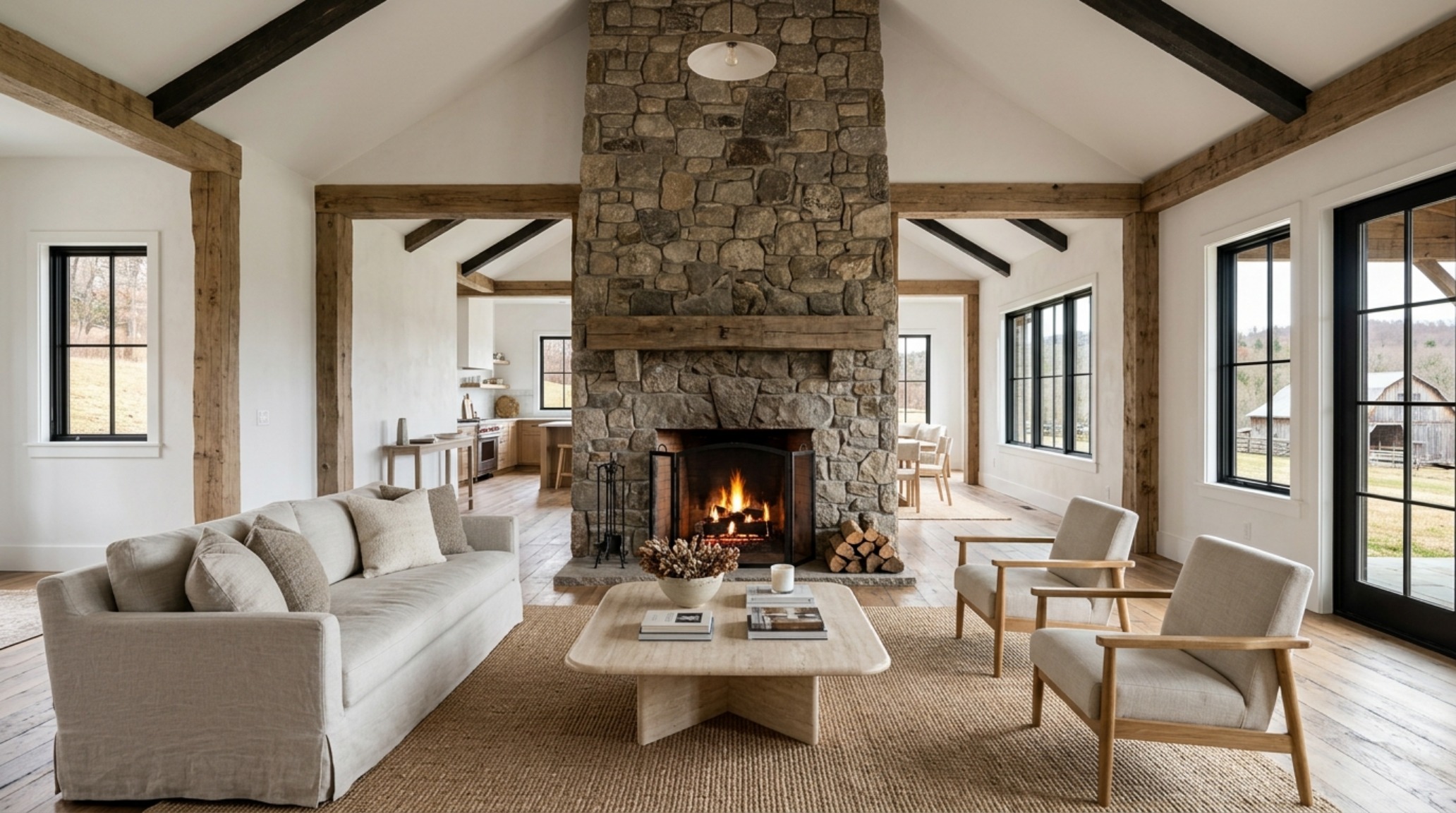
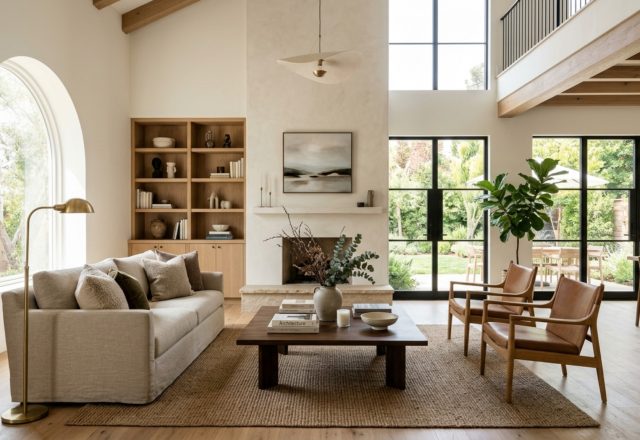
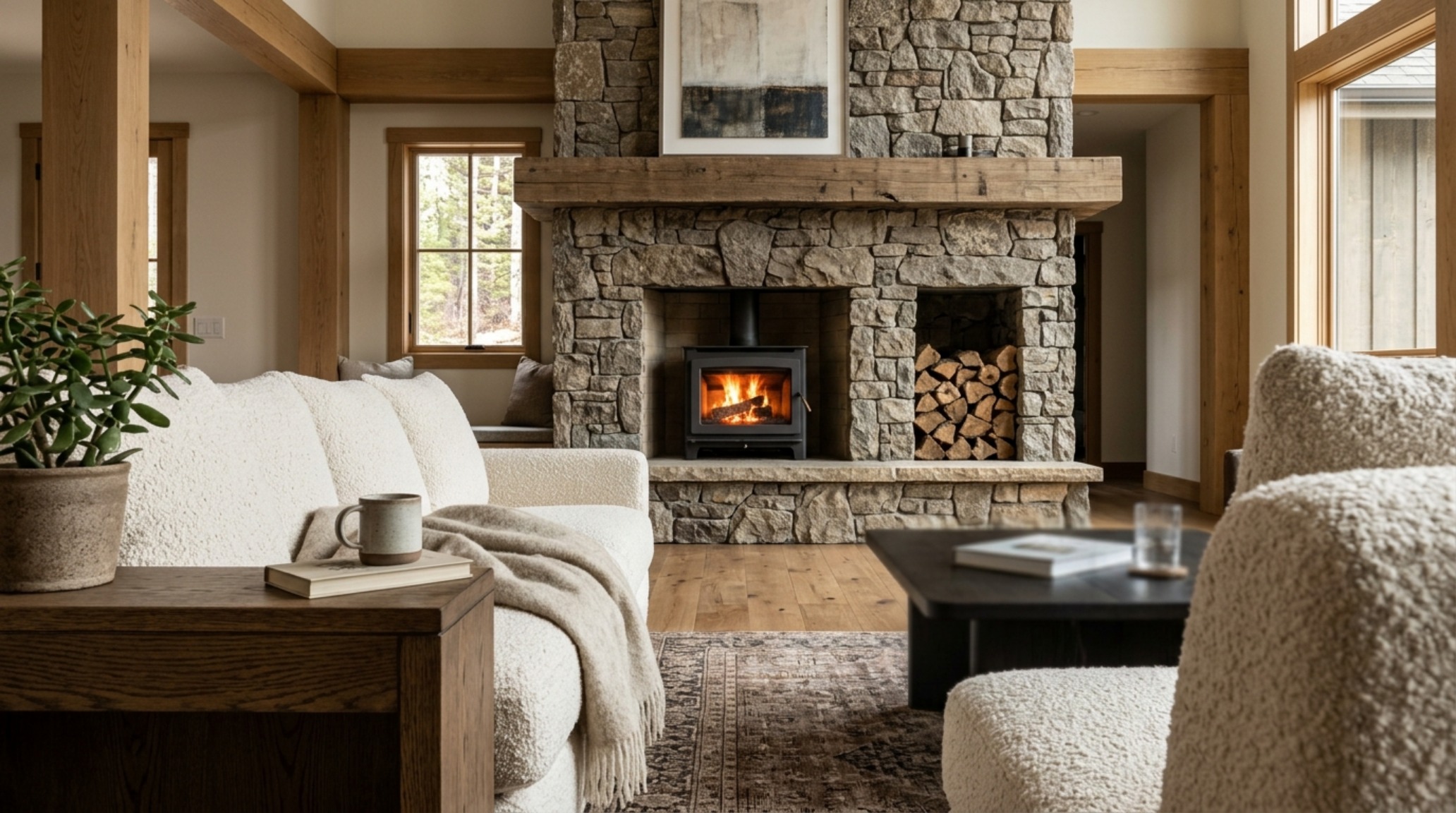
The scale of the fireplace must also correspond to the ‘mass’ of the room. A common pitfall in farmhouse design is installing a mantel that is too spindly for a vaulted ceiling. If you have 20-foot ceilings, your fireplace needs a vertical presence. This is where the floor-to-ceiling stone or limewash application becomes a necessity rather than a luxury. By extending the material to the ceiling, you draw the eye upward, celebrating the volume of the space while maintaining that cozy, organic grounding at the floor level. It creates a sense of ‘shelter’ within the expanse.
The Minimalist Mantel: A Study in Restraint
Styling for everyday use requires a rejection of the ‘more is more’ philosophy. In a minimalist farmhouse hearth aesthetic, we use objects to tell a story of provenance. Instead of mass-produced decor, look for pieces with a high tactile index: a hand-poured candle in a rough-hewn stone vessel, or a vintage dough bowl filled with moss. These farmhouse fireplace decor ideas focus on the organic. The black farmhouse fireplace contrast—achieved through matte black irons or a slate hearth—provides the perfect ‘anchor’ for these lighter, softer elements.
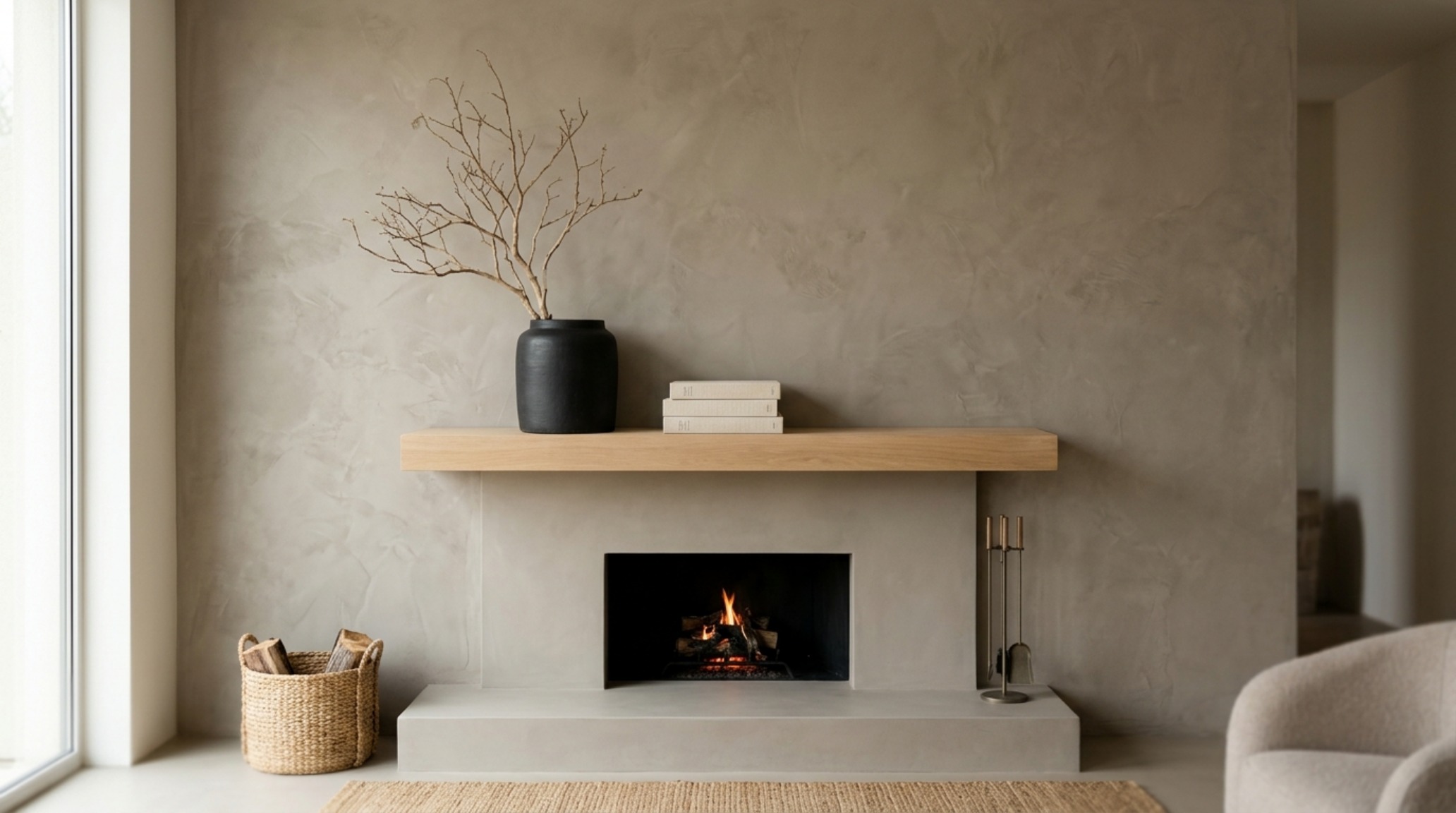
Shadow play is your best friend here. When you place a tall, spindly branch of dried eucalyptus or a piece of sculptural driftwood on a mantel, the light from the fire or the 2700K sconces will cast long, evocative shadows against the limewashed wall. This adds a layer of ‘temporary texture’ that is dynamic and soothing. It’s about creating a living room focal point that feels as though it was curated over decades, rather than purchased in a single weekend. The goal is a space that feels quiet but deeply intentional.
Synthesizing High Contrast and Warmth
The ultimate success of an organic modern farmhouse design lies in its ability to balance the ‘cold’ materials of industrialism with the ‘warm’ materials of nature. Blackened steel fire screens and slate hearths provide the necessary ‘weight’ to ground a room filled with light oak and pale plaster. This contrast is what prevents the room from feeling washed out. If you are experimenting with a rustic fireplace beam installation, consider staining it in a custom ‘smoke’ or ‘weathered gray’ rather than a traditional orange-toned oak. This modernizes the rustic element, allowing it to sit comfortably alongside more contemporary furniture pieces.
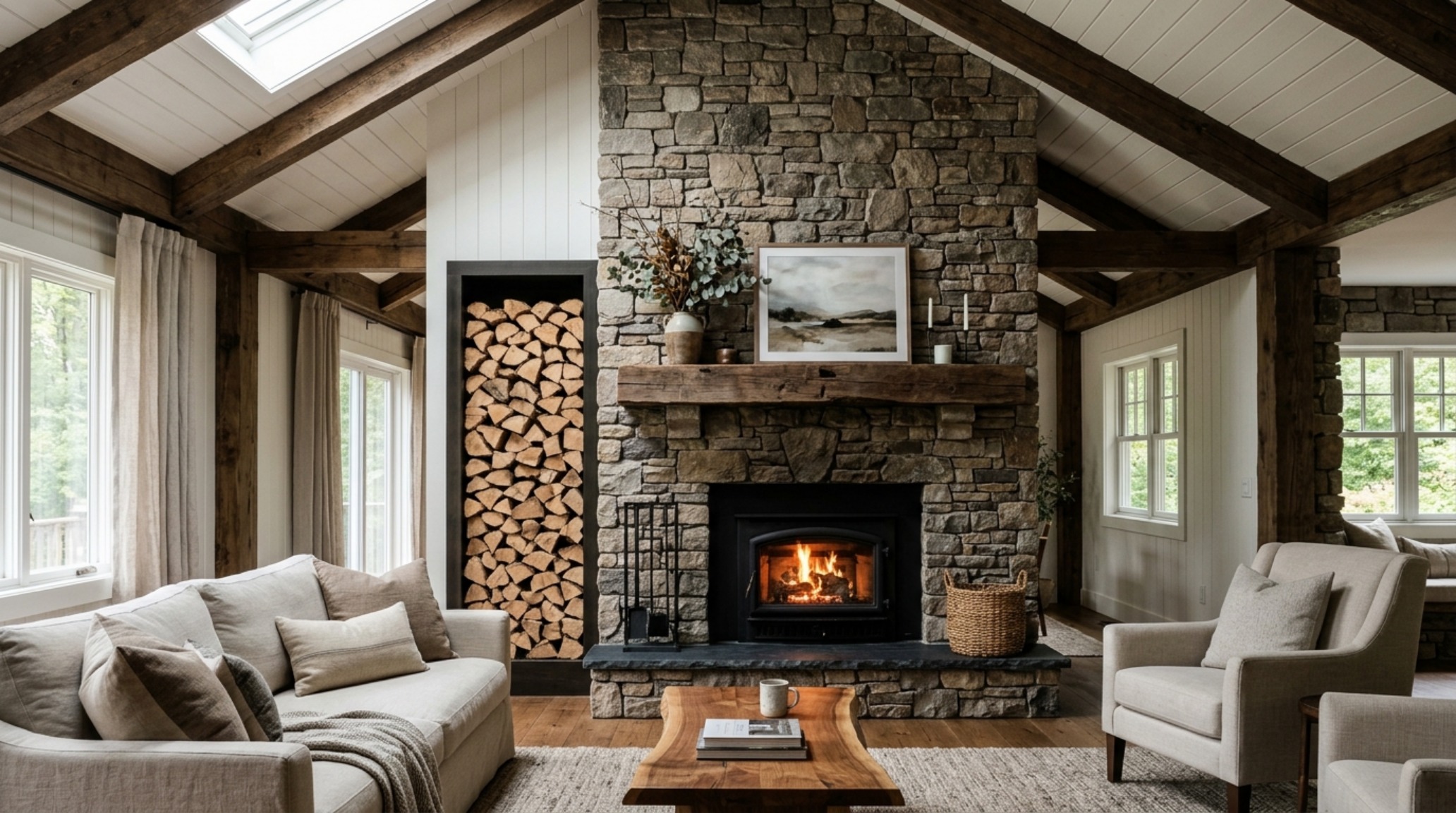
We are seeing a rise in ‘integrated storage’ where firewood is no longer hidden but celebrated as a design feature. A vertical inset for stacked logs adds an incredible amount of texture and ‘warmth’—both literally and figuratively—to the room. The repetitive circular patterns of the cut wood ends create a natural mosaic that perfectly complements the straight lines of a modern farmhouse fireplace. It’s functional art that honors the heritage of the farmhouse while serving the needs of a modern, design-conscious lifestyle.
Architectural Specification & Material Matrix
Curated tactile palette, spatial dimensions, and atmospheric lighting index for this design scheme.
The shift toward tactile hearthside design represents a broader desire for authenticity in our homes. By moving beyond the surface-level trends and focusing on the deep sensory experience of materials and light, we create spaces that offer more than just a visual ‘look.’ We create environments that feel grounded, permanent, and profoundly comforting. Whether you are executing a full renovation or simply refreshing your farmhouse fireplace decor ideas, remember that the most beautiful spaces are those that celebrate the hand of the maker and the natural rhythm of light. In this architectural reflection, the hearth remains what it has always been: the soul of the home, now reimagined for a more mindful, tactile world.
Editorial Silo • Recommended Architecture Studies
- Small Space Alchemy: Ergonomic Modular Sofa Hacks from the Best 2025 Cyber Monday Sales — Archival Design Case Study
- Tactile Resilience: Curating a Spill-Proof, Quiet Luxury Interior with Black Friday’s Best Performance Textures — Archival Design Case Study
Architectural Inspiration Lookbook
A high-resolution study in spatial proportions, tactile materiality, and light choreography curated for enduring modern living.

Curated Visual Lookbook
Design Gallery & Spatial Studies
A visual curation of architectural arrangements, lighting concepts, and material palettes featured in this space.