Most people treat bookshelves like glorified storage units. They stack paperbacks vertically, shove board games into the bottom slots, and call it a day. But the right wooden cabinetry acts as architectural anchor furniture. It holds history. Look at how warm timber tones ground a stark white wall without overwhelming the visual square footage. You do not need a massive budget to replicate this depth. You just need to let go of absolute symmetry and embrace organic textures instead.
Curating Vintage Volumes and Display Shelves
Uniformity kills personality. If every spine on your shelves matches or faces forward in rigid lines, the room starts to feel like a sleepy municipal archive. Mix it up. Pull a few texts forward to break the flat plane. Lean smaller framed art pieces directly against the backboards. This creates instant layering that flat-hung pictures simply cannot achieve. Of course, maintaining open wooden displays comes with a catch. Dust settles quickly on exposed timber and paper edges. Regular maintenance requires a soft-bristle brush and a patient hand every couple of weeks.
Balancing Art and Functional Storage
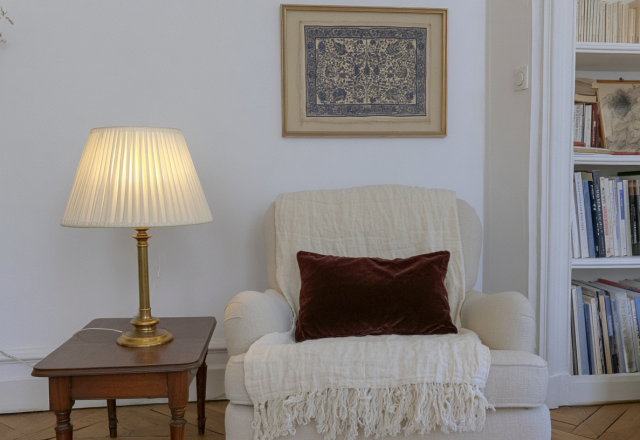
Pairing a heavy wooden bookcase with a large botanical textile art piece changes the entire weight of a room. Notice how the dark wood frame of the wall hanging balances the massive vertical shelving unit on the right. They converse with each other across the negative white space. Down below, a heavy ceramic vase stuffed with dried stems softens the hard lines of the console table. It bridges the gap between rigid furniture and living nature. Are you tired of stark, minimalist walls that feel cold? What vintage pieces could you rescue from storage to anchor your own blank spaces?
Editorial Lookbook & Photo Collection