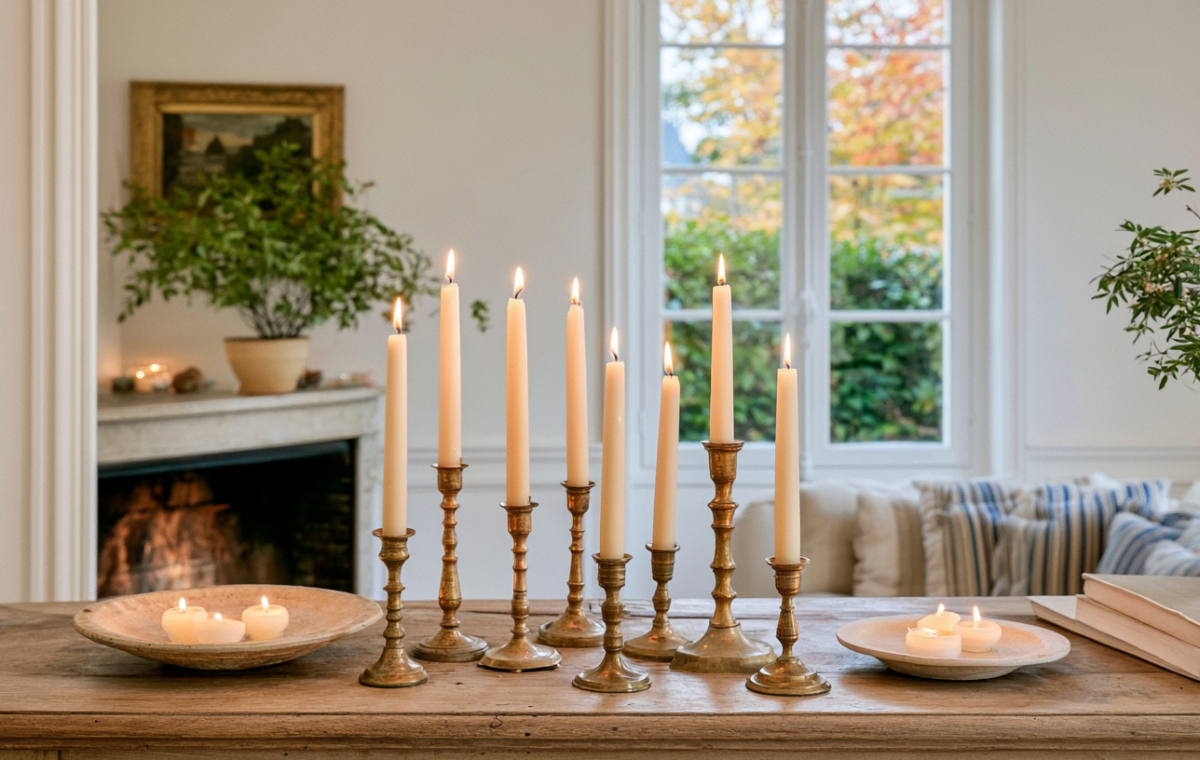
Overhead lighting is harsh. It flattens rooms, highlights dust, and completely ruins a relaxed evening atmosphere. Real warmth requires intention. Setting a long row of tapered candles inside mismatched brass candle holders changes an ordinary wooden surface into an anchor for the entire living area. It feels lived-in, deliberate, and entirely immune to fleeting design trends.
Metals like brass demand patina. Brand-new, mirror-finished brass often looks sterile in a domestic setting. Vintage candlesticks found at thrift shops or flea markets carry history. Their slight tarnish catches the flicker of a flame differently, bouncing soft amber light across plastered walls and heavy linen fabrics. Grouping varying heights together breaks up monotony. A tall pillar candle stands proud beside a squat votive, creating a skyline effect on the timber tabletop.
Practical Considerations for Flame and Wax
Candles require maintenance. Dripping wax destroys unfinished wood grain within minutes. Placing shallow ceramic dishes or rustic wooden bowls beneath your groupings catches stray wax before it ruins expensive furniture. Furthermore, open flames demand constant supervision. Keep burning tapers away from drifting curtains, drafty windows, and low-hanging decorative greenery.
Tapers often lean if they do not fit snugly into their sockets. A melted scrap of wax dropped inside the base before pressing the candle down acts as an instant stabilizer. Never skip this small step unless you enjoy waking up to a horizontal mess.
How many candlesticks are too many for your daily coffee table rotation?
Editorial Silo • Recommended Architecture Studies
- Performance Modularity: Modular Shelf System & Engineering Seamless Living in the Modern Compact Home — Archival Design Case Study
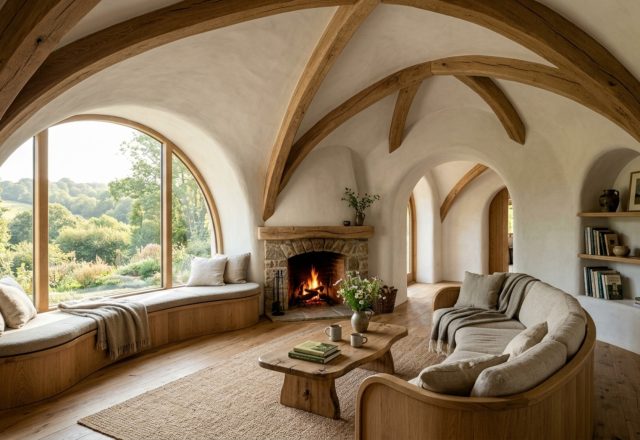
- The Physics of the Curve: Structural Secrets of Earth-Sheltered Hobbit Home Designs — Archival Design Case Study
Curated Lookbooks & Architectural Studies
- The Tactile Aesthetic of Ideas For Front Doors: Materials, Moods & Lighting Kelvin
- The Engineering of Ease: How to Make Contemporary Furniture for High-Performance Urban Living”, description: “Modern living demands a departure from static design; to make contemporary furniture today is to engineer kinetic, multifunctional solutions. This guide introduces the ‘2:1 Rule’ of spatial density—balancing two parts low-profile furniture with one part uninterrupted breathing room. We analyze the ergonomics of ‘cognitive stability,’ integrating hidden power hubs, wireless charging surfaces, and modular footprints that allow a single piece to pivot between a high-focus workspace and a serene sanctuary.
- Tactile Atmosphere: Mastering Materiality and 2700K Glow in Narrow Entryway Ideas
- The Optical Expander: Narrow Living Room Design Ideas & Using Earthy Palettes and Kinetic Textures to Reshape Visual Depth
- Attic Apartment Interior: Clever Design for Slanted Ceilings
- Gray Bedroom Design Ideas for Moody Elegance
Curated Visual Lookbook
Design Gallery & Spatial Studies
A visual curation of architectural arrangements, lighting concepts, and material palettes featured in this space.